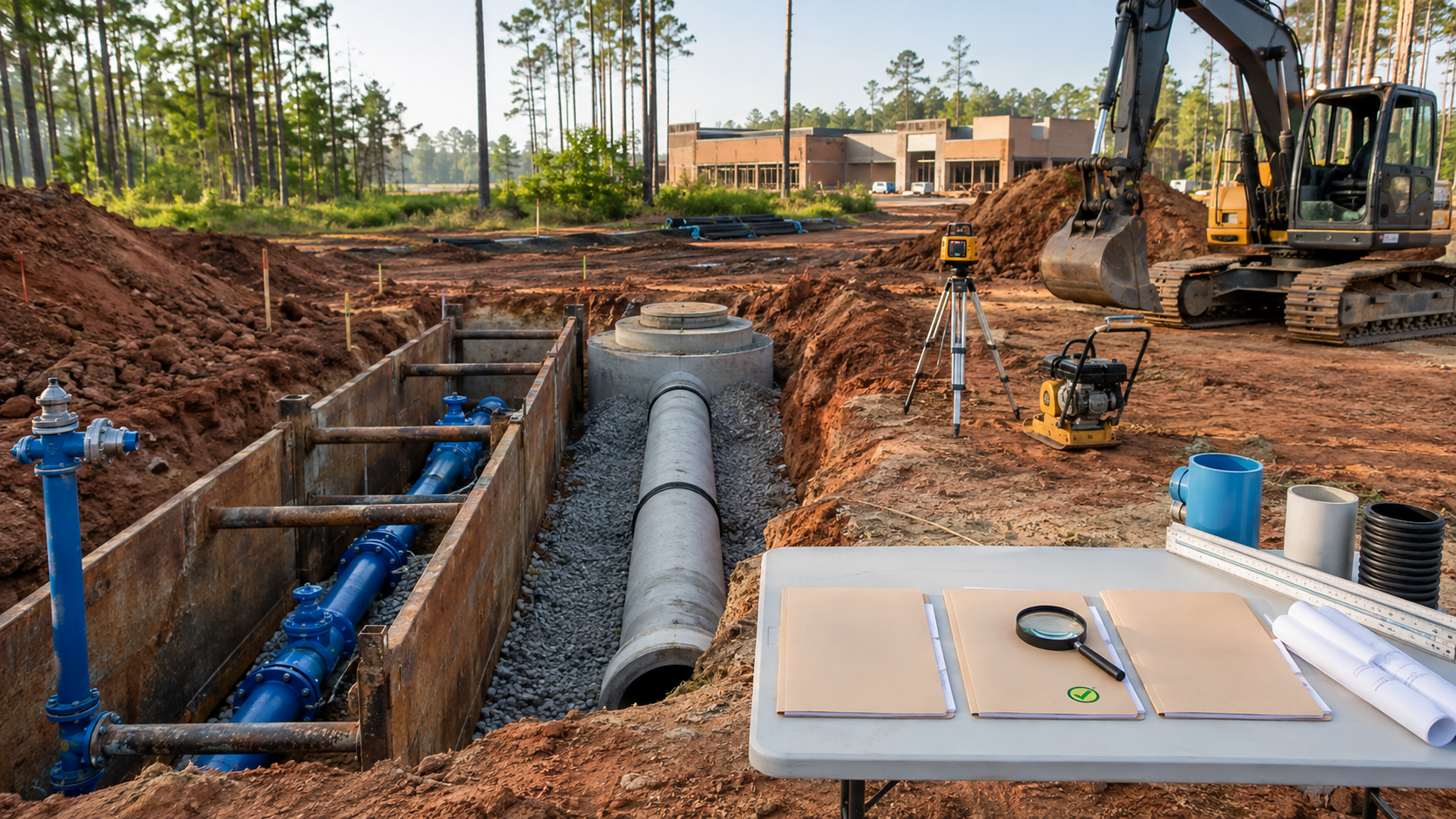
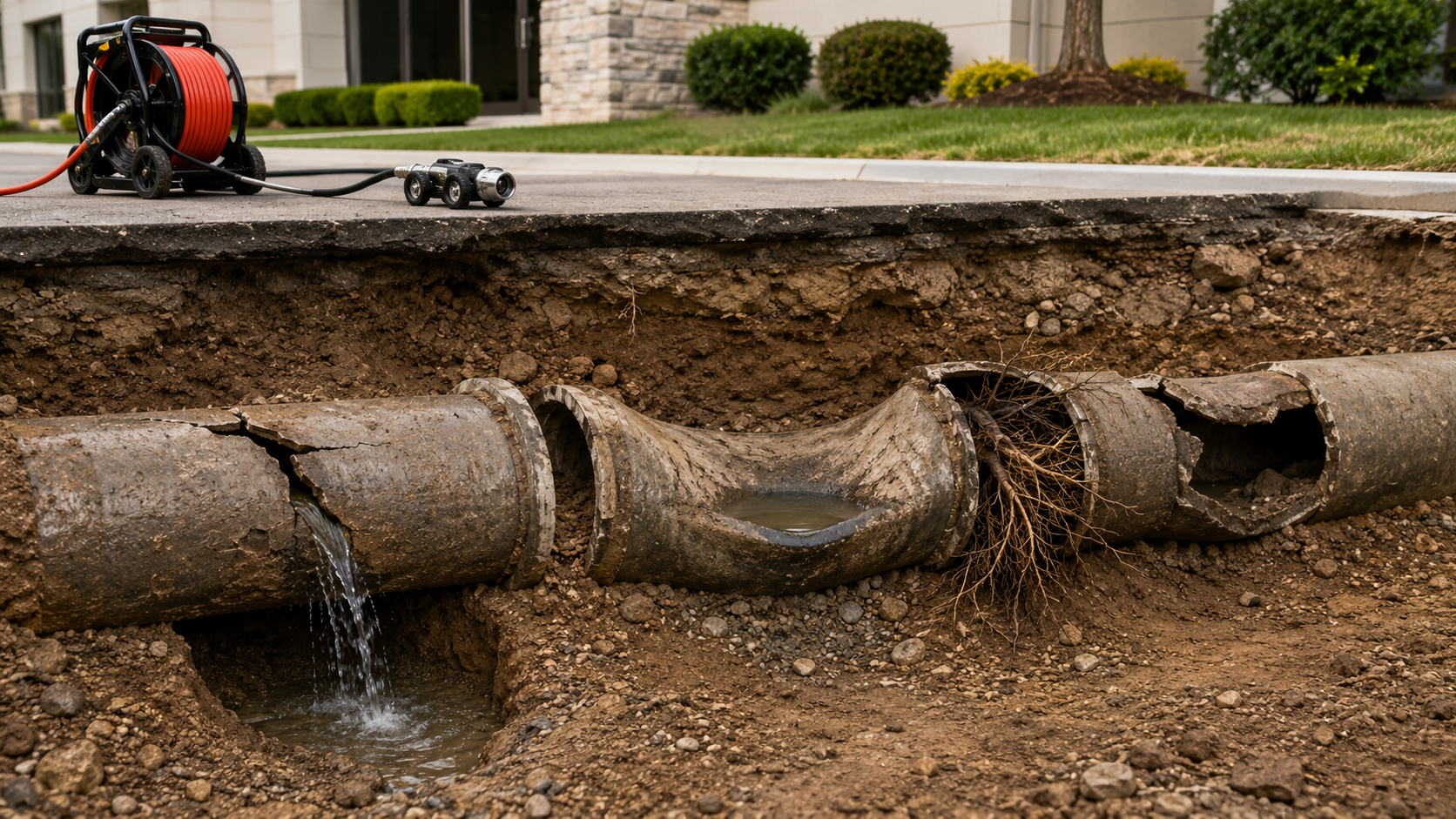
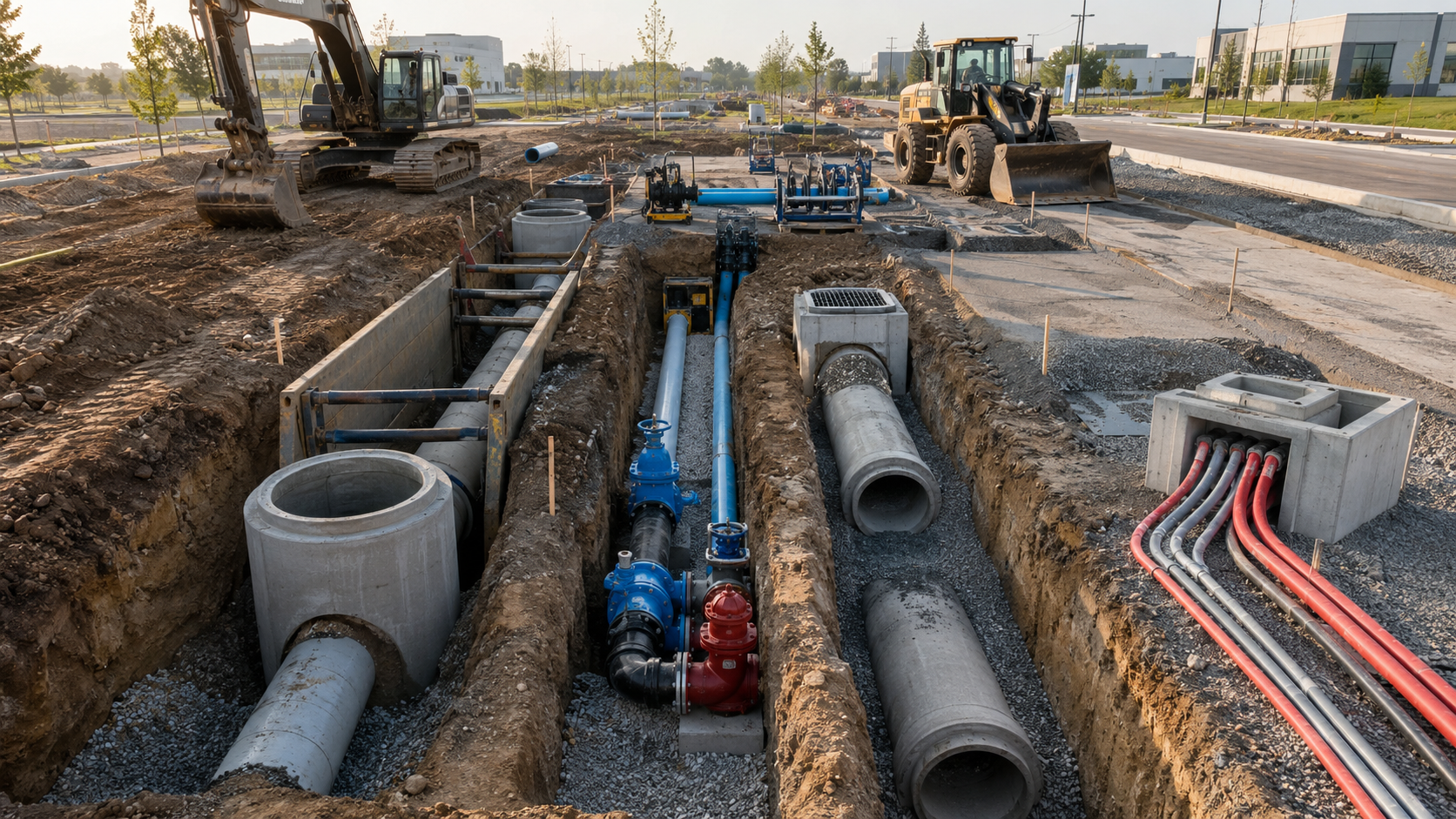
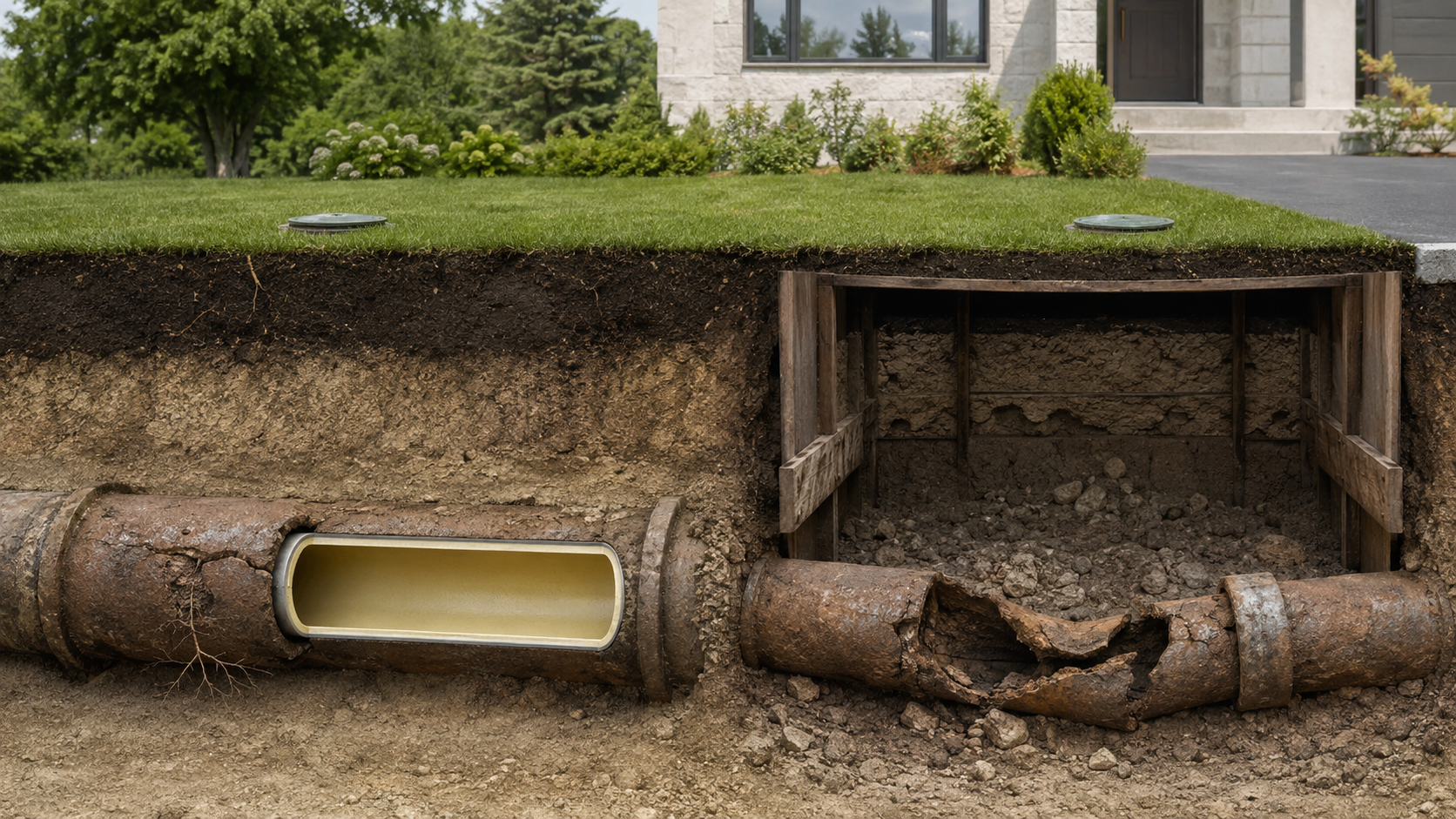
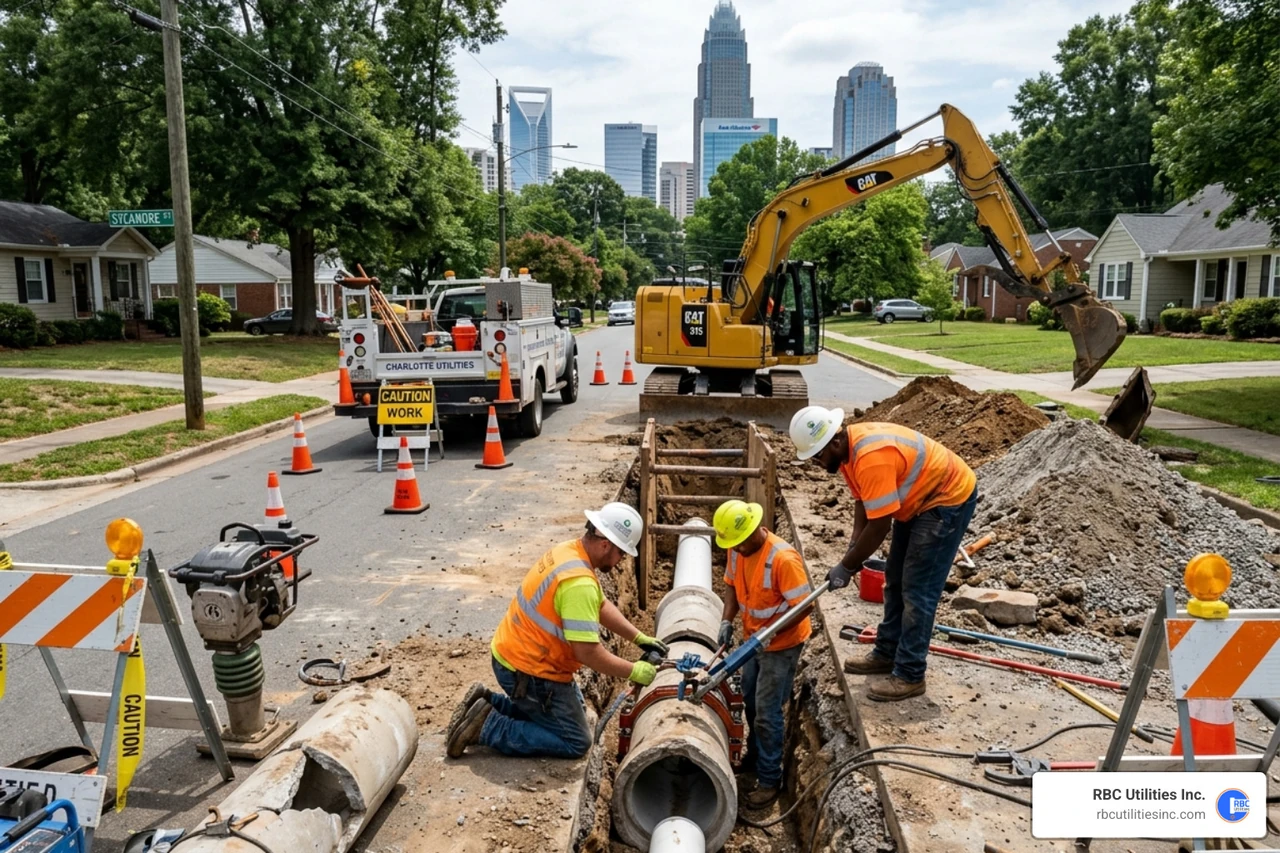
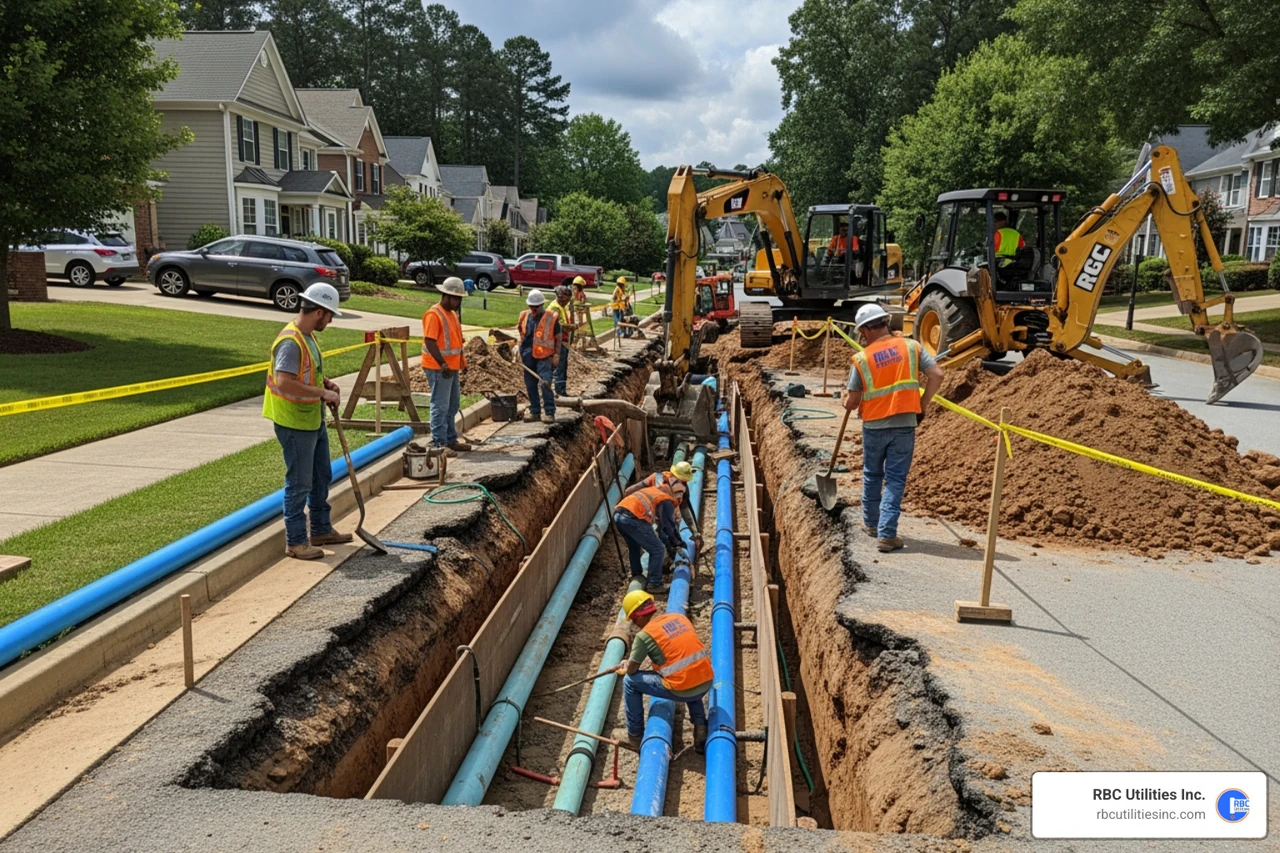
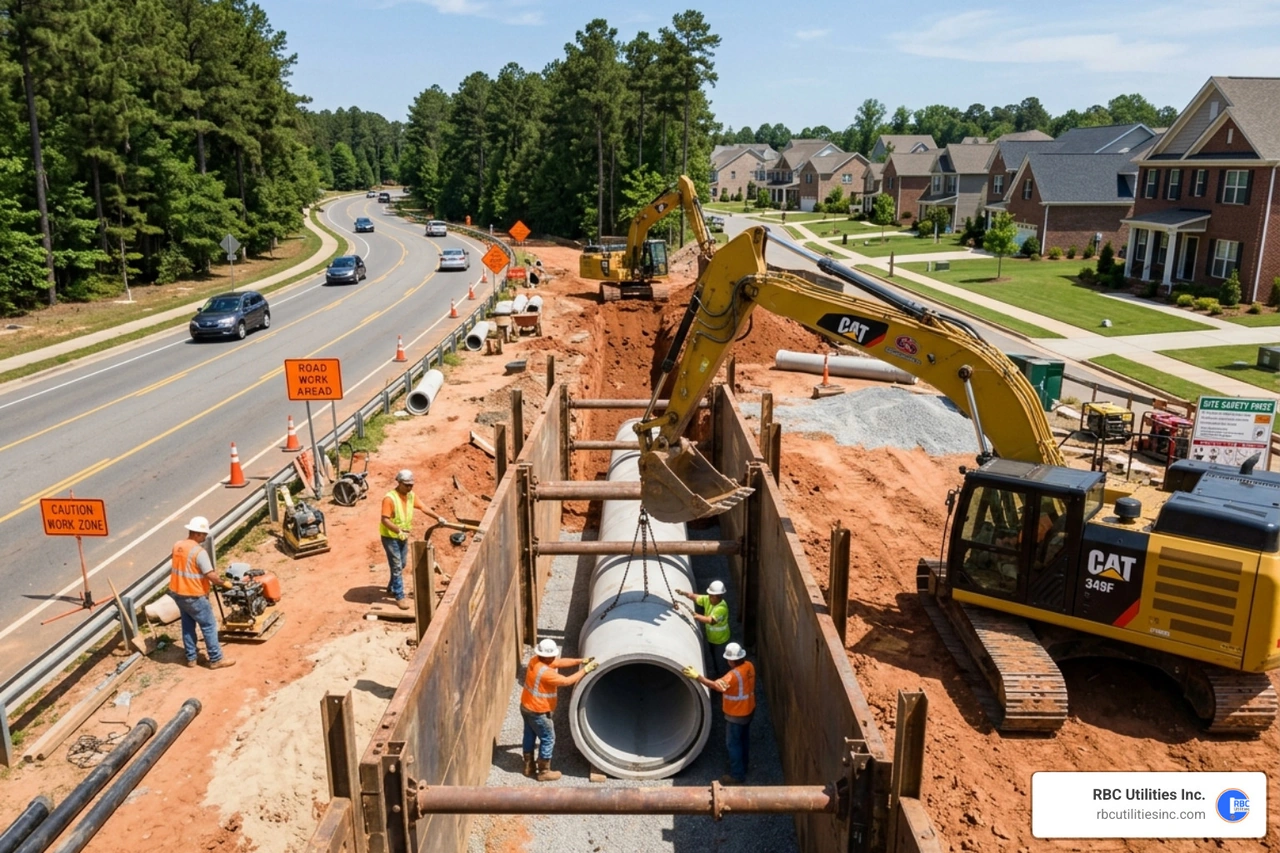
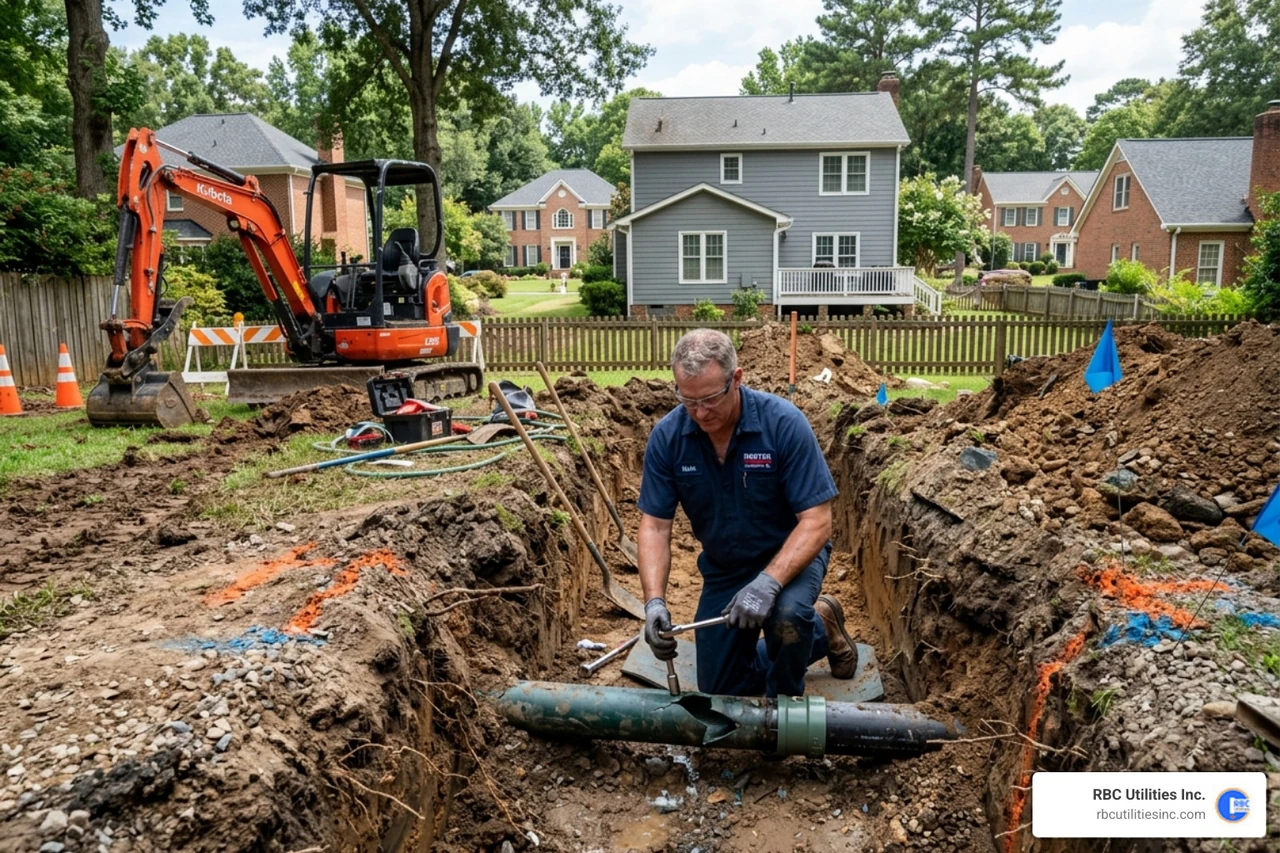
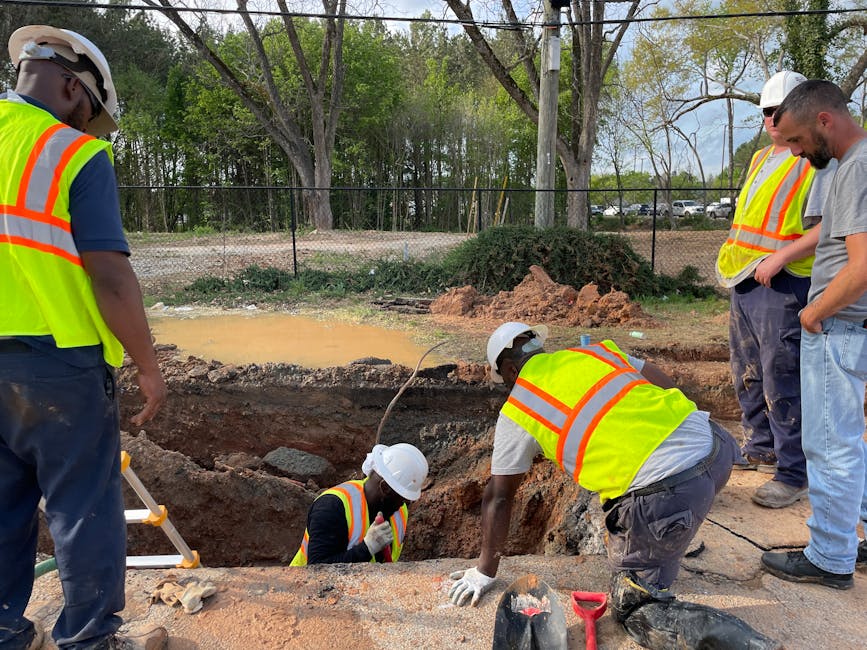
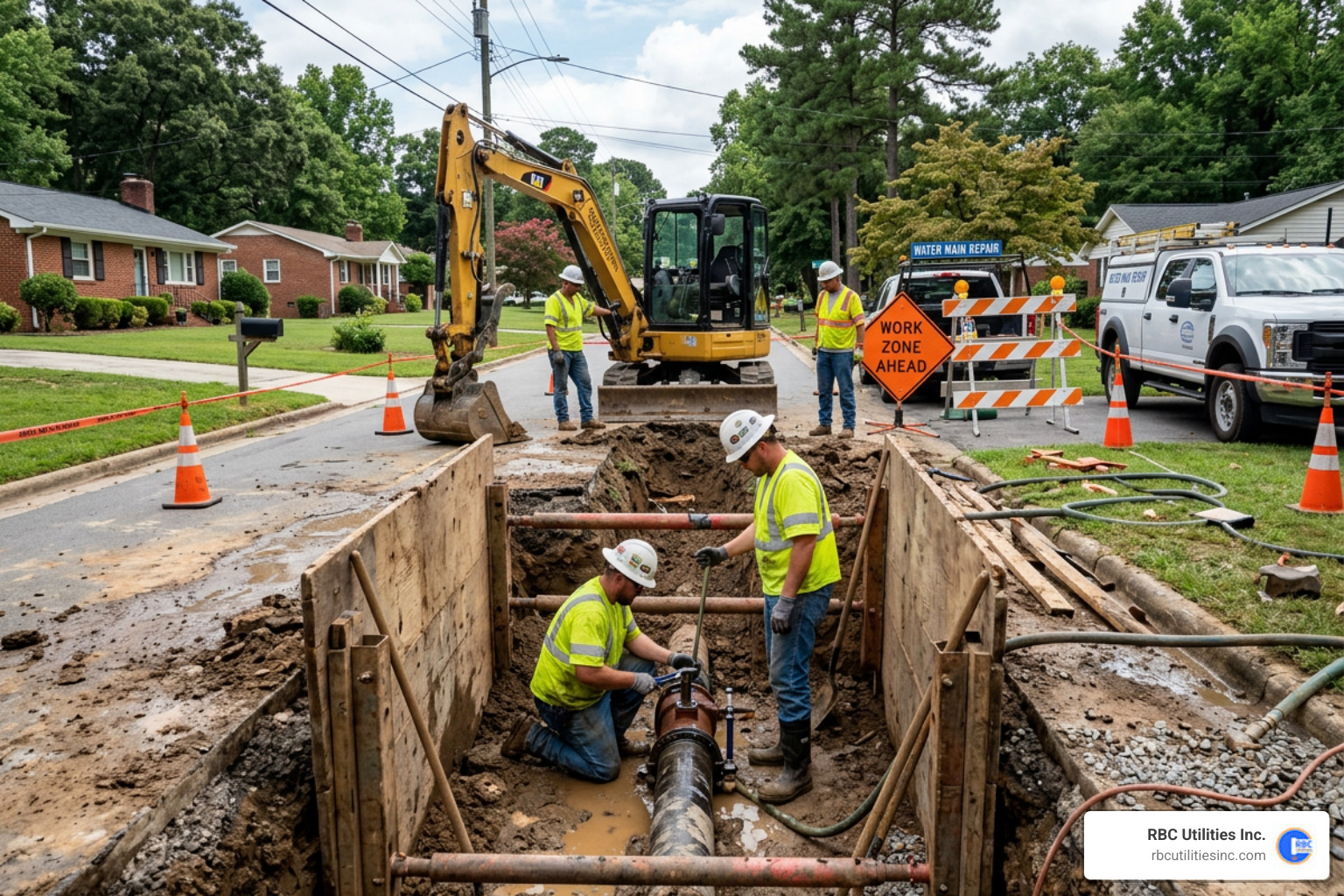
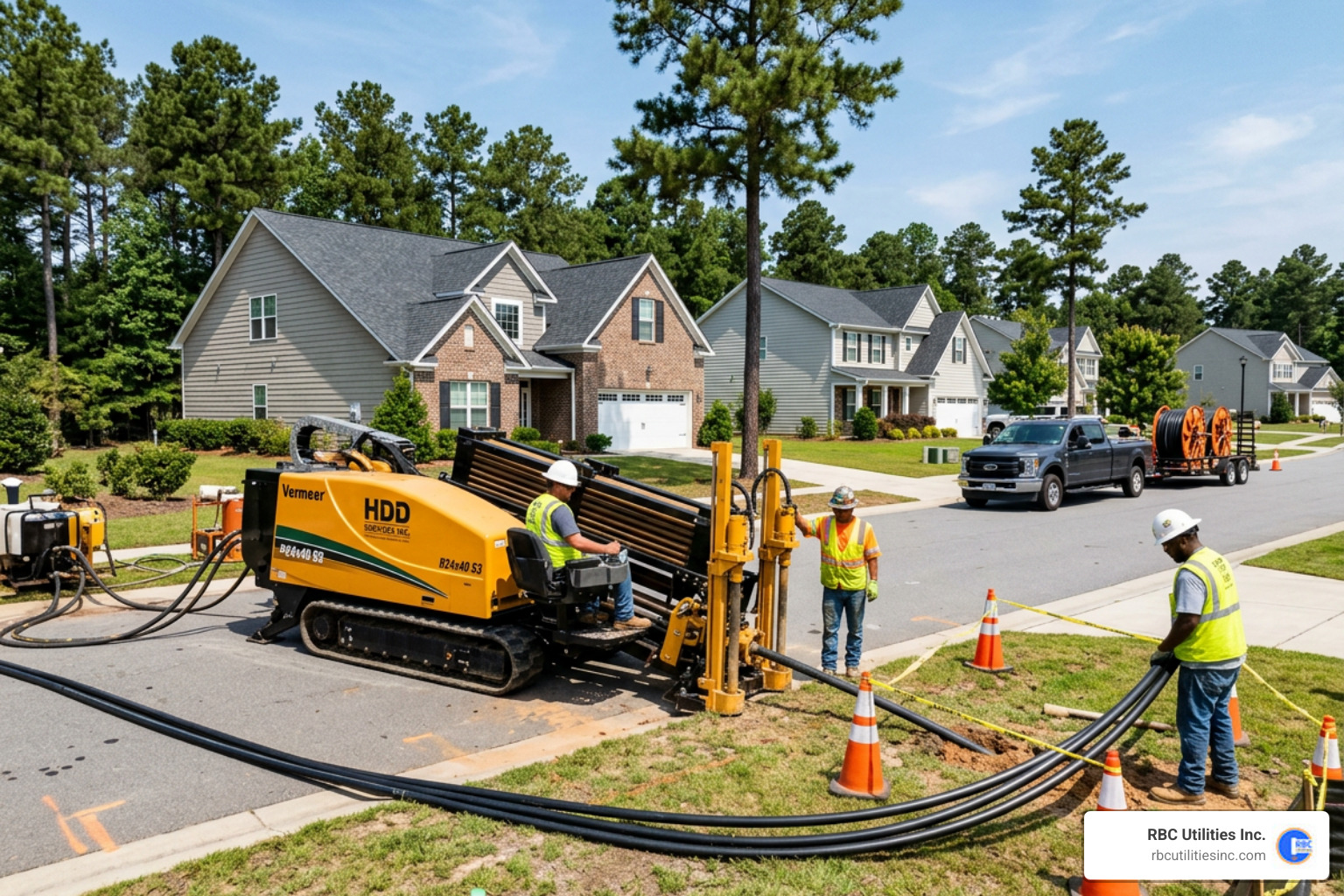
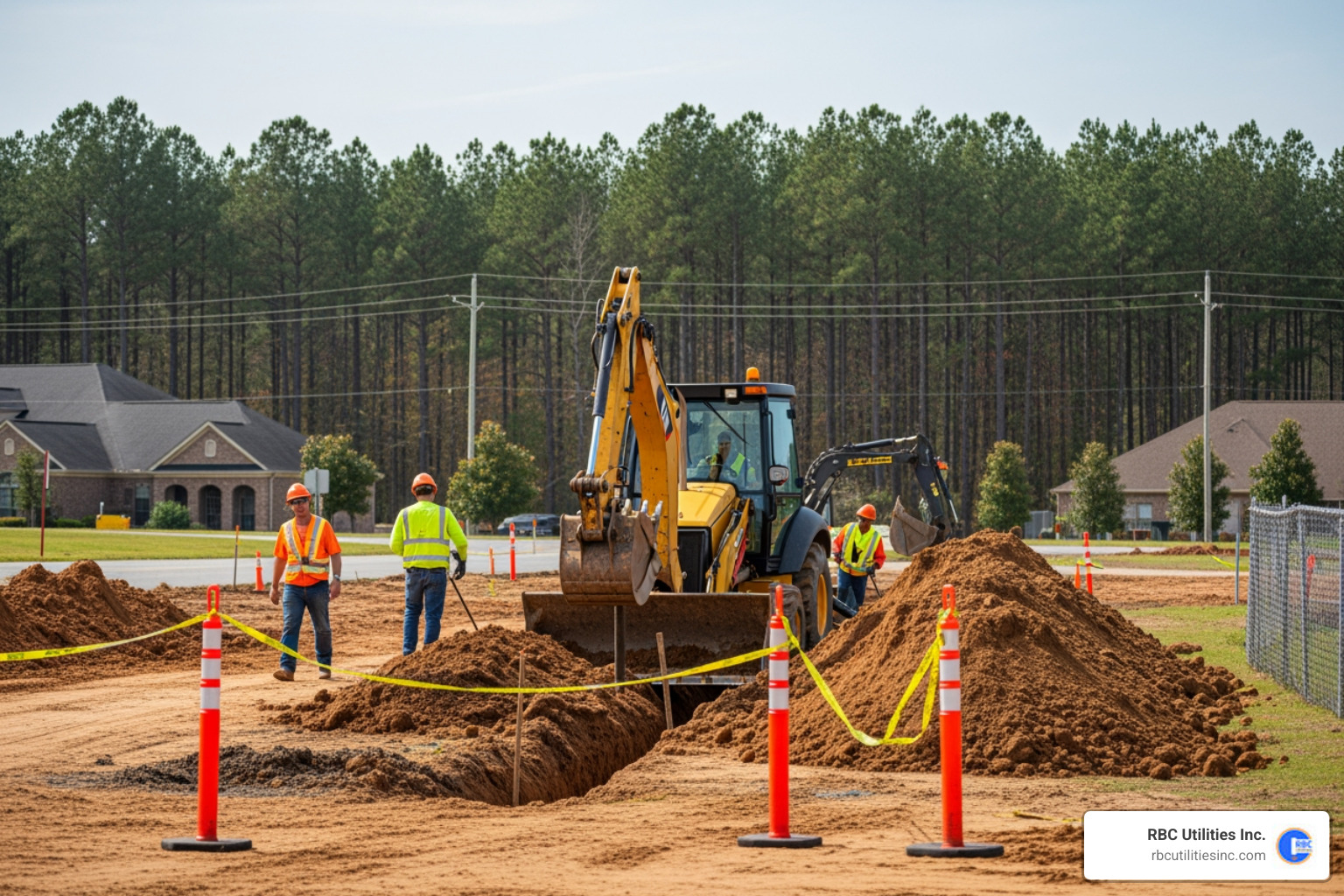
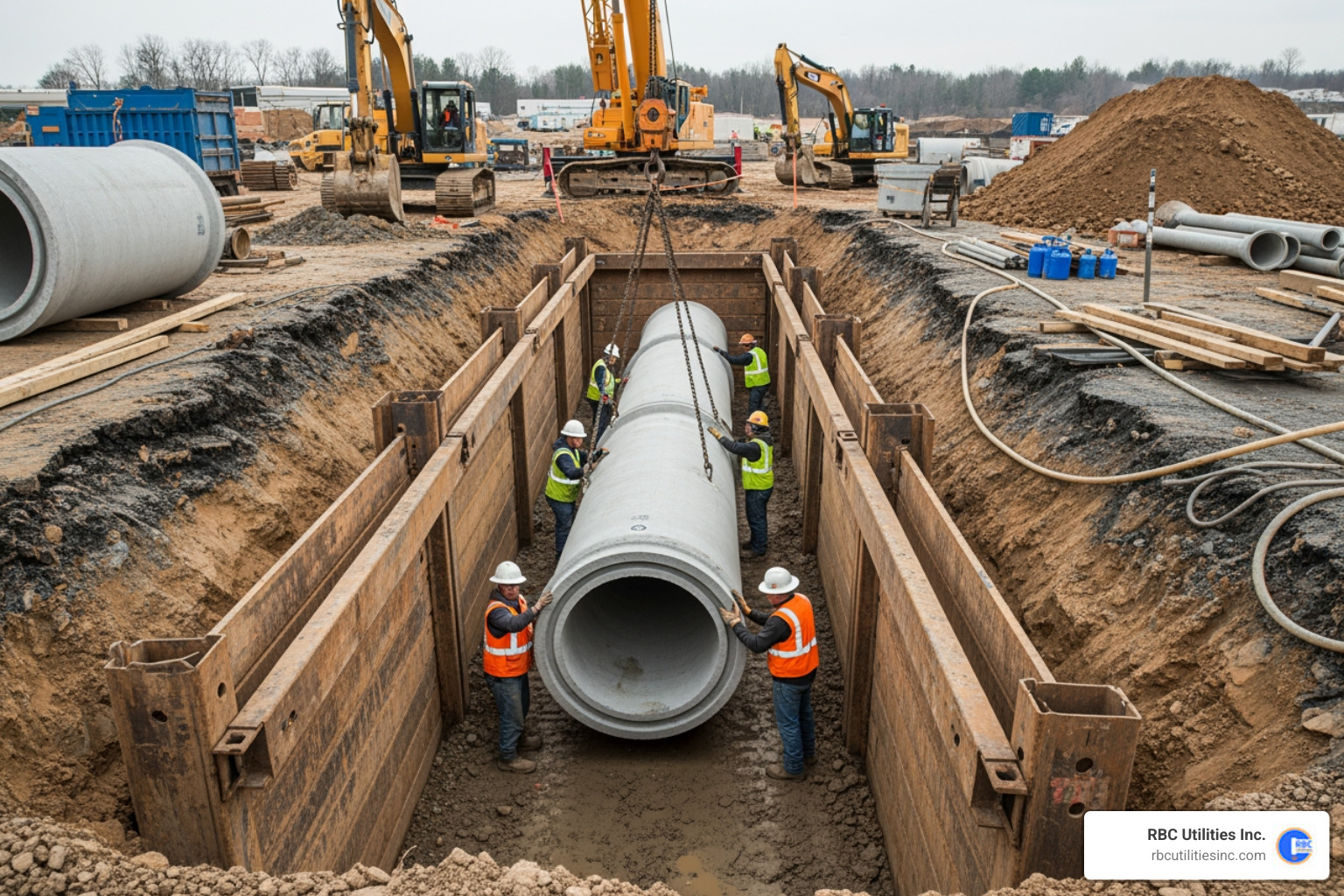
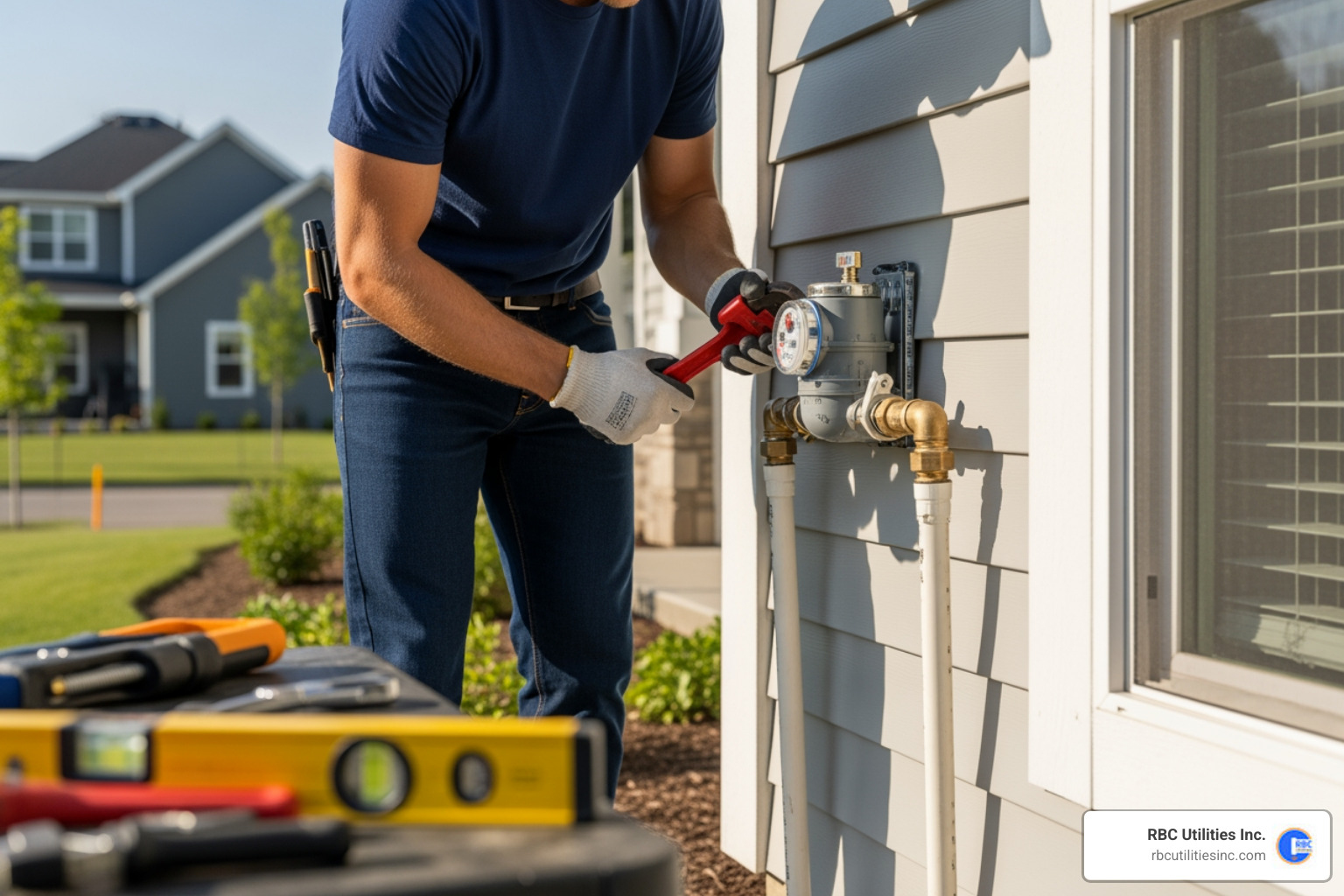
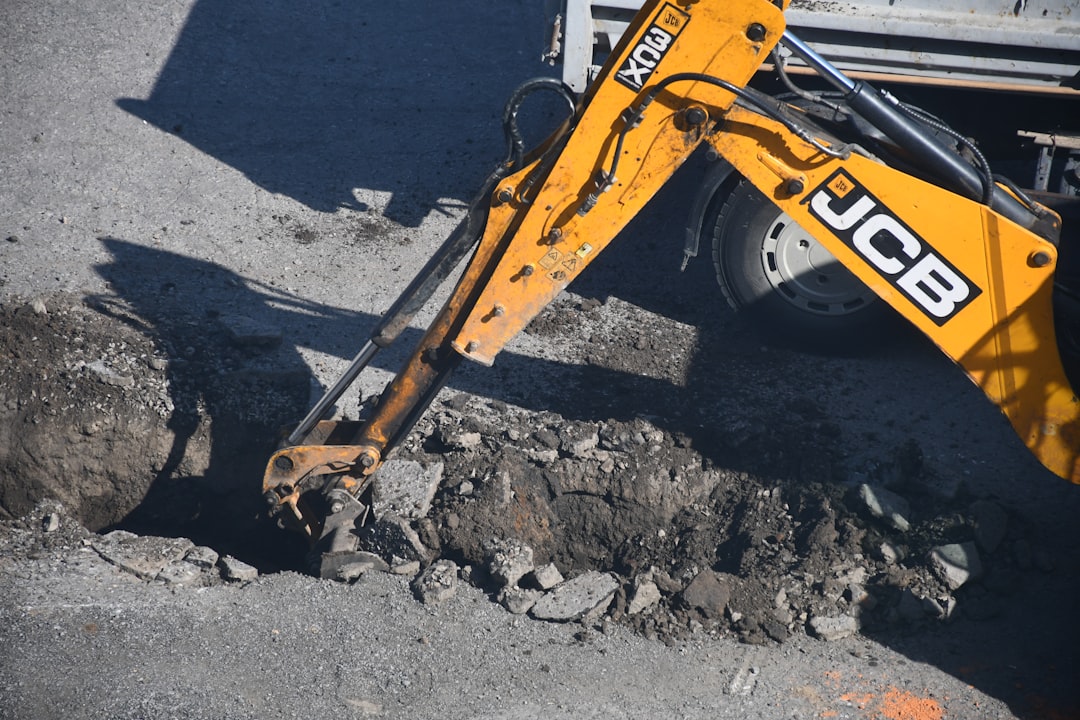
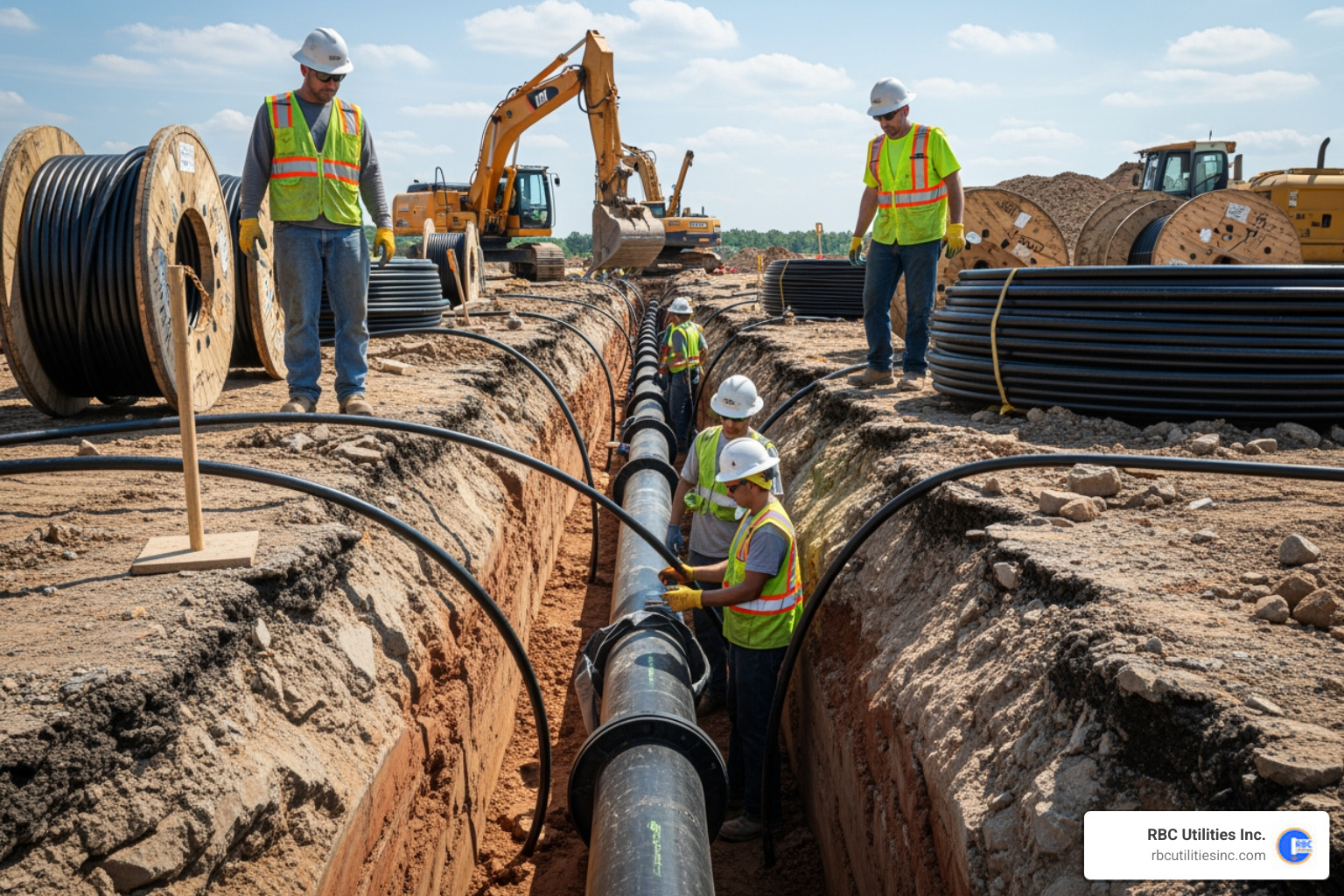
Ask any project manager what actually stalls a vertical build, and underground utilities come up more often than the framing crew or the weather. Not because the work itself is hard, but because water and sewer installation sits at the intersection of four separate schedules: the excavator, the municipality, the inspector, and every trade waiting to follow.
RBC Utilities installs water and sewer systems for developers, general contractors, and municipal partners across the Carolinas, and most of the delays the crews see trace back to sequencing decisions made weeks before anyone picked up a shovel.
For a broader look at RBC's work, review RBC Utilities services, recent RBC Utilities projects, and this guide to what makes a true utility infrastructure contractor.
SC 811 handles locate requests for South Carolina sites, and getting that request in early is one of the simplest ways to protect a schedule.
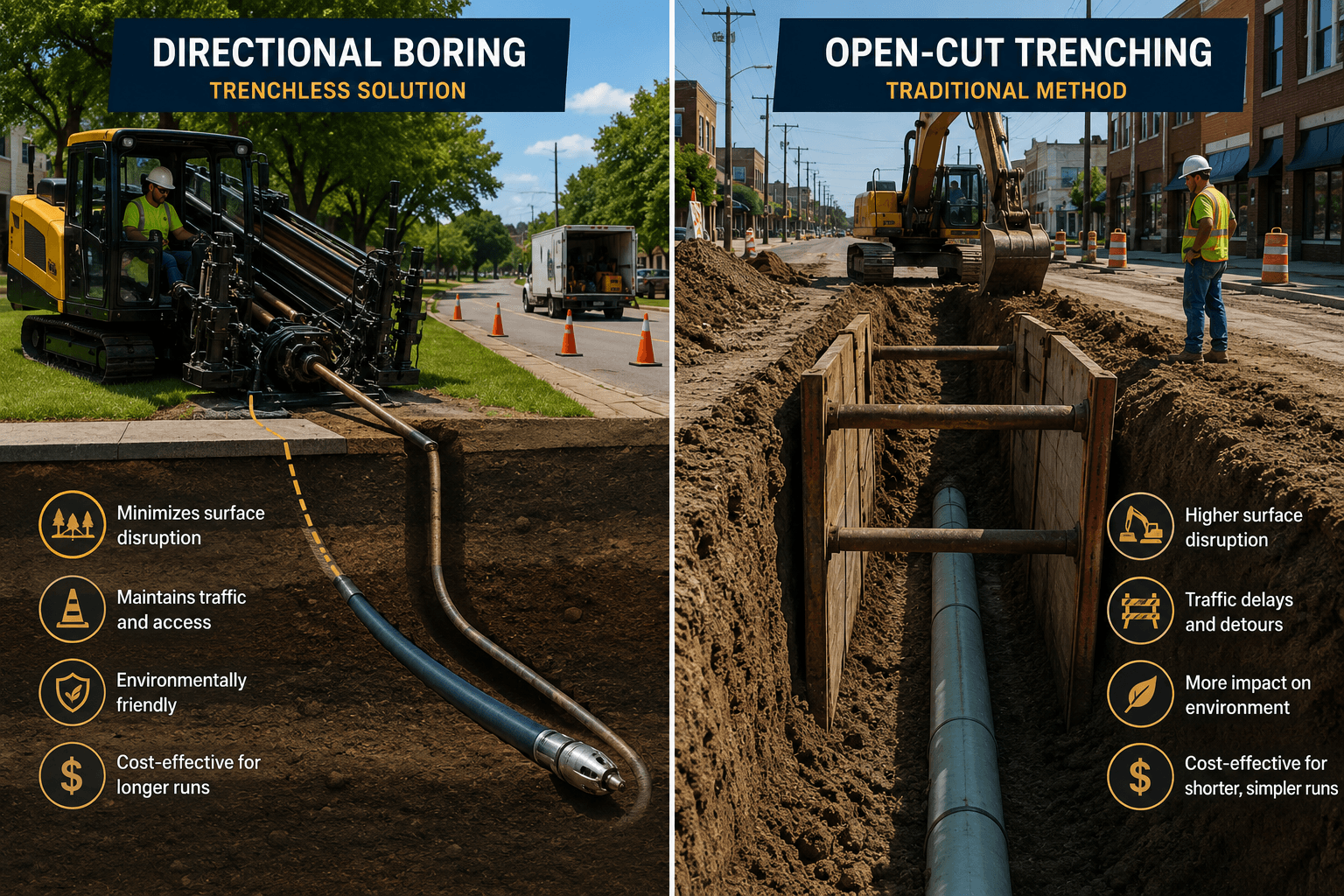
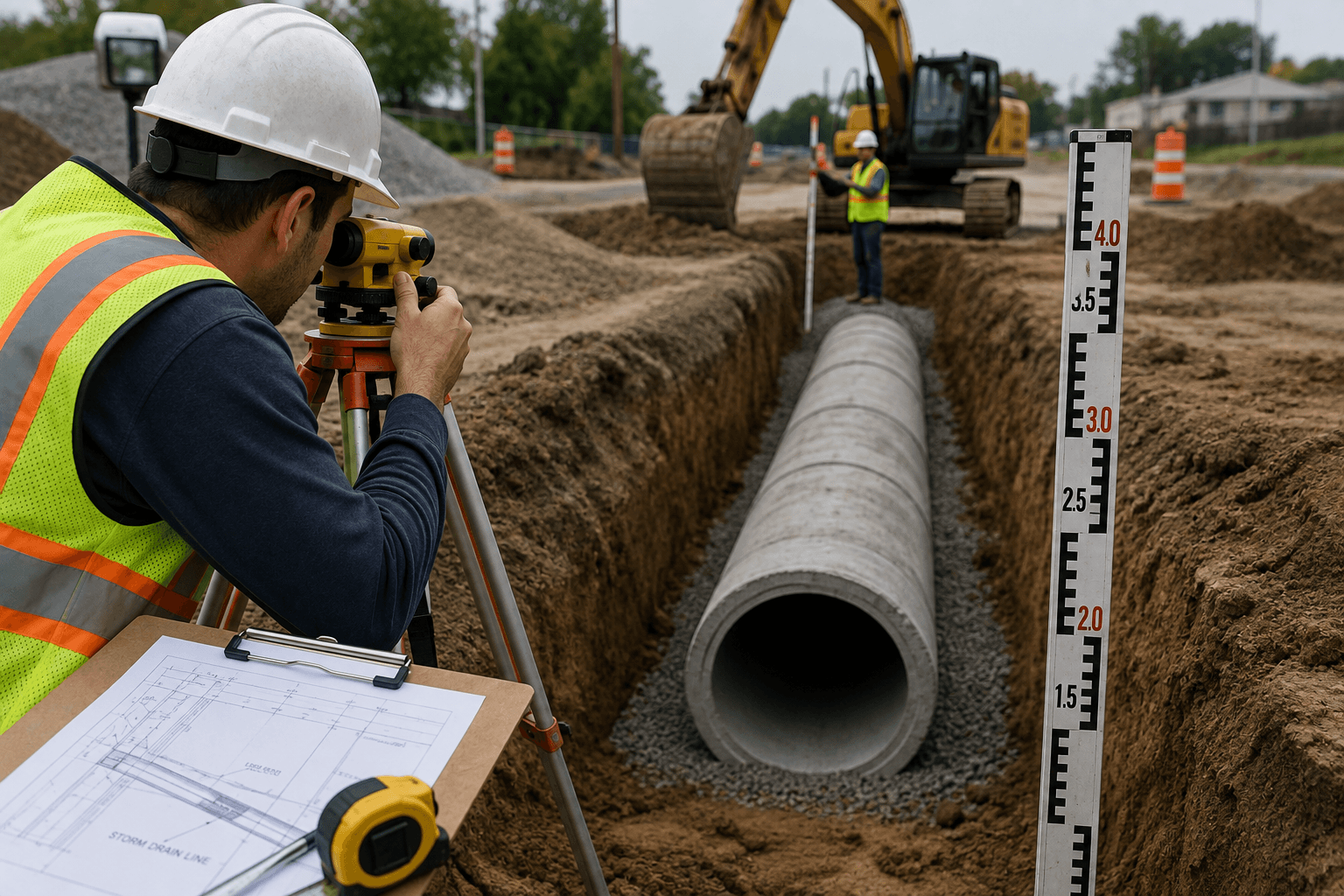
If method selection is still an open question, compare RBC's notes on directional boring vs. open-cut trenching, commercial conduit installation, and storm drain pipe installation.
More than most schedules assume, especially on sites with dense existing infrastructure. Requesting locates the moment the utility plan is set, rather than the week before mobilization, avoids the most common cause of early delay.
Sometimes, but only if the sequencing has been mapped out in advance. Running utility trenching alongside grading or paving without a shared schedule is a common way projects end up redoing finished work.
Consistent inspection results, clear documentation, and a crew that flags problems early instead of letting them surface at testing. RBC Utilities builds that discipline into every scope it installs across the Carolinas.
A water and sewer installation that stays on schedule is rarely the result of luck. It comes from sequencing decisions made before excavation starts, inspection windows treated as real milestones, and a crew that communicates problems before they become delays.
For project conversations, use the RBC Utilities contact page.
Part of Saga Infrastructure, protecting what others built and helping it grow.
Address: 4404 Stuart Andrew Blvd., Suite K, Charlotte, NC 28217
Email: info@rbcutilities.com
Phone: 803-913-9727
Service Area: North Carolina | South Carolina