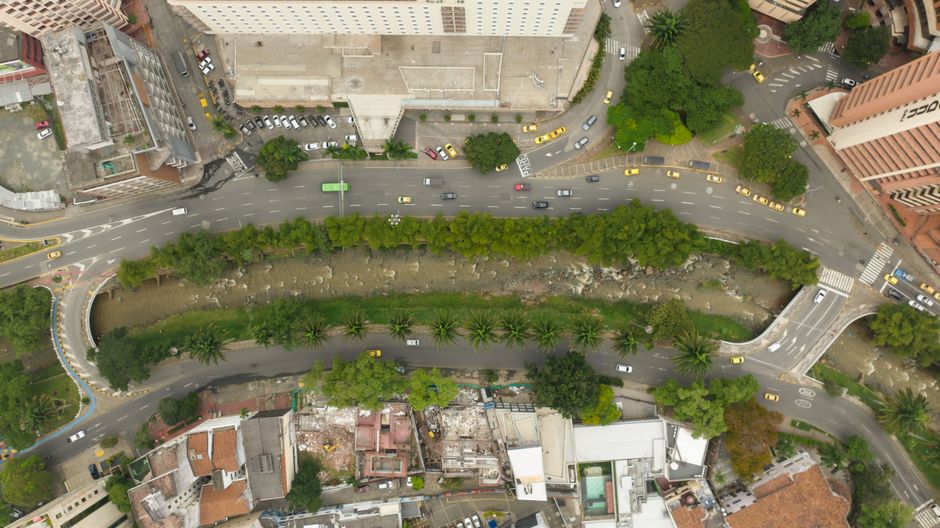
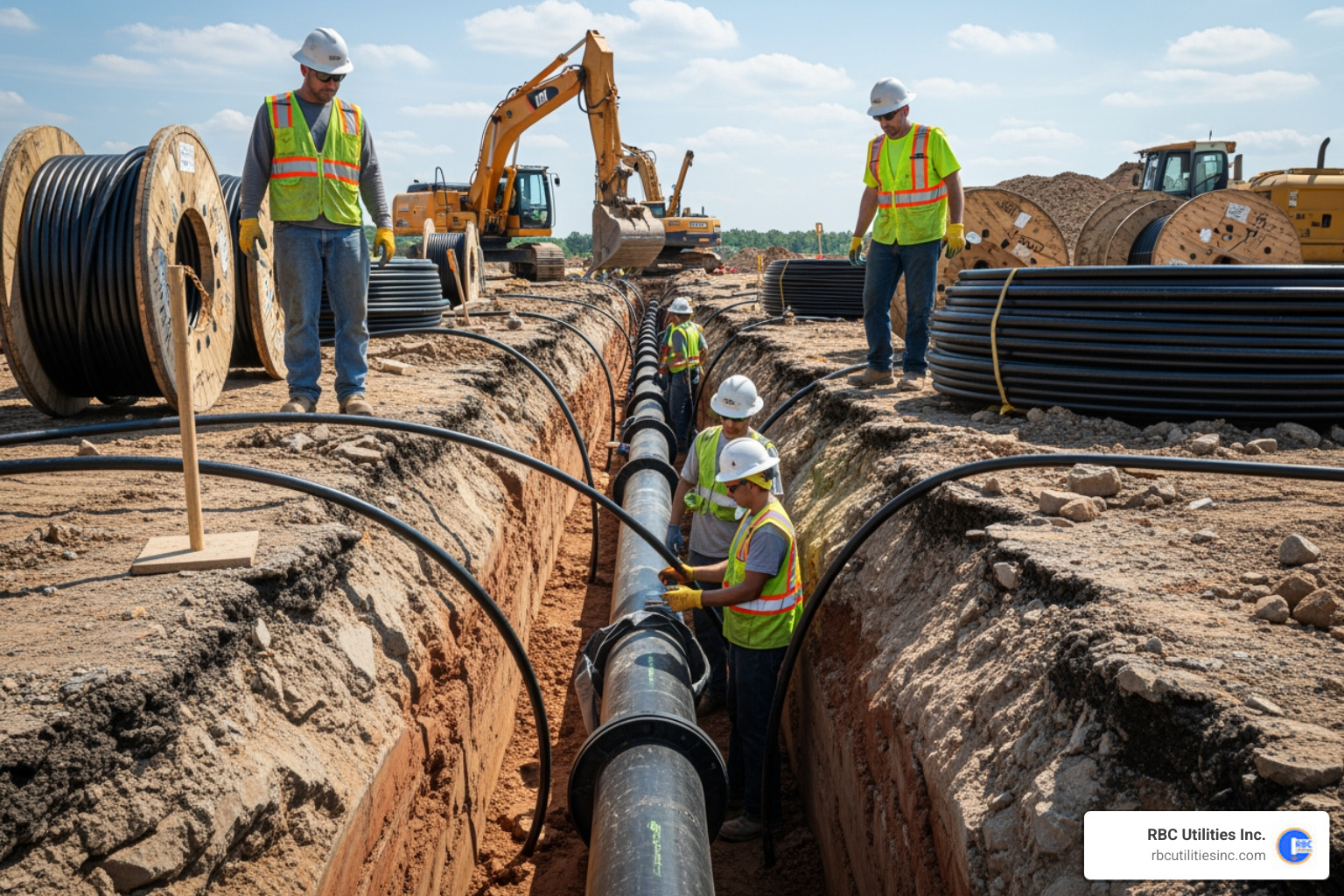
Green infrastructure examples are everywhere — from parking lots that drink up rainwater to rooftops covered in plants to restored wetlands filtering pollutants before they reach your local creek.
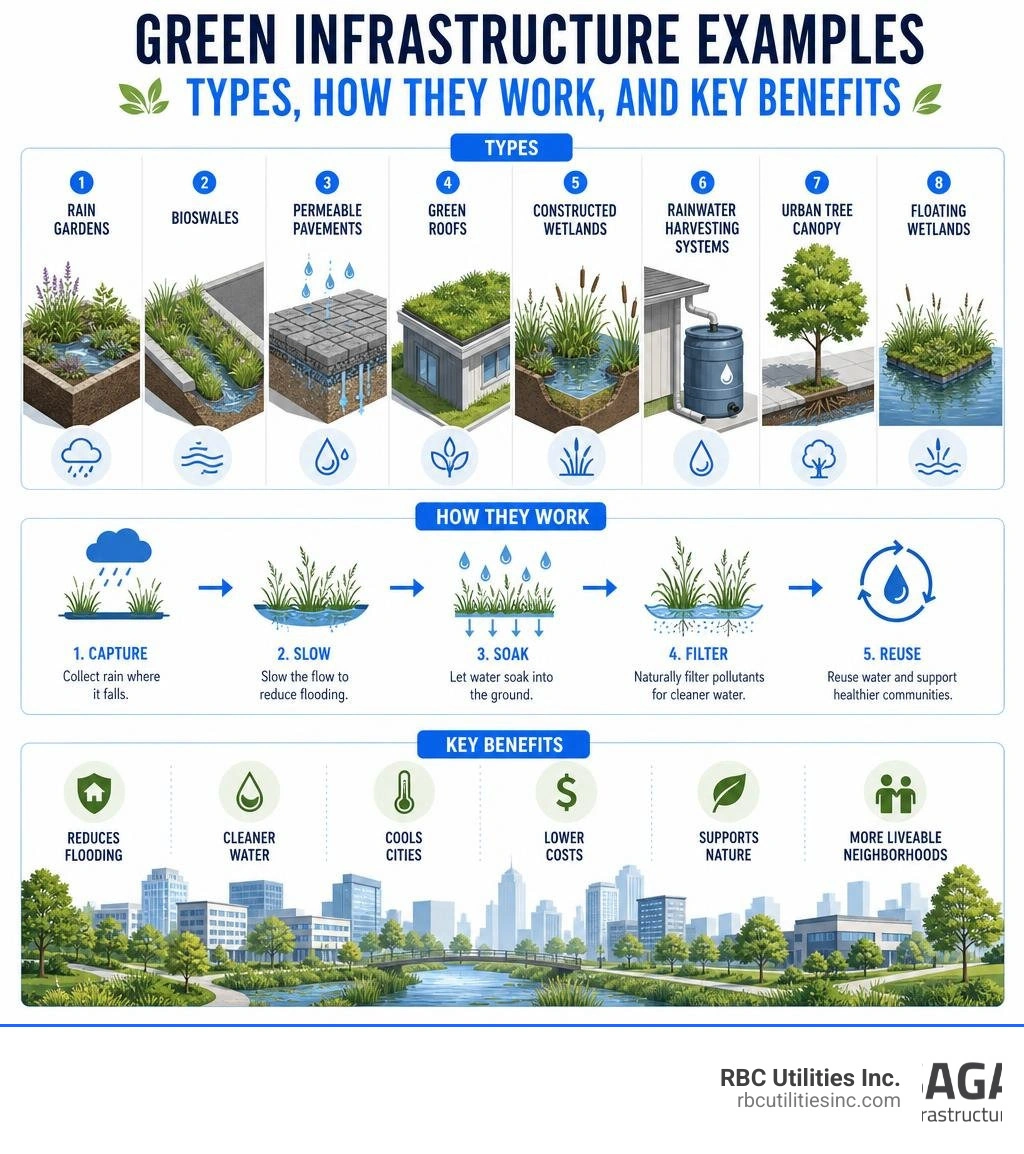
Here are the most common types you'll find in cities today:
These systems work with nature instead of against it. Rather than rushing stormwater into pipes and drains, they slow it down, soak it up, and put it to work.
Cities that have made the shift — from New York to Napa to Indianapolis — are seeing dramatic results: less flooding, cleaner water, lower infrastructure costs, and more livable neighborhoods.
And for developers and contractors in the Carolinas, understanding how these systems work isn't just useful — it's becoming essential as municipalities update their stormwater requirements.
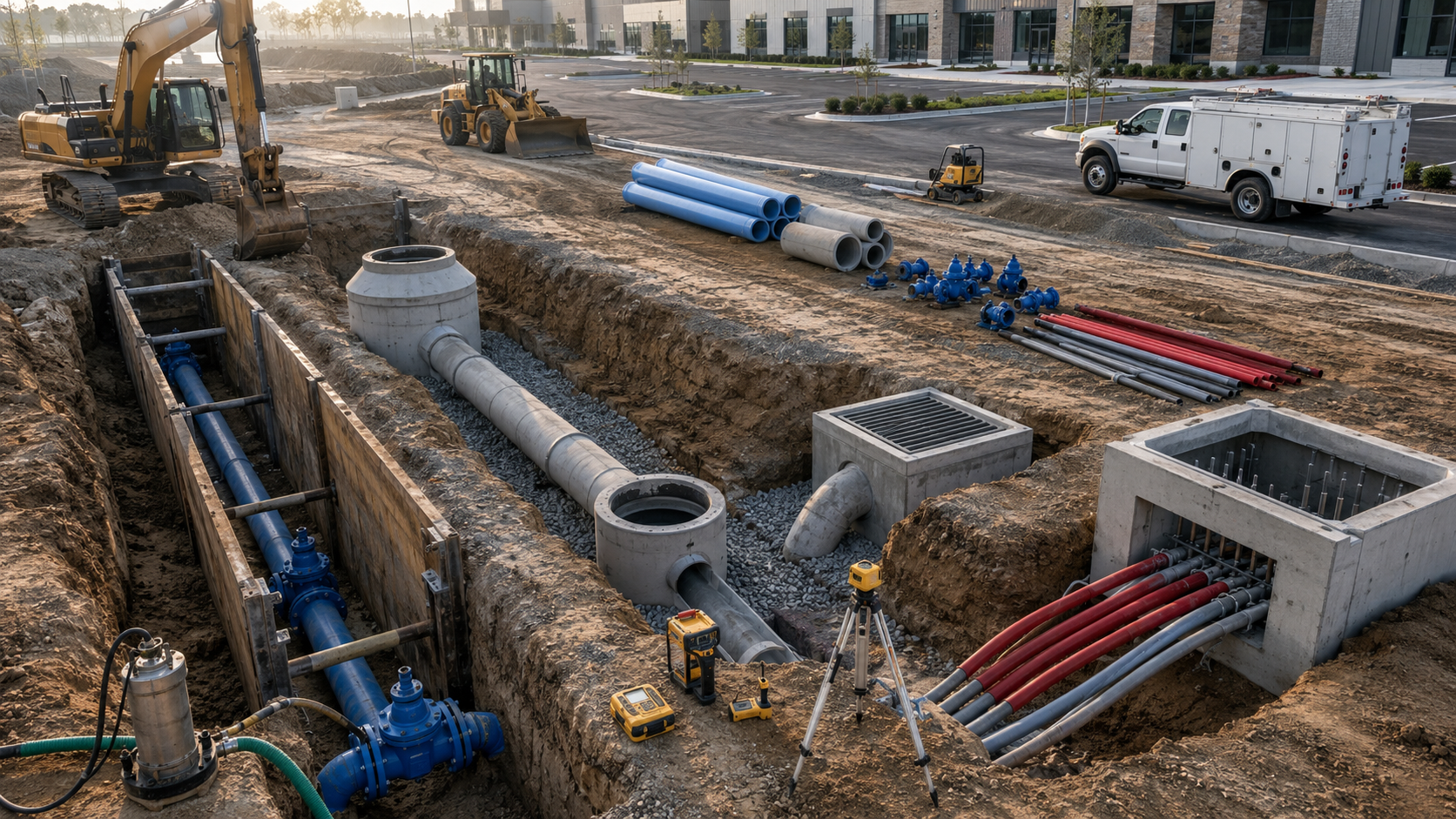
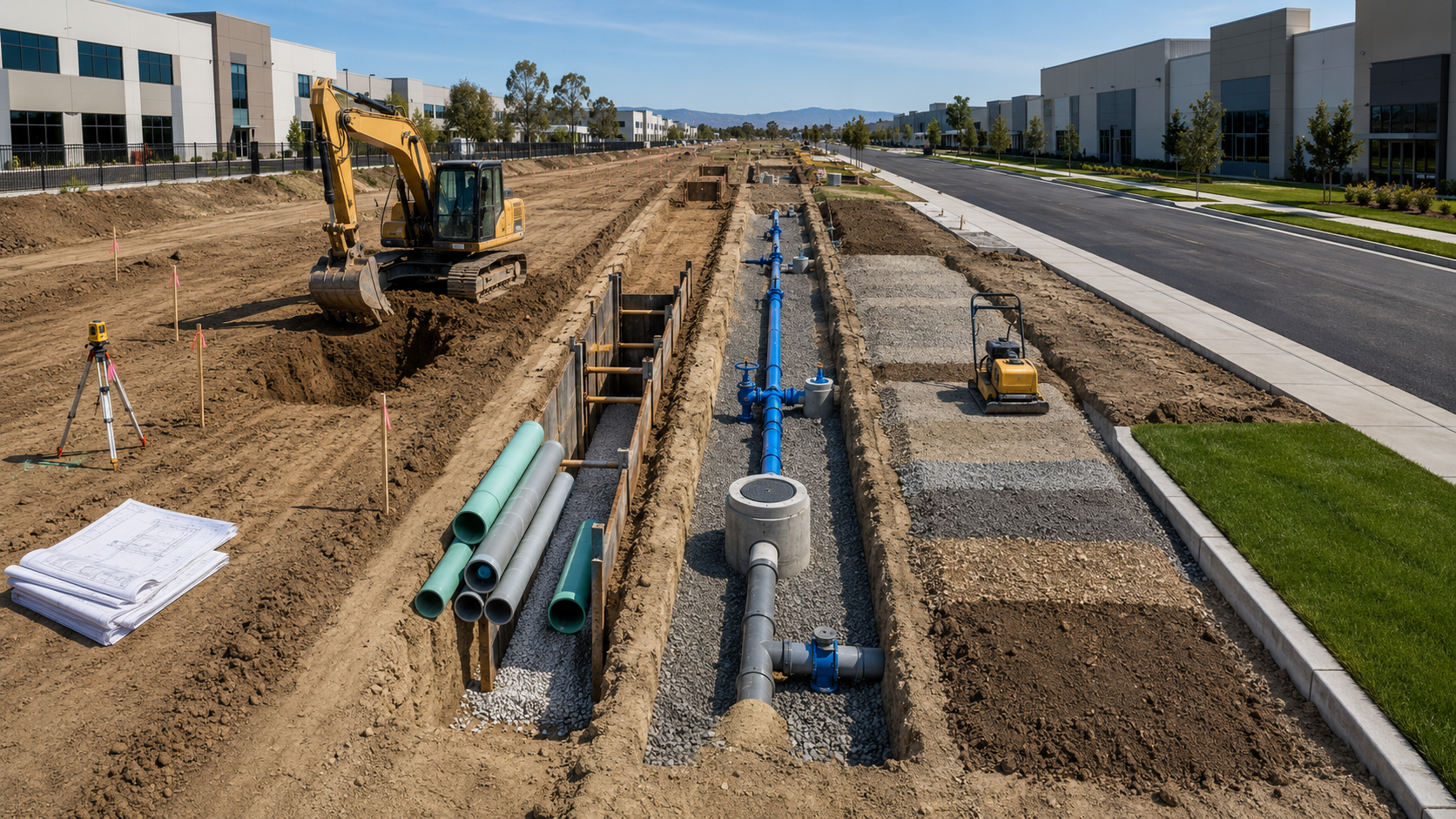
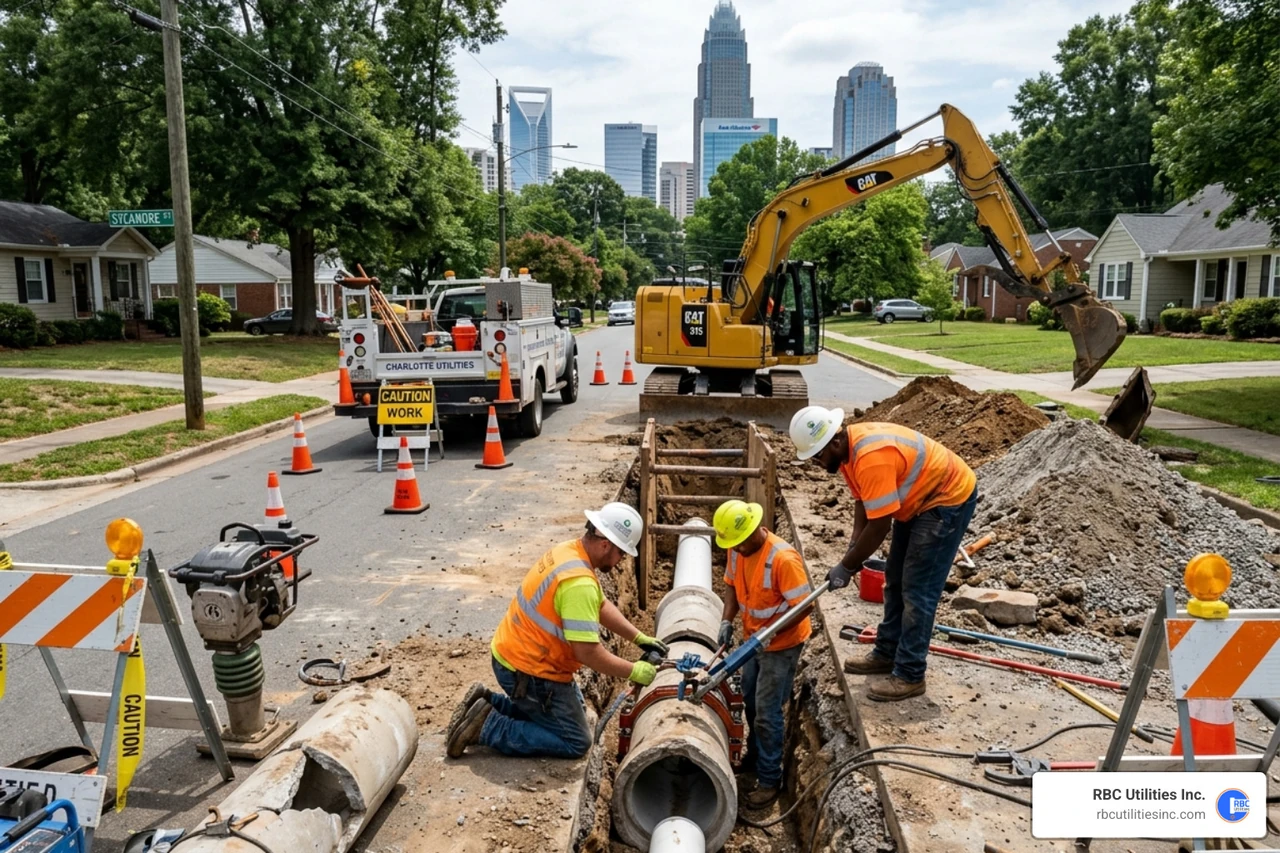
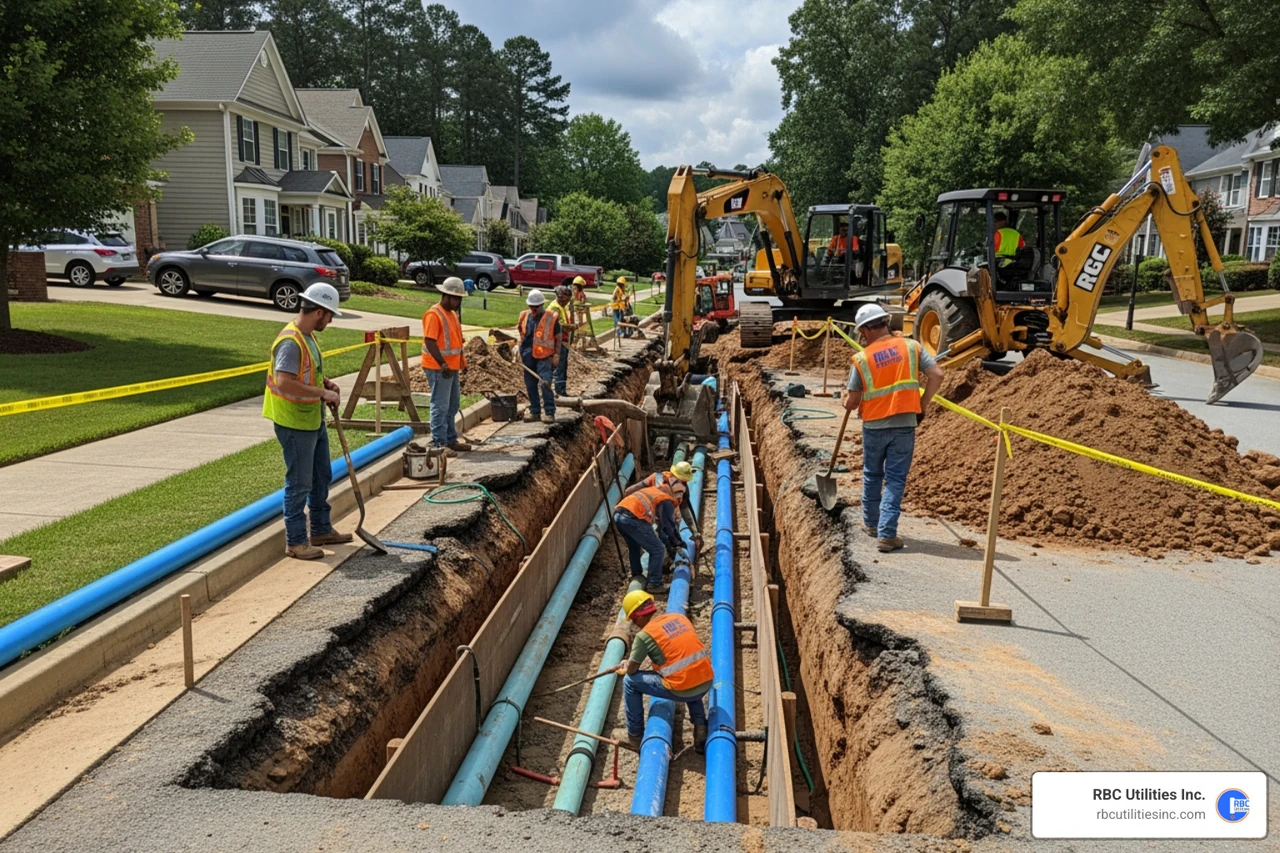
I'm Don Larsen from RBC Utilities, Inc., and our team has spent years working alongside developers and municipalities across the Carolinas on underground utility systems — including storm drainage infrastructure that increasingly needs to integrate with green infrastructure examples like bioswales, permeable pavements, and detention systems. In this guide, I'll walk you through the real-world applications, the numbers behind them, and what they mean for how we build today.
Similar topics to green infrastructure examples:
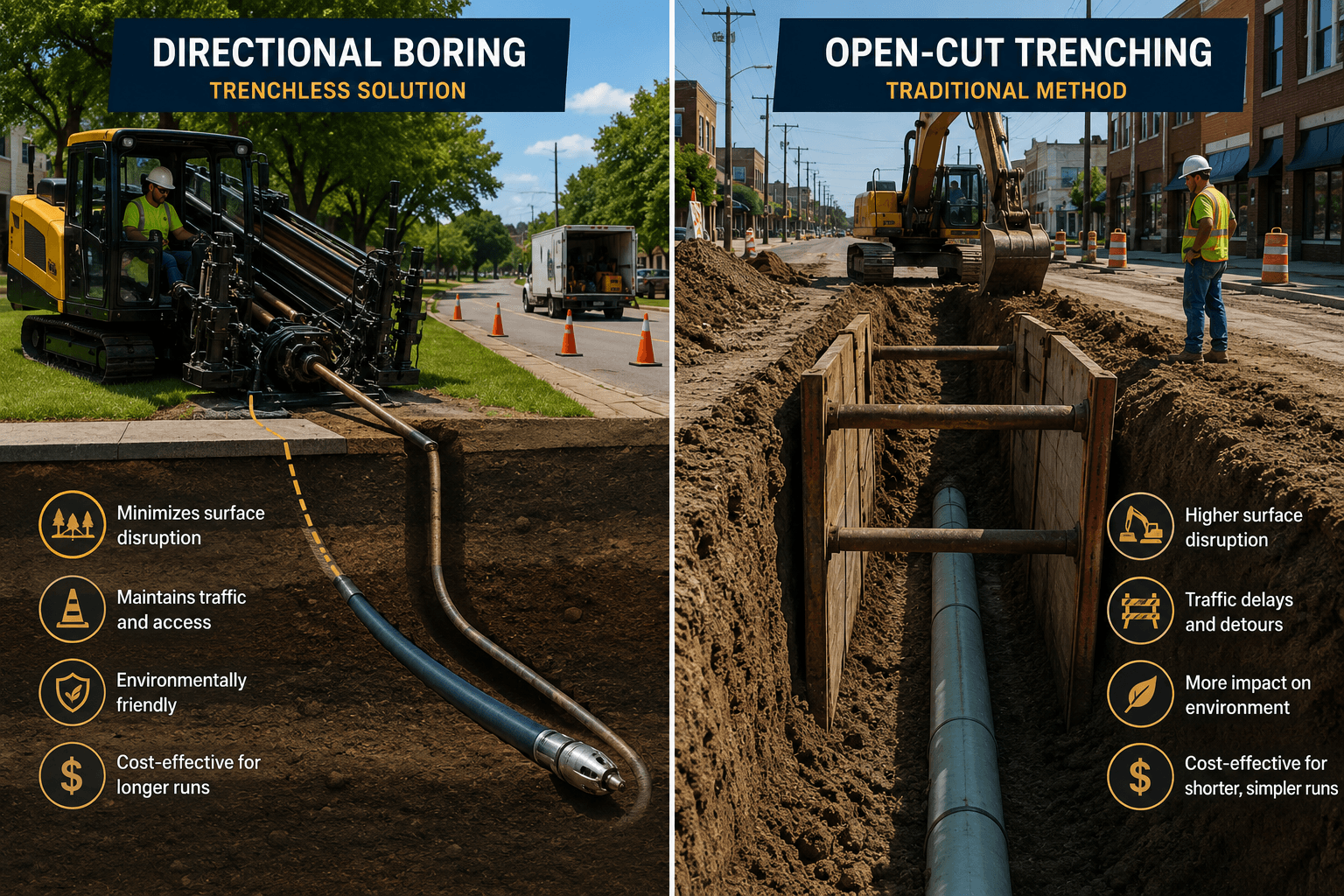
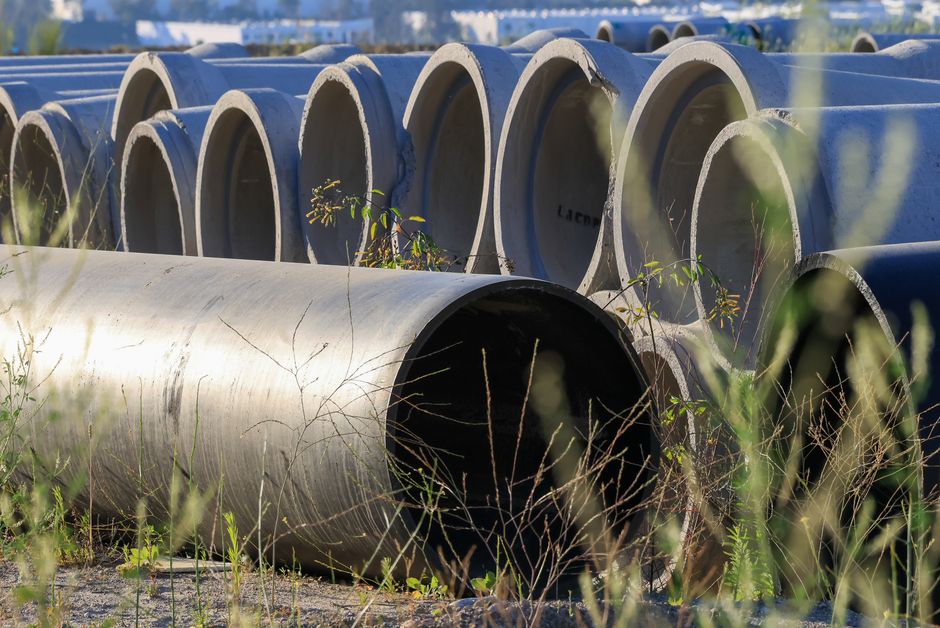
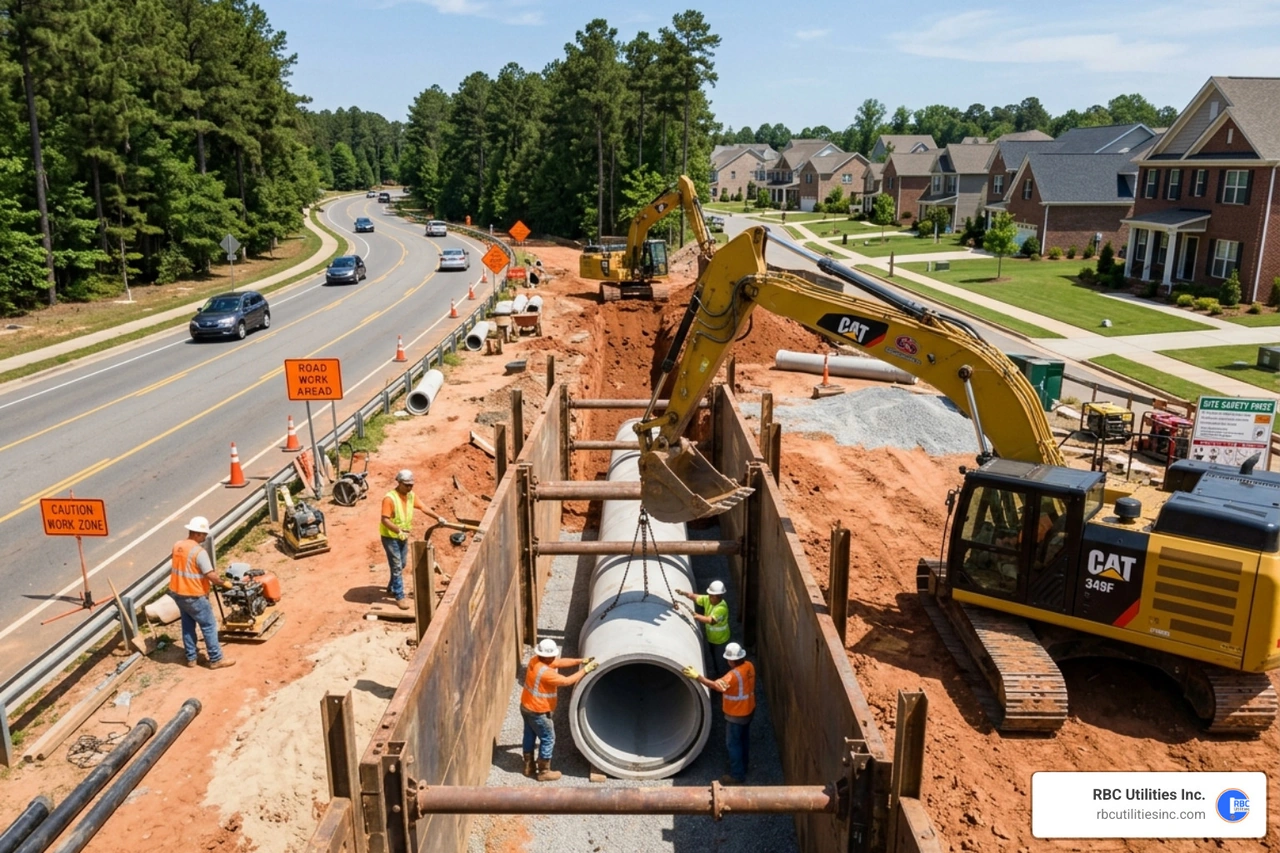
To understand why green infrastructure is such a game-changer, we have to look at what came before it. For more than a century, modern cities relied entirely on traditional "grey" infrastructure. This is the network of concrete pipes, gutters, catch basins, and underground vaults designed to do one thing: get water off our streets and out of our sight as fast as possible.
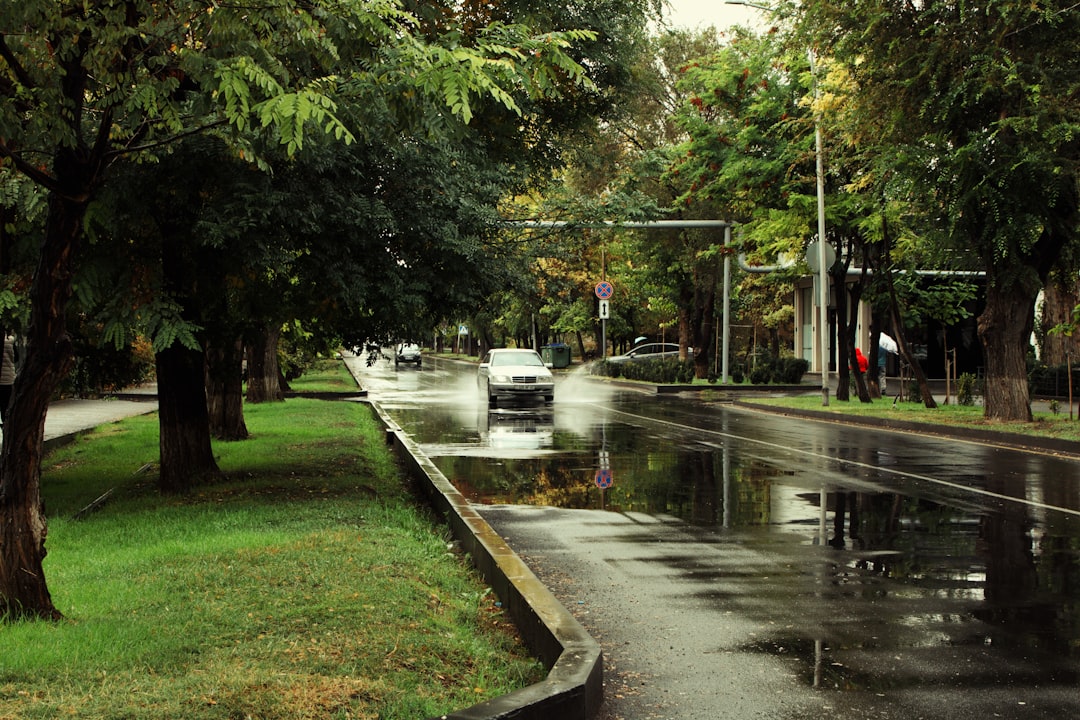
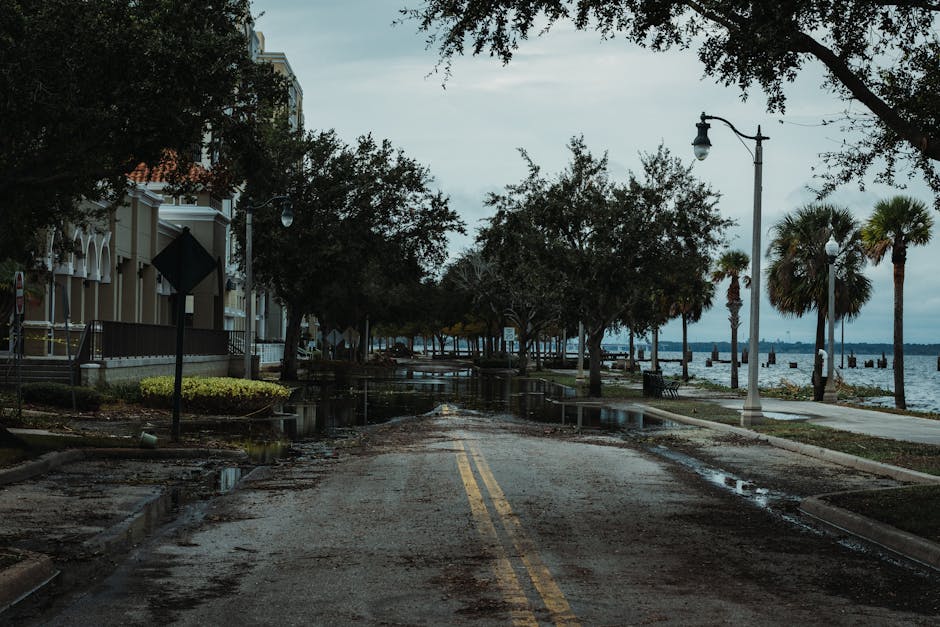
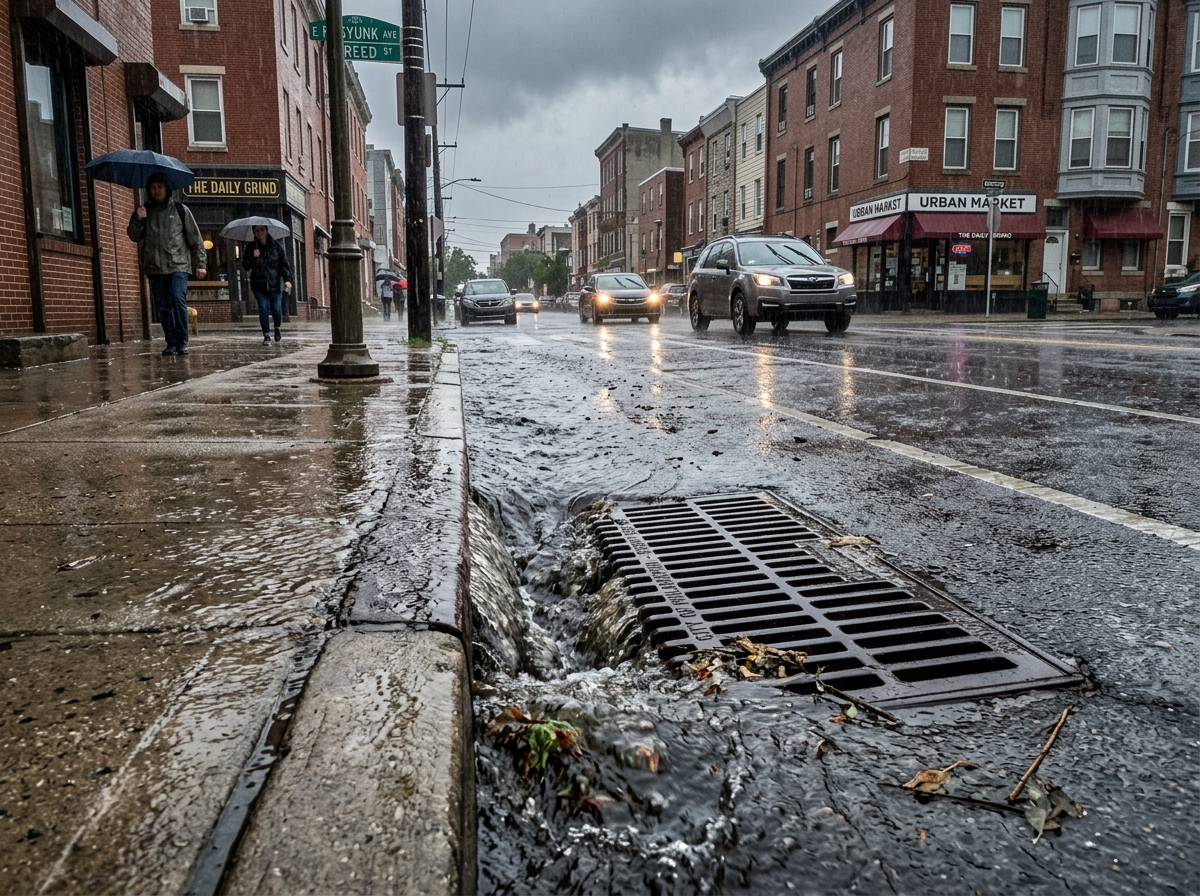
But as cities expand and replace natural, absorbing soils with asphalt and concrete, grey infrastructure is reaching its limits. During intense storms, massive volumes of urban runoff rush into our storm systems all at once. This leads to localized street flooding, sewer overflows, and heavily polluted water dumping directly into our local rivers and lakes.
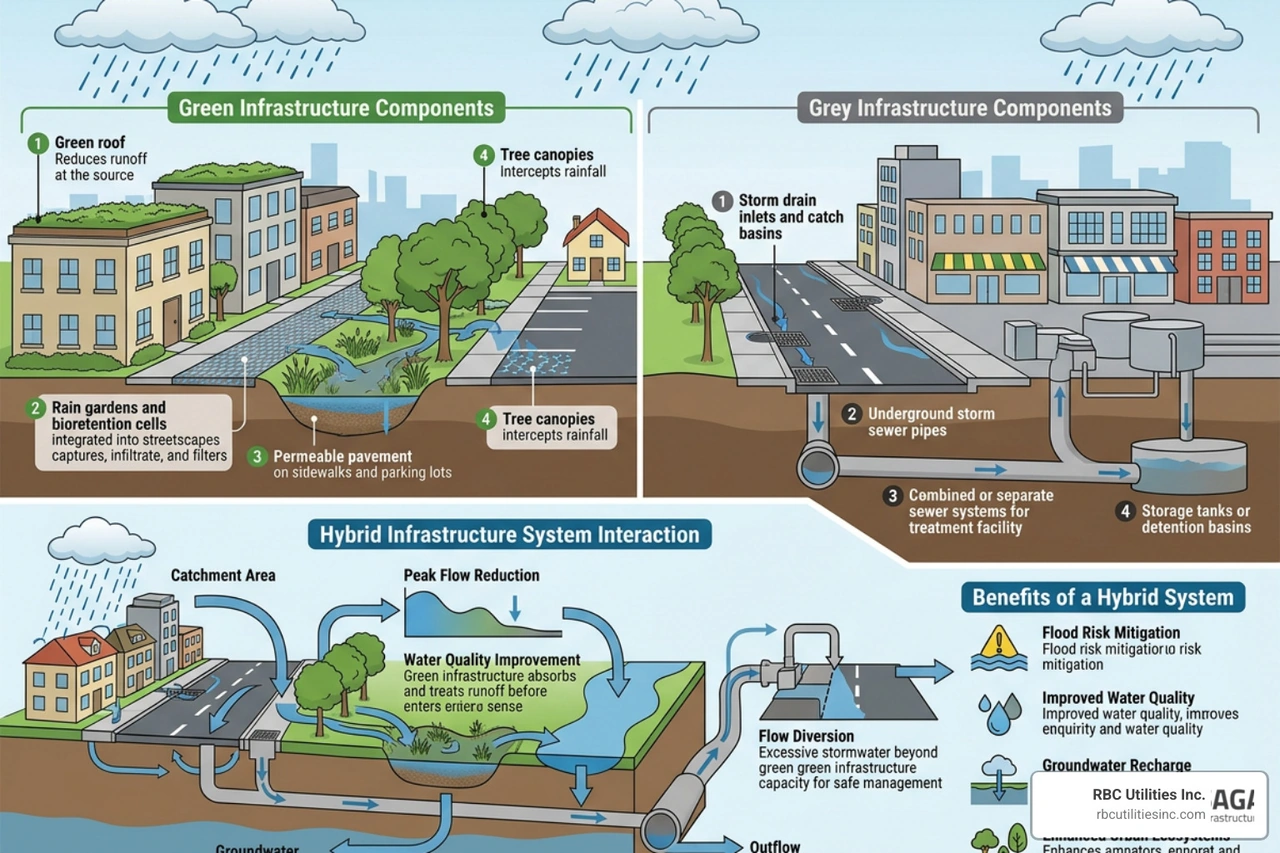
This is where green infrastructure takes a completely different approach. Instead of fighting the natural water cycle, it mimics it. By using engineered soils, native vegetation, and porous materials, green systems capture rainwater right where it falls. This allows water to naturally filter into the ground, evaporate back into the air, or slow down before entering municipal systems.
The key differences between the two systems include:
In places like Charlotte, the city manages stormwater by balancing both approaches. Local guidelines, such as those outlined by the Gray vs Green Infrastructure - City of Charlotte resources, emphasize that the future isn't about choosing one over the other. Instead, it is about integrating them.
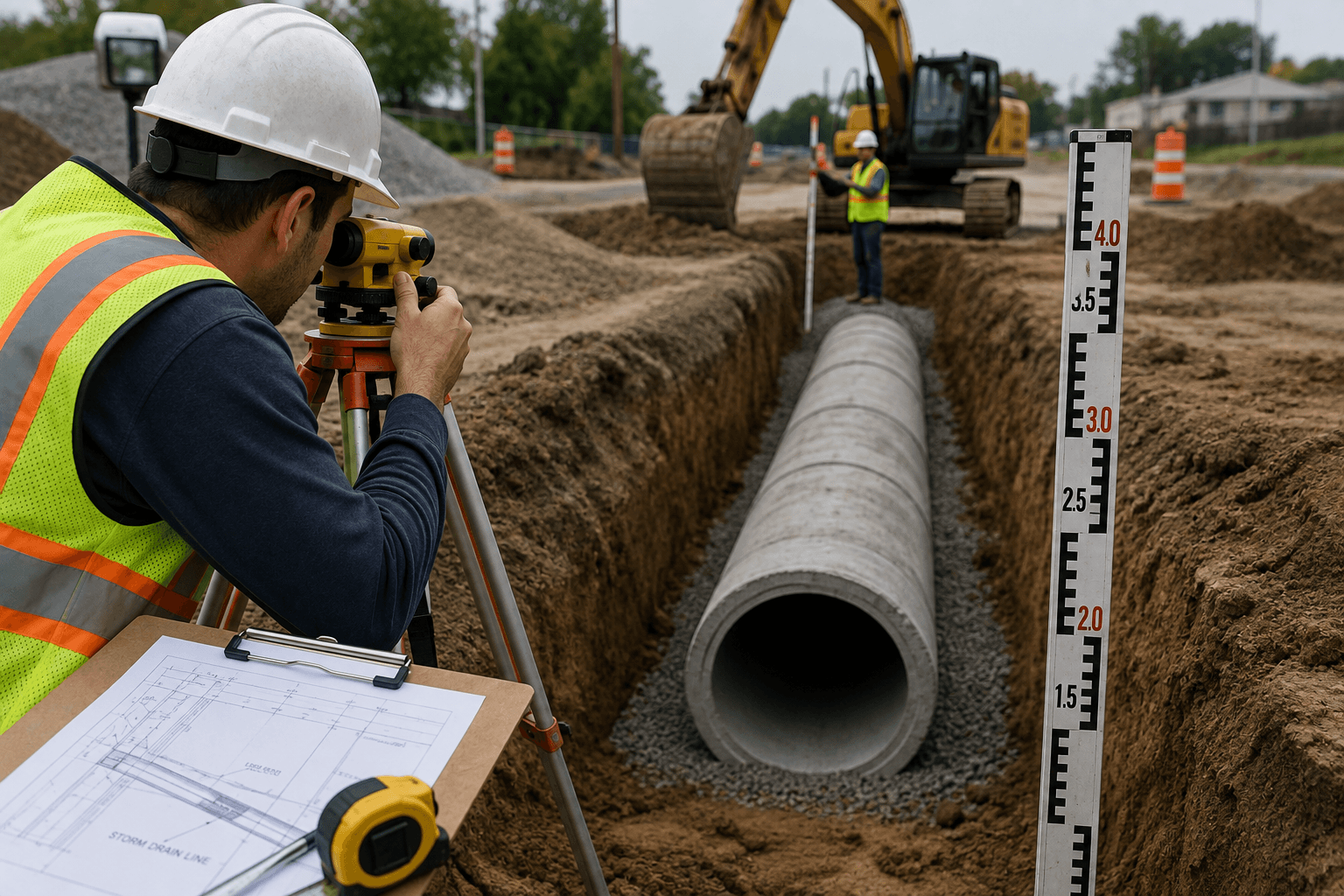
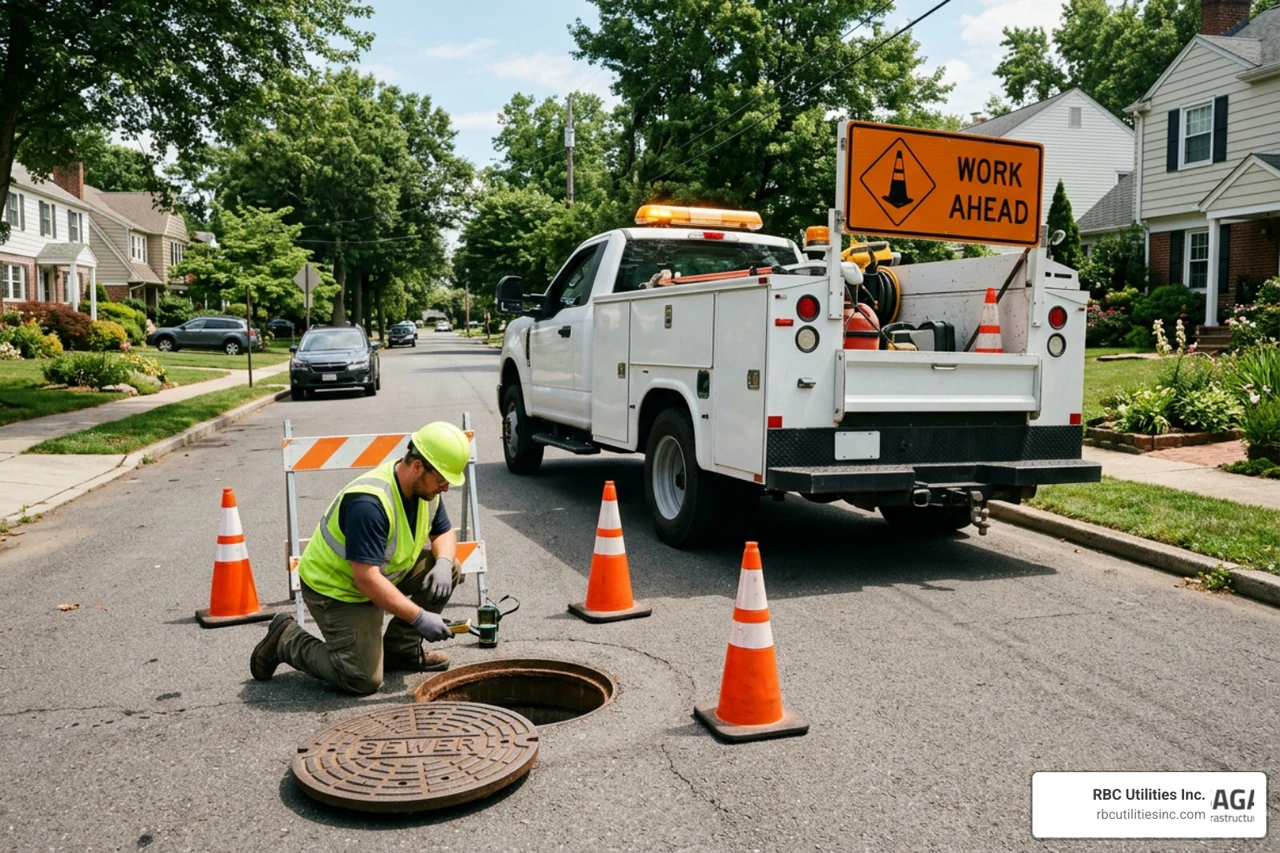
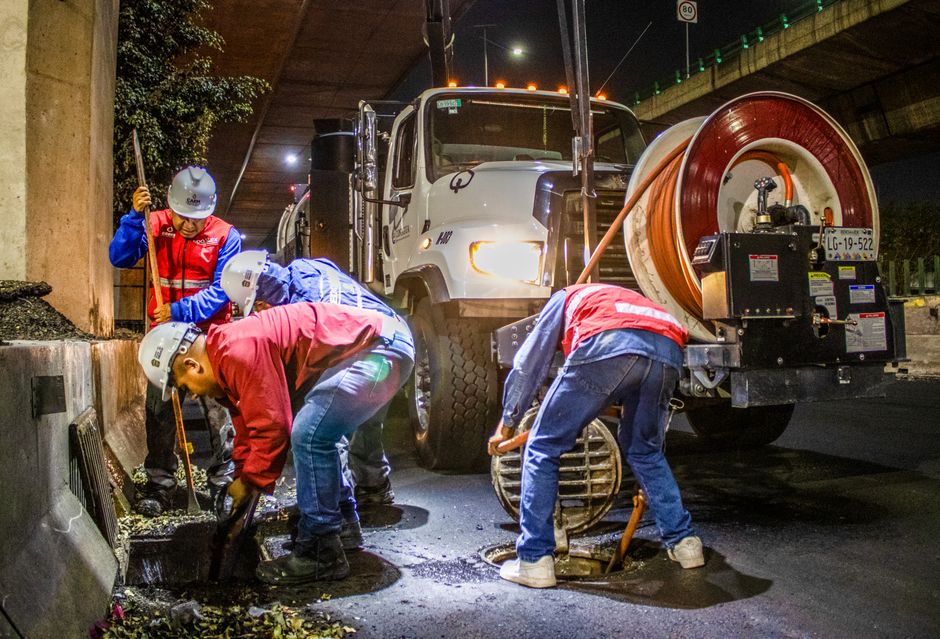
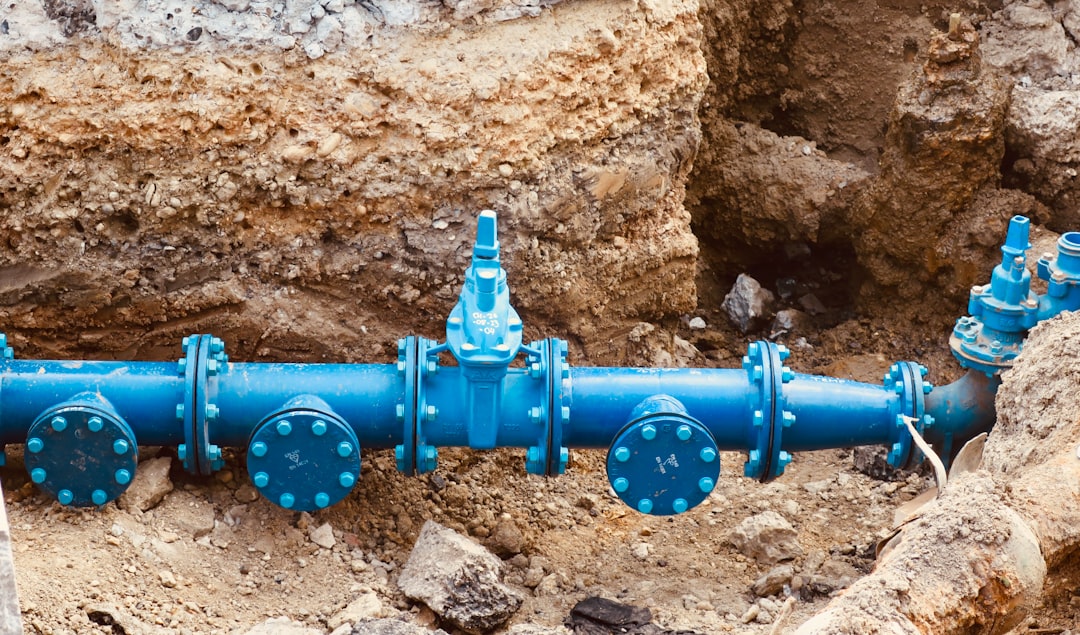
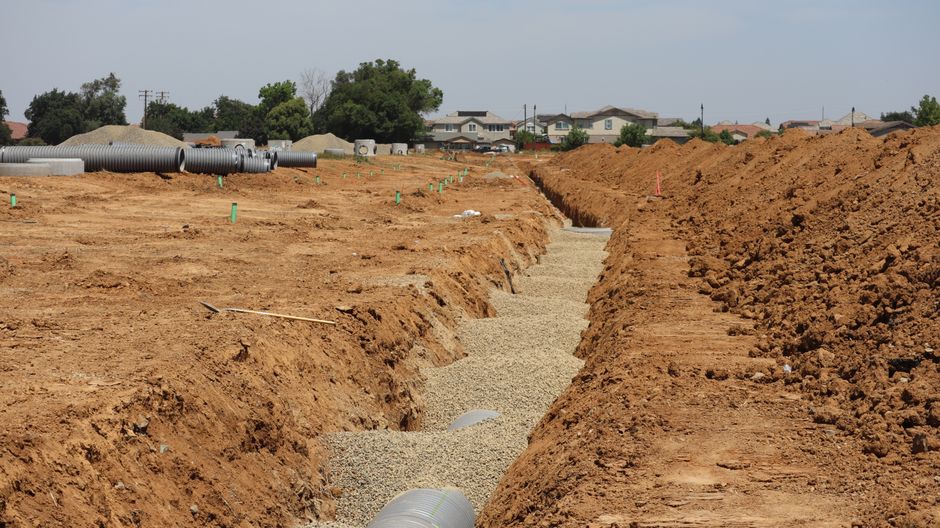
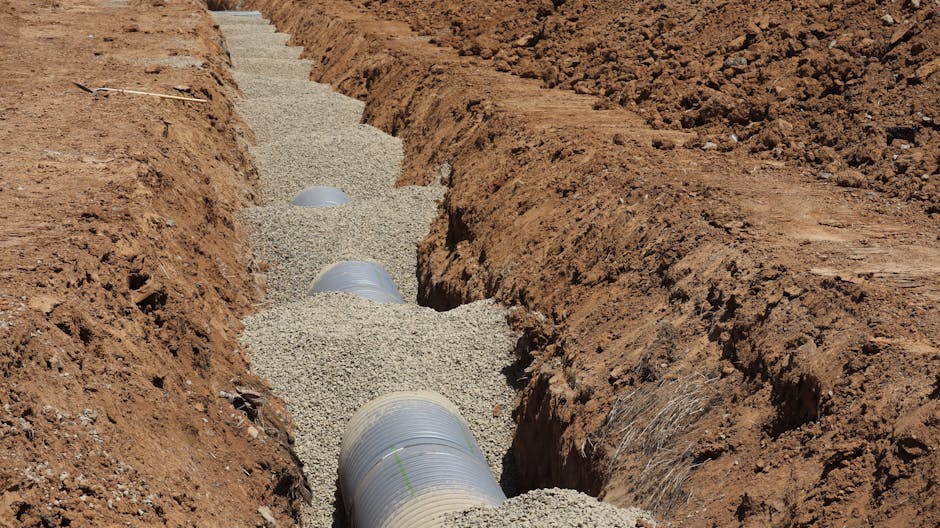
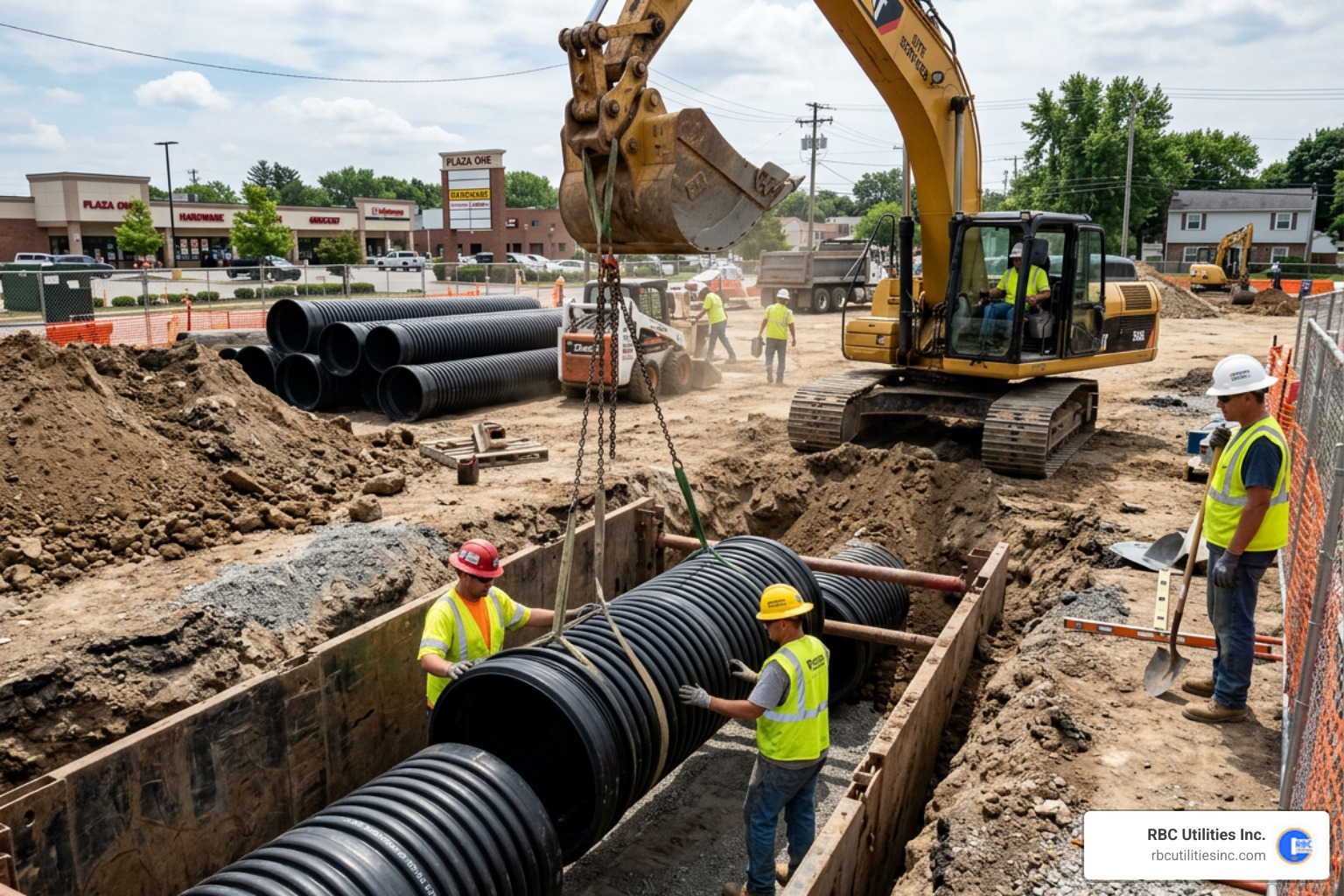
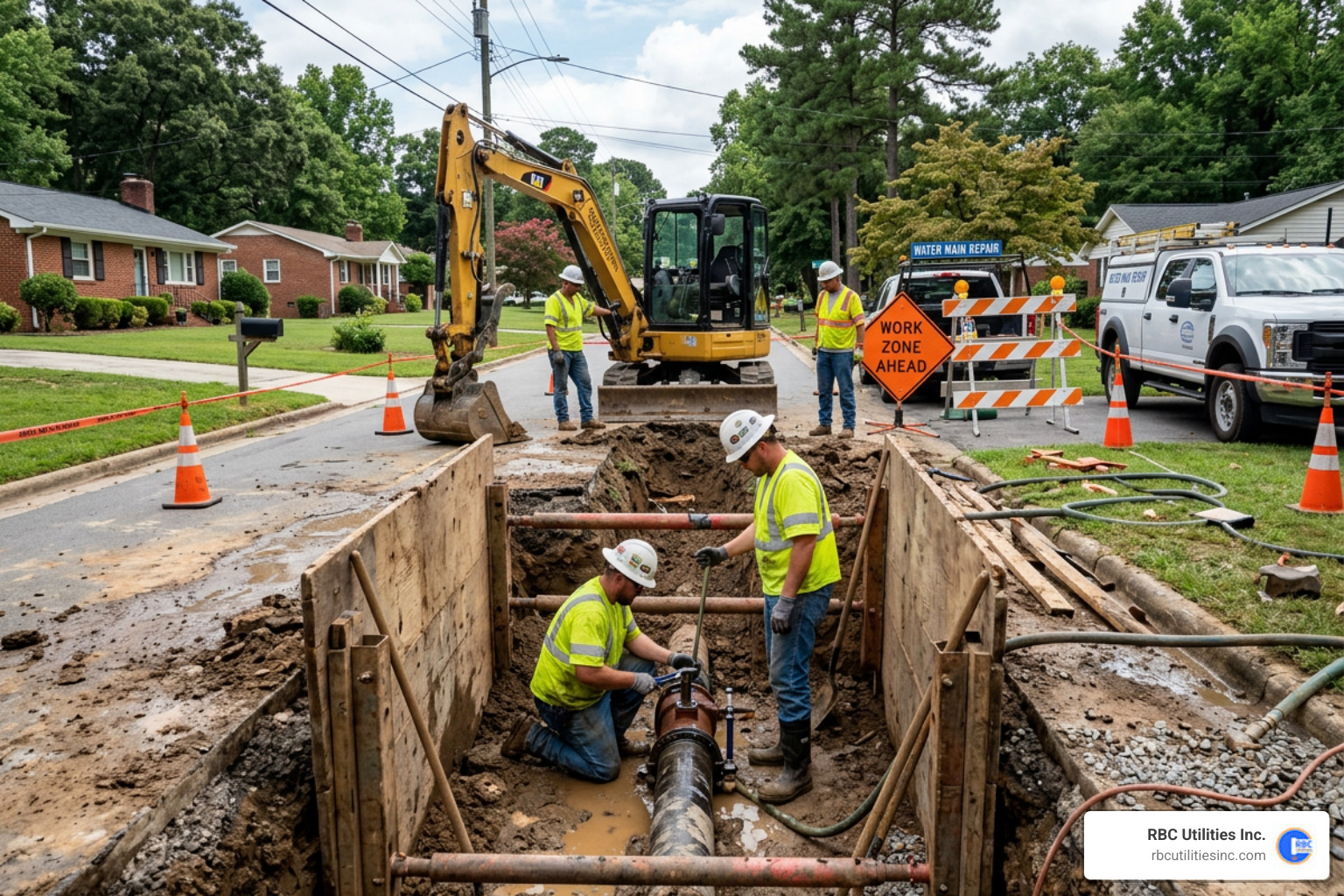
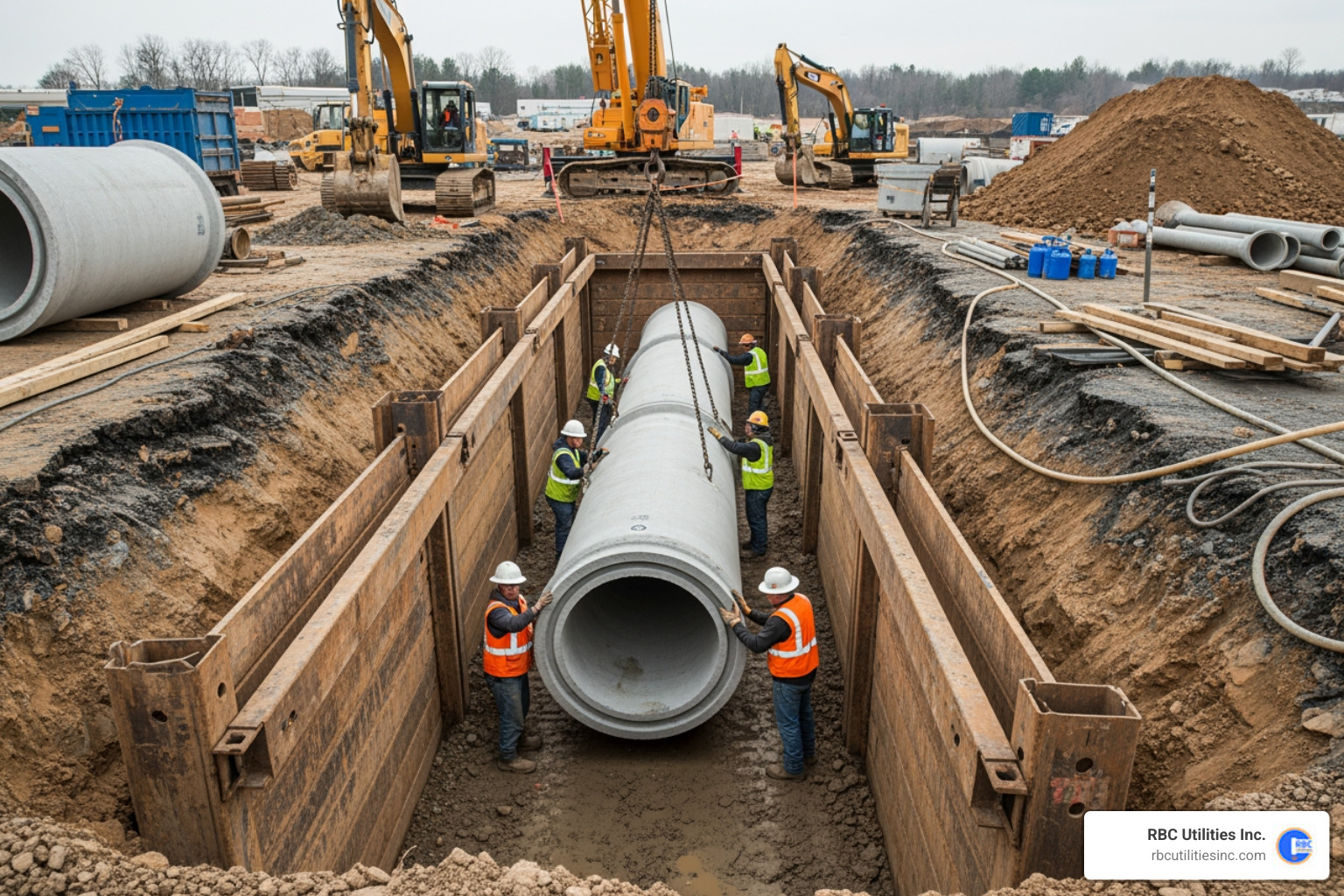
When we install underground utilities, we often connect green surface elements (like bioretention cells) directly to traditional underground systems. This hybrid approach ensures that during extreme storms, overflow water is still safely managed by heavy-duty Stormwater Infrastructure, while smaller, more frequent rain events are completely handled on-site by nature.
Seeing is believing. Across the country, forward-thinking communities are implementing creative green infrastructure examples to solve real development and environmental challenges. Let's look at how these different categories perform in actual, real-world scenarios.
Rain gardens and bioswales are the workhorses of urban stormwater management. They are designed to collect, channel, and filter runoff from highly impervious areas like parking lots, sidewalks, and streets.
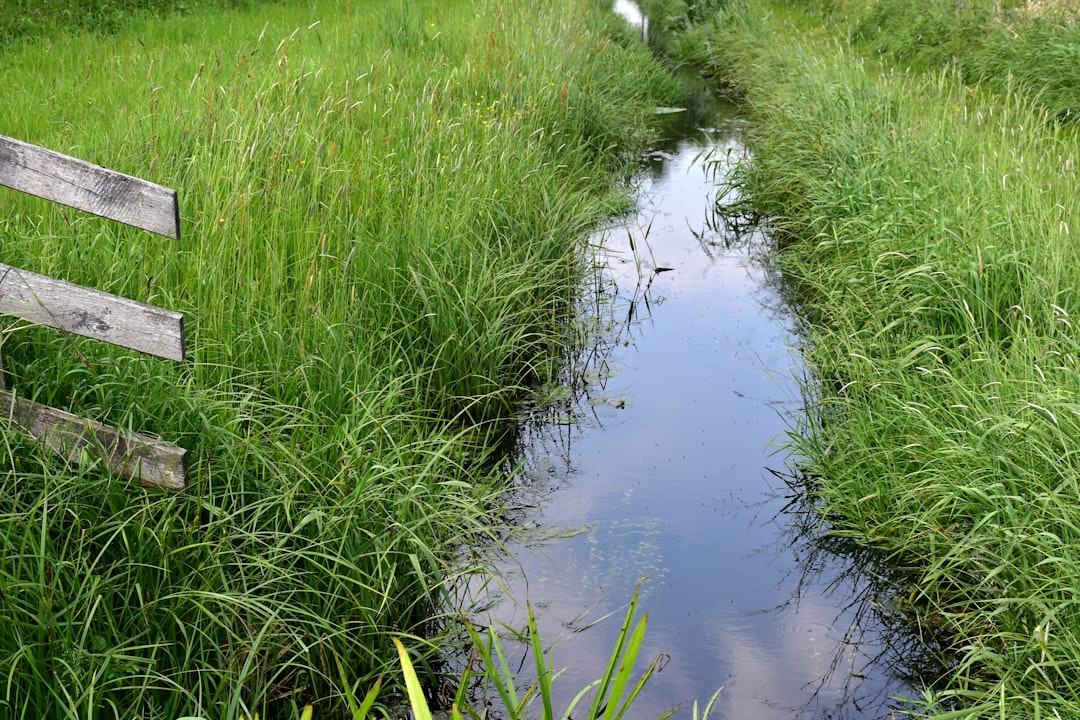
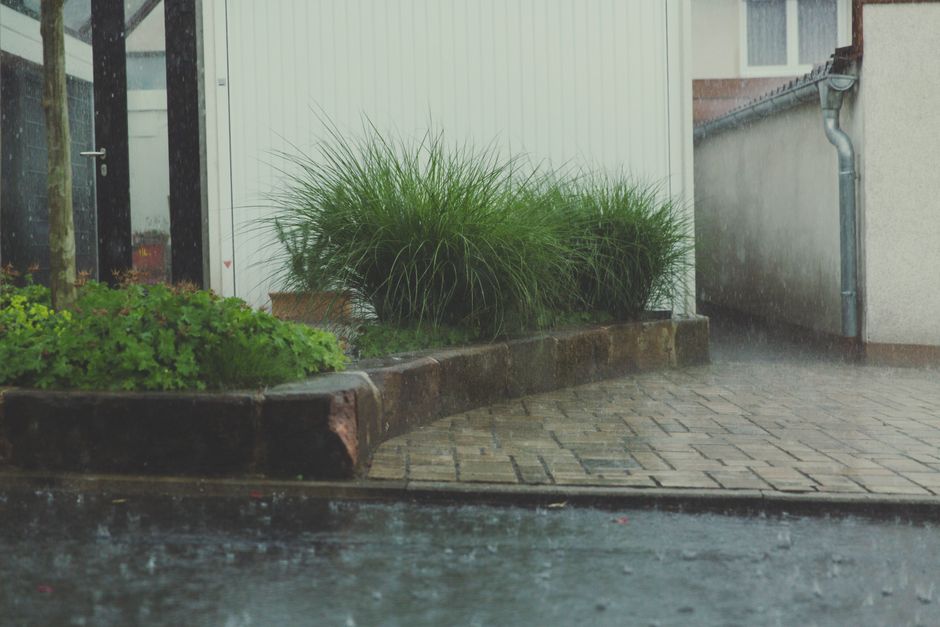
A rain garden is a shallow, vegetated basin with engineered soils that absorb stormwater from nearby hard surfaces. Bioswales are similar but are designed as gently sloped channels that move water slowly from one point to another, filtering out pollutants along the way.
A fantastic demonstration of this technology is the Baxter Bioswale - The Watershed Project . Located next to a busy community center parking lot, this highly diverse bioswale uses over 30 native plant species to filter runoff before it enters Baxter Creek.
The performance data from this project shows how incredibly effective natural filtration can be:
When you can't spare the ground space for a vegetated swale, you have to get creative with your surfaces. That is where permeable pavements and green roofs come in.
Permeable pavements allow water to seep directly through the surface into a subterranean stone storage reservoir, where it slowly infiltrates into the native soil. This eliminates standing water and reduces the need for large, unsightly surface detention ponds.
A prime example is the newly completed project at the Lake Katherine Nature Center enhances sustainability with MWRD-funded permeable parking lot | MWRD . This 45-space parking lot was rebuilt using permeable pavers, bioswales, and native trees.
The system is designed to store an estimated 120,000 gallons of stormwater every single time it rains, preventing that water from overwhelming the local sewer system.
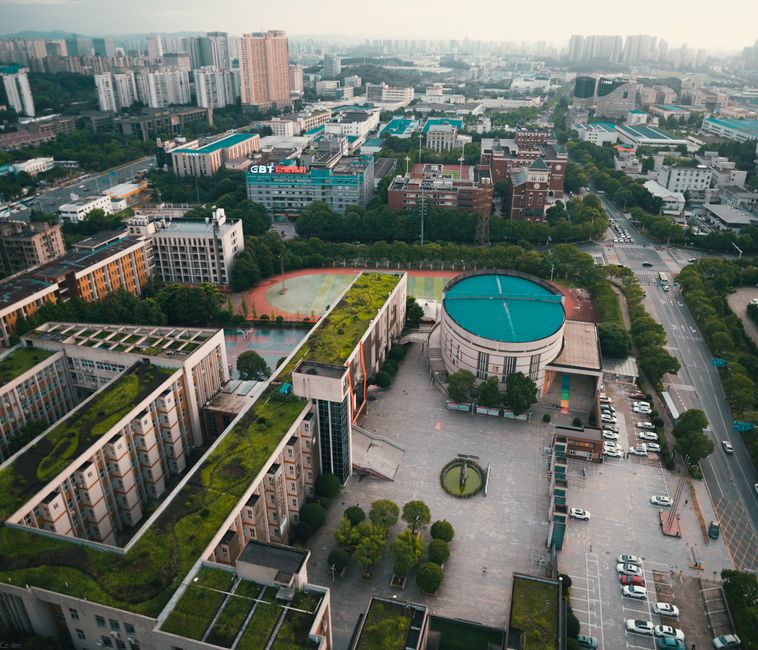
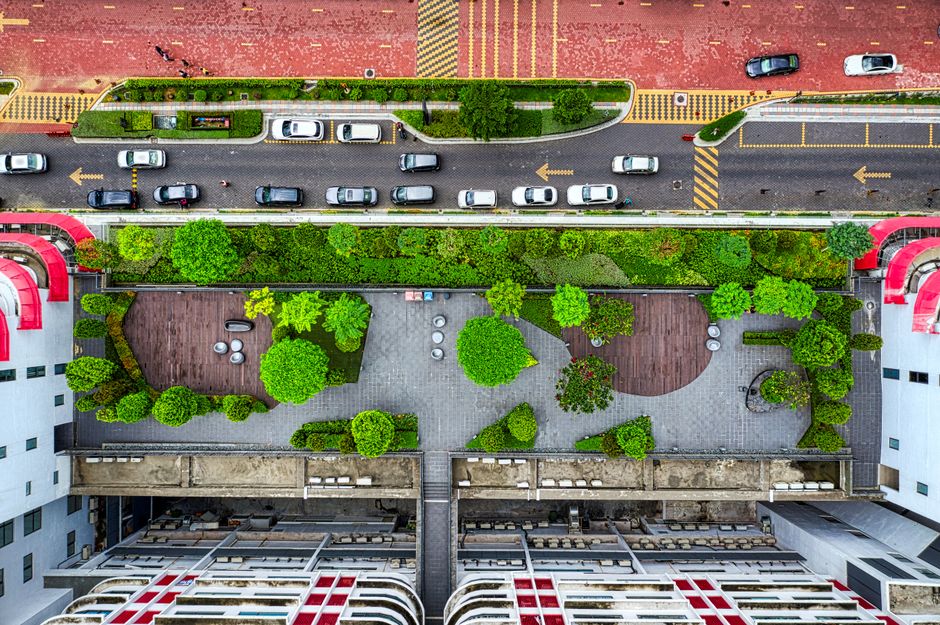
On the other end of the spectrum, green roofs bring nature to the skyline. By placing a lightweight layer of engineered soil and drought-tolerant plants (like sedum) on top of buildings, cities can absorb rain before it ever touches the ground. Green roofs also combat the "urban heat island" effect. Thermal imaging shows that vegetated roofs maintain surface temperatures of 20–30°C (68–86°F), compared to a blistering 30–40°C (86–104°F) on traditional blacktop roofs.
For larger-scale water treatment, engineered wetlands provide some of the most cost-effective and carbon-friendly solutions available today.
In Bedfordshire, UK, the Nature replaces chemicals as Anglian Water delivers groundbreaking Everton wetland scheme - Water Magazine shows how biology can replace heavy chemical treatment. To meet strict new phosphorus limits for a population of roughly 600, engineers bypassed traditional chemical dosing in favor of an 18,320-square-meter constructed wetland planted with over 110,000 native plants.
The environmental results were staggering:
But what if you are in a dense urban area where you can't buy acres of land for a wetland? You float them!
As reported by the Boston Globe, Boston's man-made wetlands float on Charles River, Fort Point Channel are proving that floating ecosystems can restore water quality in historic waterways where granite seawalls prevent traditional shoreline restoration. These floating structures, built on non-toxic flotation devices with clay and woody debris, mimic natural tidal movements, clear excess phosphorus from urban runoff, control algae blooms, and provide nesting habitats for fish and birds.
Whether it is a small rain garden in Carrboro or a massive regional wetland, green infrastructure operates on three main hydrologic principles:
By utilizing these principles, cities are saving incredible amounts of money. Take a look at these major municipal breakthroughs from around the country:
These benefits are also highly measurable at the street level. In Washington, D.C., the Kennedy Street Green Infrastructure Streetscape project was designed to tackle severe combined sewer overflows. By installing permeable parking lanes, bioretention curb extensions, and underground leaching drywells, the project added 60,000 gallons of storage capacity.
According to a study by the Optimizing and Evaluating the Performance of Green Infrastructure in a Washington DC Streetscape - Boston Society of Civil Engineers Section , the results exceeded all expectations. On average, wet weather flow volumes in the 16-acre drainage area were reduced by 72% after construction. During a typical 1.5-inch rain event, runoff volume plummeted from 0.68 million gallons down to just 0.05 million gallons.
For local leaders looking to build similar resilience here at home, resources like the Environmental Finance Center's guide on Resilient Roots: Cultivating Green Infrastructure for a Sustainable ... show how these investments create jobs, improve public health, and protect property values over the long term.
Despite the clear benefits, implementing green infrastructure examples in the real world isn't always a walk in the park. It requires careful planning, specialized knowledge, and deep collaboration between surface designers and underground utility contractors.
The primary barriers to green infrastructure adoption include:
In the Carolinas, we are making great strides in solving these issues. The SC Green Infrastructure Plan 2023 and the GREEN STORMWATER INFRASTRUCTURE guidelines from the North Carolina Department of Environmental Quality (NC DEQ) provide clear frameworks for local planners.
Furthermore, progressive towns like Carrboro have successfully integrated these systems into their local planning. You can see how they manage their urban forest and stormwater networks in the Carrboro's Green Infrastructure portal.
Similarly, coastal cities facing sea-level rise are leading the charge. The Green Infrastructure | Charleston, SC - Official Website platform highlights how the city uses natural drainage systems to mitigate tidal flooding.
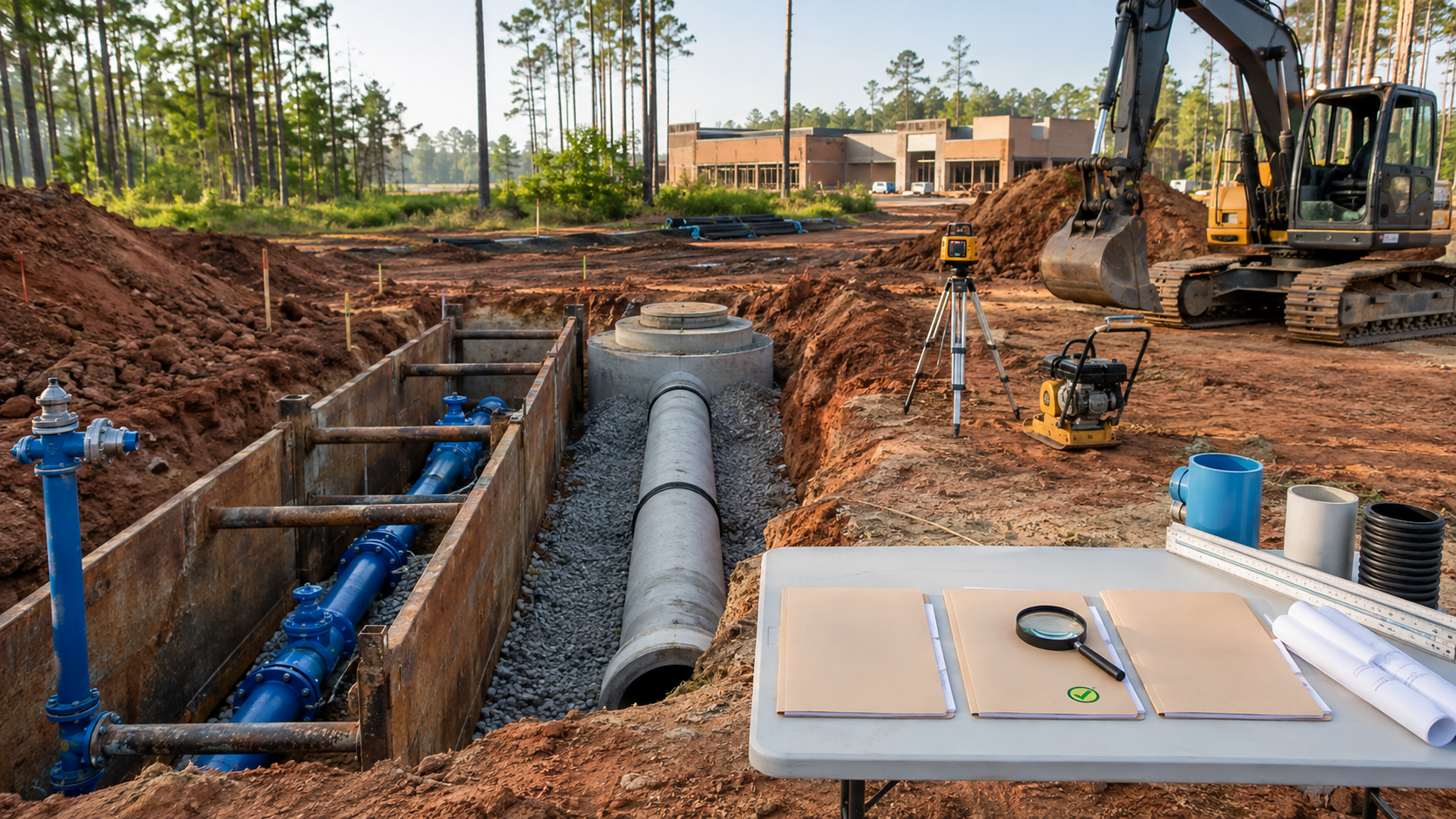
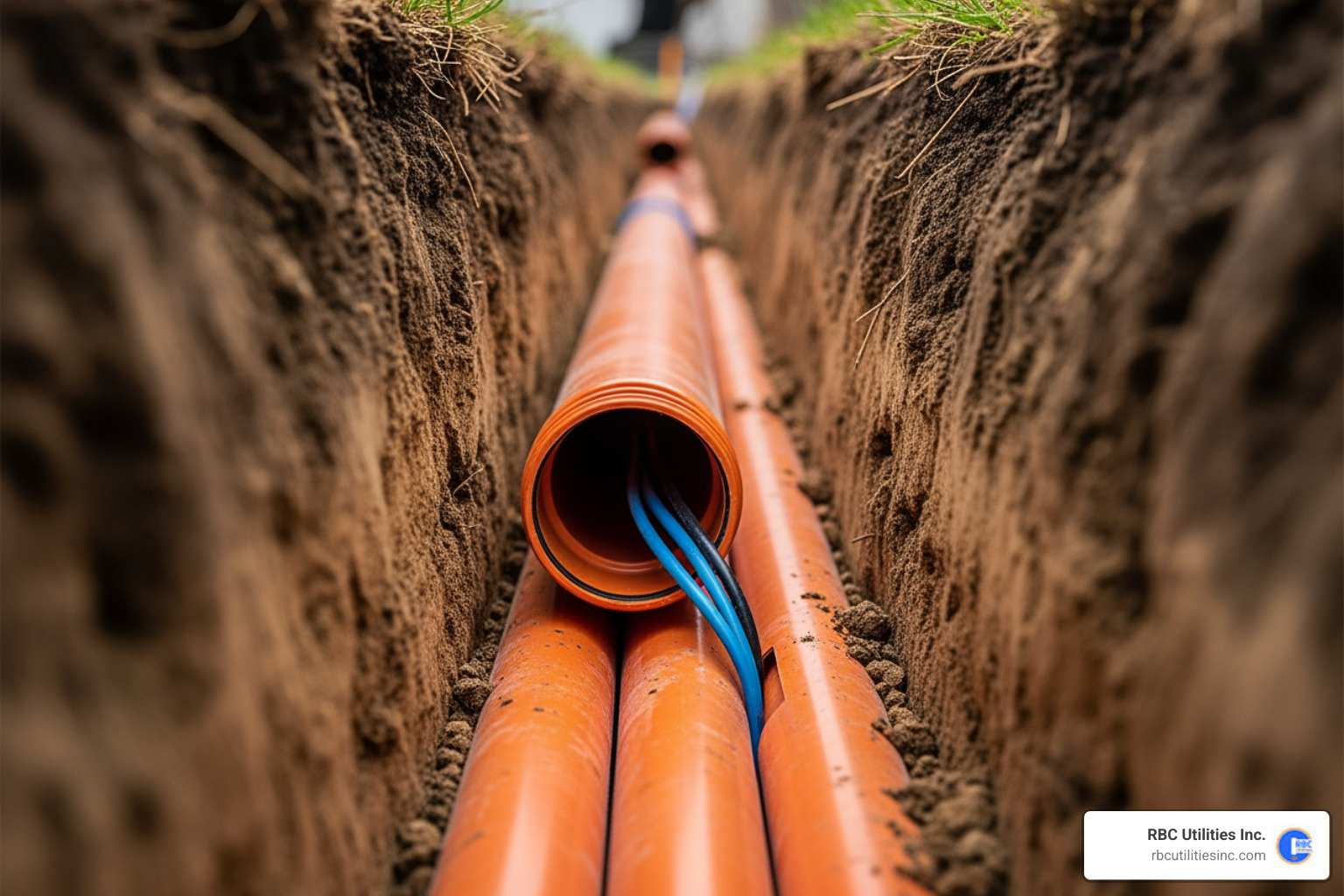
At RBC Utilities, we believe the key to overcoming these challenges is early coordination. When we plan a project's underground layout, we coordinate with landscape architects to ensure that bioretention areas are safely offset from critical conduits and sewer lines, and that proper overflow systems like Storm Water Detention Systems are in place to handle extreme weather.
Grey infrastructure relies on man-made, impervious structures like concrete pipes, culverts, and storm drains to quickly channel water away from urban areas. Green infrastructure uses natural systems, plants, soils, and permeable surfaces to absorb, filter, and slow down stormwater right where it lands, mimicking the natural water cycle.
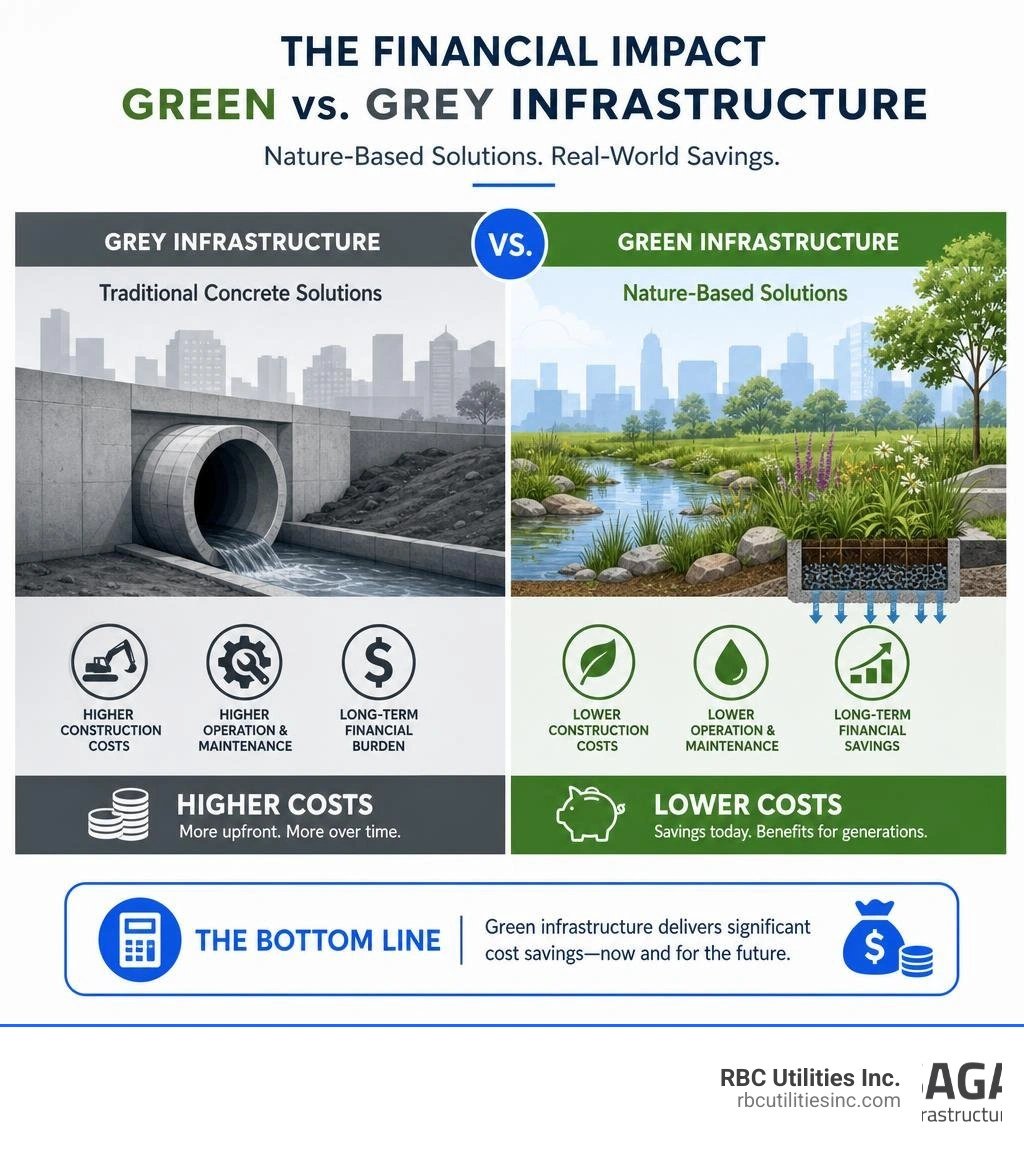
While green infrastructure can sometimes have higher initial design or landscaping costs, it saves money by reducing the need for massive, expensive grey infrastructure upgrades (like widening underground storm mains). It also prevents costly flood damage, naturally filters water to reduce treatment plant costs, and provides co-benefits like reduced energy use through urban cooling.
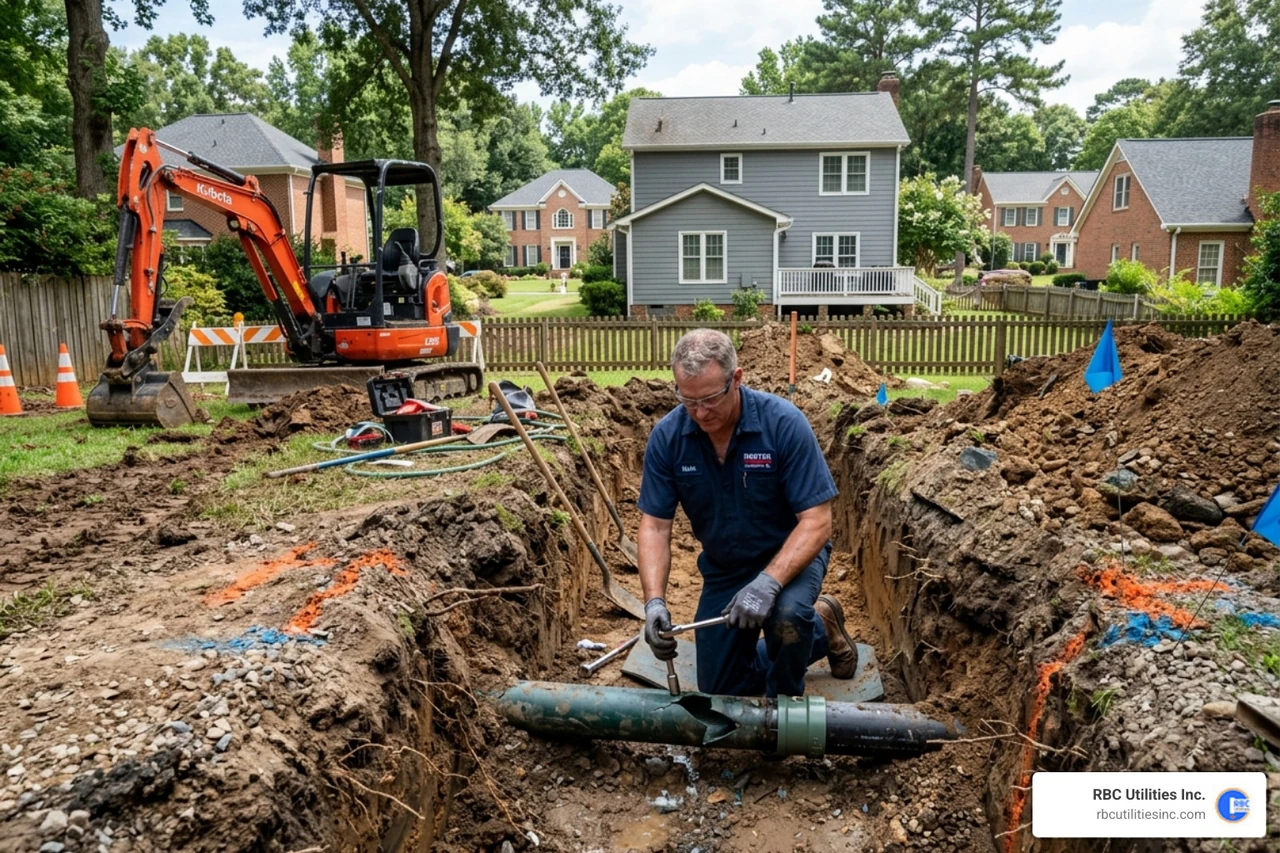
Yes, but it requires professional utility coordination. Because green infrastructure promotes water infiltration, it must be strategically designed and placed so that soaking water does not undermine underground water lines, sewer pipes, or electrical conduits. Using root barriers, proper setbacks, and engineered overflow drains ensures both systems work together safely.
As we look ahead through 2026 and beyond, the growth of the Carolinas shows no signs of slowing down. But to keep our communities safe, healthy, and beautiful, the way we build has to evolve. Integrating creative green infrastructure examples into our commercial, residential, and municipal developments isn't just an environmental trend — it's a smart, cost-effective way to build infrastructure that lasts.
At RBC Utilities, Inc., we bring local Carolinas expertise backed by national Saga Infrastructure resources to every project we touch. Whether you are planning a new commercial development in Charlotte that requires hybrid bioretention systems, or a municipal sewer upgrade in South Carolina, we have the experience to get the job done safely and reliably.
Ready to plan your next project with a team that understands how to bridge the gap between green surface design and robust underground utility systems? Contact RBC Utilities, Inc. today and let's build a more resilient future together.
Part of Saga Infrastructure, protecting what others built and helping it grow.
Address: 4404 Stuart Andrew Blvd., Suite K, Charlotte, NC 28217
Email: info@rbcutilities.com
Phone: 803-913-9727
Service Area: North Carolina | South Carolina