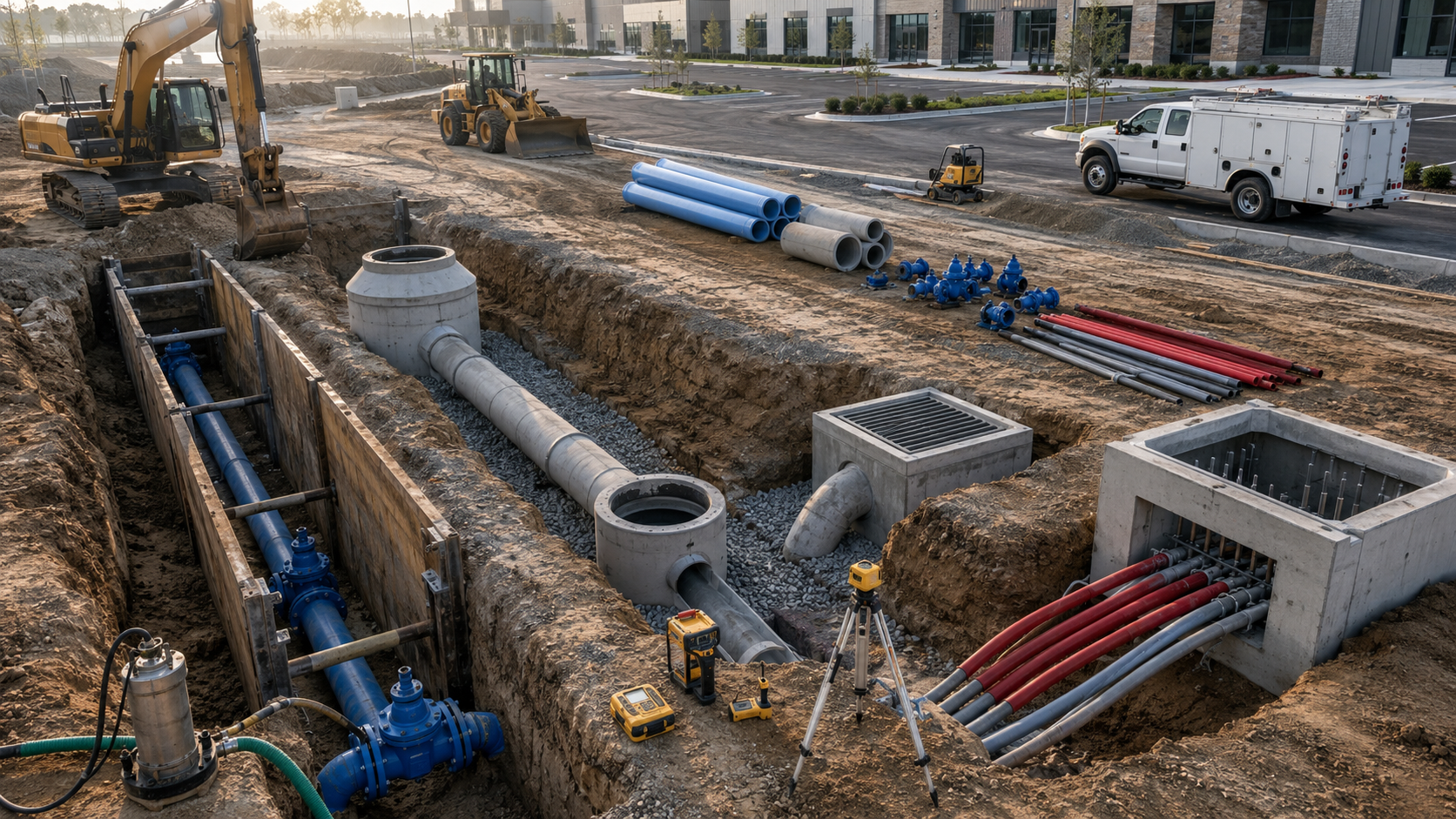
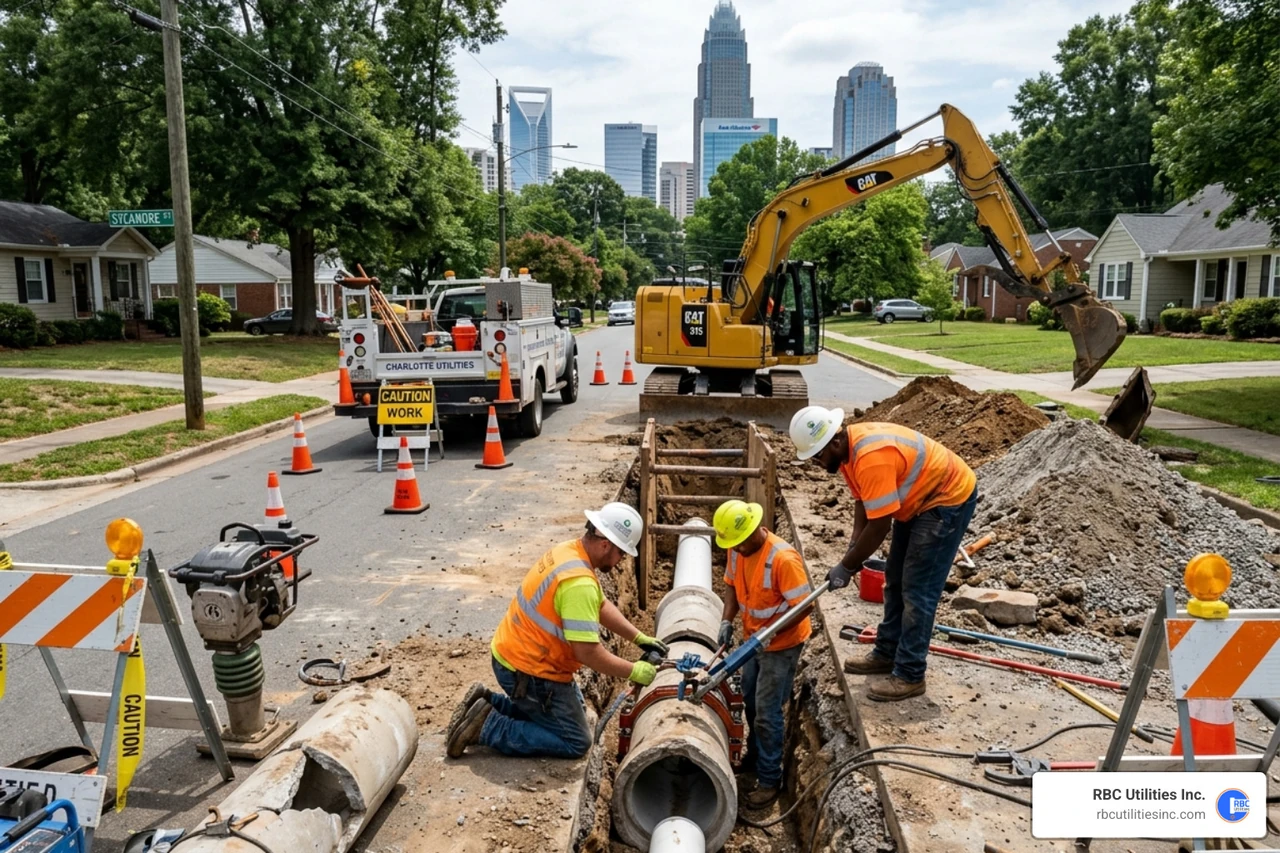
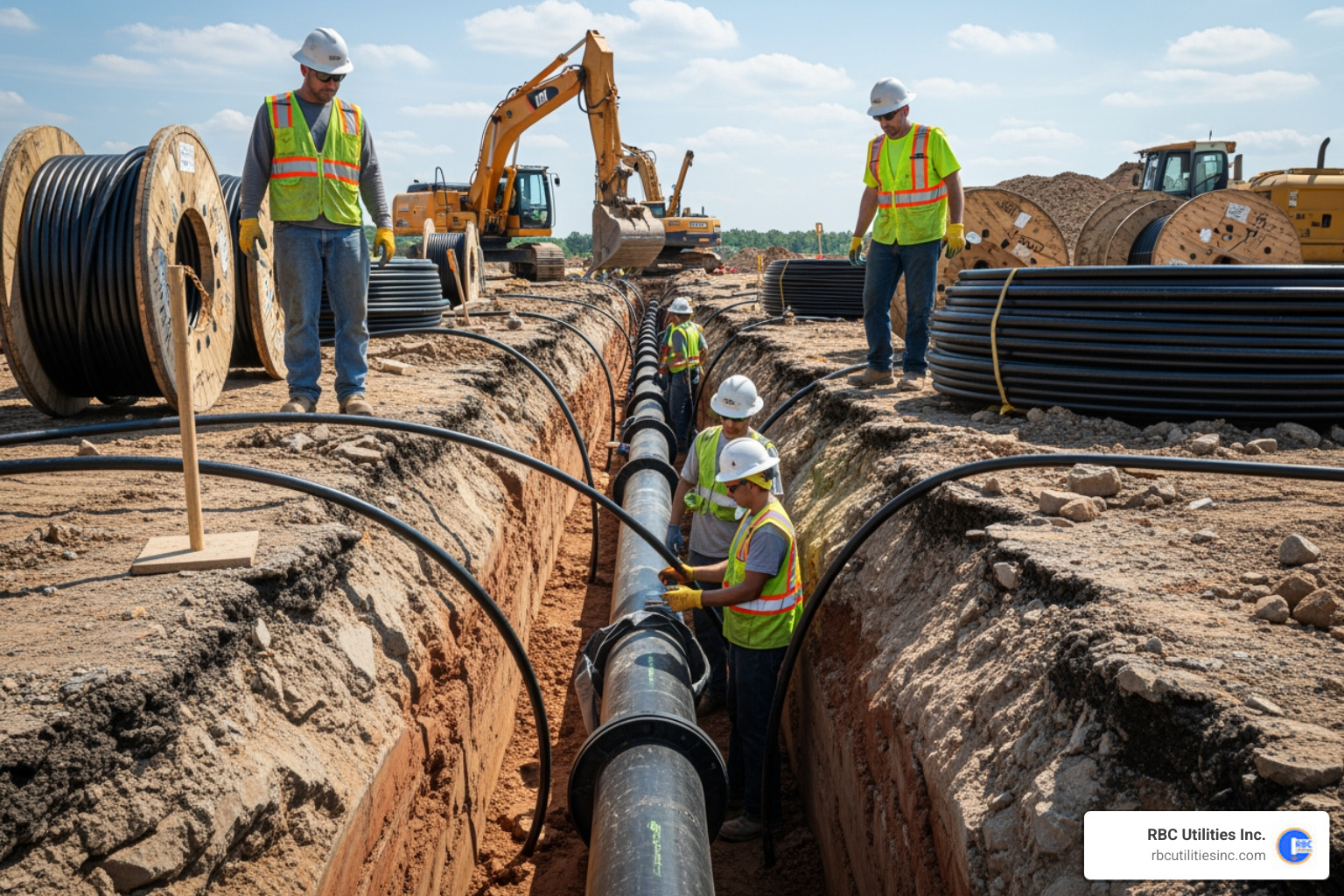
Utility line installation services cover the full process of placing water, sewer, storm drain, gas, electrical conduit, and telecom lines underground to connect properties to essential infrastructure.
Quick answer — what to look for in a utility line installation provider:
Getting underground utilities right the first time matters more than most developers expect. A line installed at the wrong depth, a pipe bedded incorrectly, or a connection that fails inspection does not just cause a delay — it means digging everything back up and starting over. For mid-sized residential and commercial projects in the Carolinas, that kind of setback can blow a budget and push an entire schedule back by weeks.
The stakes are real. Underground utility projects that follow best practices can reduce long-term maintenance costs by up to 30% over 20 years. Choosing the right contractor — one who understands local codes, coordinates with municipalities, and installs to spec the first time — is one of the most important decisions on any development project.
I'm Don Larsen from RBC Utilities Inc., and since 2008 our team has delivered utility line installation services across residential, commercial, and municipal projects throughout the Carolinas, specializing in water lines, sanitary sewer, storm drainage, and conduit systems. In this guide, I'll walk you through everything you need to know to find the right provider and get your project done right.
Utility line installation services word guide:

When we talk about underground construction, we aren't just talking about digging a single ditch and dropping in a pipe. Modern infrastructure is a complex web of interconnected systems, each requiring its own unique materials, depth standards, and handling protocols.
In the Carolinas, we regularly handle a diverse range of underground utility services in Charlotte, NC and the surrounding areas. A professional contractor must have the specialized equipment and trained personnel to manage several distinct types of utility systems simultaneously.
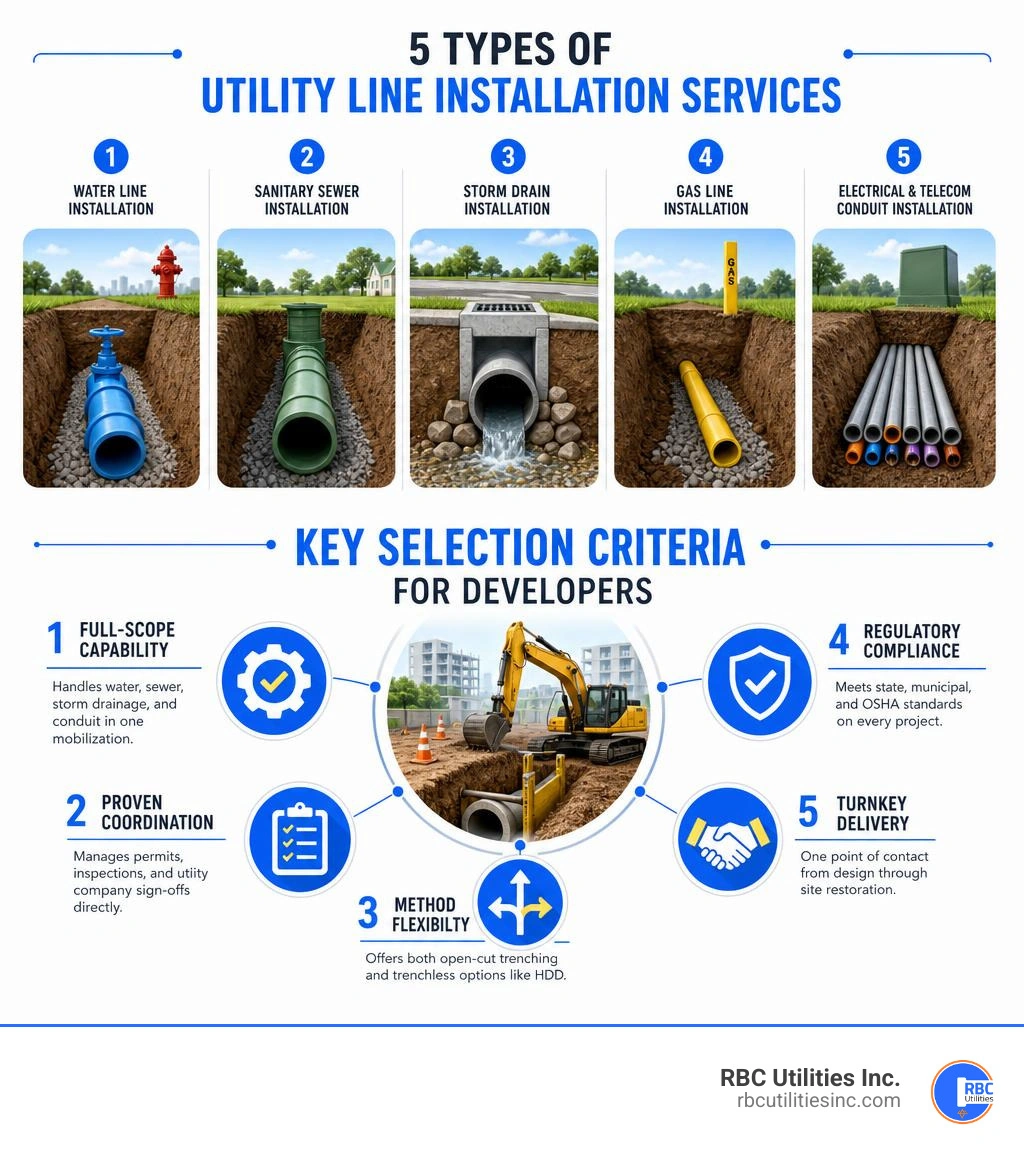
By coordinating these services in a single mobilization, developers can save substantial time and money. In fact, companies using turnkey utility installation services report project completion 25% faster than coordinating multiple contractors. Here are the primary systems that make up our daily workload:
Let’s take a closer look at how these systems are planned and executed to ensure long-term reliability.
Water and sewer systems are the lifeblood of any new development. Unlike electrical cables, which can bend relatively easily, water and sewer lines require rigid configurations and highly precise grading.
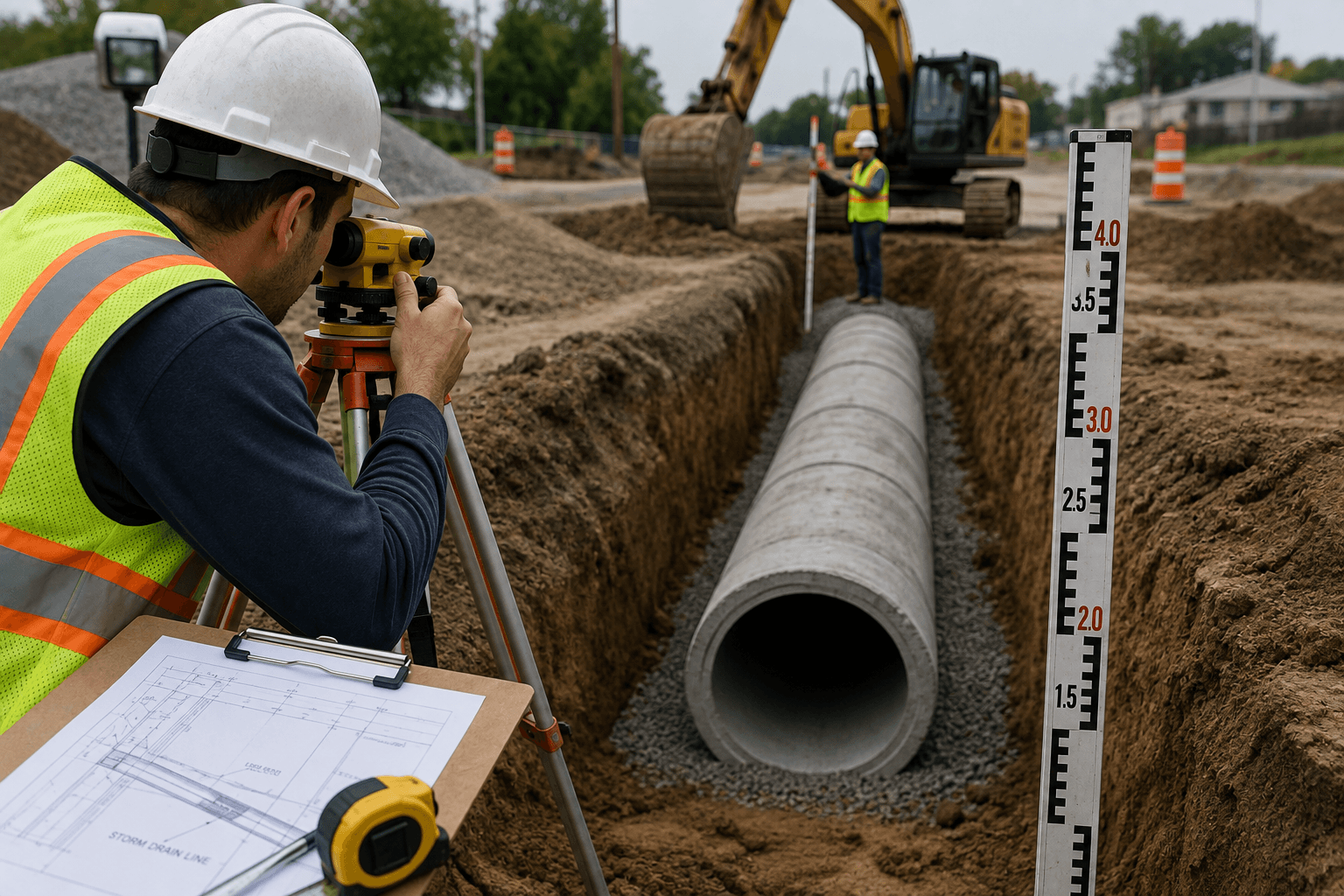
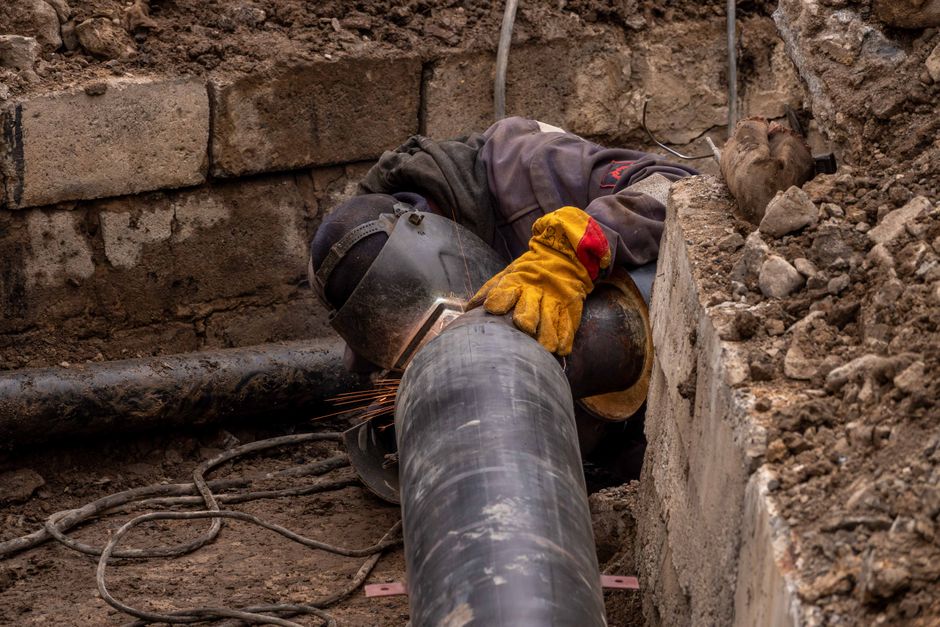
For sanitary systems, we specialize in comprehensive Sewer Main Line Installation to ensure waste flows seamlessly to the municipal tie-in. This work relies heavily on gravity flow, meaning even a minor calculation error in the pipe’s slope can lead to clogs, backups, and eventual system failure.
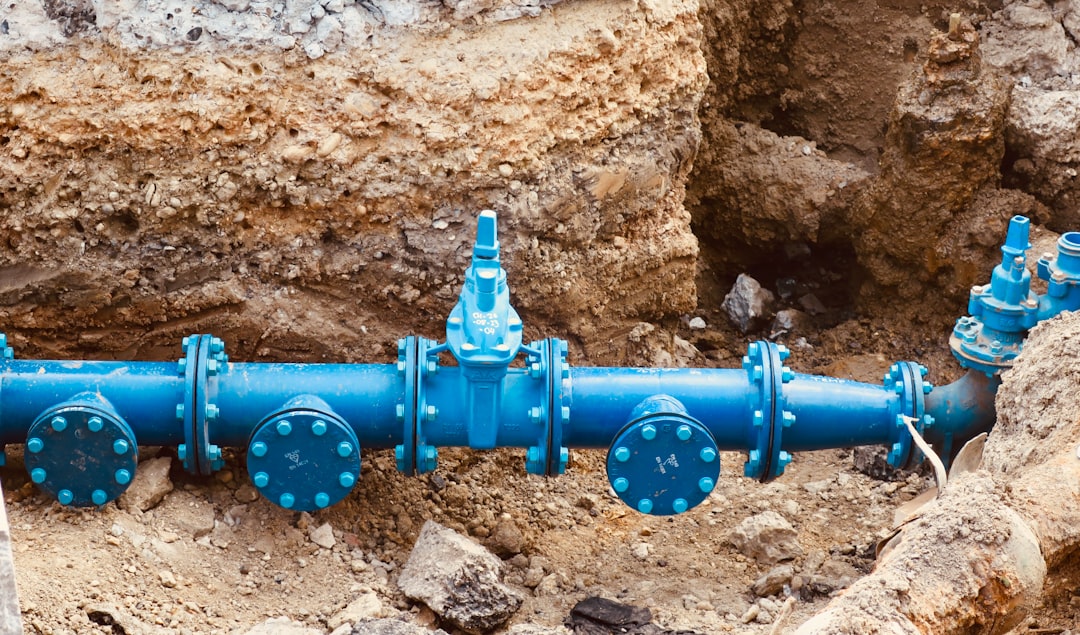
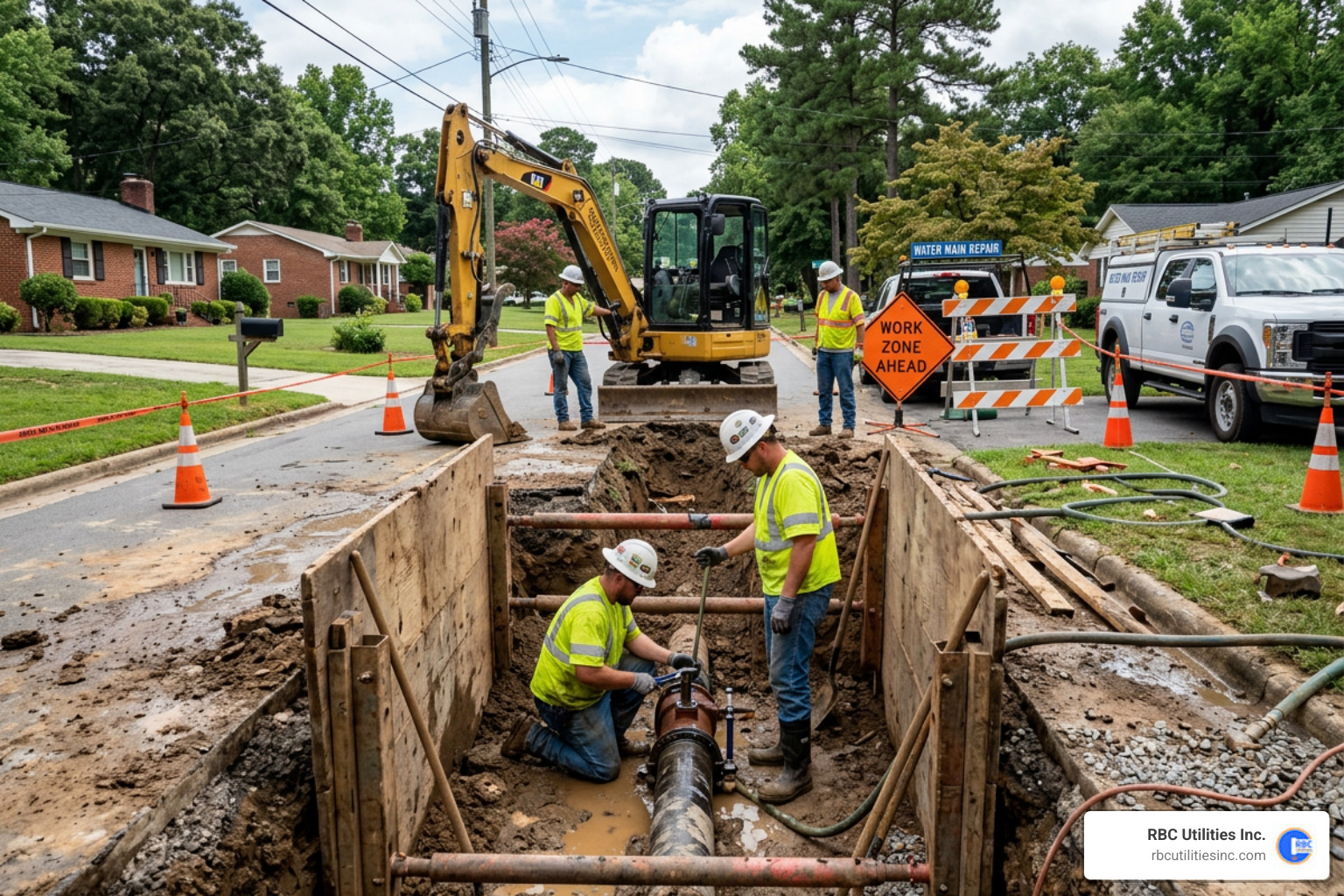
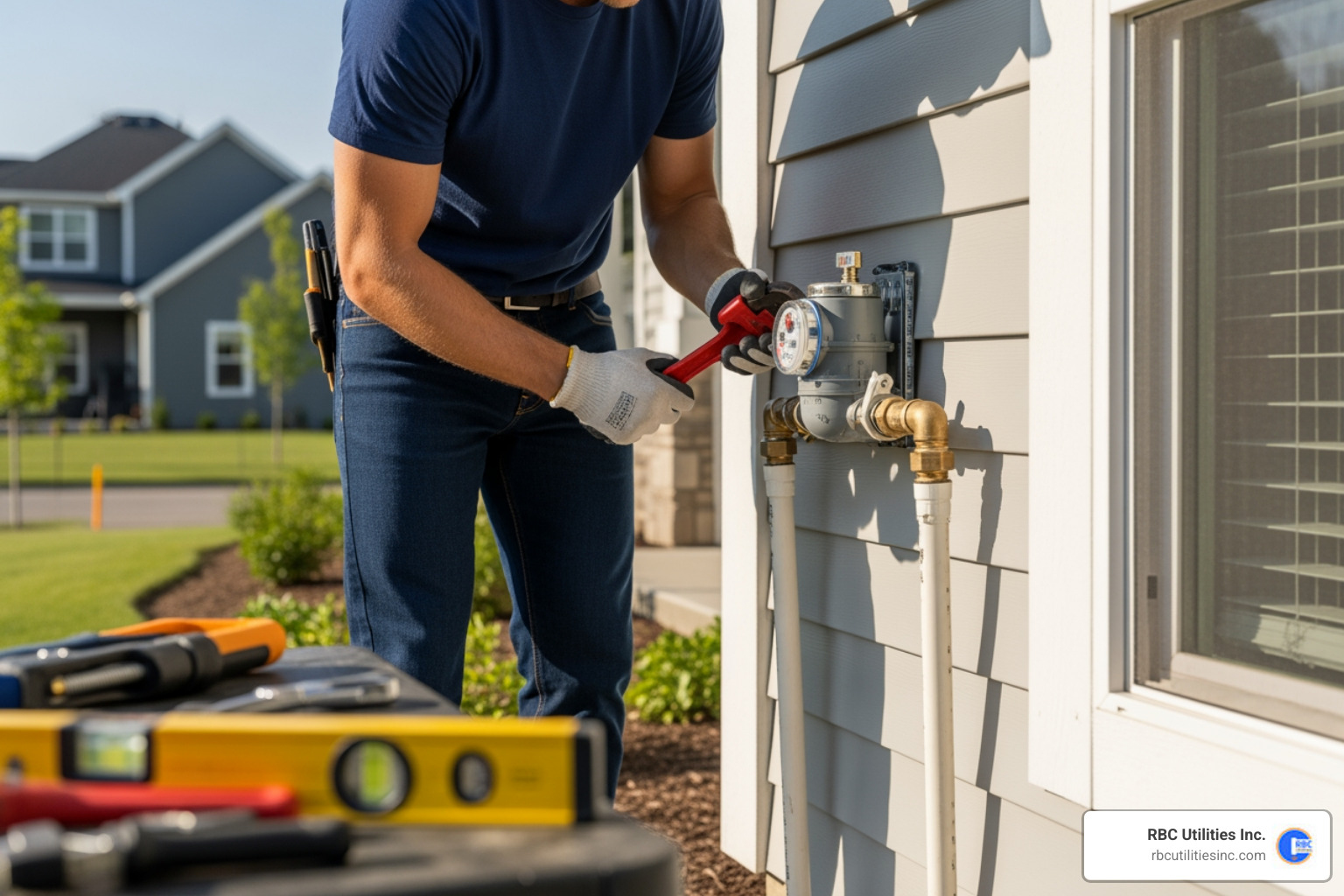
On the freshwater side, we work closely with developers as Water Main Contractors Carolinas trust to install reliable water mains and lateral connections. This also includes precise Water Meter Installation Services to ensure municipalities can accurately track usage from day one.
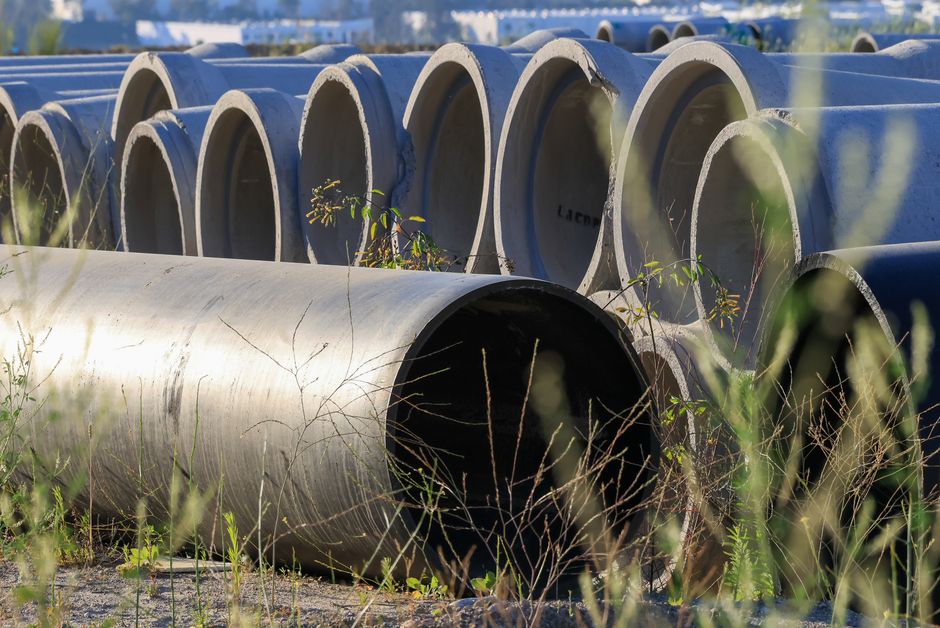
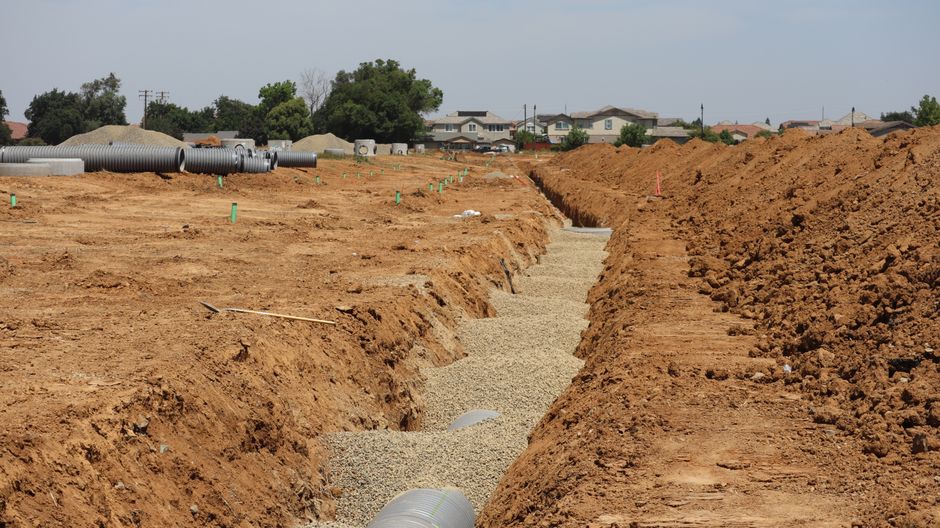
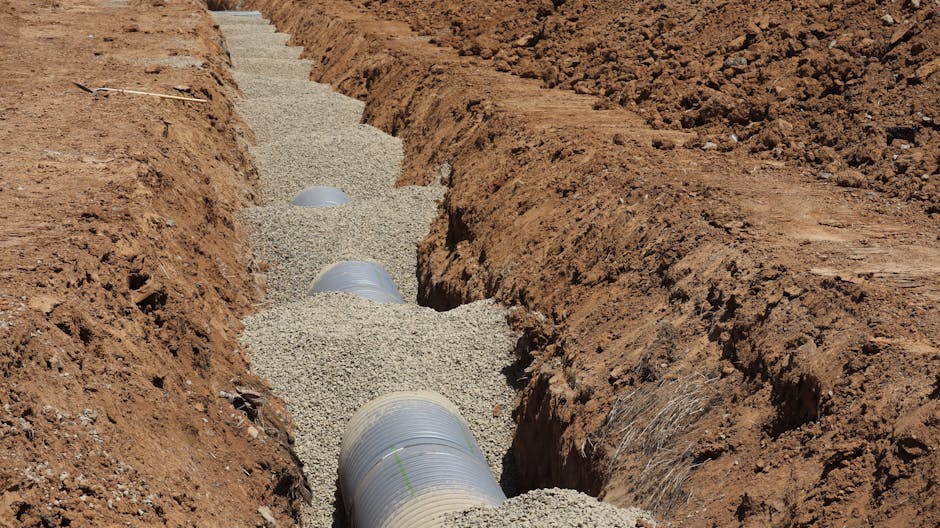
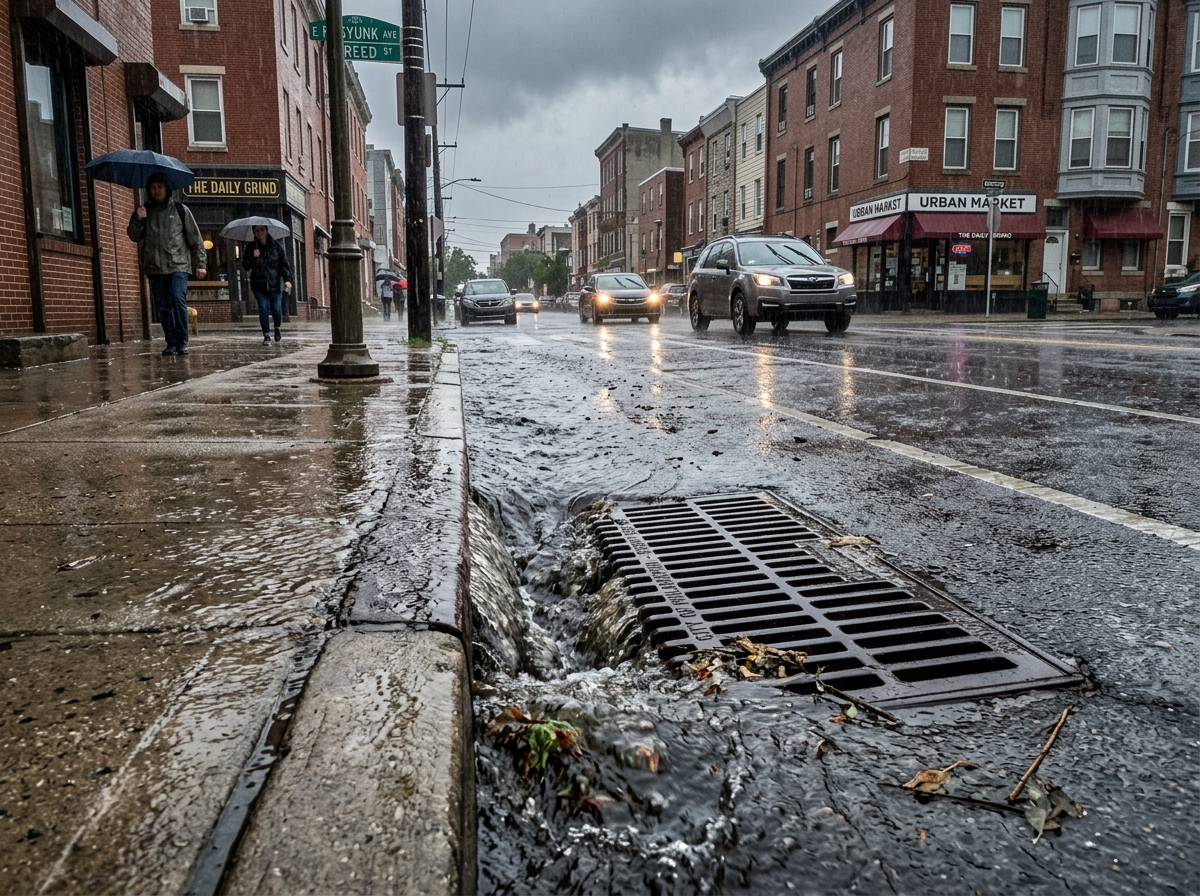
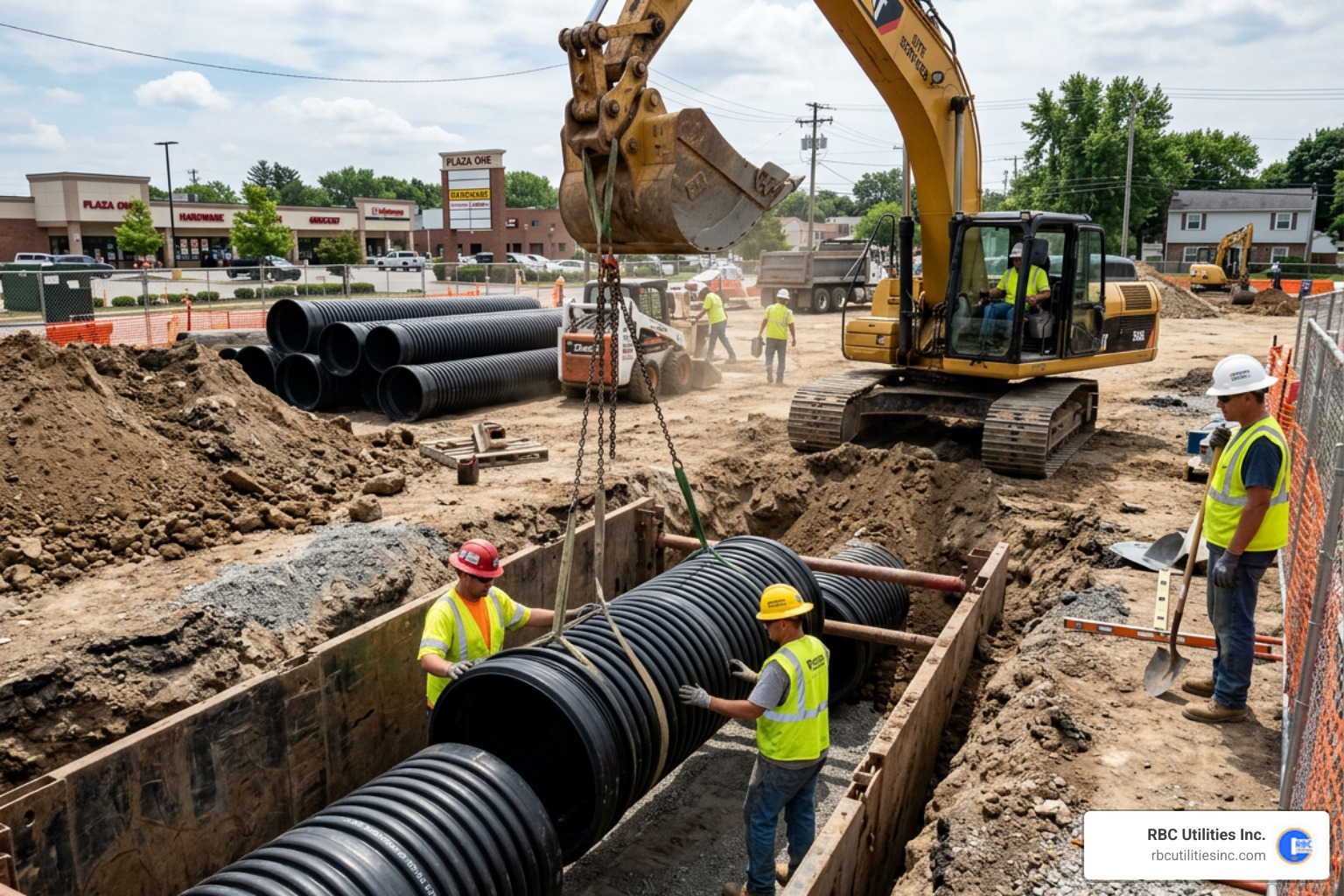
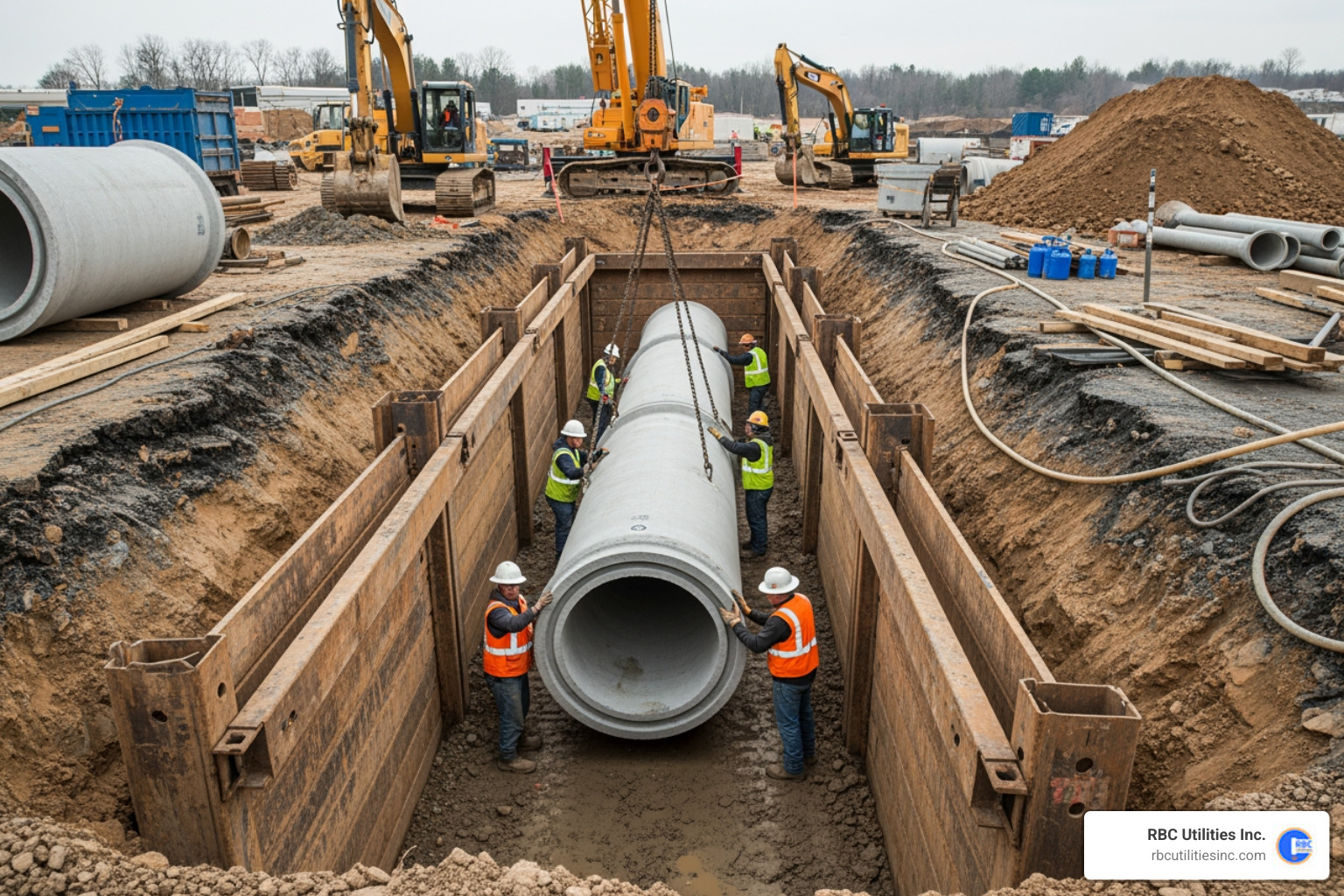
Additionally, we manage heavy-duty Storm Drain Pipe Installation to protect properties from the sudden, torrential downpours common to North and South Carolina. Proper bedding with gravel or sand is essential for these rigid pipes to prevent shifting or cracking under the weight of the backfilled soil.
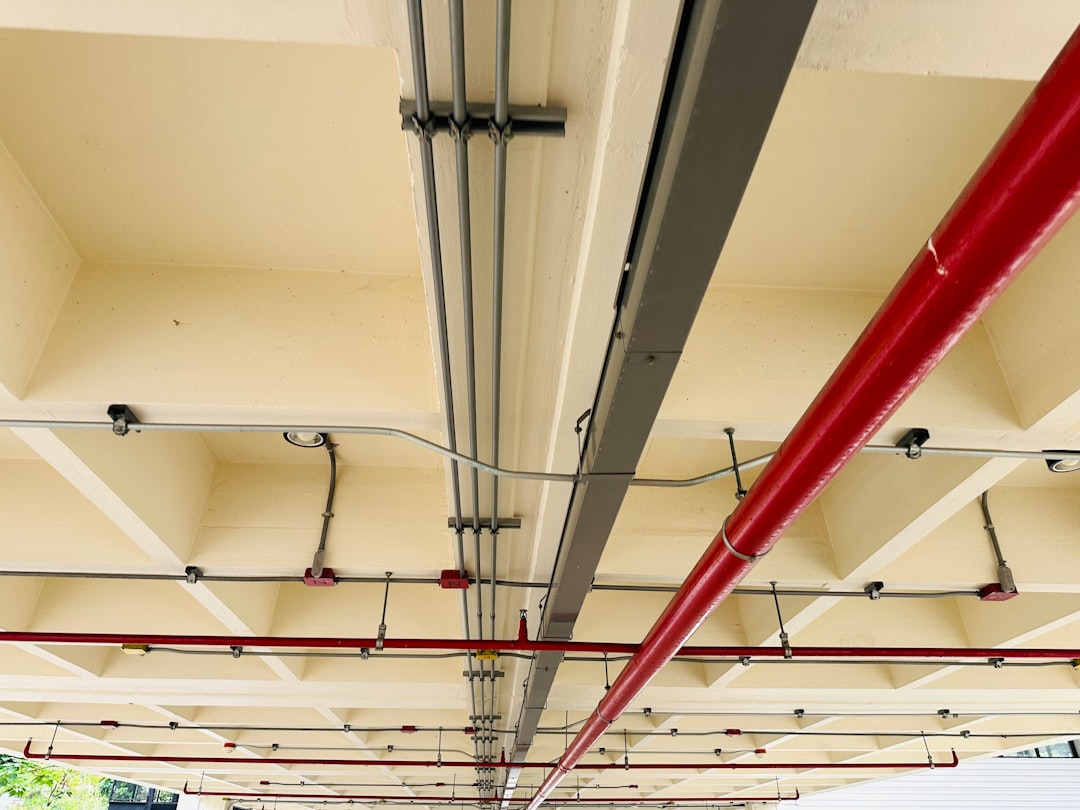
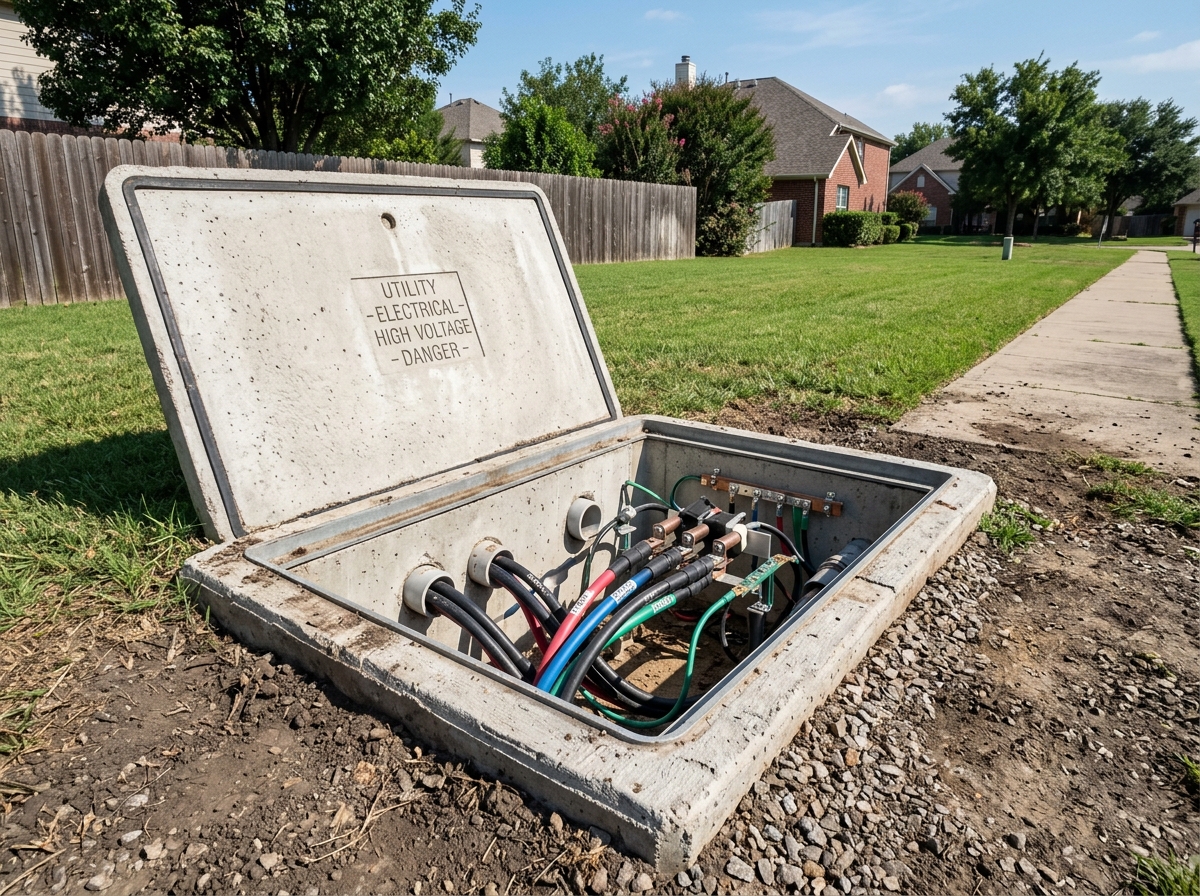
As our cities expand, overhead lines are rapidly being replaced by underground systems. Underground power distribution offers superior protection from Carolinas storm seasons, but it requires highly specialized protective conduit.
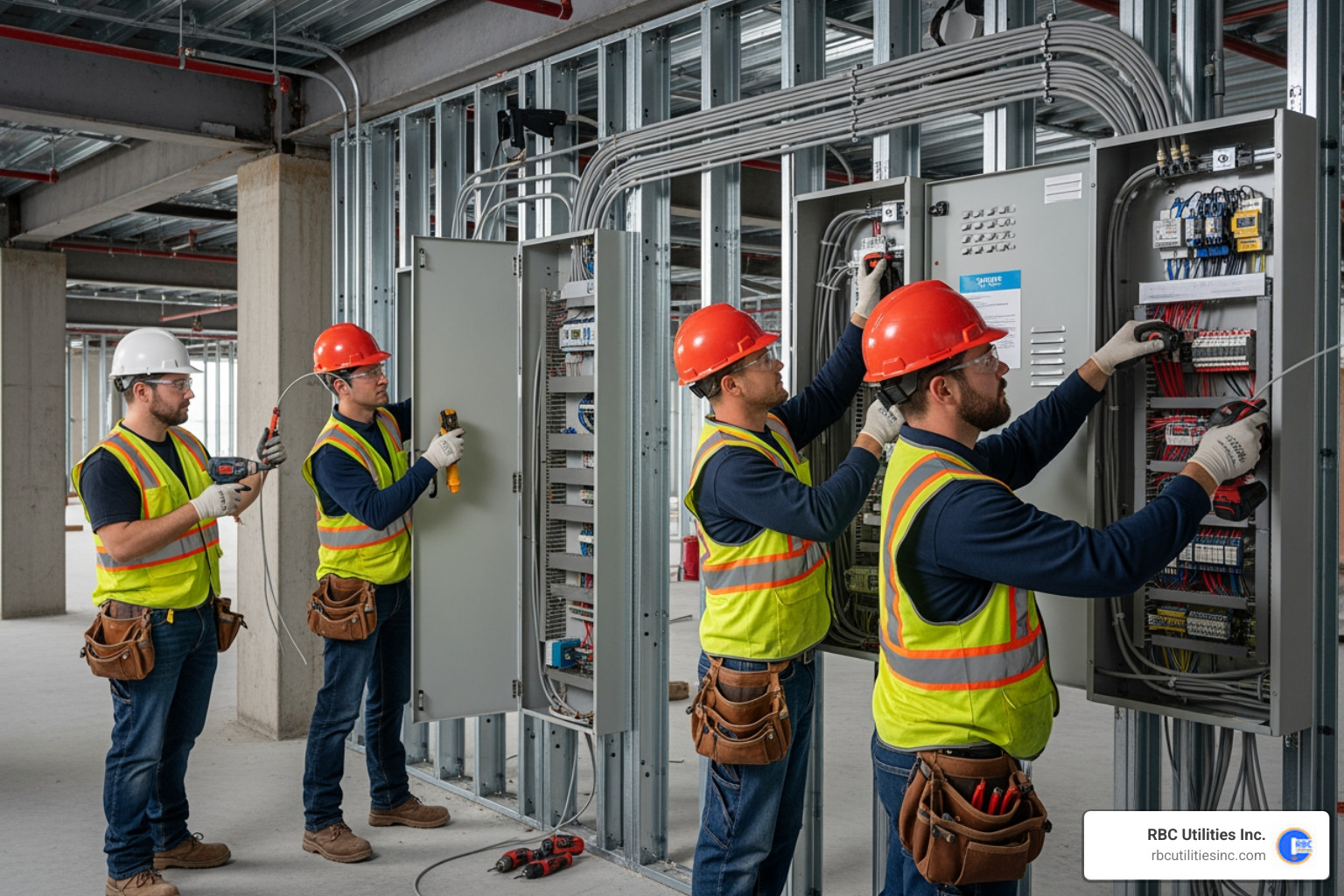
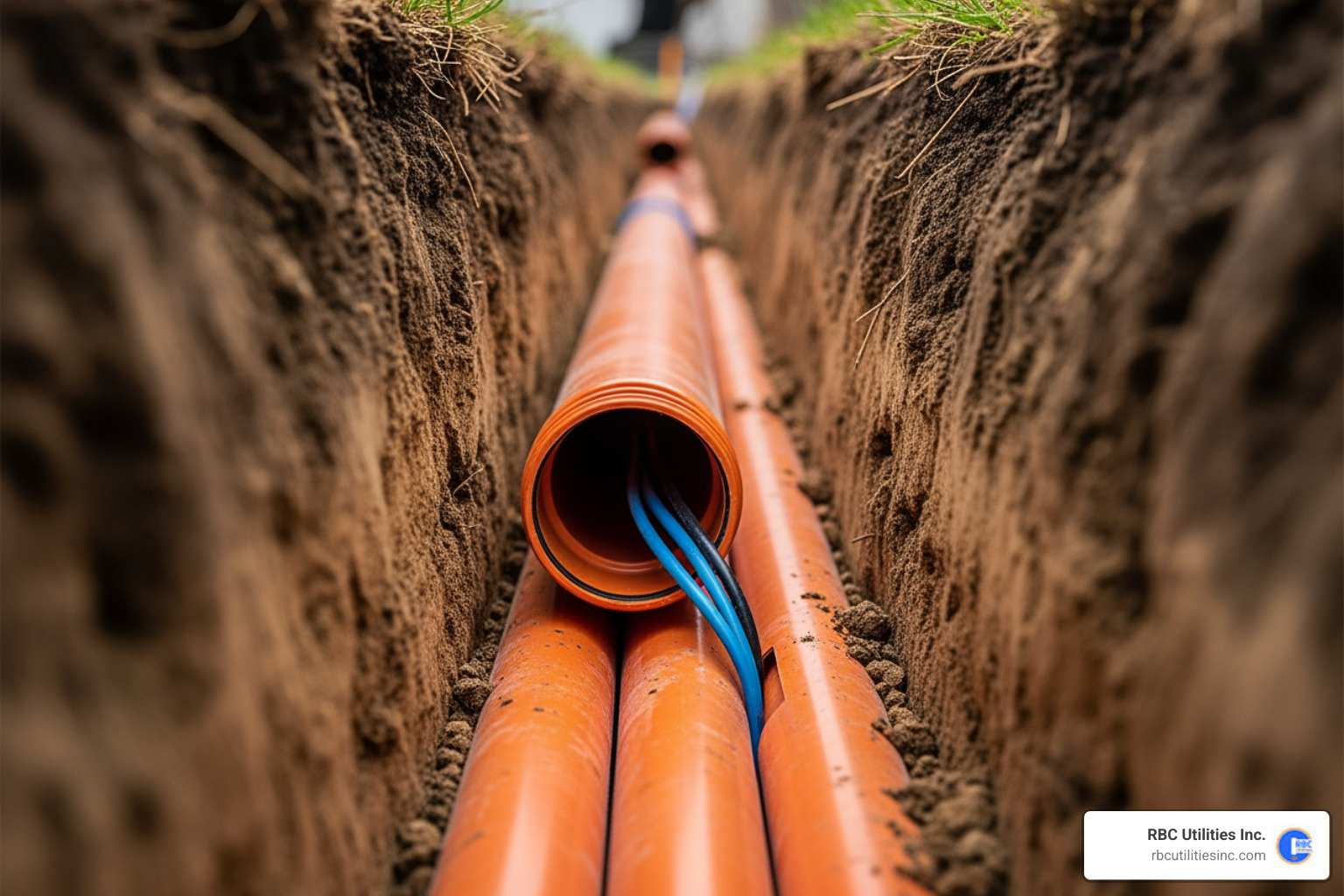
Our team provides expert Underground Power Cable Installation and robust Commercial Conduit Installation Services to prepare commercial developments and residential subdivisions for high-voltage power. We work with specialized crews to install conduit systems that protect electrical grids and high-speed fiber optic cables from physical damage and water intrusion.
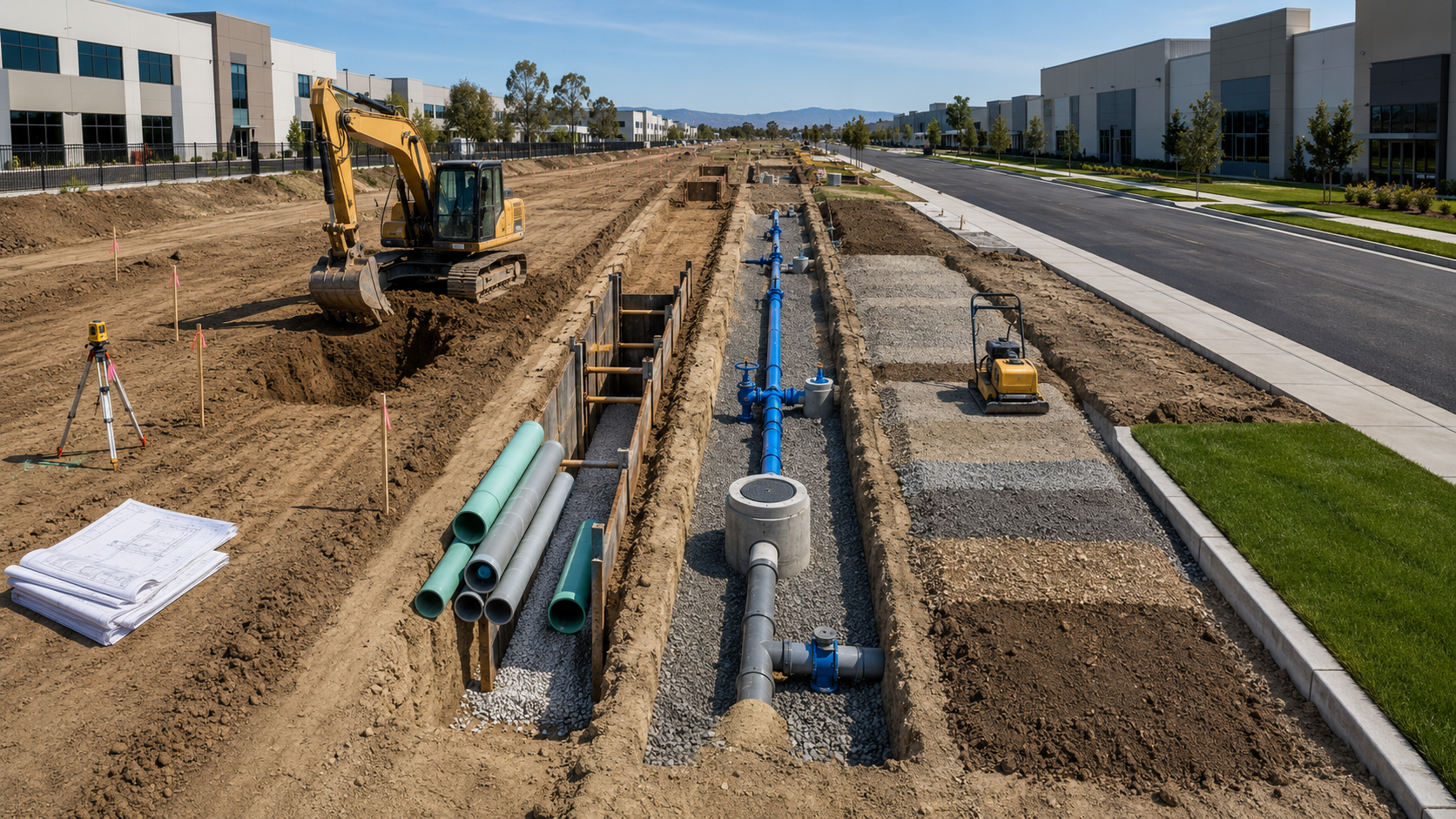
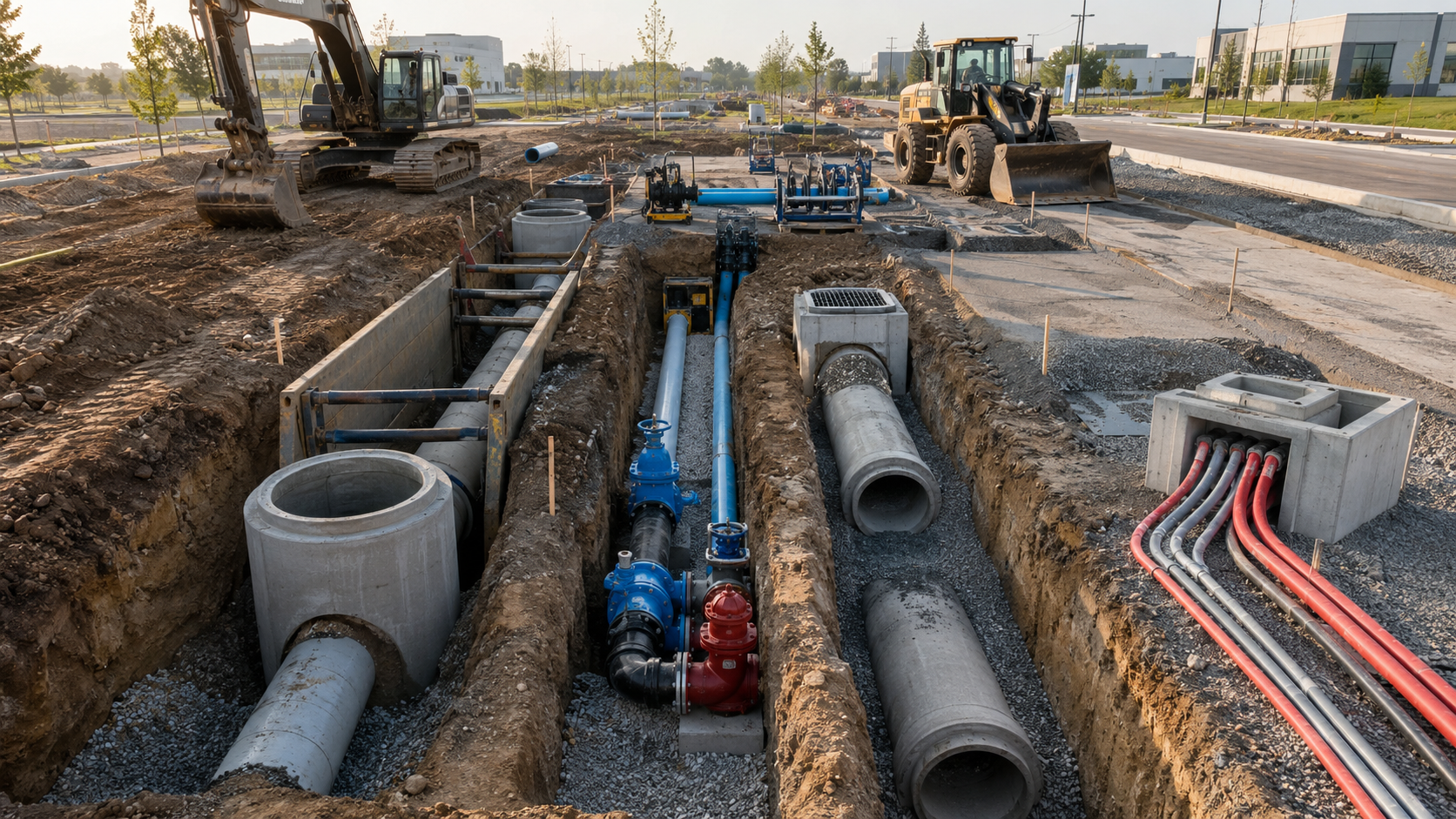
To optimize space and reduce excavation costs, we often utilize joint trenches. A joint trench allows us to place electrical conduit, fiber optic cables, and telecommunications lines in a single, organized corridor. By maintaining required spacing and utilizing protective barriers, we ensure that power and communication systems can run side-by-side safely without interference.
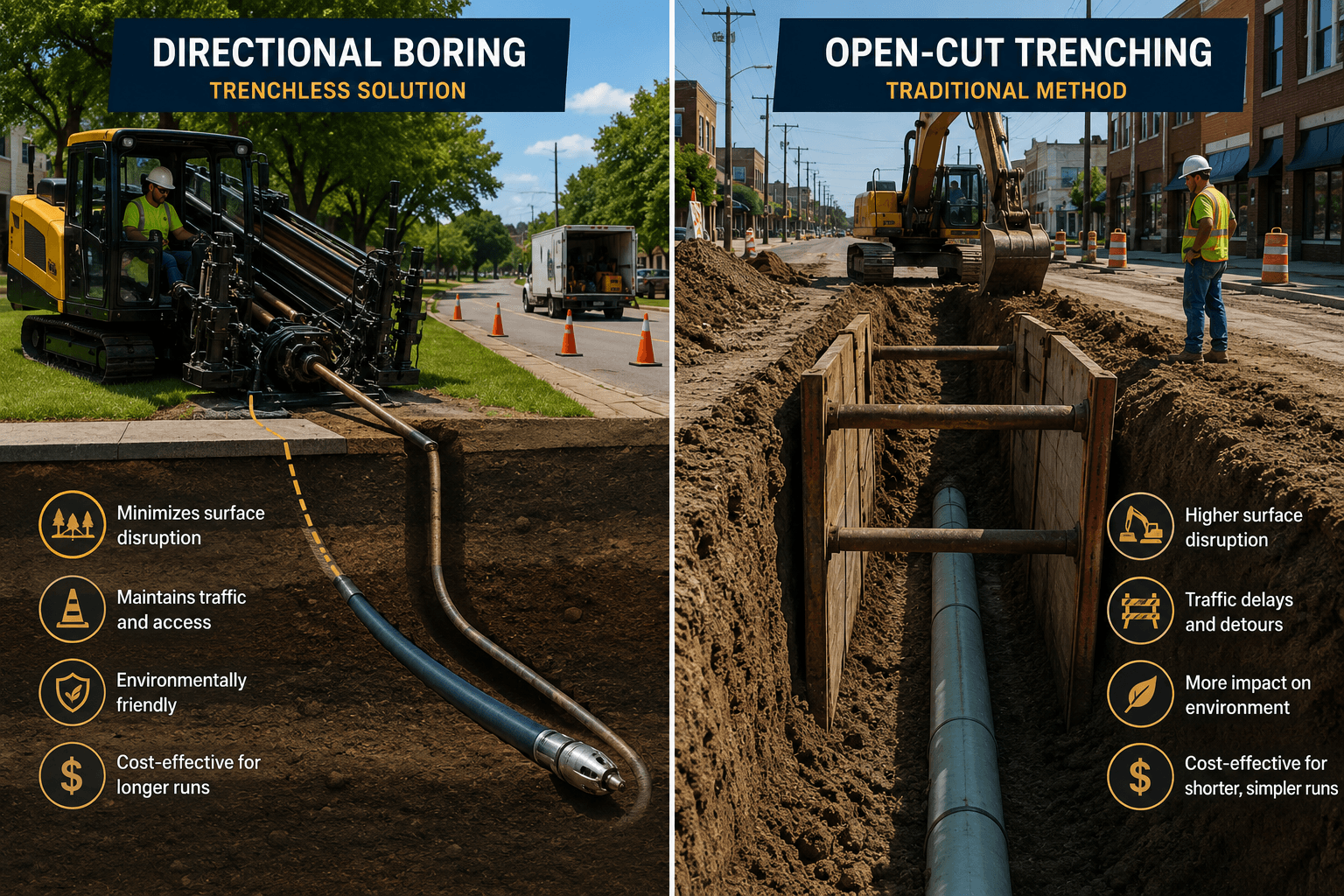
Choosing how to get the pipe or conduit into the ground is one of the most critical decisions in any utility project. Traditionally, the only option was to dig a massive, open trench from point A to point B. Today, advanced trenchless technologies allow us to install utilities directly underneath roads, wetlands, and existing structures with virtually zero surface disruption.
Both methods have their place. Let's look at how they compare:
Surface disruption
Ideal soil conditions
Restoration costs
Best use cases
Cost savings
Whether we are deploying conventional excavation or advanced trenchless methods, our priority is always matching the technique to the unique demands of the site. Experienced contractors will carefully analyze the terrain before recommending a path forward.
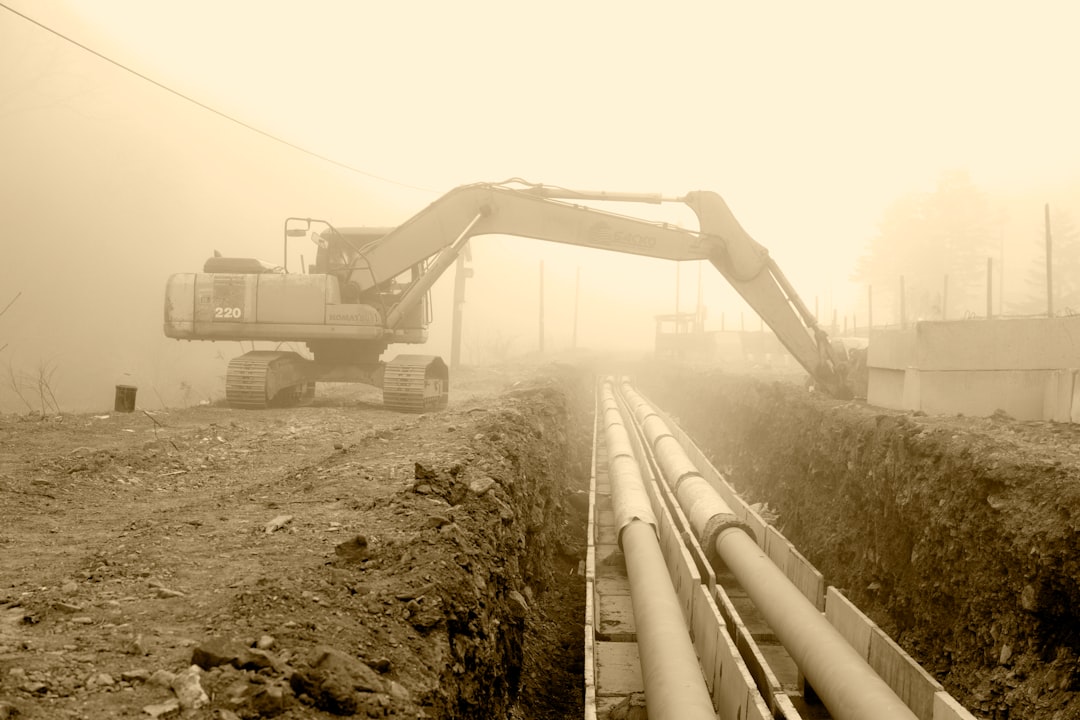
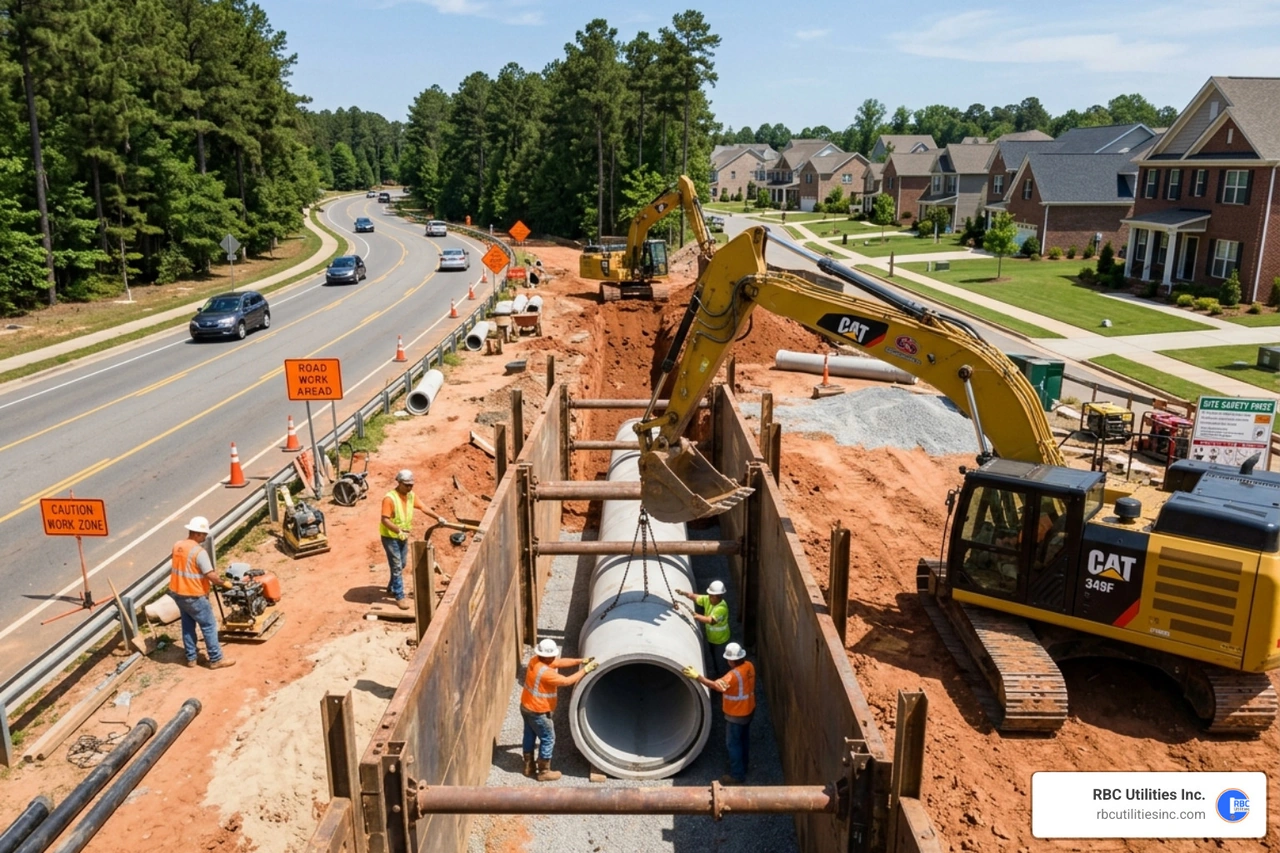
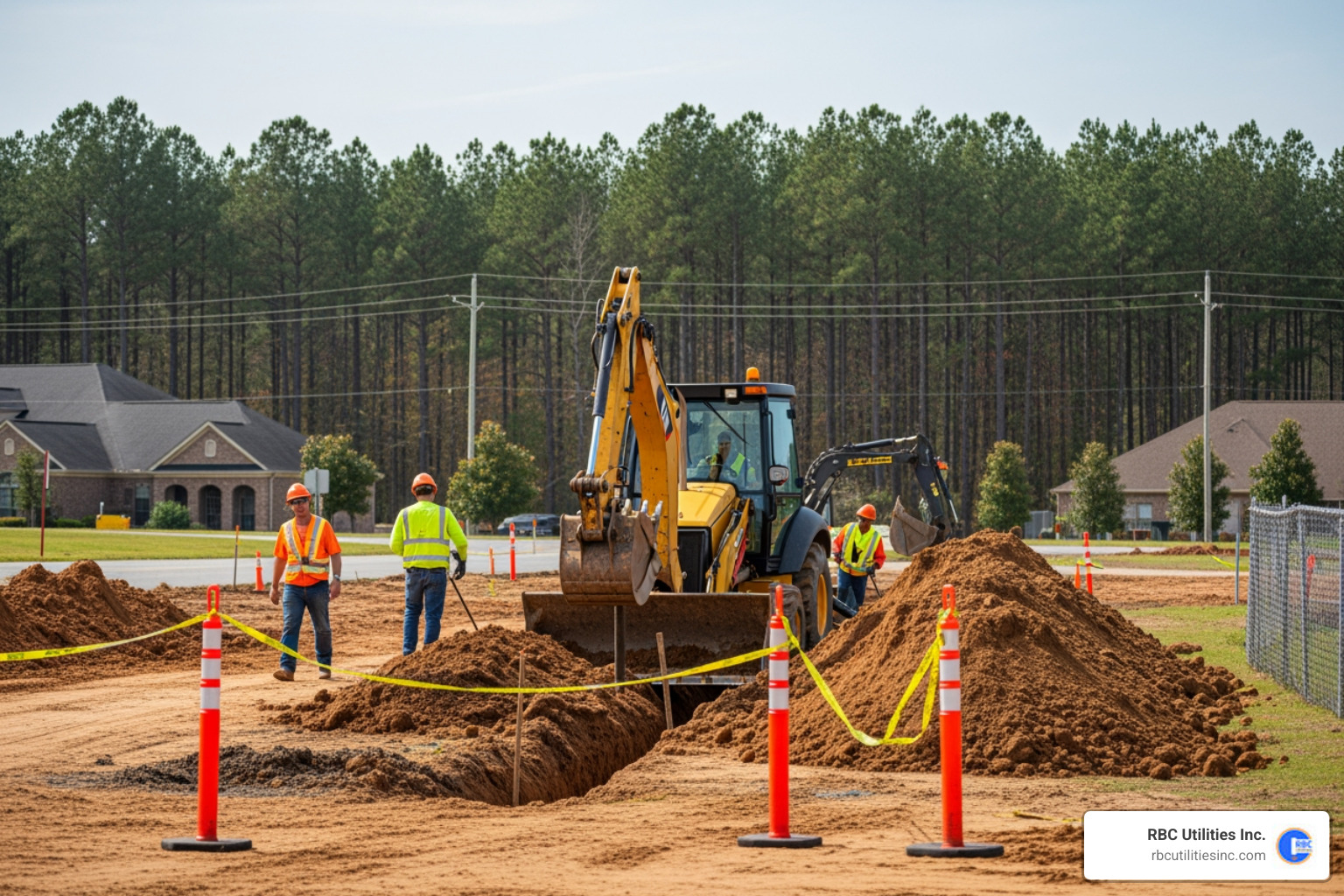
Despite the rise of trenchless tech, traditional open-cut trenching remains the most practical choice for many projects. When installing deep gravity-fed sewer mains or wide storm drains, we must have physical and visual access to the entire length of the pipe to verify the slope down to the millimeter.
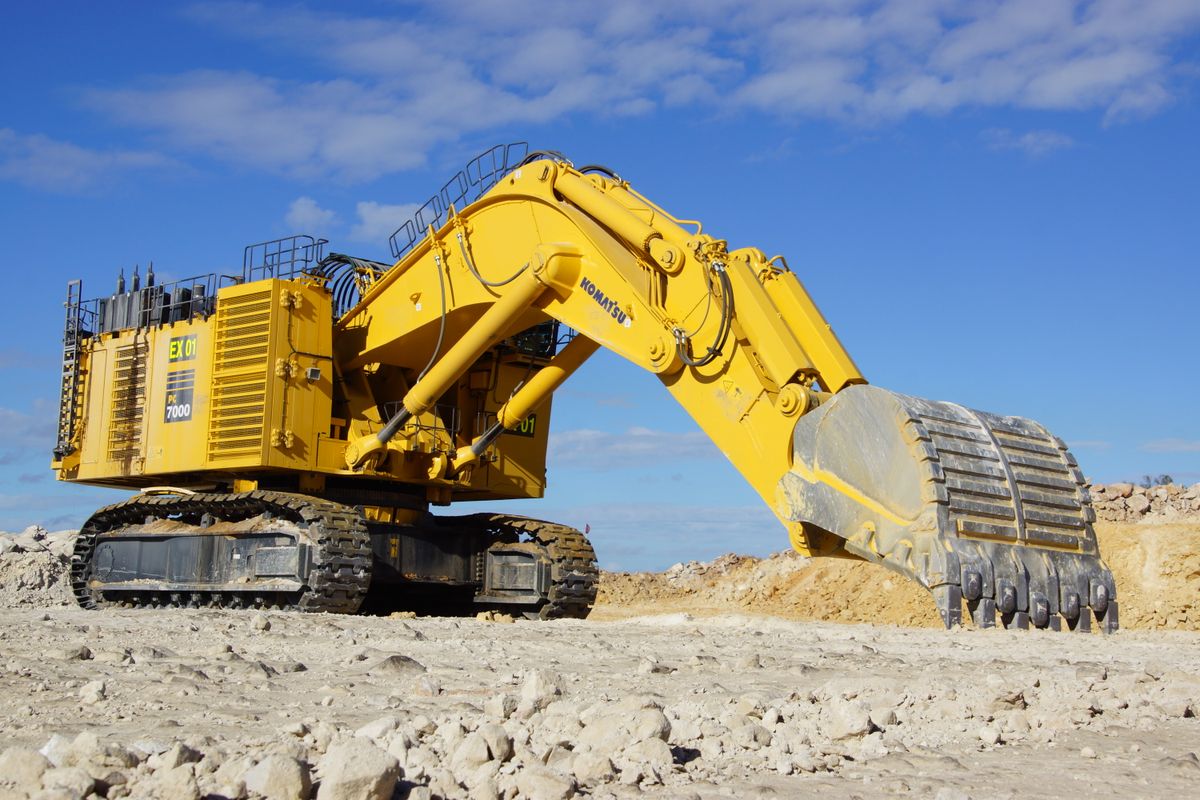
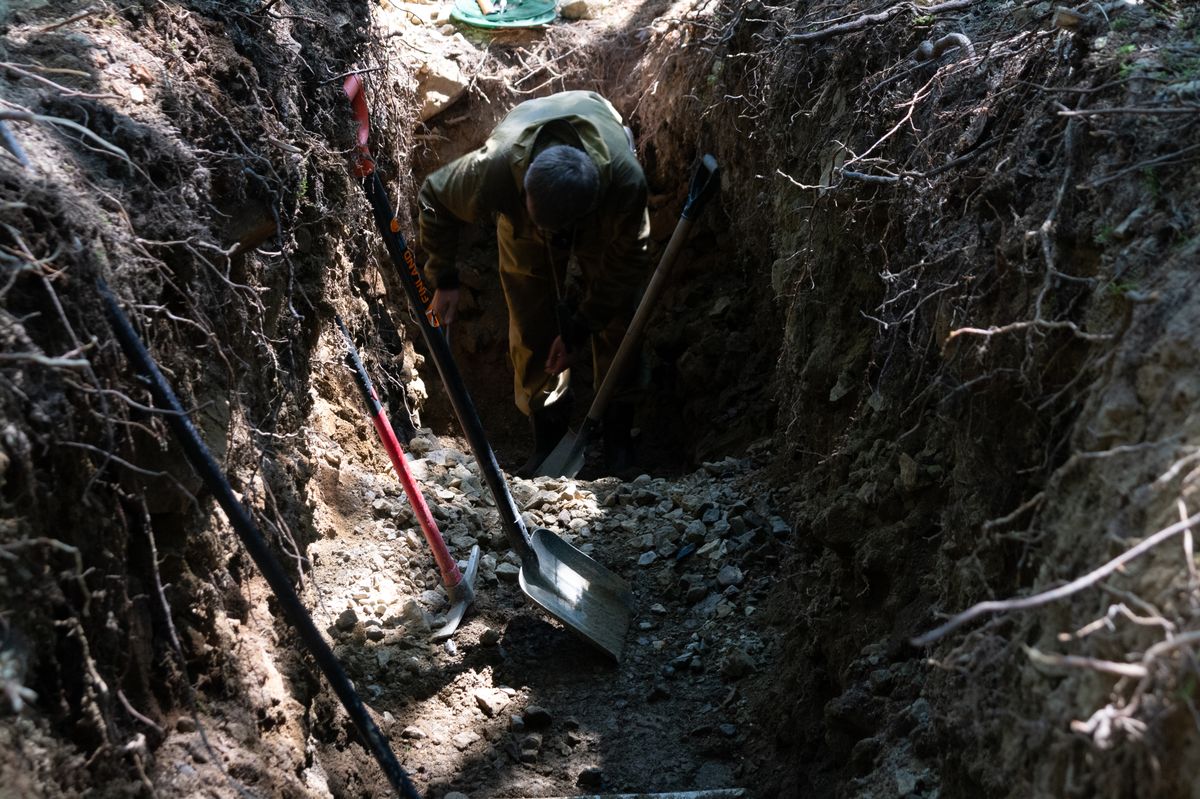
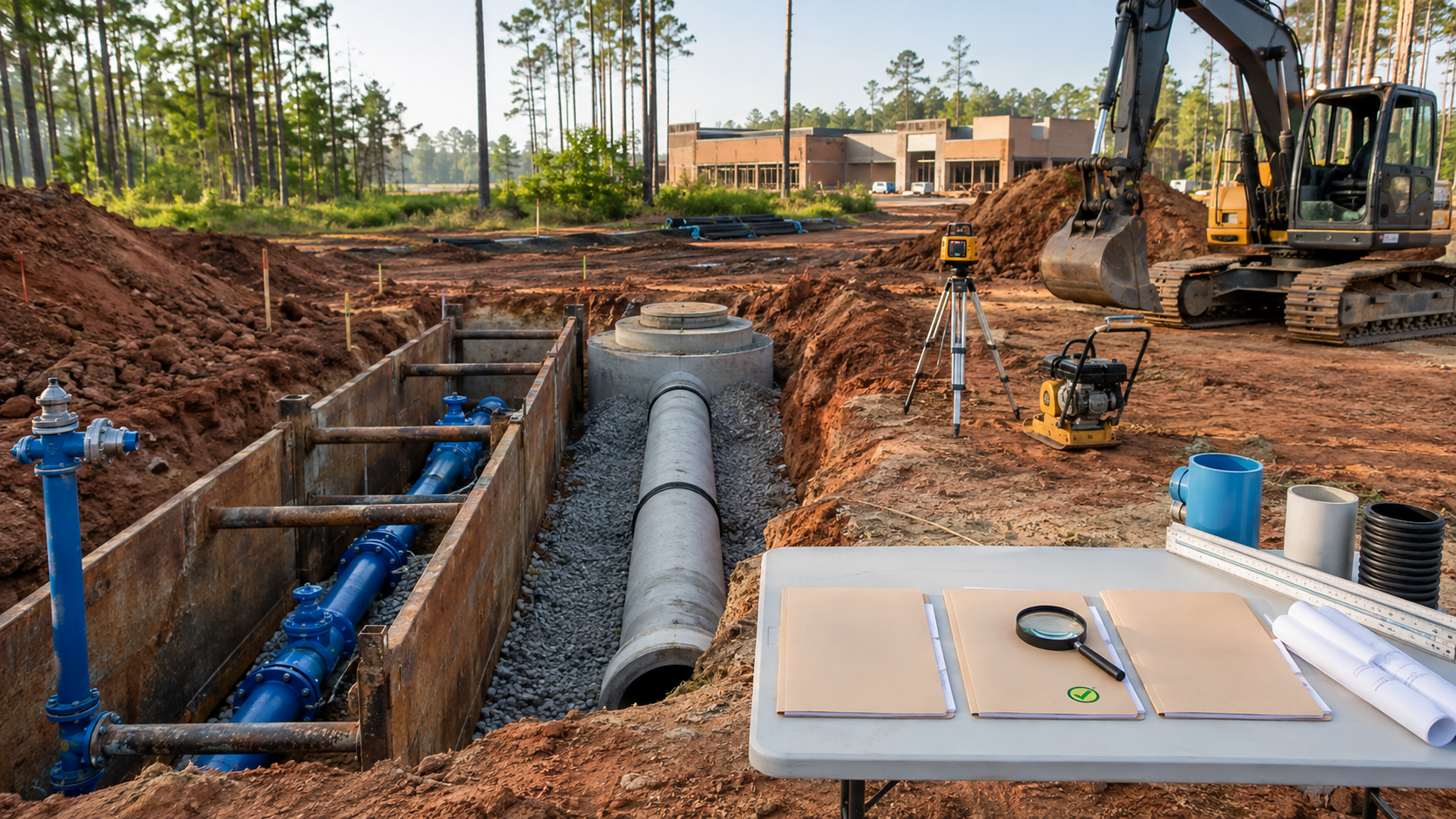
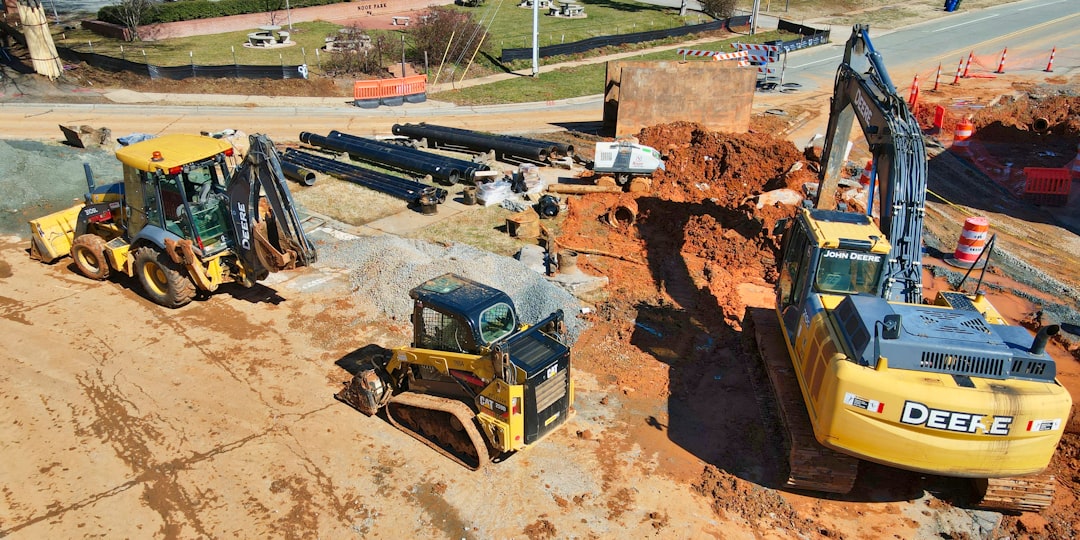
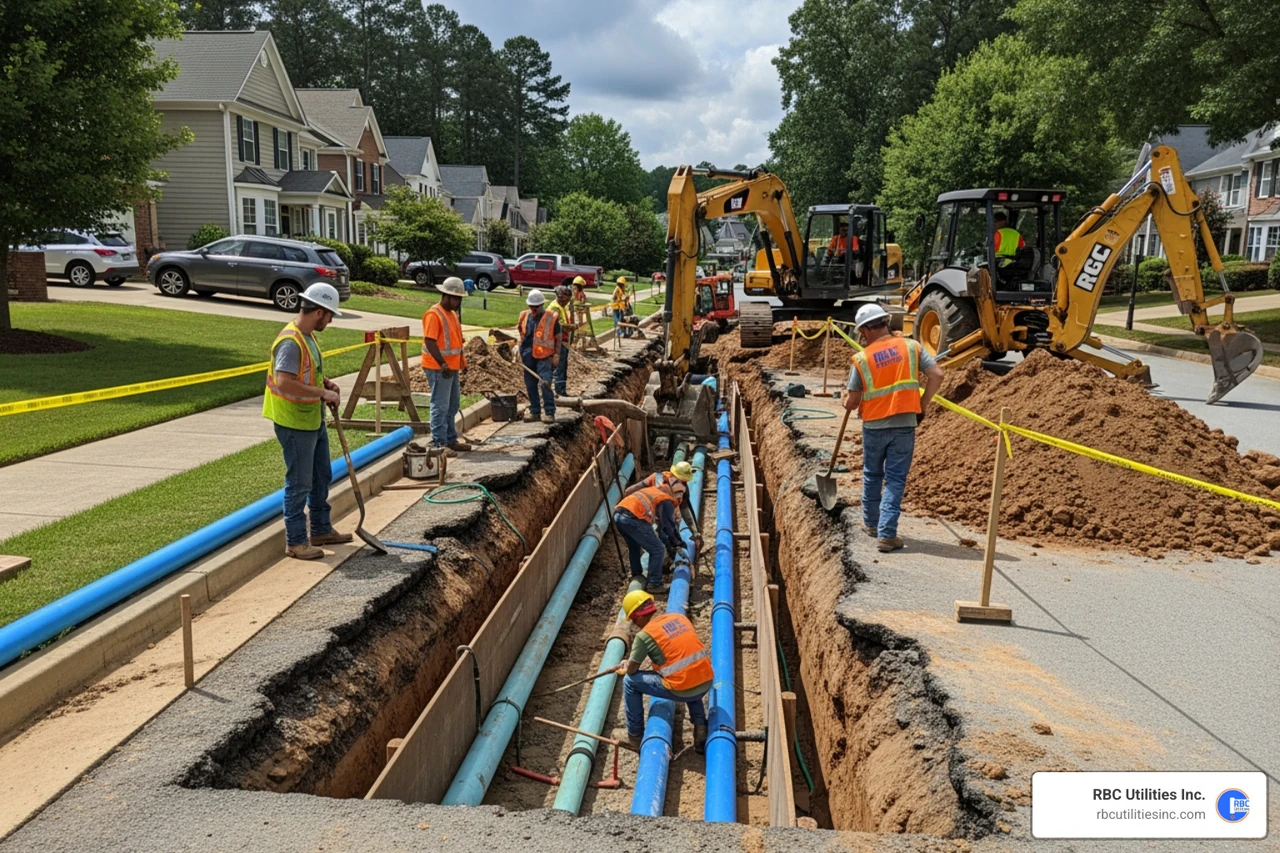
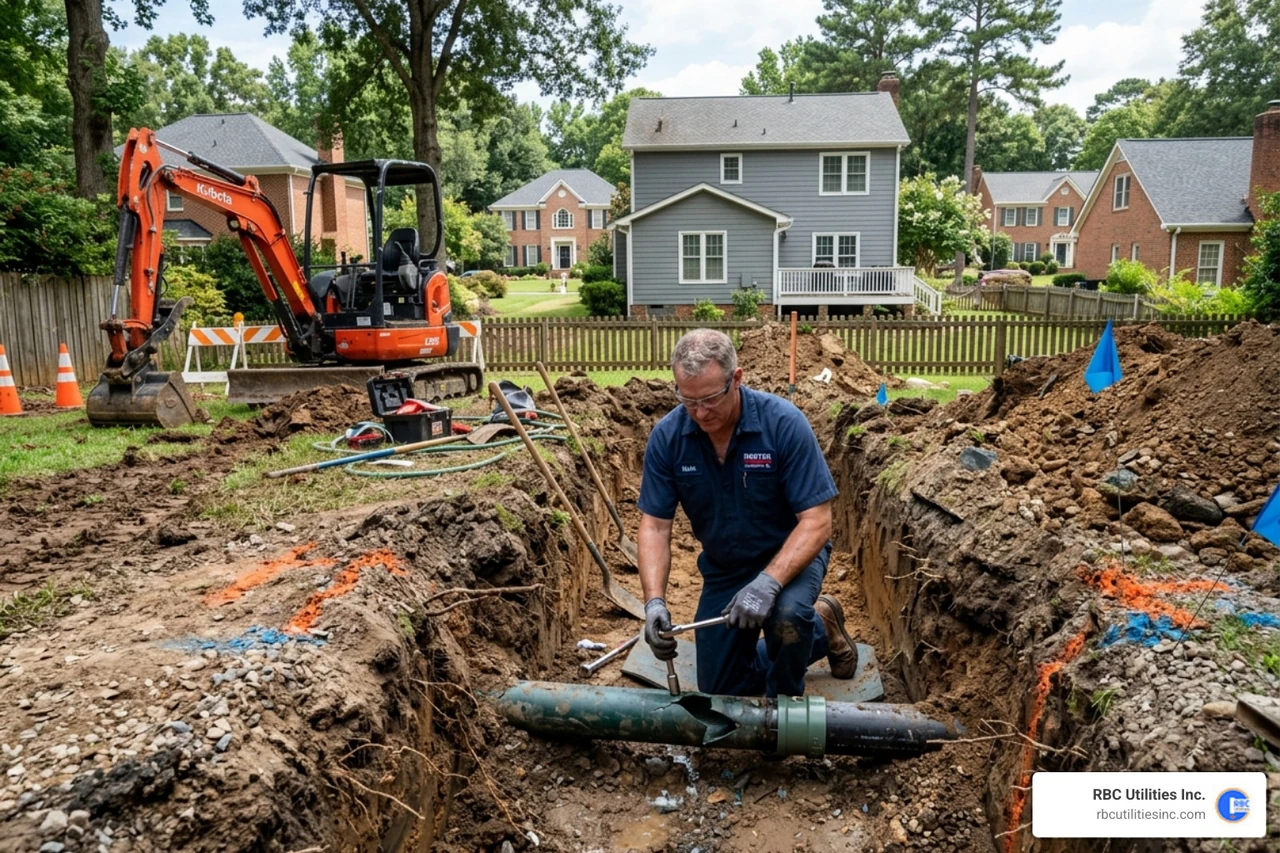
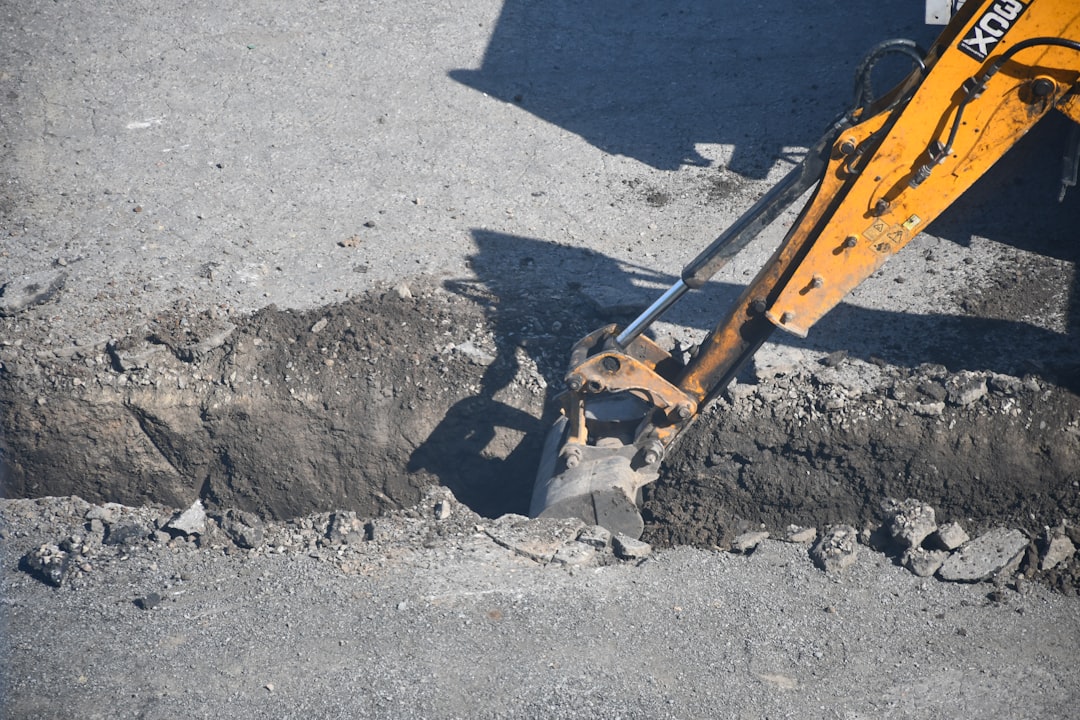
Our crews utilize specialized excavators and trenchers to complete Utility Trench Excavation NC safely and efficiently. During traditional excavation, soil stability is our primary concern. We strictly follow OSHA guidelines, using trench boxes, shoring, and precise sloping to protect our workers from cave-ins.
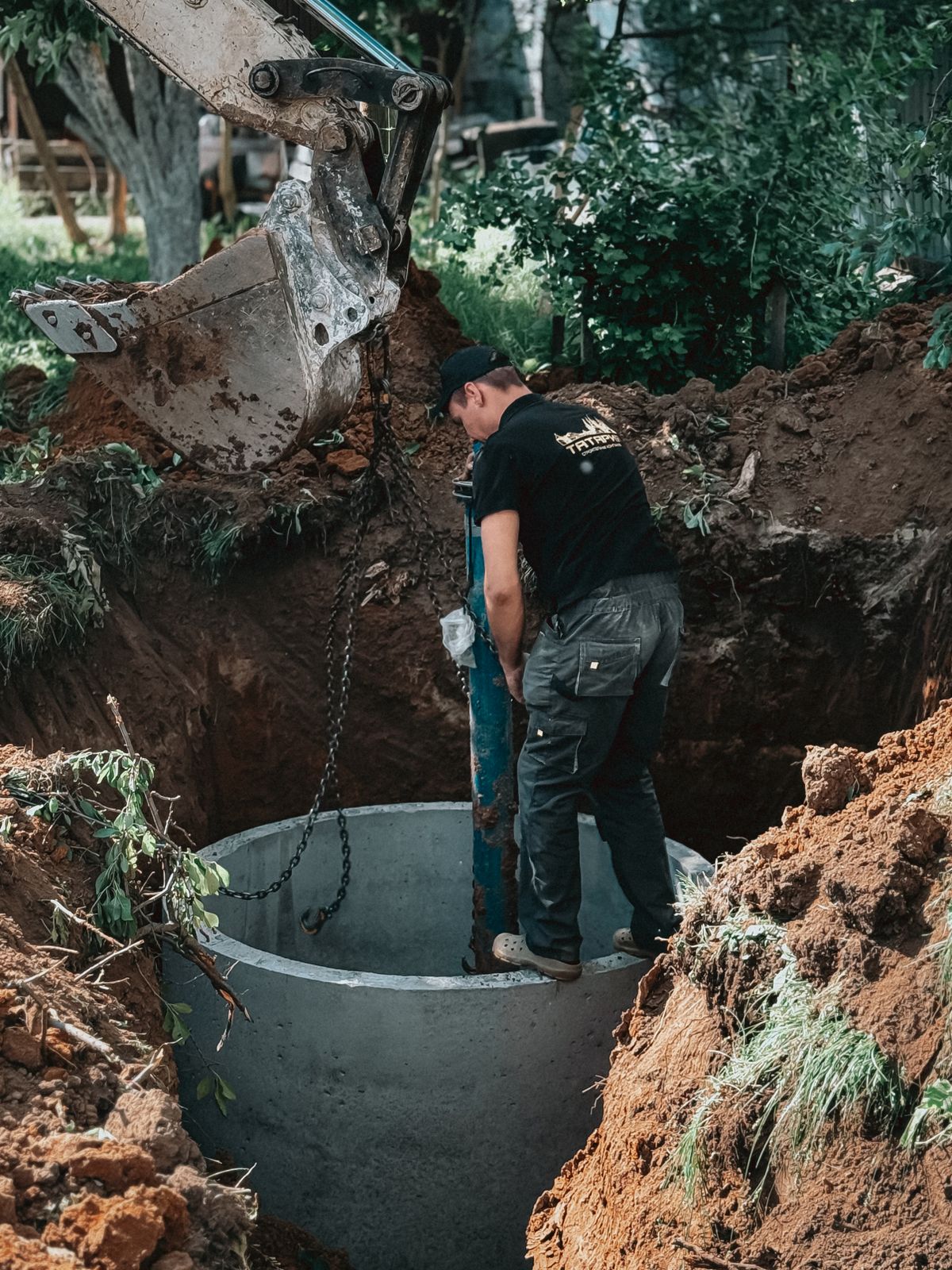
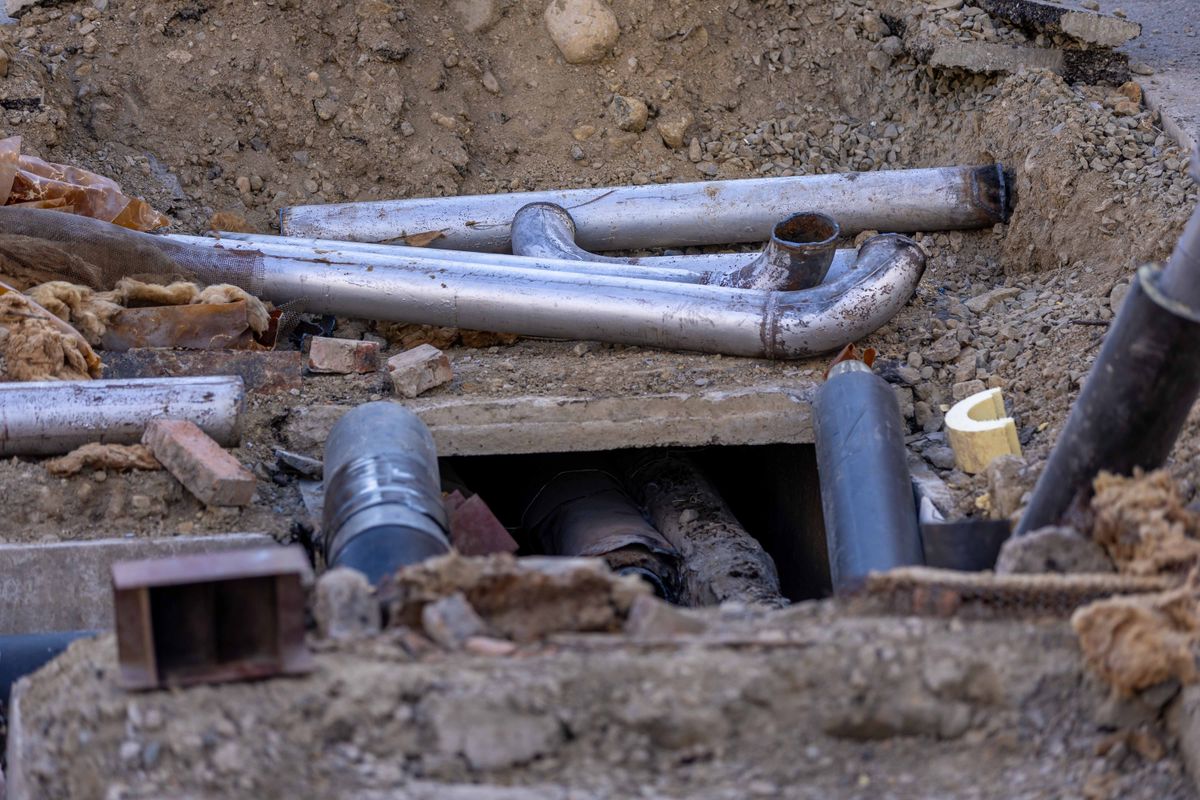
Once the utility is placed, we use high-quality bedding materials like sand or washed stone to support the pipe, followed by methodical backfilling and compaction to prevent the ground from settling later on.
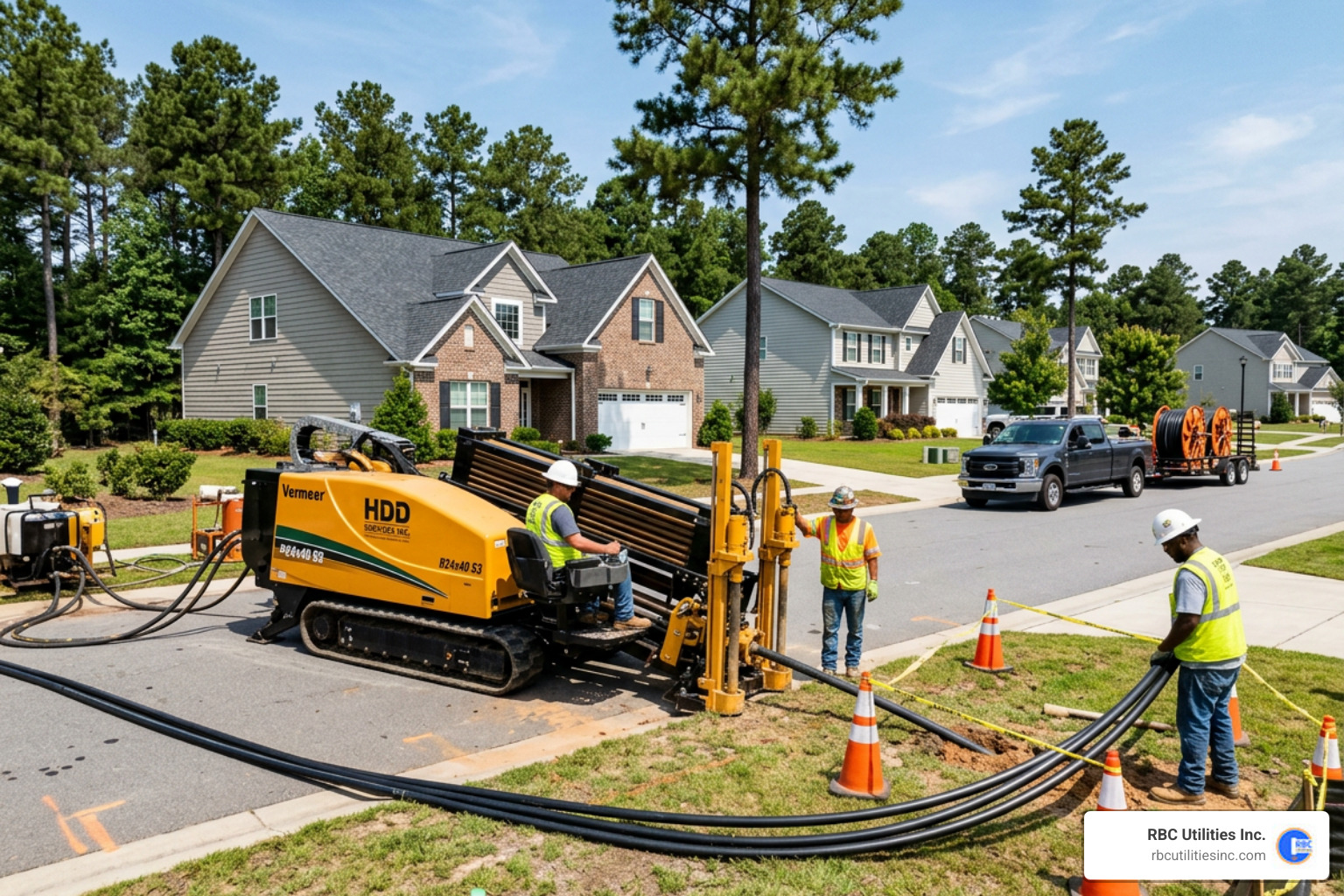
For projects where digging up the surface is either too expensive or physically impossible, trenchless technology is a game-changer. We utilize horizontal directional drilling (HDD) to install conduit and piping beneath active roadways, parking lots, and beautifully landscaped commercial properties without disturbing the surface.
Through our specialized Trenchless Utility Installation Carolinas services, we can install everything from telecom conduit to water lines with surgical precision. The process begins with a steerable pilot bore, followed by a reaming pass to enlarge the hole, and finally, the pullback of the continuous plastic pipe or conduit.
By eliminating the need to tear up and repave asphalt or replace expensive landscaping, HDD saves property owners significant time and money. Learn more about our complete service offerings on our RBC Utilities Services page.
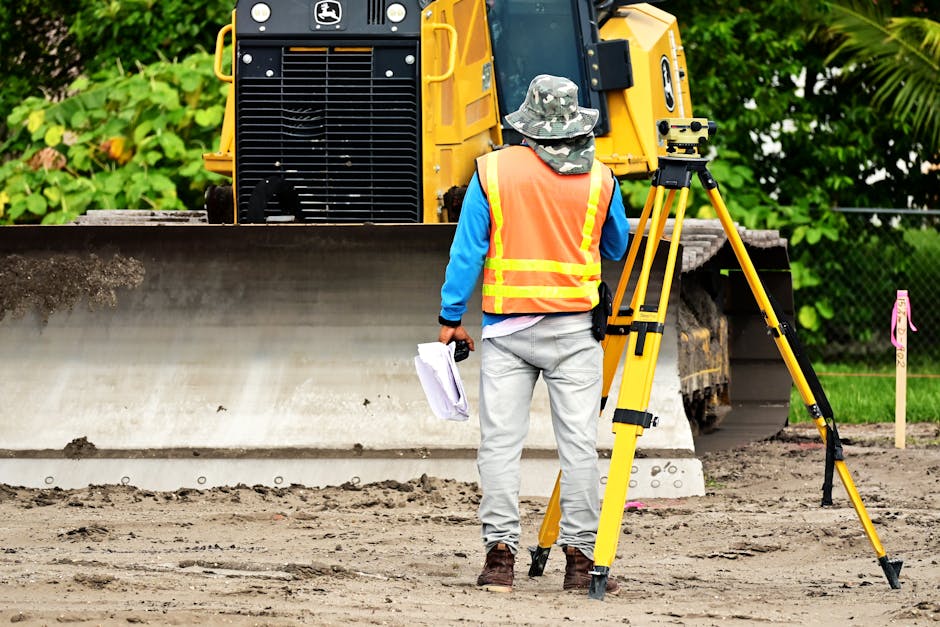
A successful utility installation relies on meticulous planning long before the first excavator arrives on site. A single missed detail in the planning phase can result in ruptured lines, project delays, or failed municipal inspections. Here is the step-by-step process we follow on every project to guarantee success:
Every piece of land in the Carolinas has its own unique personality. In Charlotte, we often deal with dense clay, while coastal areas present high water tables and sandy soils. These differences dictate how we approach Underground Utility Installation NC projects.
During our initial site assessment, we evaluate:
By taking the time to analyze these variables upfront, we can select the safest, most cost-effective installation method for your specific site.
Safety is not just a checklist; it is the foundation of our company culture. Before we break ground on any project, we coordinate directly with local utility companies and municipal inspectors to ensure complete regulatory compliance.
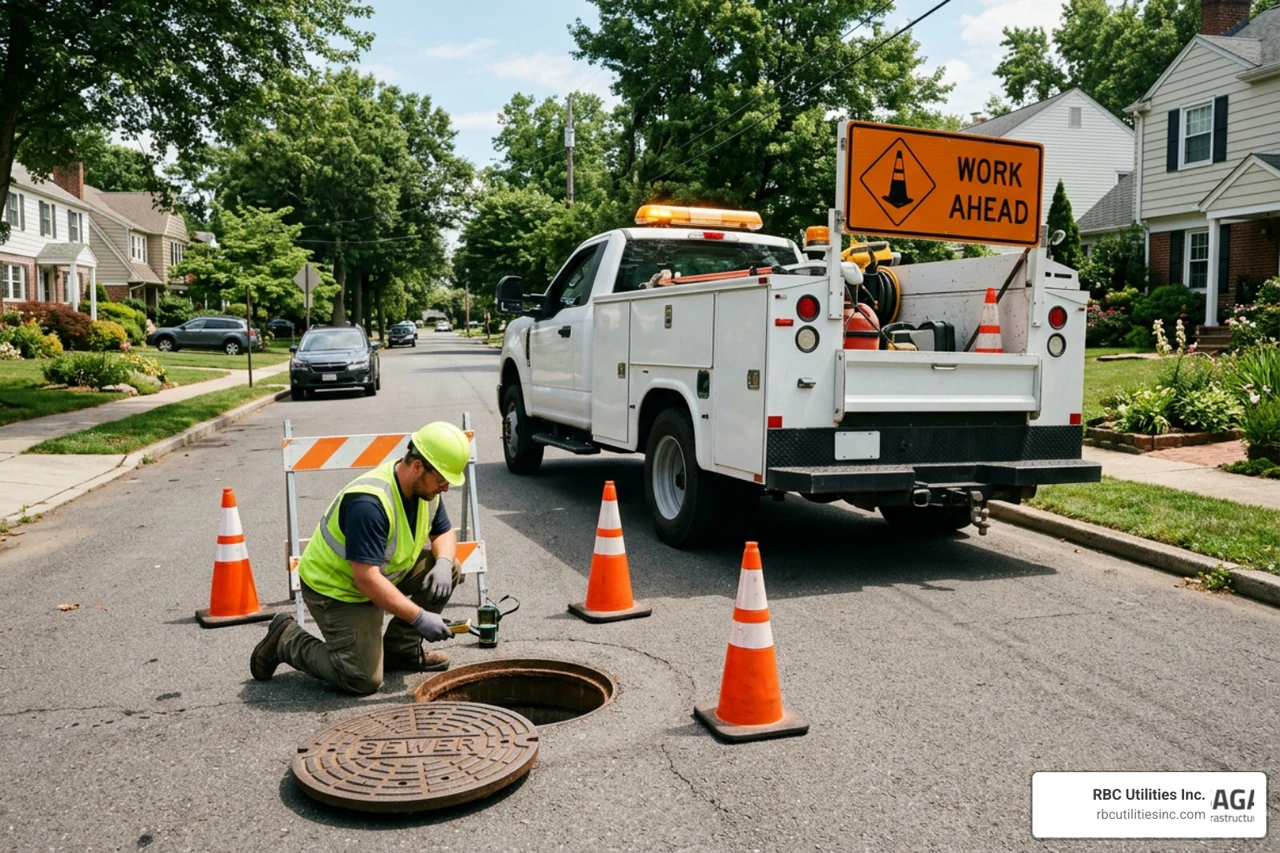
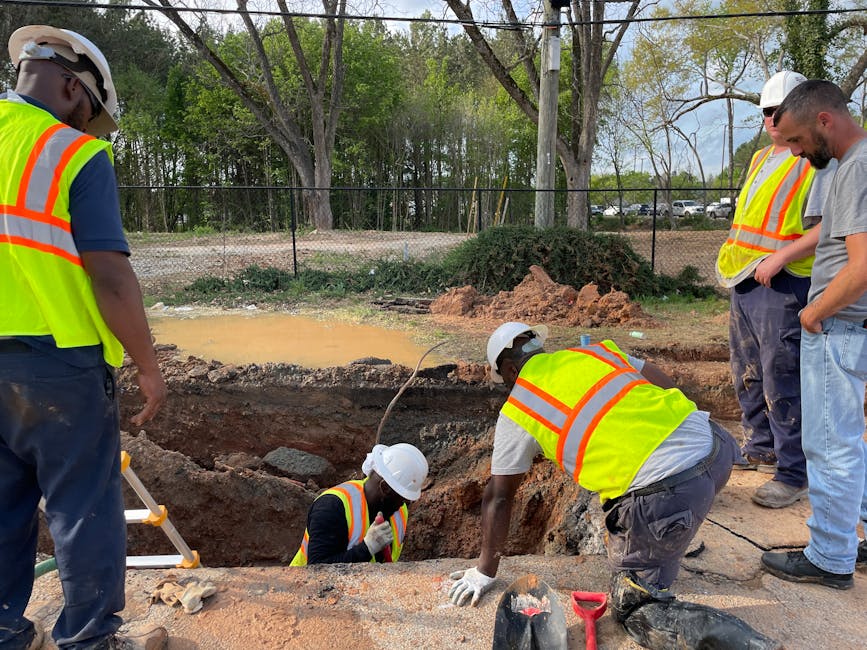
A critical first step is contacting the 811 locator service to mark all existing public utilities. We also align excavation practices with OSHA trenching and excavation safety guidance so crews are protected through proper protective systems, access planning, and hazard controls. Proper utility line installation with correct depth and protective conduit can prevent up to 85% of utility damage incidents caused by excavation.
We also maintain close relationships with local municipal authorities to streamline the permitting process. Whether we are managing an Underground Infrastructure Expansion Carolinas project or a localized commercial hookup, we handle all inspections and testing in-house. This ensures your project moves forward seamlessly without costly delays or communication gaps.
Required depths vary based on local municipal codes, the type of utility, and whether the line is subject to surface traffic.
Generally, water lines must be installed below the local frost line to prevent freezing. In North and South Carolina, this typically translates to a minimum depth of 36 to 42 inches. Sanitary sewers are placed at varying depths to maintain the necessary gravity slope.
Electrical and telecommunications lines are typically installed between 18 and 36 inches deep, with direct-burial UF cables requiring at least 24 inches of cover. When installing Conduit for Underground Power, we always ensure the depth meets or exceeds local utility provider specifications to protect the cables from future excavation work.
Once your utility lines are in the ground, a little preventive care goes a long way. Property owners should keep the following in mind:
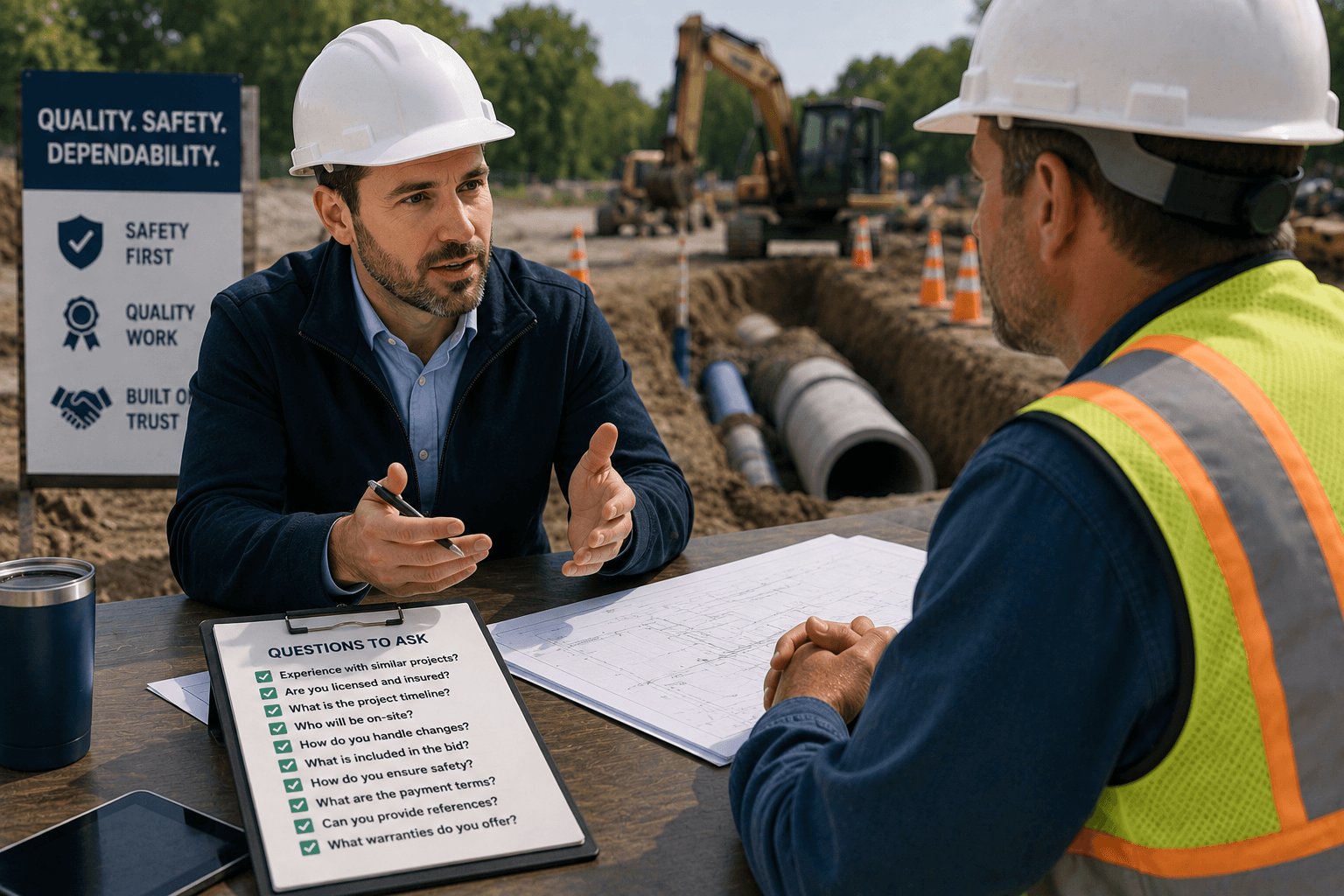
Getting an accurate quote starts with a clear project scope. When you contact a professional utility contractor, be prepared to provide:
We will conduct a thorough site evaluation to assess access, potential obstacles, and the best installation methods before providing a detailed, transparent cost estimation.
Underground utility installation is the foundation upon which your entire development project rests. Getting it right requires a contractor who brings technical precision, local regulatory expertise, and a commitment to safety to the job site every single day.
At RBC Utilities Inc., we leverage our deep Carolinas expertise, backed by the national resources of Saga Infrastructure, to deliver reliable, turnkey utility solutions. From initial route design and permitting through excavation, testing, and final site restoration, we manage the entire scope in-house to keep your project on schedule and on budget.
Ready to start planning your next development? Visit our RBC Utilities Services page to connect with our team and request a comprehensive consultation for your project.
Part of Saga Infrastructure, protecting what others built and helping it grow.
Address: 4404 Stuart Andrew Blvd., Suite K, Charlotte, NC 28217
Email: info@rbcutilities.com
Phone: 803-913-9727
Service Area: North Carolina | South Carolina