Why Commercial Sewer Line Services Are Critical to Infrastructure Health
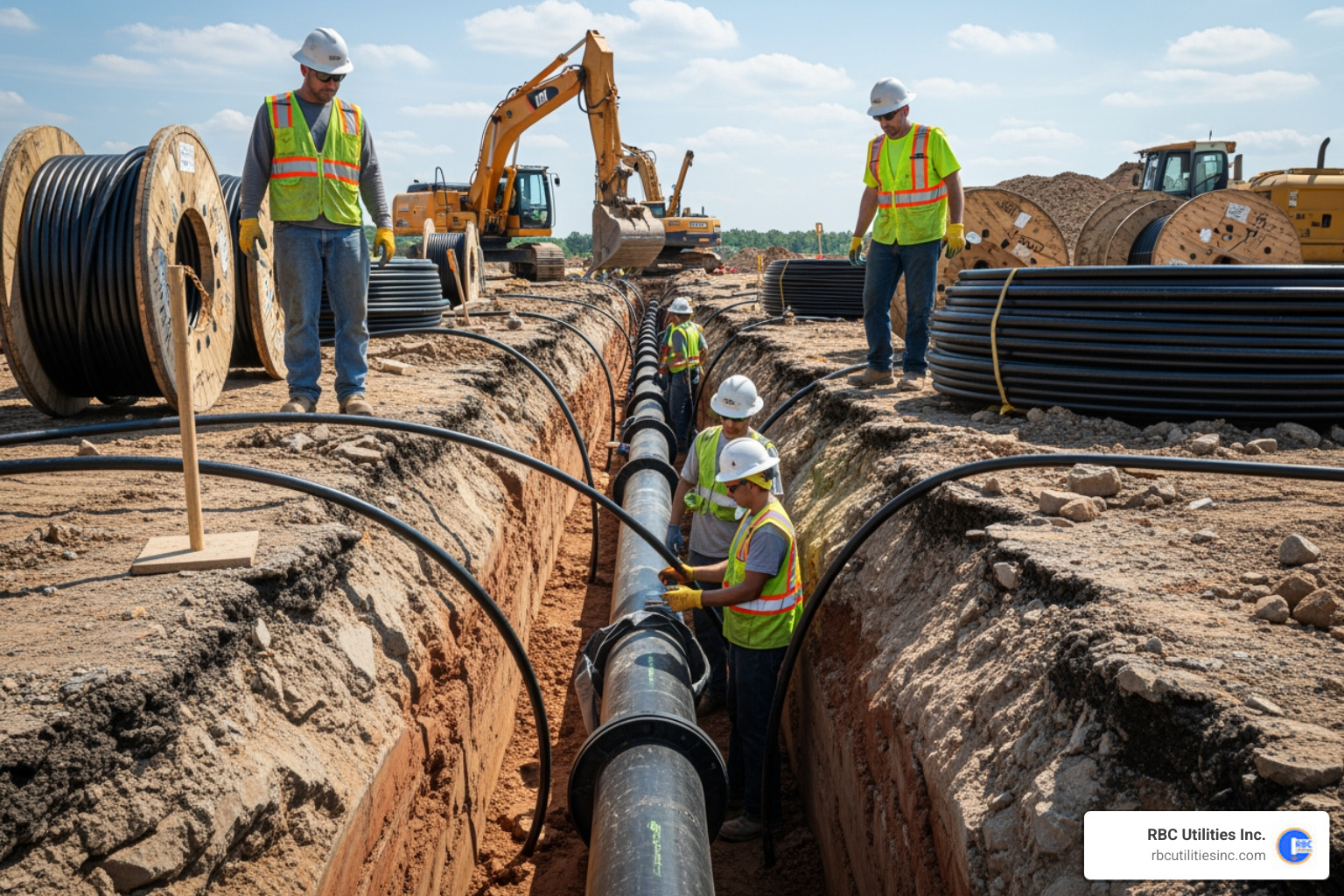
Commercial sewer line services are the inspection, cleaning, repair, and replacement of underground sewer systems in business and development properties. Here's a quick overview of what they include:
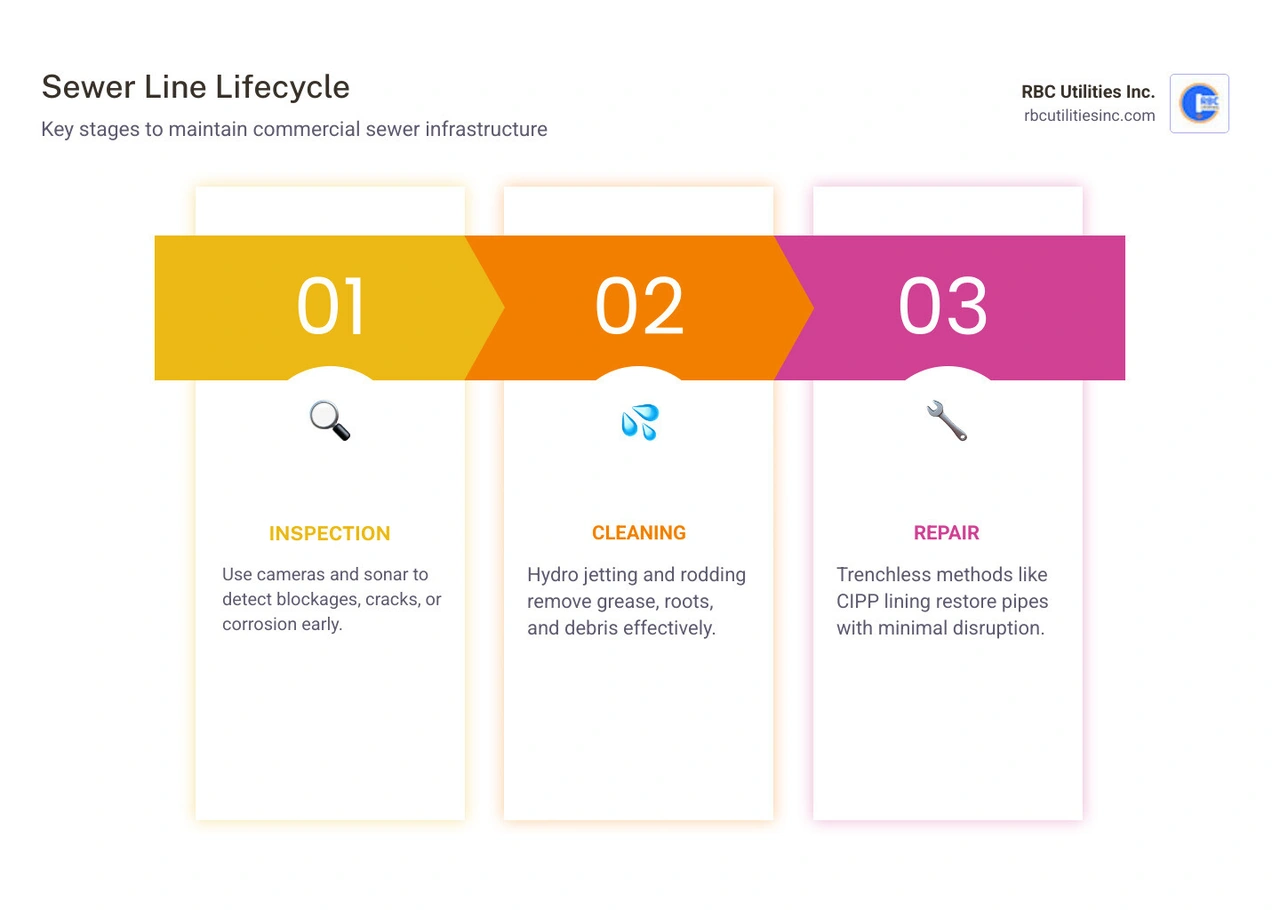
- Inspection - Camera and sonar-based diagnostics to locate damage or blockages
- Cleaning - Hydro jetting and mechanical rodding to clear grease, roots, and debris
- Repair - Trenchless methods (CIPP lining, pipe bursting) or traditional excavation
- Replacement - Full or partial pipe replacement using PVC, HDPE, or cast iron
- Preventative maintenance - Scheduled service to extend pipe lifespan and avoid emergencies
- Emergency response - 24/7 mobilization for backups, collapses, or sewage overflows
Most commercial sewer repairs using trenchless methods can be completed in one day. Traditional excavation typically takes two to five days, depending on depth, pipe length, and site conditions.
When a sewer line fails on an active job site or operating commercial property, the consequences are immediate. Operations stop. Health risks rise. Costs escalate fast. For developers and contractors in the Carolinas, keeping underground sewer infrastructure in sound condition is not optional — it is a baseline requirement for every successful project.
Sewer lines are largely invisible, buried beneath parking lots, foundations, and landscaping. That invisibility makes them easy to overlook — until something goes wrong. Grease builds up in a restaurant's main line. Tree roots crack through aging clay pipe. Heavy equipment compresses soil and shifts a lateral. Any of these can bring a commercial property to a halt.
The good news is that most sewer line problems are preventable with the right maintenance approach and fixable with modern repair technology — often without tearing up the property.
I'm Don Larsen from RBC Utilities, Inc., a leading underground utility construction contractor with deep experience delivering commercial sewer line services across residential, commercial, and municipal projects throughout the Carolinas. In this guide, I'll walk you through everything you need to know to protect your sewer infrastructure, from early warning signs to repair options and cost factors.
Essential commercial sewer line services terms:
Common Signs and Causes of Commercial Sewer Line Failure
Identifying a sewer problem before it becomes a full-blown catastrophe is the difference between a quick fix and a $30,000 excavation project. In our work across Charlotte and the broader Carolinas region, we see a few recurring "red flags" that signal a system is under duress.
The Warning Signs
- Slow Drains: If multiple sinks, toilets, or floor drains are sluggish, the issue isn't a simple clog in a single fixture; it is a bottleneck in the main sewer line.
- Sewage Odors: A healthy sewer system is airtight. If you smell "rotten eggs" or sewer gas around your property or inside the building, you likely have a cracked pipe or a dried-out trap allowing gases to escape.
- Gurgling Toilets: When air is trapped in the lines due to a blockage, it forces bubbles back up through the water in your toilets, creating a distinct gurgling sound.
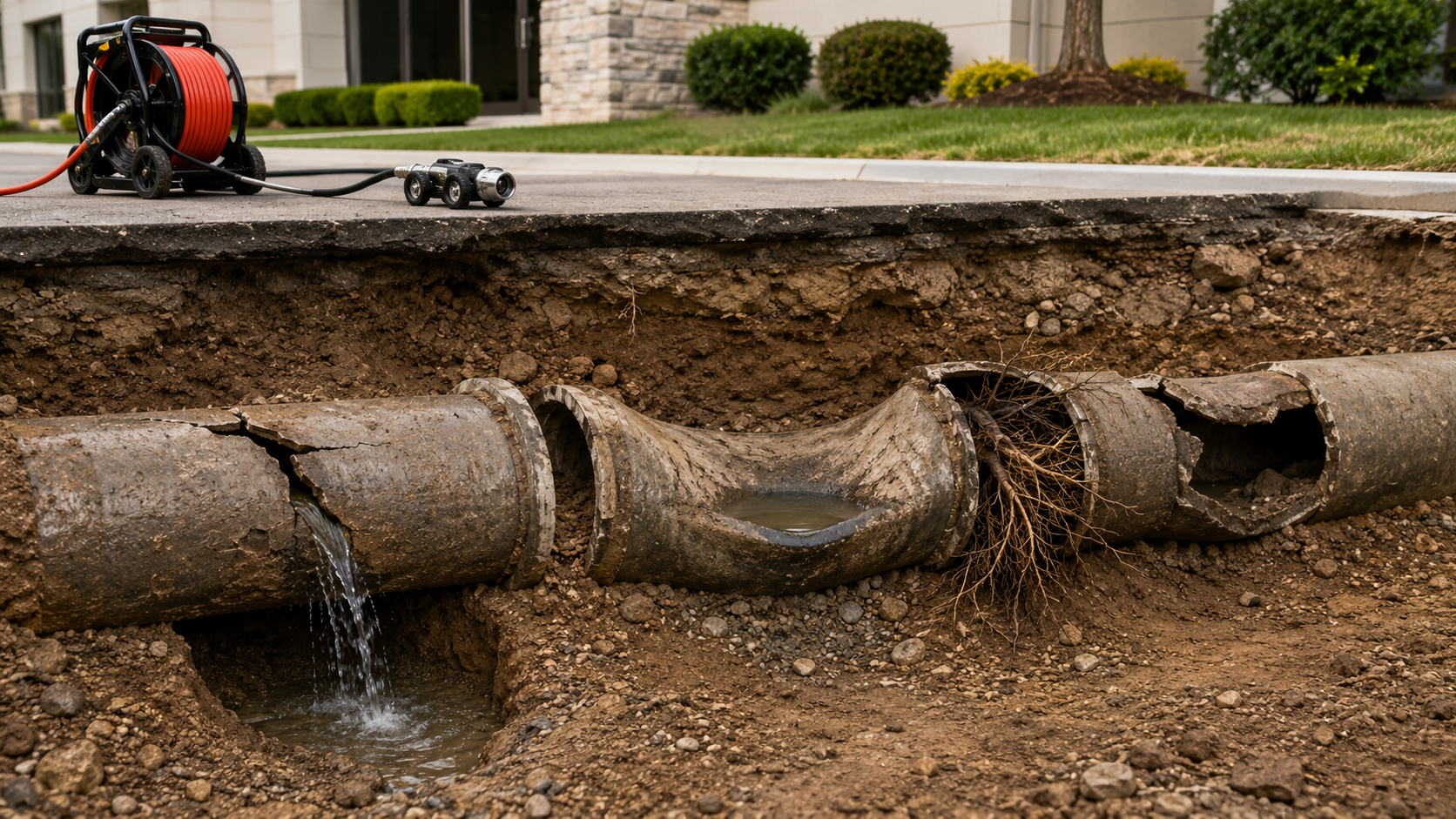
- Sinkholes and Soggy Grass: In the Carolinas, our soil can be quite reactive. If a sewer line leaks, the surrounding soil becomes saturated and eventually collapses, creating sinkholes in parking lots or unusually lush, green patches of grass in the middle of a dry lawn.
The Root of the Problem
Why do these lines fail? It is rarely just one thing.
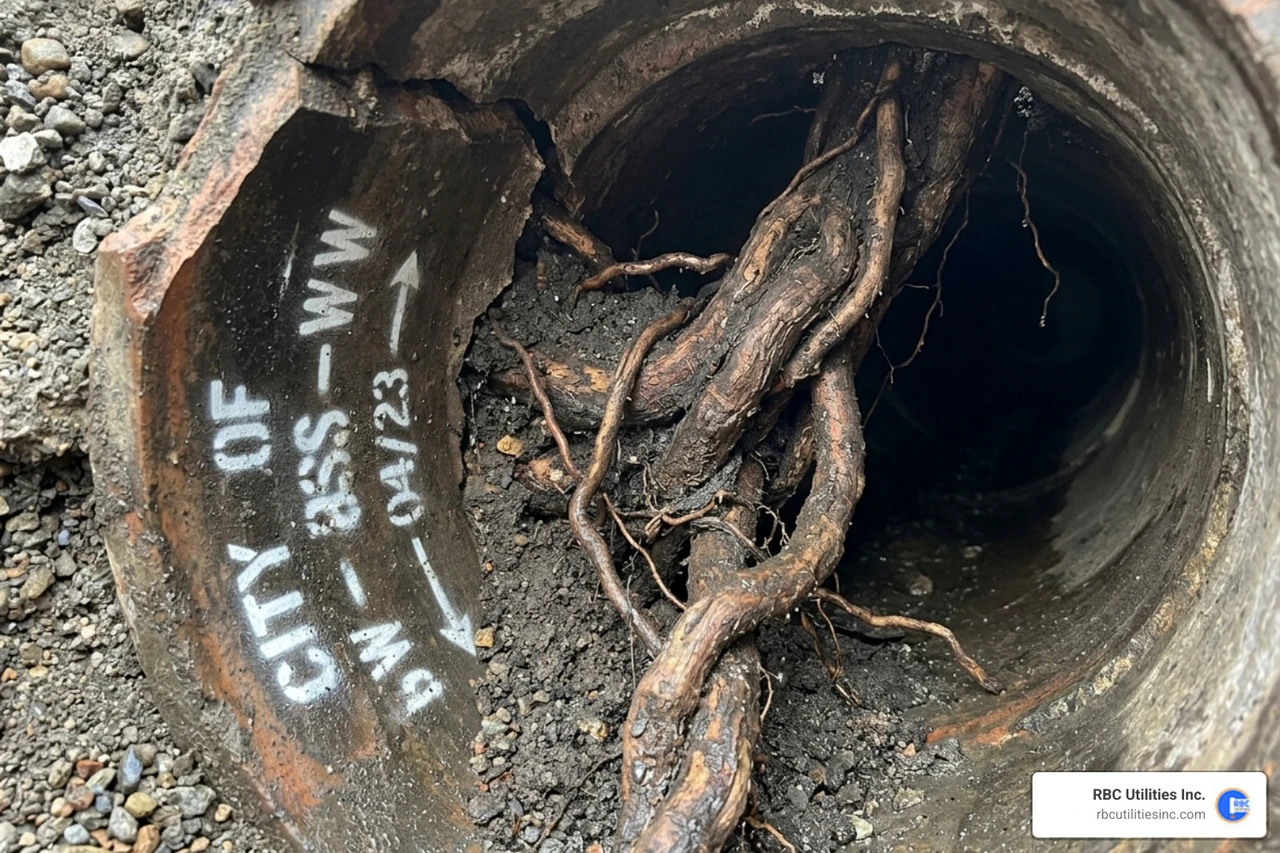
- Tree Root Intrusion: This is perhaps the most common cause we encounter. Roots are naturally drawn to the moisture and nutrients inside sewer pipes. They can enter through microscopic cracks or loose joints, eventually expanding until they shatter the pipe or create a massive "root ball" that stops all flow.
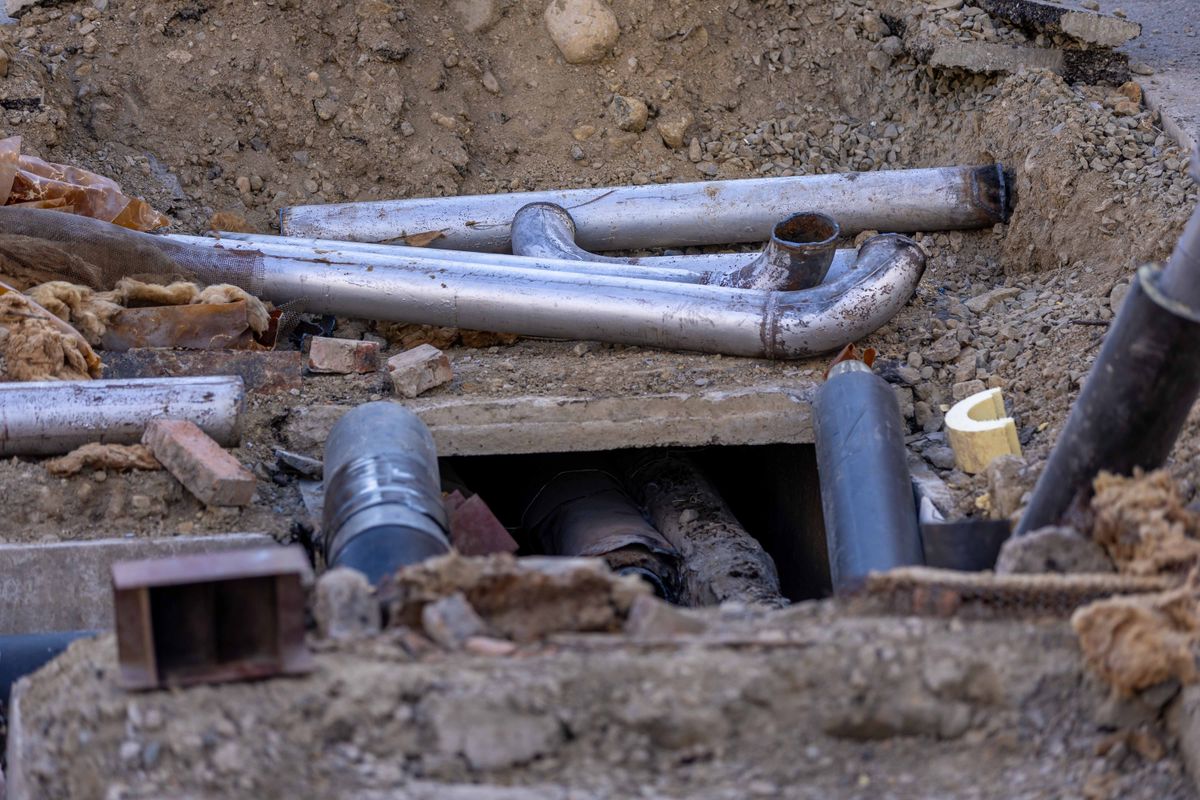
- Pipe Corrosion: Many older commercial properties in North and South Carolina still rely on cast iron or even "Orangeburg" (bituminous fiber) pipes. Over decades, these materials rust, scale, or simply flatten under the weight of the earth.
- Grease Blockages: In the commercial world, FOG (Fats, Oils, and Grease) is a major enemy. If grease is not properly trapped, it cools and hardens inside the sewer line, essentially "narrowing the arteries" of your plumbing.
- Shifting Soil: Ground movement, whether from heavy construction equipment on-site or natural settling, can cause pipes to "belly" (sag) or disconnect at the joints.
Impact on Different Property Types
The risks vary depending on what you are managing.
- Restaurants: These are high-risk zones for grease clogs. A backup here does not just mean a mess; it means a visit from the health department and potential closure.
- High-Rises and Office Buildings: The sheer volume of waste in a multi-story building puts immense pressure on the main stack and horizontal laterals. A failure on a lower floor can affect every unit above it.
- Retail Malls: With hundreds of public restrooms, the risk of "non-flushables" (wipes, paper towels) causing a main line blockage is constant.
- Industrial Plants and Food Processing: These facilities often deal with corrosive chemicals or high-temperature waste that can accelerate pipe degradation.
- Medical Facilities: Sanitation is paramount. Any sewer backup in a hospital or clinic is a high-priority biohazard emergency.
If you are noticing any of these signs, it is time to schedule a professional inspection and evaluate the right commercial sewer line services for your property.
Essential Commercial Sewer Line Services for Modern Infrastructure
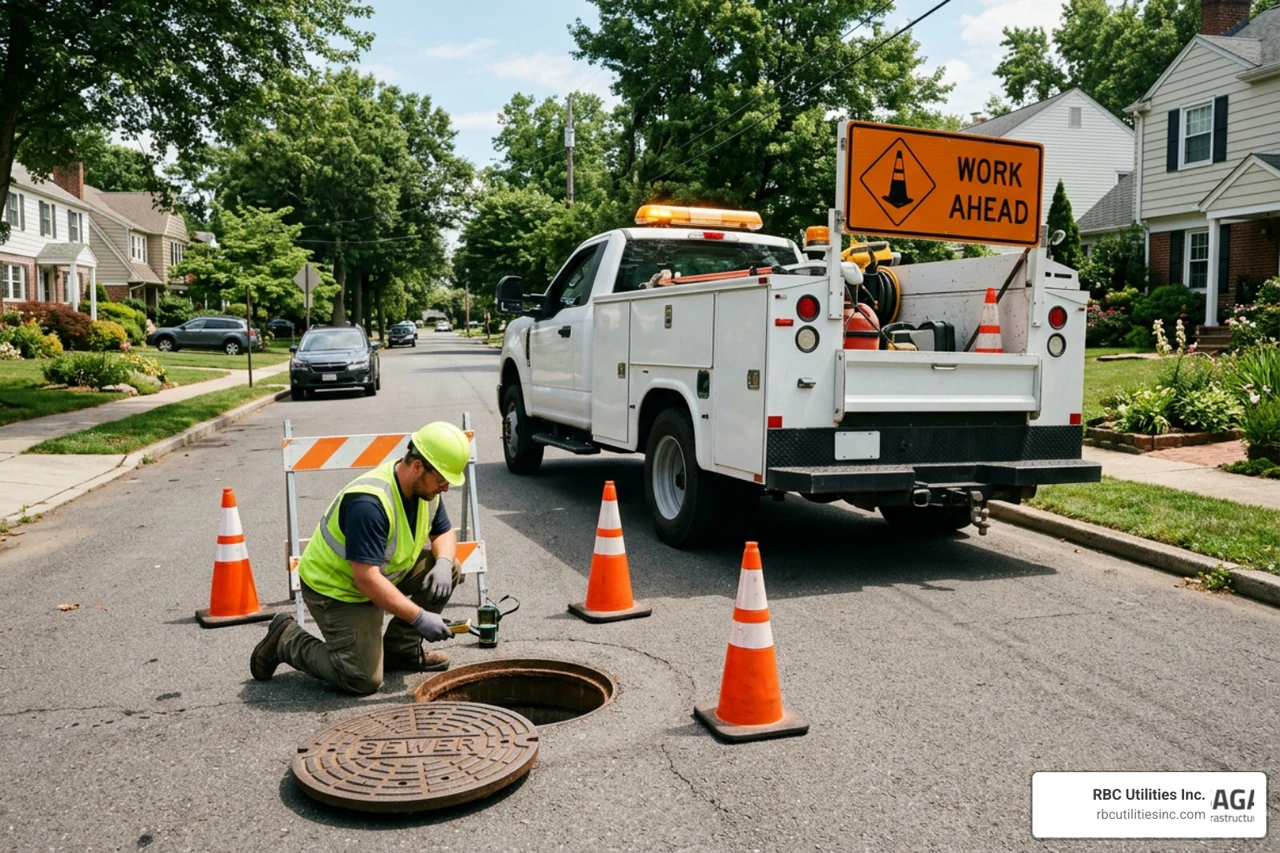
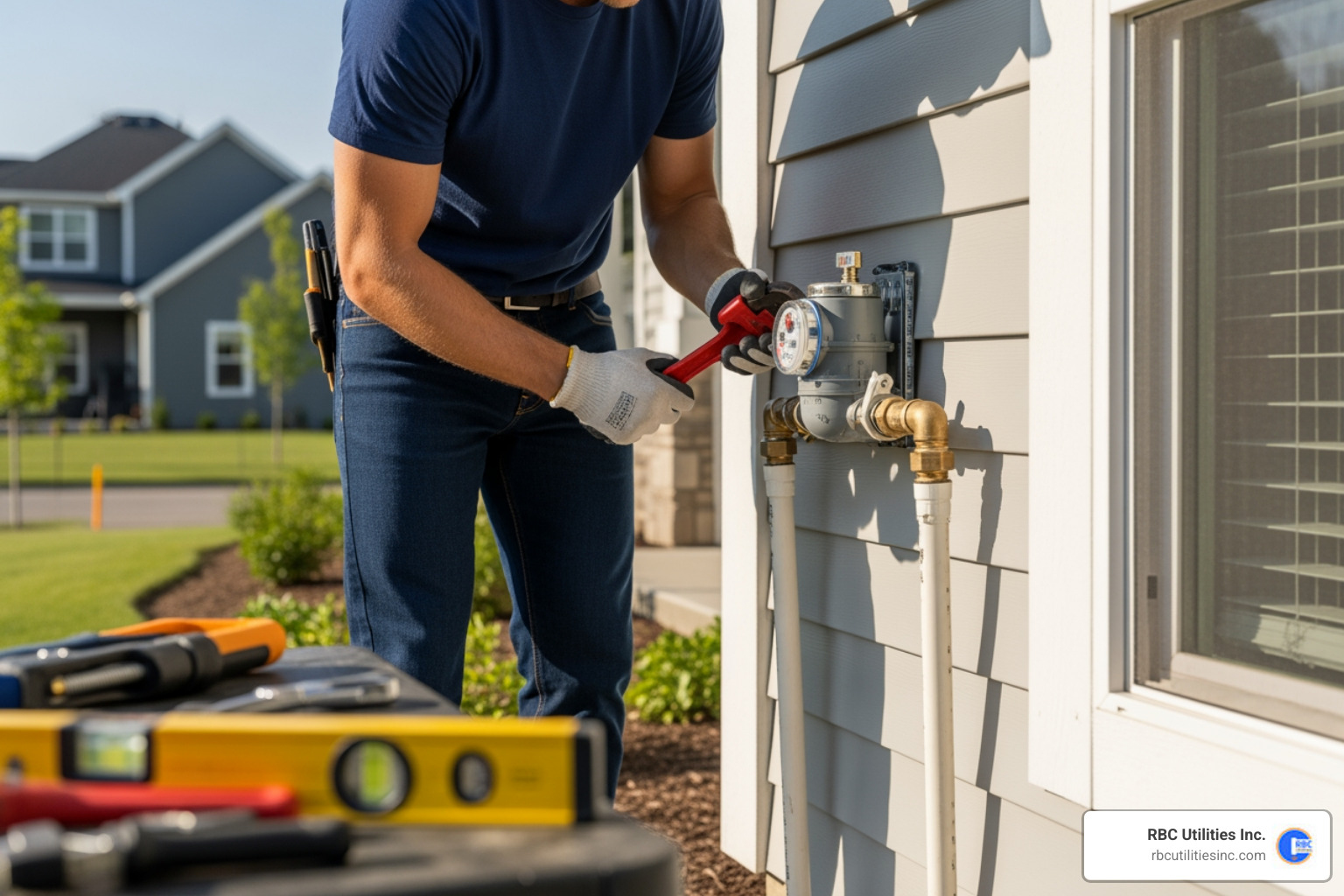
At RBC Utilities Inc., we believe that a "wait and see" approach is the most expensive way to manage underground infrastructure. Modern commercial sewer line services utilize high-tech tools to diagnose and resolve issues with surgical precision.
High-Tech Diagnostics and Cleaning
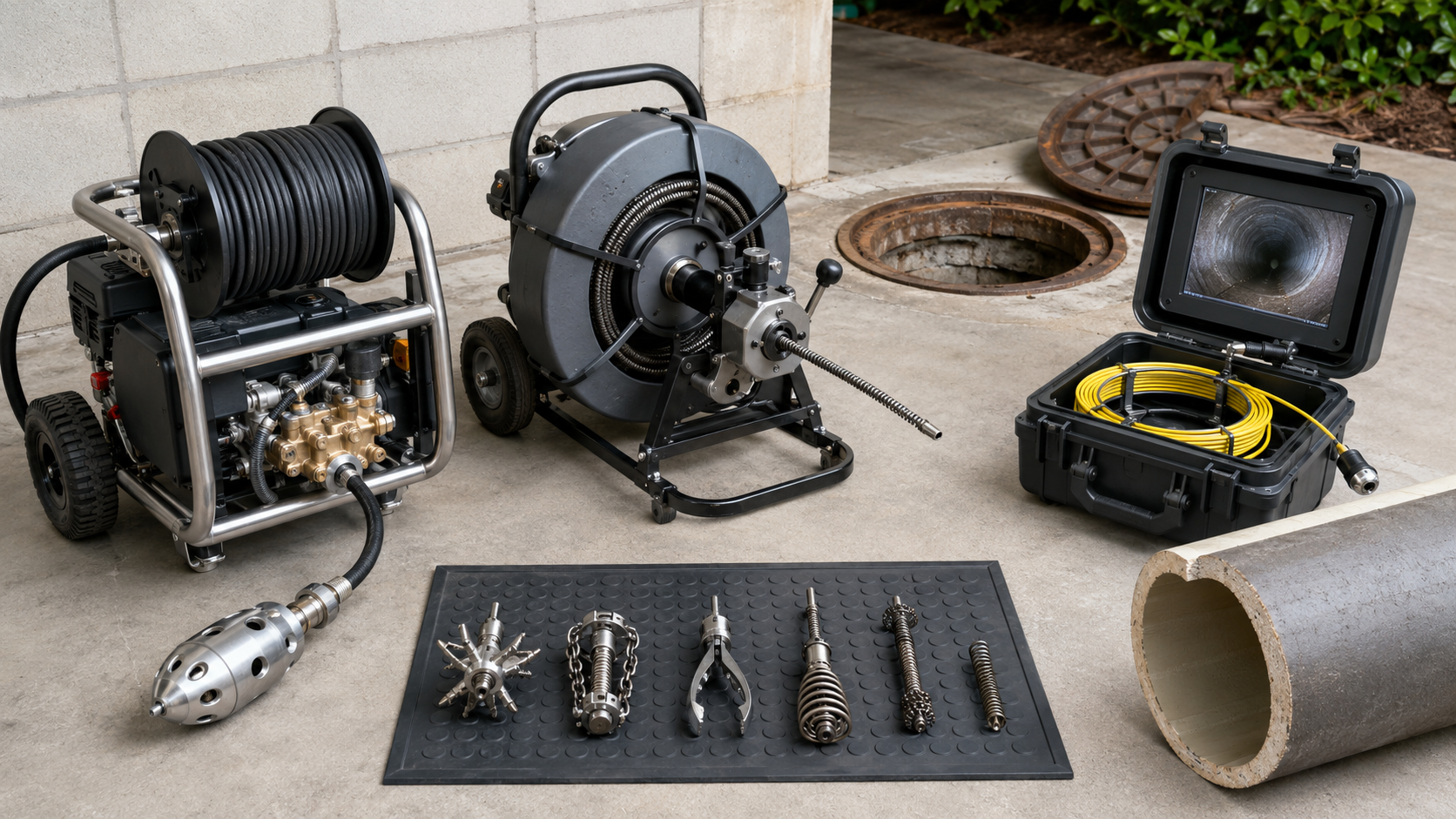
- Camera Inspections: We don't guess; we see. By threading a high-definition, waterproof camera through the line, we can pinpoint the exact location of a crack, root intrusion, or collapse. This eliminates unnecessary digging.
- Hydro Jetting: Think of this as a pressure washer for the inside of your pipes. Using specialized nozzles and water pressures up to 4,000 PSI, hydro jetting scours the pipe walls clean, removing grease, scale, and even small tree roots.
- Leak Detection: For pressurized systems or subtle cracks, we use acoustic sensors or thermal imaging to find the source of the leak before it undermines a foundation.
Specialized Maintenance Tools
A professional crew should arrive with a "fleet" of solutions. For example, we often use:
- Robotic Cutters: To remove stubborn roots or old liners.
- Mechanical Rodding: For heavy-duty physical blockages.
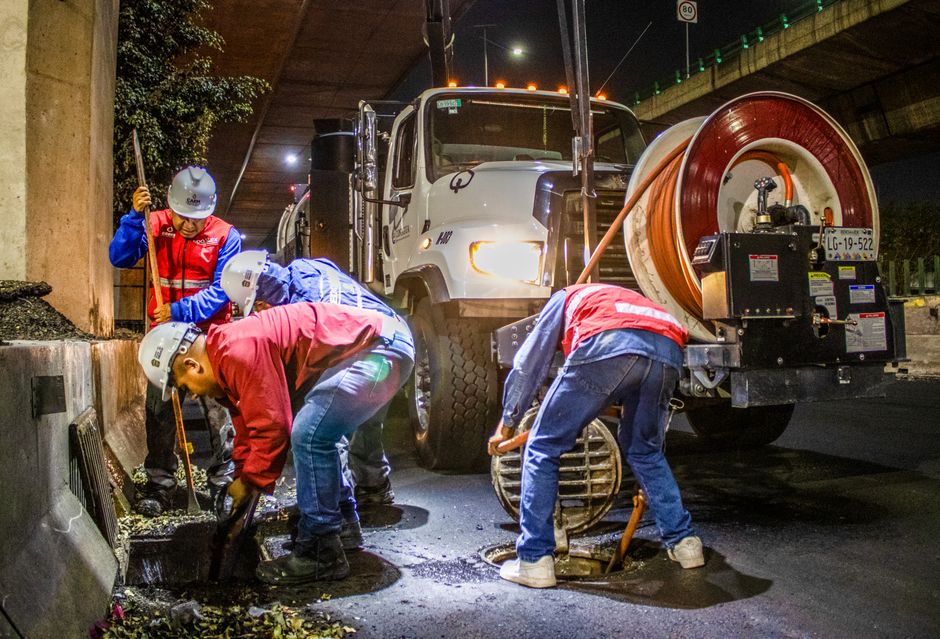
- Vacuum Catch Basin Cleaning: Essential for storm water and sanitary systems to prevent debris from entering the main lines.
More info about our services can help you determine which tool is right for your specific project.
Benefits of Regular Maintenance
Why invest in a maintenance contract?
- Operational Uptime: You can't run a business if the toilets don't flush. Regular cleaning prevents the "surprise" 2:00 AM backup.
- Regulatory Compliance: Municipalities in the Carolinas have strict codes regarding wastewater discharge. Regular inspections ensure you stay within legal limits.
- Property Value: Documented sewer maintenance is a major asset during property appraisals or sales.
- Cost Prevention: A $500 cleaning today can prevent a $15,000 emergency repair next year.
Emergency Response and Mitigation
When a main line collapses, time is the enemy. We offer 24/7 availability because we know that a sewer backup at a hotel or a shopping center can result in thousands of dollars in lost revenue every hour. Rapid mobilization allows us to bypass the damaged section, preventing flooding and ensuring business continuity while the permanent repair is planned.
Trenchless vs. Traditional: Choosing the Right Repair Method
The biggest question property owners ask us is: "Do we have to dig up the parking lot?" The answer is increasingly "No," thanks to trenchless technology.
The Methods Compared
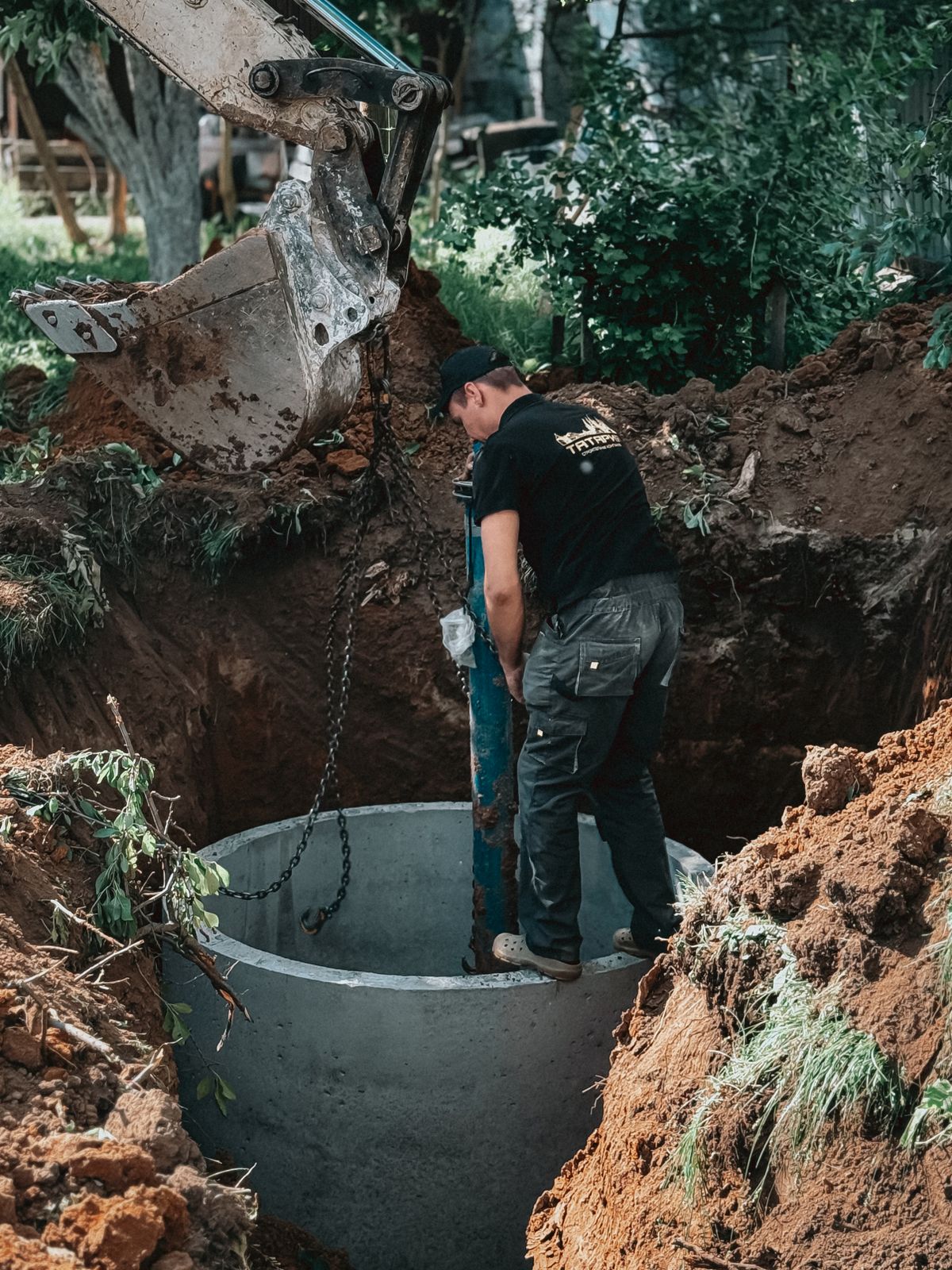
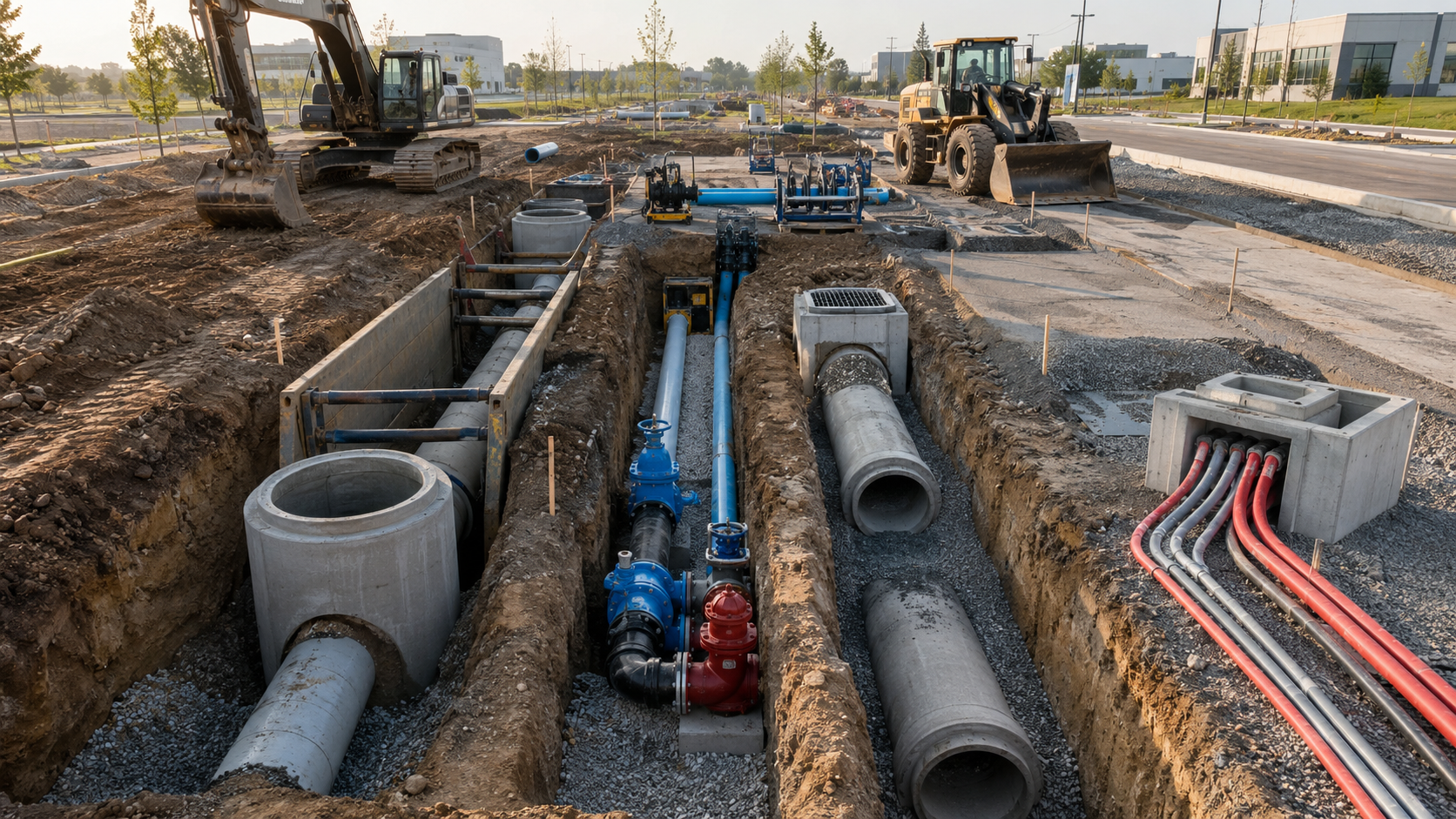
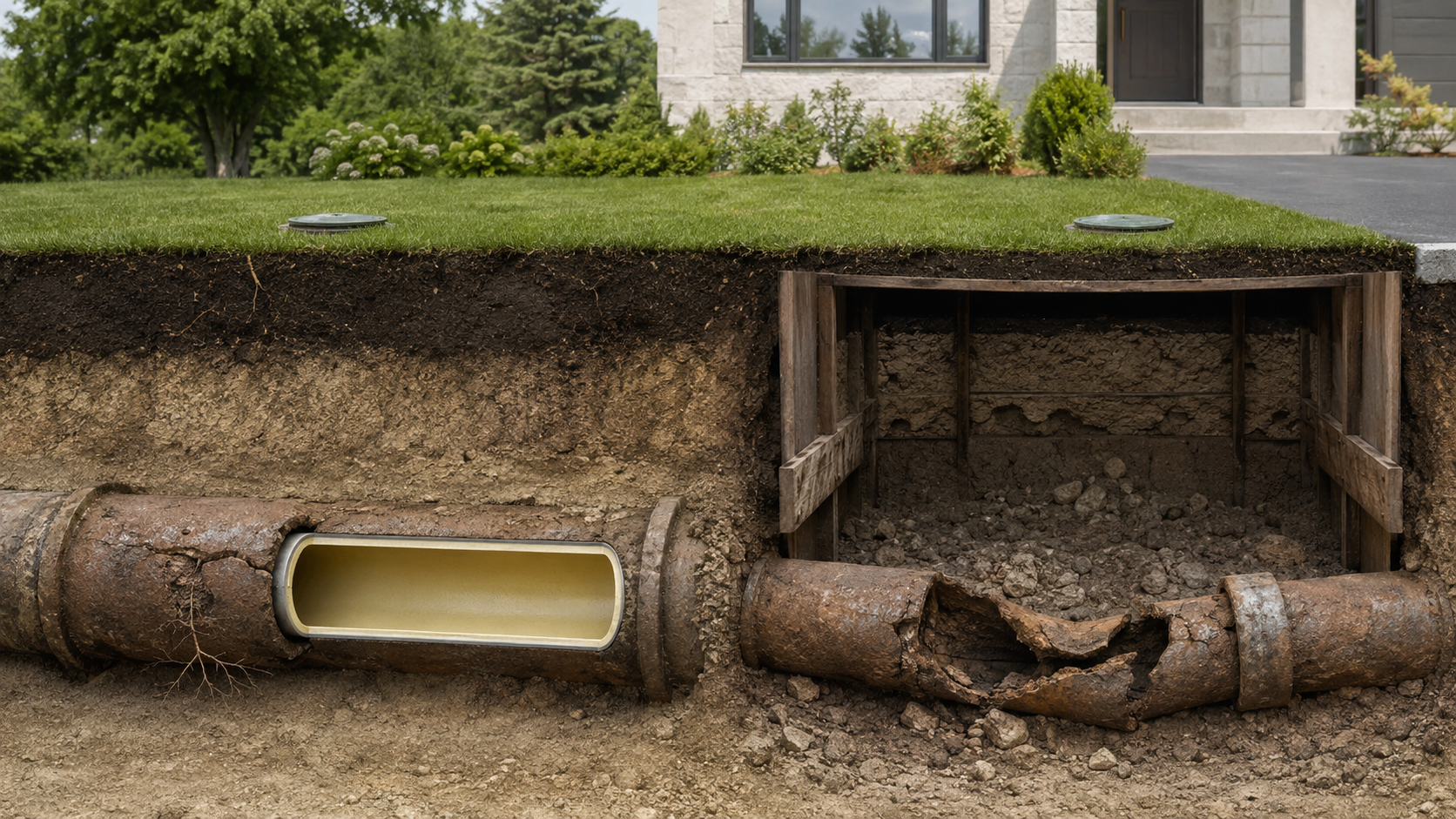
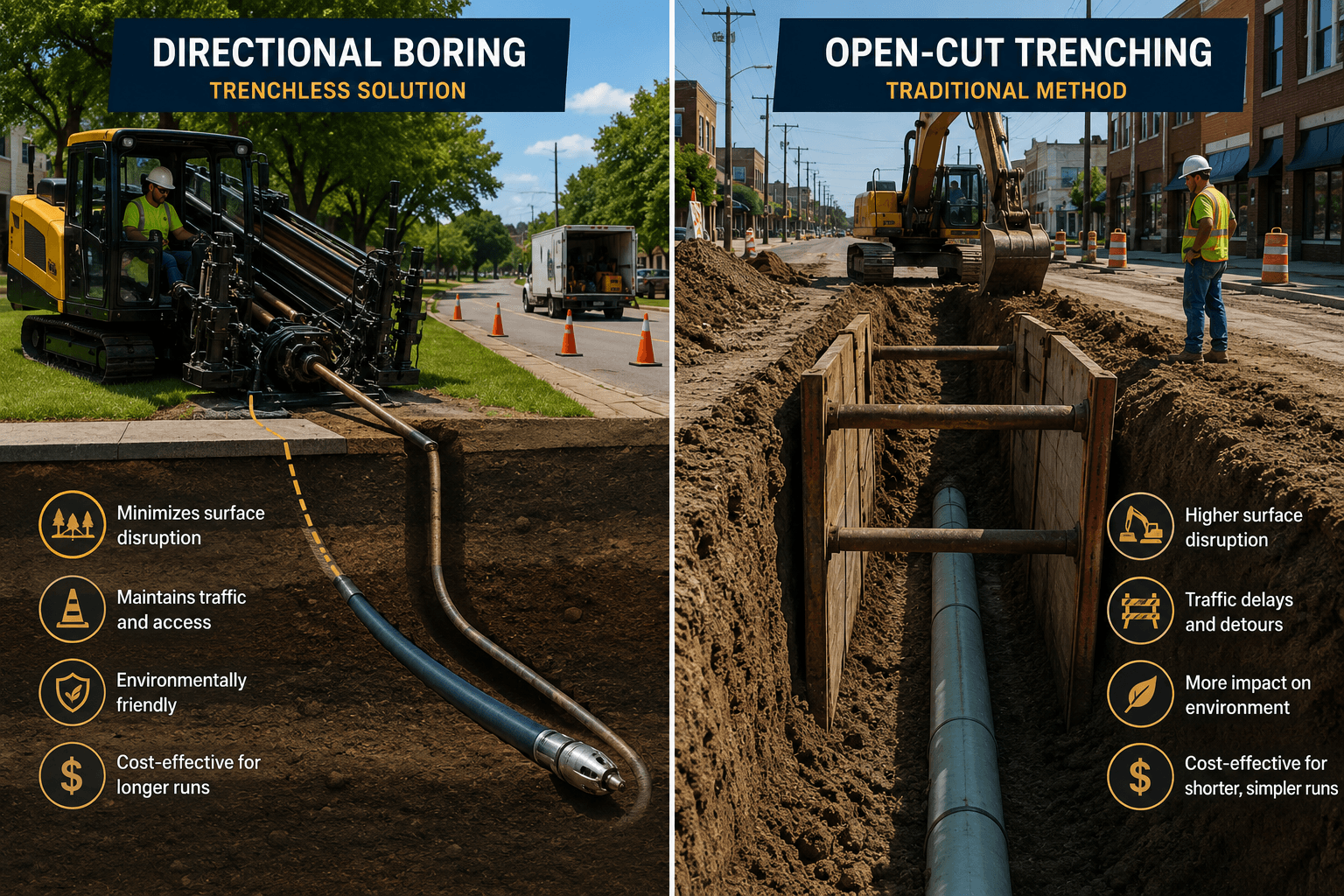
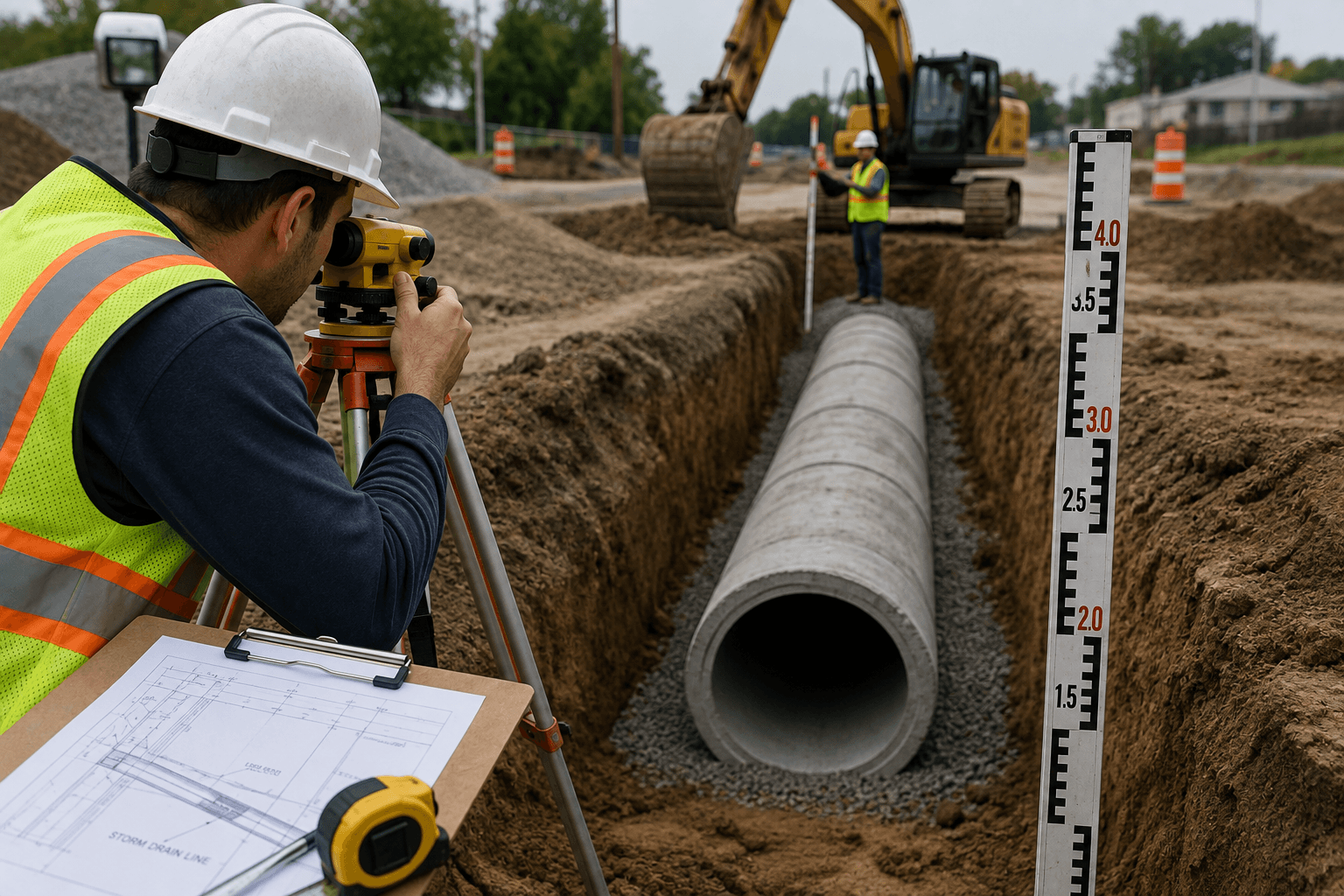
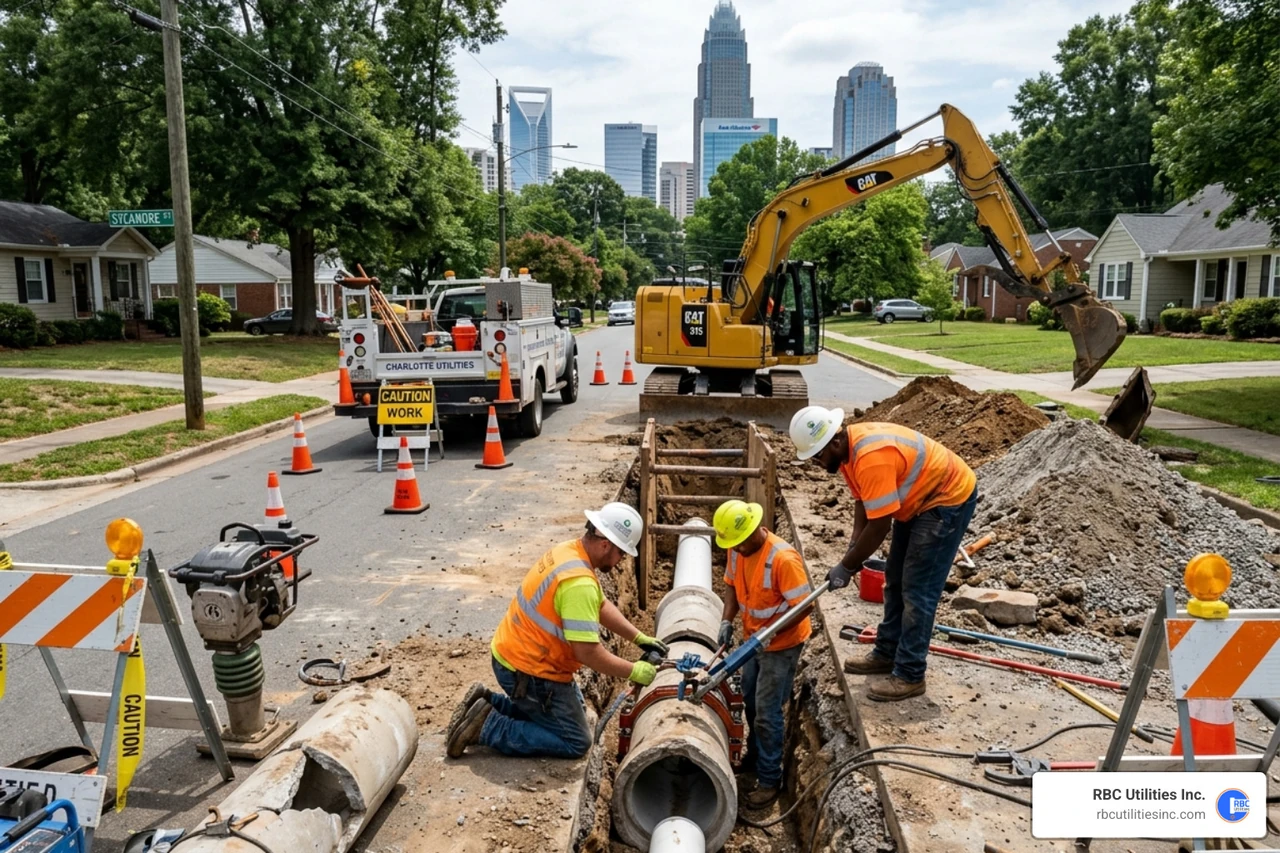
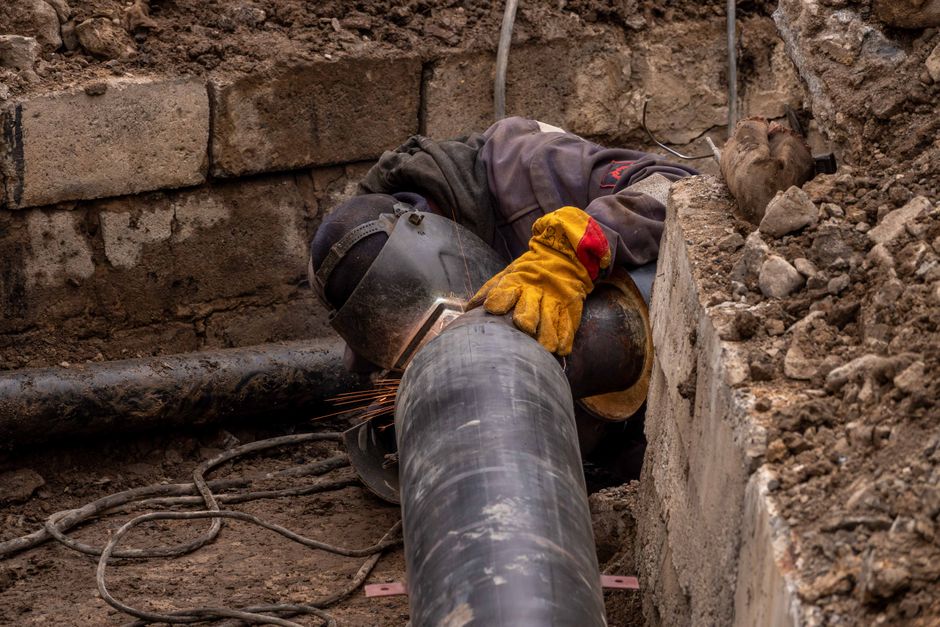
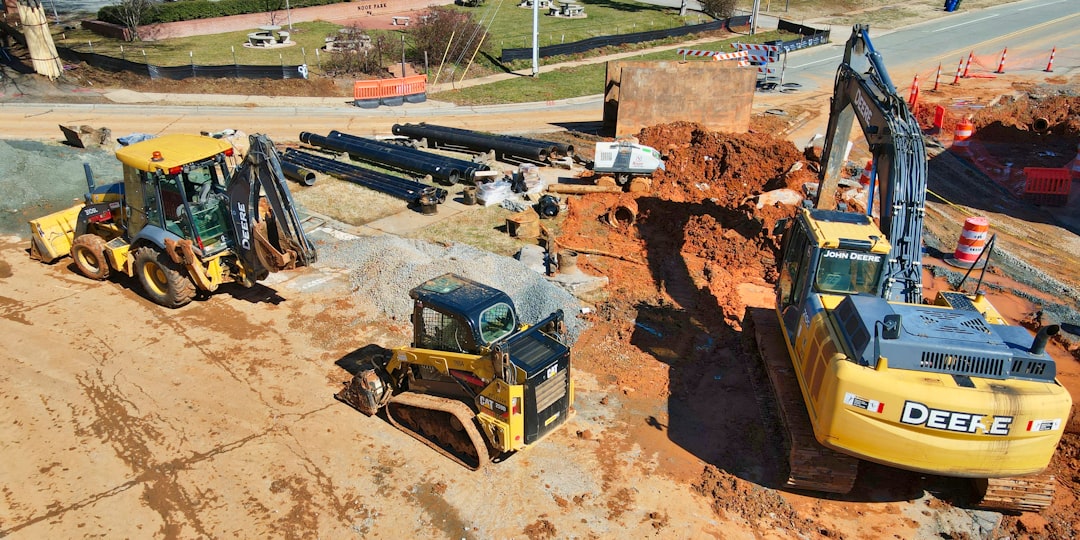
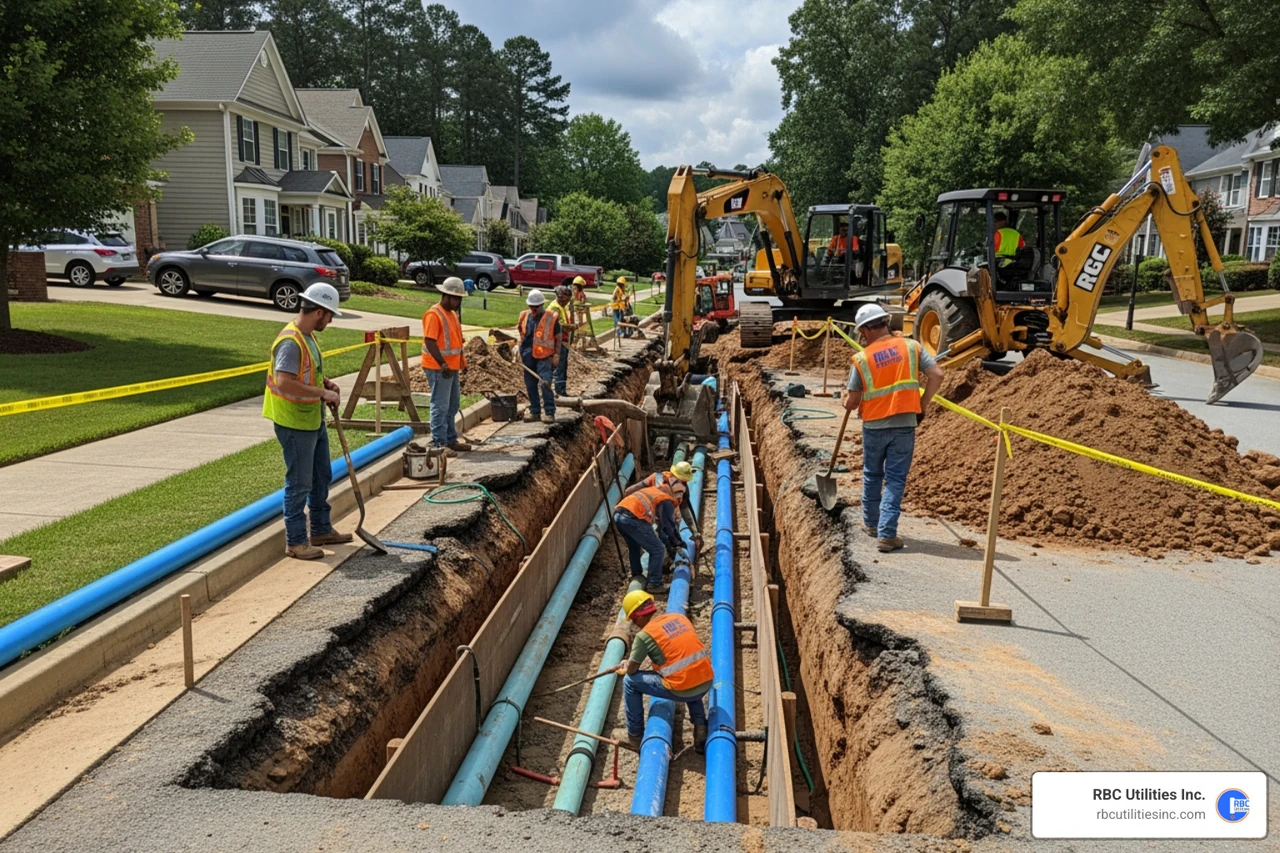
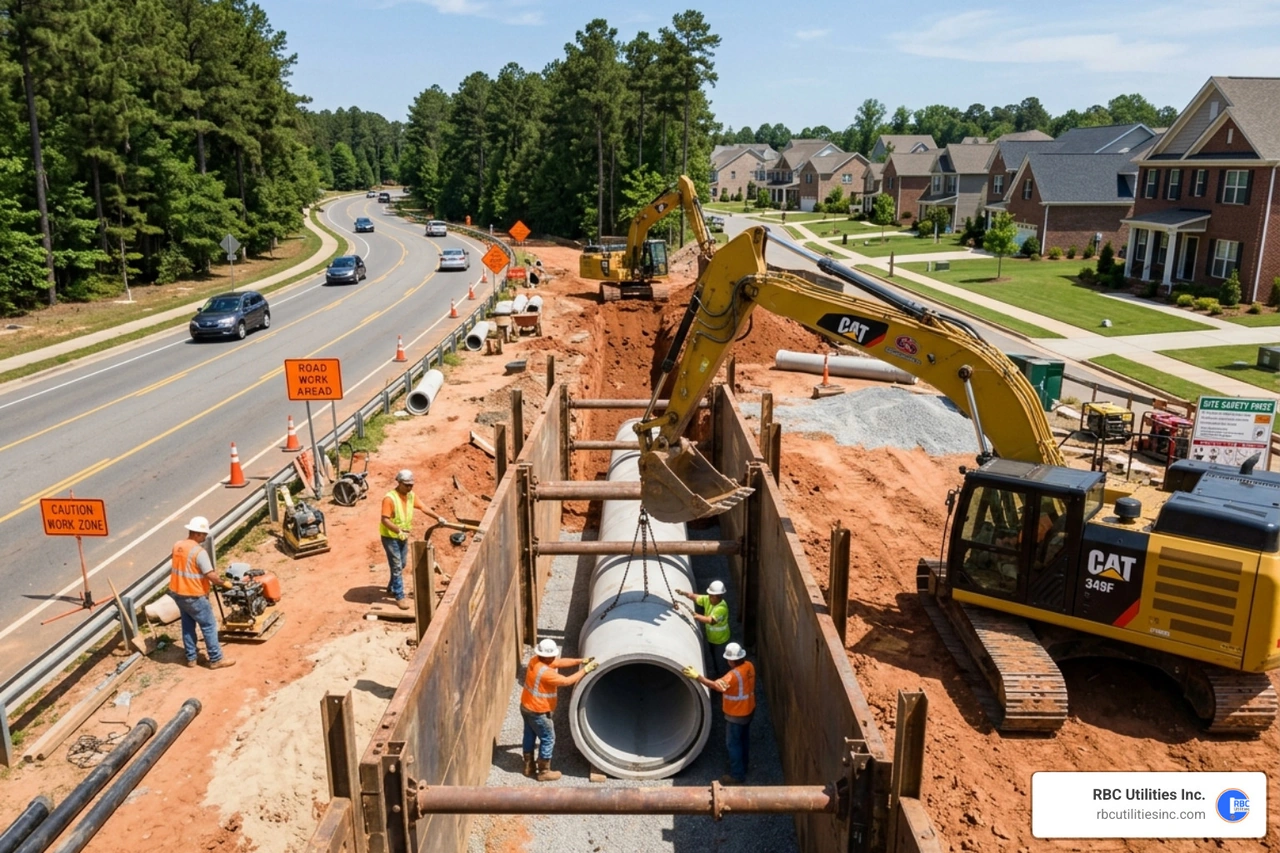
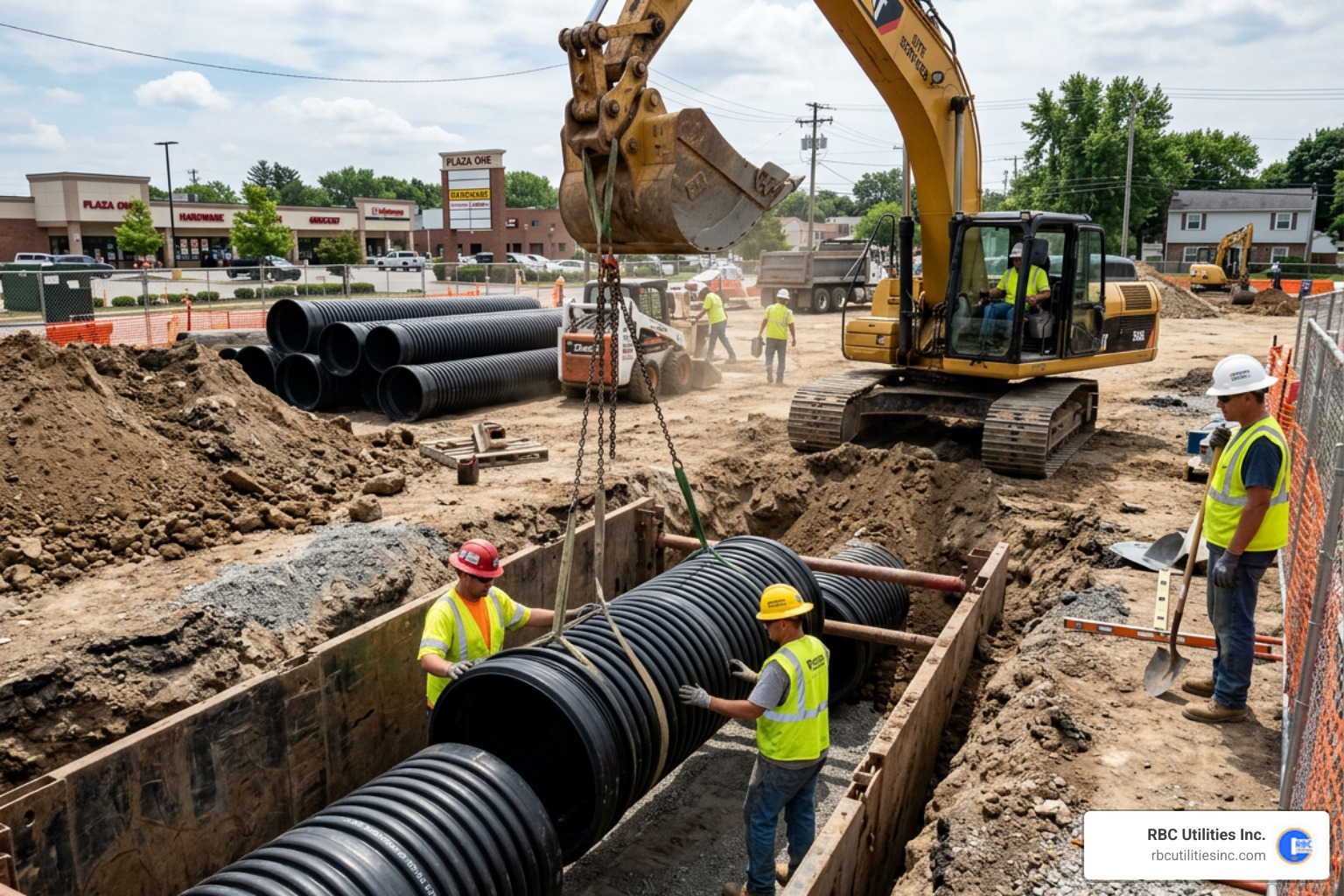
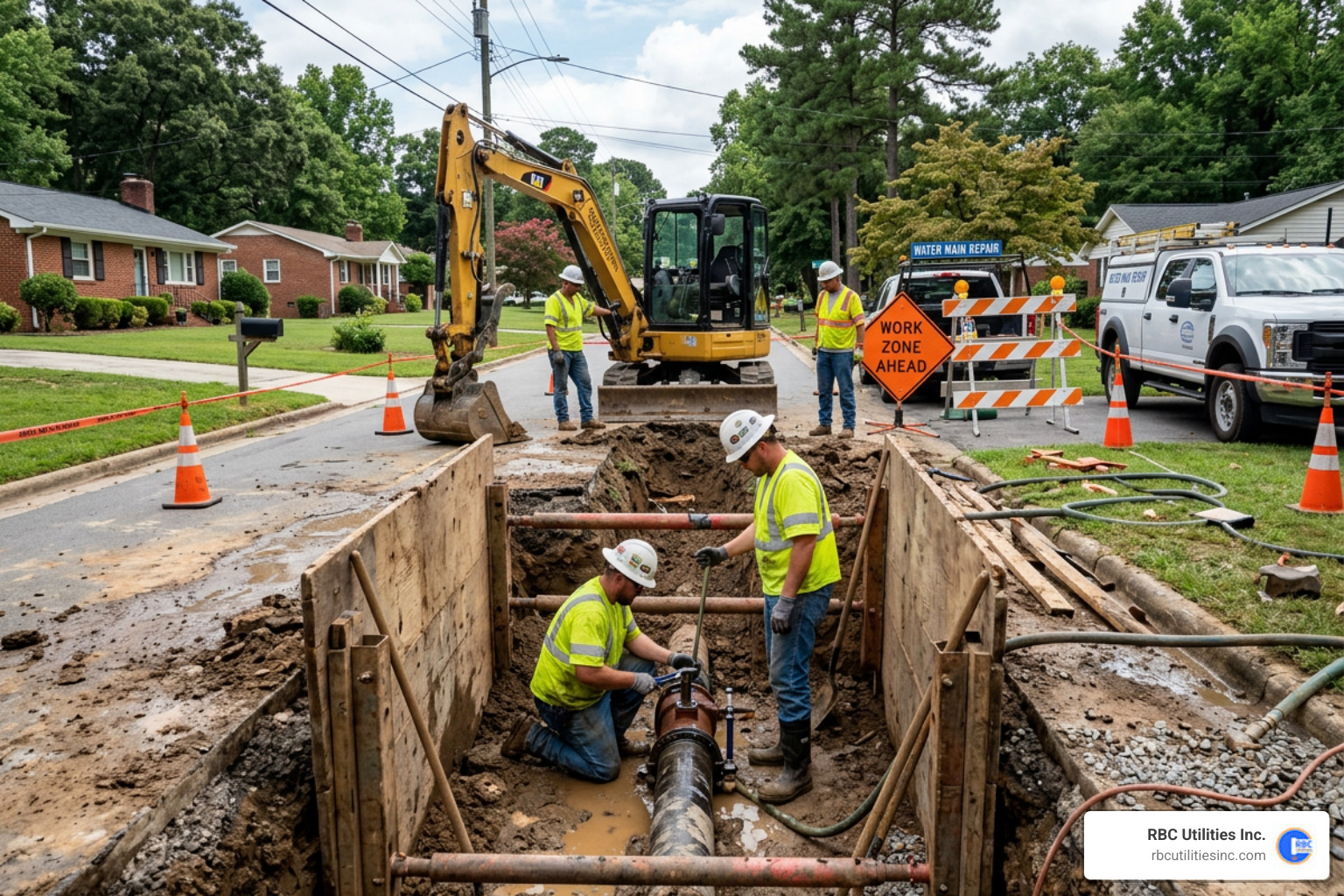
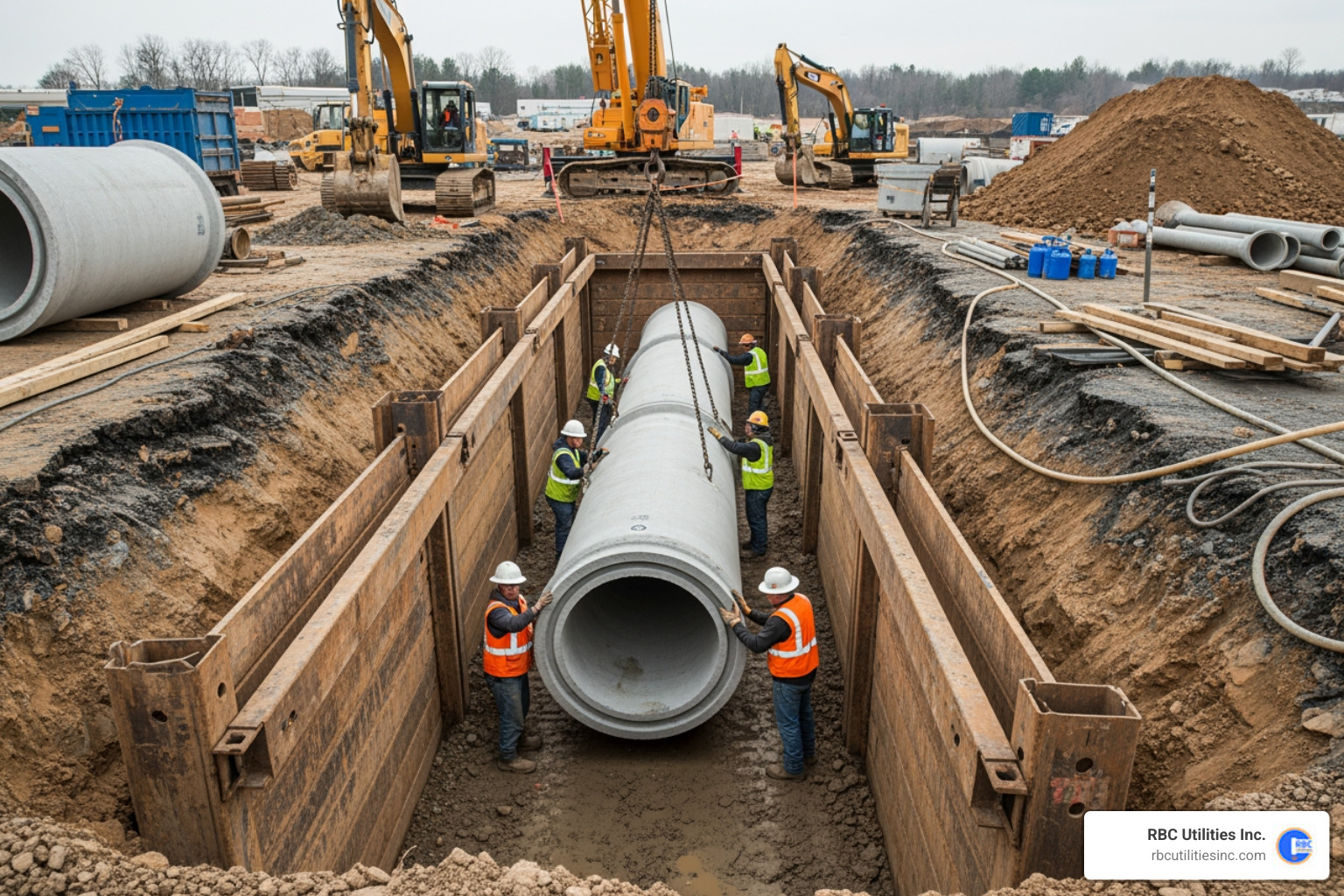
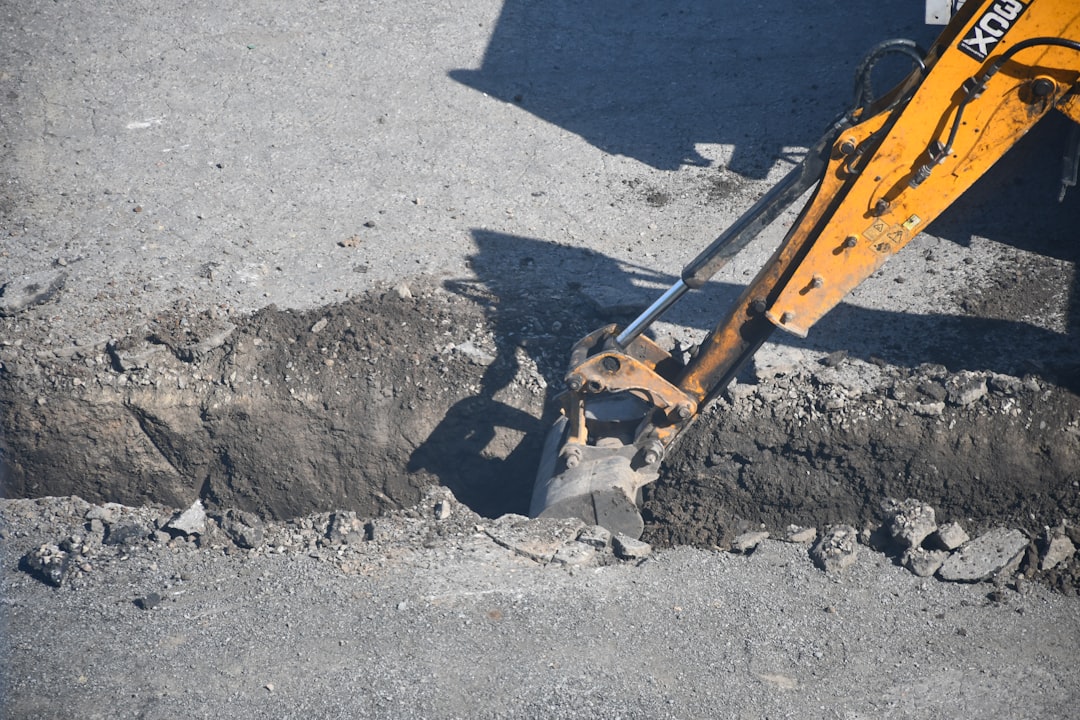
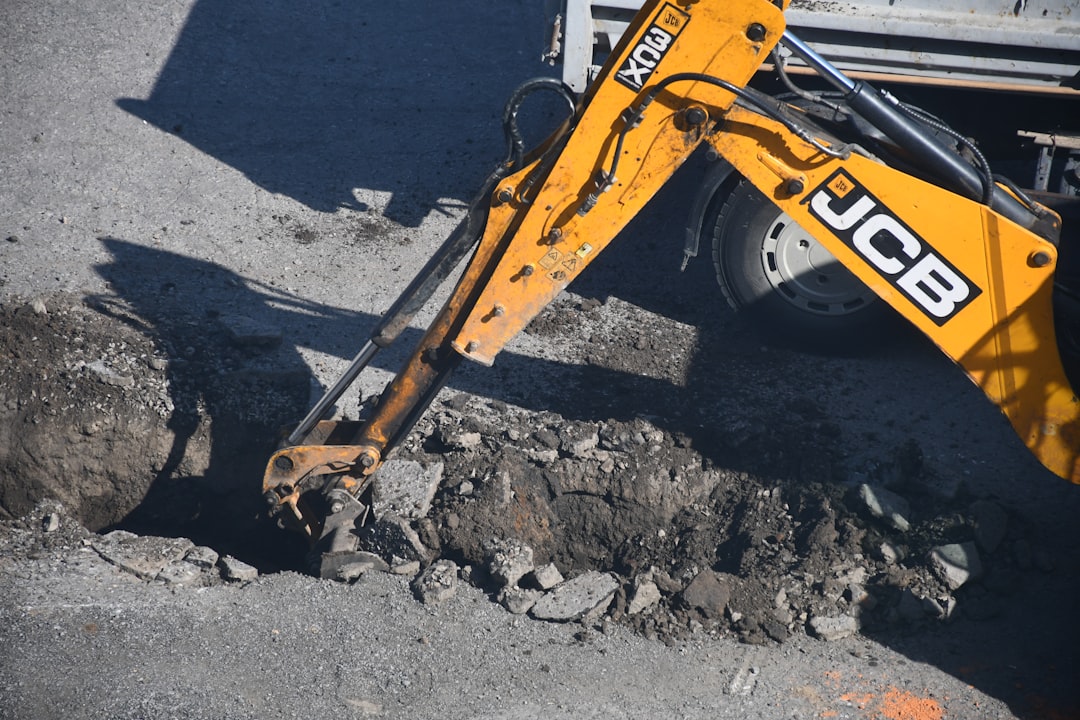
- Traditional Excavation: This involves digging a trench along the entire length of the pipe. While it's sometimes necessary for collapsed pipes or brand-new installations, it is disruptive and expensive to restore the landscaping or asphalt afterward.
- Cured-In-Place Pipe (CIPP) Lining: We insert a felt liner saturated with epoxy resin into the existing pipe. Once in place, we inflate it and use heat or UV light to "cure" it. This creates a brand-new, jointless pipe inside the old one.
- Pipe Bursting: A large "bursting head" is pulled through the old pipe, shattering it outward while simultaneously pulling a new HDPE pipe into the void.
| Feature | Traditional Excavation | Trenchless (CIPP/Bursting) |
|---|
| Completion Time | 2-5 Days | 1 Day (usually) |
| Disruption | High (trenches, noise) | Minimal (small access points) |
| Cost (Upfront) | Moderate | Higher (technology-driven) |
| Restoration Cost | High (paving/landscaping) | Low to None |
| Lifespan | 50+ Years | 50+ Years |
Discover commercial sewer line services to see how these methods can save your property from extensive damage.
Minimizing Business Disruption
For a retail center in Charlotte or a medical plaza in Columbia, closing the entrance for a week of digging isn't an option. Trenchless methods allow for:
- One-Day Completion: Most "relining" jobs are done between sunrise and sunset.
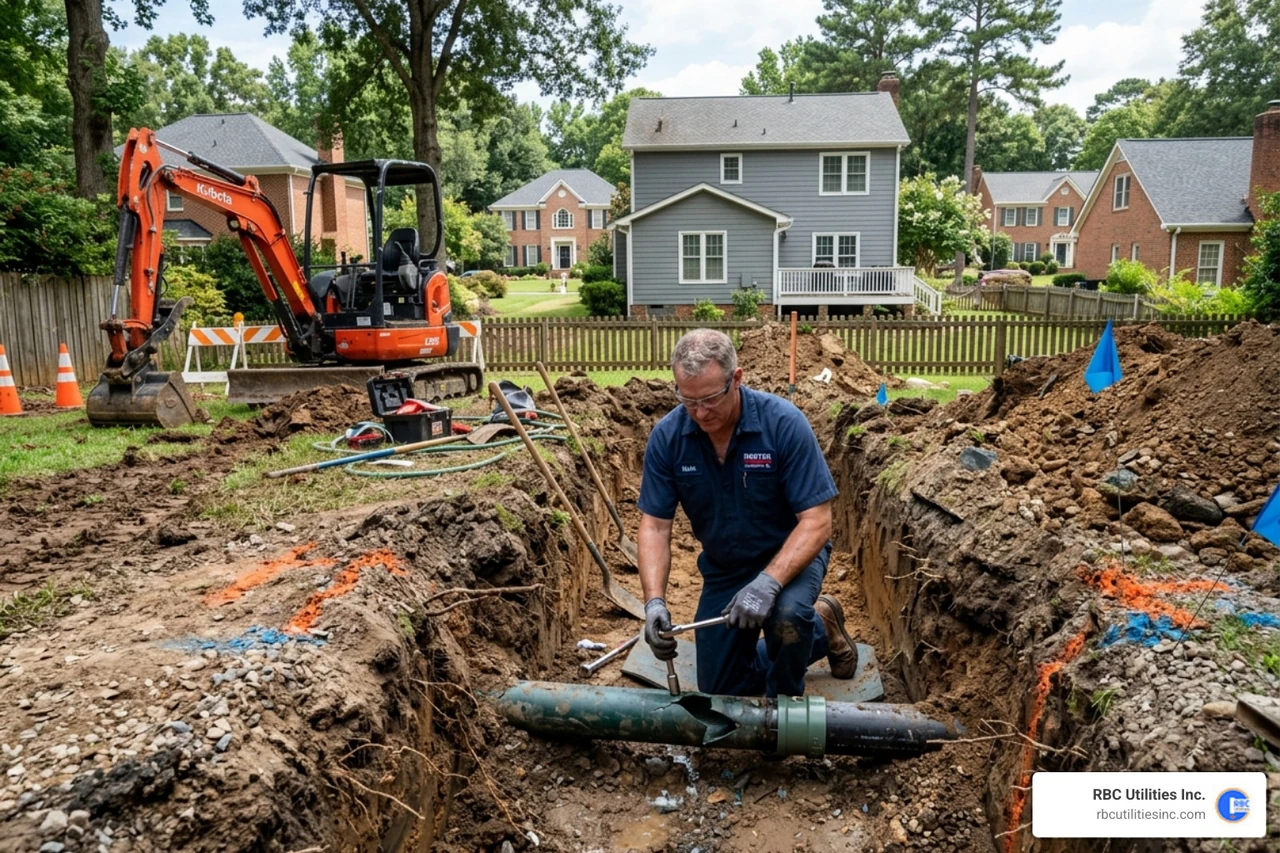
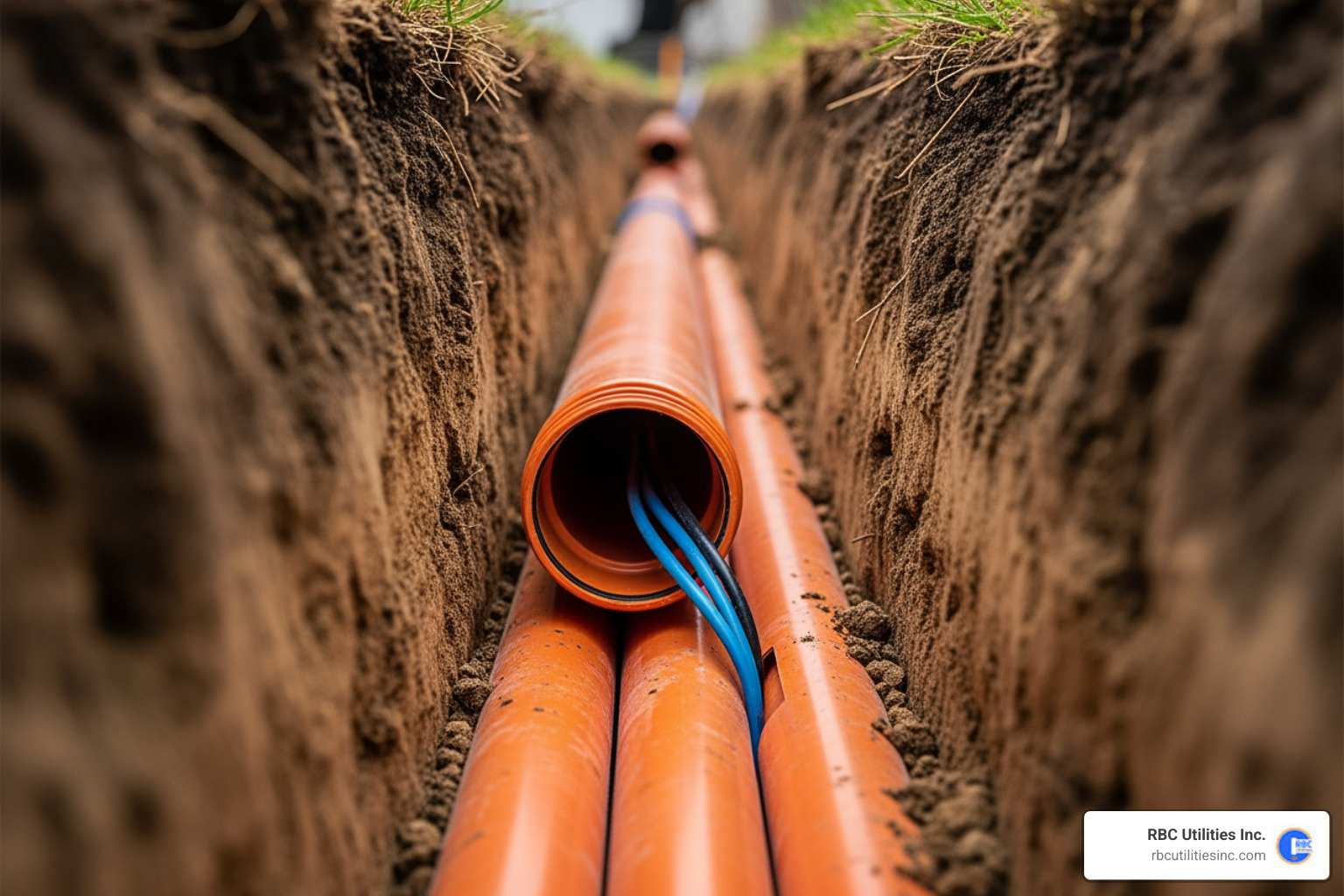
- Landscaping Preservation: We only need one or two small access pits rather than a 100-foot trench.
- Traffic Management: We can work under active driveways without stopping the flow of customers.
Long-Term Durability and Warranties
Don't think of trenchless as a "patch." Epoxy liners and HDPE pipes are incredibly durable. They are resistant to corrosion, chemical wear, and-most importantly-they are jointless, which means tree roots have nowhere to enter. Most professional installations come with significant service guarantees, often rated for a 50-year structural lifespan.
Understanding the Costs and Logistics of Sewer Projects in 2026
As of April 2026, the landscape of utility construction in the Carolinas is influenced by evolving material costs and labor availability. While every project is unique, we can provide some general benchmarks.
Factors Influencing Price
- Pipe Depth: A pipe buried 3 feet down is much cheaper to fix than one buried 15 feet deep under a building's foundation.
- Material Choice: PVC and HDPE are currently the industry standards for cost-efficiency, whereas specialized cast iron for certain high-rise applications may carry a premium.
- Accessibility: Can we get our equipment to the site easily, or do we need to navigate tight alleys and indoor floor drains?
- Permitting and Regulations: North and South Carolina have specific environmental and building codes. Handling the paperwork and inspections is a key part of the project logistics.
In the Carolinas, we see costs vary based on the specific needs of the project. While labor rates differ by region, the complexity of the job remains the primary cost driver. You should always request a detailed project estimate to get an accurate price for your specific site conditions and repair scope.
Financing and Rebate Opportunities
- Utility Rebates: Some municipal water and sewer authorities offer rebates for upgrading old, leaky lines that contribute to "Inflow and Infiltration" (I&I) in the city system.
- Commercial Financing: Many contractors offer specialized financing for large-scale infrastructure projects, allowing you to spread the cost over several years.
- Insurance Coverage: While "wear and tear" is rarely covered, sudden pipe collapses or damage from external factors (like a third-party contractor hitting your line) may be covered under your commercial property insurance.
Frequently Asked Questions about Commercial Sewer Line Services
How do commercial sewer line services differ from residential?
The scale is the biggest difference. Commercial systems are designed for high-volume capacity. A residential line might serve four people; a commercial line at a stadium or mall serves thousands. Furthermore, commercial pipes often deal with industrial waste and grease, requiring more frequent cleaning and more durable materials like heavy-duty PVC or cast iron. The compliance standards are also much stricter for businesses to prevent public health hazards.
What technologies are used in commercial sewer line services?
We use a suite of advanced tools:
- HD Cameras: For real-time, high-definition video of the pipe interior.
- Robotic Cutters: To clear obstructions without digging.
- Sonar Mapping: To find pipes through thick concrete or deep soil.
- High-Pressure Flushing: (Hydro jetting) to restore flow.
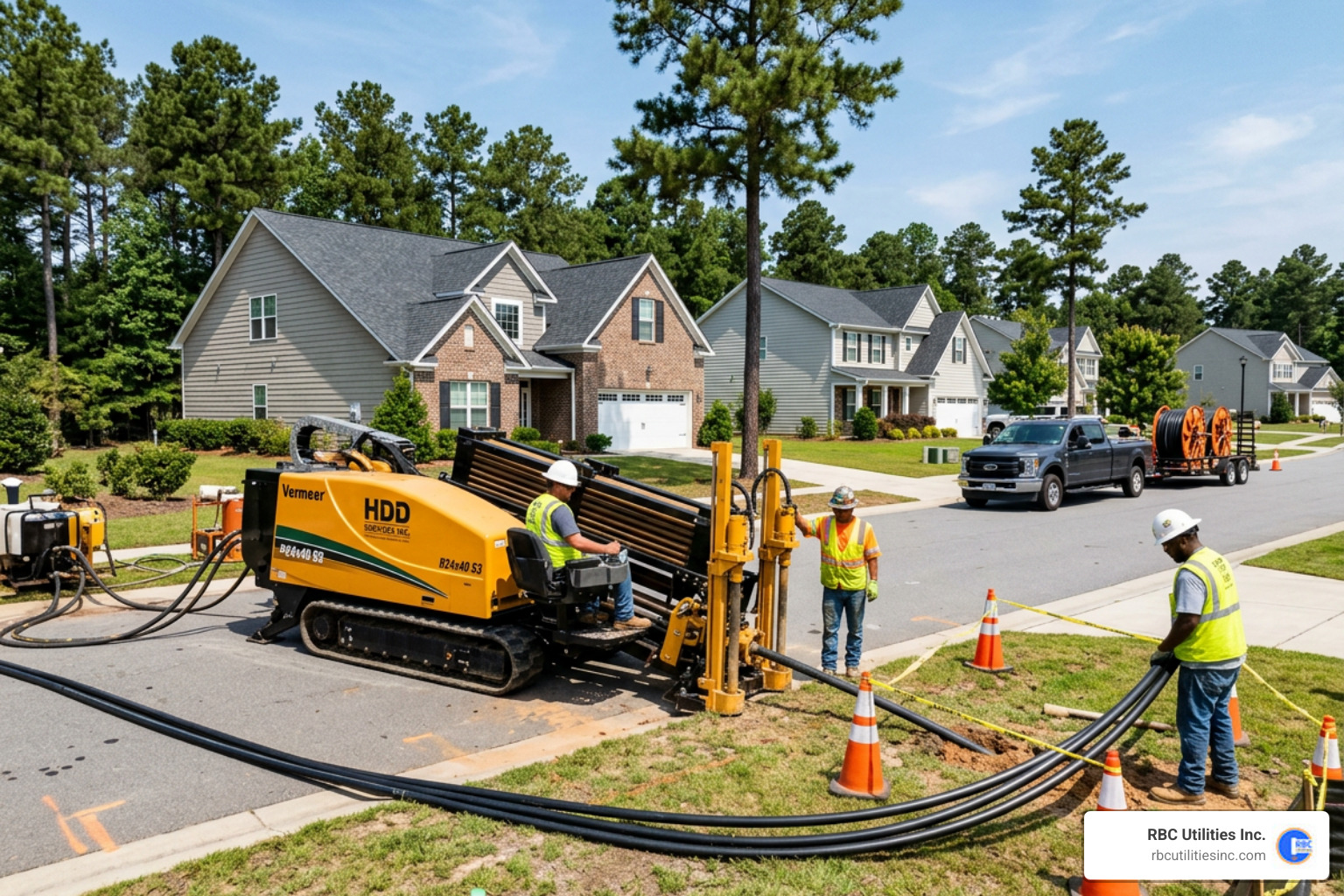
- Trenchless Boring: Allowing us to install new lines under roads or buildings without disturbing the surface.
How long does a typical commercial repair take?
In 2026, efficiency is our goal. Trenchless timelines are typically 24 to 48 hours for the actual repair. Excavation schedules can take 5 to 10 days once you factor in the digging, the repair, the inspections, and the backfilling/paving. Permitting delays can sometimes add a week to the front end of a project, which is why we handle the paperwork for our clients to keep things moving.
Conclusion
Your sewer system is the backbone of your property’s sanitation and functionality. Whether you are managing a new subdivision in Charlotte or maintaining a historic commercial building in Charleston, the health of your underground utilities determines your operational success.
At RBC Utilities Inc., we combine local Carolinas expertise with the national resources of Saga Infrastructure. This means we bring the highest safety standards, reliable crews, and the latest technology to every job site. We don't just fix pipes; we document our work with precision, providing you with the peace of mind that your infrastructure is built to last.
If you’re facing slow drains, mysterious odors, or planning a new development, don't leave your underground utilities to chance. Trust the team that emphasizes reliability and safety.
For more information or to discuss your next project, visit us at https://rbcutilitiesinc.com/. We’re here to keep the Carolinas running smoothly, one pipe at a time.