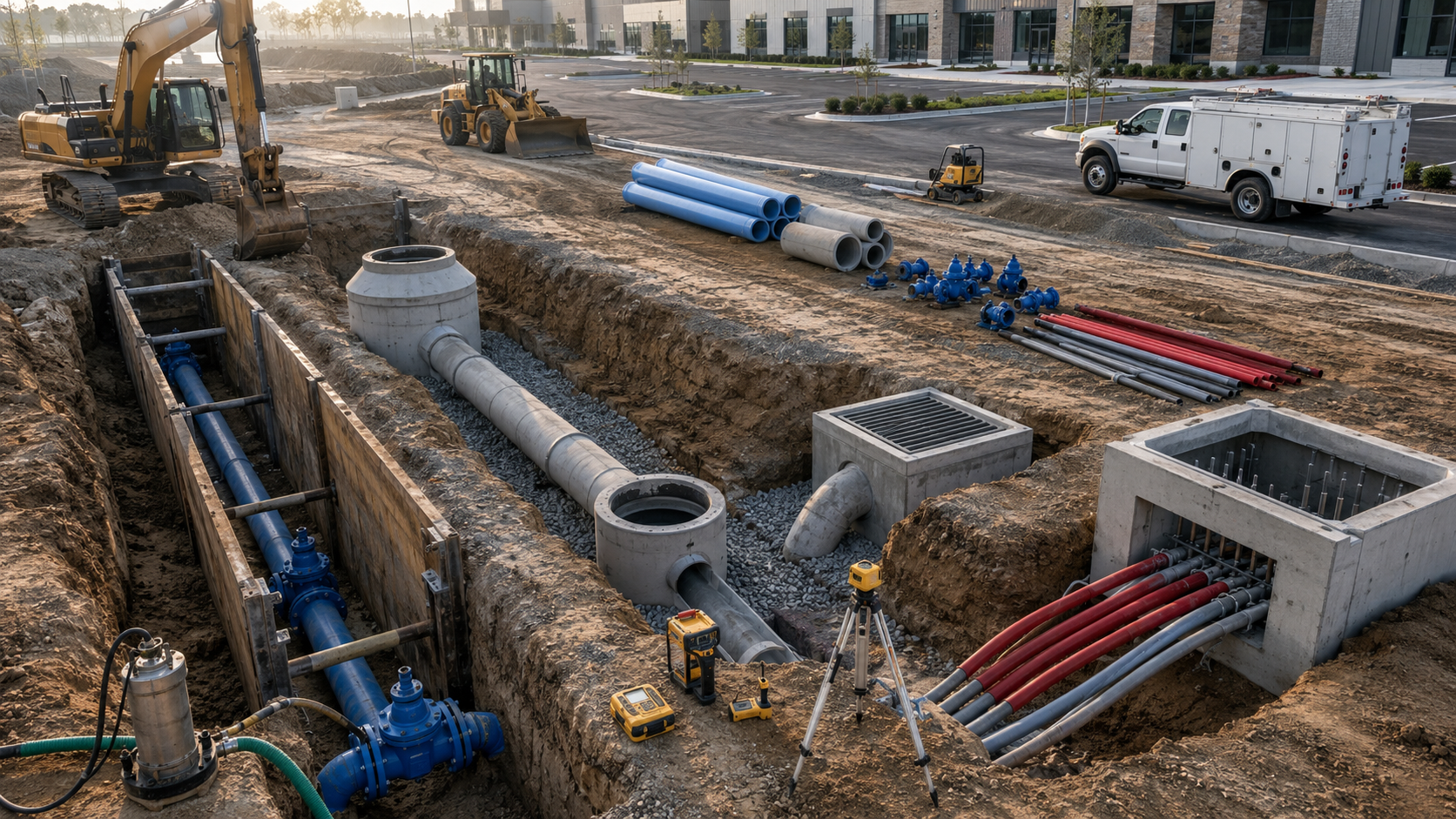
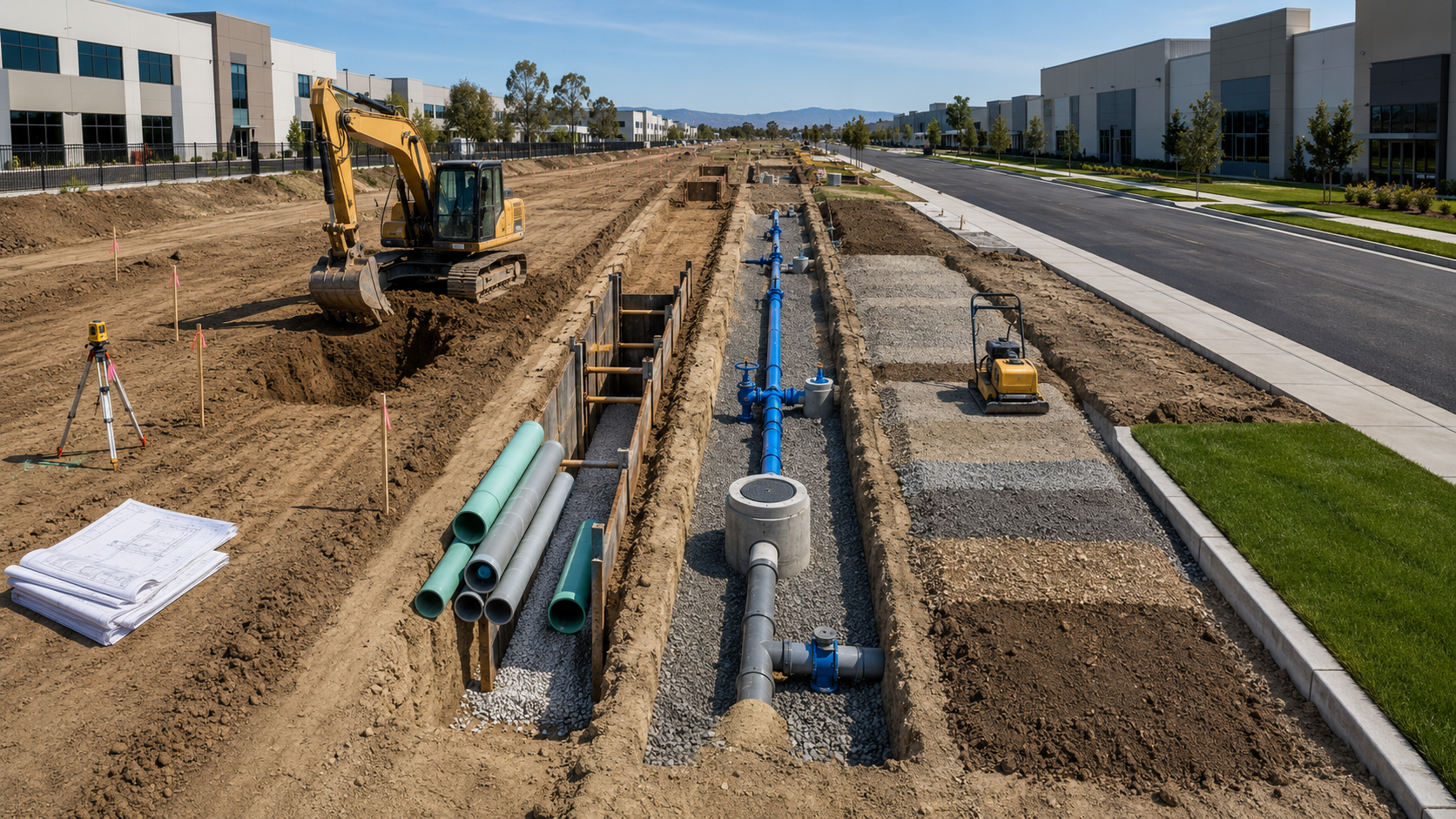
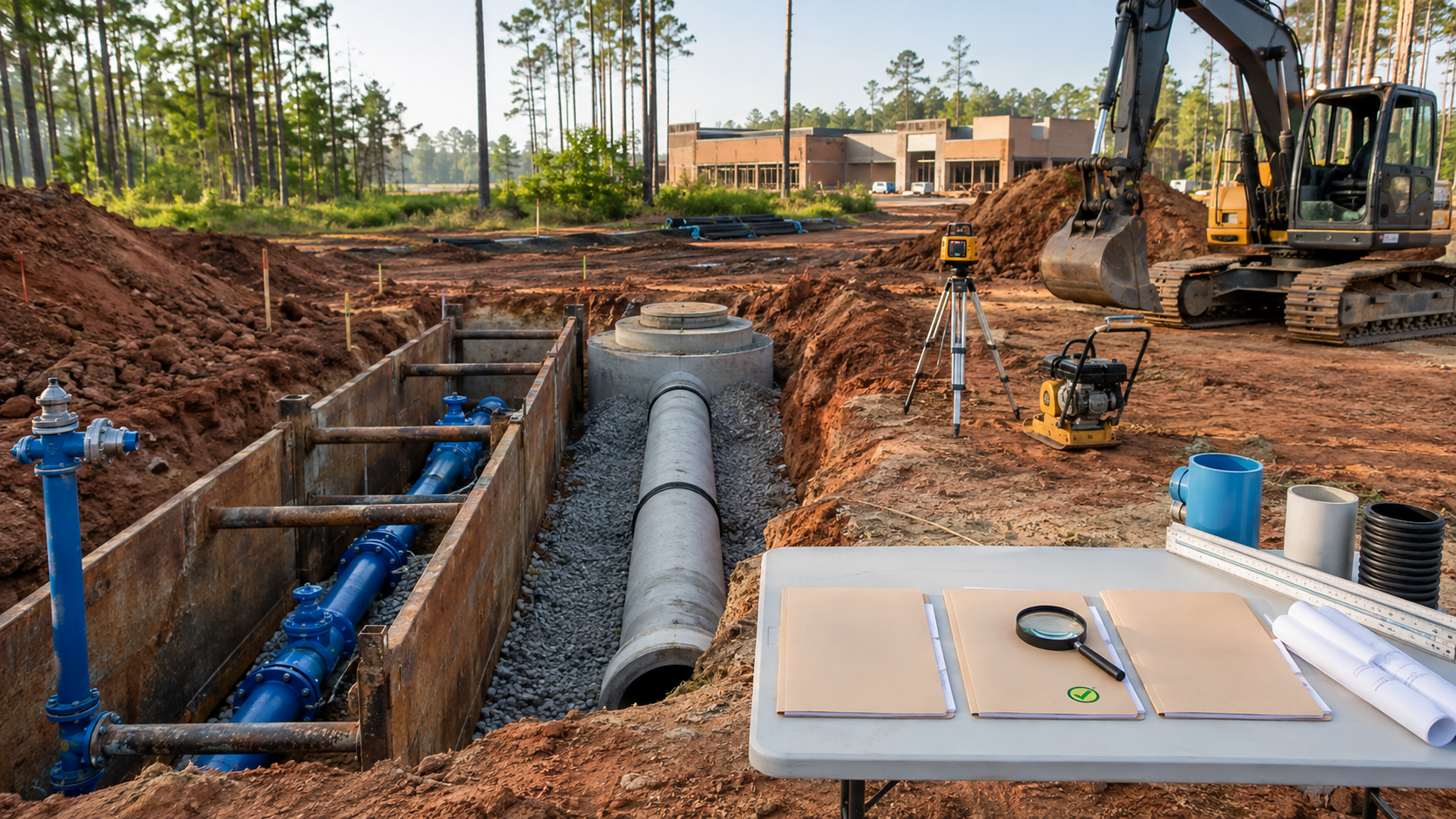
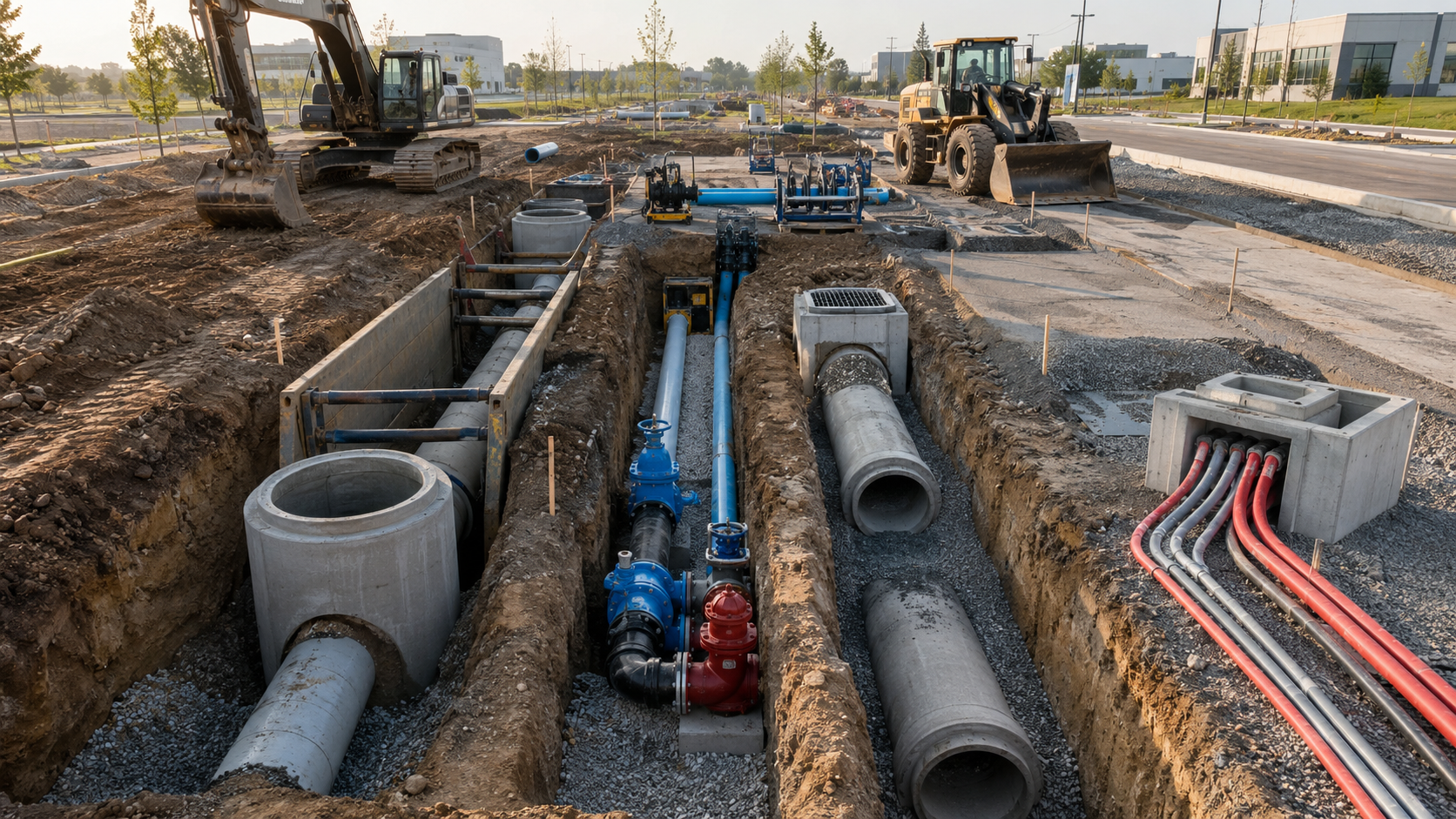
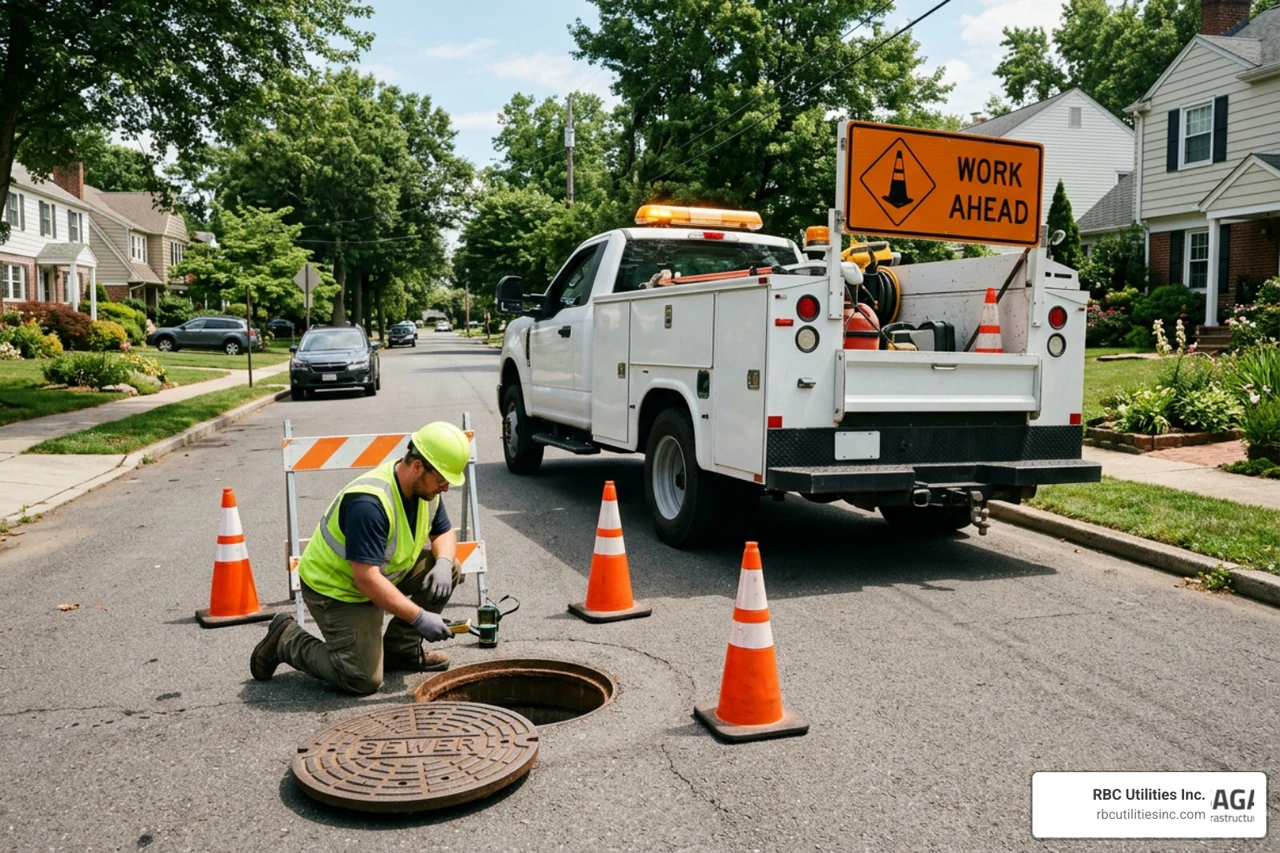
Sewer system rehabilitation in the Carolinas is one of the most urgent — and most overlooked — infrastructure challenges facing developers, contractors, and municipalities right now.
Quick answer: Sewer rehabilitation means restoring deteriorating pipes, manholes, and laterals using methods like CIPP lining, pipe bursting, or open-cut replacement. In the Carolinas, projects are driven by aging clay and concrete pipes (many installed before the 1950s), regulatory pressure to reduce sewer overflows, and significant grant funding now available through ARPA, SRF loans, and state programs like South Carolina's Rural Infrastructure Authority.
Here's what that looks like in practice across the region:
| Factor | What's Happening in the Carolinas |
|---|---|
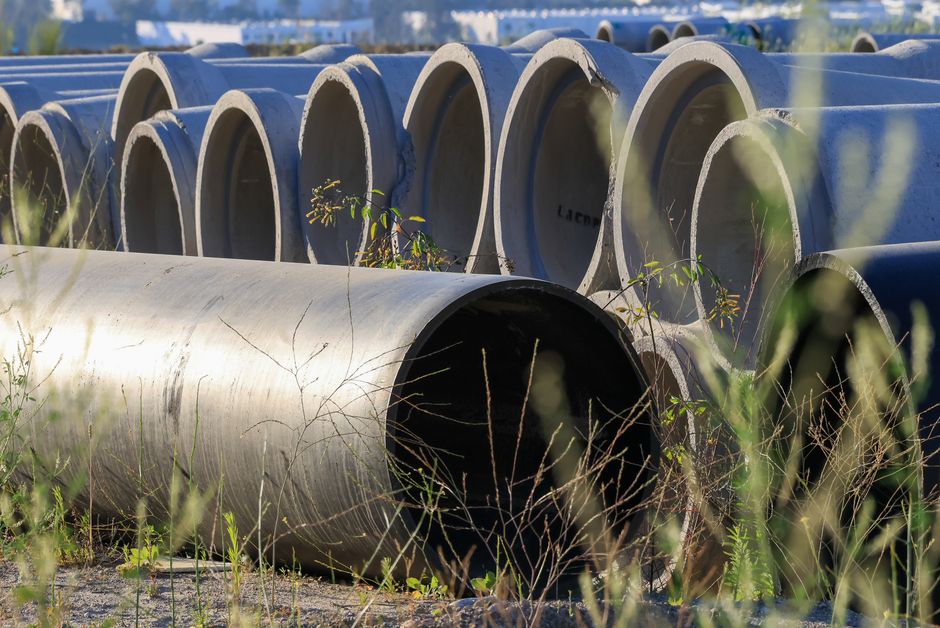
| Aging pipes | Many systems predate the 1950s; some go back to the early 1900s |
| Scale of need | Charlotte Water alone has inspected over 5 million feet of sewer |
| Common methods | CIPP lining, pipe bursting, open-cut replacement |
| Funding available | ARPA, SRF loans, RIA grants — some covering up to 85% of costs |
| Typical project size | From $1.7M basin projects to $17.8M large-scale contracts |
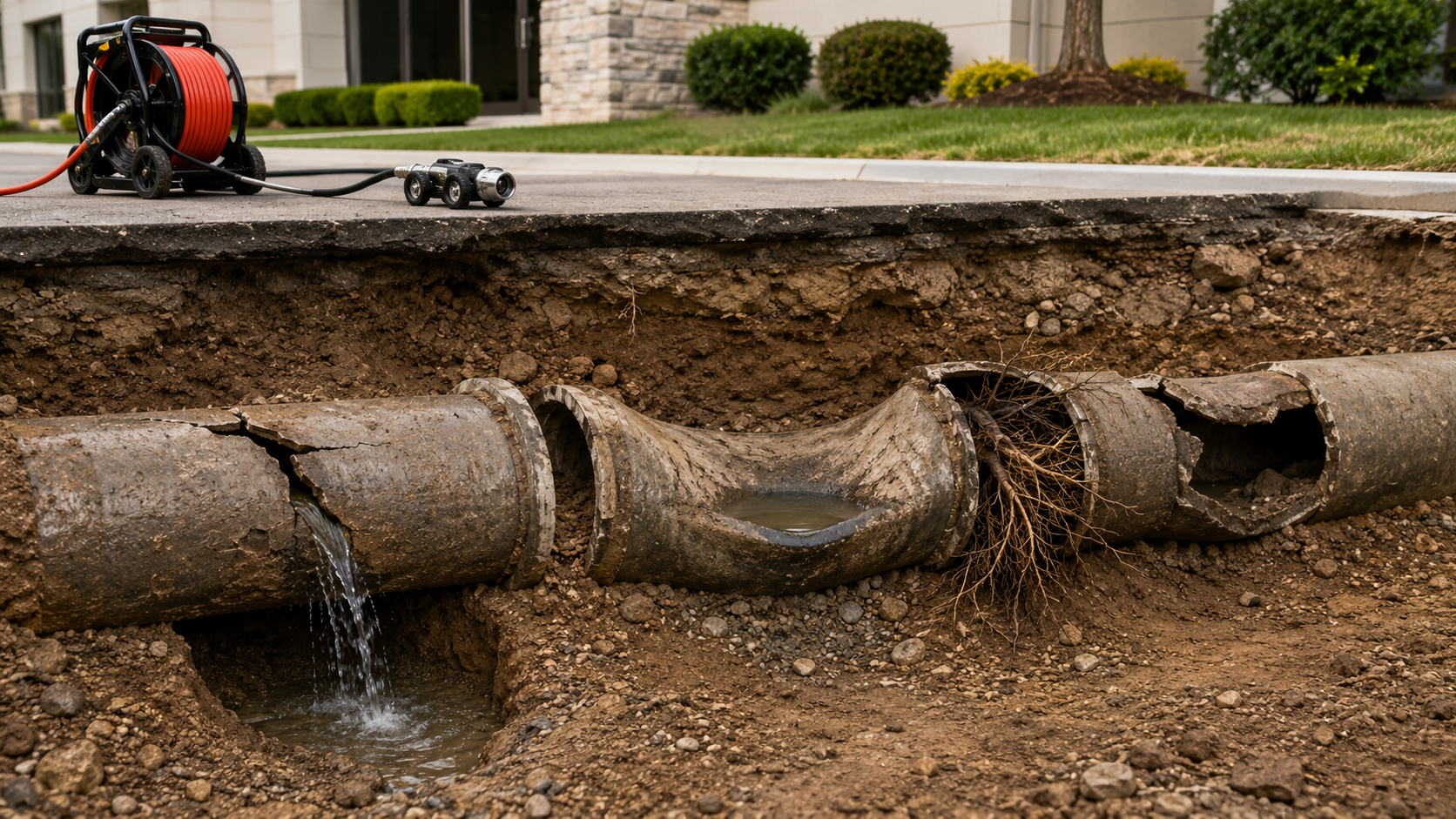
The stakes are real. Failing pipes cause sanitary sewer overflows (SSOs), sinkholes, and regulatory fines. Cities like Greensboro have responded with dedicated annual budgets — around $8 million per year — targeting one percent of their 3,000+ miles of water and sewer lines every year. That kind of systematic investment is becoming the new standard.
For developers and general contractors, understanding how these programs work — and what technologies are available — directly affects project timelines, permitting, and long-term reliability of the systems you build.
I'm Don Larsen with RBC Utilities, Inc., and our team has been delivering underground utility construction across the Carolinas since 2008, including sanitary sewer installation, rehabilitation support, and municipal infrastructure upgrades that speak directly to the challenges of sewer system rehabilitation in the Carolinas. In this guide, I'll walk you through the methods, funding sources, and best practices shaping this space in 2026.
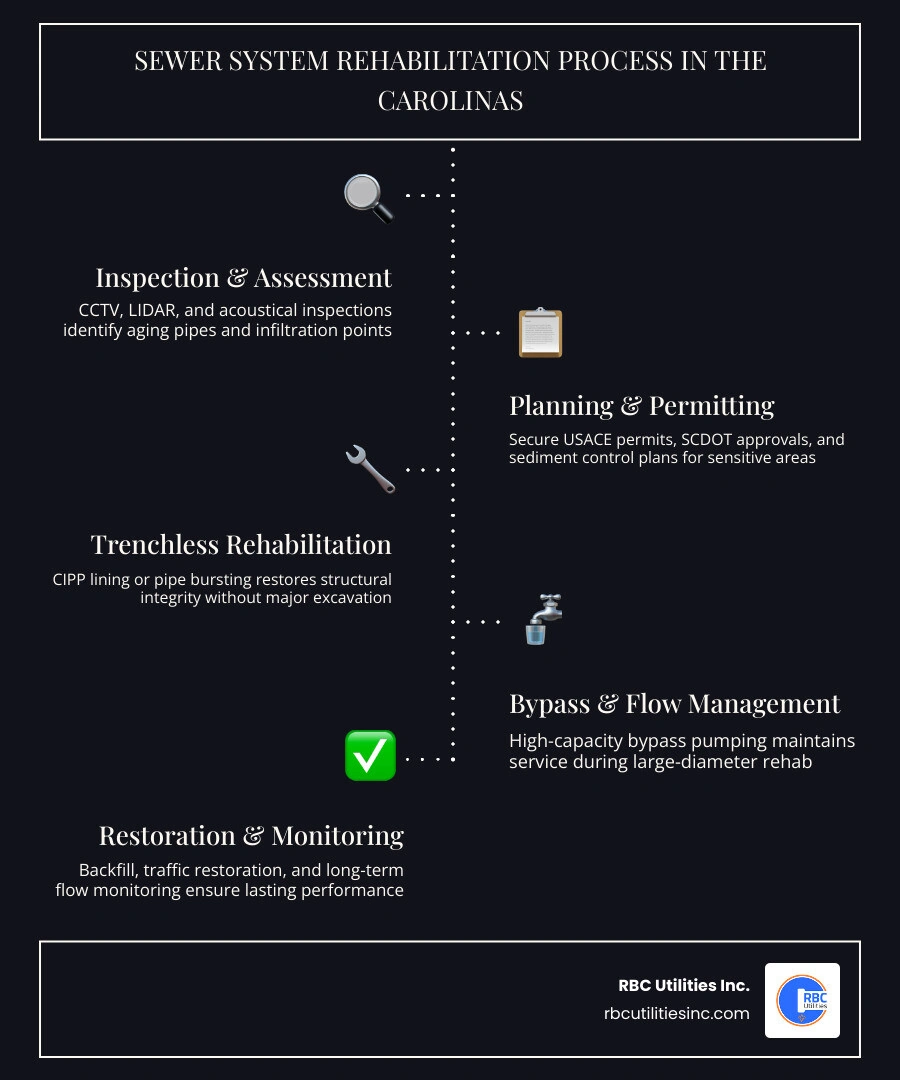
As we move through 2026, the Carolinas are in the midst of an infrastructure renaissance. Much of our underground world was built decades ago, and those pipes are reaching their "retirement age" all at once. In cities like Charlotte and Greensboro, the push for sewer system rehabilitation Carolinas isn't just about fixing leaks; it's about supporting the explosive population growth we've seen over the last five years.

The scale of the effort is staggering. Charlotte Water, the largest sewer utility in the region, manages approximately 4,500 miles of gravity sewer. To keep up, they have conducted CCTV reviews of over 5 million feet of sewer and smoke tested another 16 million feet. This proactive data gathering is essential for underground infrastructure expansion Carolinas, ensuring that new developments aren't connecting to failing backbones.
Greensboro provides another excellent model for the region. With more than 3,000 miles of lines—many installed before 1950 and some even before 1910—the city has committed to a systematic approach to aging lines. Their goal is to rehabilitate one percent of their entire system every single year, backed by an $8 million annual budget. This "find it and fix it" mentality helps prevent catastrophic failures and maintains water quality for residents.
Why the sudden surge in activity? It comes down to a few critical factors:
We aren't just using shovels and backhoes anymore. The industry has seen a massive shift toward high-tech diagnostic and repair tools. Charlotte Water's large-diameter rehabilitation program has pioneered many of these techniques locally.
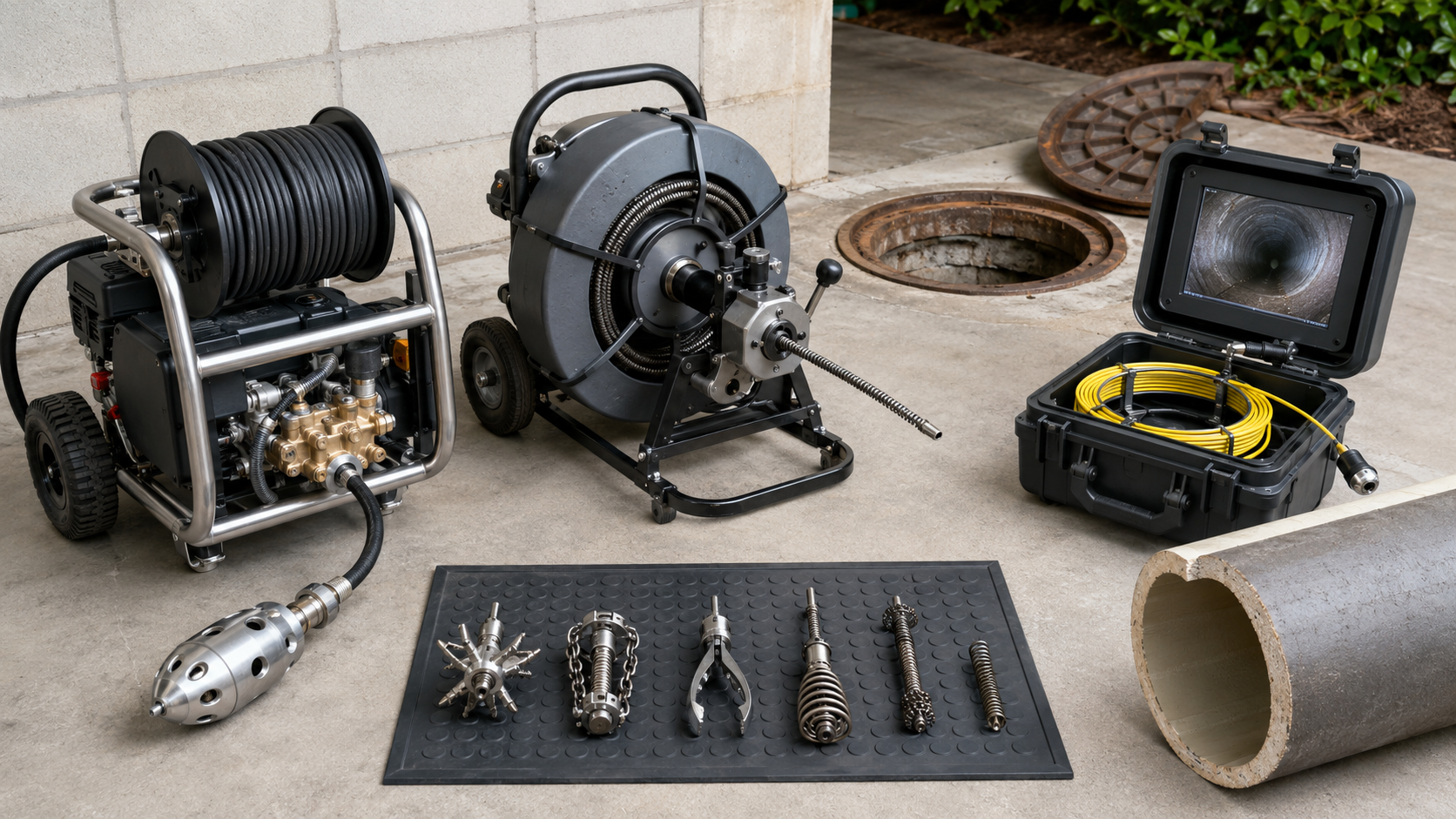
One standout is UV-CIPP, which uses ultraviolet light to cure resin-saturated liners. It’s faster and often stronger than traditional steam-curing. We’re also seeing the use of SL-RAT (Acoustical Inspection), which uses sound waves to quickly check for blockages in millions of feet of pipe without needing to put a camera in every single line. For severely corroded pipes, LIDAR CCTV provides a 3D profile of the interior, helping engineers design liners that fit perfectly even when the original pipe has lost its shape.
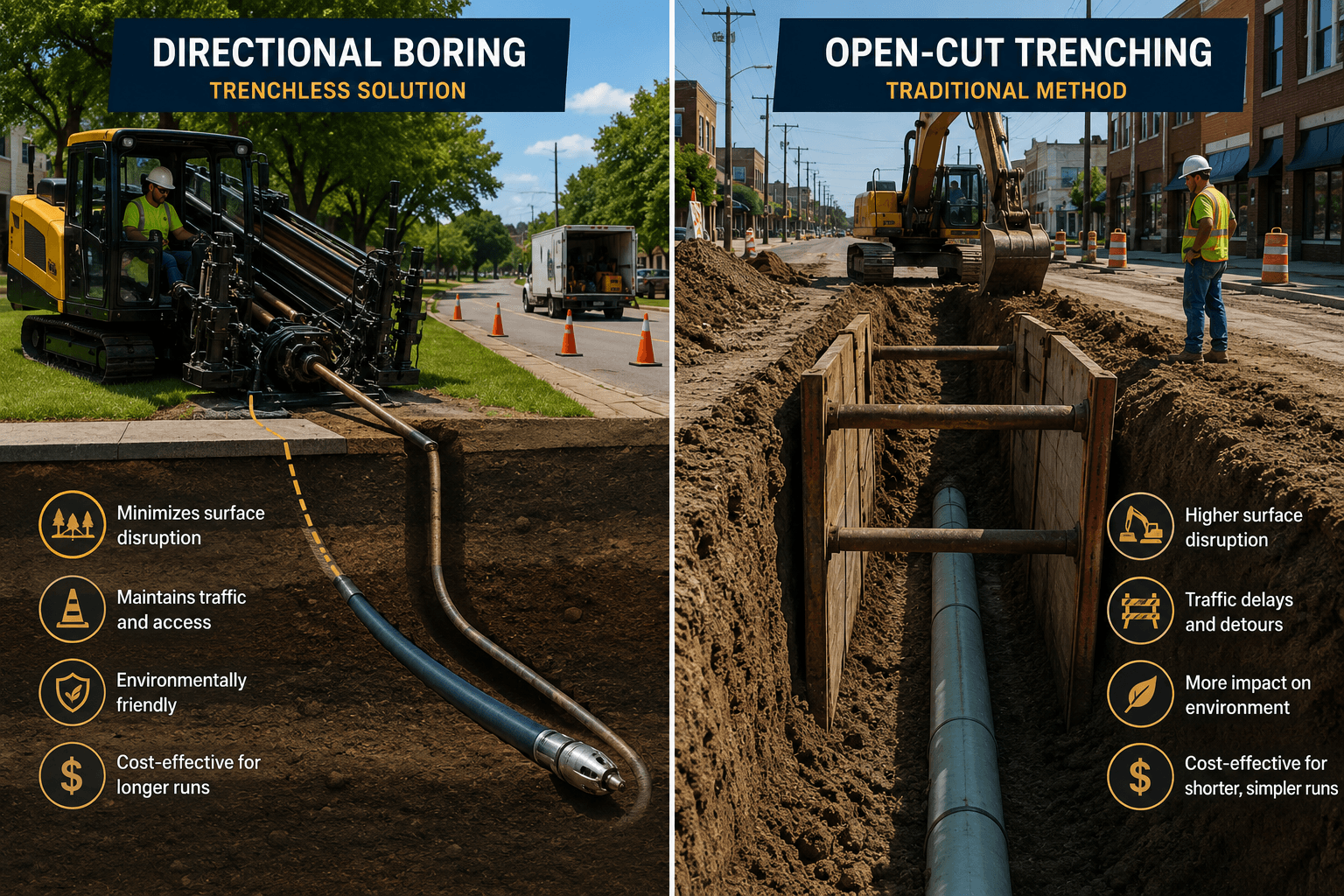
When we look at a project site, we have to decide: do we dig it up, or do we fix it from the inside? This decision depends on the pipe's depth, the surrounding traffic, and the condition of the soil.
| Method | Best For | Pros | Cons |
|---|---|---|---|
| CIPP Lining | Most pipe sizes (8" to 78") | No digging, fast, long-lasting | Requires high-flow bypass |
| Pipe Bursting | Replacing clay with HDPE | Can increase pipe size | Not for severely collapsed lines |
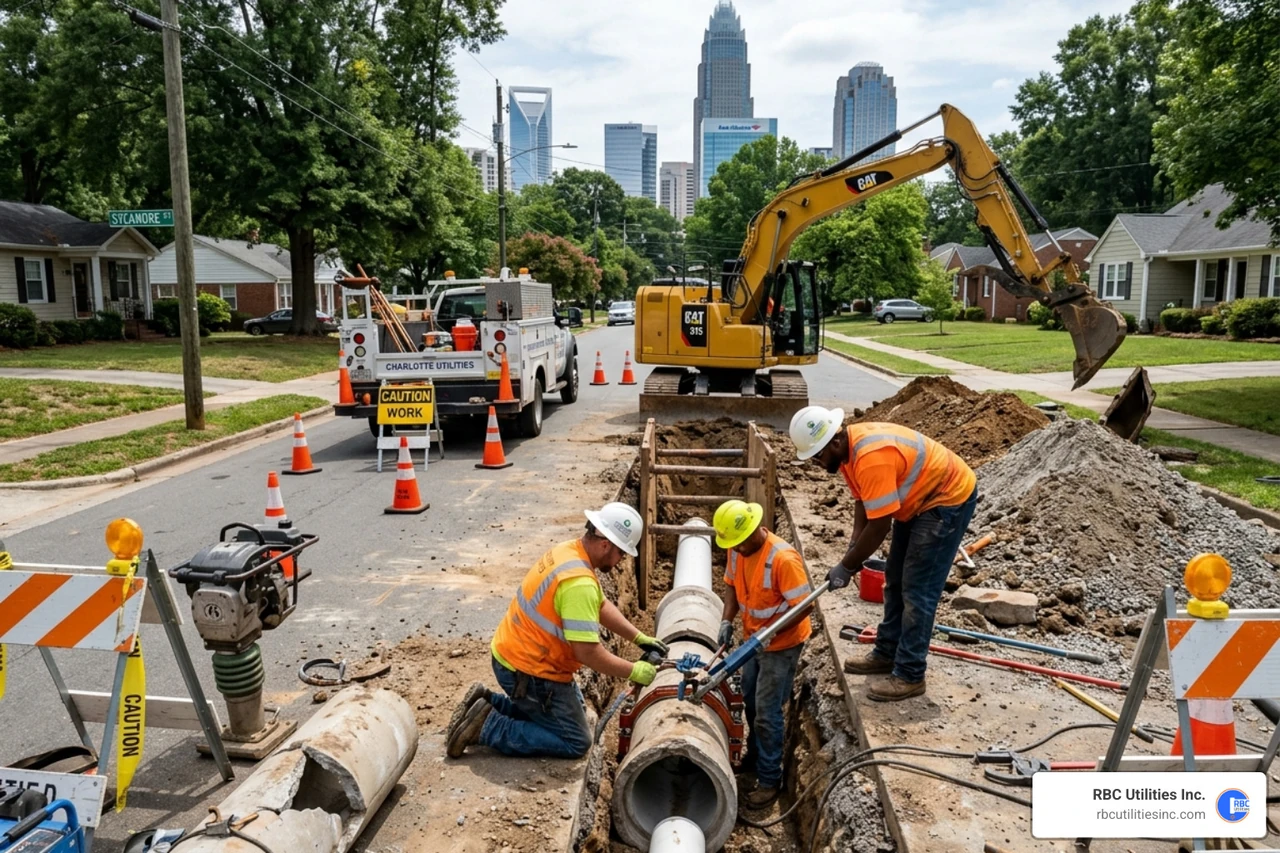
| Open-Cut | Shallow lines or new installs | Most reliable structural fix | Massive surface disruption |
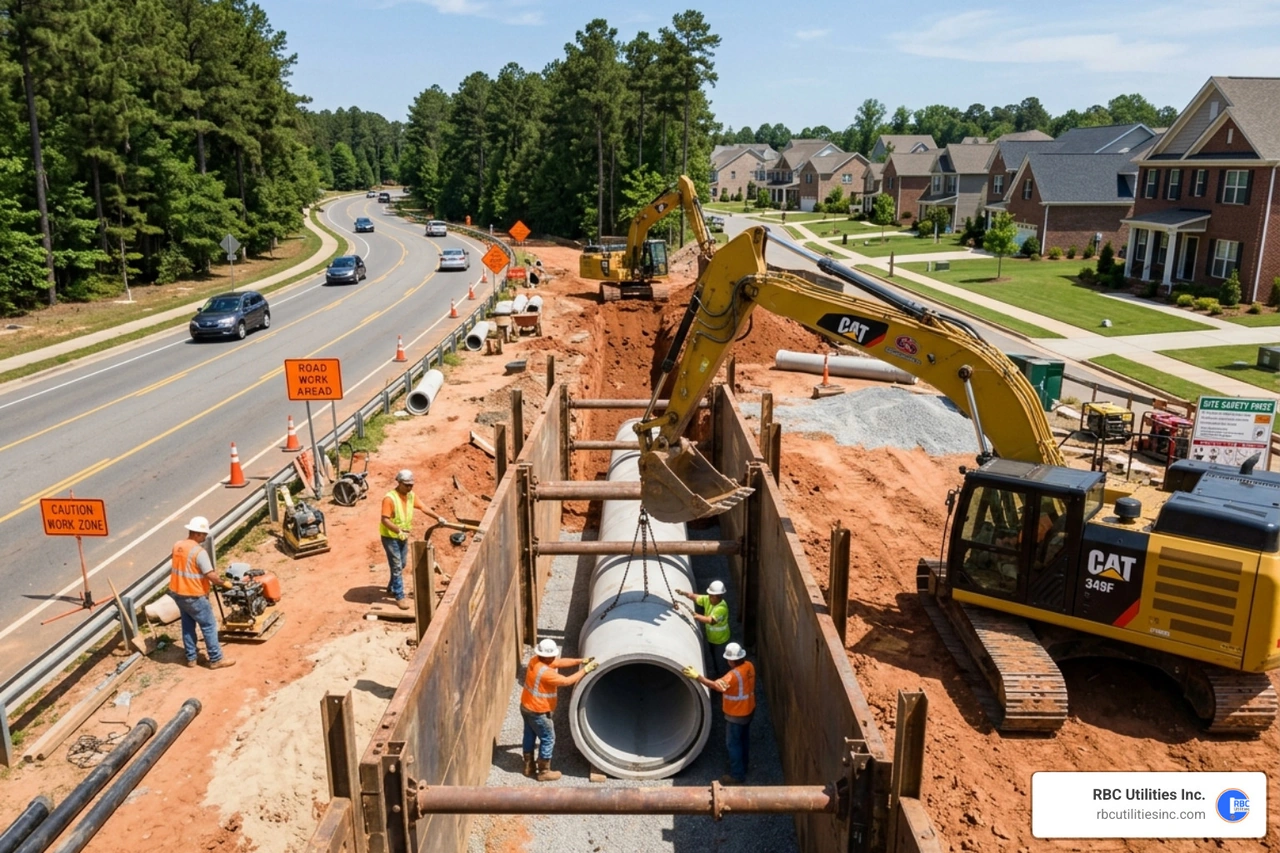
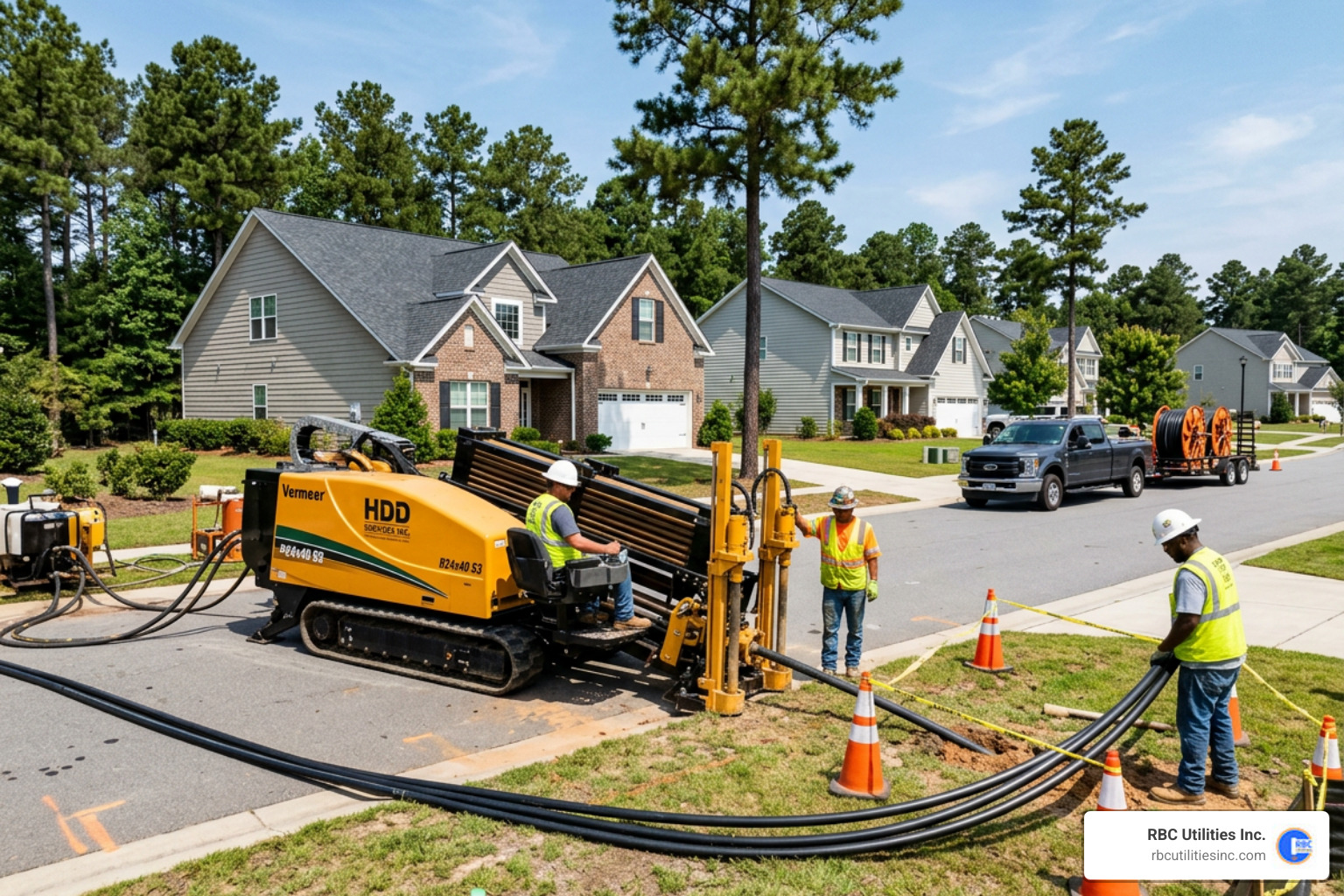
Trenchless technology has become the preferred choice for trenchless utility installation Carolinas because it minimizes the headaches for the local community. Instead of closing a road for three months, we might only need a few nights of work.
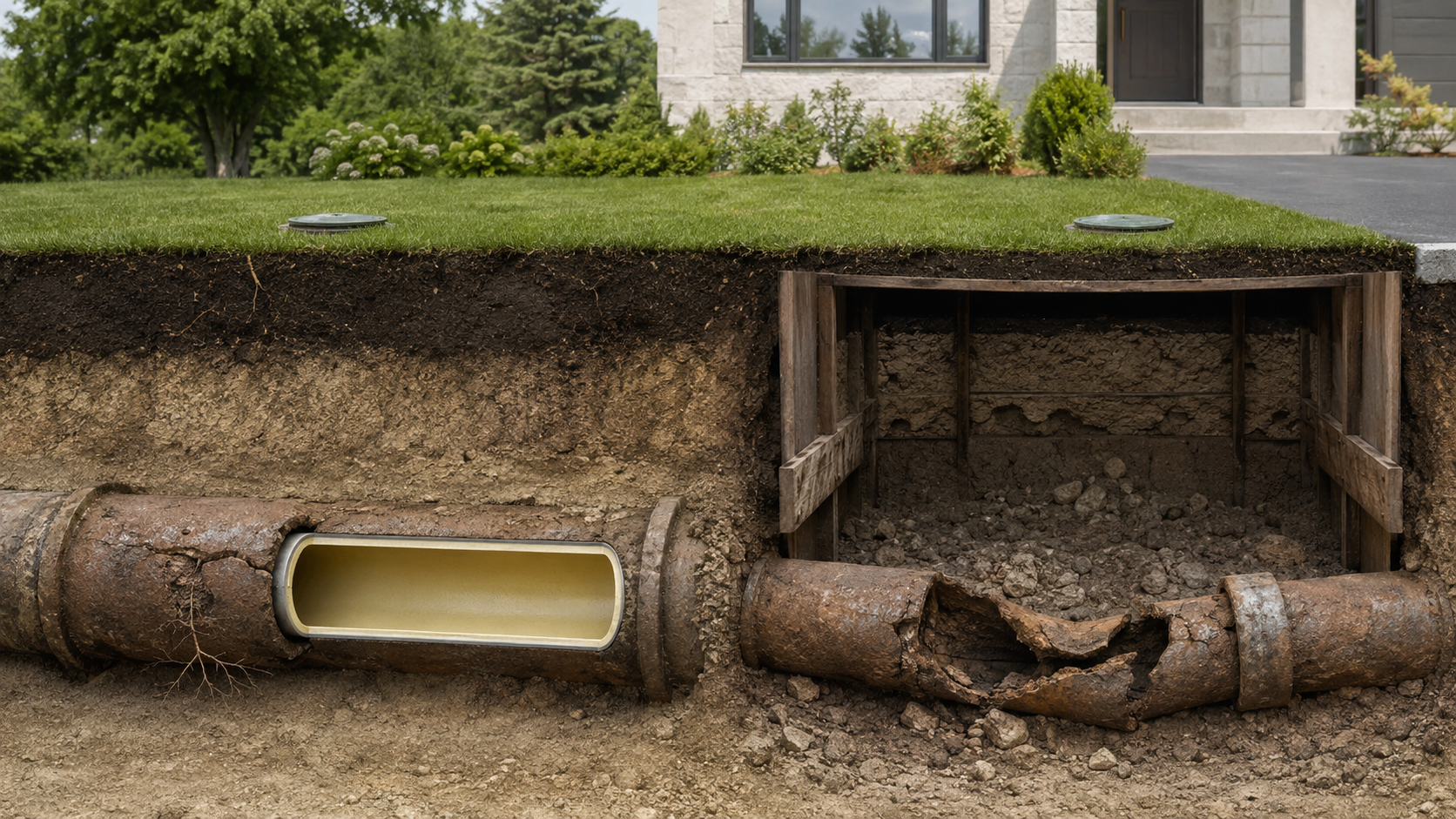
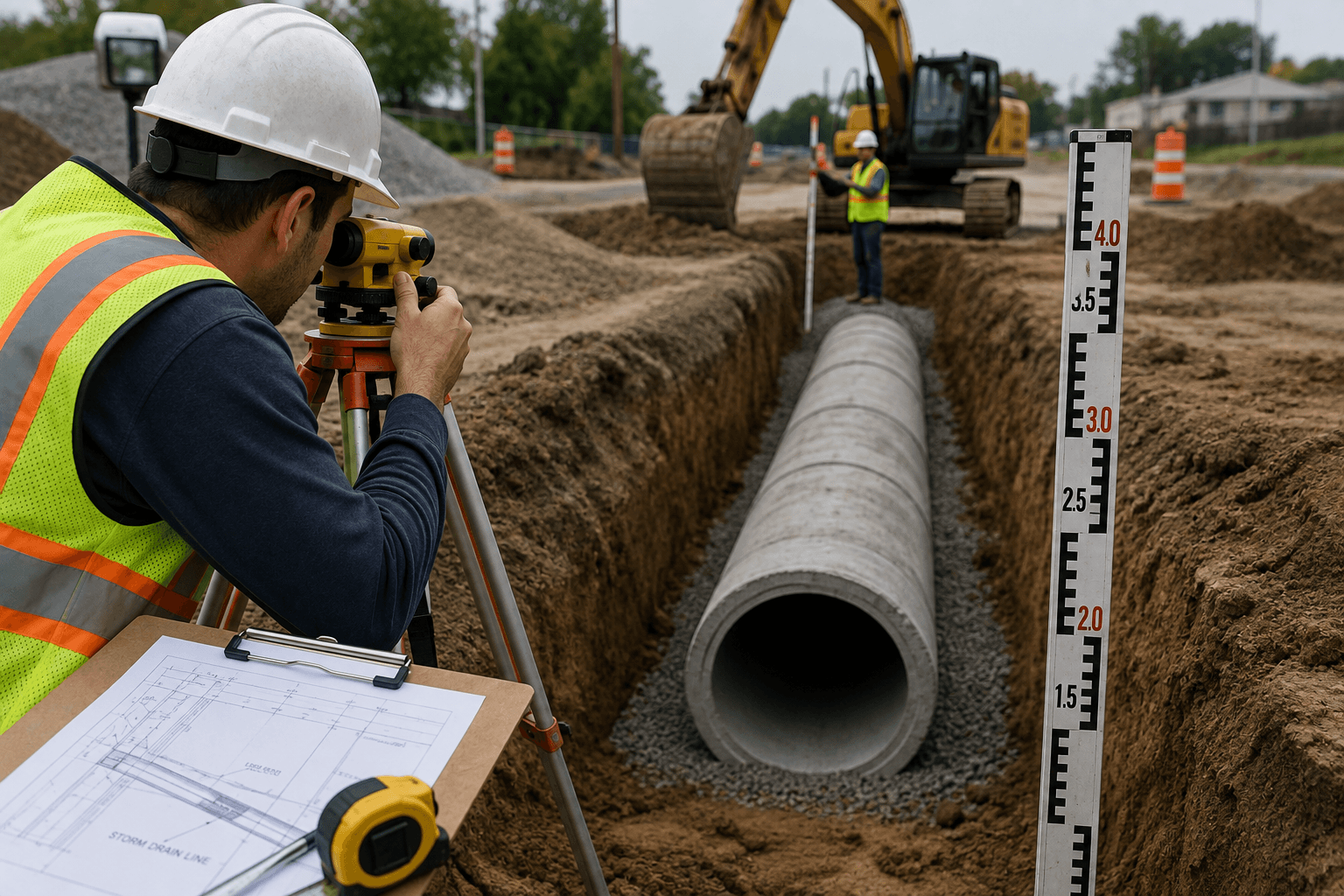
CIPP is the "gold standard" for modern rehabilitation. It involves pulling a flexible, resin-soaked liner into an existing pipe and then "inflating" it and curing it until it becomes a hard, structural pipe-within-a-pipe.
In the Carolinas, we've seen CIPP used on everything from 8-inch neighborhood lines to massive 78-inch interceptors. For example, Charlotte Water recently rehabilitated a 78-inch sewer at a depth of 64 feet using this method. Because it’s a "jointless" solution, it’s incredibly effective at stopping root intrusion and I/I. If you are managing a facility with aging lines, sewer pipe replacement services using CIPP can extend the life of your infrastructure by 50 years or more without destroying your parking lot.
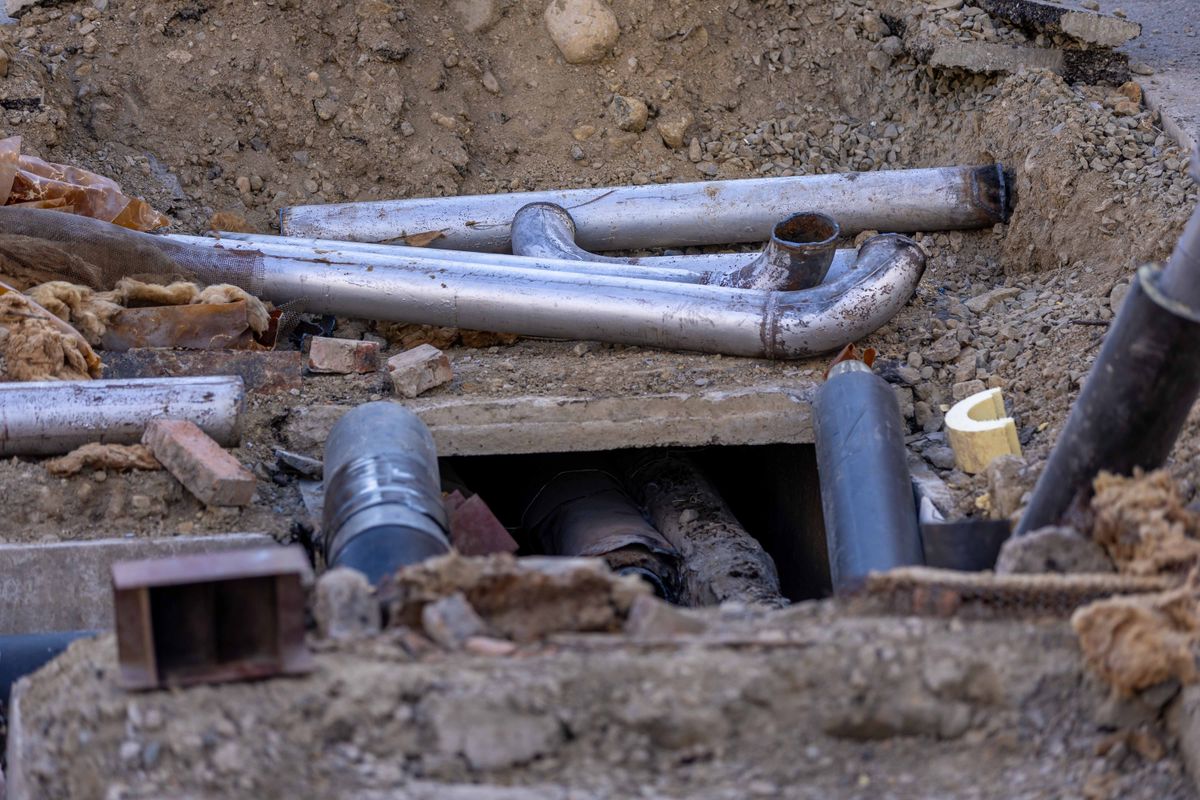
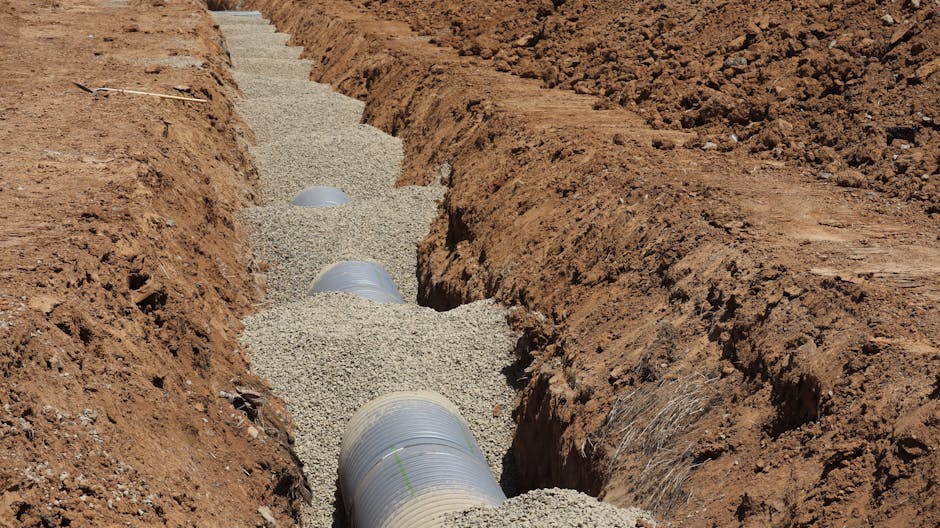
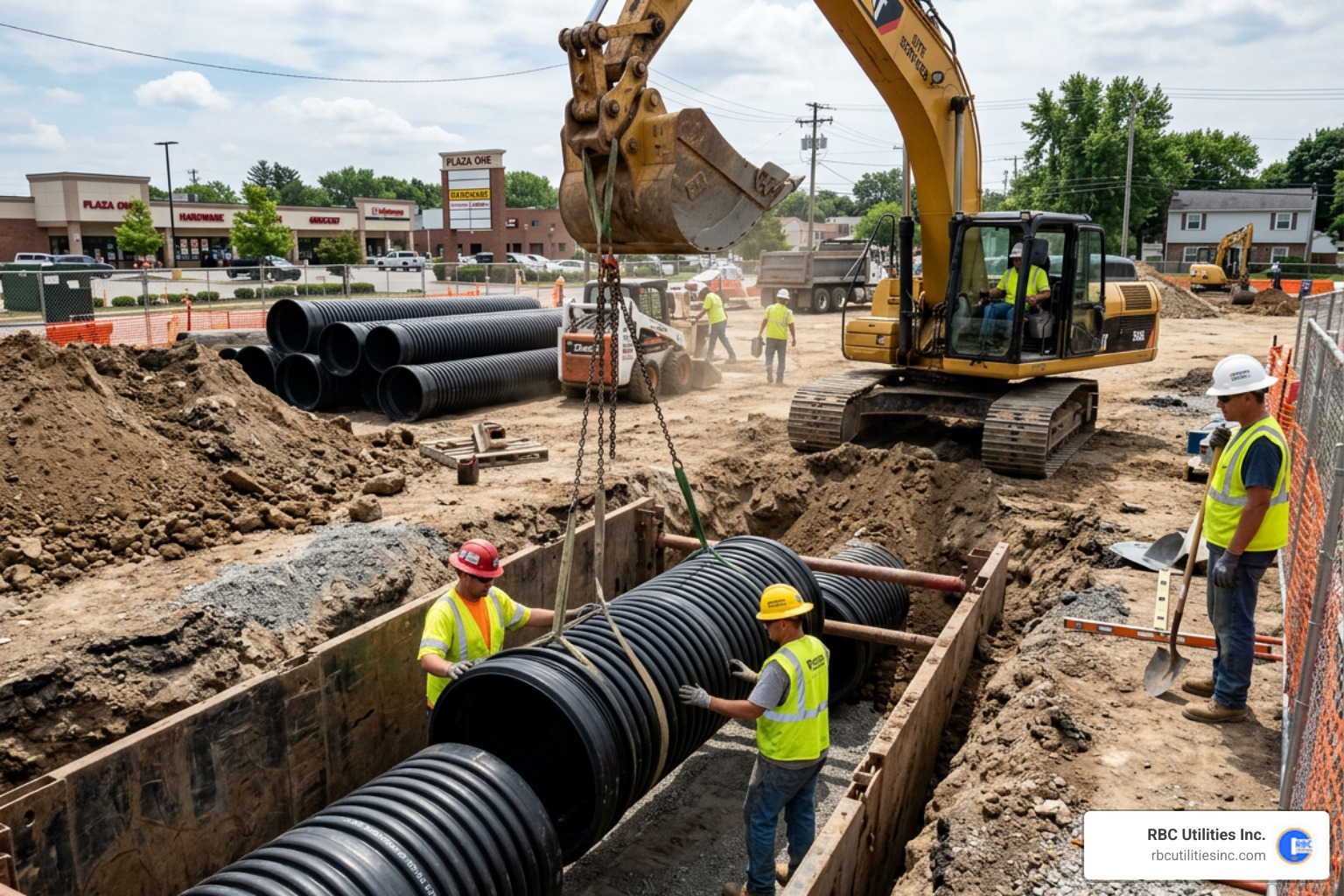
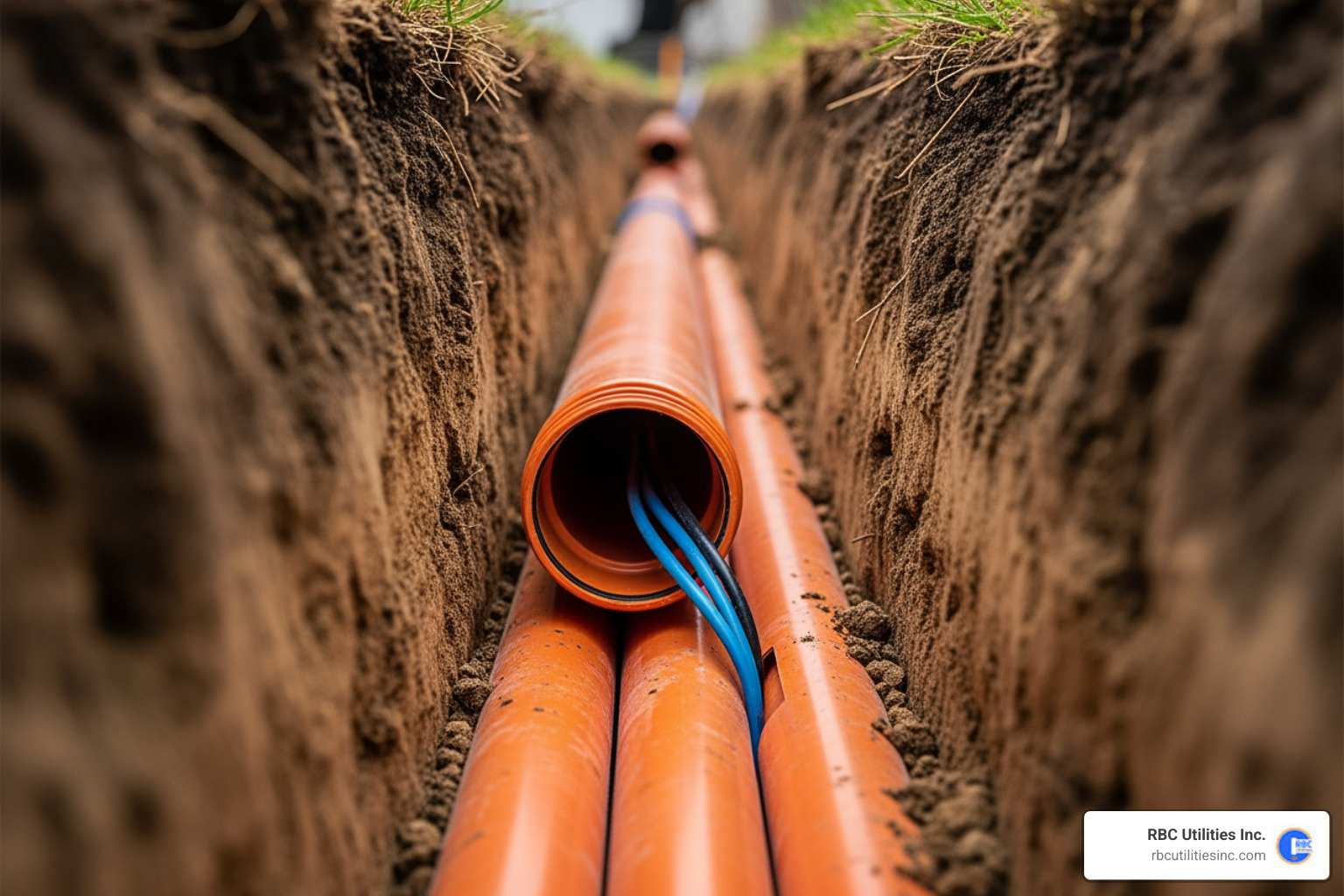
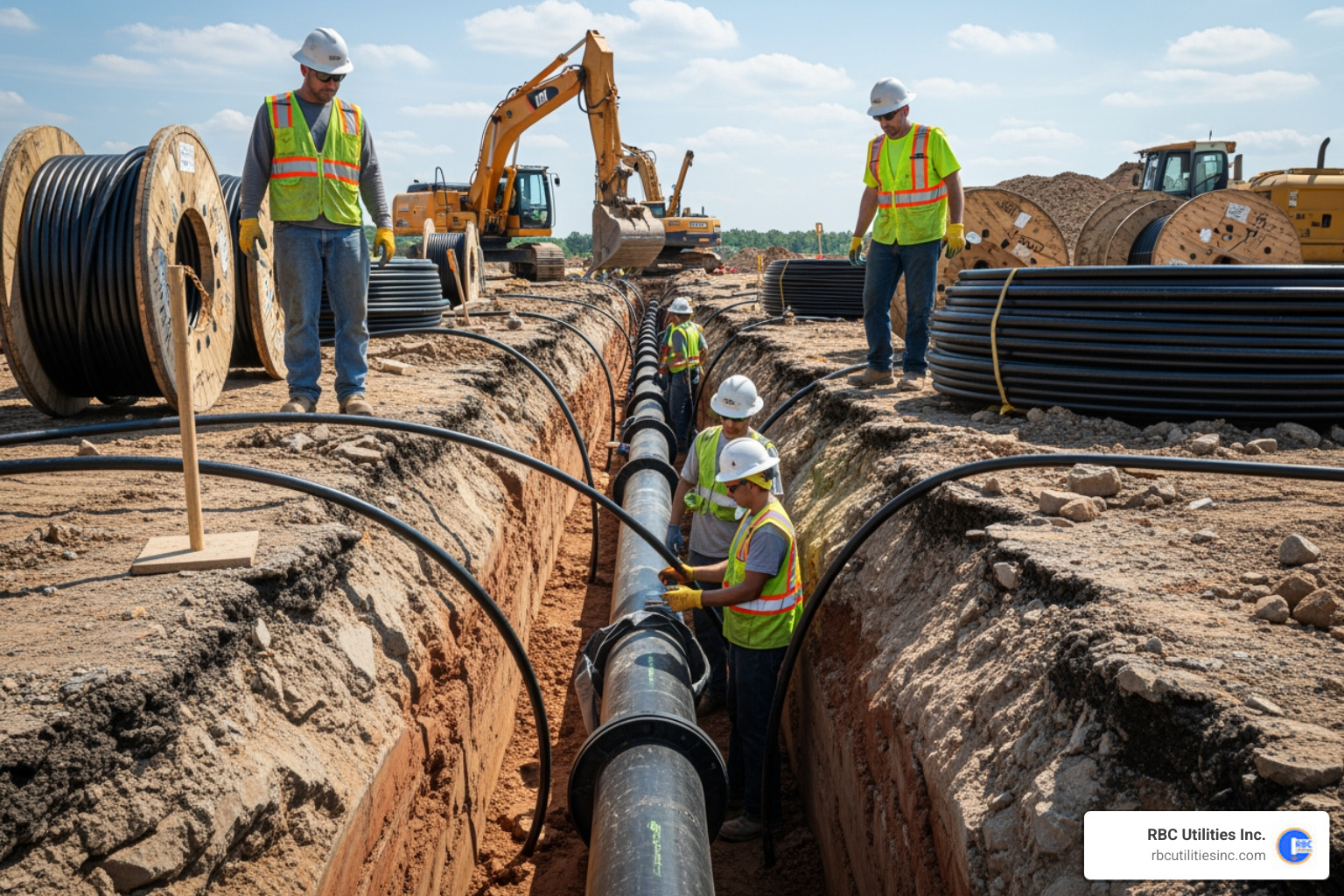
Sometimes, a pipe is too far gone for a liner, or we need to increase the capacity of the line to handle a new development. That’s where Pipe Bursting comes in. A "bursting head" is pulled through the old pipe (usually old vitrified clay or brittle iron), shattering it and pulling a brand-new High-Density Polyethylene (HDPE) pipe in behind it.
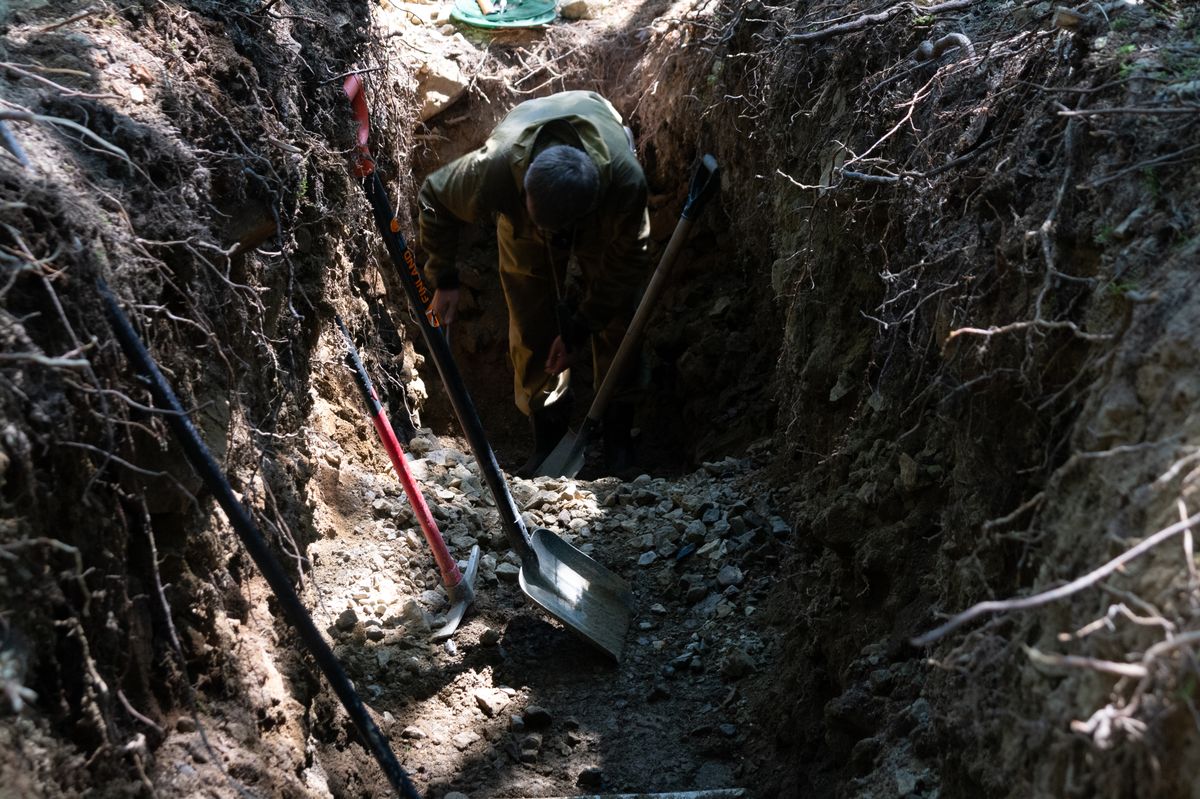
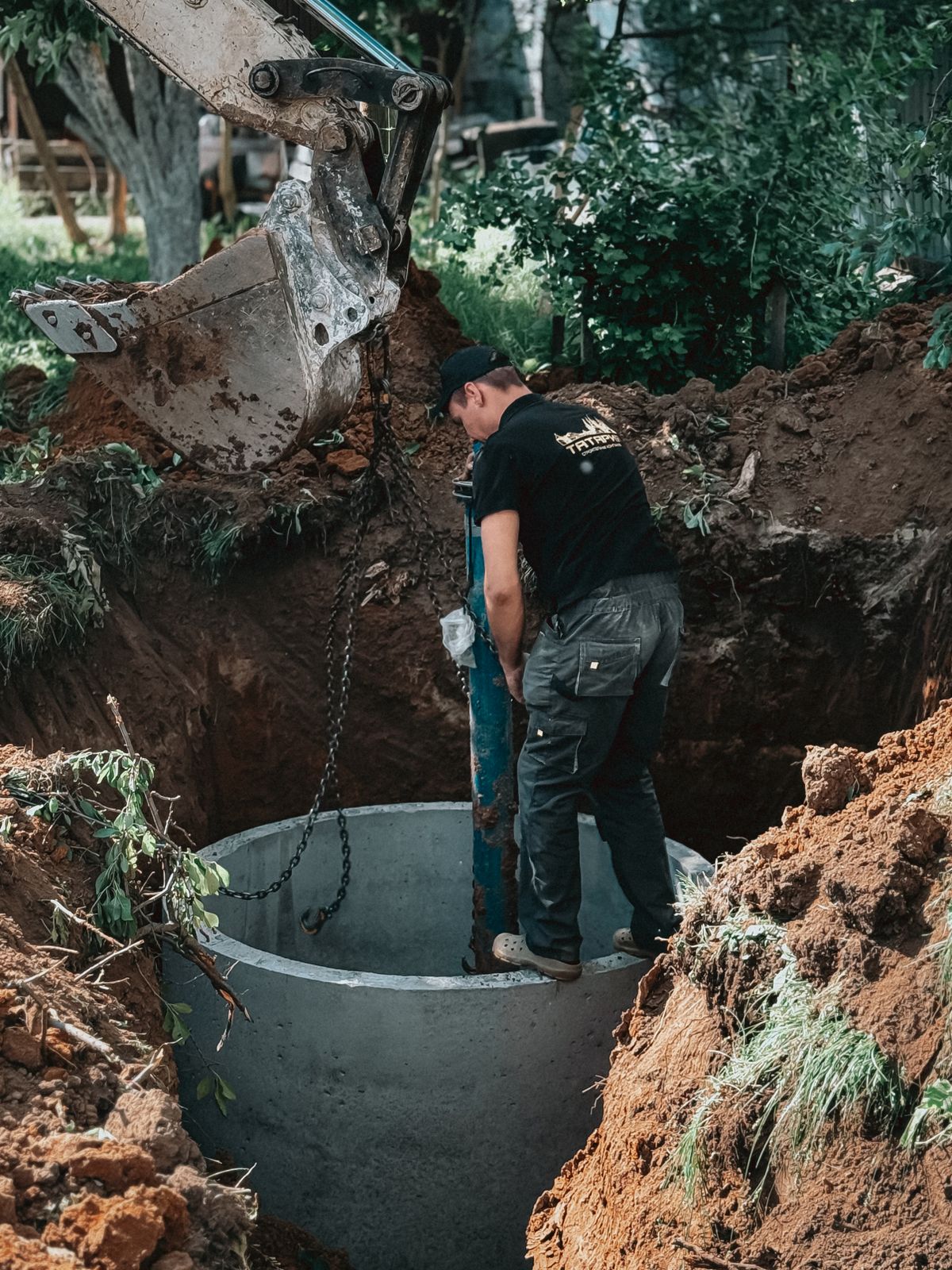
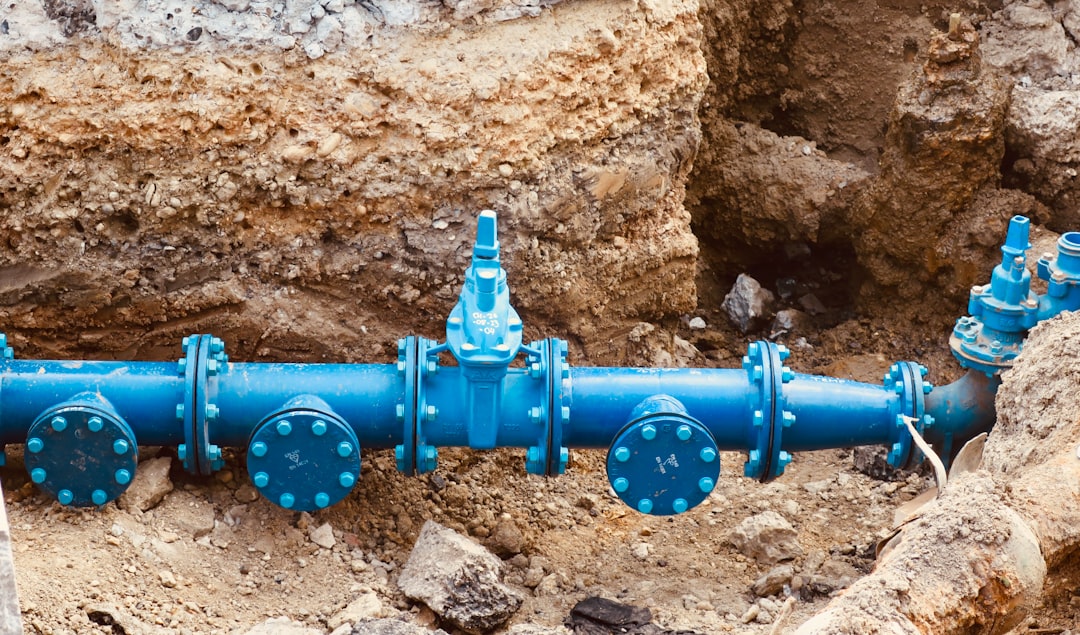
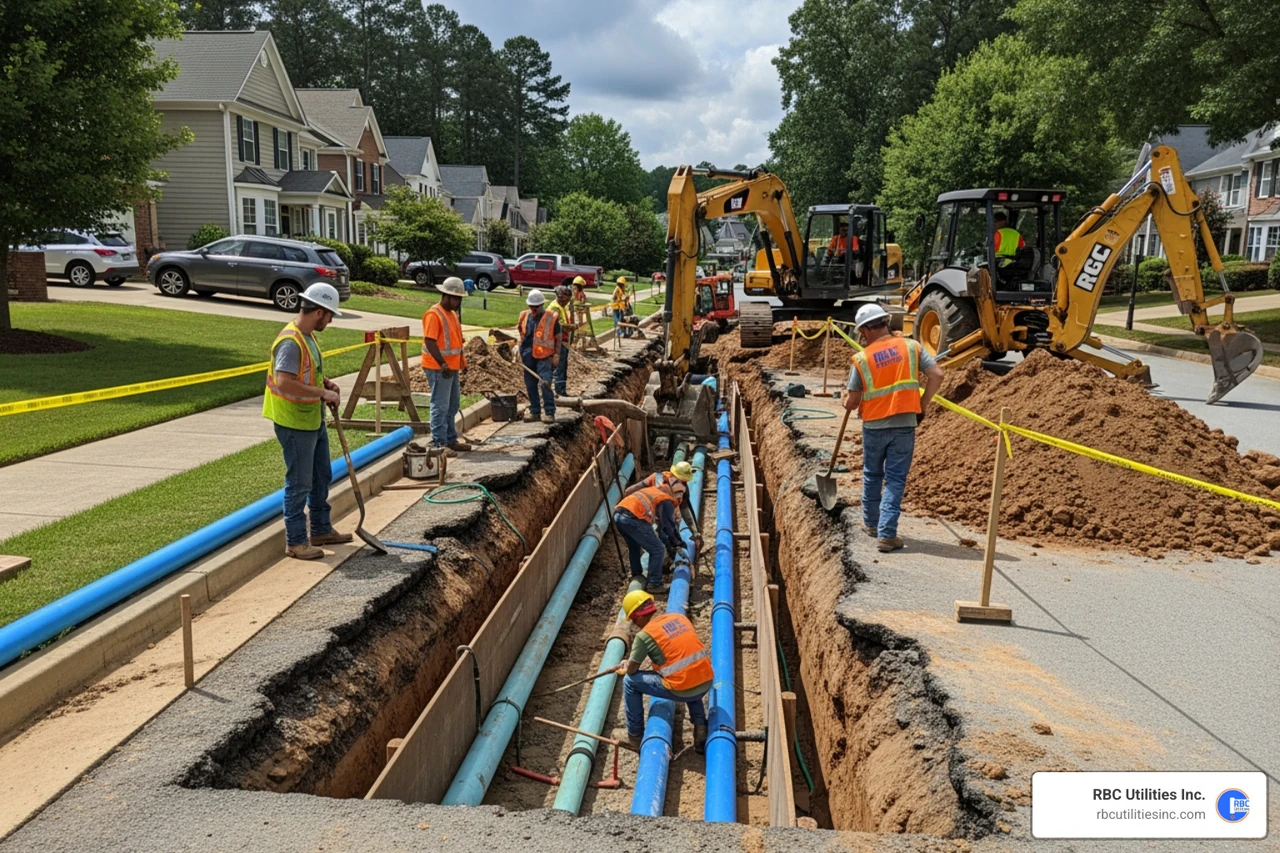
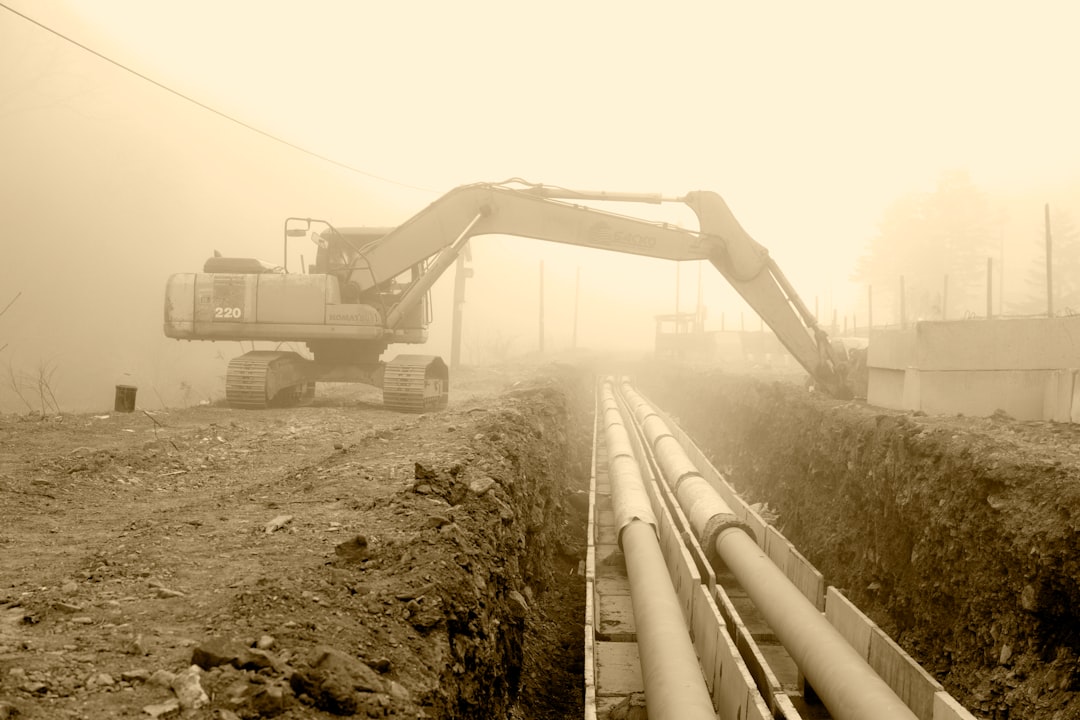
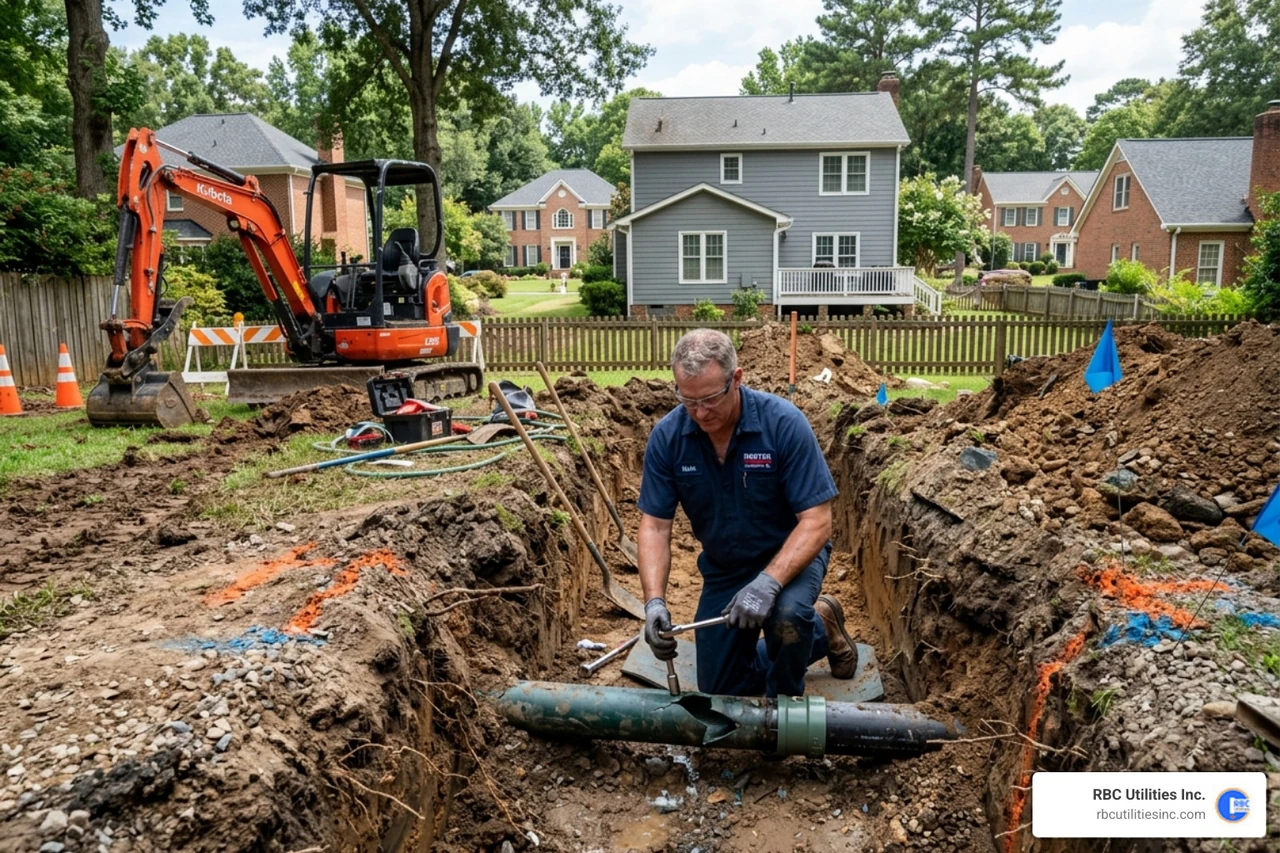
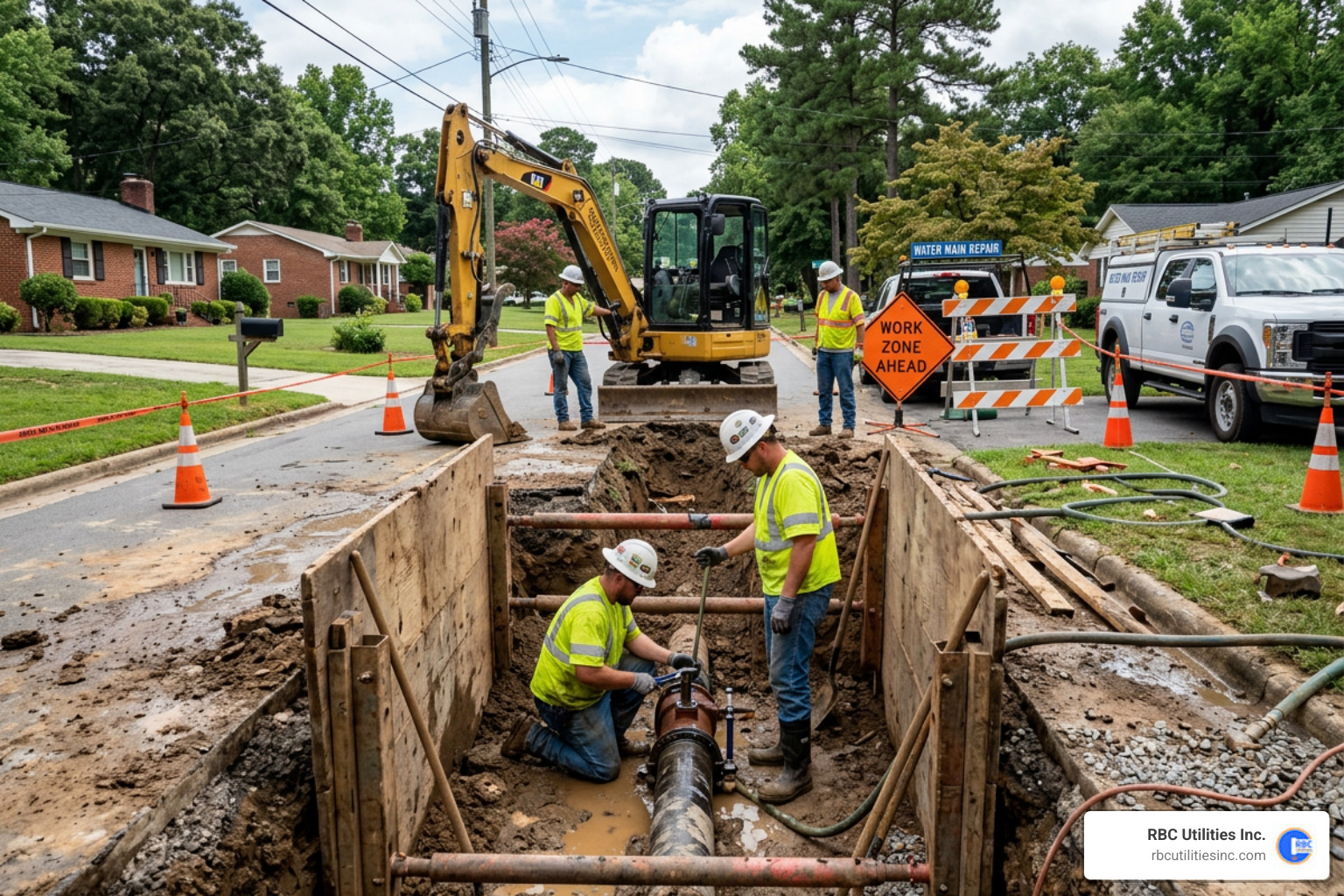
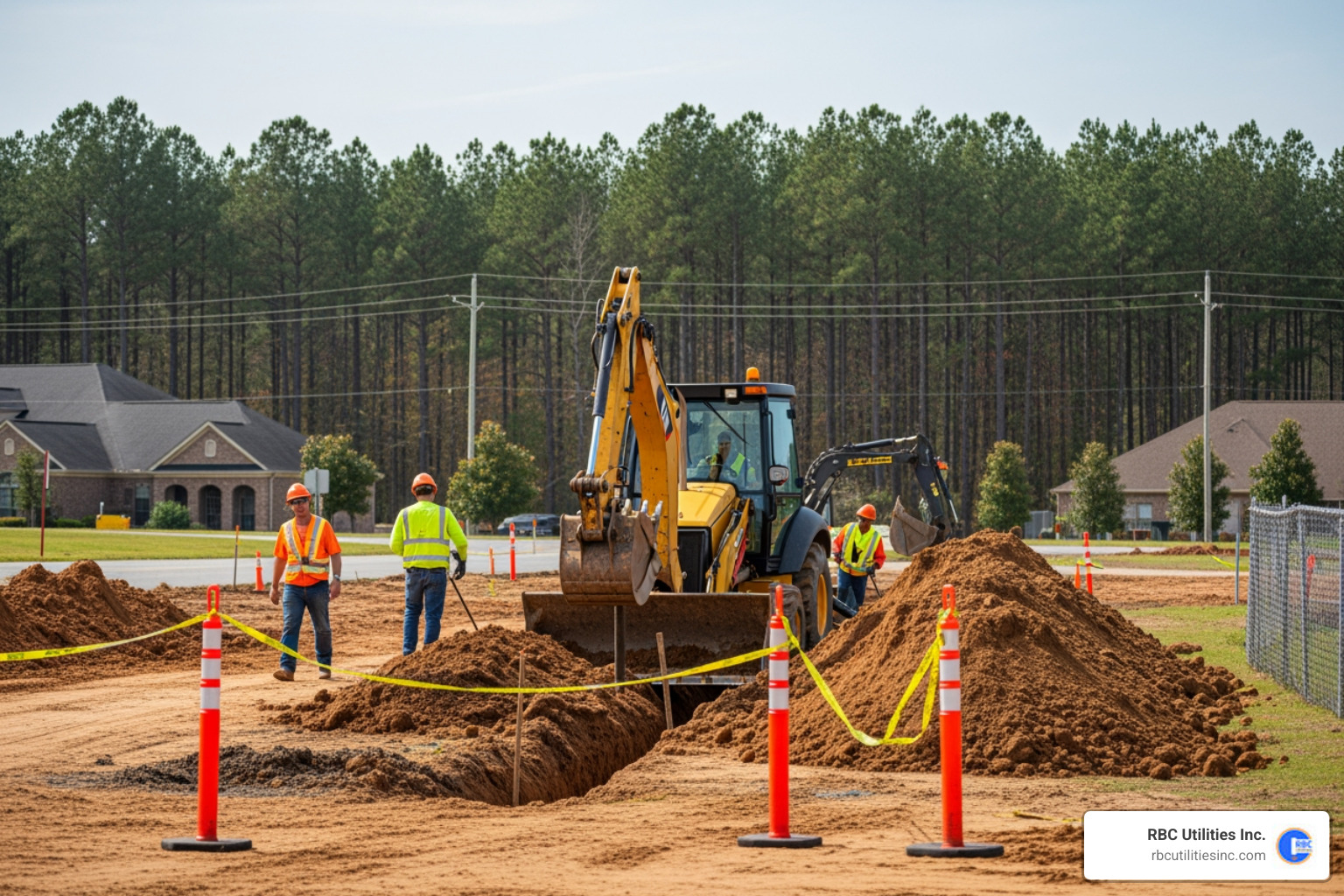
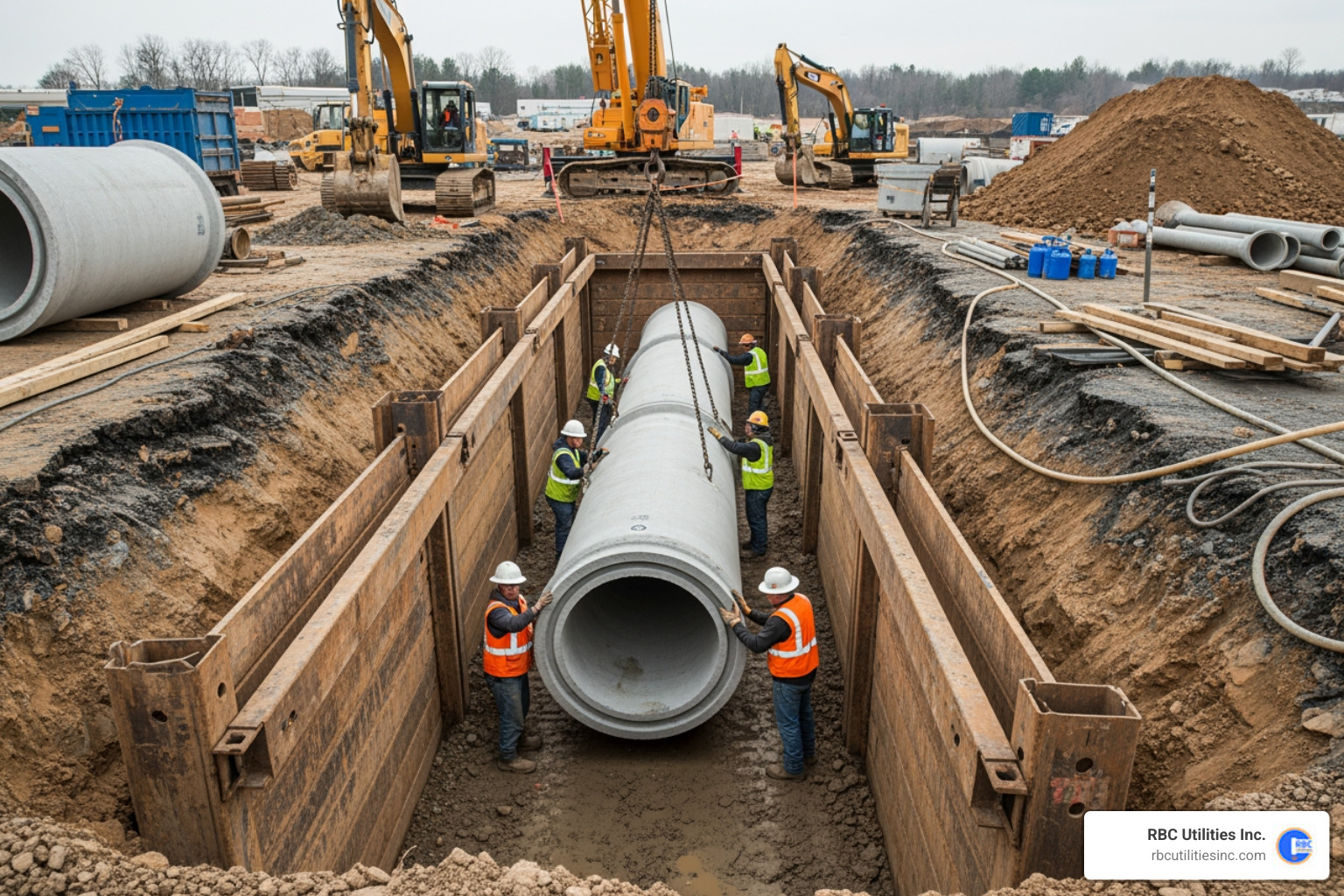
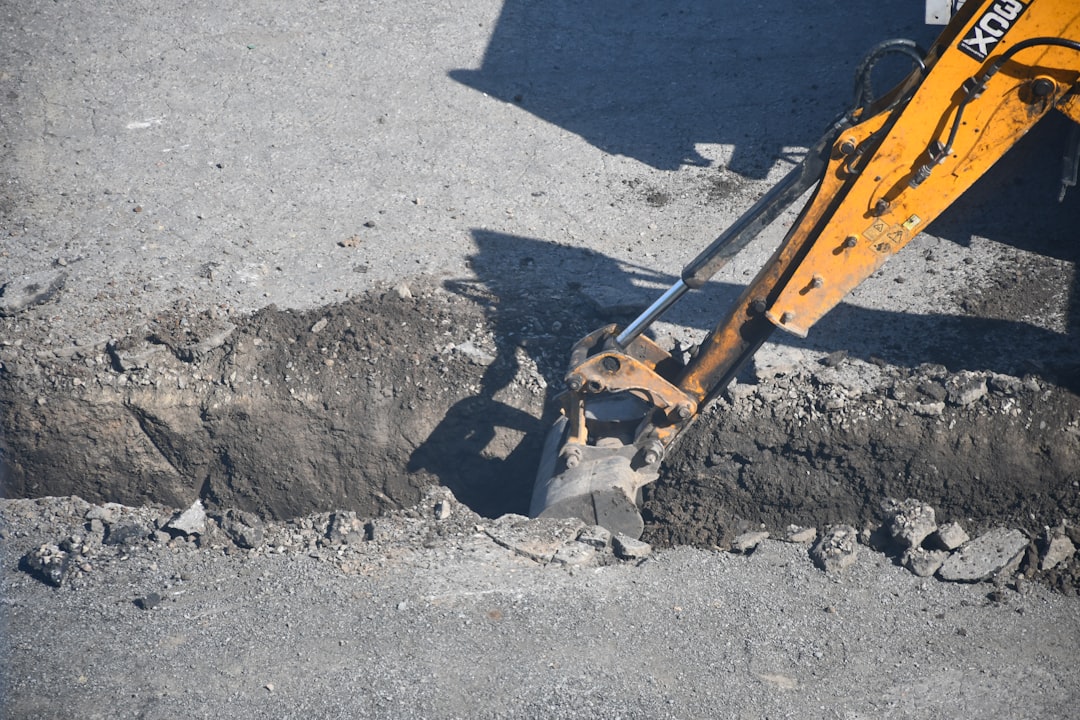
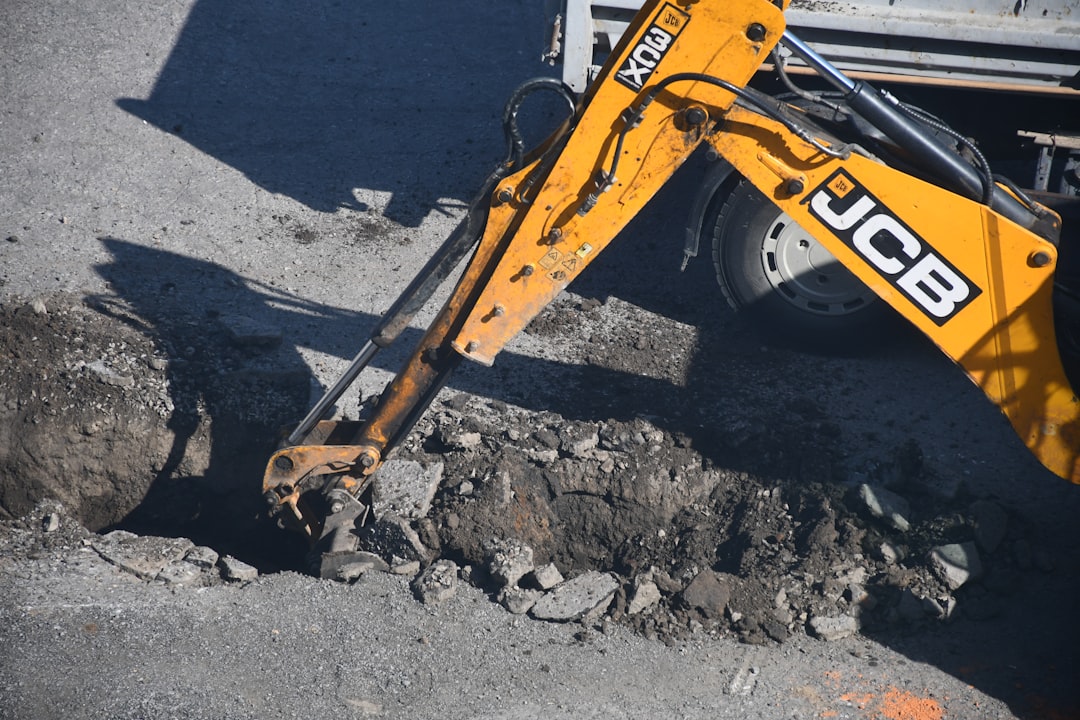
However, there are still times when sewer main line installation requires traditional open-cut replacement. If a pipe has completely collapsed or if the alignment needs to be moved out from under a private building and into a public right-of-way, digging is the only way to go.
Sewer work in the Carolinas isn't always a walk in the park. Our geography—from the red clay of the Piedmont to the sandy marshes of the coast—presents unique challenges.
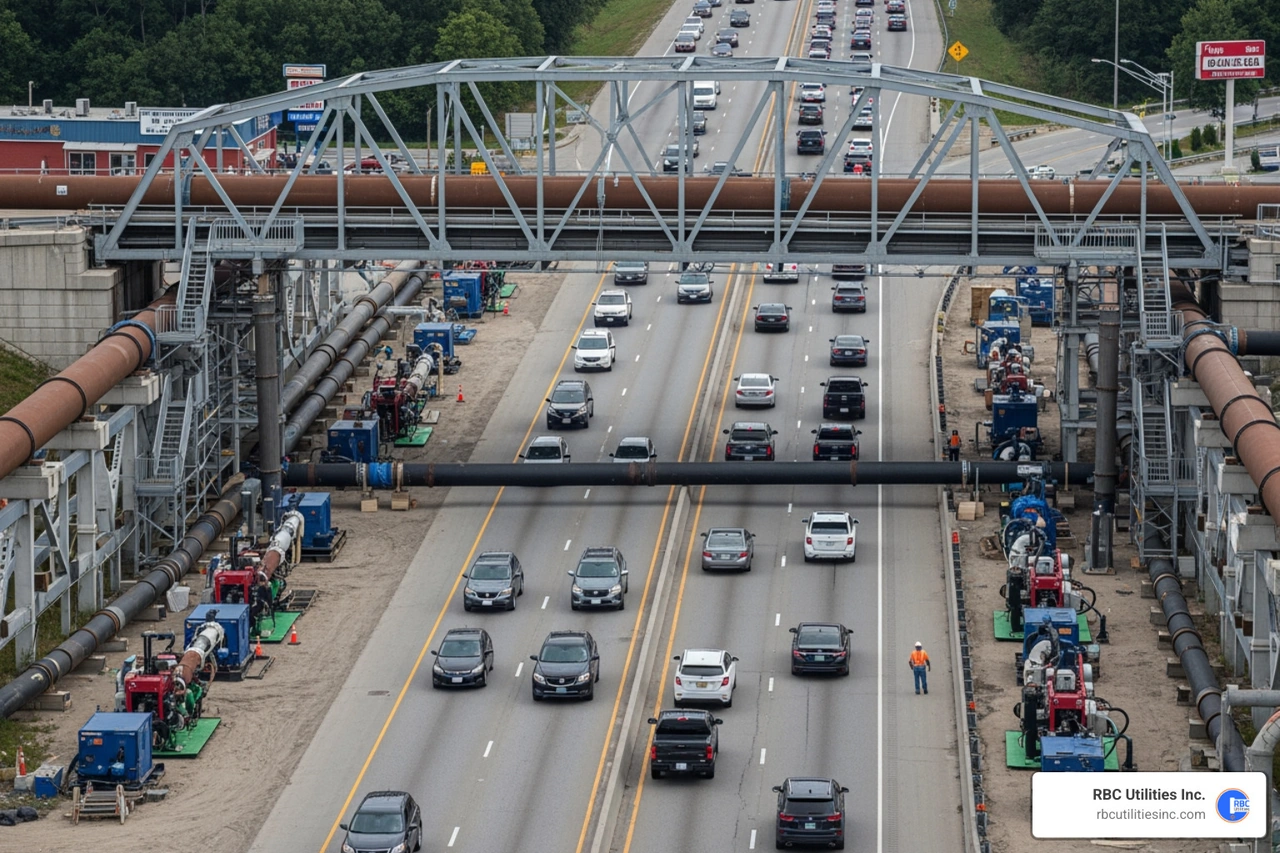
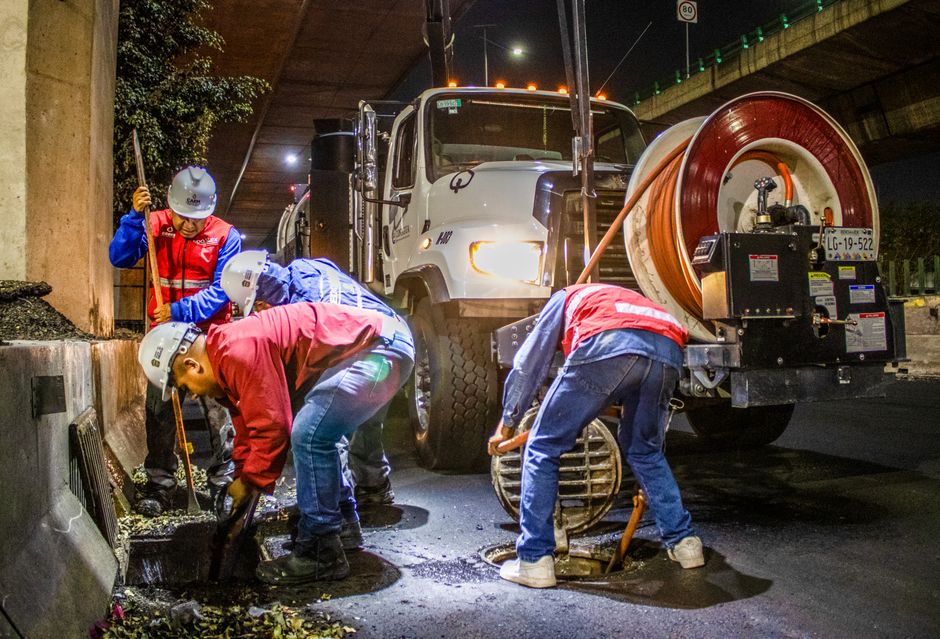
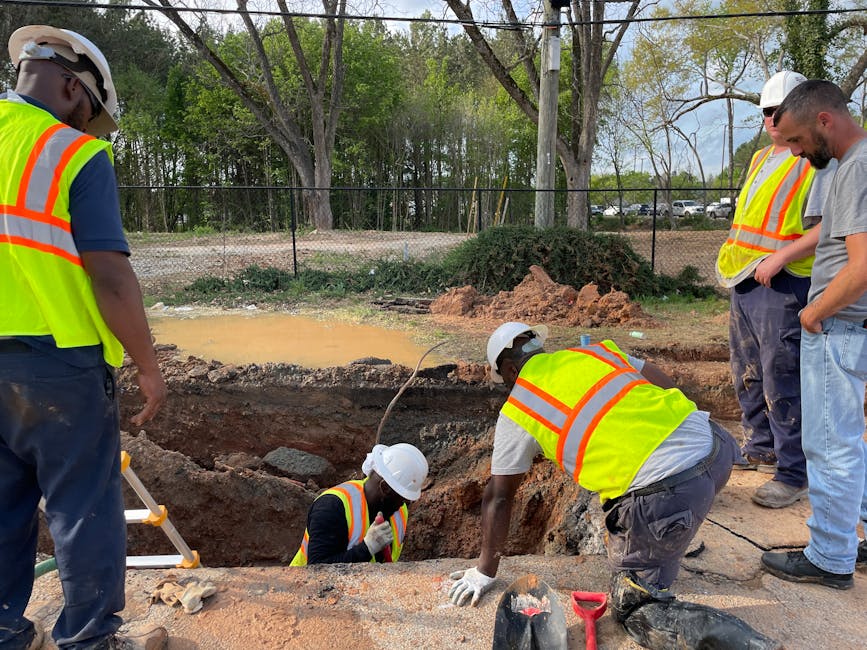
One of the biggest hurdles is bypass pumping. When you're relining a major "trunk" line, the waste doesn't stop flowing just because you're working. You have to pump that flow around the work zone. In a recent Charlotte project, teams had to manage a 57 million gallon per day (MGD) bypass. This involved ten 12-inch pumps and three 24-inch force mains running for over 5,000 feet. They even used temporary steel truss bridges to carry the bypass pipes over 5-lane roads—a first for NCDOT approval!
The Ashley & Cooper Interceptor case study highlights similar complexities in South Carolina, where over 50,000 feet of interceptor were rehabilitated across marshes and railroad crossings.
Working near water means dealing with a lot of "alphabet soup" agencies. If a project touches jurisdictional waters, you're looking at USACE (U.S. Army Corps of Engineers) permits. In South Carolina, you’ll likely deal with SC DHEC for sediment control and OCRM if you're near the coast.
Crossing a railroad or a major highway like I-26 requires specialized encroachment permits. These agencies are (rightfully) protective of their assets, so project teams have to prove that their bypass systems and construction methods won't cause settlements or vibrations that could damage the tracks or the road.
If you're a property owner or municipal planner, the "soft" side of the project—community impact—is just as important as the engineering. Successful projects in 2026 use:
Whether it's a small repair or a massive commercial sewer line repair, having an emergency contingency plan is non-negotiable. If a pump fails or a storm hits, you need 100% redundancy ready to go.
The price tag for these projects can be intimidating, but there has never been a better time for Carolina municipalities to find funding.
We are seeing a massive influx of federal and state dollars. For instance, the City of Mauldin was recently awarded a $3.4 million grant from the South Carolina Rural Infrastructure Authority (RIA) to rehab 12,500 feet of clay pipe. Meanwhile, Southport, NC is moving forward with a $9.8 million project funded by a mix of DEQ-DWI grants and State Revolving Fund (SRF) loans.
The American Rescue Plan Act (ARPA) has also been a game-changer. The Town of Southern Pines, for example, utilized nearly $5 million in ARPA funds for their sewer replacement project. These grants often cover the vast majority of the cost, requiring only a small local match, making it possible for smaller towns to tackle "big city" infrastructure problems.
For a standard neighborhood basin, most trenchless "rehab jobs" last between 4 to 6 weeks. However, large-scale municipal programs are often phased over several years. For example, a major interceptor project might take 7 to 10 months of active construction, but the planning and permitting phase can add another year to that timeline.
Costs vary wildly based on pipe diameter and depth. Recent bid results in the Carolinas show a wide range:
Trenchless methods like CIPP and pipe bursting require only small "insertion pits" rather than a continuous open trench. This means we can keep driveways open, maintain traffic flow on major roads, and avoid the vibration and dust associated with heavy excavation. In urban areas like downtown Greensboro or Charlotte, this is often the only viable way to perform work without shutting down the local economy.
The "out of sight, out of mind" era of underground utilities is over. As we've seen throughout 2026, sewer system rehabilitation Carolinas is a vital part of keeping our region growing, safe, and environmentally sound. From the technical marvel of lining a 78-inch pipe 60 feet underground to the systematic 1% annual replacement goals of our cities, the Carolinas are leading the way in infrastructure reliability.
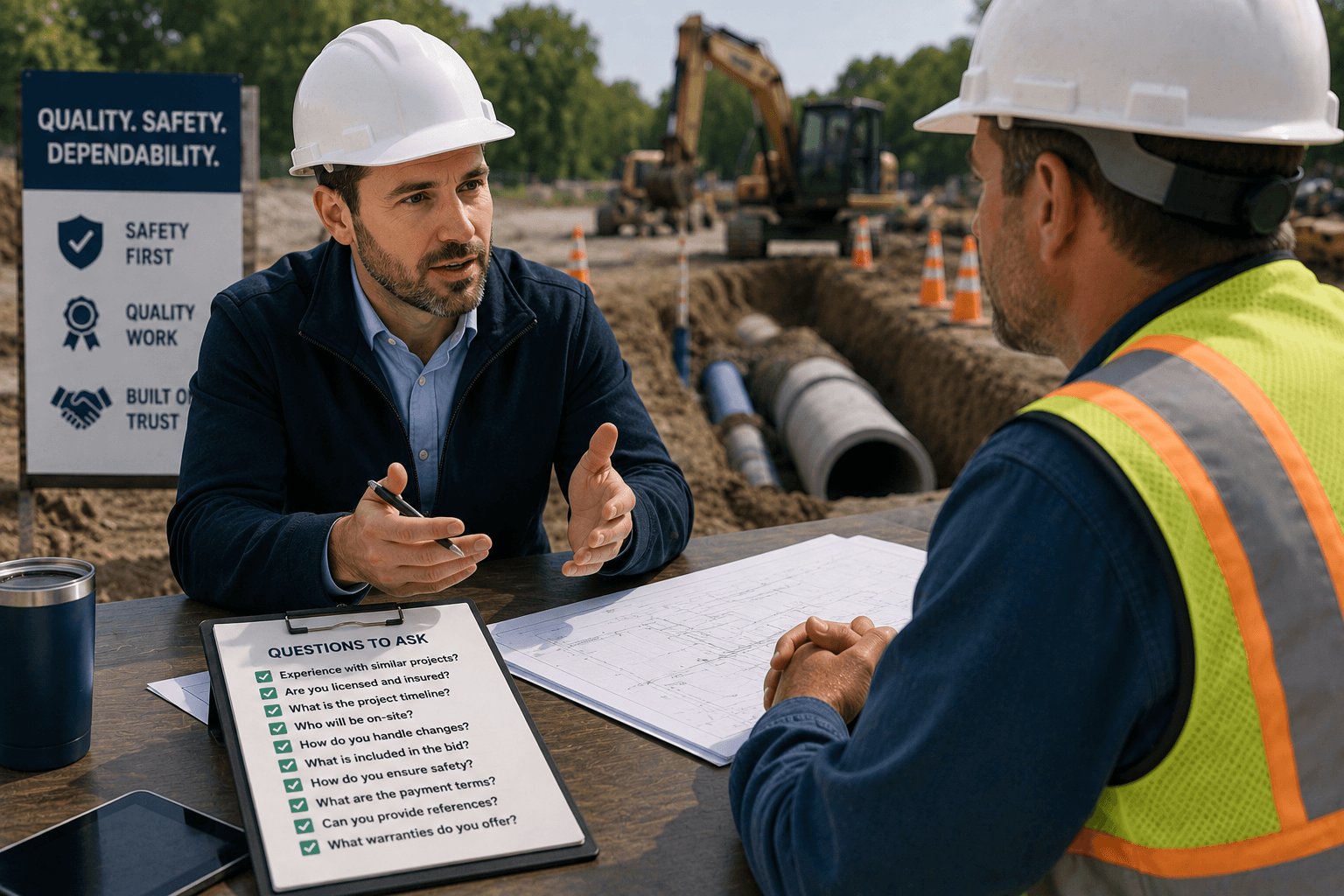
At RBC Utilities Inc., we understand that every project—whether it's a municipal interceptor or a commercial drainage system—requires a balance of technical expertise and community respect. Backed by the national resources of Saga Infrastructure, we bring local Carolinas expertise to every job site, emphasizing safety and long-term reliability.
If your system is showing signs of age, or if you're planning a new development that needs to integrate with existing infrastructure, don't wait for a failure to happen. Contact us for professional utility services and let’s ensure your underground assets are ready for the next 50 years.
Part of Saga Infrastructure, protecting what others built and helping it grow.
Address: 4404 Stuart Andrew Blvd., Suite K, Charlotte, NC 28217
Email: info@rbcutilities.com
Phone: 803-913-9727
Service Area: North Carolina | South Carolina