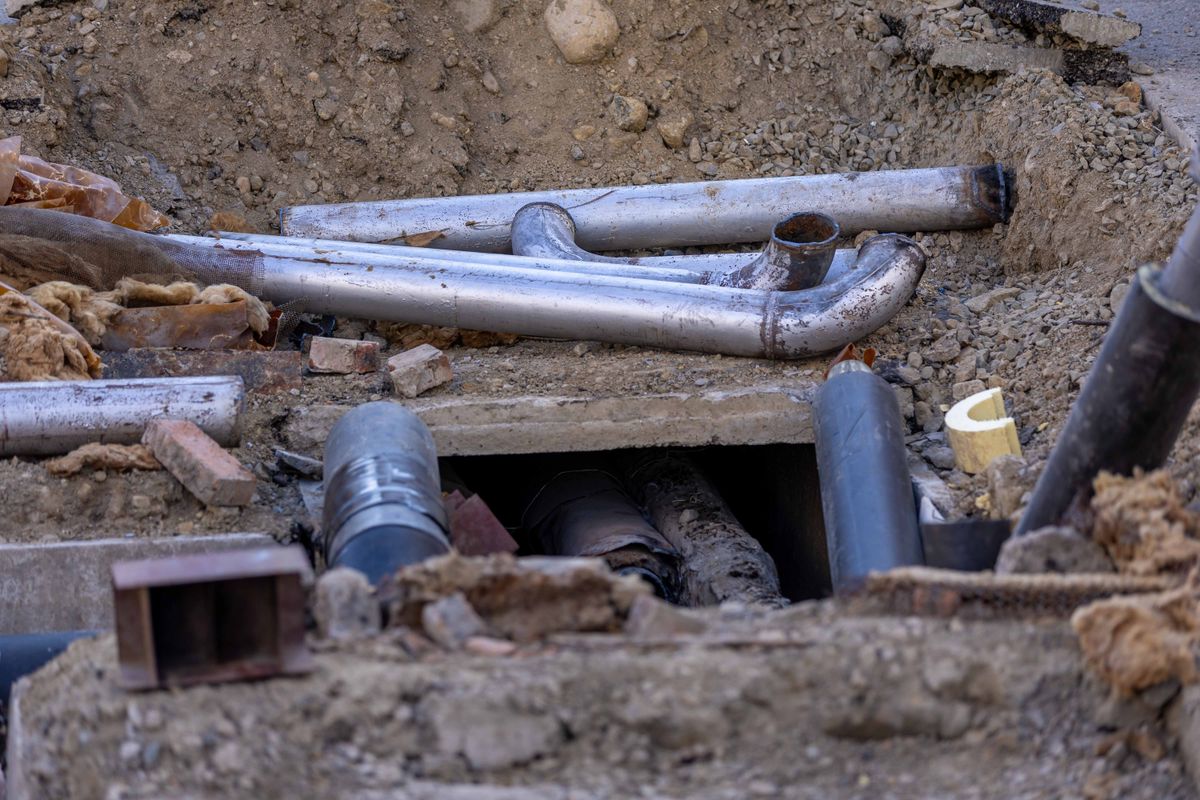
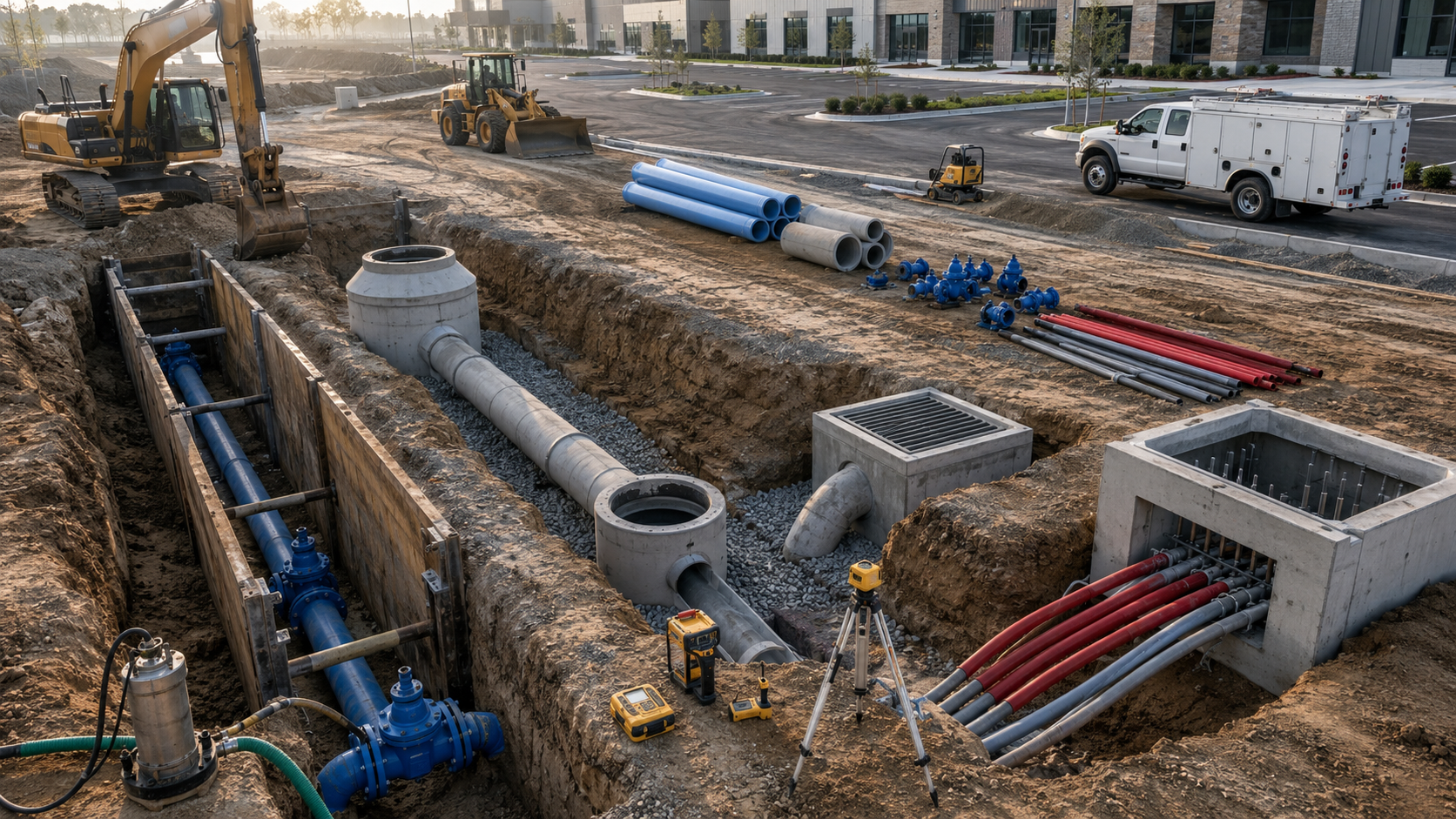
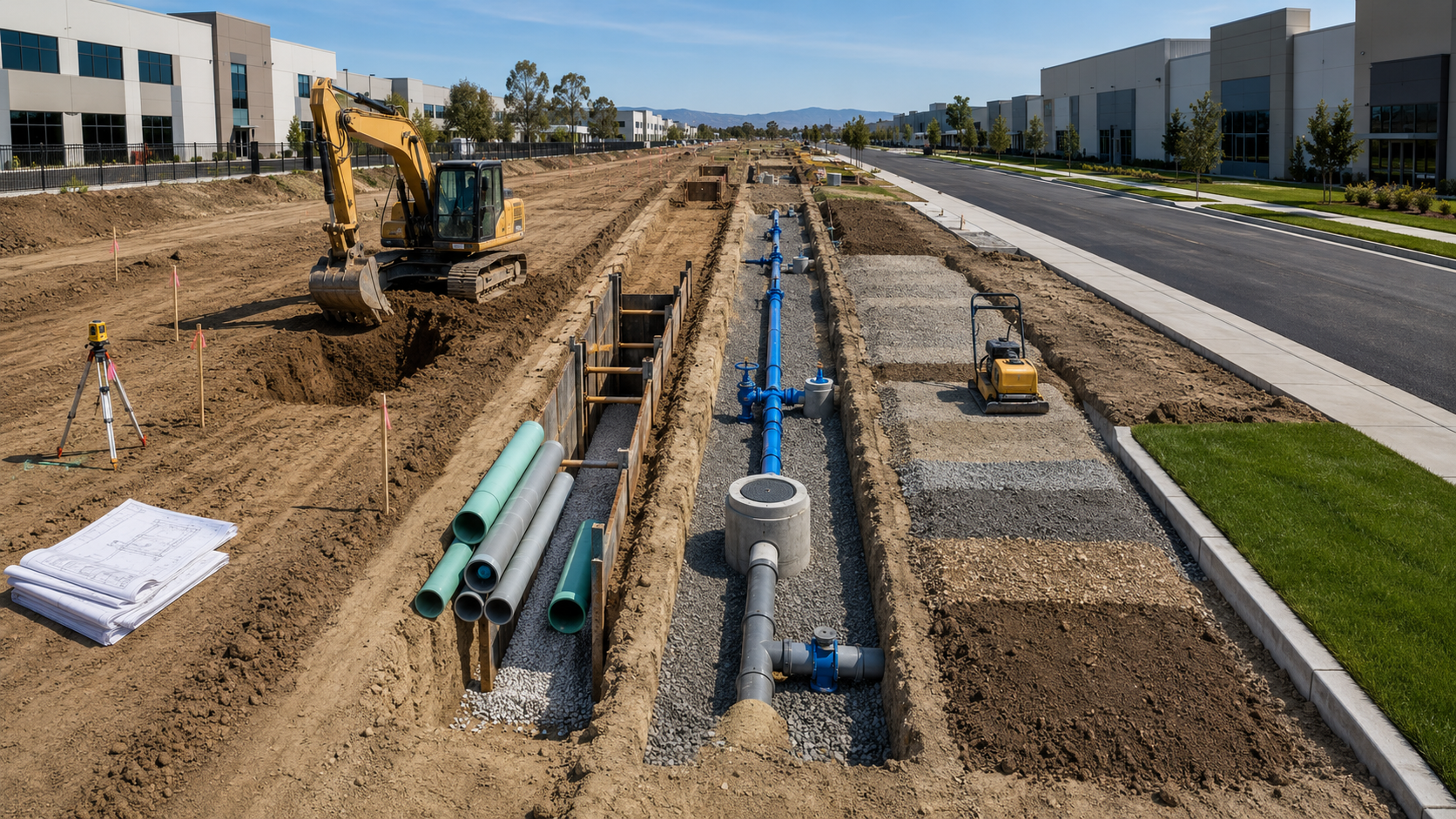
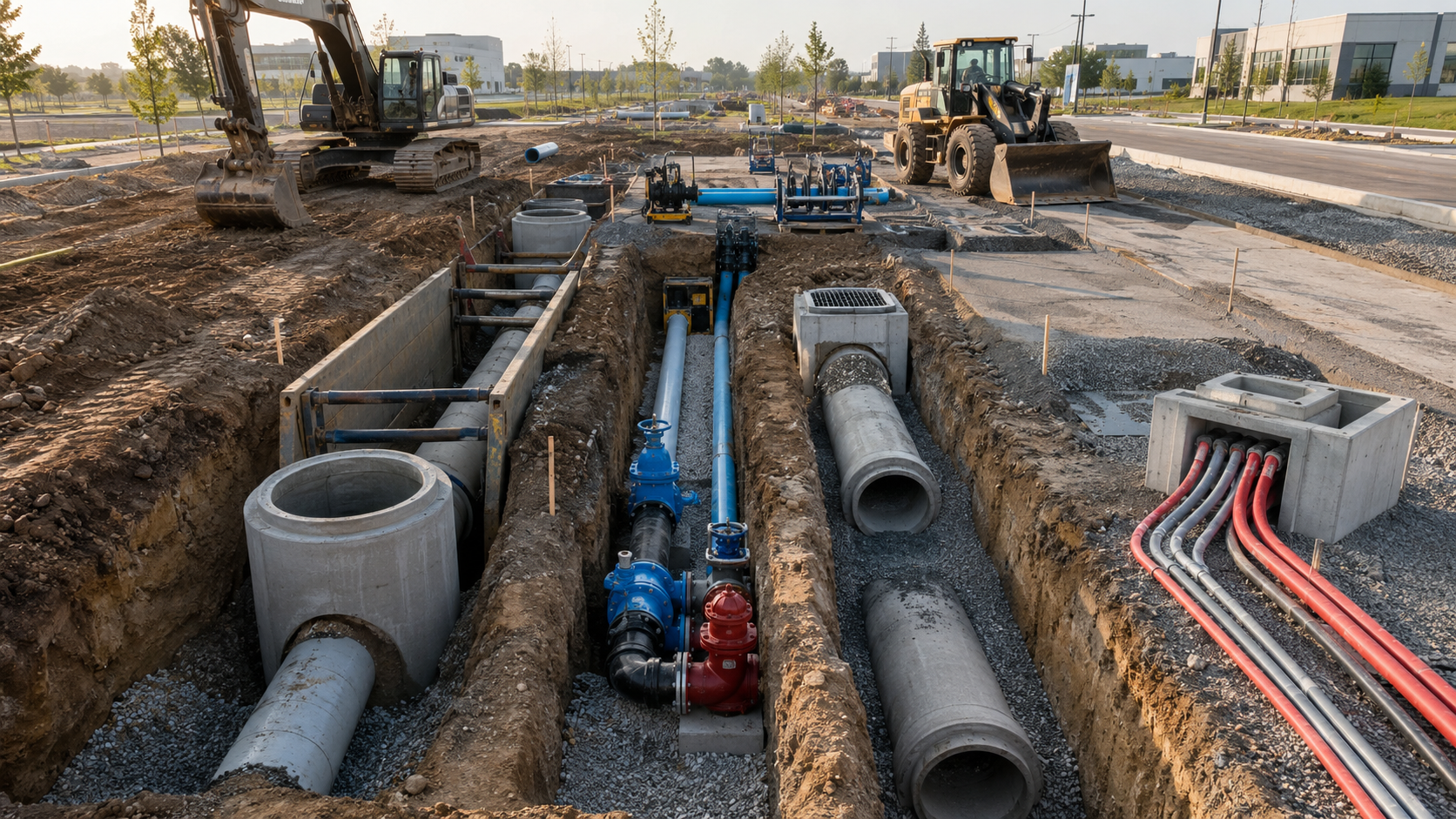
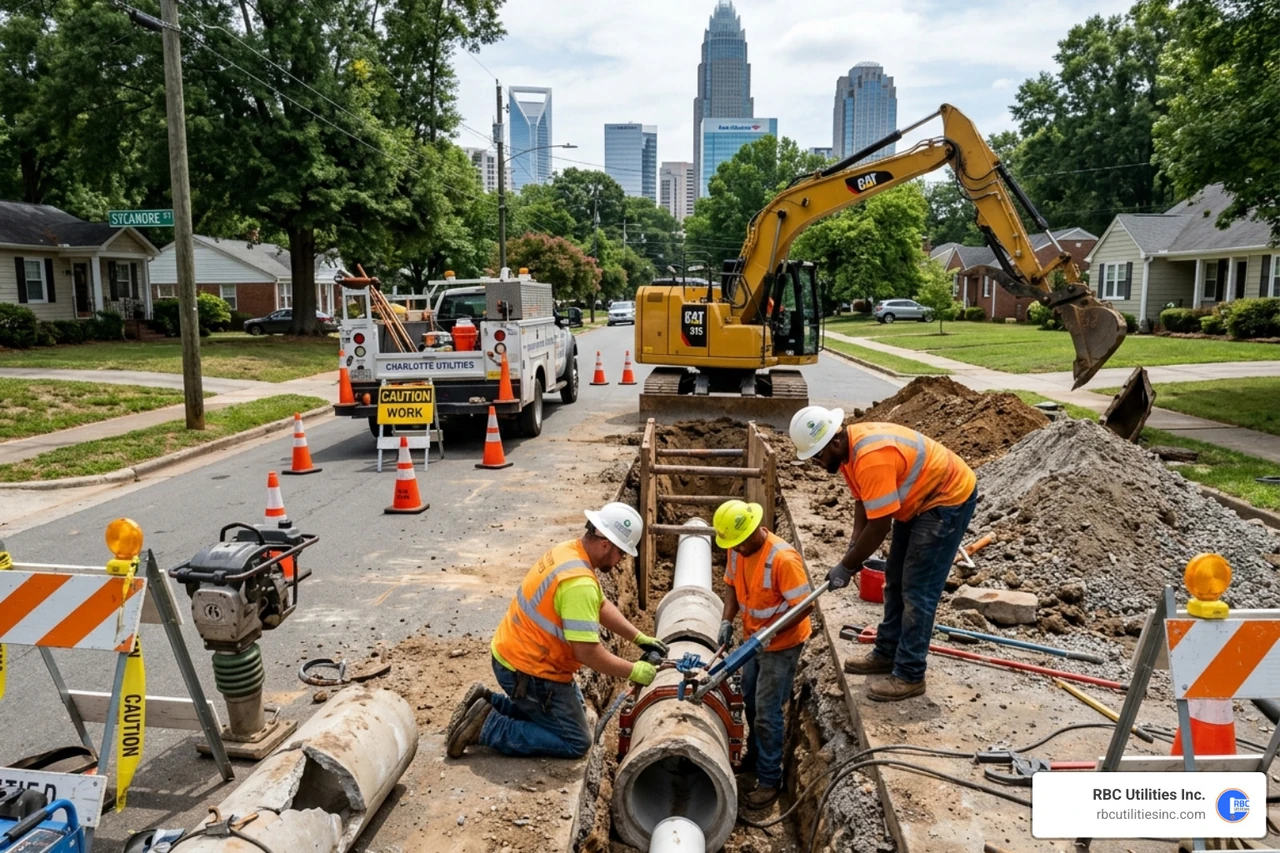
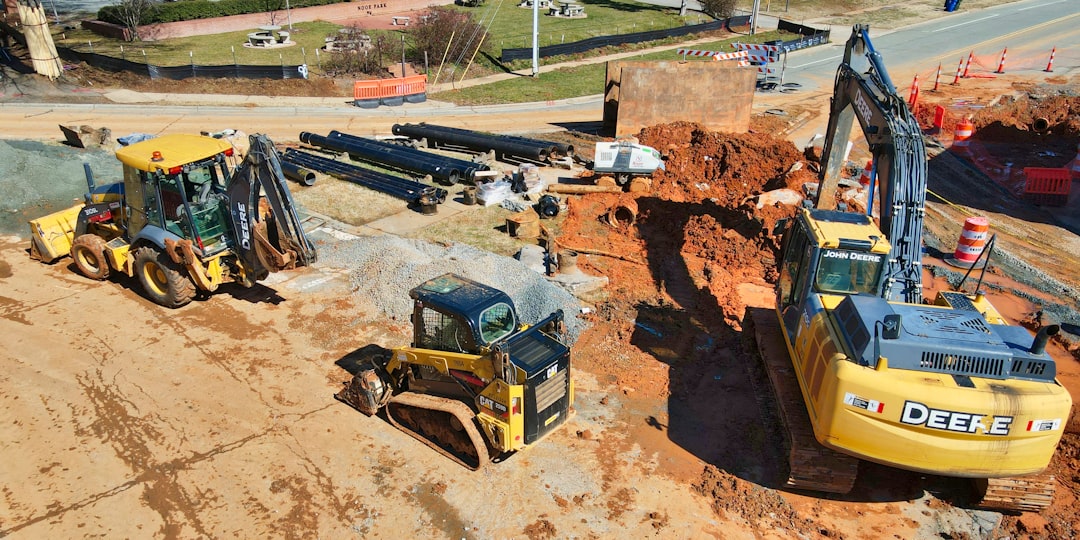
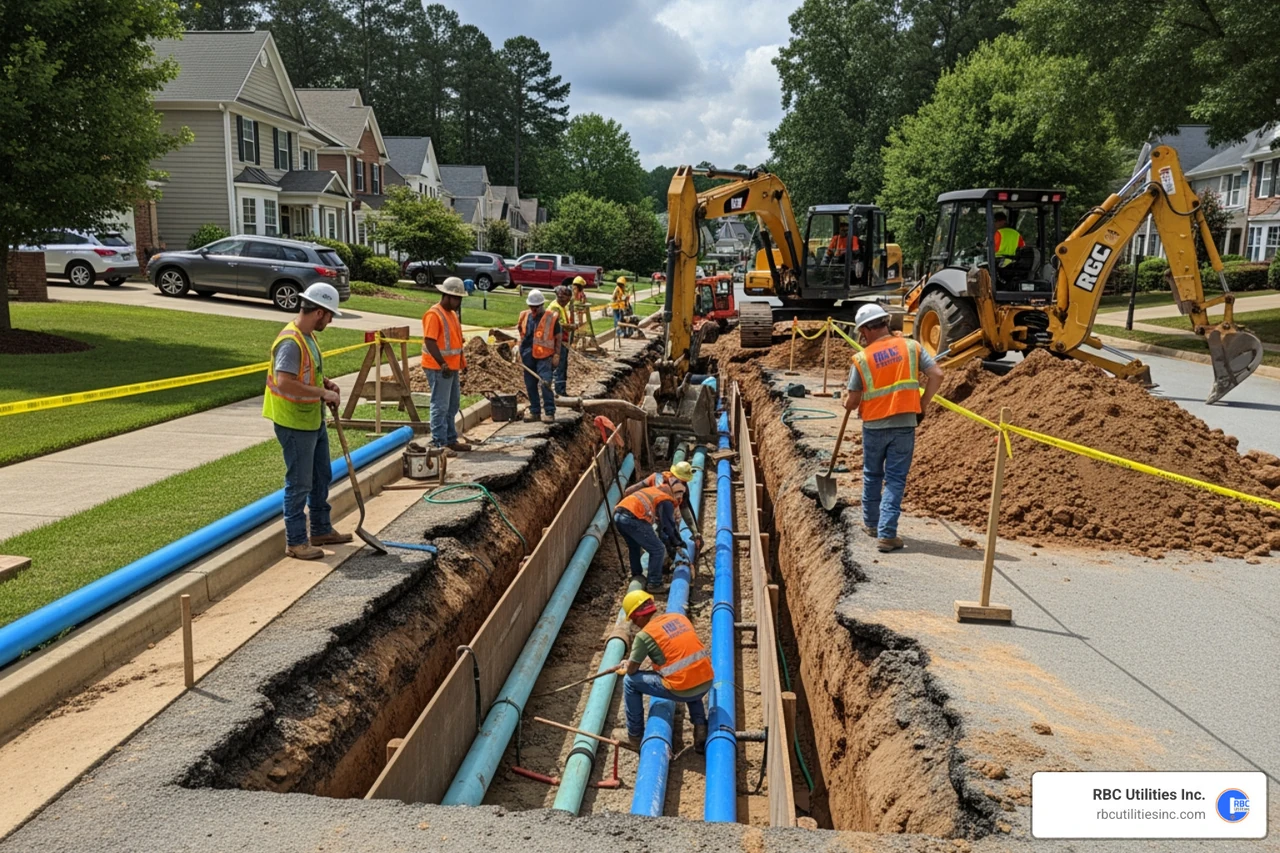
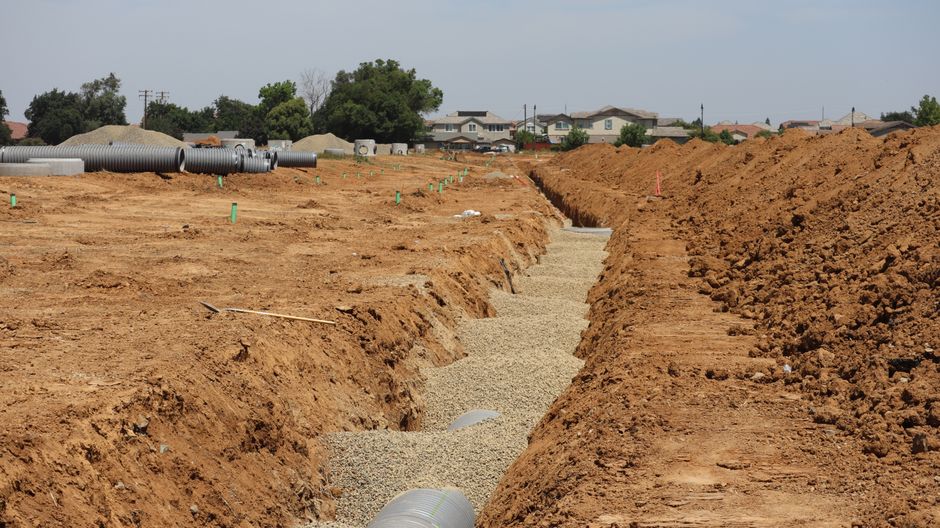
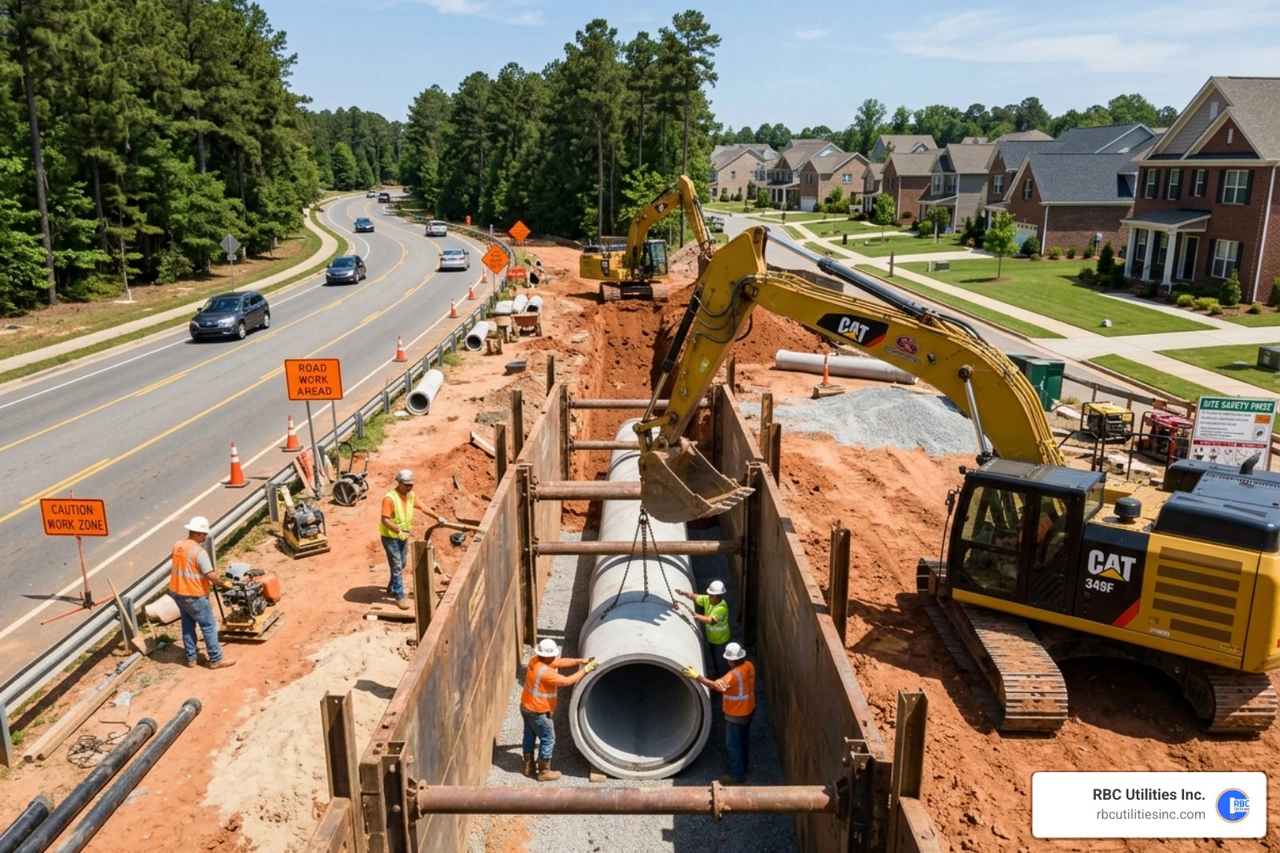
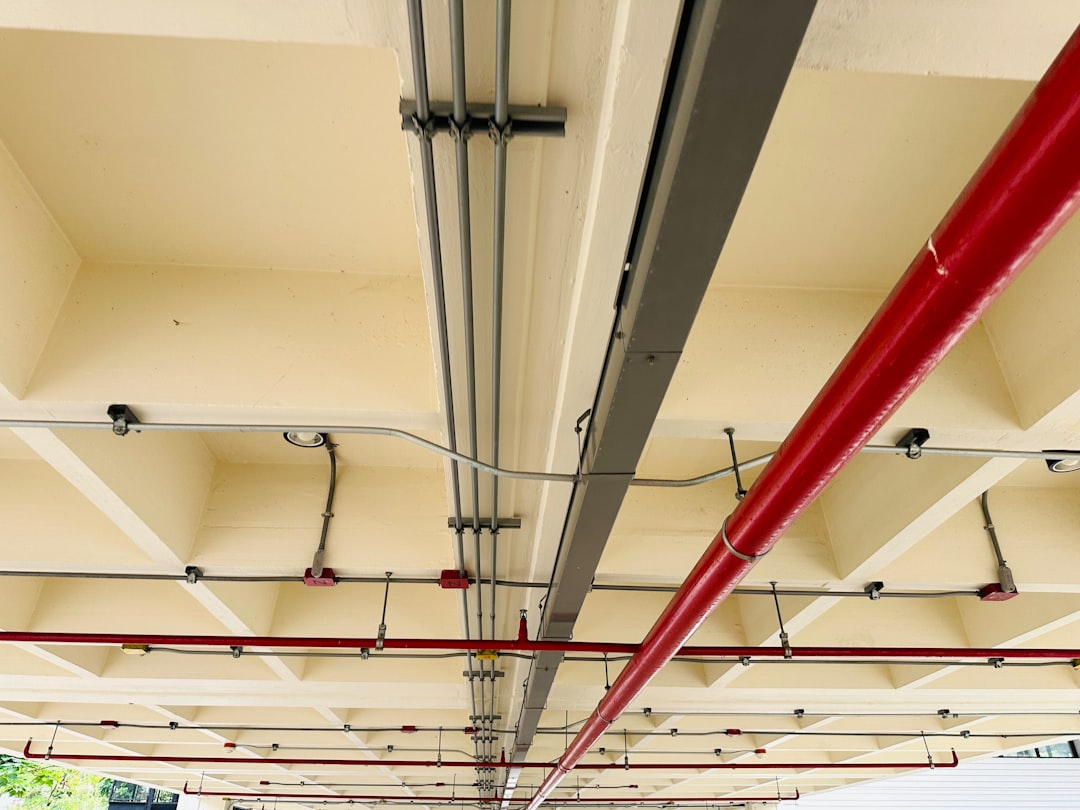
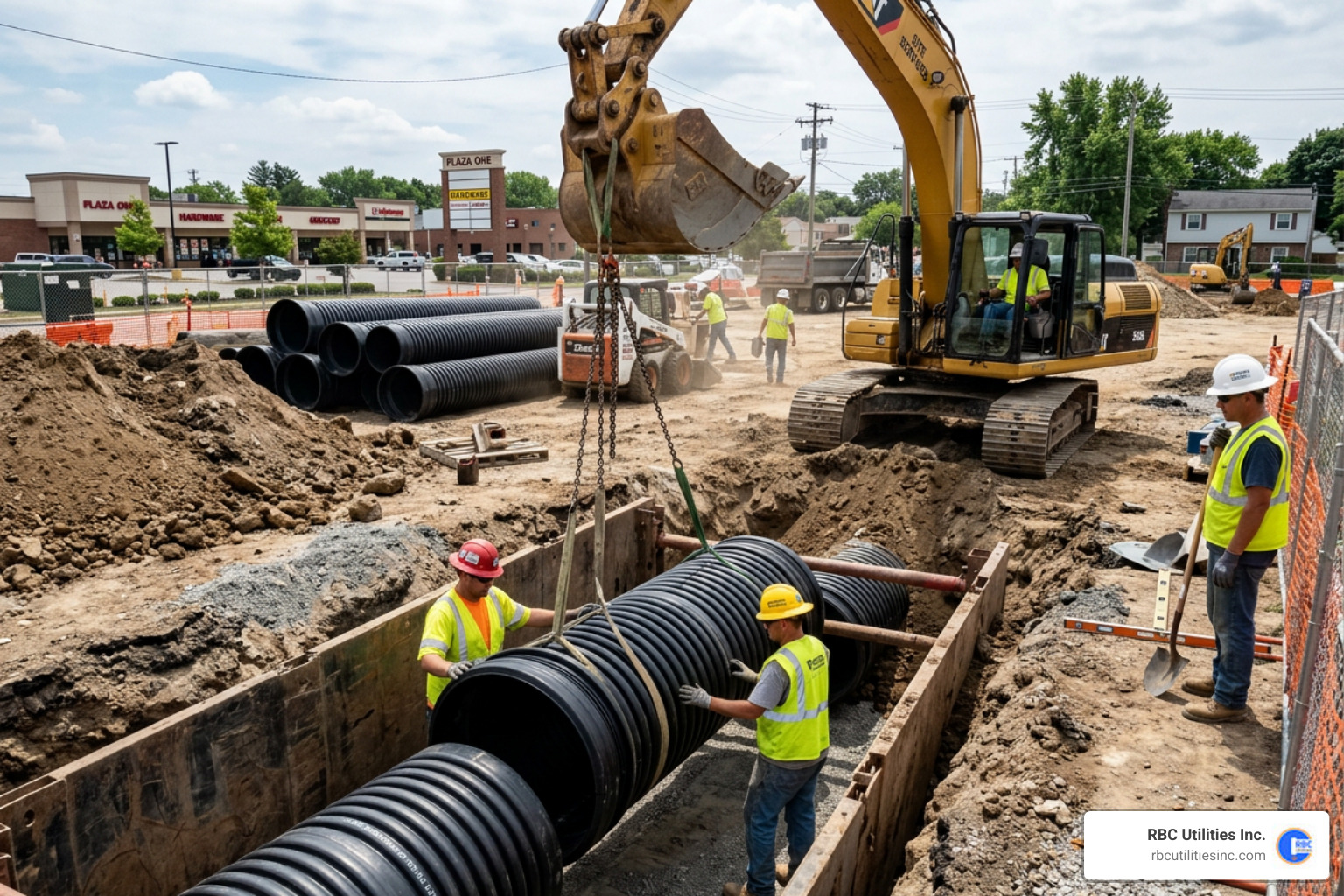
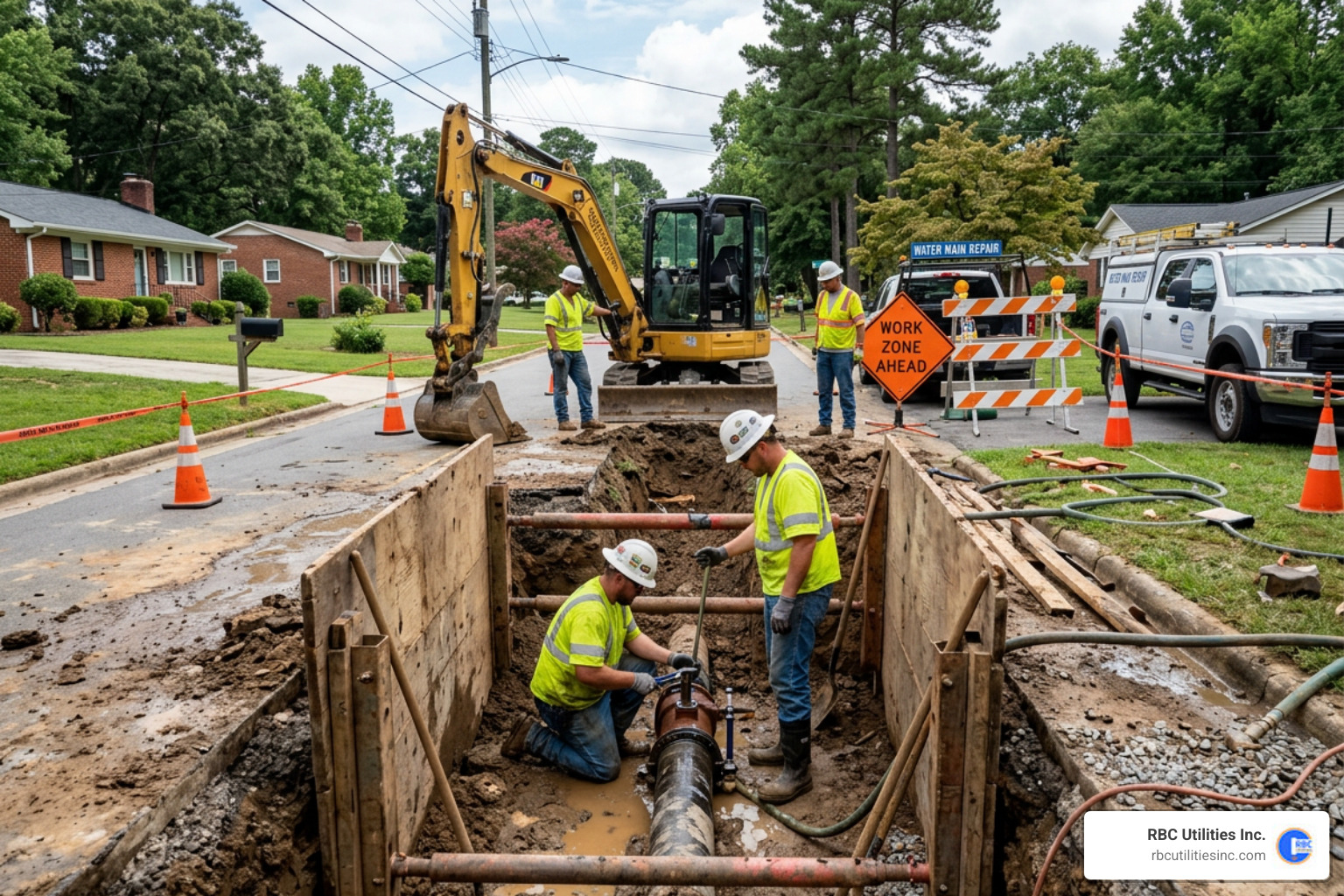
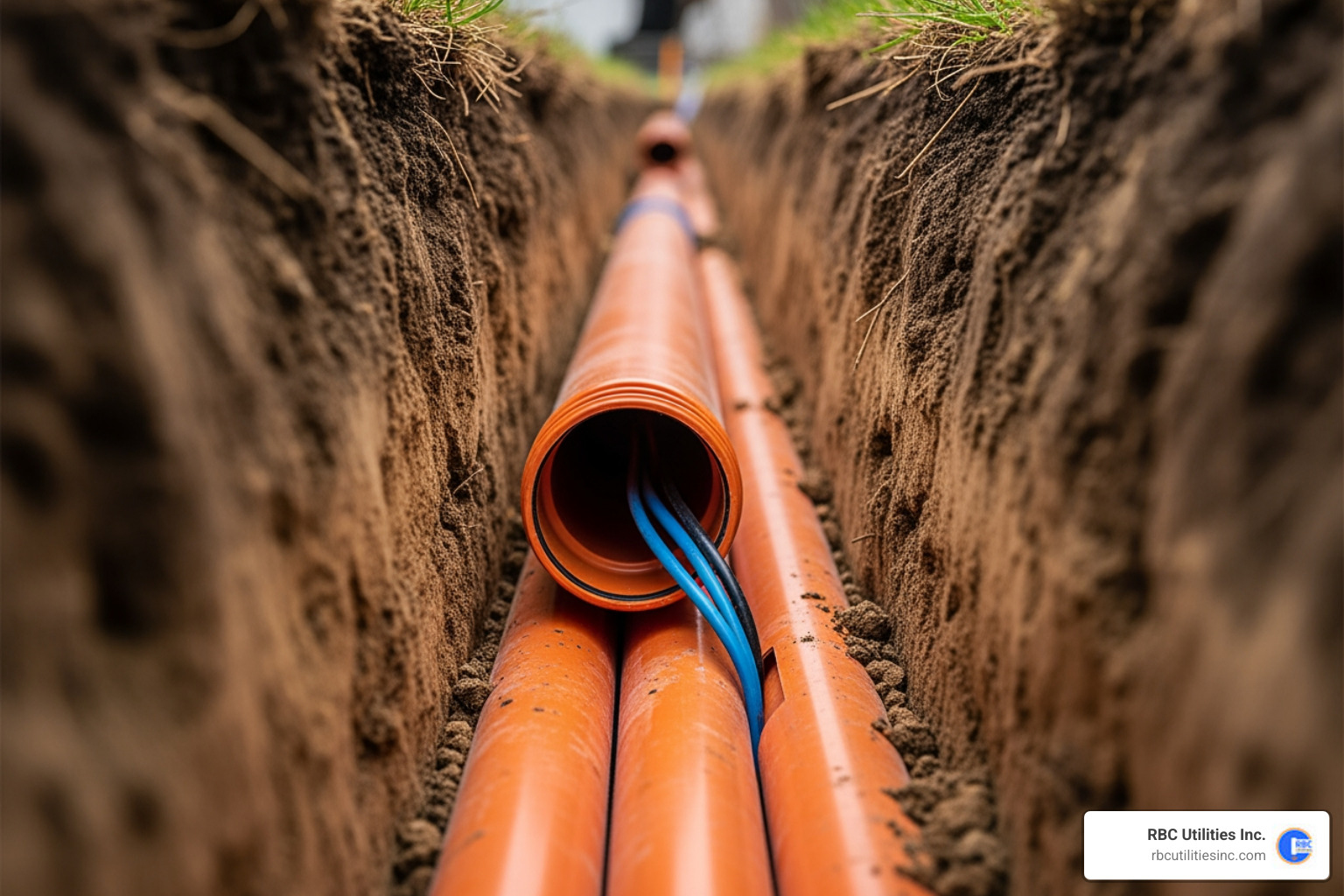
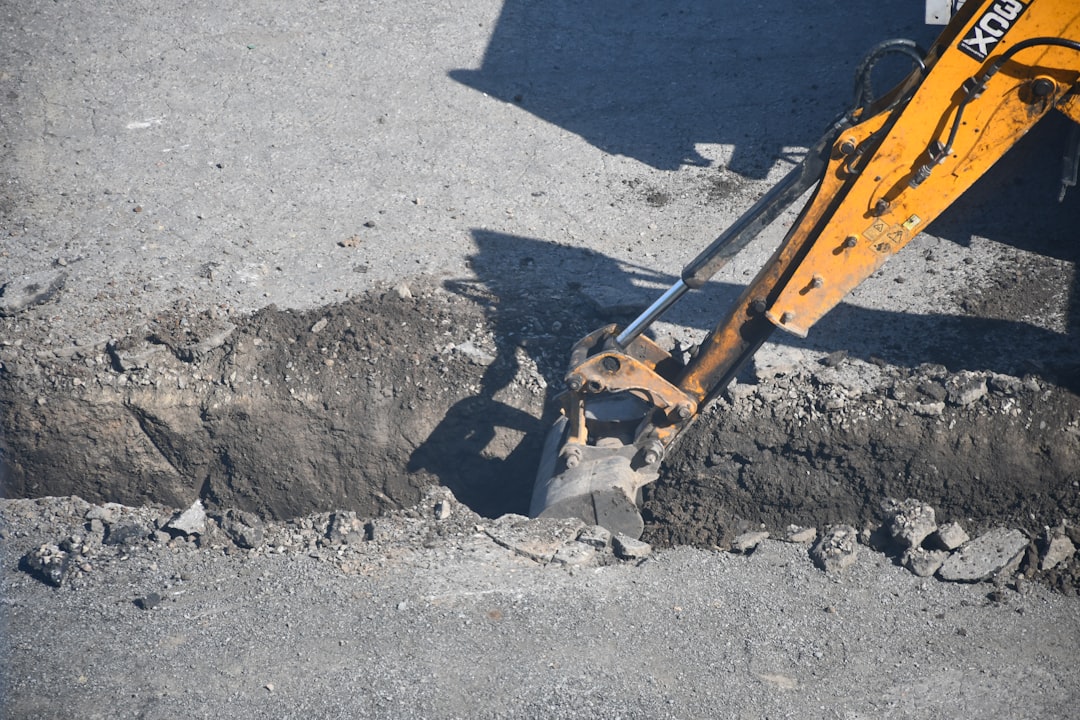
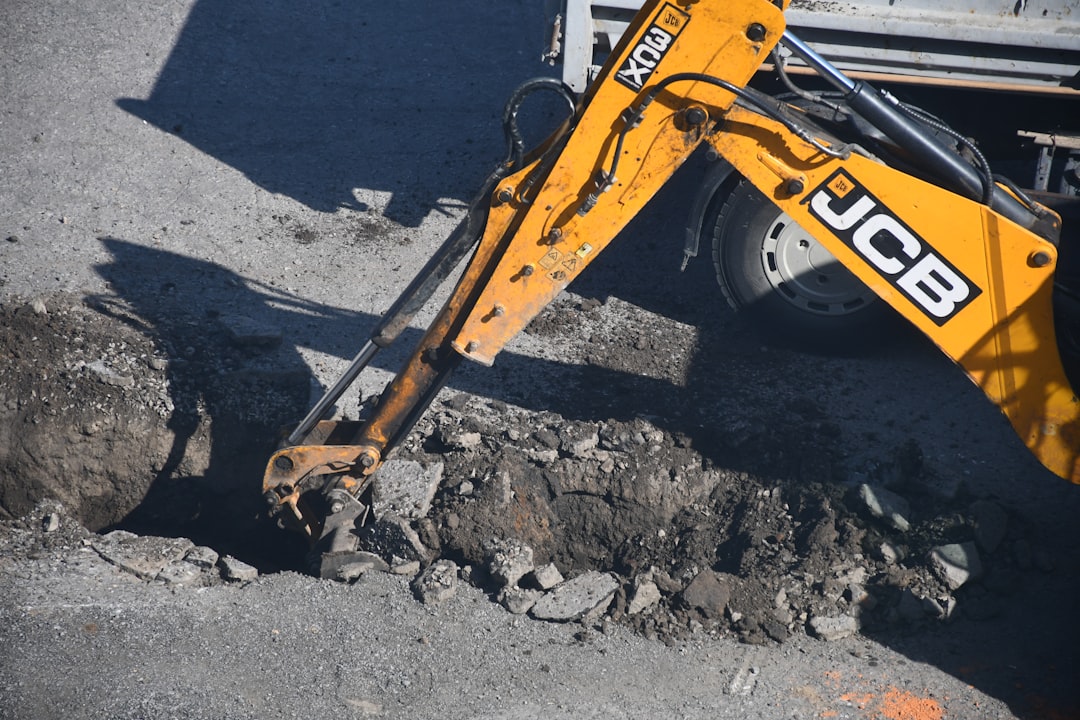
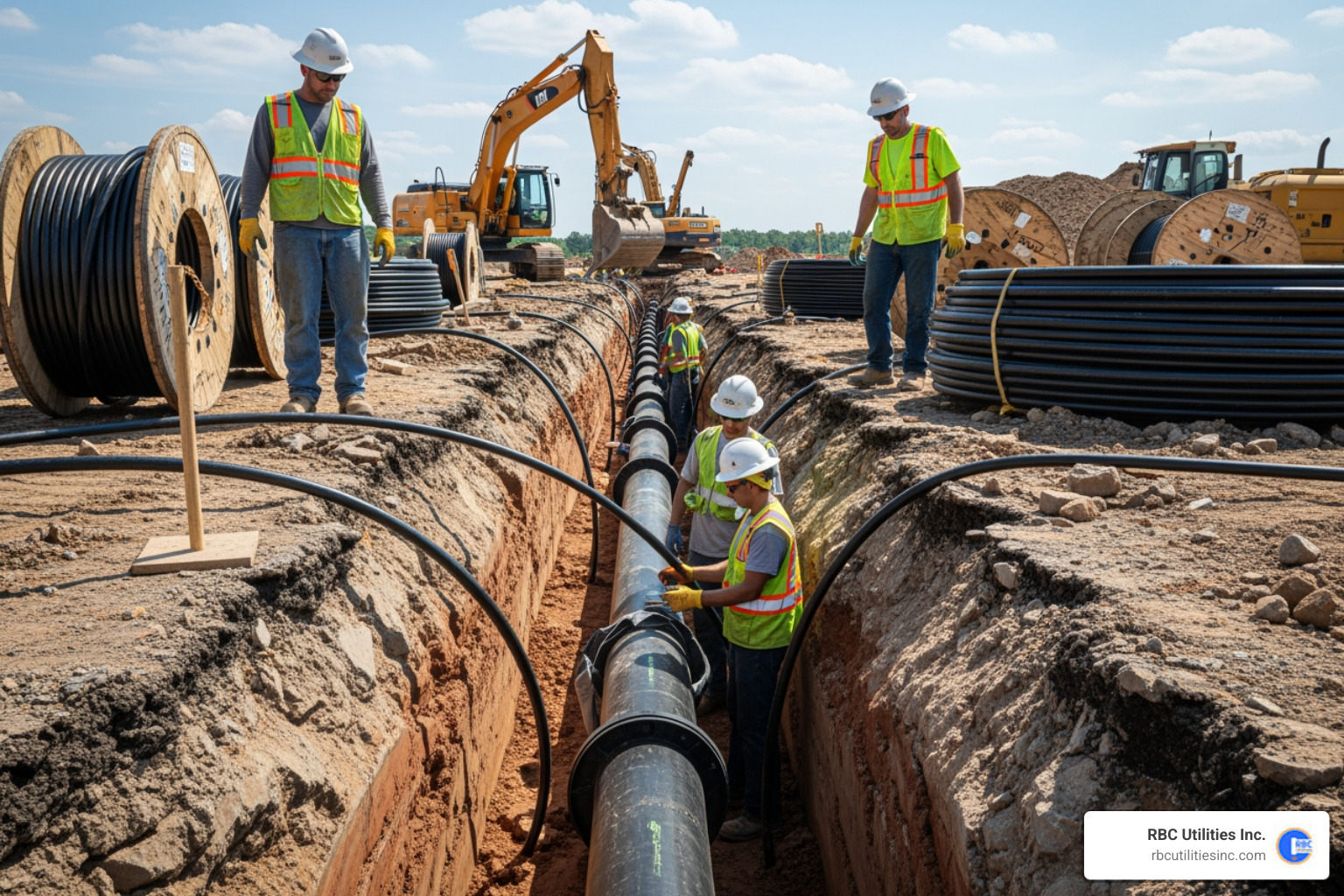
Conduit routing looks simple on a one-line diagram and gets complicated fast once it has to share a corridor with water, sewer, and storm lines, or thread around slab work already scheduled. GCs who confirm routing and depth early avoid the version of this problem that shows up as a field conflict instead of a plan revision.
For a broader look at RBC's work, review RBC Utilities services, recent RBC Utilities projects, and this guide to what makes a true utility infrastructure contractor.
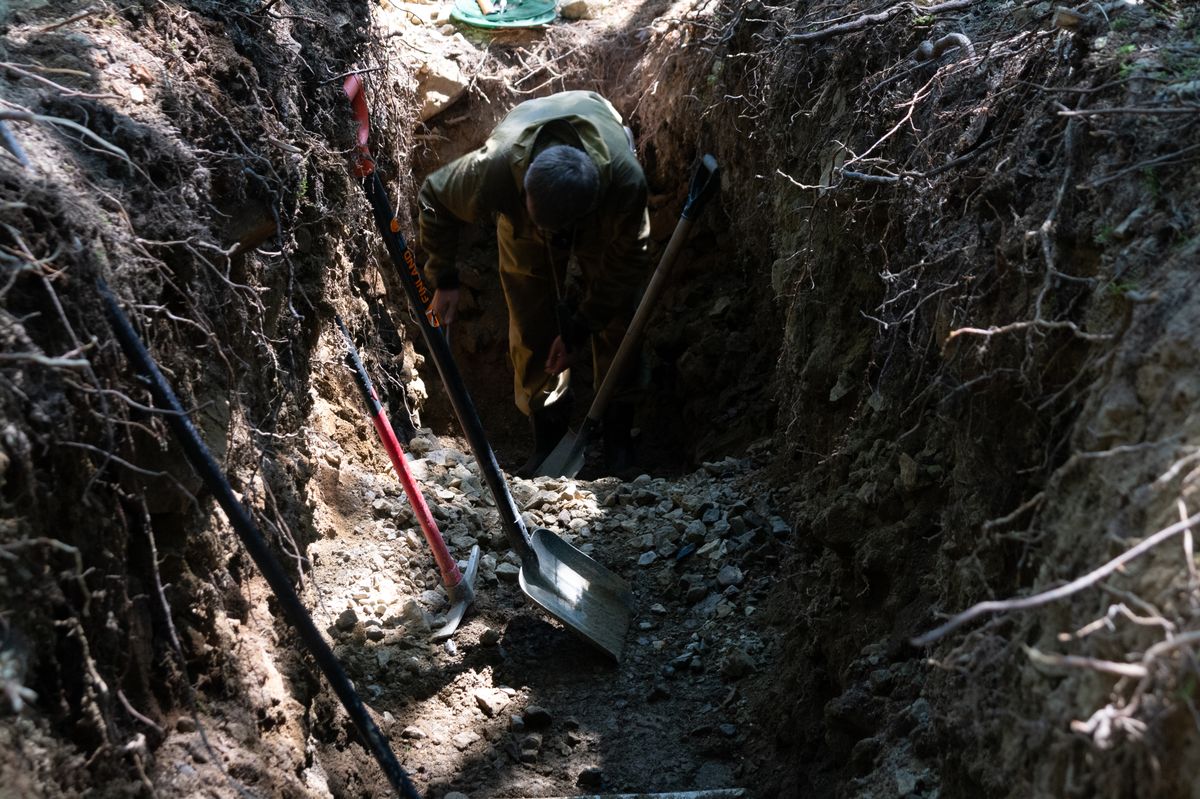
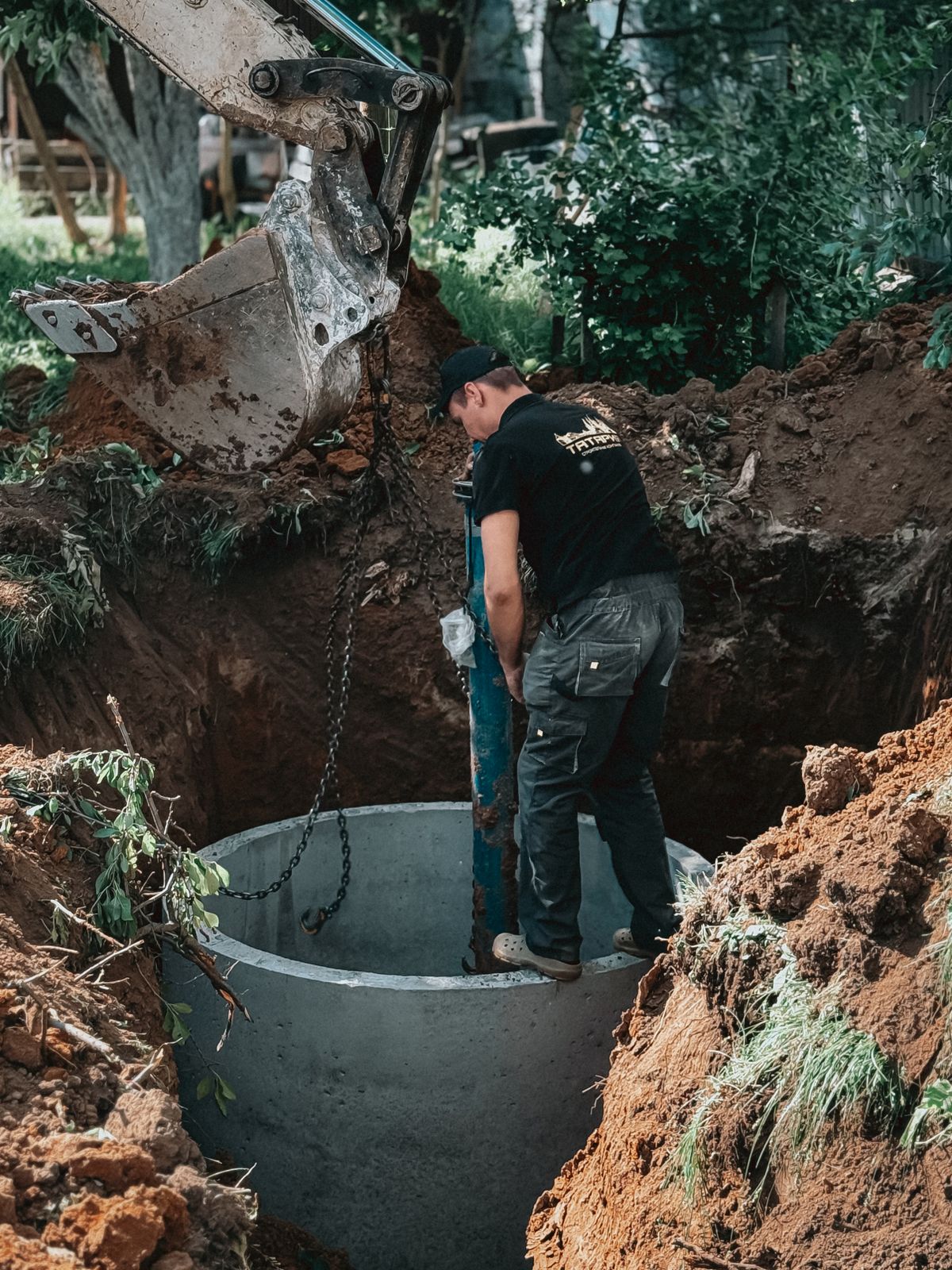
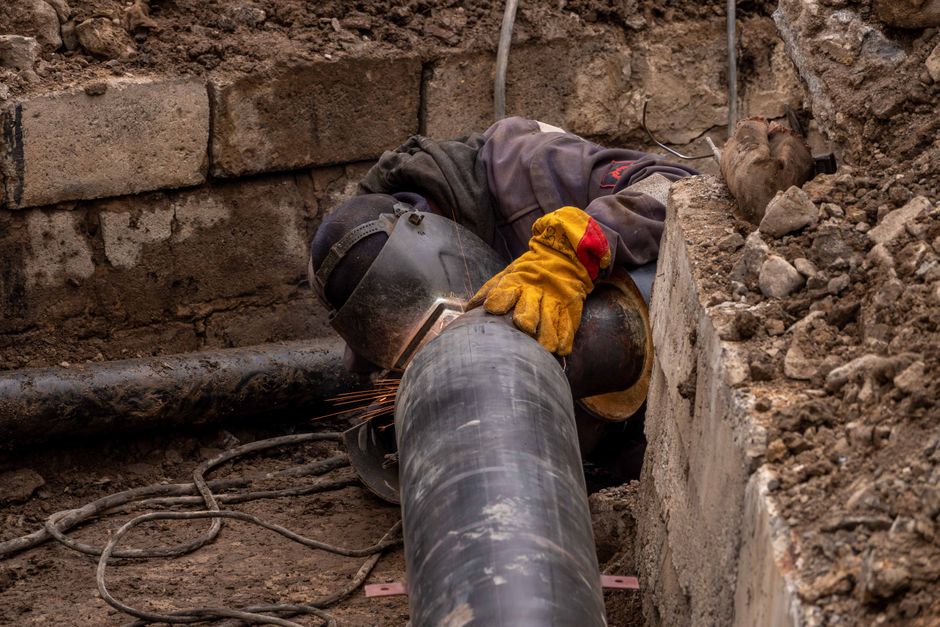
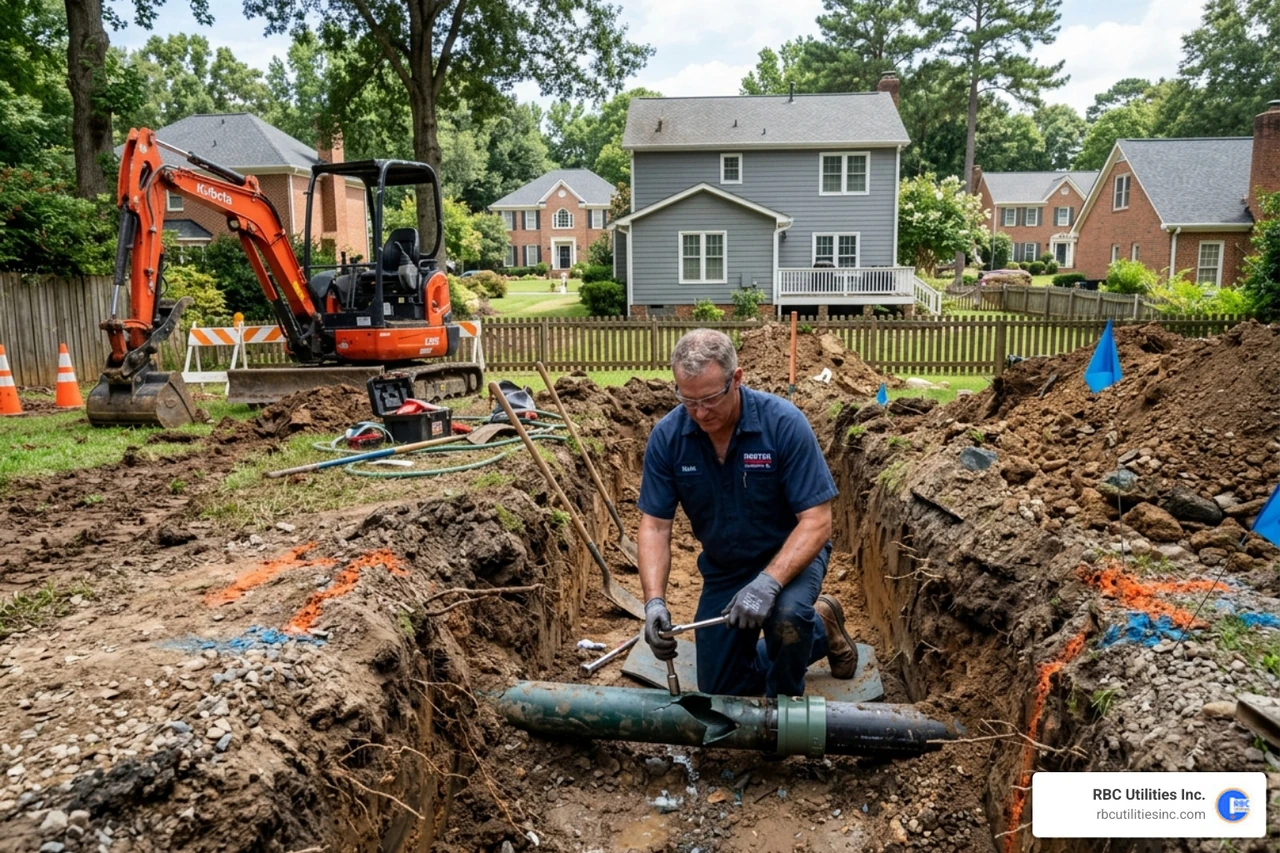
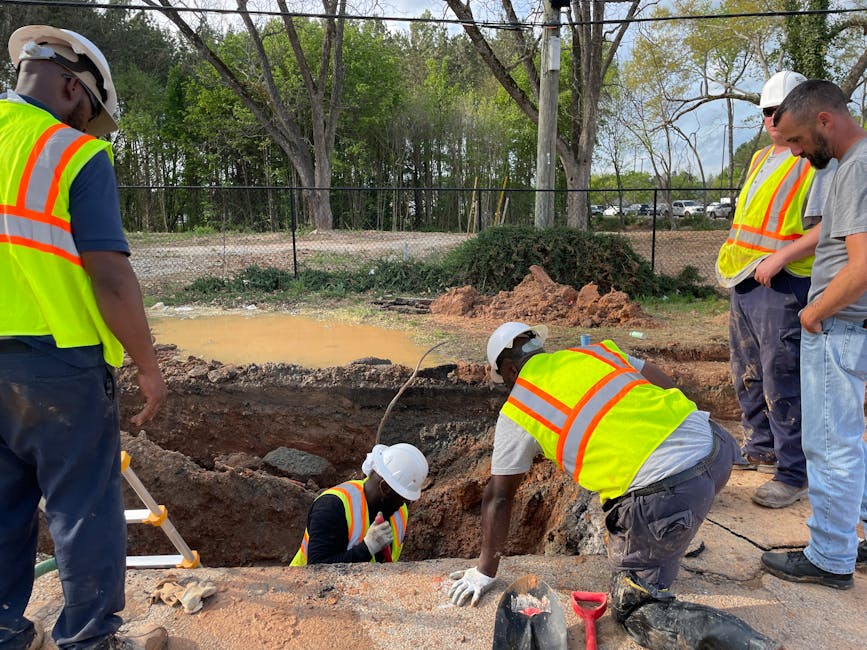
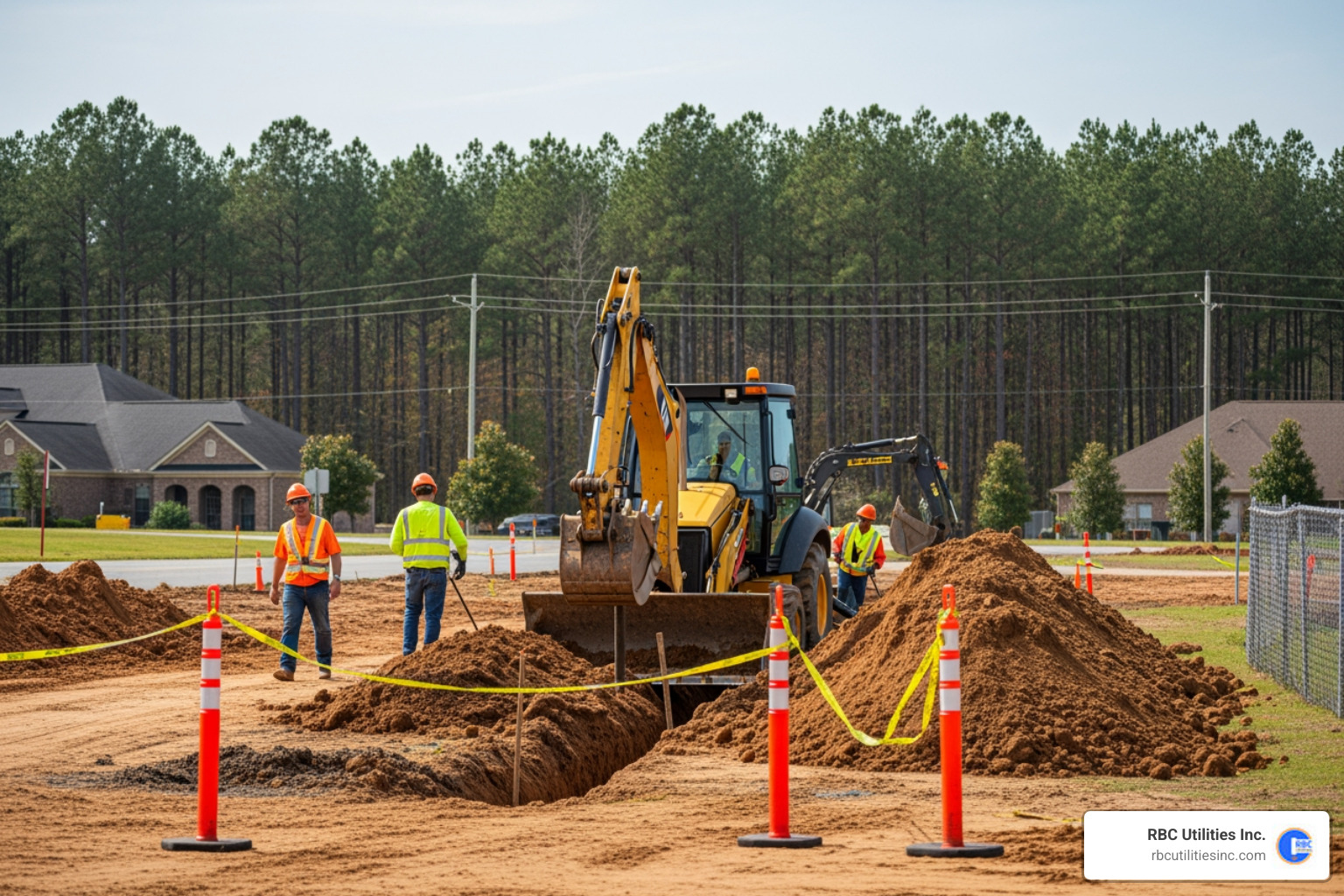
OSHA's trenching and excavation safety guidance applies to conduit trenches just as much as water and sewer lines, particularly where multiple utilities are being installed in a shared, congested corridor.
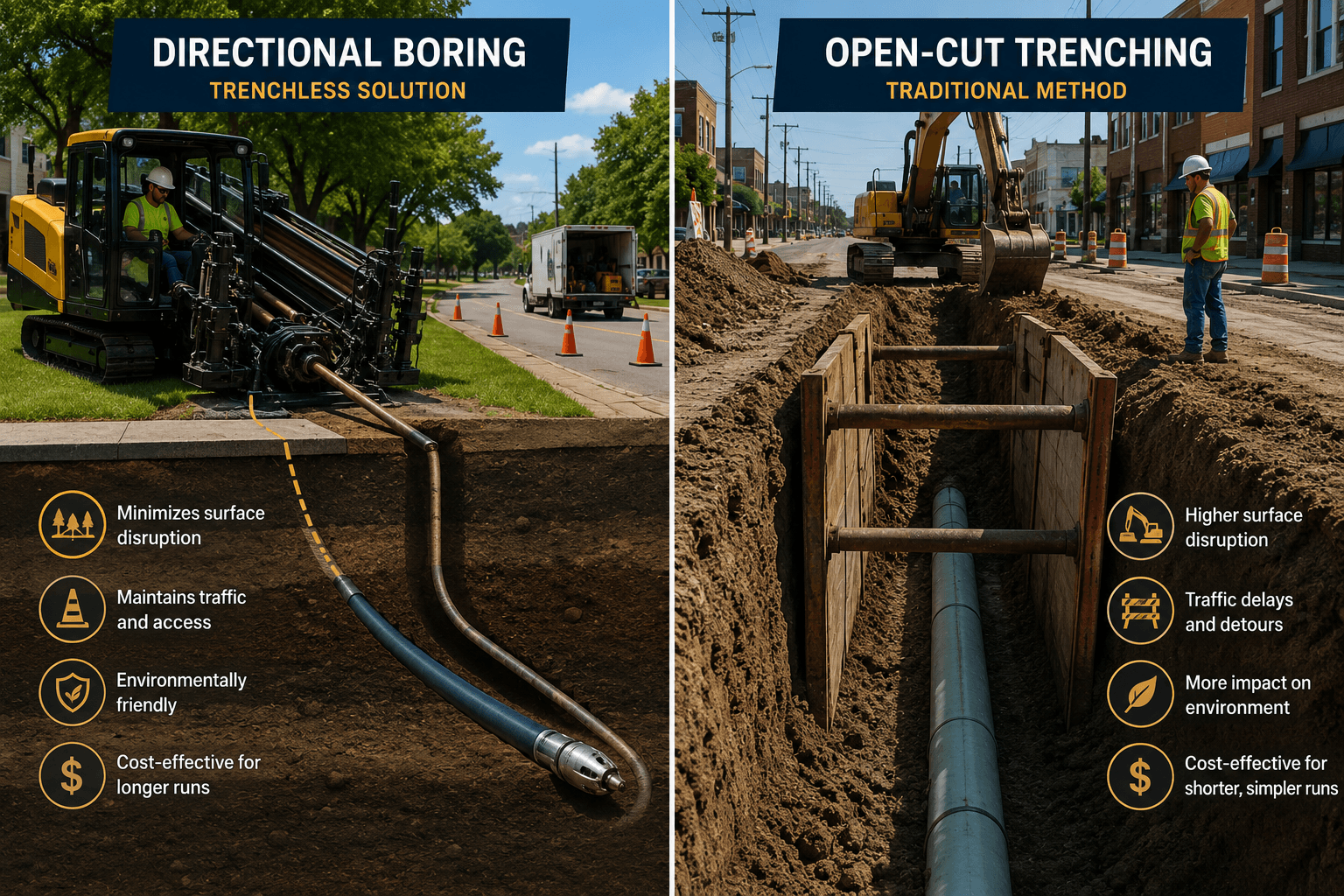
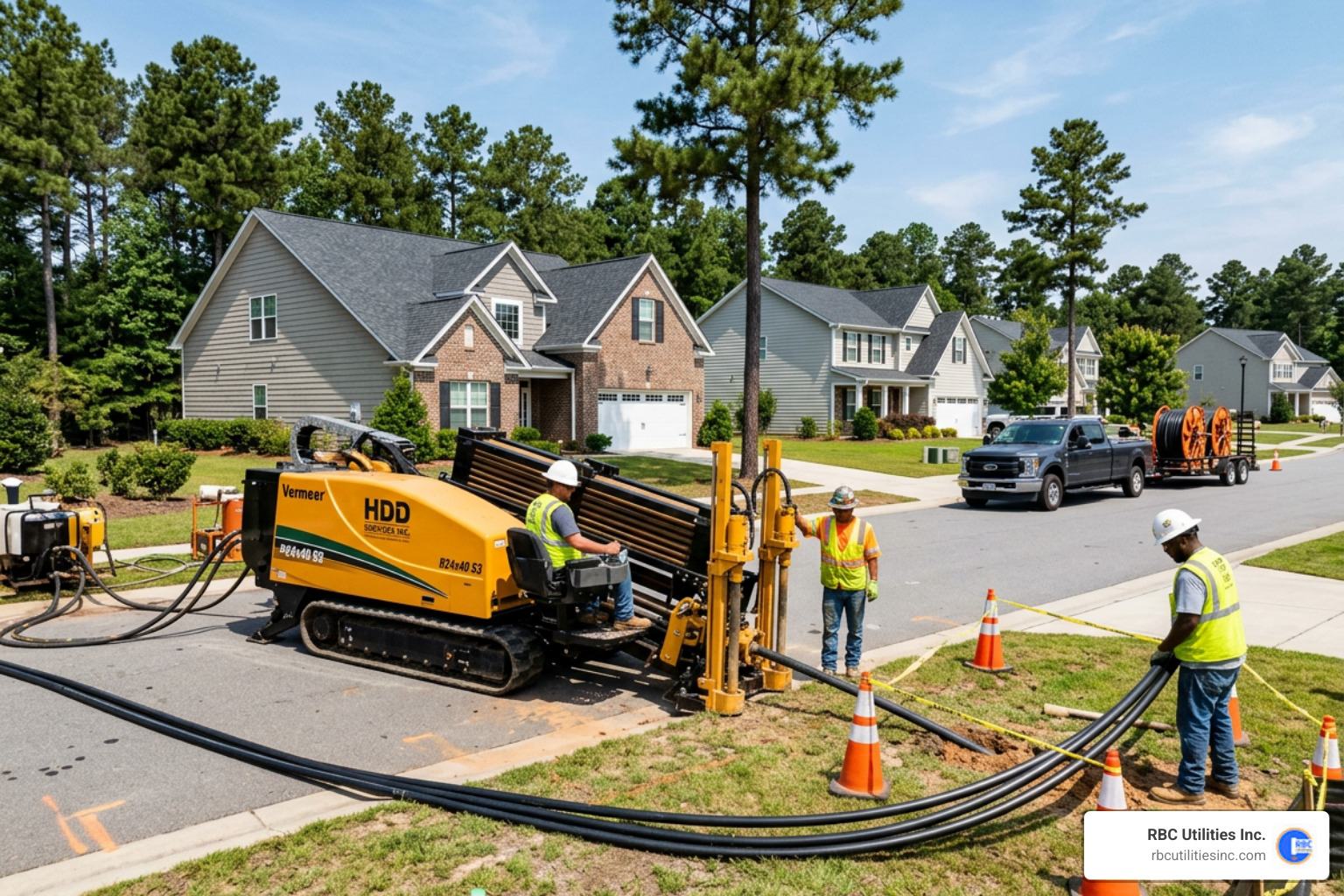
Compare RBC's notes on directional boring vs. open-cut trenching and storm drain pipe installation for related coordination questions that come up on the same sites.
Before the water, sewer, and storm trenches are finalized, since conduit is often the easiest scope to reroute on paper and the hardest to fix once everything else is in the ground.
Typically yes, separate from water and sewer testing, and often governed by a different agency or utility provider entirely. Confirming that requirement early avoids a scheduling surprise later.
Experience reconciling conduit routing against water, sewer, and storm work on the same site, since RBC typically installs all four scopes for a project rather than just one in isolation.
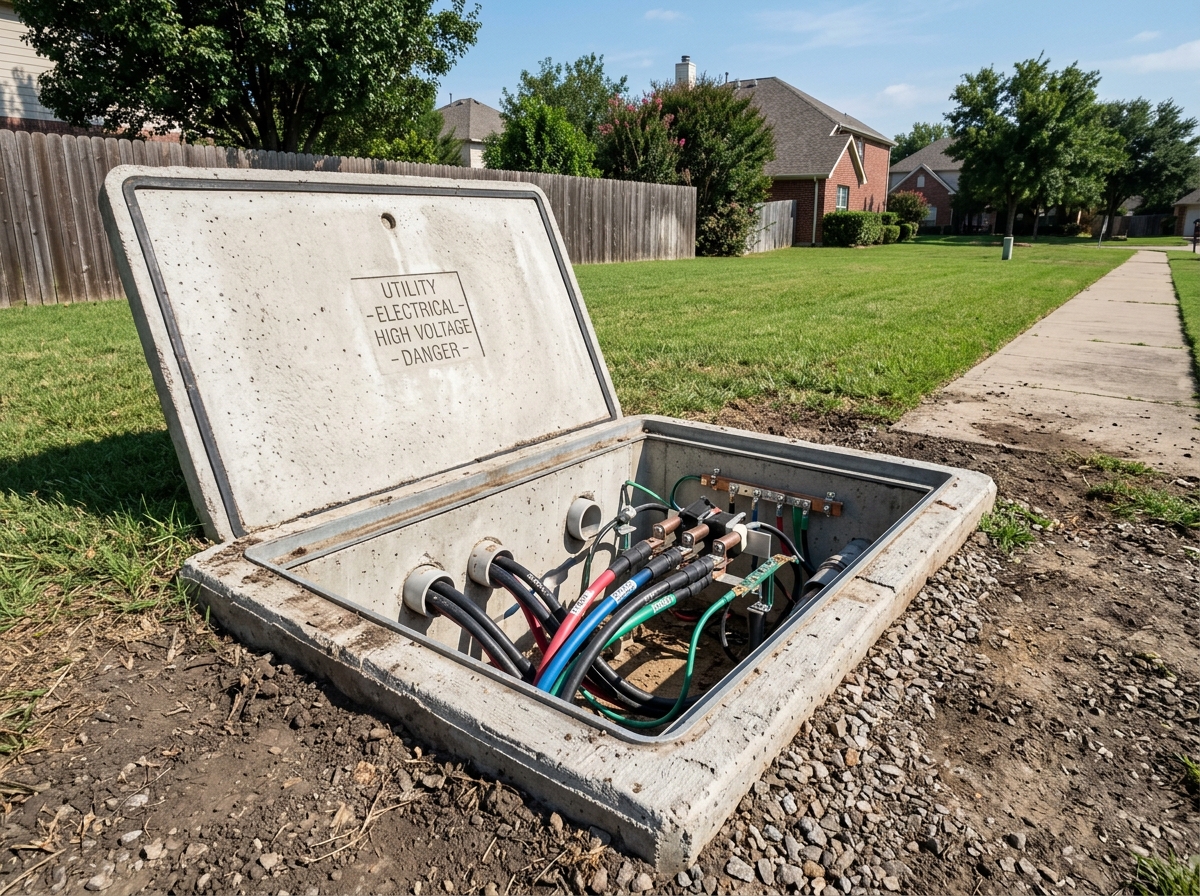
Commercial conduit installation causes the most problems when it's treated as an isolated scope instead of one more system sharing a crowded corridor. Confirming routing, depth, and stub-up locations early keeps it from becoming a field conflict.
RBC Utilities coordinates conduit work alongside water, sewer, and storm scopes across the Carolinas. For project conversations, use the RBC Utilities contact page.
Part of Saga Infrastructure, protecting what others built and helping it grow.
Address: 4404 Stuart Andrew Blvd., Suite K, Charlotte, NC 28217
Email: info@rbcutilities.com
Phone: 803-913-9727
Service Area: North Carolina | South Carolina