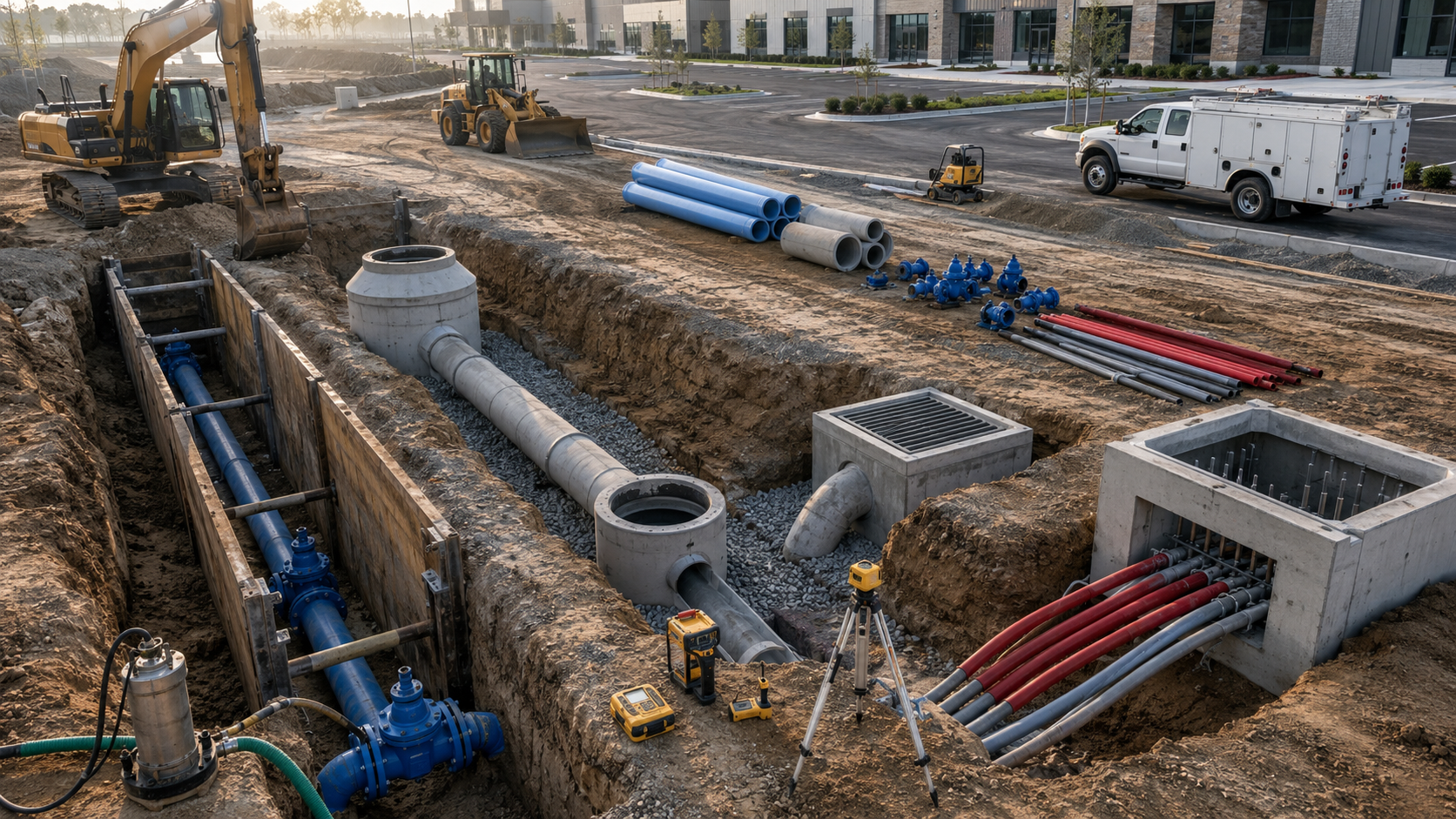
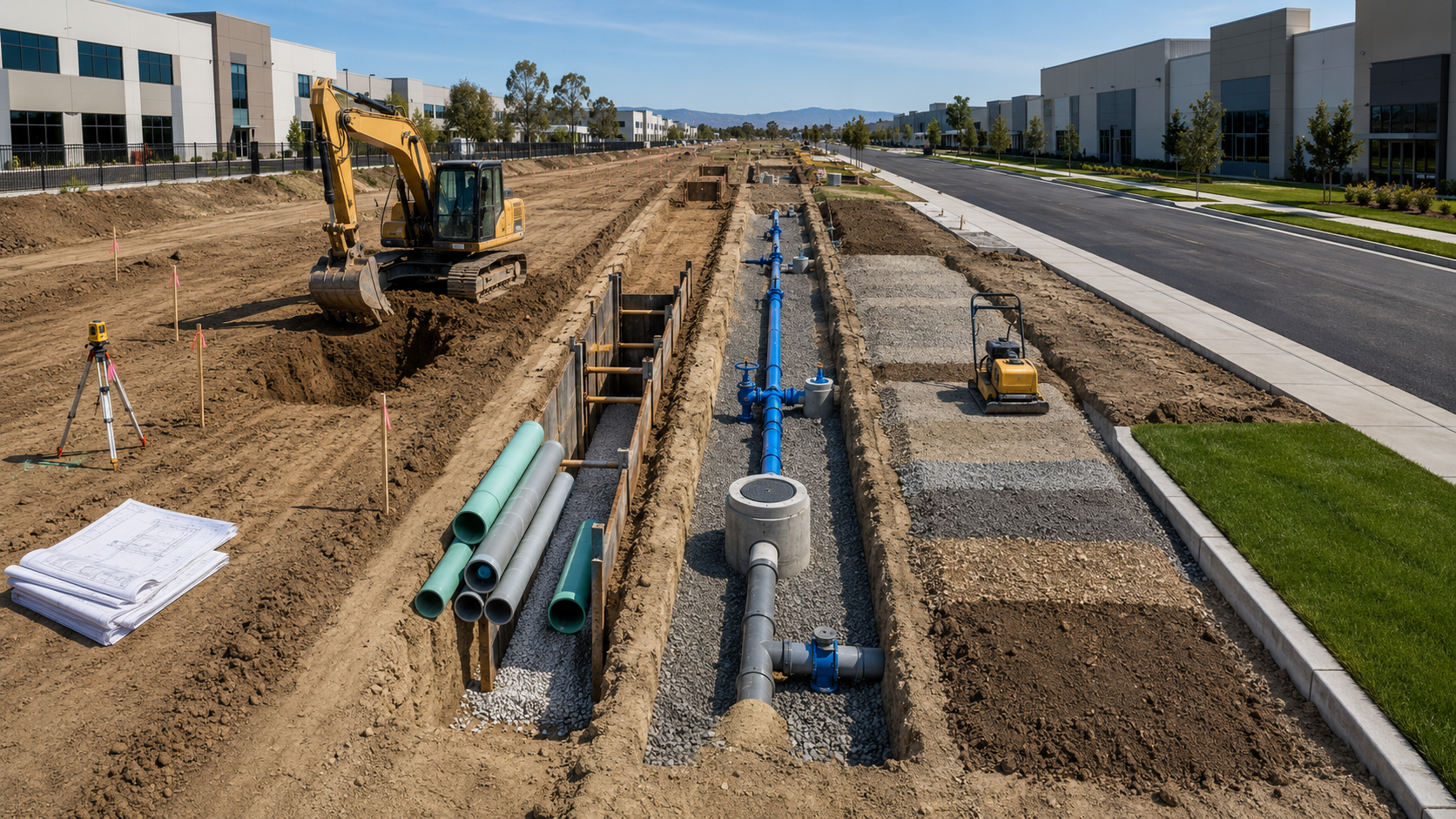
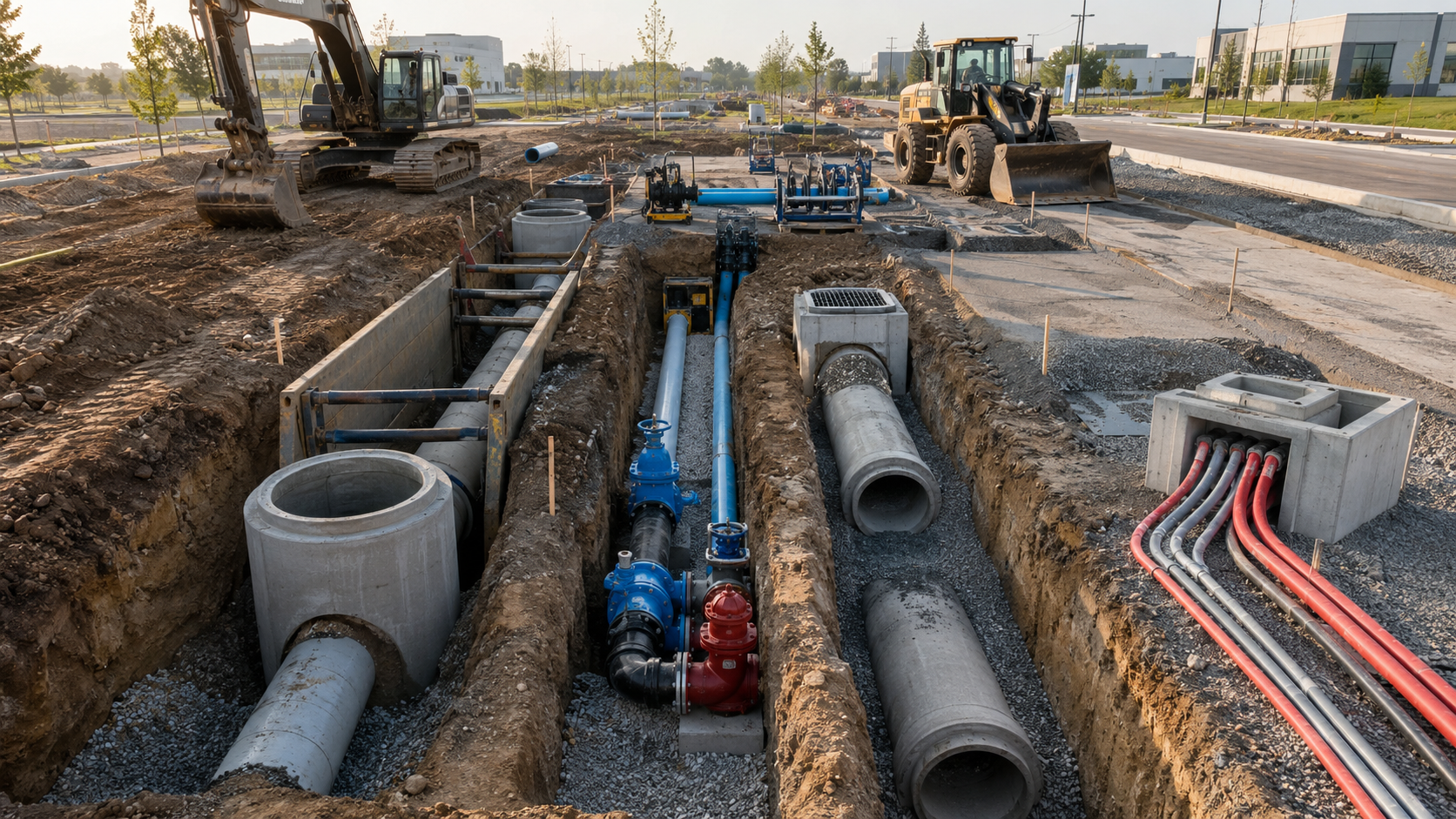
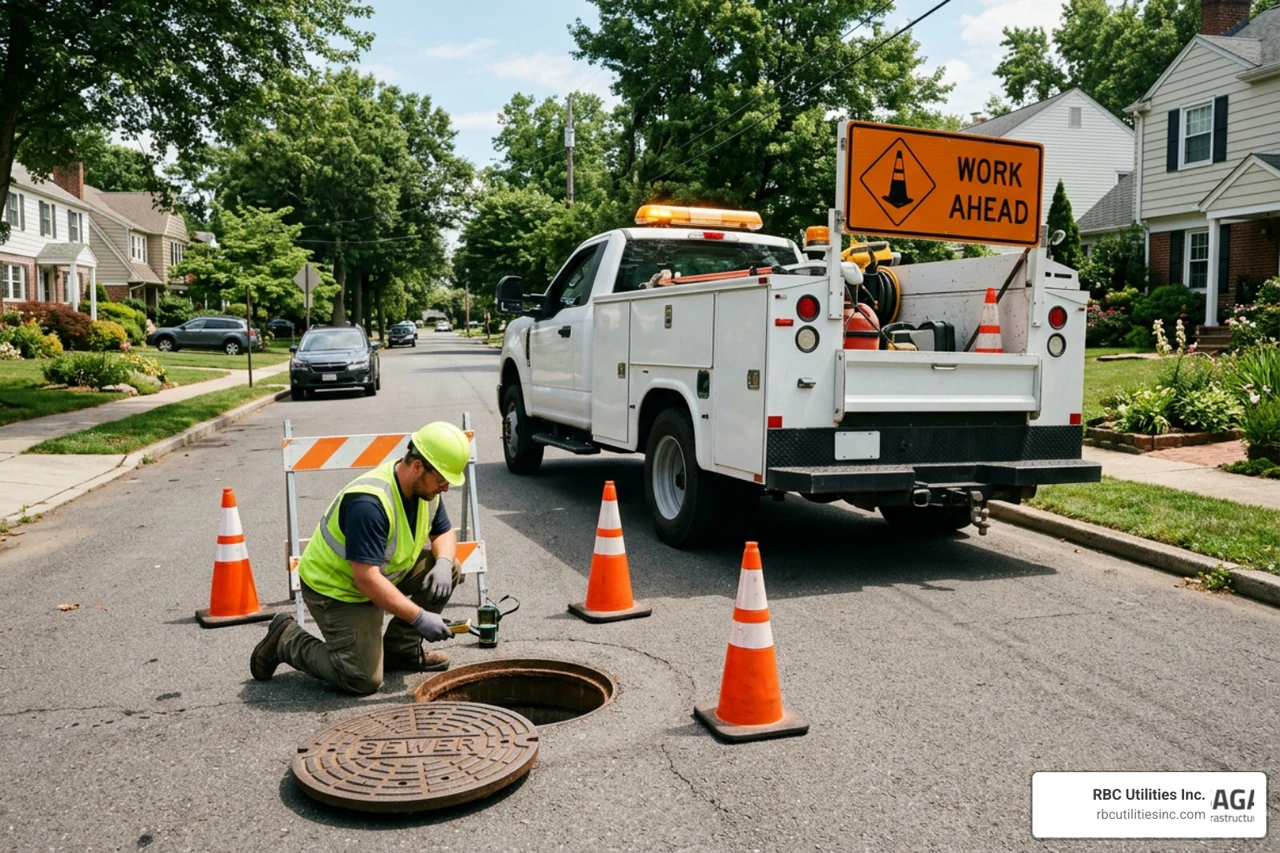
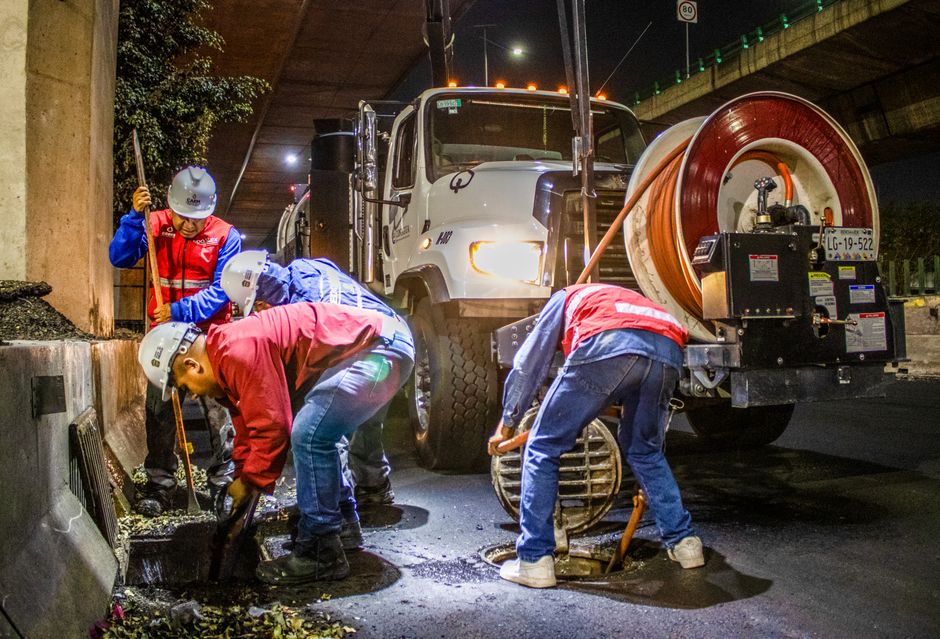
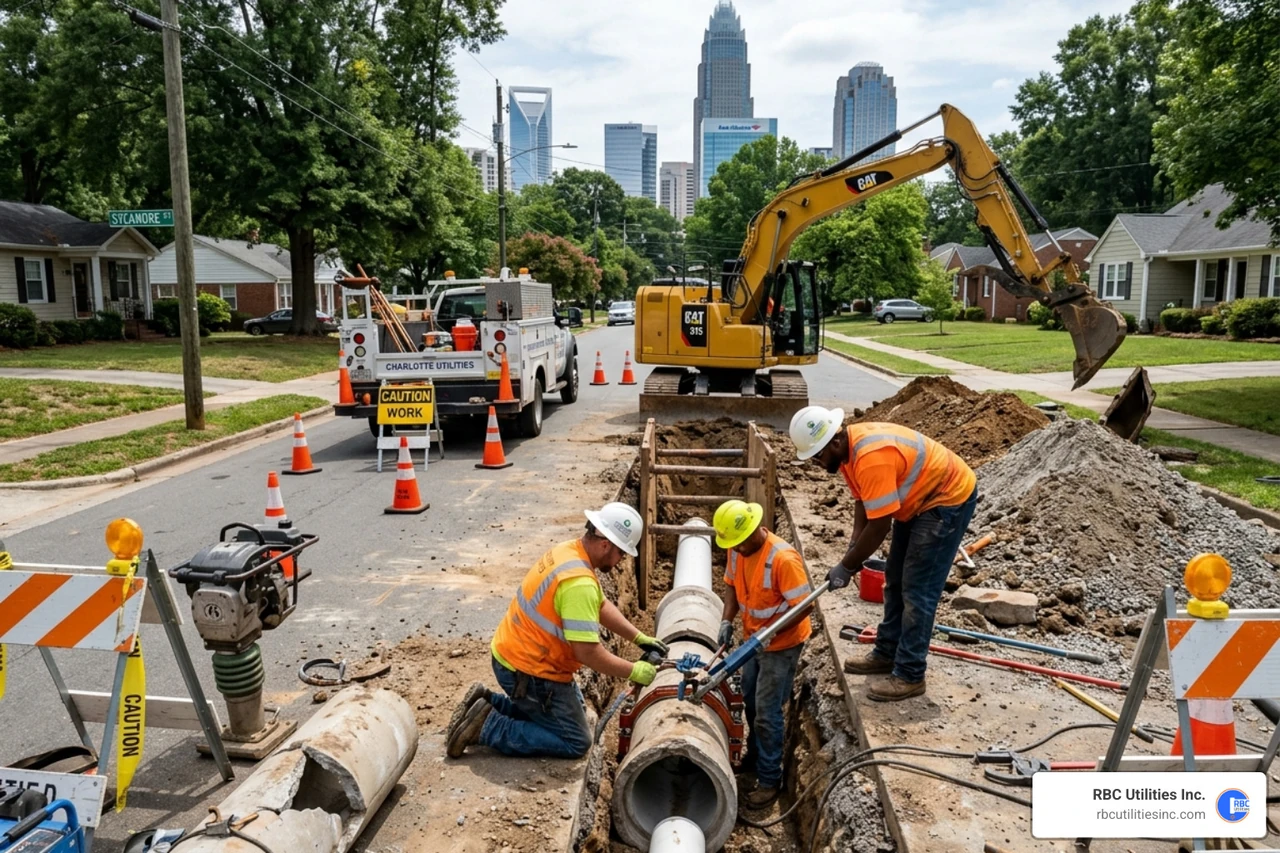
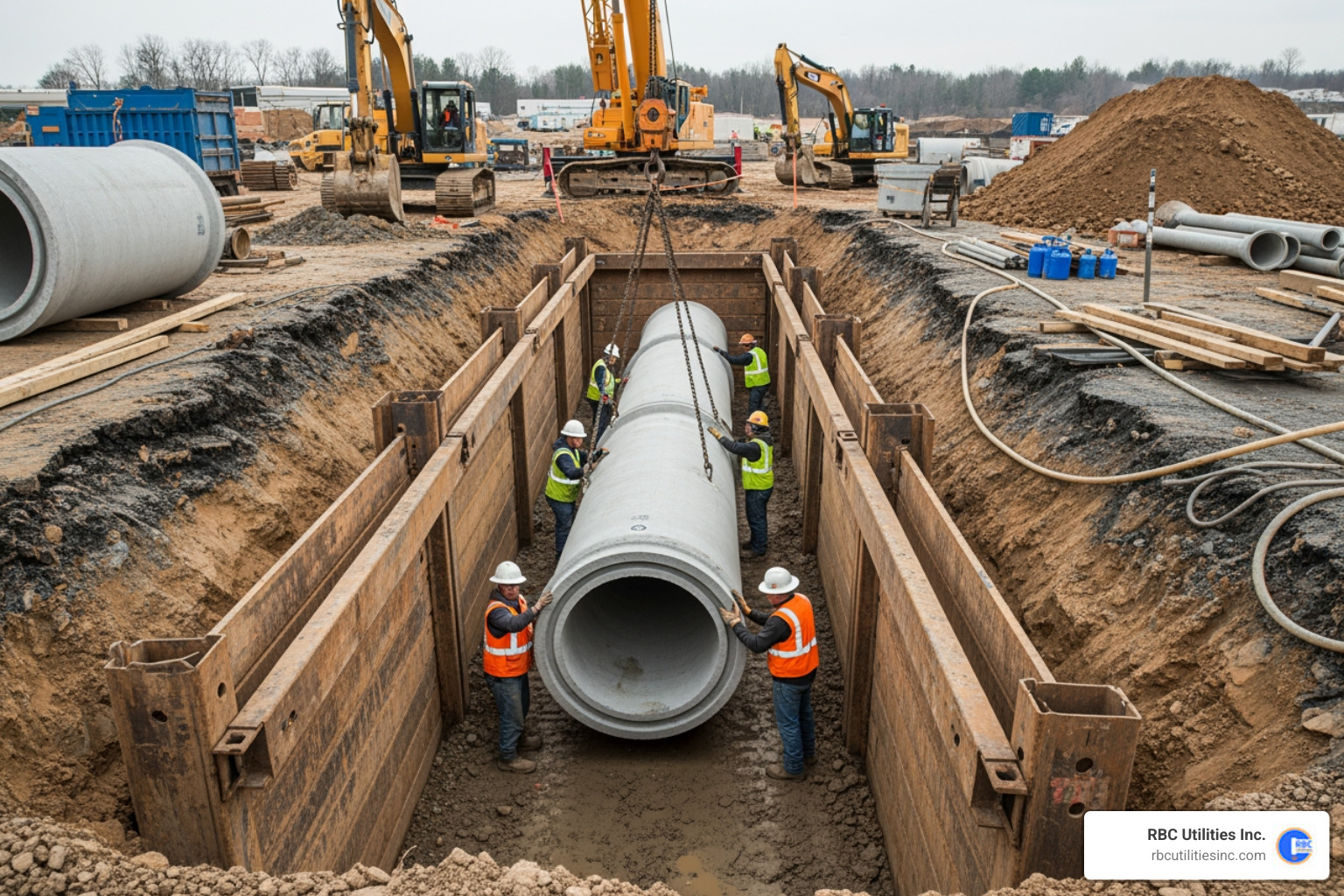
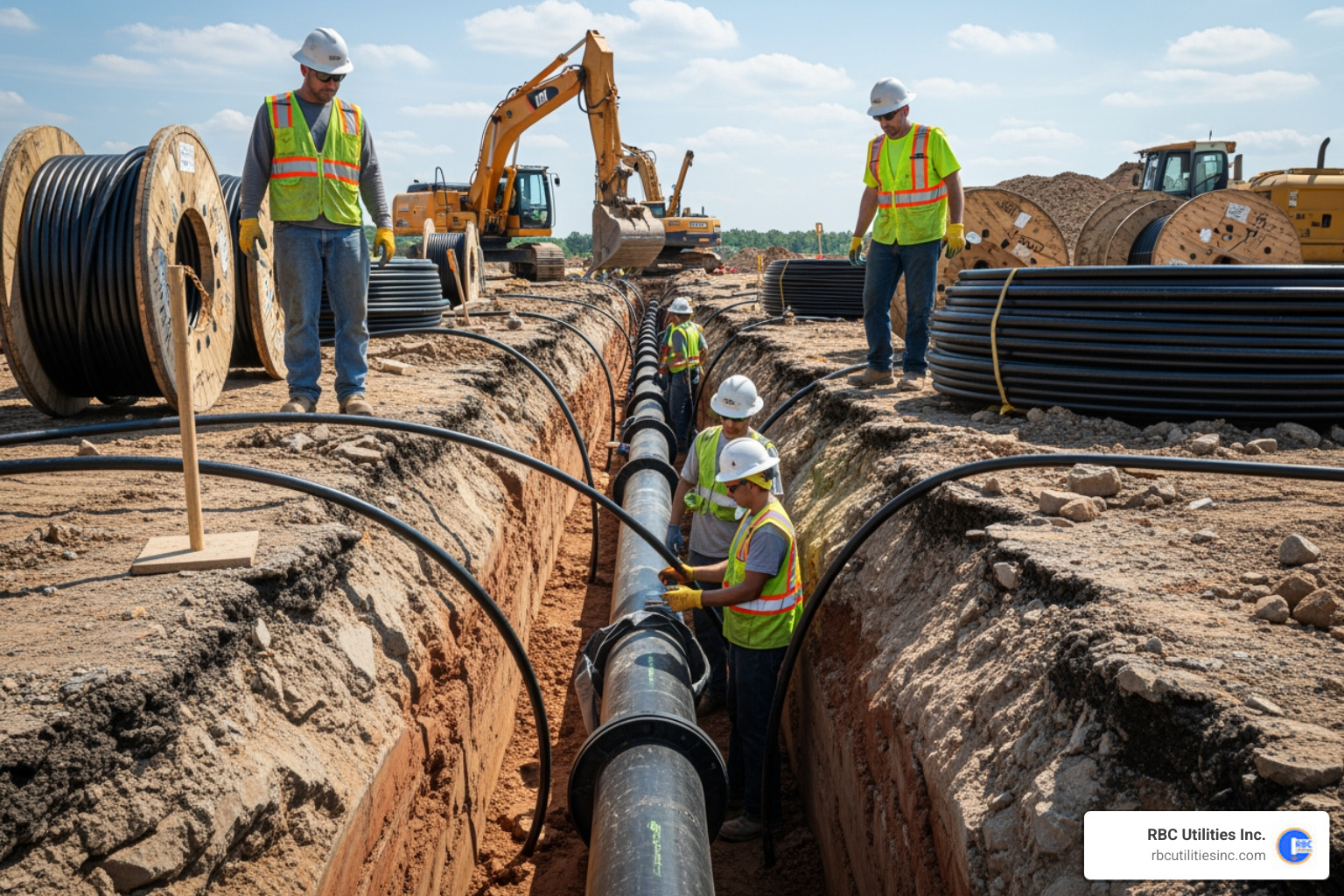
Municipal sewer system builders are the specialized contractors responsible for designing, excavating, and installing the underground pipe networks that carry wastewater away from homes, businesses, and public facilities to treatment plants.
Quick answer — what to look for in a municipal sewer system builder:
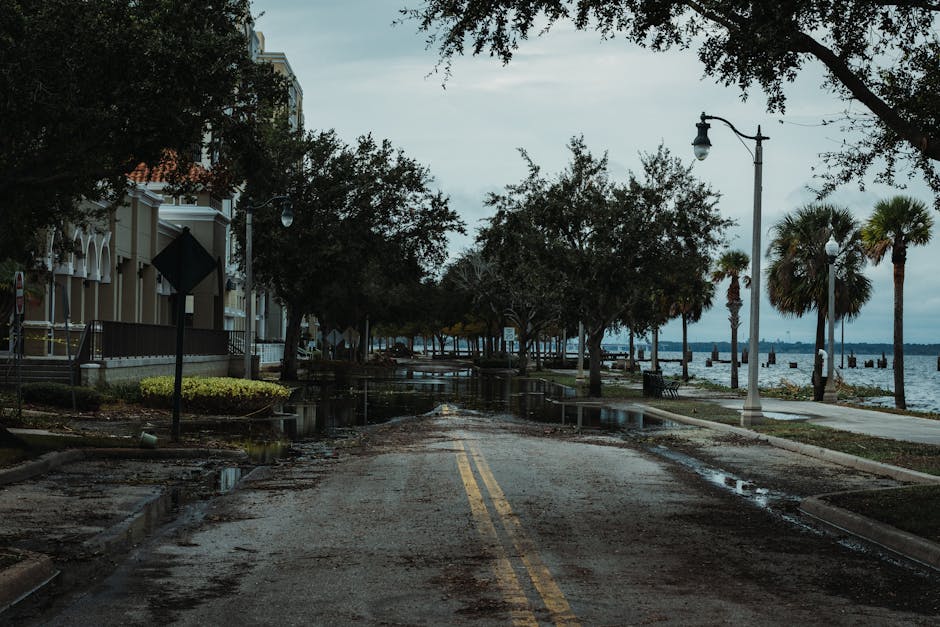
Sewer infrastructure is invisible until it fails — and when it does, the costs are severe. Delays, overflows, regulatory fines, and redesigns can derail an entire development. Yet the gap between demand and capacity keeps growing. In India alone, 72,000 MLD of sewage is generated but only 28% is treated — a striking reminder of what happens when sewer infrastructure can't keep pace with growth. In North America, aging systems face similar pressure, with municipalities scrambling to rehabilitate deteriorating pipes before they become a public health crisis.
For developers and general contractors in the Carolinas, choosing the wrong builder isn't just a budget risk — it's a timeline and liability risk too.
I'm Don Larsen, and at RBC Utilities, Inc., I've spent years working alongside municipalities, developers, and general contractors across the Carolinas on exactly these kinds of underground utility challenges — including sanitary sewer systems, water lines, storm drainage, and conduit work that demand the same precision and accountability you'd expect from any municipal sewer system builder. In the sections ahead, we'll walk you through everything you need to evaluate, hire, and work with the right builder for your next project.
Simple municipal sewer system builders word guide:
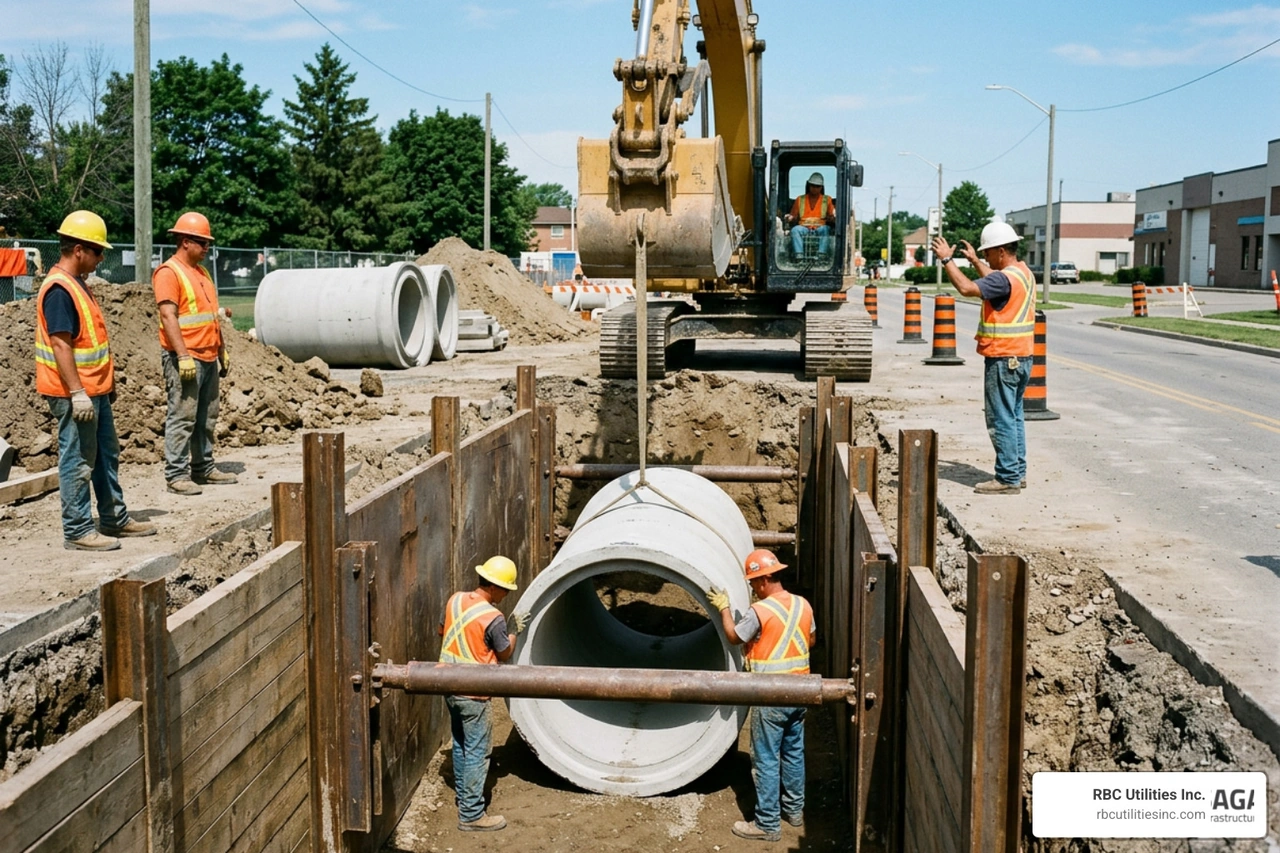
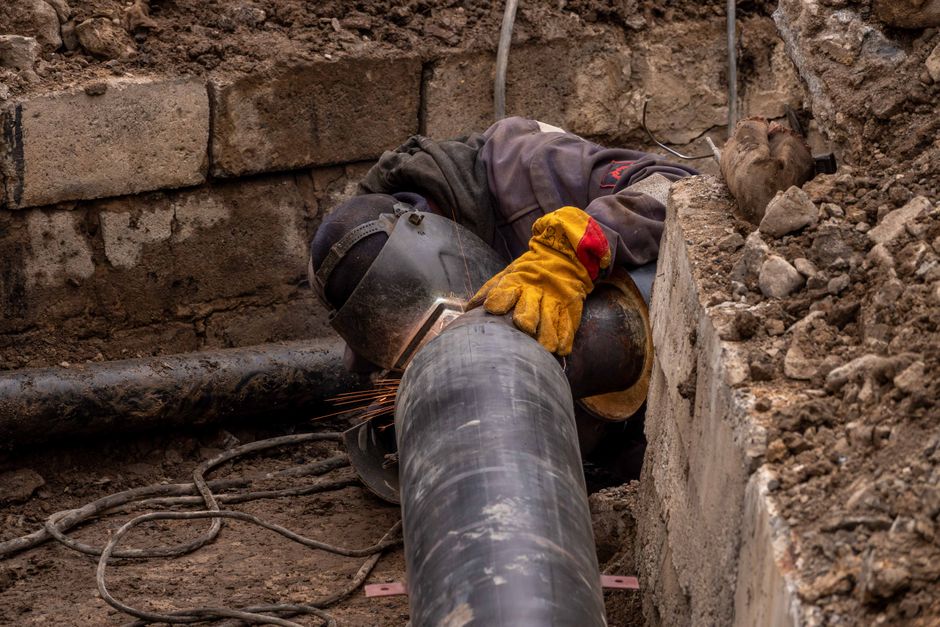
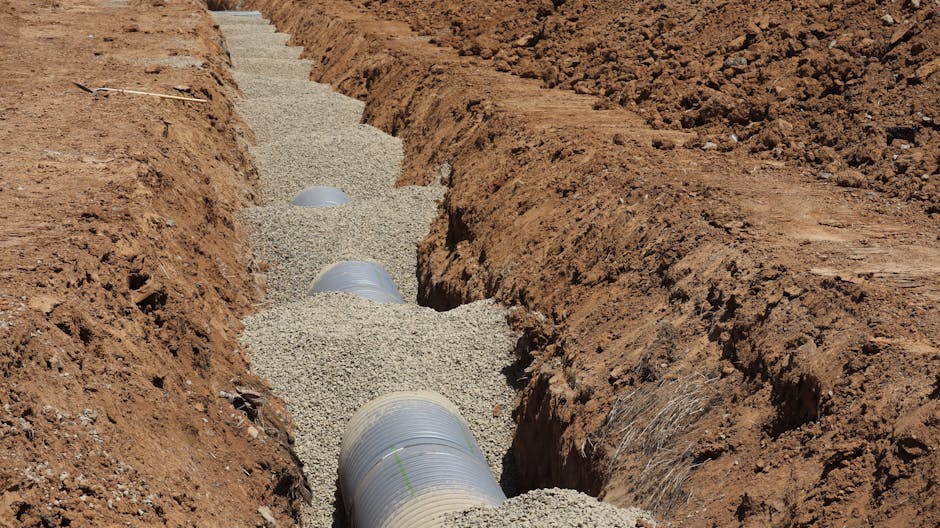
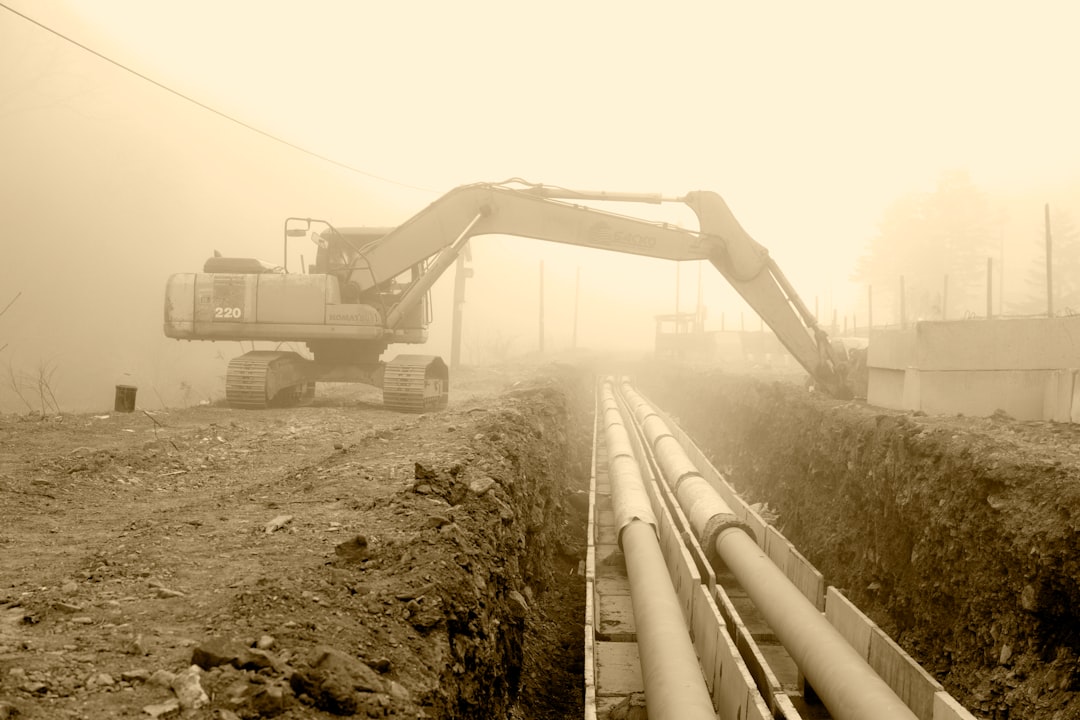
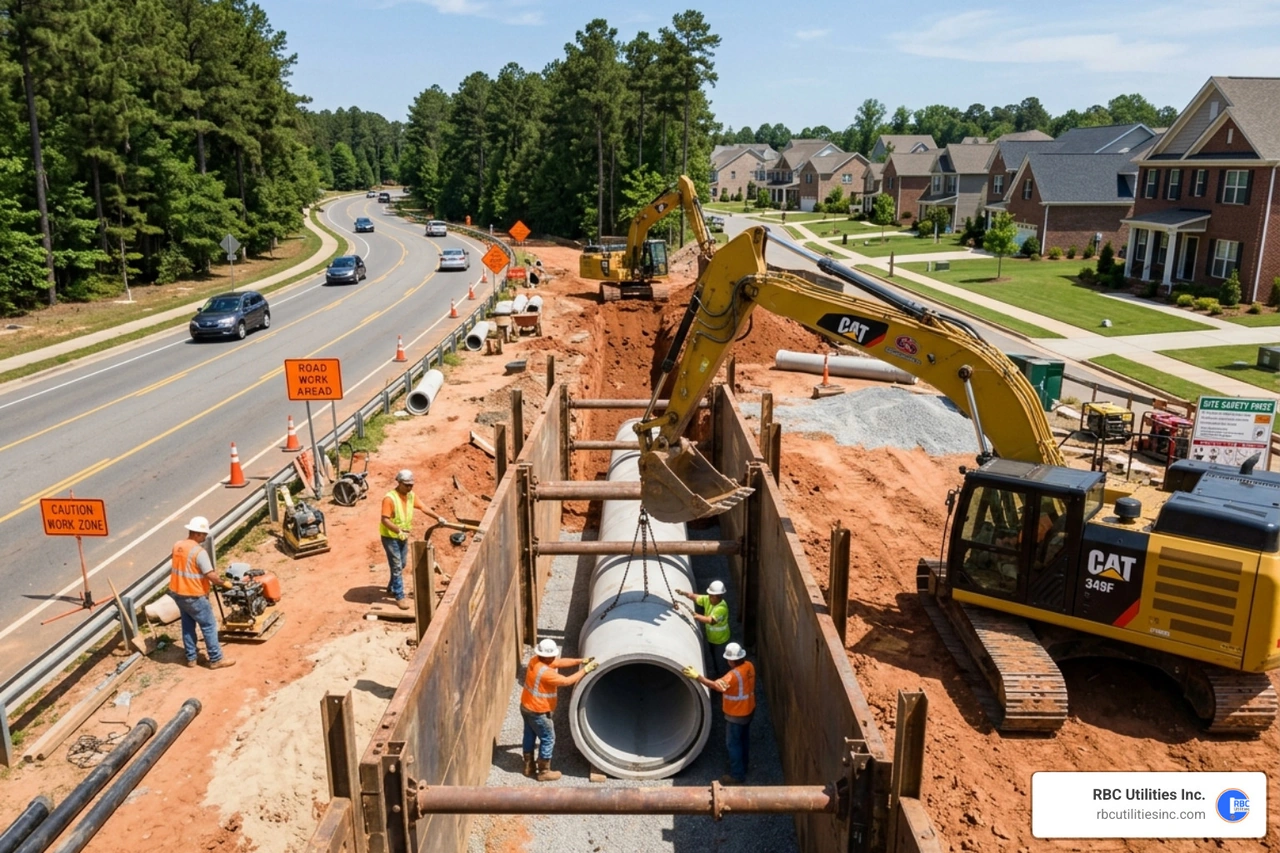
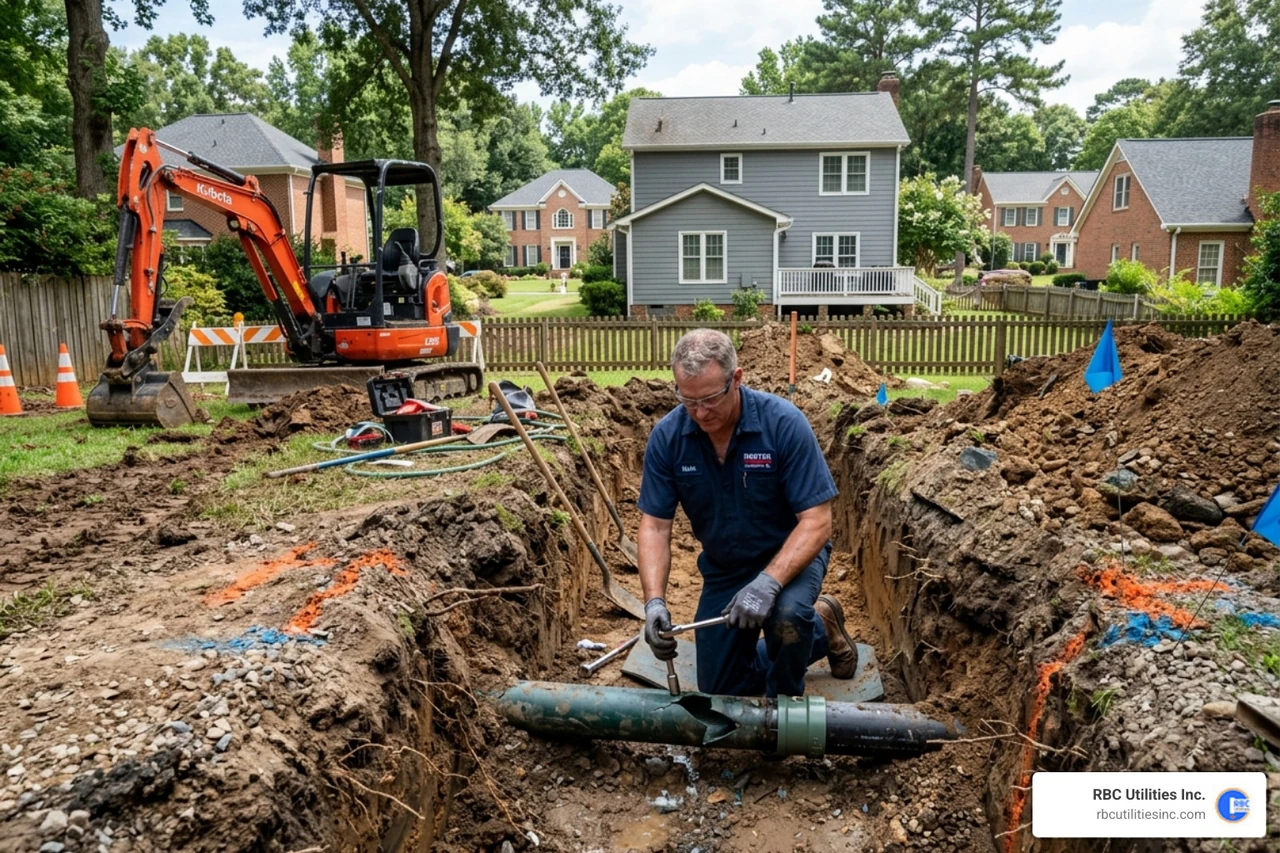
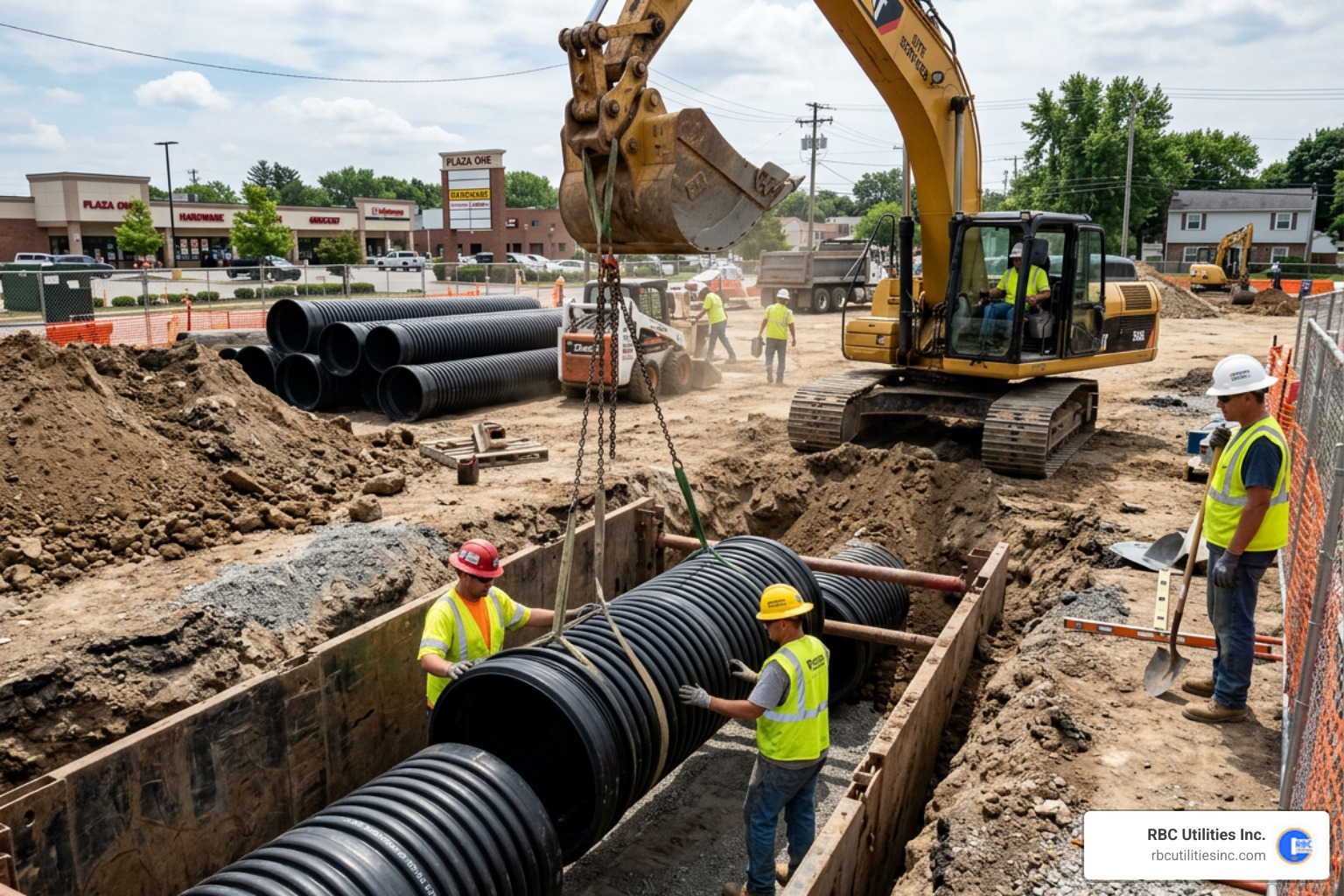
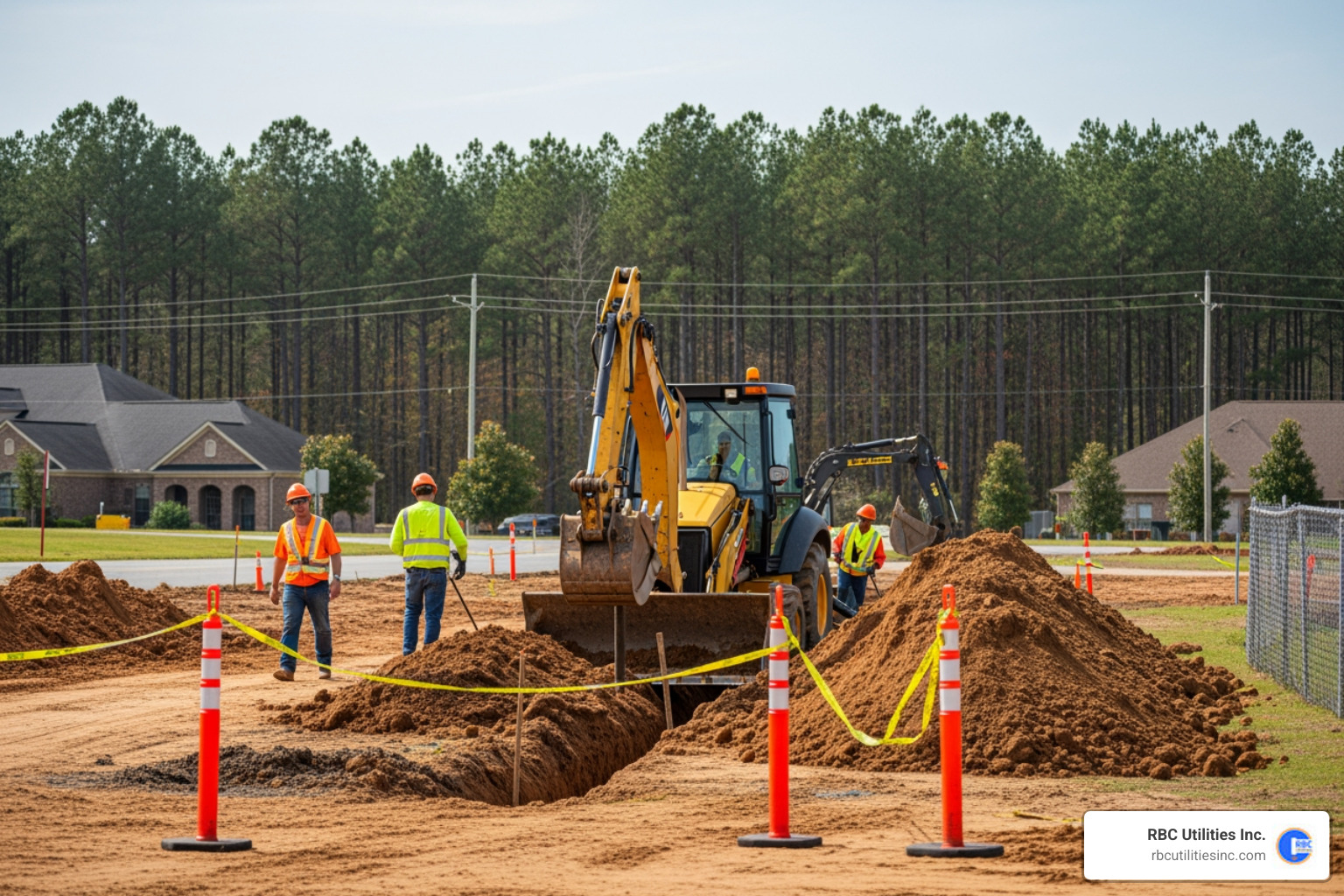
When we think of public infrastructure, we often picture towering bridges or smooth highways. But the real unsung heroes of public health and urban development operate completely out of sight. Municipal sewer system builders are the specialized heavy civil contractors who turn engineering drawings into physical, functioning underground utility networks.
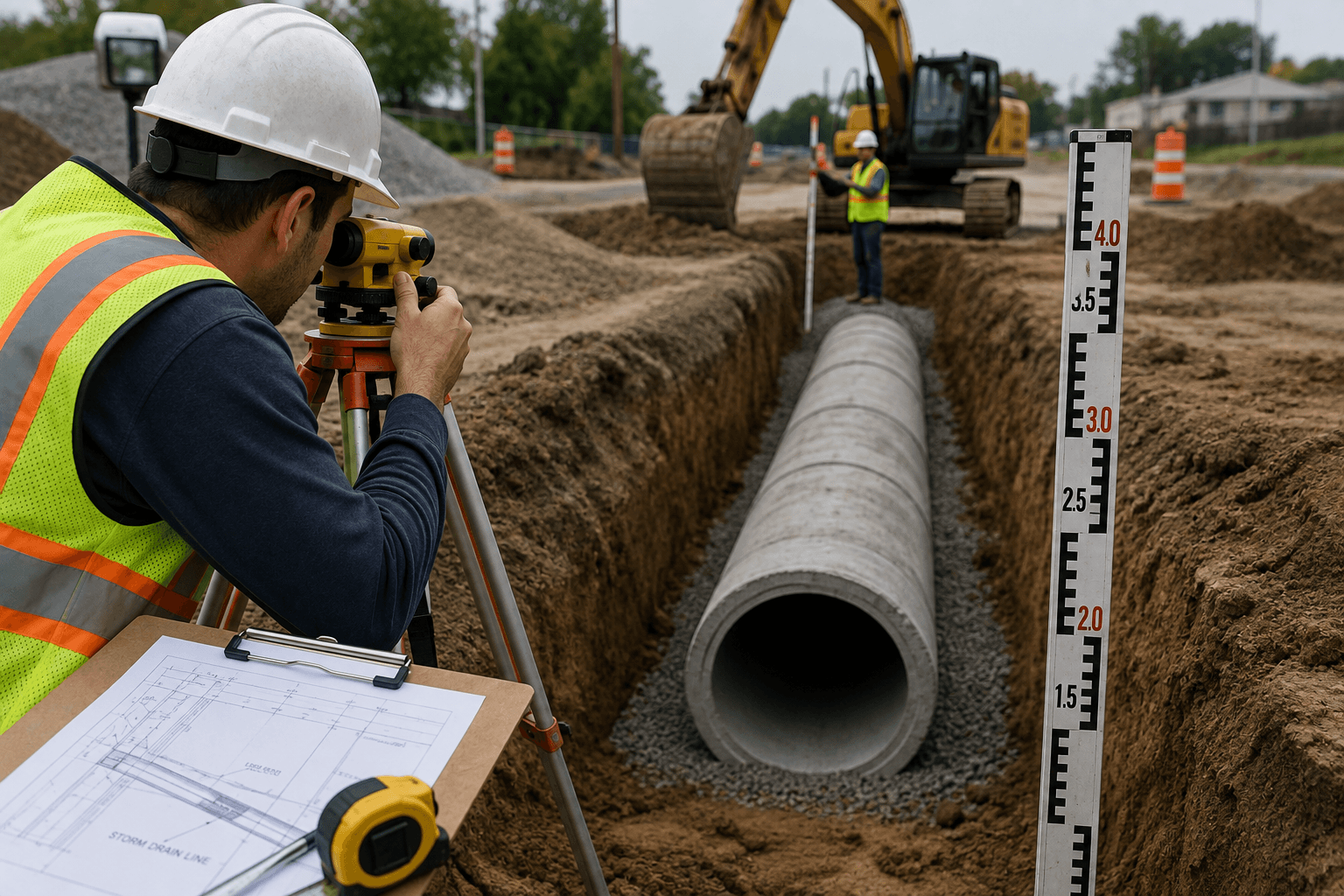
Unlike general builders, we deal with the complex, high-stakes world of earthwork, deep trenching, fluid dynamics, and environmental containment. We are responsible for laying the structural foundation of wastewater management. Whether it is executing a major Sewer Utility Contractors contract or expanding a growing city's sanitary network, the physical plant construction must be flawlessly executed to prevent environmental contamination and protect public health.
It is common for those outside the industry to confuse the different players in the wastewater sector. To put it simply:
When a municipality or developer plans to build a new subdivision or upgrade an aging municipal utility network, they do not just need a supplier or a maintenance crew; they need a dedicated builder who understands how to manage major civil works without shutting down local services.
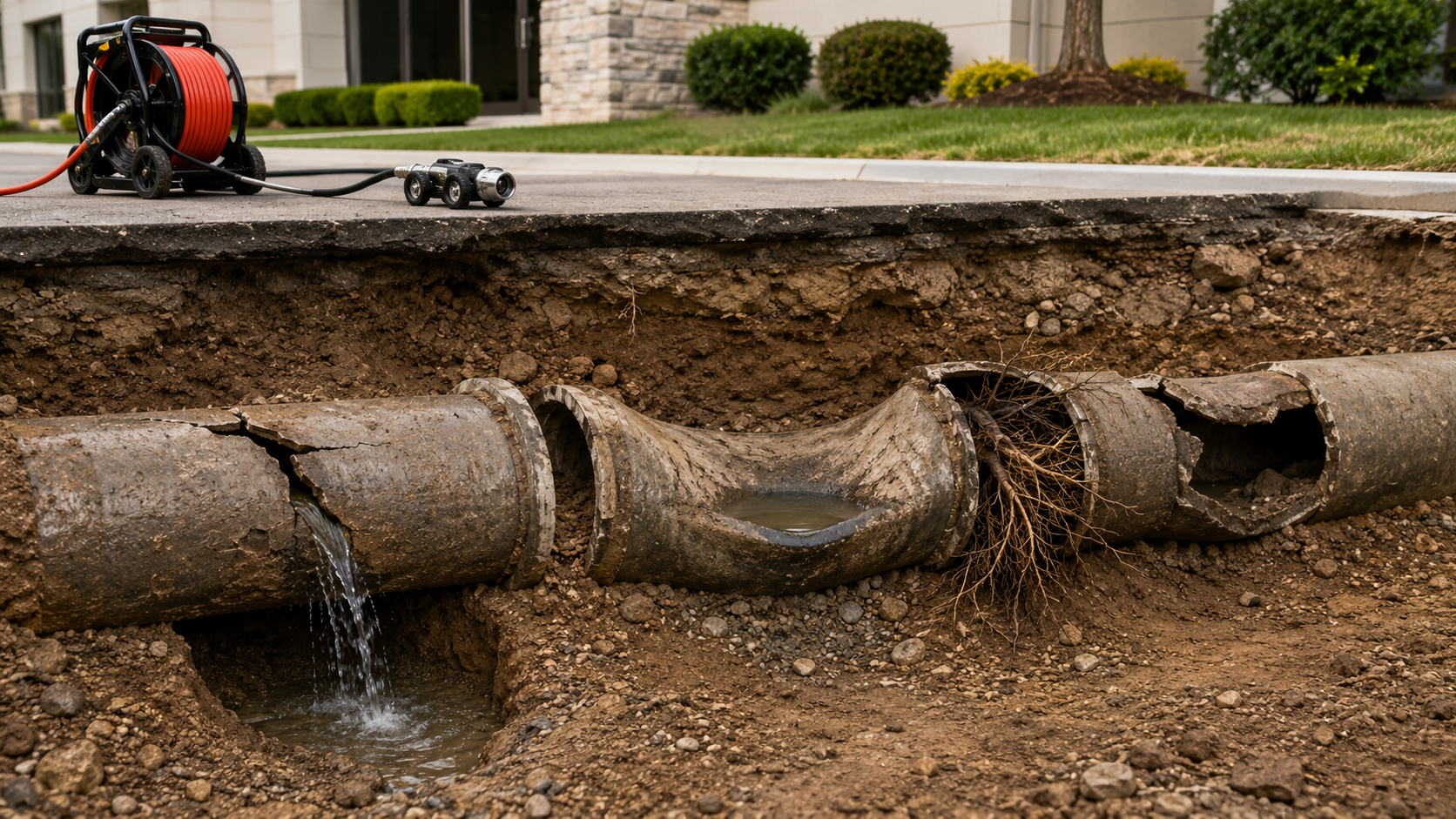
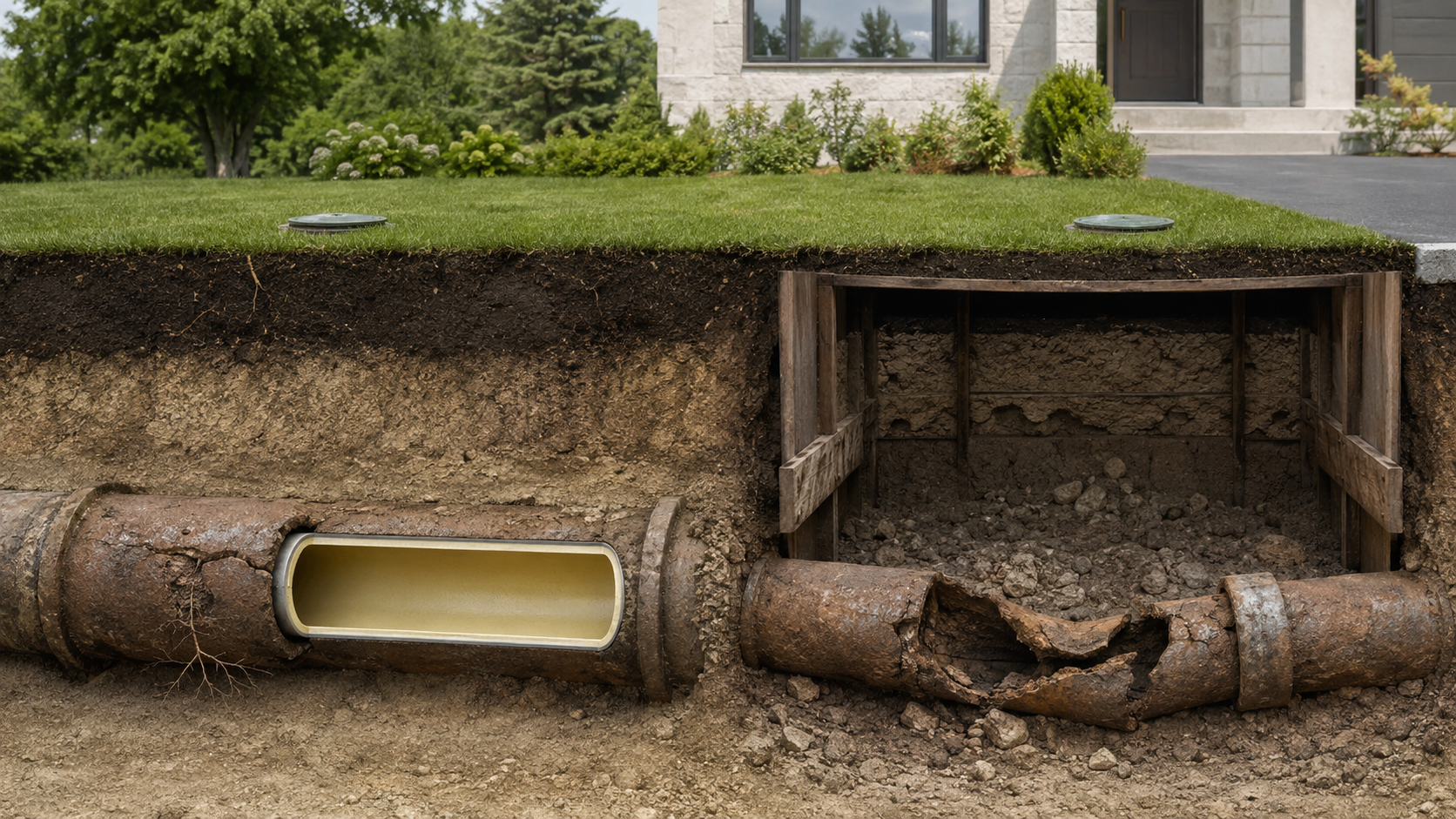
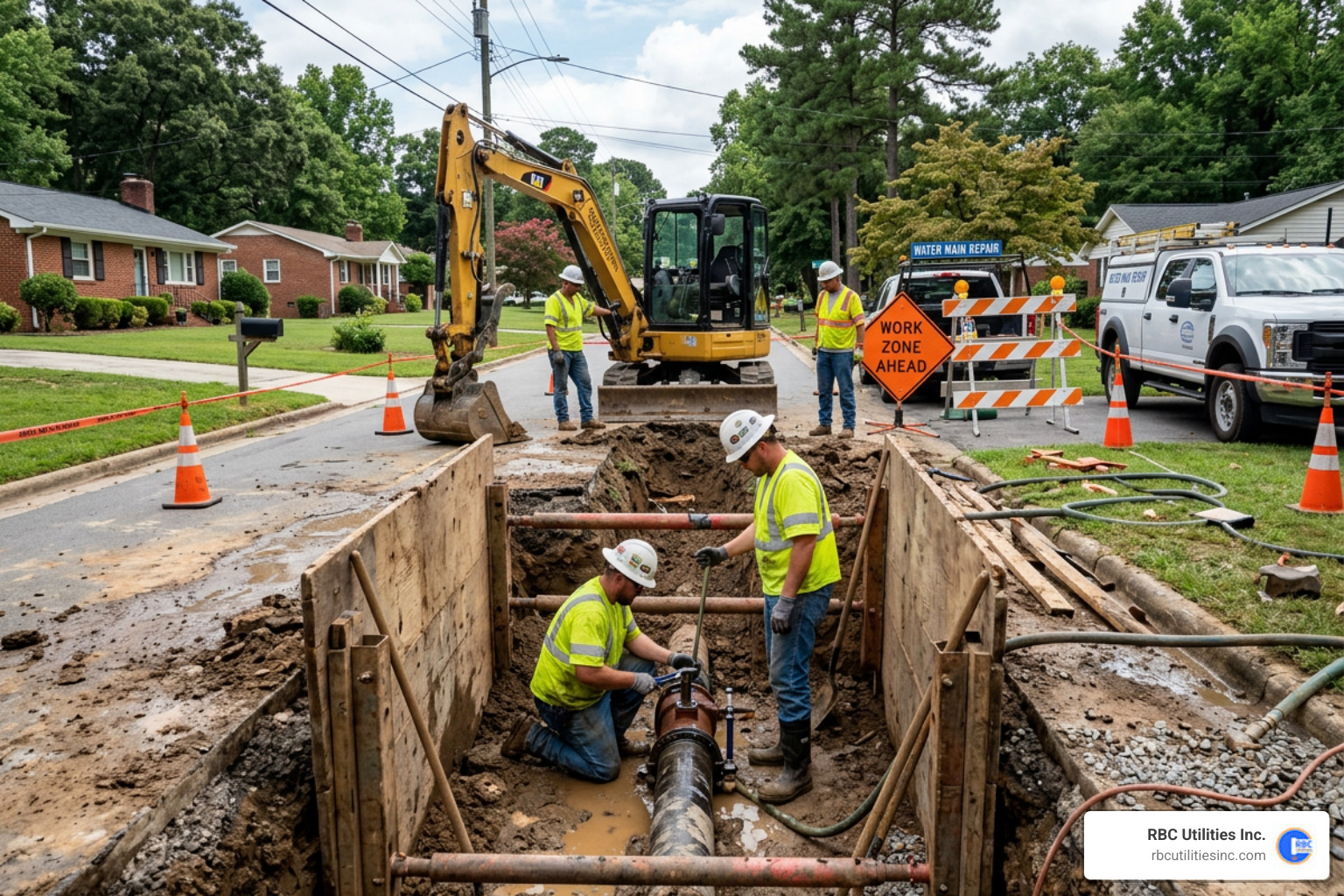
Building a sewer network that lasts for generations requires anticipating the natural and physical forces that threaten underground pipes. When we perform Sewer Pipe Replacement Services, we regularly witness the consequences of poor initial construction. Here is how professional builders prevent the most common failure points:
Every municipality has its own unique topography, soil composition, and population density, which means there is no one-size-fits-all sewer design. As experienced builders, we must be proficient in constructing several distinct types of systems.
The list below highlights the key differences between the two most common designs: traditional gravity sewers and modern pressure sewers.
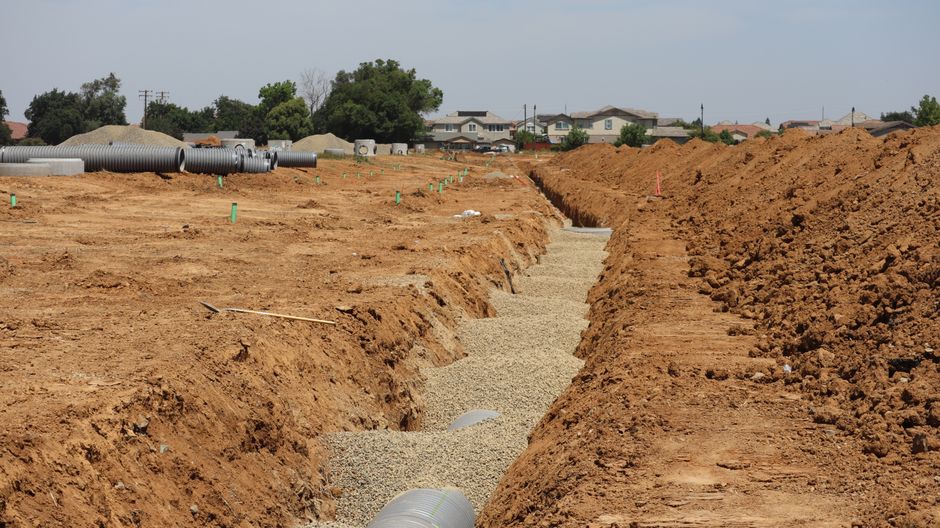
The backbone of most municipal networks is the gravity sewer. It is elegant in its simplicity: pipes are laid on a continuous downward slope, allowing wastewater to flow naturally to its destination. However, gravity has its limits. If the line must travel uphill, or if the trench depth becomes excessively deep (sometimes over 20 feet, requiring dangerous and expensive shoring), we must transition to a force main system.
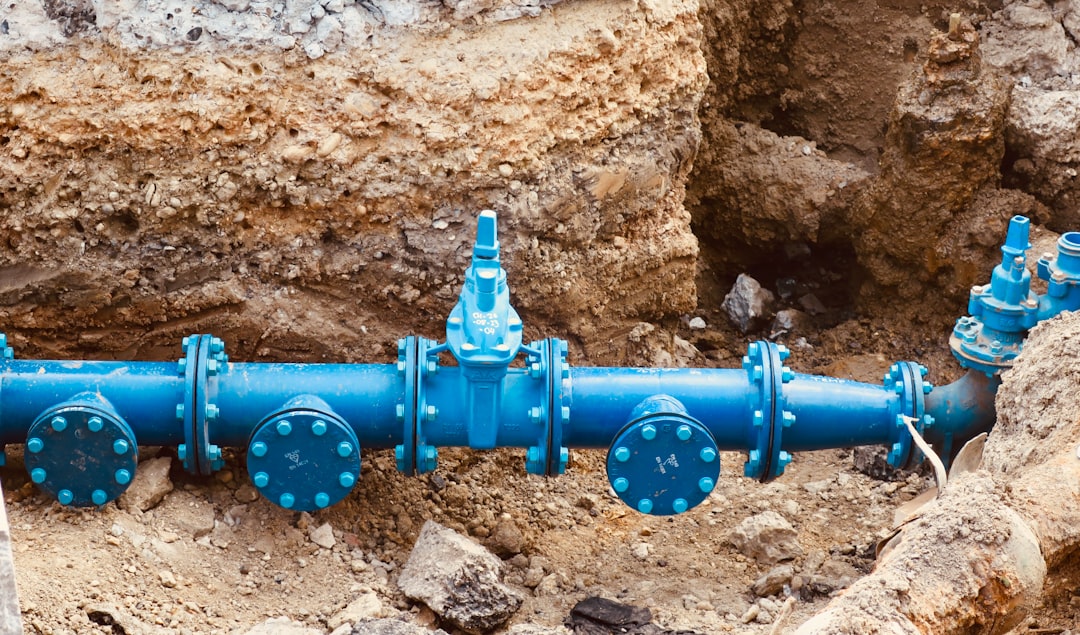
Force mains use pressurized pipelines to pump wastewater uphill. This setup requires the construction of a lift station—a wet well equipped with heavy-duty pumps that push the sewage through pressure-rated pipelines over ridges or long flat distances until it can discharge back into a gravity line. Building these systems requires a deep understanding of fluid dynamics, pressure surges, and thrust restraint engineering.
In areas with challenging geography—such as the rocky terrain of the Piedmont or the high water tables of the coastal Carolinas—traditional gravity systems can be cost-prohibitive. That is where low-pressure sewer systems, like those powered by E/One grinder pumps, come into play.
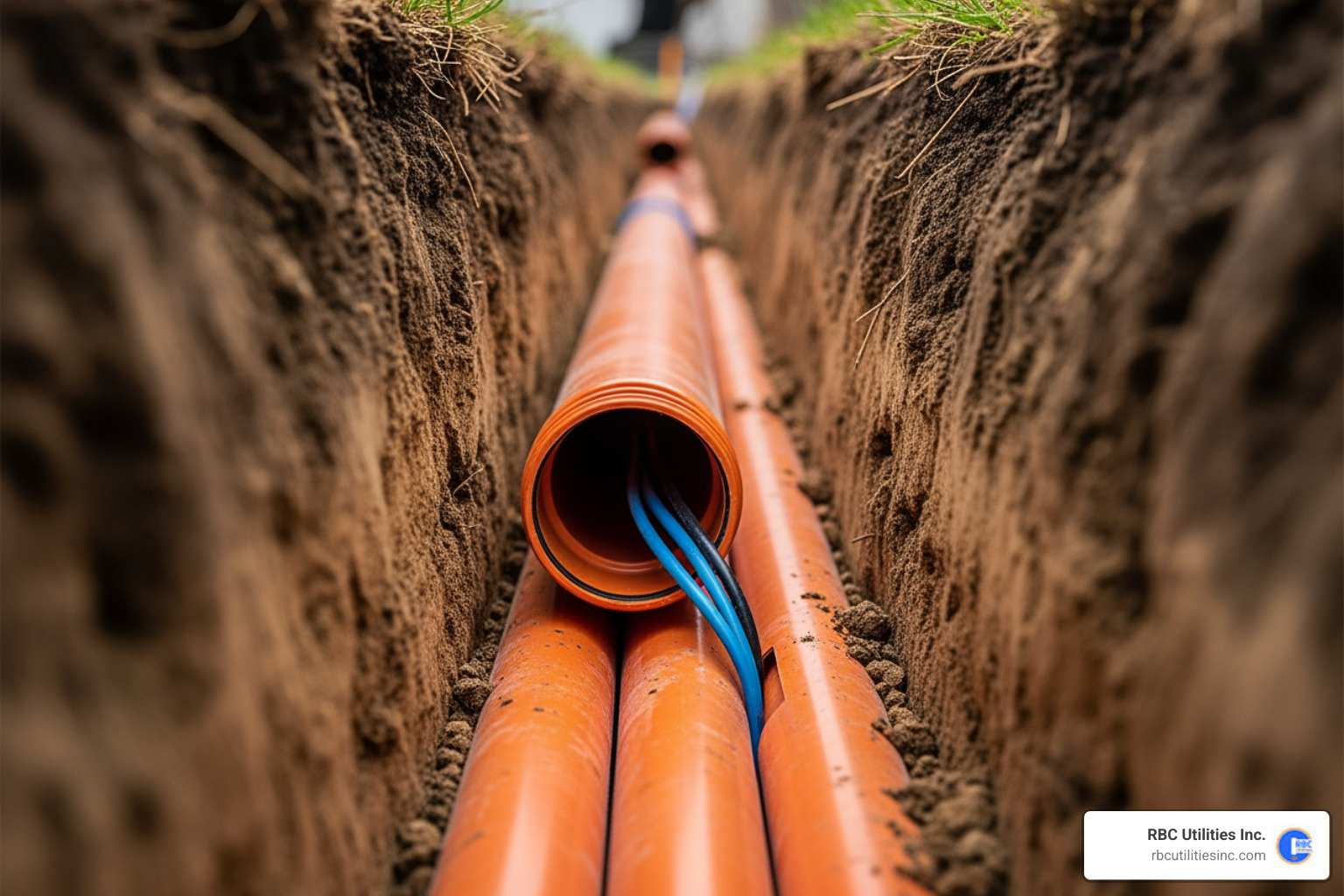
Instead of relying on deep, sloped trenches, a pressure sewer uses small-diameter HDPE pipes buried just below the frost line. Each property has a small grinder pump station that pulverizes waste and pumps it under pressure directly through the network. This technology allows us to follow the natural contours of the land, resulting in upfront and installed cost savings of 50% or more compared to gravity sewers. It also allows for incredible environmental preservation, as we do not have to clear-cut wide paths or blast through solid rock to lay deep pipes.
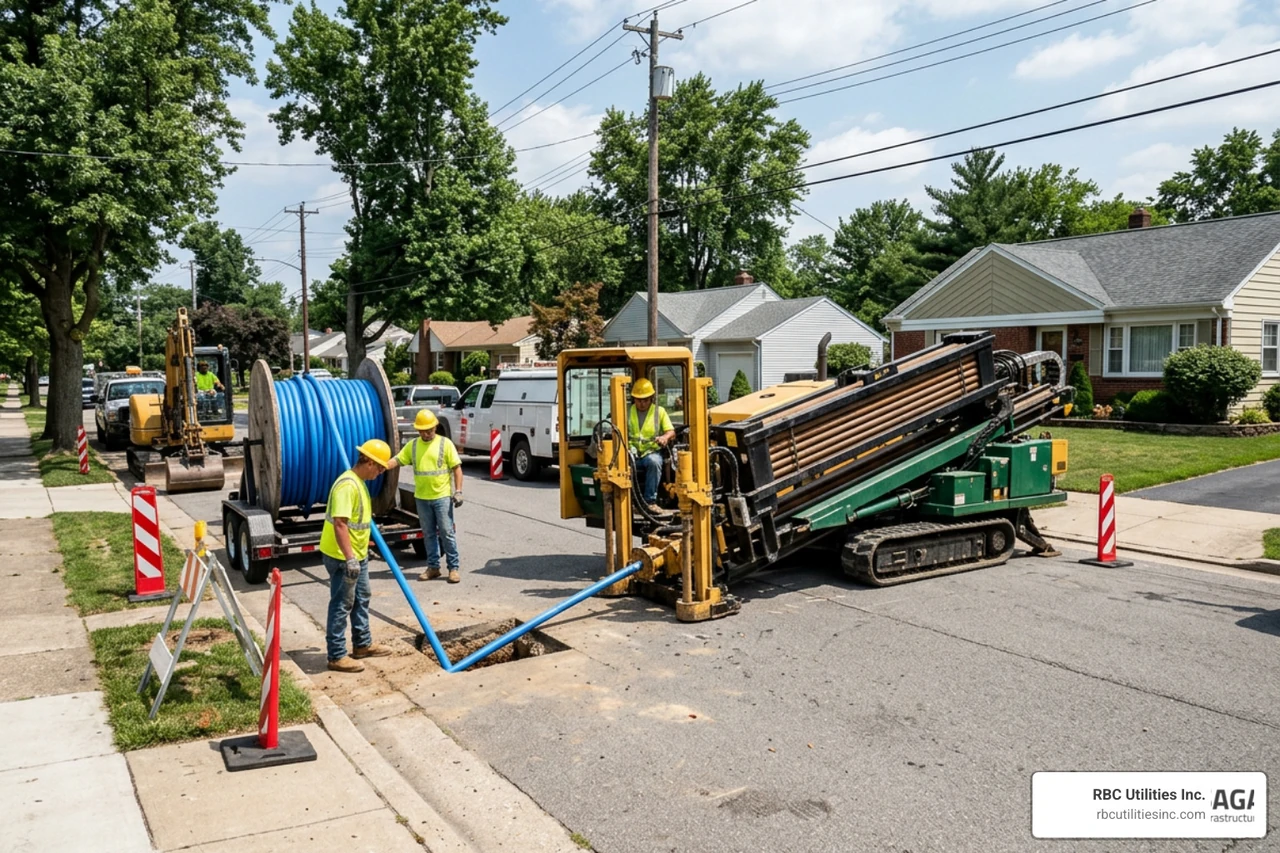
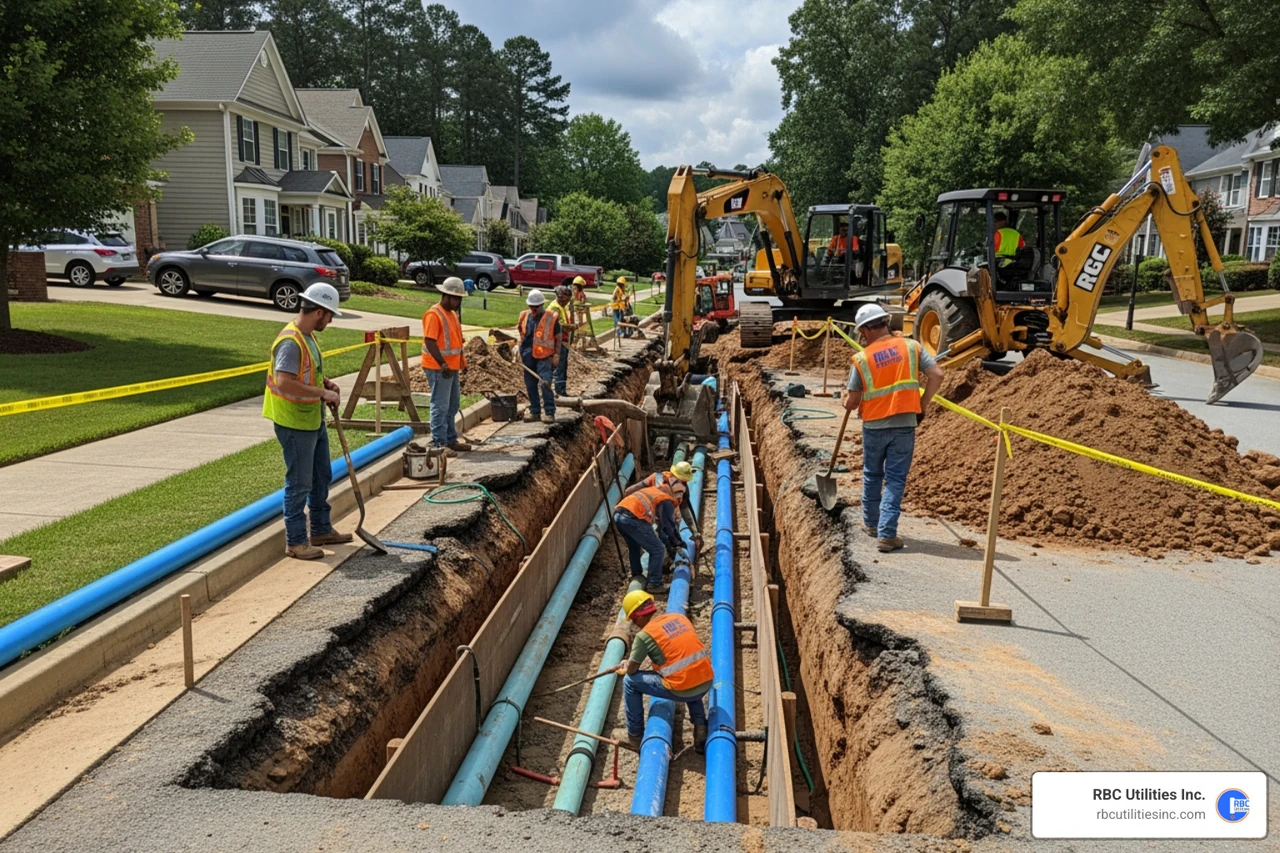
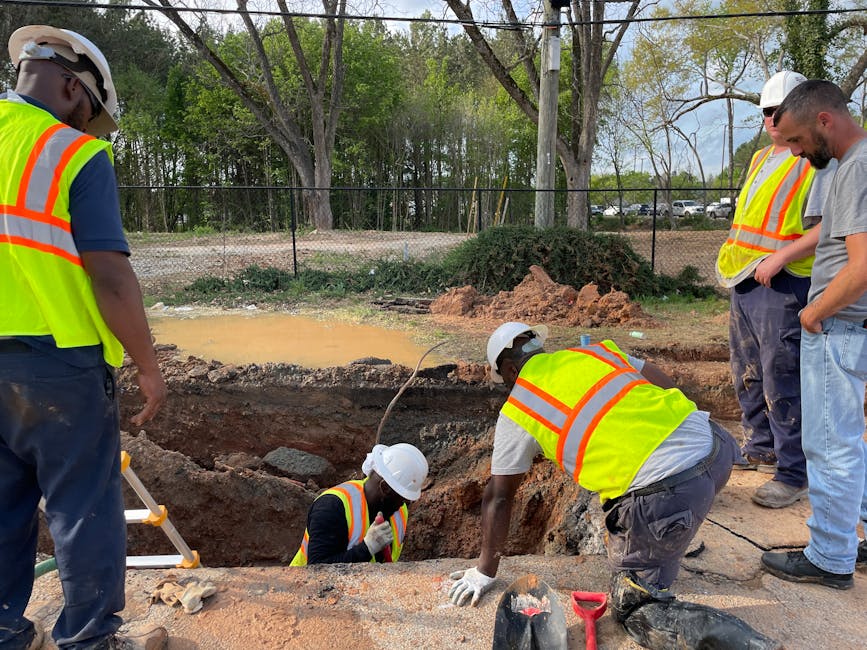
Laying miles of pipe through active communities, around existing utilities, and across sensitive ecosystems is a massive logistical puzzle. Every project requires a careful balance of heavy civil engineering and surgical precision.
In the Carolinas, environmental protection is not just a box to check; it is a core part of our daily operations. When constructing sanitary sewer networks, we must strictly comply with local bylaws, state environmental protection agency guidelines, and strict OSHA safety standards for trenching and excavation.
For instance, managing stormwater runoff and preventing soil erosion during construction is critical. We work closely with municipal departments, such as the teams managing Wastewater Management | Greenville, SC - Official Website , to implement strict erosion control plans.
Furthermore, aging systems across the region are receiving significant upgrades. For example, South Carolina utilities like MetroConnects have utilized major funding—including a $20 million grant from the South Carolina Infrastructure Investment Program—to rehabilitate deteriorating clay and concrete sewer lines, protecting local watersheds from sanitary sewer overflows (SSOs).
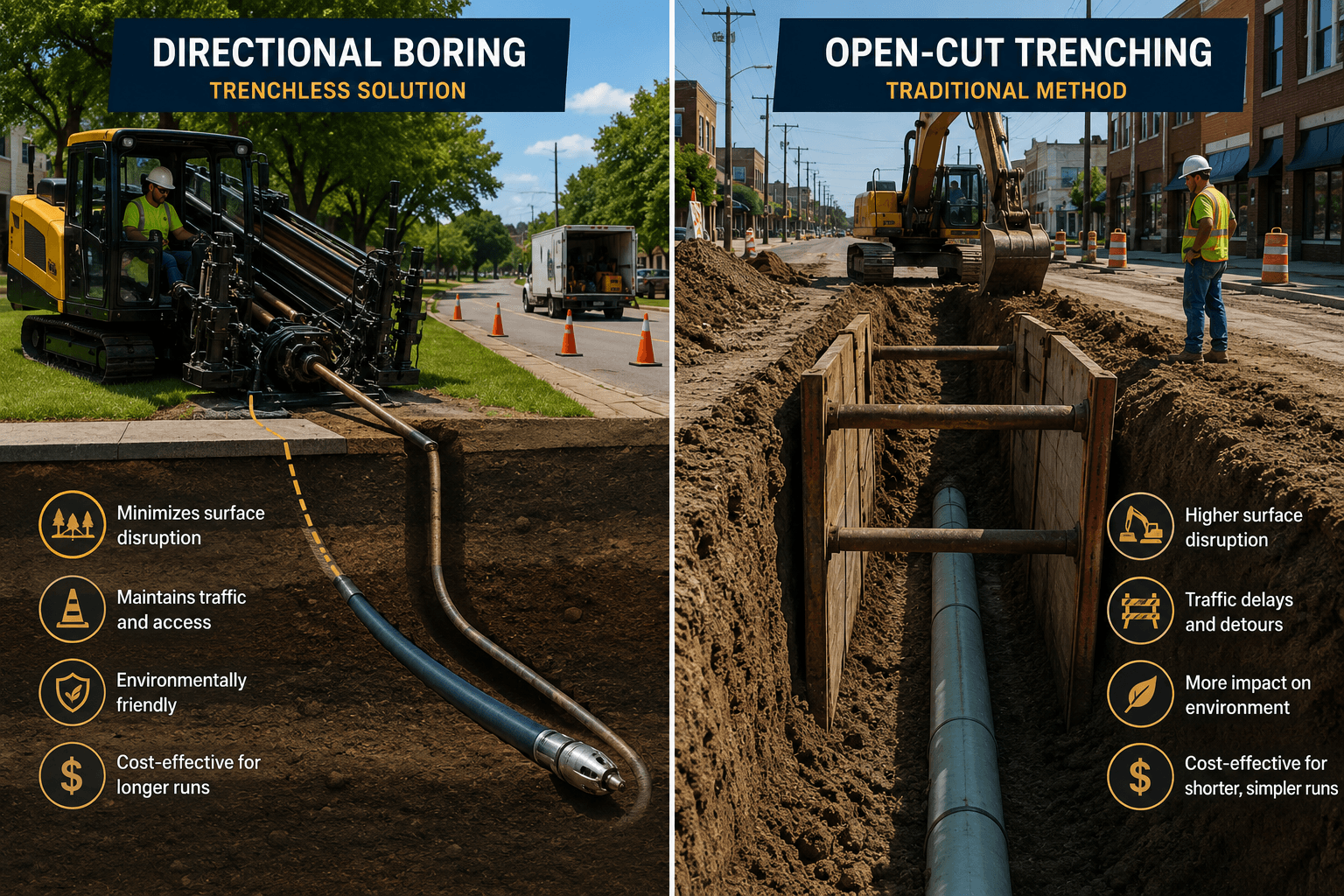
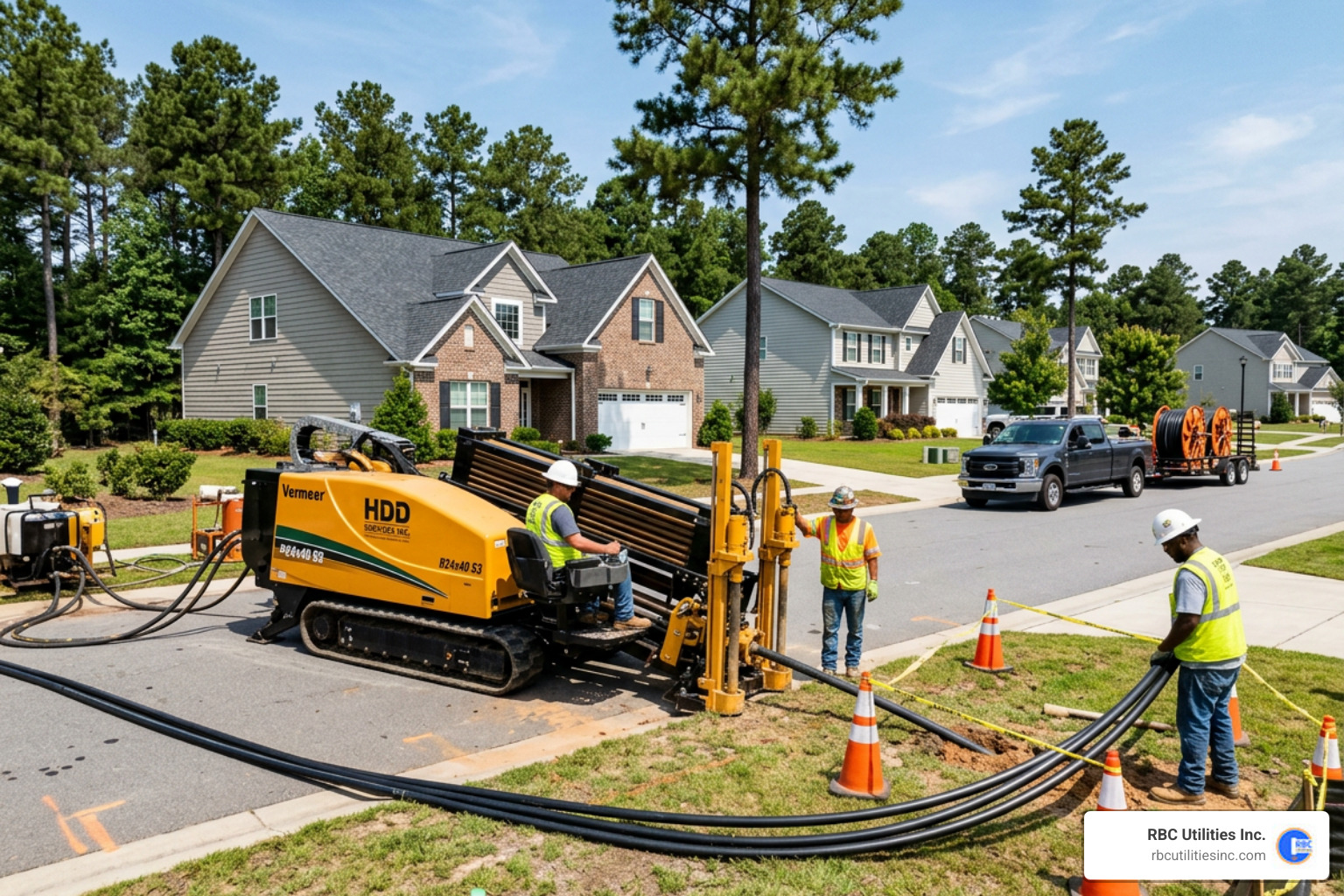
In established urban centers like Charlotte, digging a massive open trench down the middle of a busy street is often out of the question. It disrupts local businesses, stops traffic, and risks damaging existing gas, water, and fiber-optic lines.
To overcome these hurdles, we utilize trenchless technologies:
These advanced methods are essential when delivering high-capacity Commercial Sewer Line Services in tightly packed commercial zones.
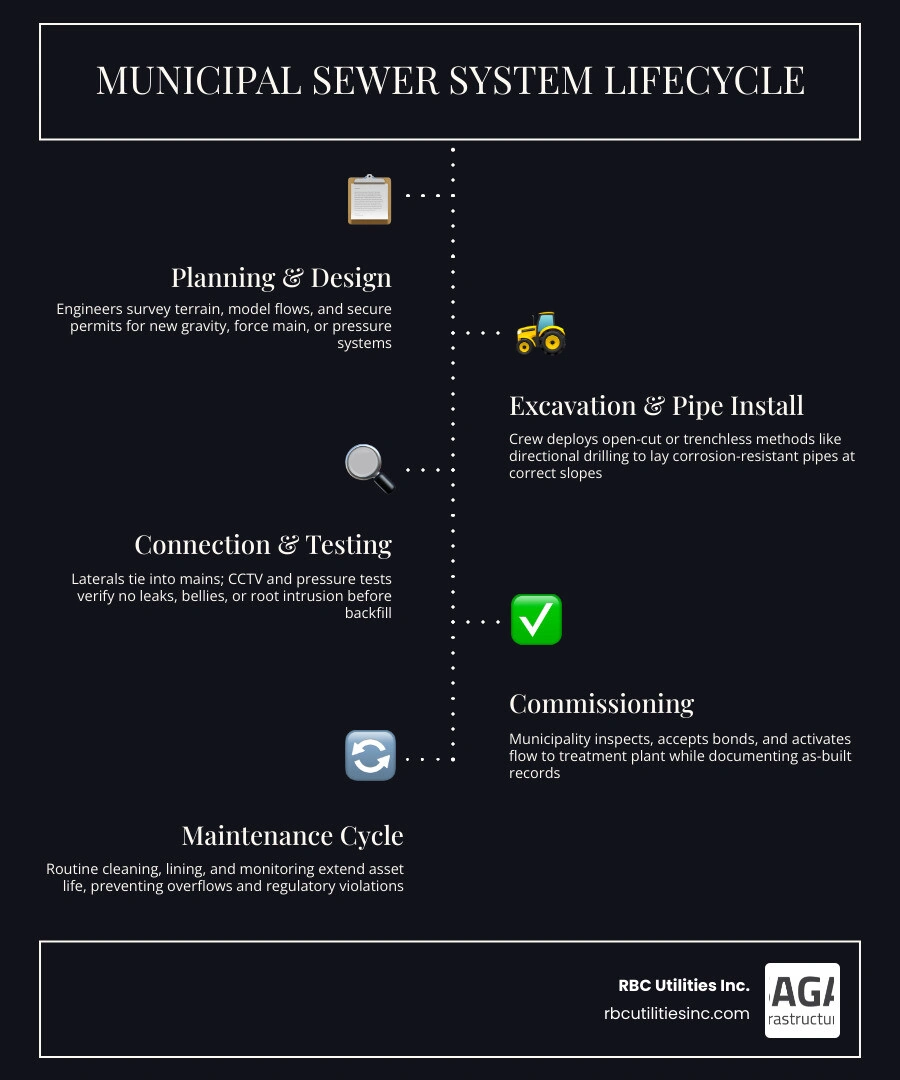
A successful sewer project is built on clear legal agreements, proper permitting, and a precise division of long-term responsibilities.
Connecting a new commercial development or residential subdivision to a city's sewer main is a highly regulated process. In Charlotte, for example, developers must navigate the strict guidelines set by New Residential Install Charlotte Water .
The process typically involves:
Who owns what? It is a question that often leads to confusion. While specific rules vary by local utility, the general division of responsibility for sewer infrastructure is as follows:
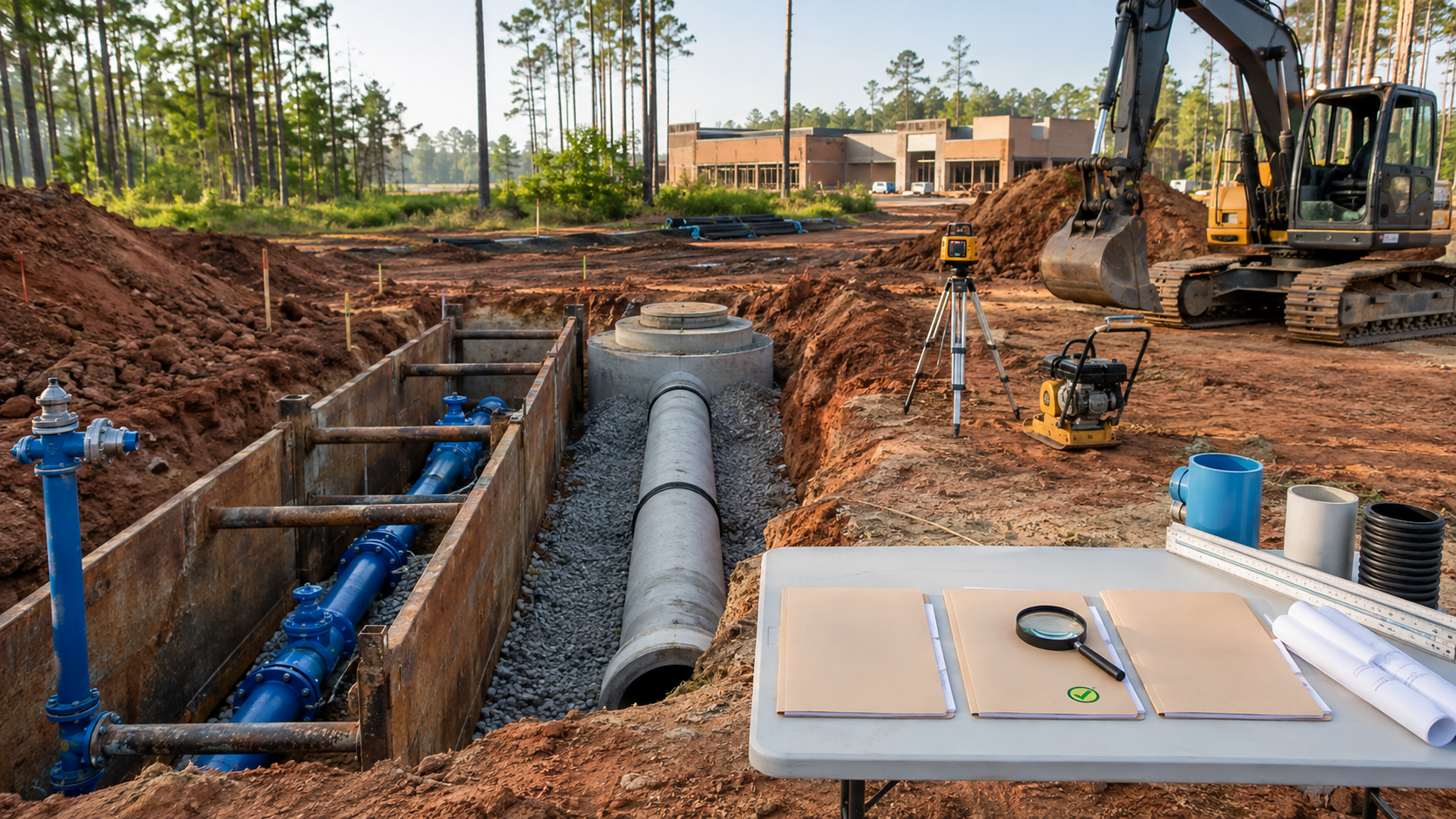
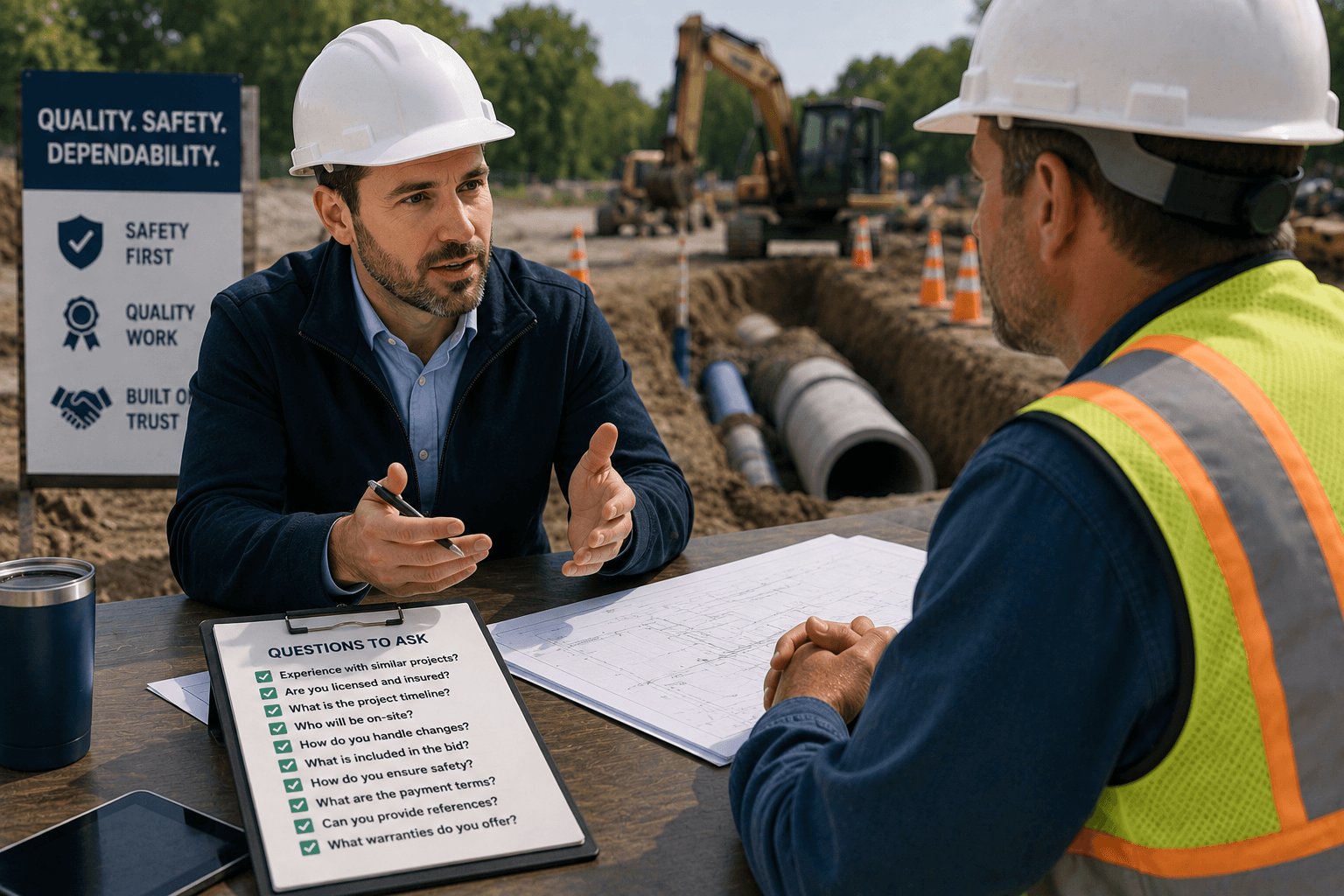
When public money and public health are on the line, selecting the right contractor is paramount. Municipalities and private developers should look for the following qualifications:
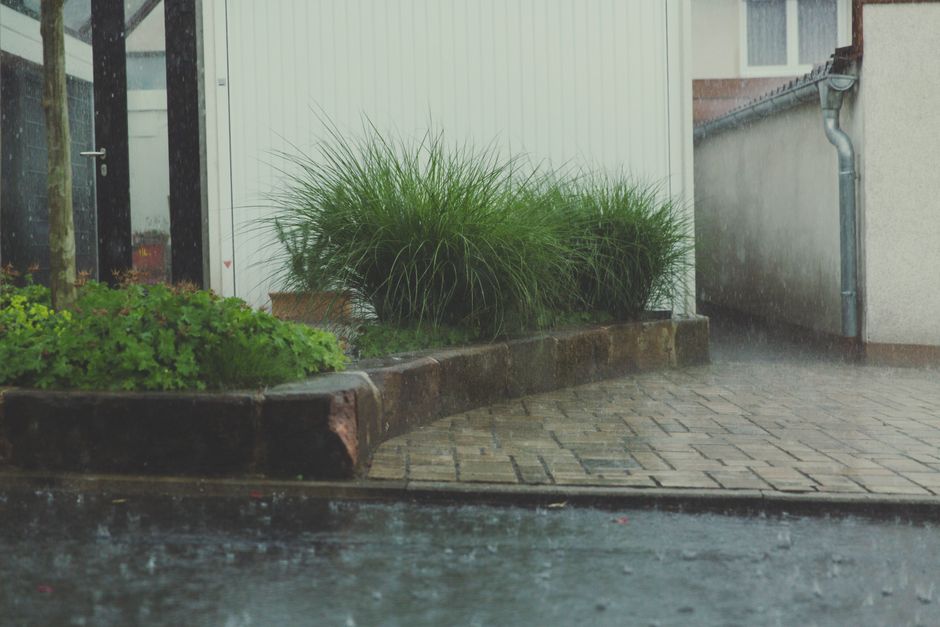
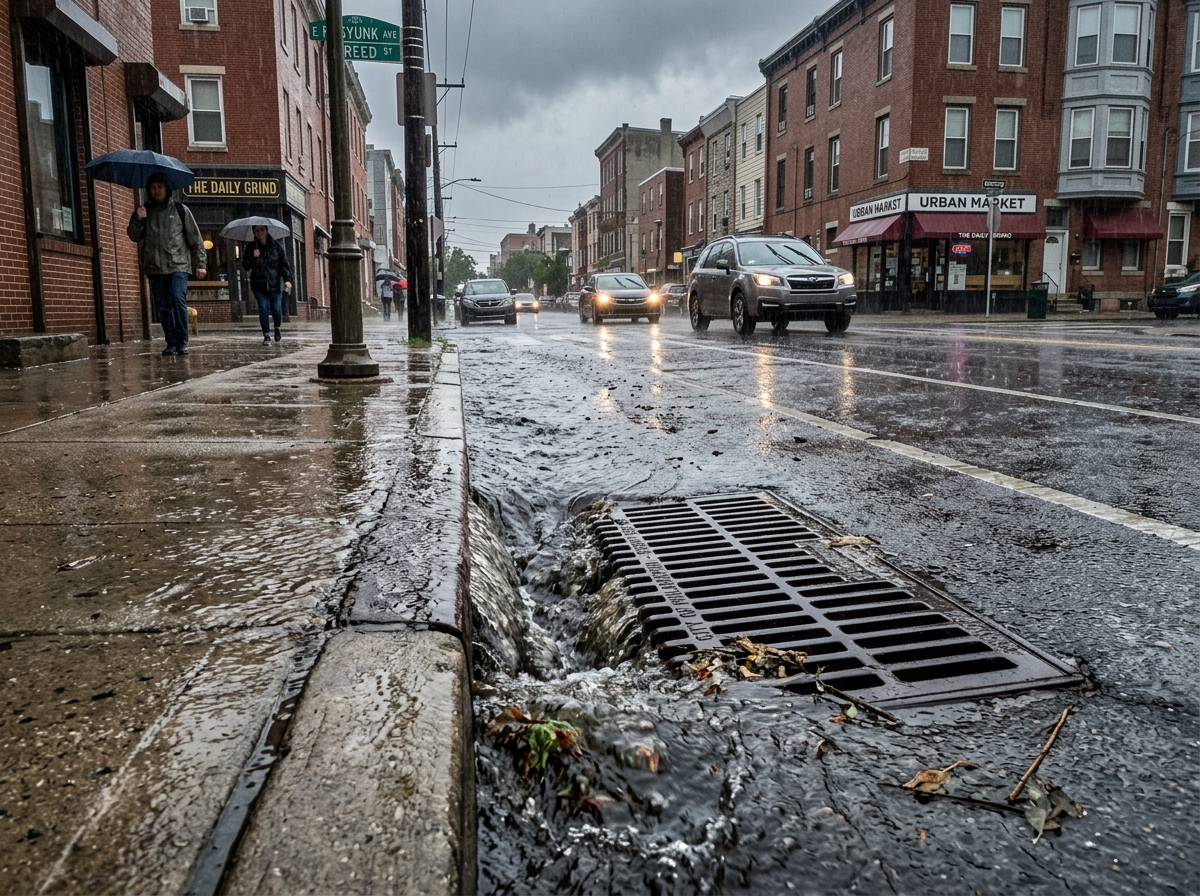
A sanitary sewer is a closed system designed to carry contaminated wastewater from toilets, sinks, and industrial drains directly to a wastewater treatment facility. A storm sewer, on the other hand, collects rainwater runoff from streets, parking lots, and roofs, discharging it directly into local creeks, rivers, or lakes without treatment. Keeping these systems separate is vital for environmental protection and preventing treatment plants from becoming overwhelmed during heavy storms.
In most municipal utility construction contracts, a performance bond must remain valid for one year after the project reaches substantial completion. This one-year warranty period ensures that if any issues—such as pipe settling, joint leaks, or backfill failure—occur due to faulty construction, the contractor is legally obligated to return and fix the issue at no cost to the municipality.
Traditional gravity sewers require deep, sloped trenches, which can be incredibly expensive if you have to blast through solid rock, dig below the water table, or work around hilly terrain. Pressure sewer systems use small, flexible HDPE pipes buried in shallow trenches that follow the natural contour of the land. This drastically reduces excavation costs, eliminates the need for expensive concrete lift stations, and minimizes environmental disruption, saving up to 50% or more in upfront installation costs.
Building the underground systems that keep our communities clean, safe, and open for business is a massive responsibility. From selecting the right engineering design to navigating local environmental regulations and executing flawless physical installations, every step requires specialized expertise.
At RBC Utilities, Inc., we have built our reputation on delivering high-quality, reliable underground utility systems across North Carolina and South Carolina. Backed by the extensive national resources of Saga Infrastructure, we bring local Carolinas expertise, an unyielding commitment to safety, and a focus on building lasting careers for our team.
Whether you need major public main line installations, trenchless directional drilling, or professional Sewer Line Repair Charlotte, we are here to help.
Ready to get started on your next municipal or commercial utility project? Partner with RBC Utilities Inc. for your next infrastructure project and let us build a stronger, safer community together.
Part of Saga Infrastructure, protecting what others built and helping it grow.
Address: 4404 Stuart Andrew Blvd., Suite K, Charlotte, NC 28217
Email: info@rbcutilities.com
Phone: 803-913-9727
Service Area: North Carolina | South Carolina