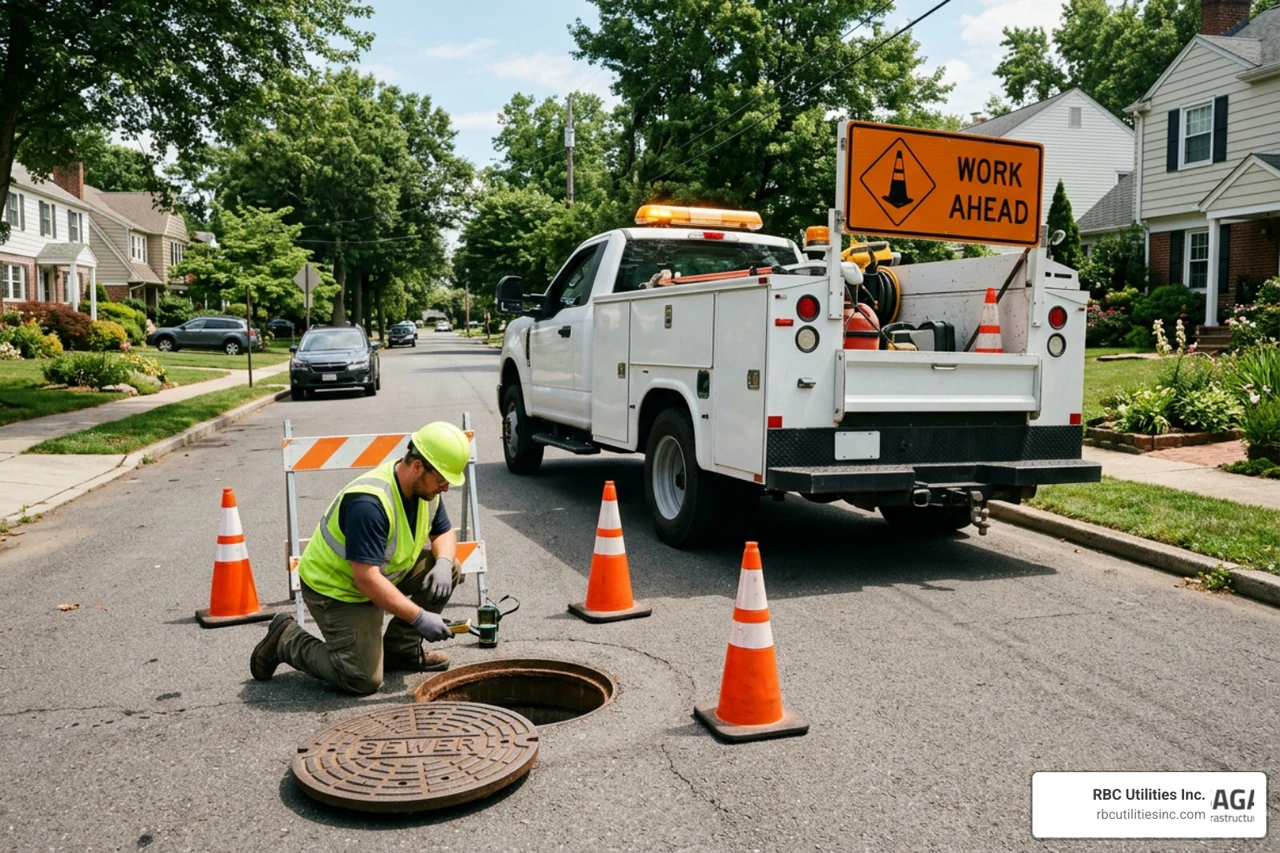
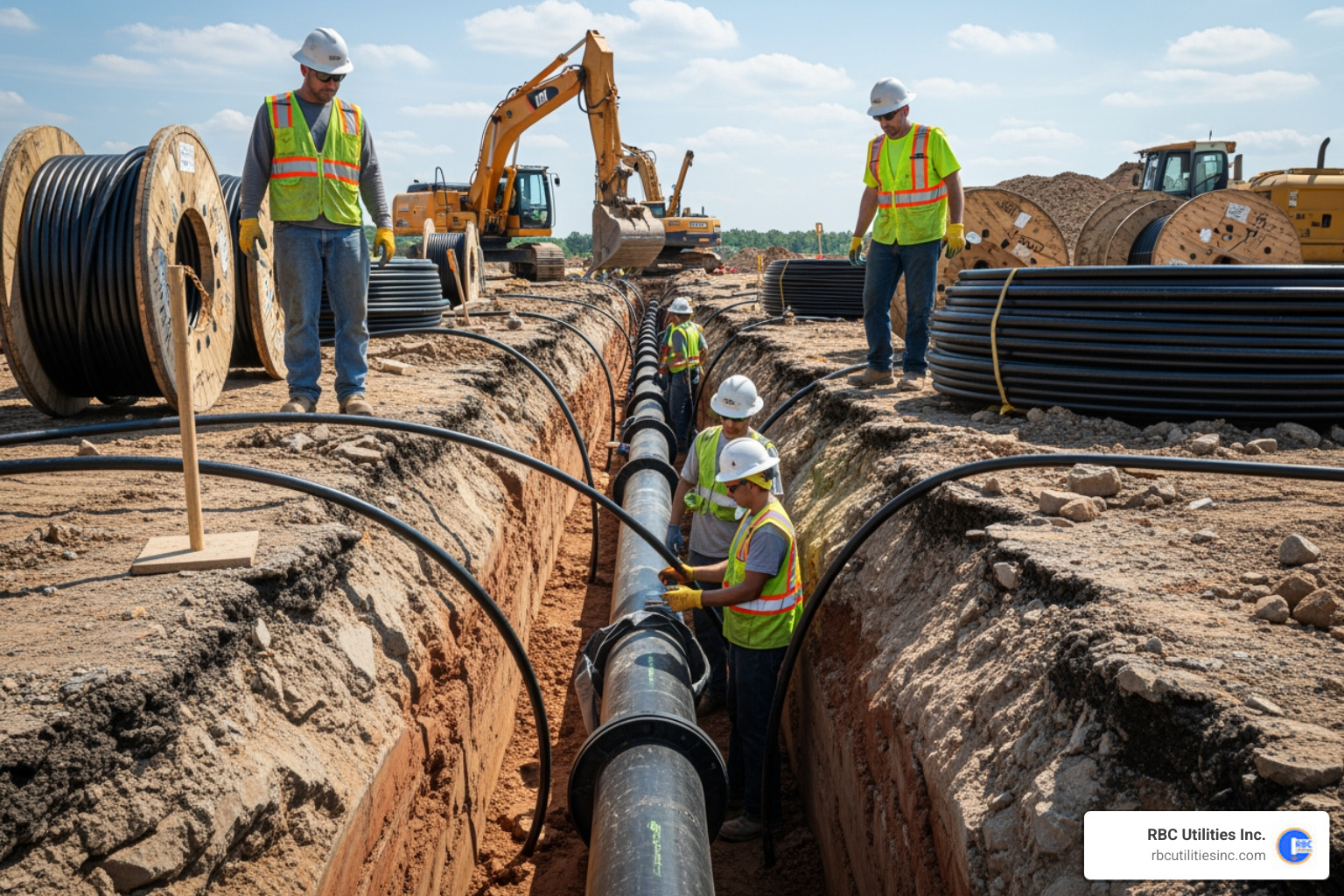
Sewer line installation contractors are licensed professionals who design, permit, and install the underground pipe systems that carry wastewater from buildings to the municipal sewer main. If you need one fast, here is what to look for:
| What to Look For | Why It Matters |
|---|---|
| Licensed and bonded in your state | Required for permits and code compliance |
| Experience with your project type | Residential, commercial, and municipal work differ significantly |
| Trenchless and traditional method capability | Gives you options based on site conditions |
| Permit and inspection handling | Saves time and avoids costly violations |
| Proven track record in your region | Local soil and code knowledge reduces risk |
Every building connected to a public sewer system depends on a properly installed lateral line. When that line fails — or is missing entirely — the consequences range from slow drains to sewage backups, foundation damage, and serious health hazards. For developers and general contractors in the Carolinas, getting this underground work right from the start is not optional. It is the foundation everything else is built on.
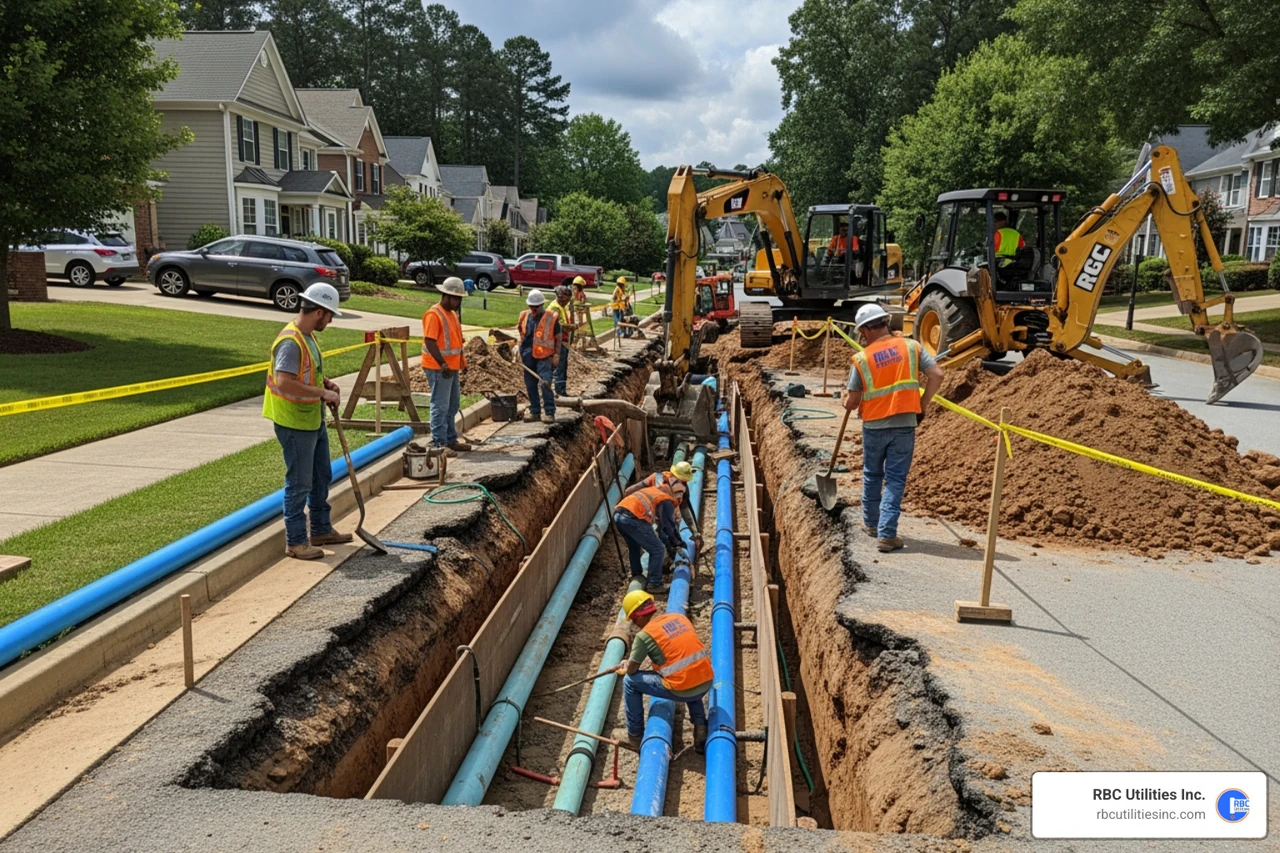
I'm Don Larsen with RBC Utilities Inc., a Carolina-based underground utility contractor with deep experience working alongside sewer line installation contractors on residential, commercial, and municipal projects since 2008. In the sections below, we will walk you through everything you need to know to find the right contractor and get the job done properly.
Glossary for sewer line installation contractors:
In the Carolinas, our infrastructure faces unique pressures—from the shifting clay soils of the Piedmont to the high water tables of the Coastal Plain. Knowing when to call sewer line installation contractors can save you thousands in emergency cleanup costs.
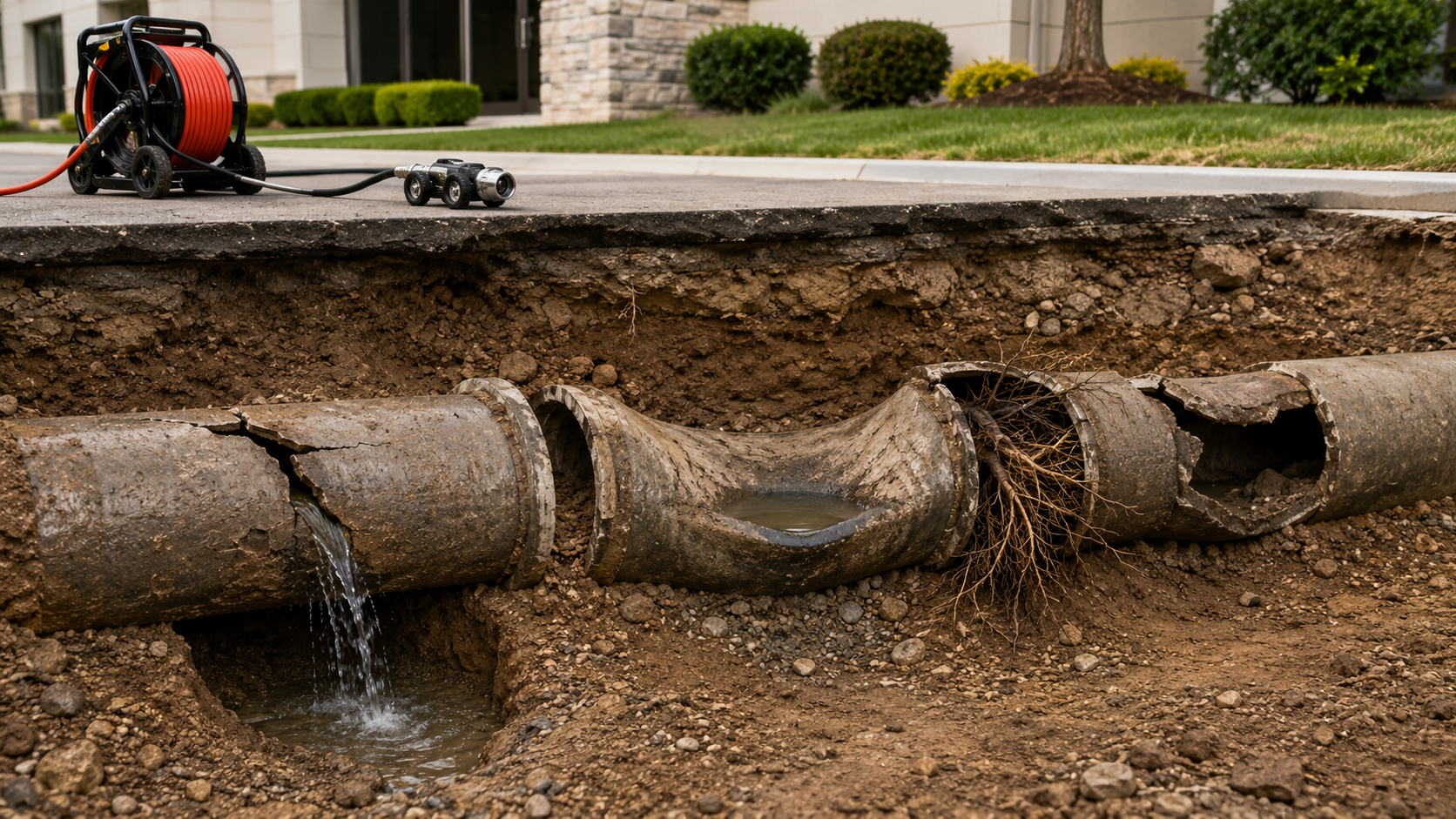
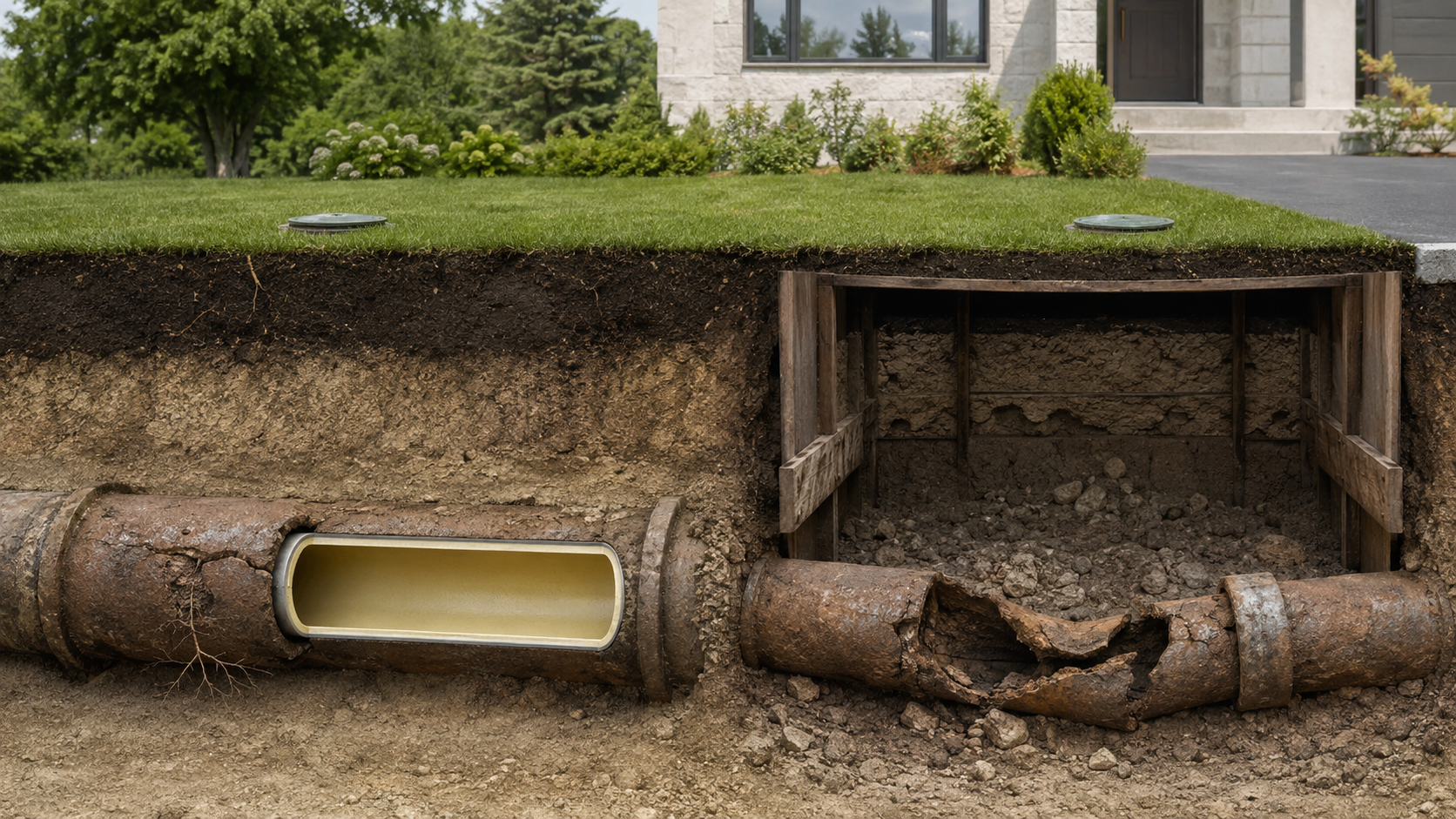
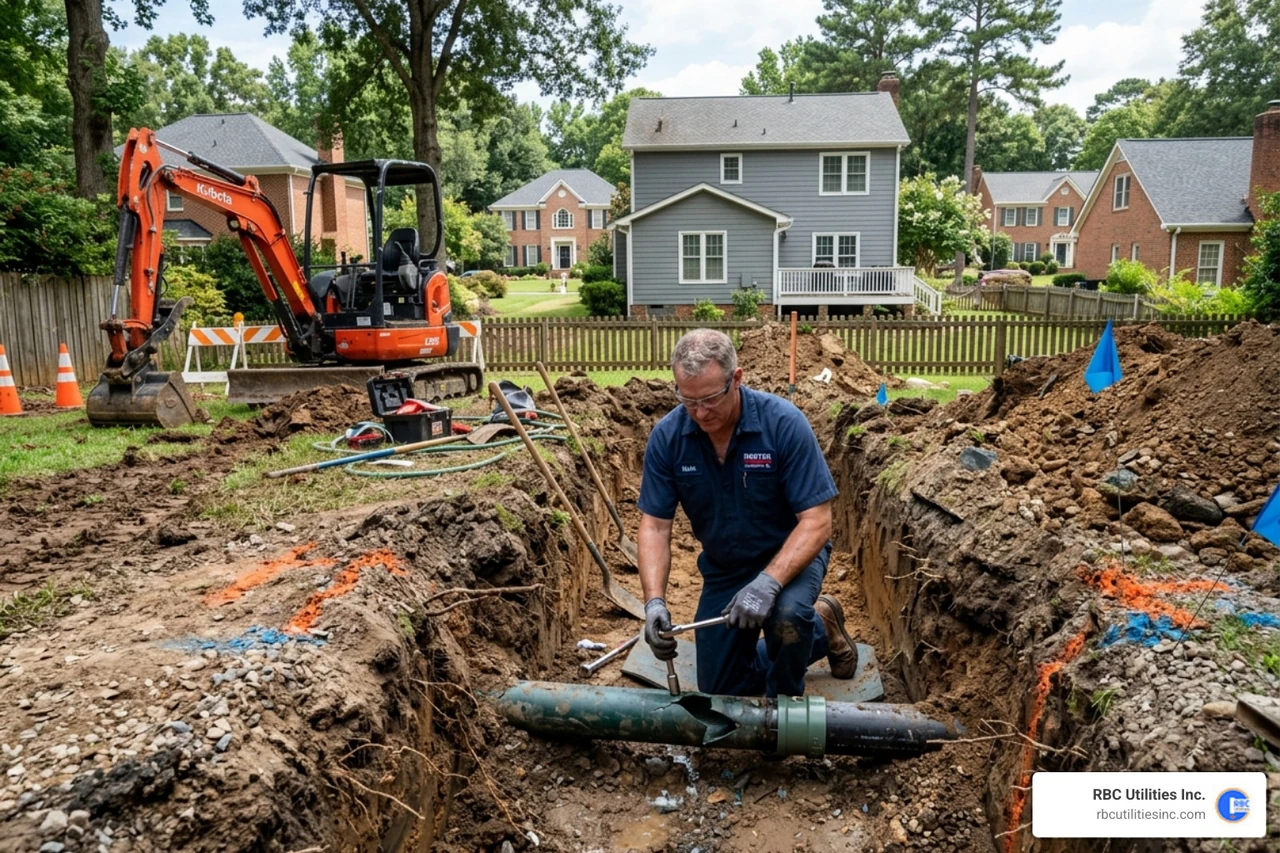
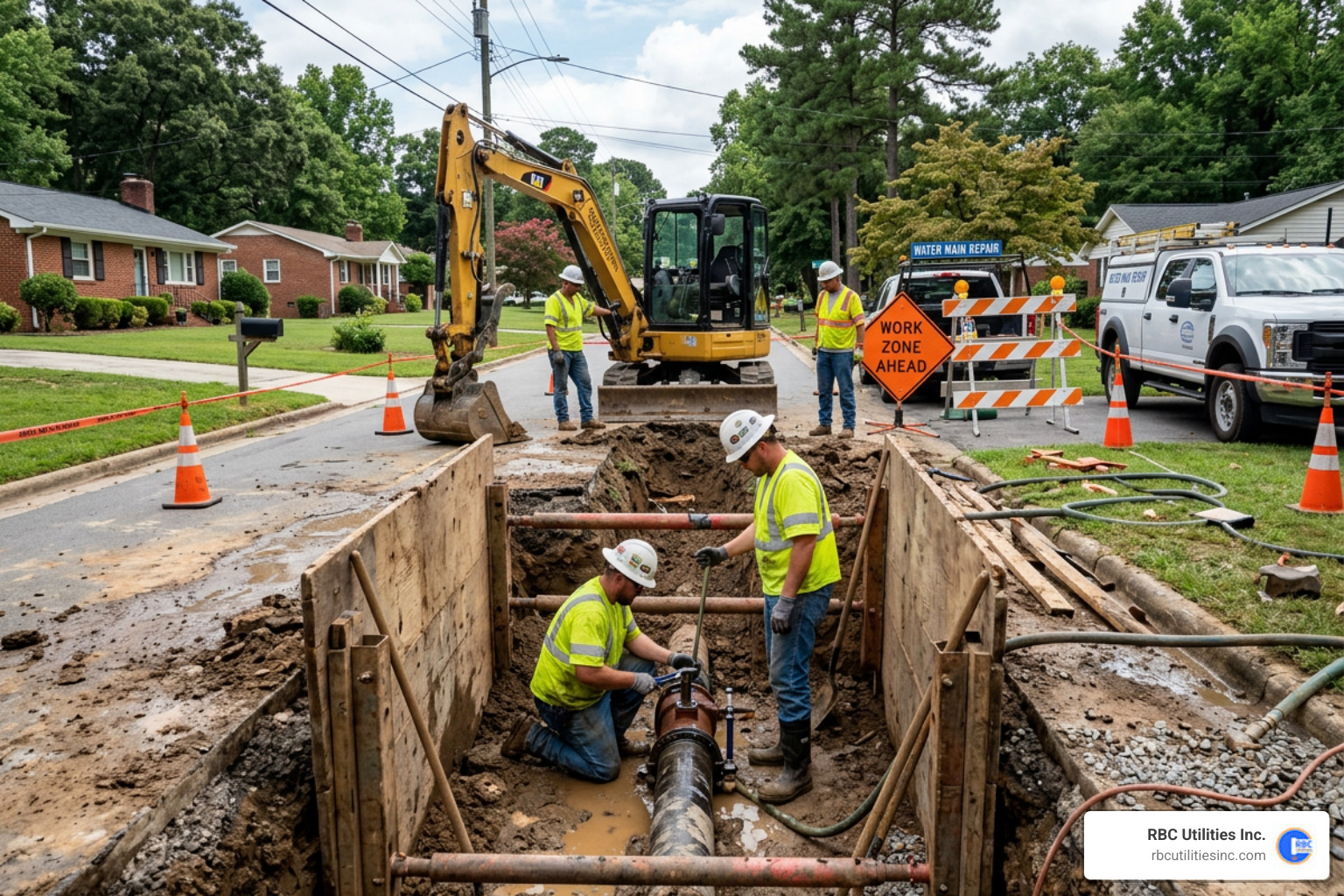
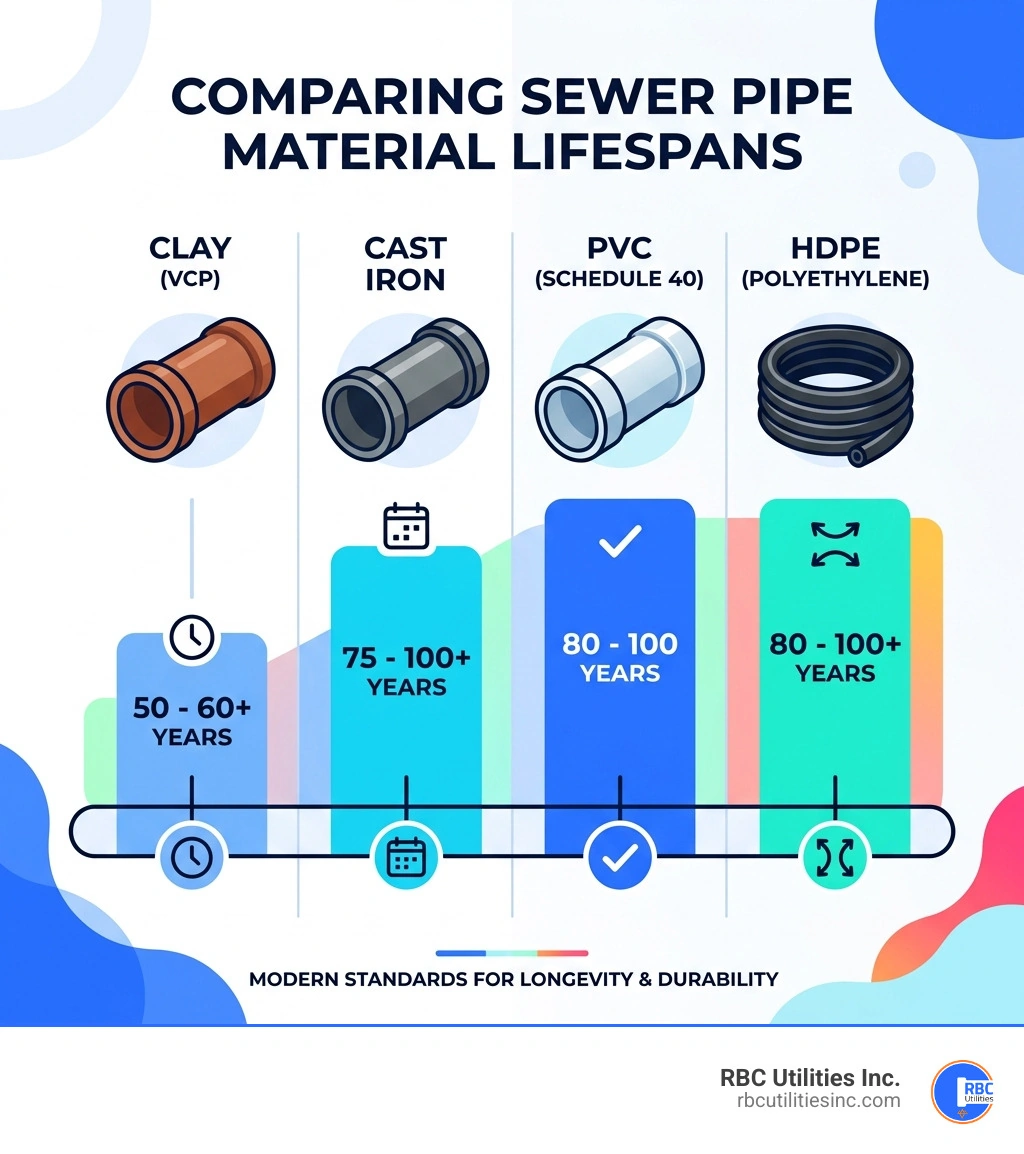
While some issues can be solved with a simple cleaning, others indicate that the system has reached the end of its functional life. Most sewer lines are designed to last between 50 to 60 years. However, if your property was built in the mid-20th century, you may be dealing with outdated materials like clay or "Orangeburg" pipe (essentially tar-paper tubes), which are notorious for collapsing under the weight of modern soil loads.
Key warning signs include:
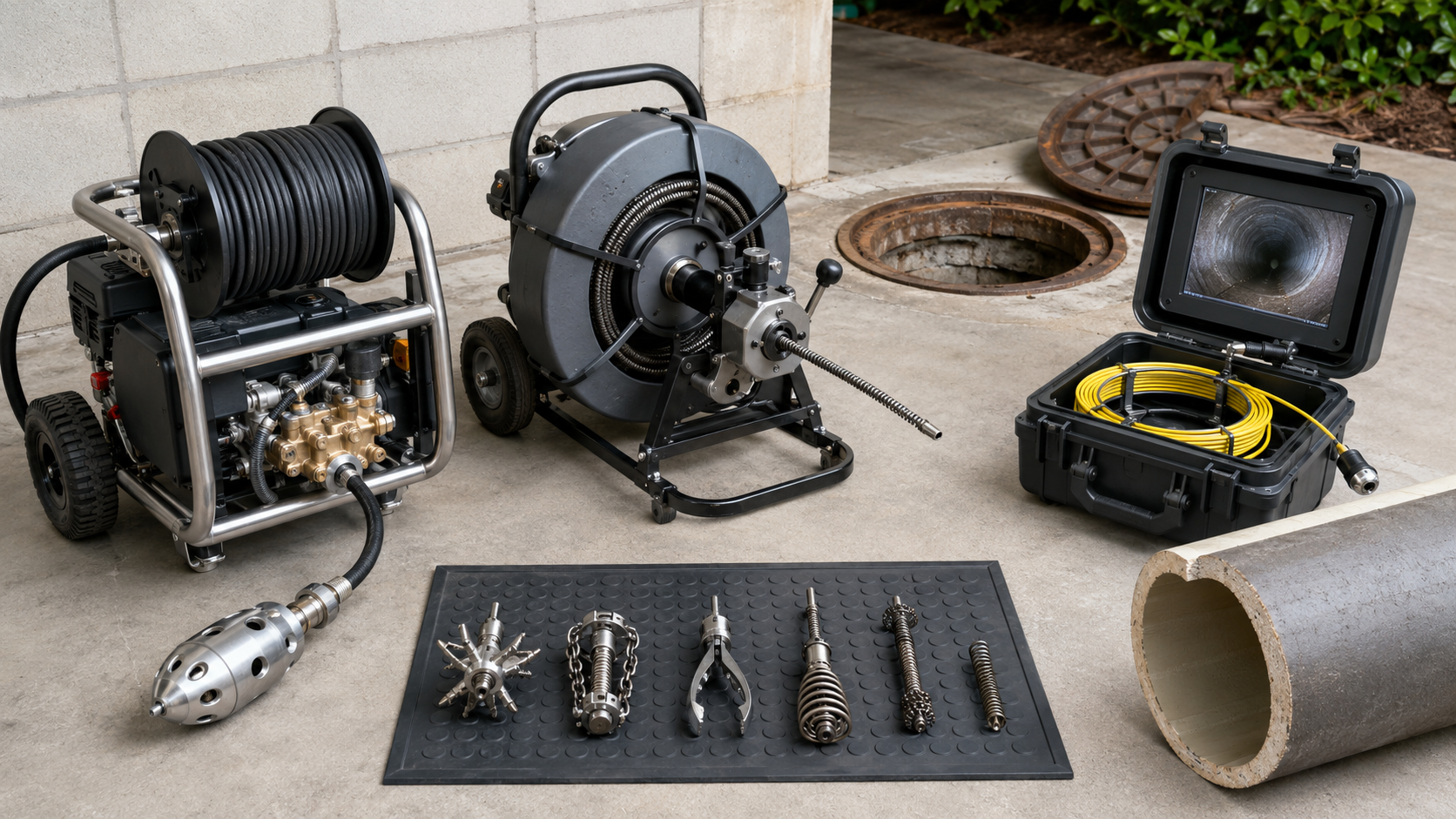
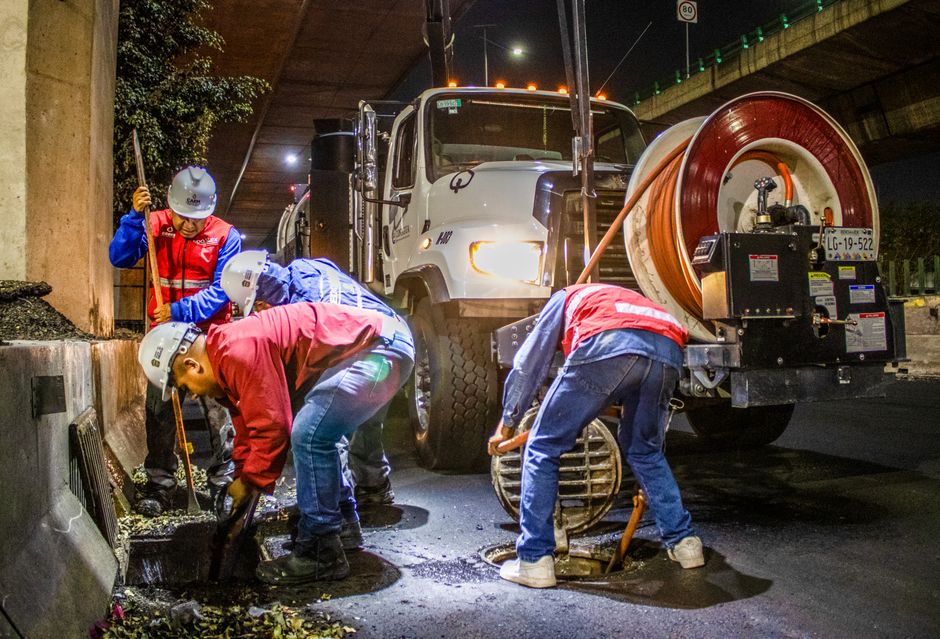
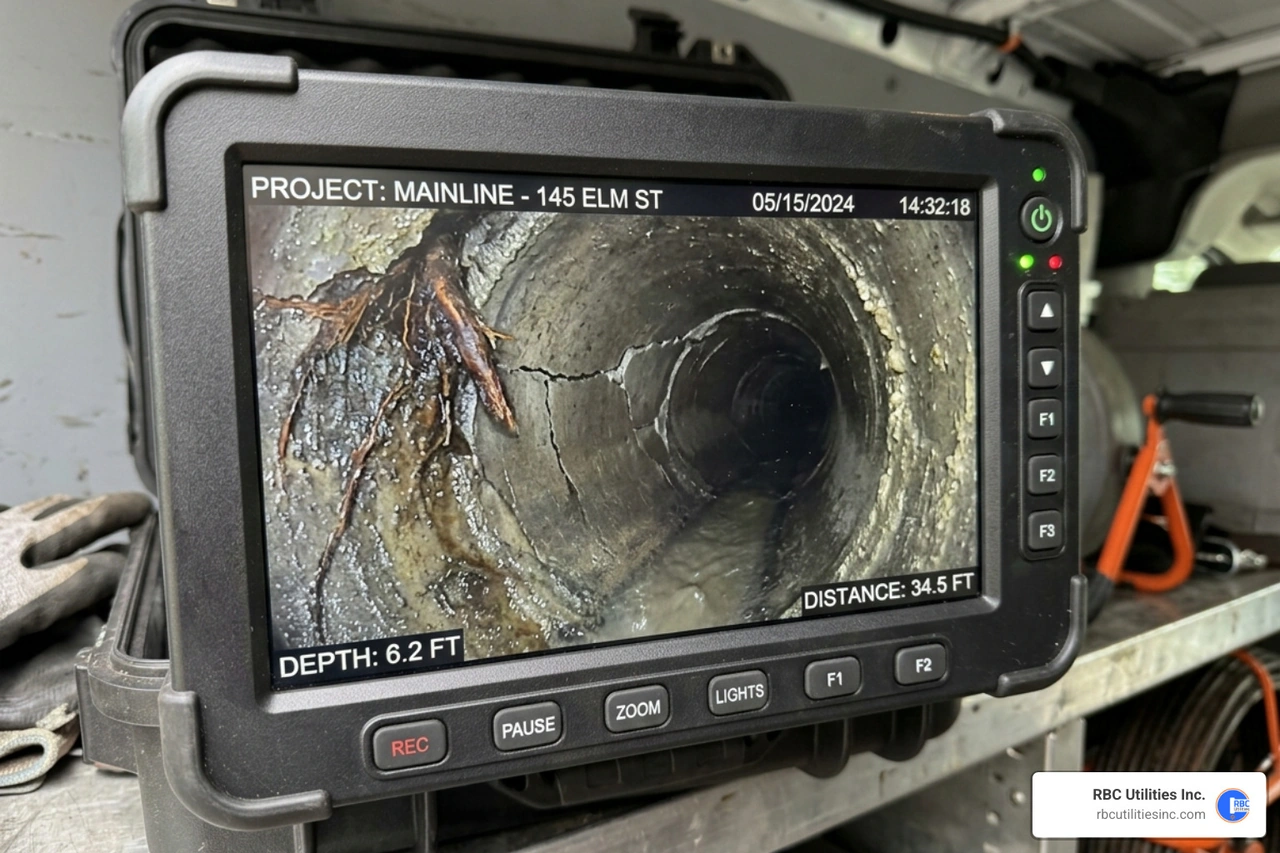
Modern sewer line installation contractors use high-definition video inspections to diagnose these issues. These cameras don't just find clogs; they identify soil voids and fractures that predict a total pipe collapse before it happens.
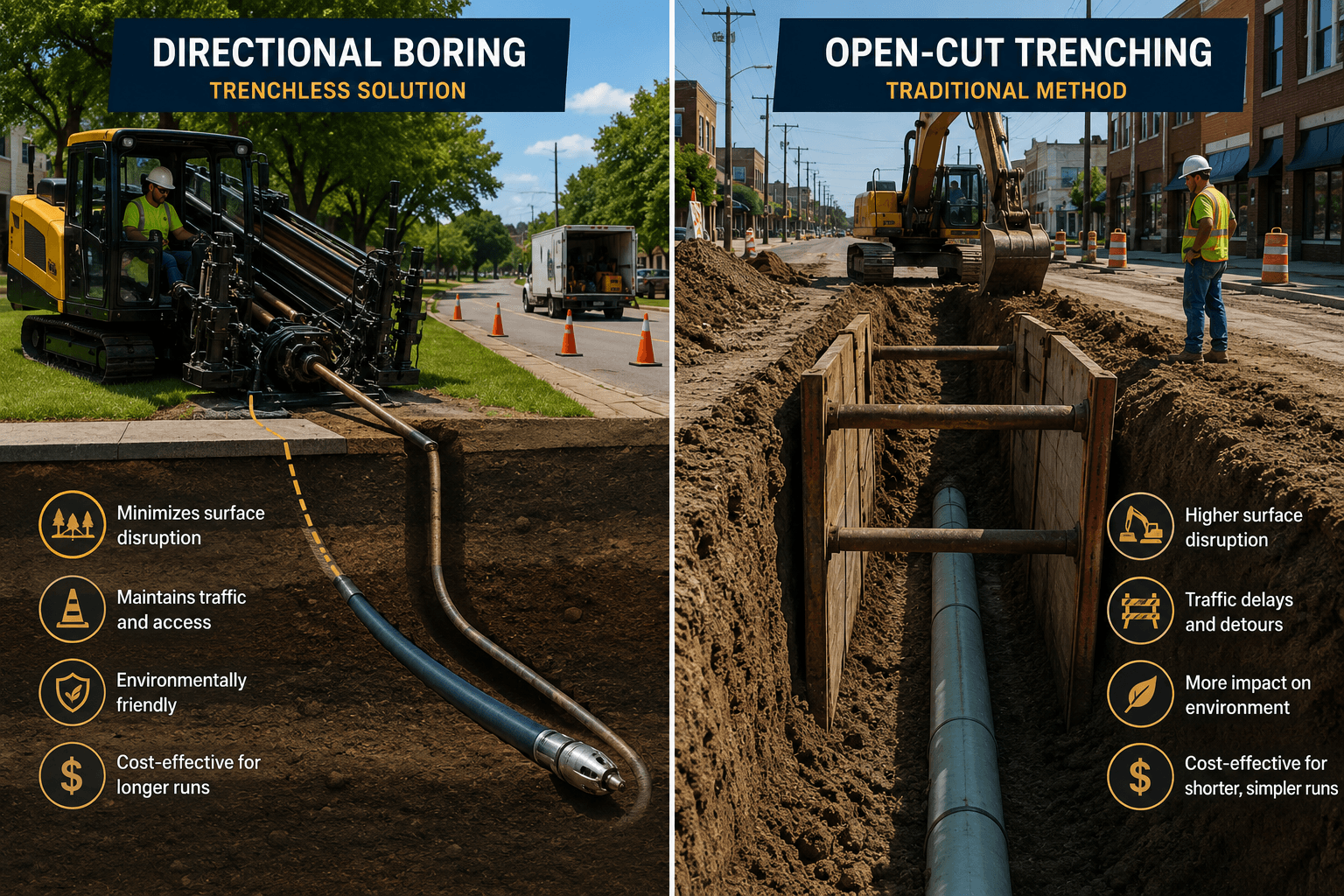
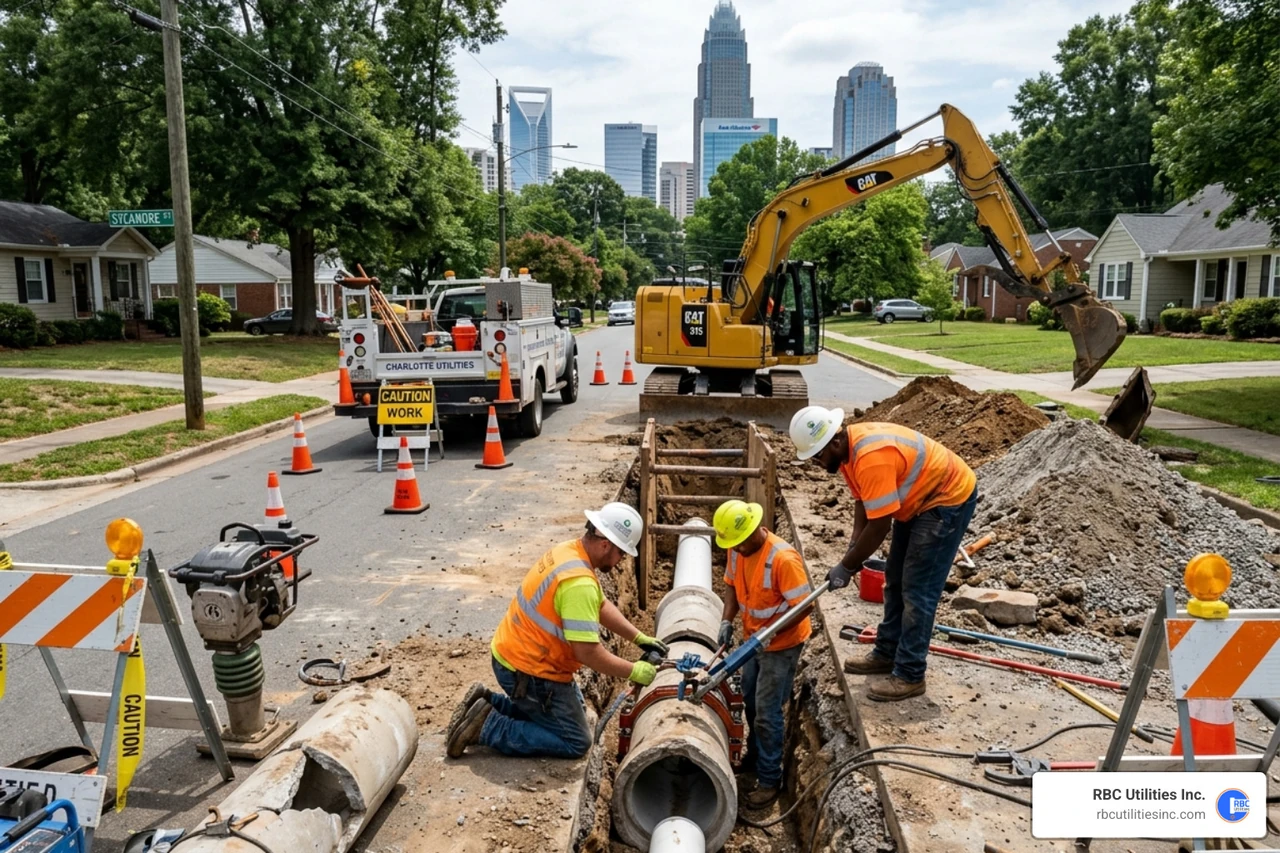
Choosing the right installation method is a balance between budget, property disruption, and long-term durability. In 2026, contractors have more tools than ever to get the job done without turning your property into a battlefield.
| Method | Best For | Pros | Cons |
|---|---|---|---|
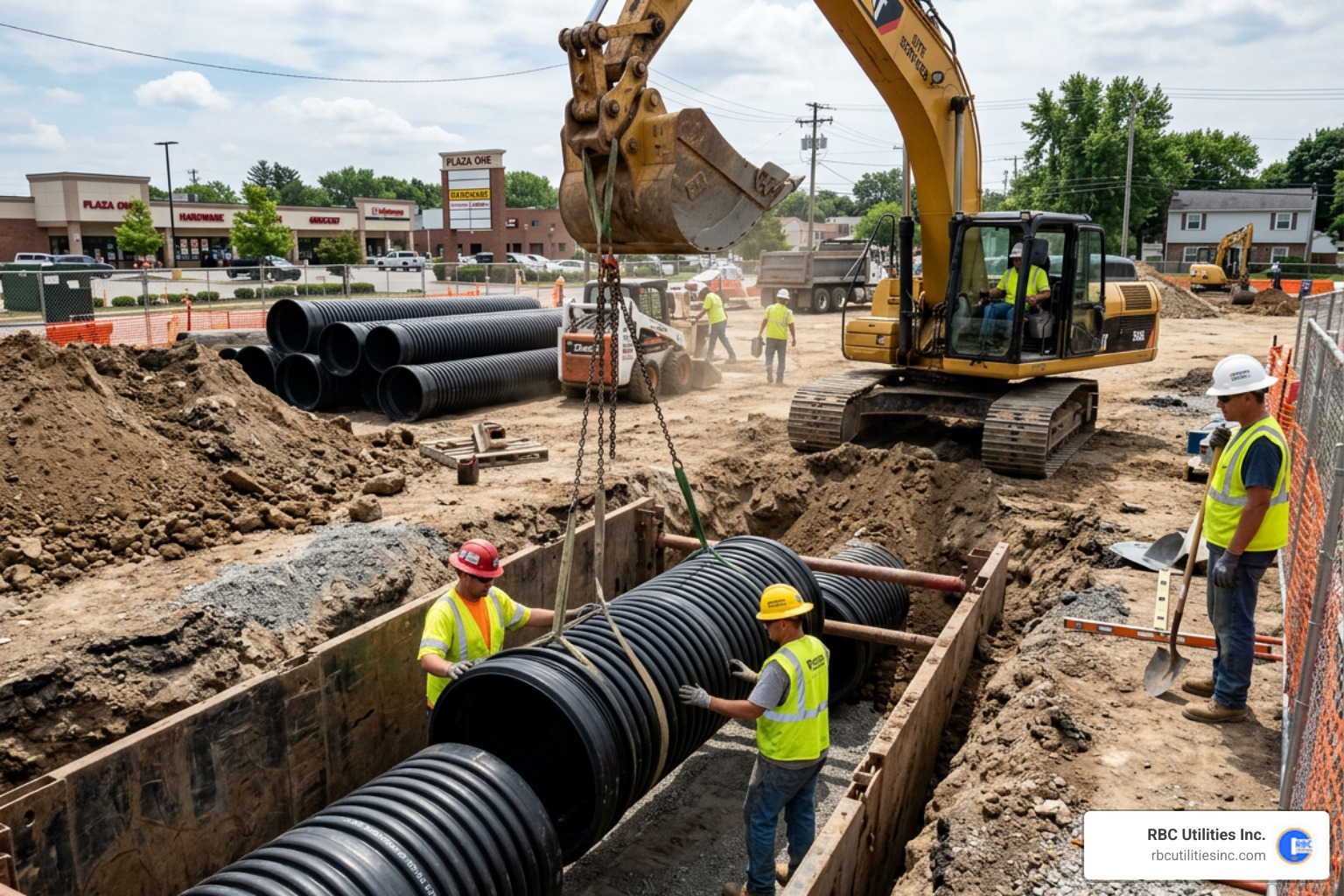
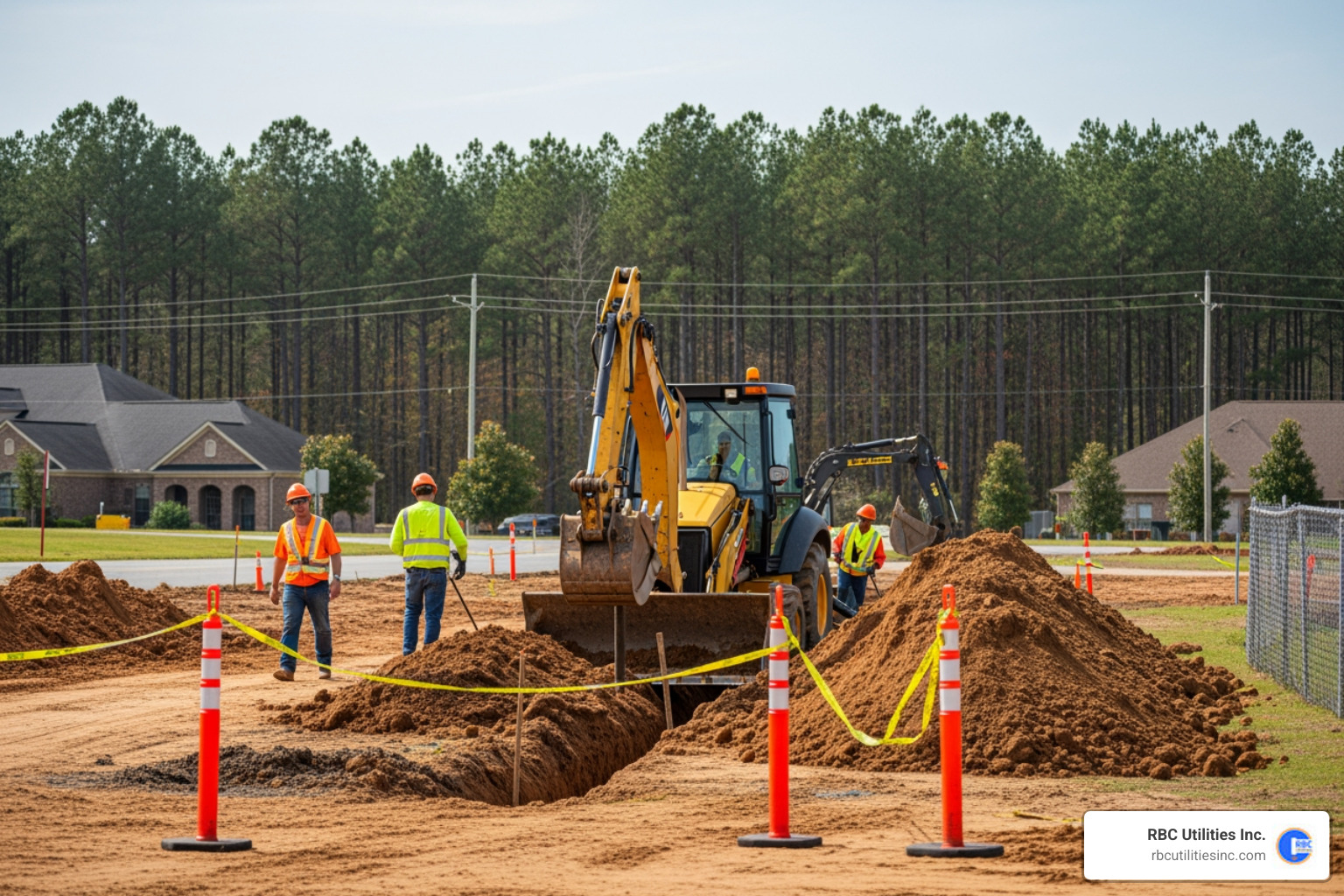
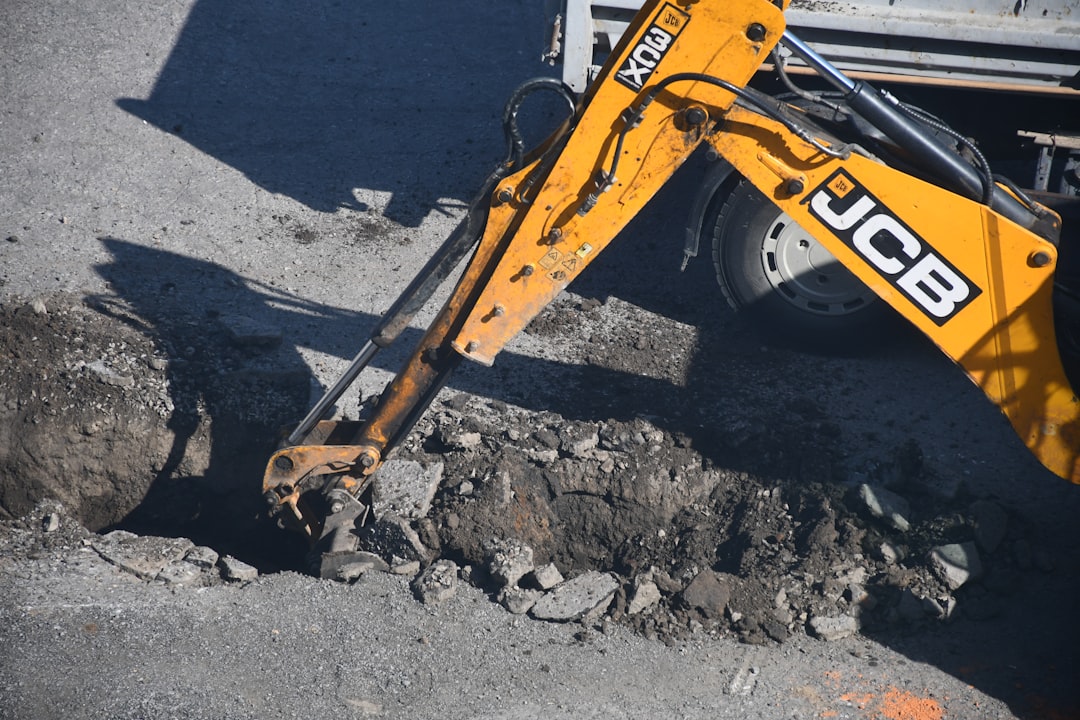
| Traditional Trenching | New construction; shallow lines | Lower upfront material cost | High surface disruption; requires yard restoration |
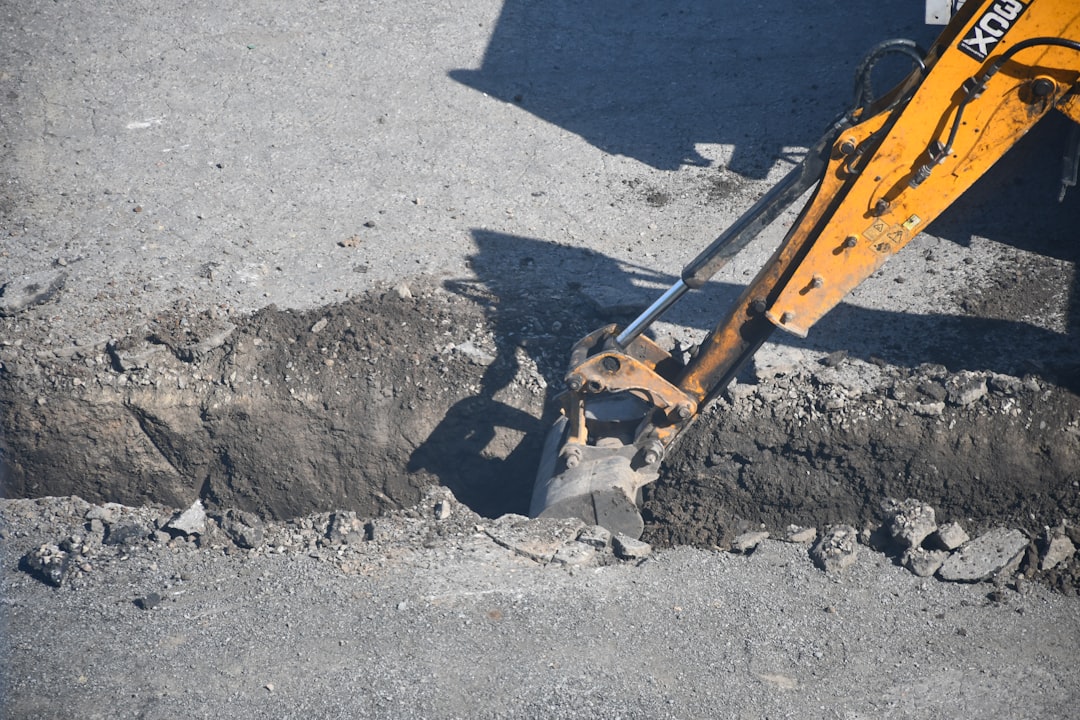
| Pipe Bursting | Replacing existing lines | Minimal digging; pulls in a new seamless pipe | Not suitable for "bellied" or collapsed lines |
| CIPP Lining | Rehabilitating aging pipes | No digging; creates a "pipe within a pipe" | Cannot be used if the original pipe has lost its shape |
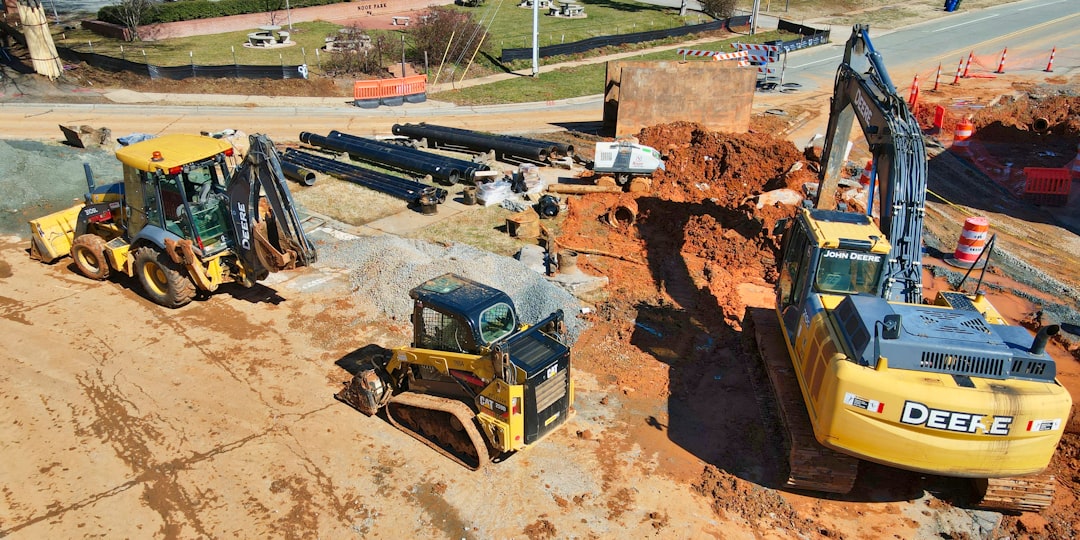
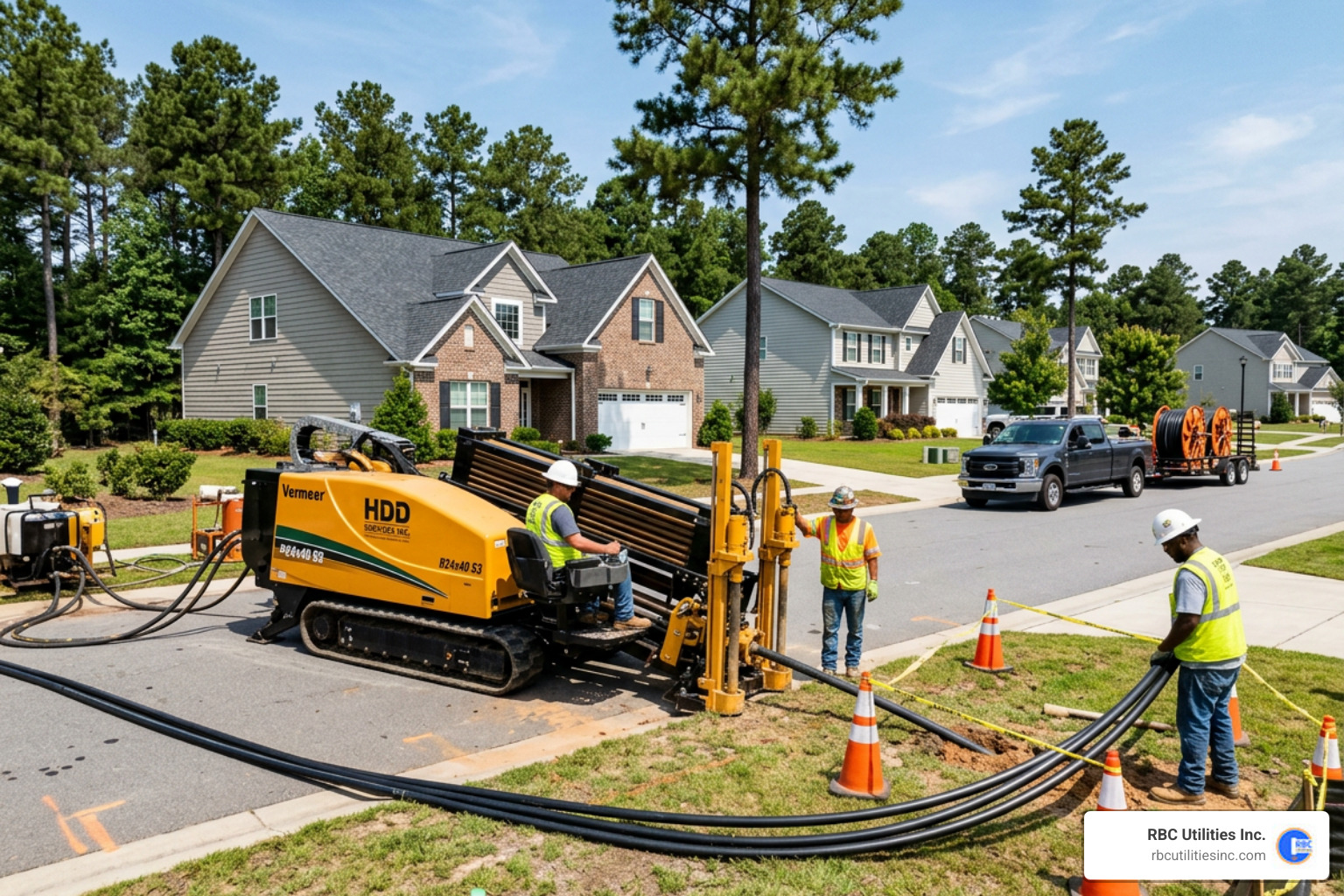
| Directional Boring | Long distances; crossing obstacles | Precise alignment; avoids roads/driveways | Requires specialized, heavy equipment |
| Jack and Bore | Under highways or railroads | Extreme precision; handles large diameters | Higher cost; requires deep launch pits |
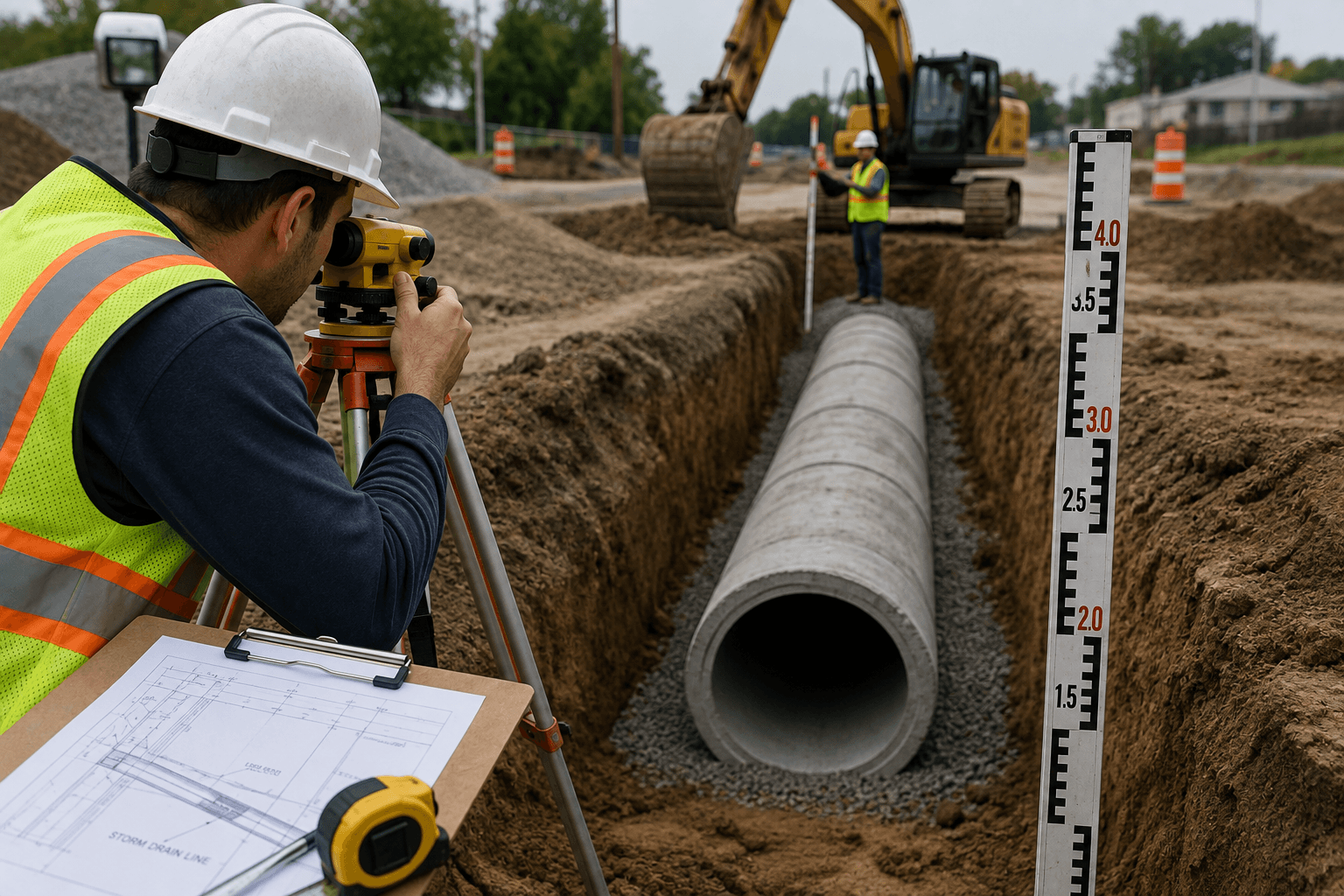
For gravity-fed systems, precision is everything. We focus on "on-line and on-grade" installation, ensuring the pipe has the exact percentage of fall (typically 1/4 inch per foot) required to move wastewater effectively. Without this precision, "bellied" pipes form, creating stagnant pools that invite clogs and root growth.
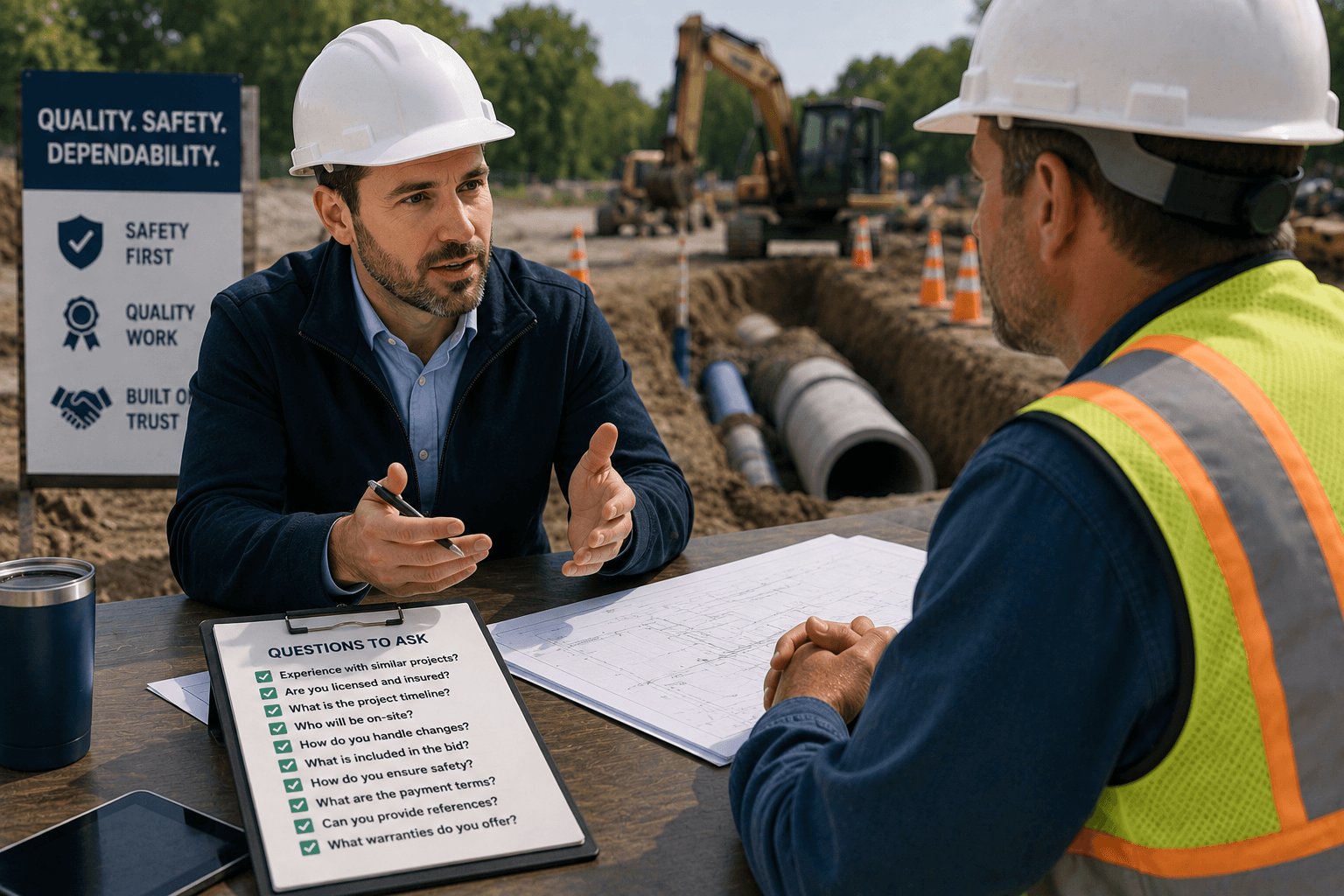
Finding a contractor in the Southeast requires looking past a fancy website. You need a team that understands the local regulatory landscape. In cities like Charlotte or Raleigh, sewer work is highly regulated.
When evaluating sewer line installation contractors, check for:
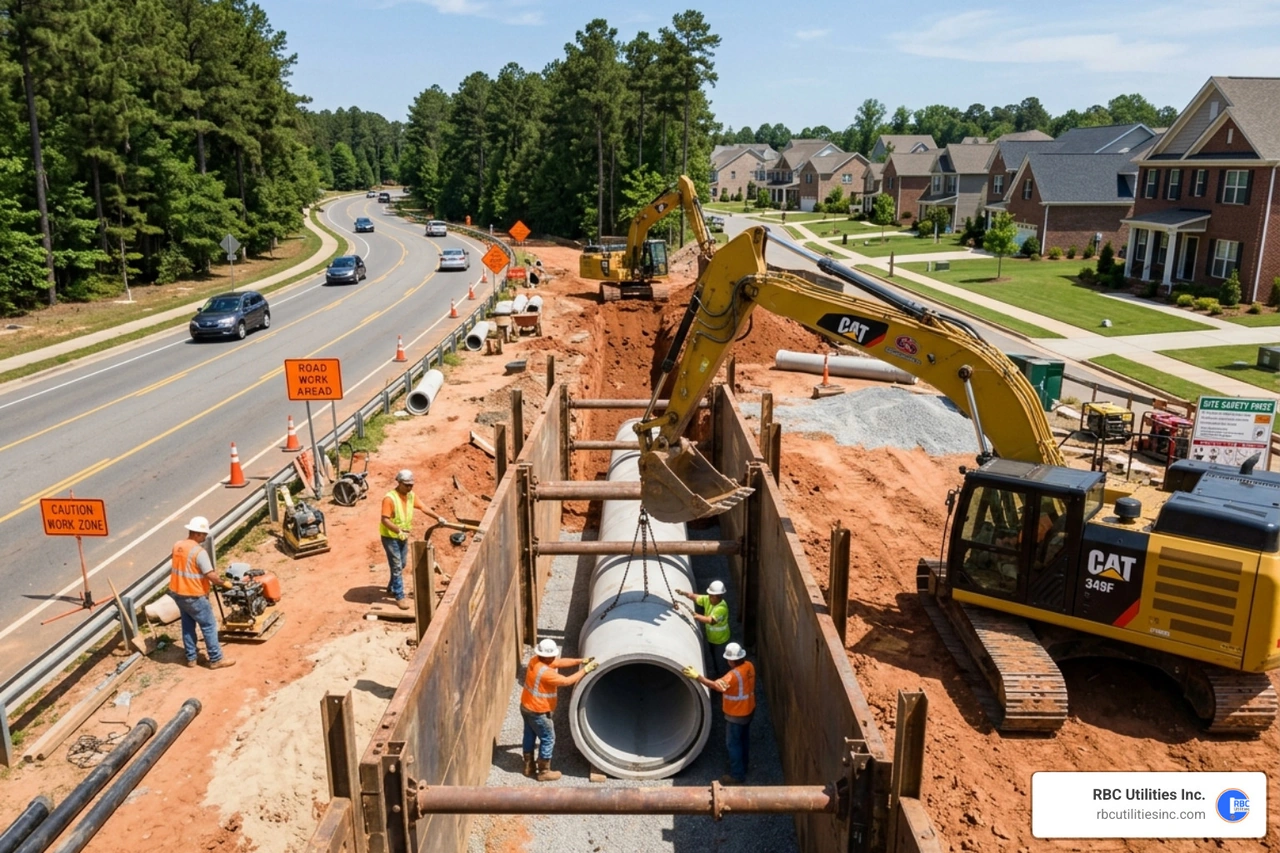
It might be tempting to view a sewer line as "just a pipe in the ground," but it is a complex engineering project. Professional sewer line installation contractors provide several critical services that a DIY attempt or an unlicensed handyman cannot:

Cost is often the biggest concern for property owners. In the Carolinas, sewer line installation generally ranges from $50 to $250 per linear foot. For a standard 50-foot line, you might expect a total cost between $3,000 and $12,500, though complex commercial projects can exceed this.
Several factors influence the final quote:
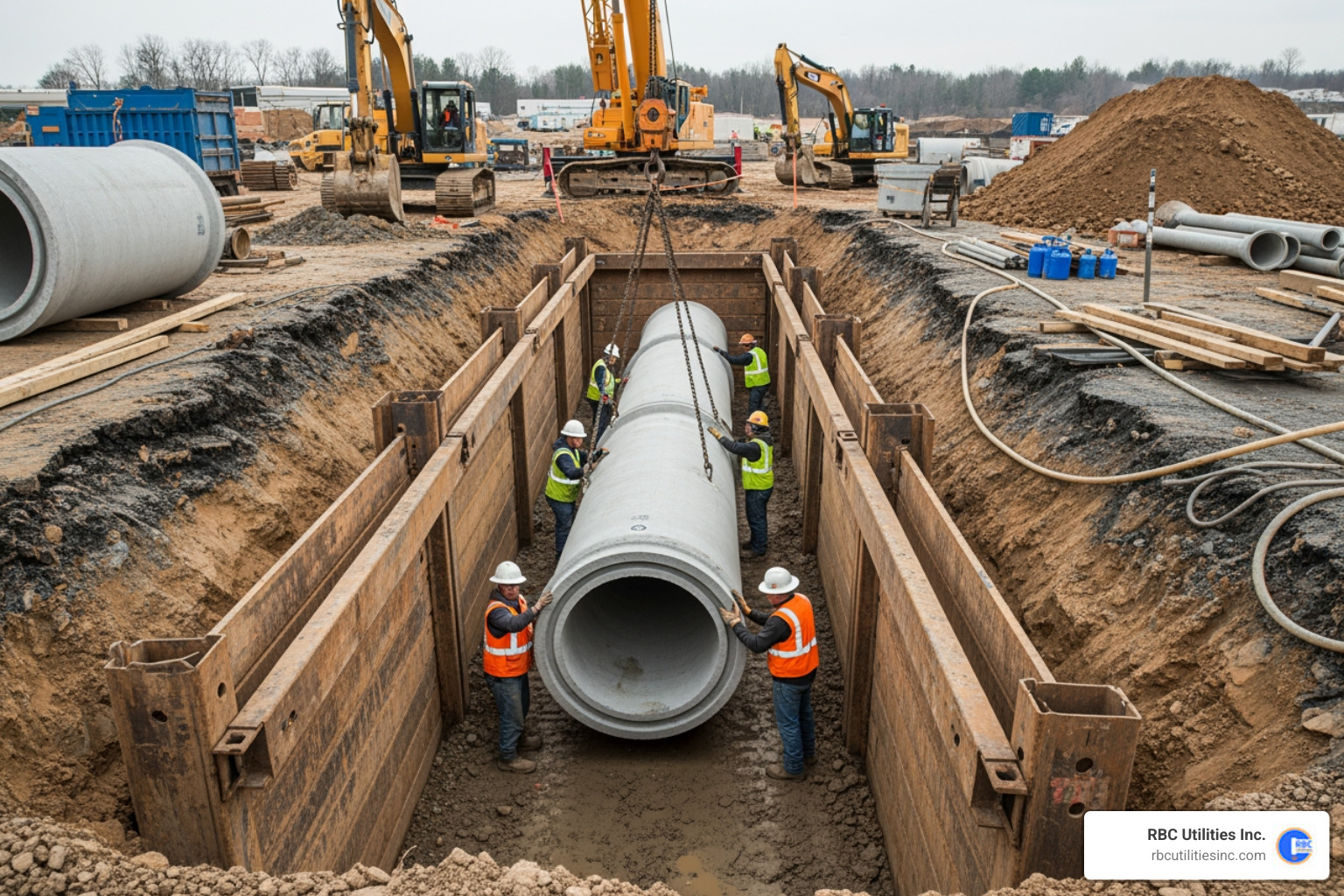
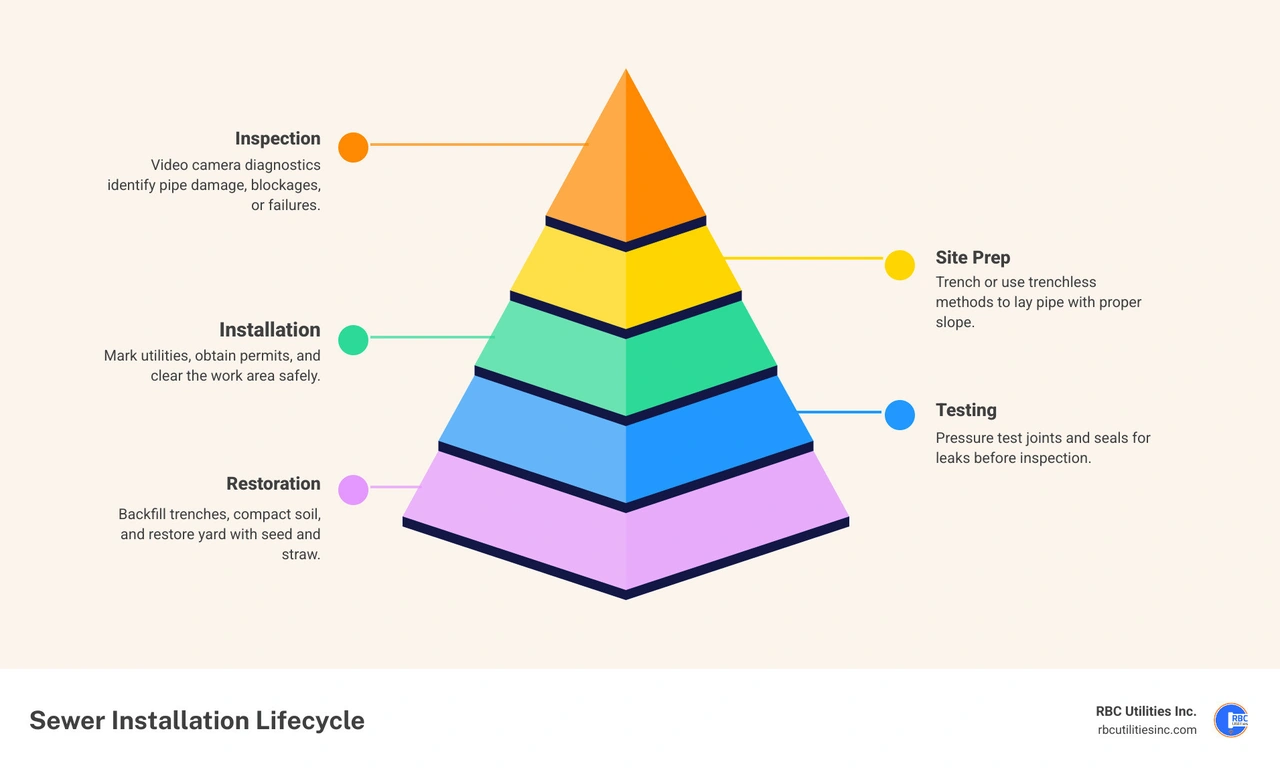
When you hire sewer line installation contractors, the process typically follows a structured path to ensure longevity and code compliance. Most residential projects are completed in 1 to 5 days.
Most single-family residential projects take between 1 to 3 workdays. However, if the line is exceptionally deep, requires boring under a road, or if we encounter severe weather, it can take up to 5 days. Commercial or municipal projects vary based on the scale of the infrastructure.
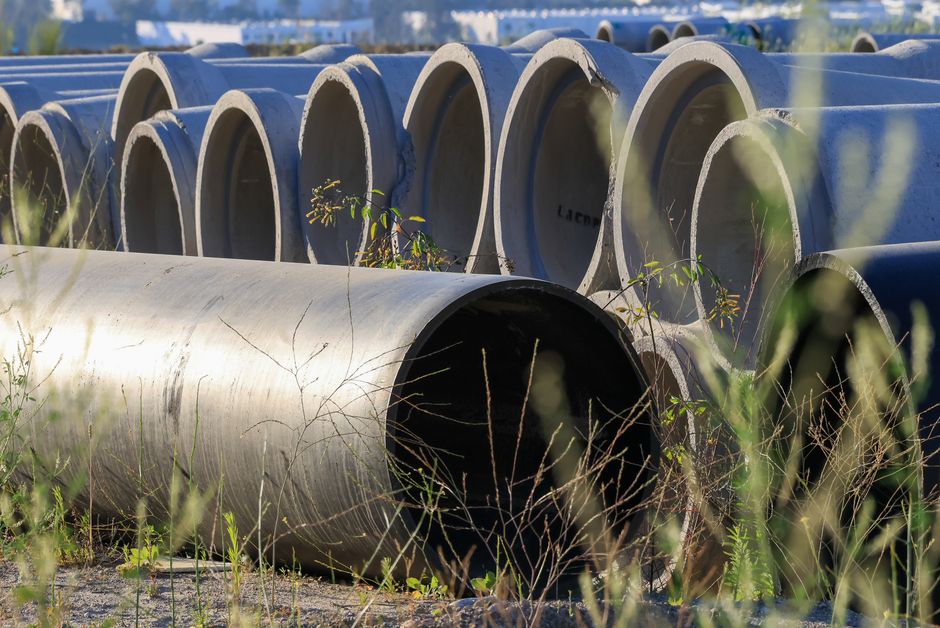
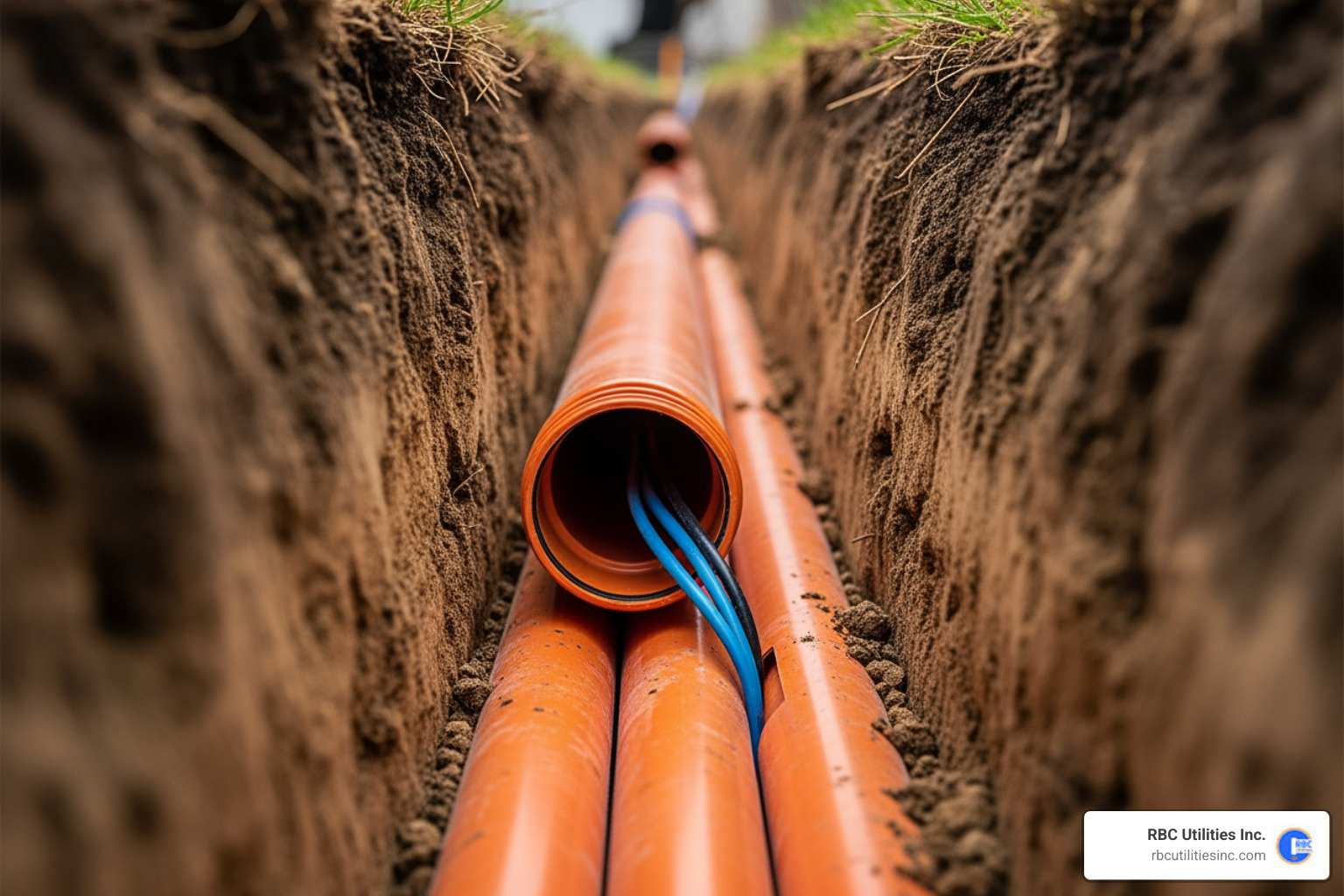
For most modern applications, PVC Schedule 40 or HDPE are the gold standards. They are resistant to corrosion, flexible enough to handle soil shifts, and have a lifespan of 80 to 100 years. In specific high-pressure or heavy-load environments, cast iron or ductile iron may be used, which can last over a century if properly maintained.
Yes. In both North and South Carolina, sewer line work is a regulated activity. You must obtain a sanitary lateral permit. Reputable sewer line installation contractors will handle this entire process for you, including scheduling the final inspection with the utility department.
A reliable sewer system is the unsung hero of any property. Whether you are a developer breaking ground on a new subdivision in Charlotte or a business owner in Columbia facing a system failure, the quality of your underground utilities determines the long-term value and safety of your investment.
At RBC Utilities Inc., we take pride in being the sewer line installation contractors the Carolinas trust. Backed by the national strength of Saga Infrastructure, we bring a "safety-first" mentality to every trench and bore pit. Don't leave your infrastructure to chance—ensure your project is built to last for the next century.
Part of Saga Infrastructure, protecting what others built and helping it grow.
Address: 4404 Stuart Andrew Blvd., Suite K, Charlotte, NC 28217
Email: info@rbcutilities.com
Phone: 803-913-9727
Service Area: North Carolina | South Carolina