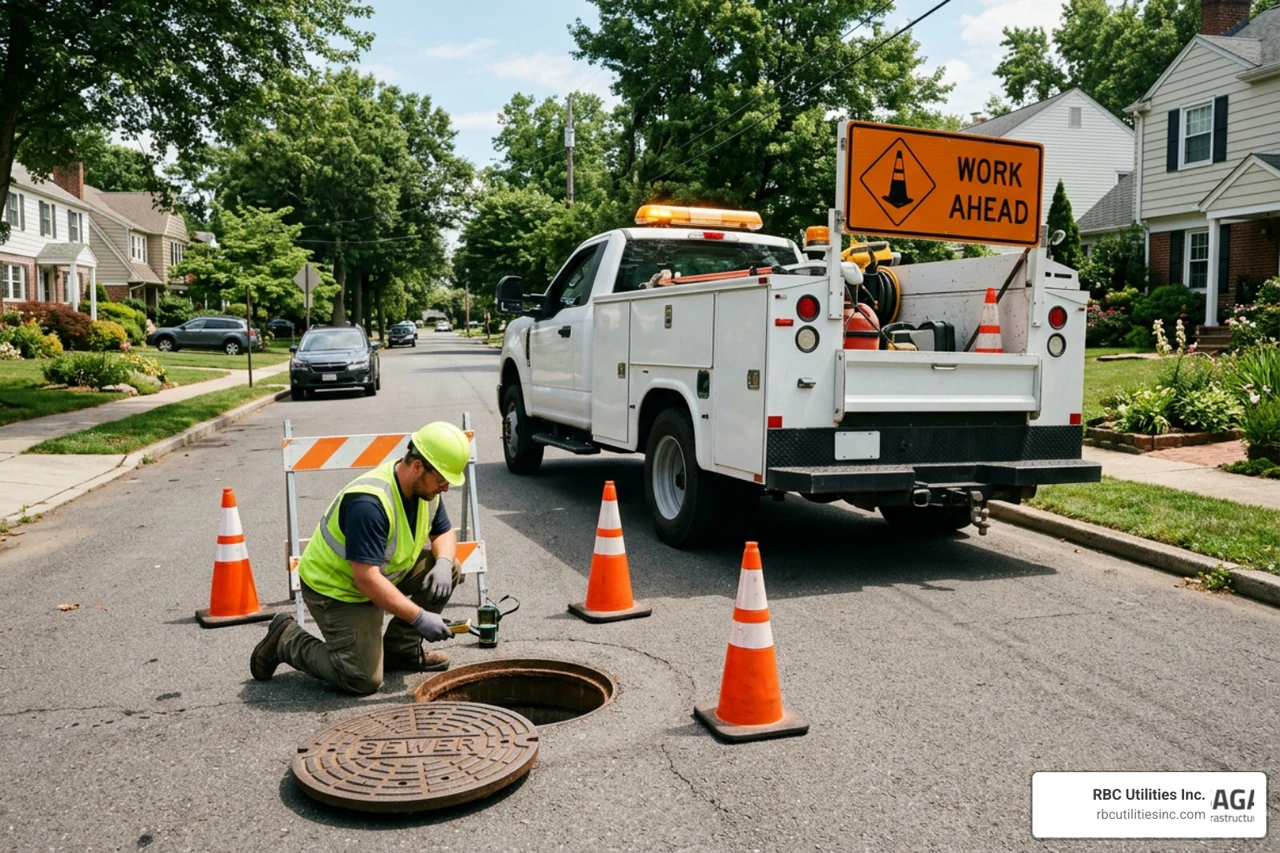
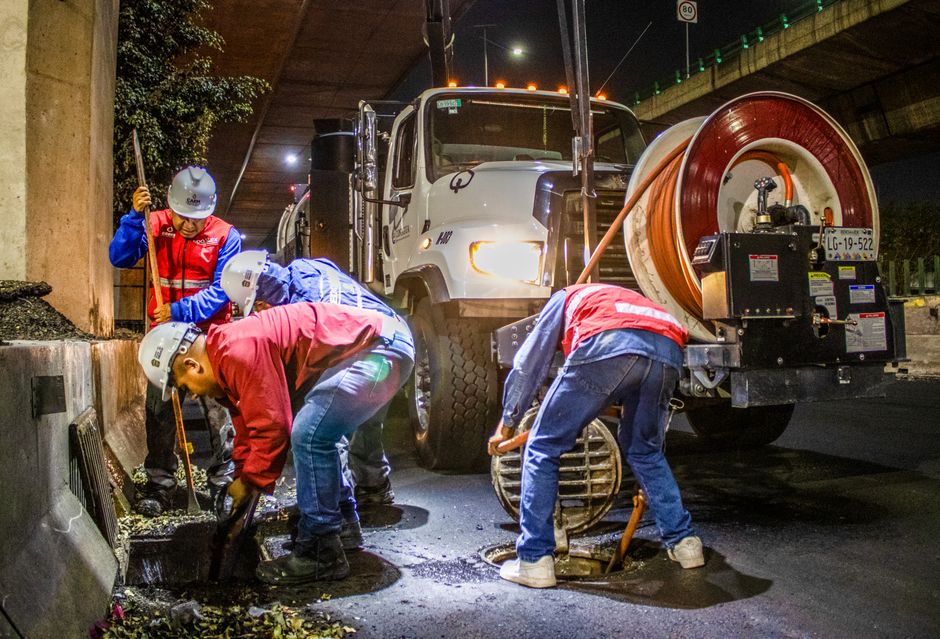
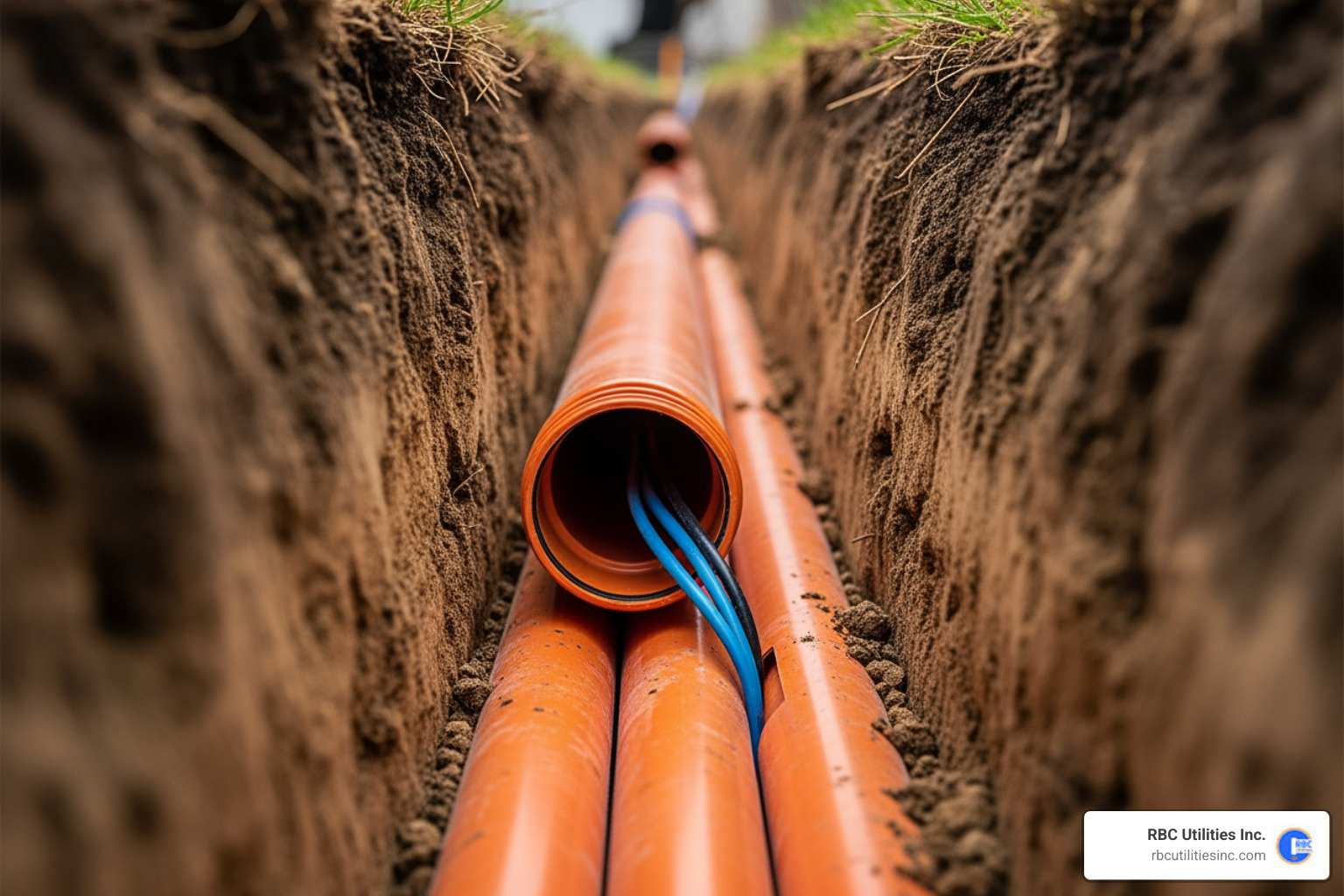
Plumbing and sewer service is the backbone of any functional building — residential, commercial, or municipal. When it works, nobody thinks about it. When it fails, everything stops.
Here is a quick overview of what plumbing and sewer service covers:
| Category | What It Includes |
|---|---|
| Residential | Drain cleaning, leak detection, water heaters, sewer line repair |
| Commercial | Grease traps, backflow prevention, high-volume drain systems |
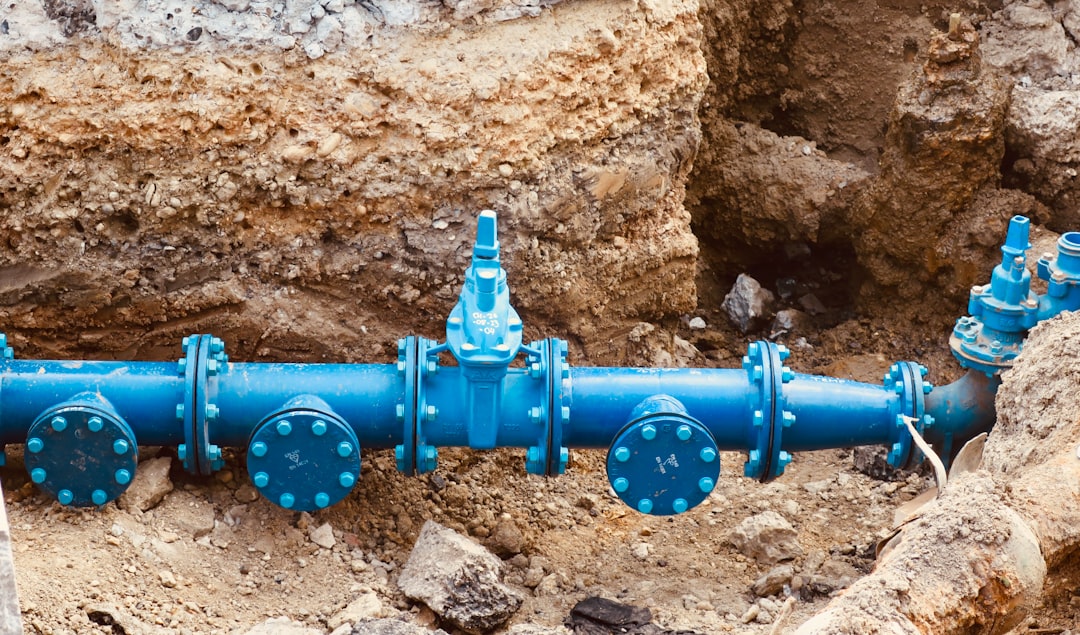
| Municipal/Utility | Force mains, sanitary sewer installation, water line construction |
| Emergency | Burst pipes, sewer backups, rapid dispatch response |
| Inspection & Diagnostics | Camera inspection, hydro jetting, smoke testing |
The stakes are high. About 20% of U.S. homes experience a plumbing leak every year, wasting an average of 10,000 gallons of water per household. Sewer line repairs can run anywhere from $2,500 to $7,500 — and that number climbs fast when problems go undetected.
For developers and general contractors in the Carolinas, getting underground utility systems right from the start is not optional. Delays caused by failed sewer connections or non-compliant installations can derail entire project timelines and budgets.
The good news? Most of these problems are preventable with the right contractor, the right methods, and the right knowledge.
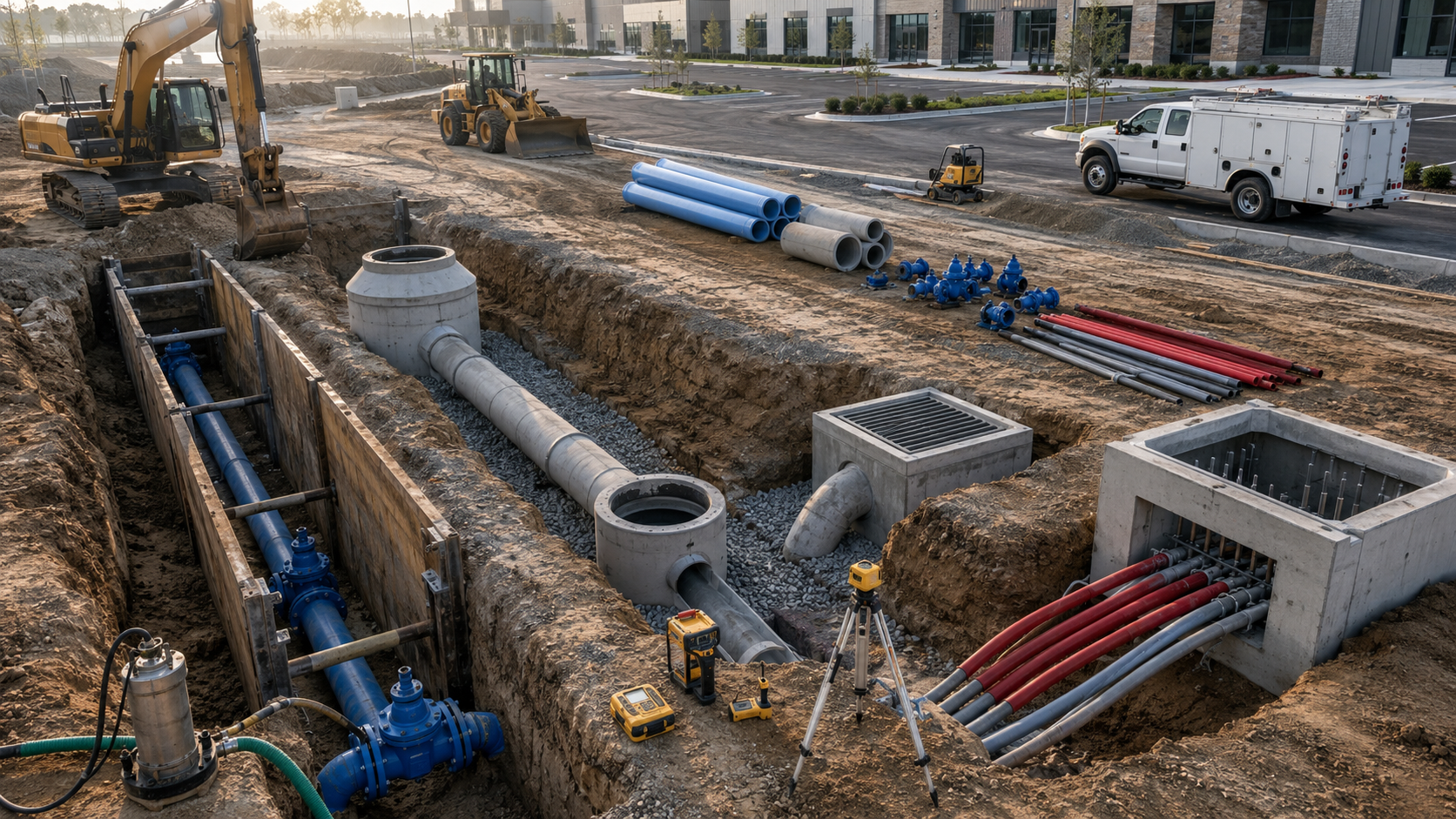
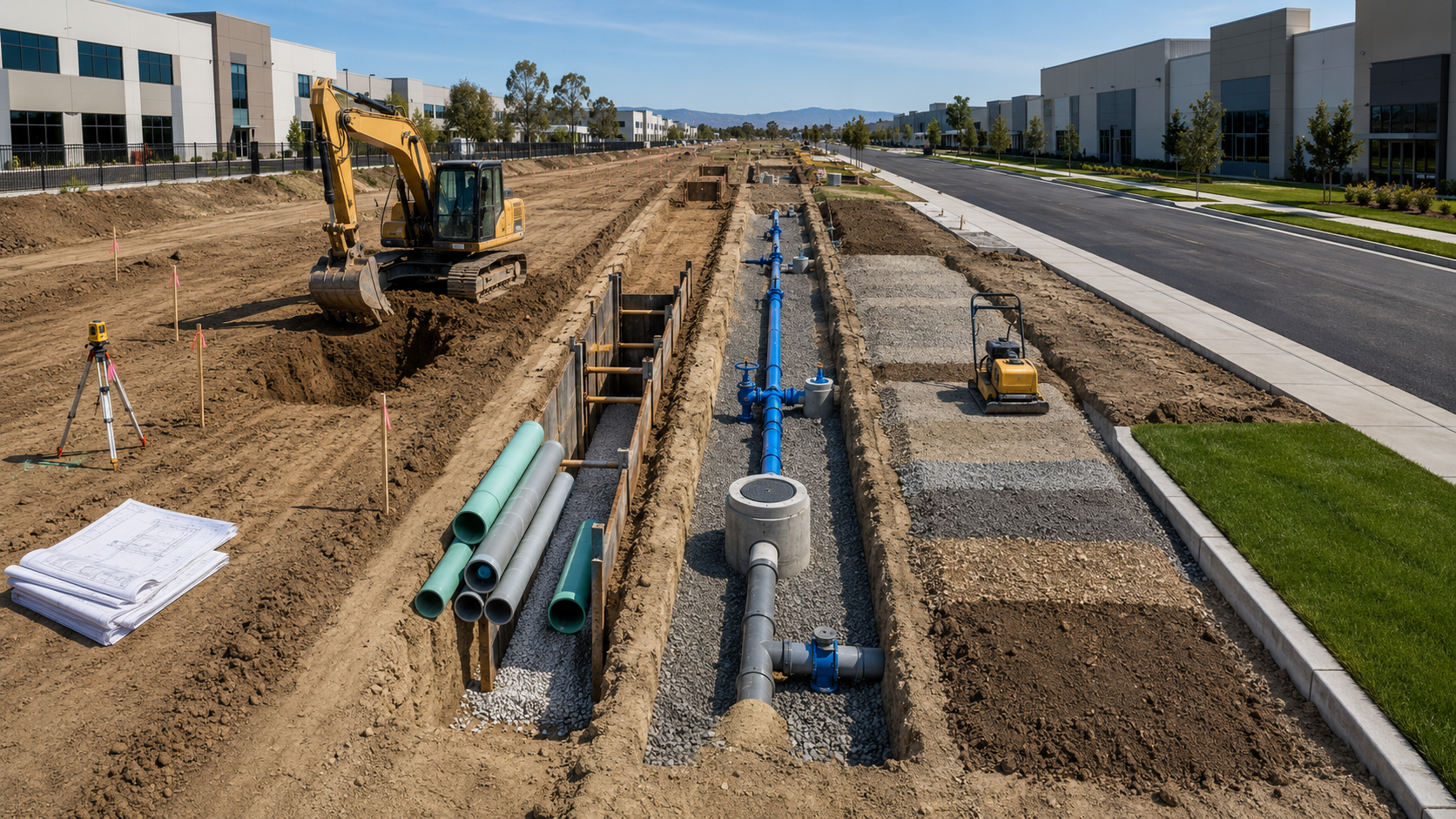
I'm Don Larsen, writing on behalf of RBC Utilities Inc., a leading underground utility construction contractor specializing in water lines, sanitary sewer systems, storm drainage, and conduit installation across the Carolinas since 2008 — the kind of plumbing and sewer service work that keeps communities and construction projects running. In this guide, we'll break down everything you need to know to make smart, informed decisions about sewer and plumbing systems at any project scale.

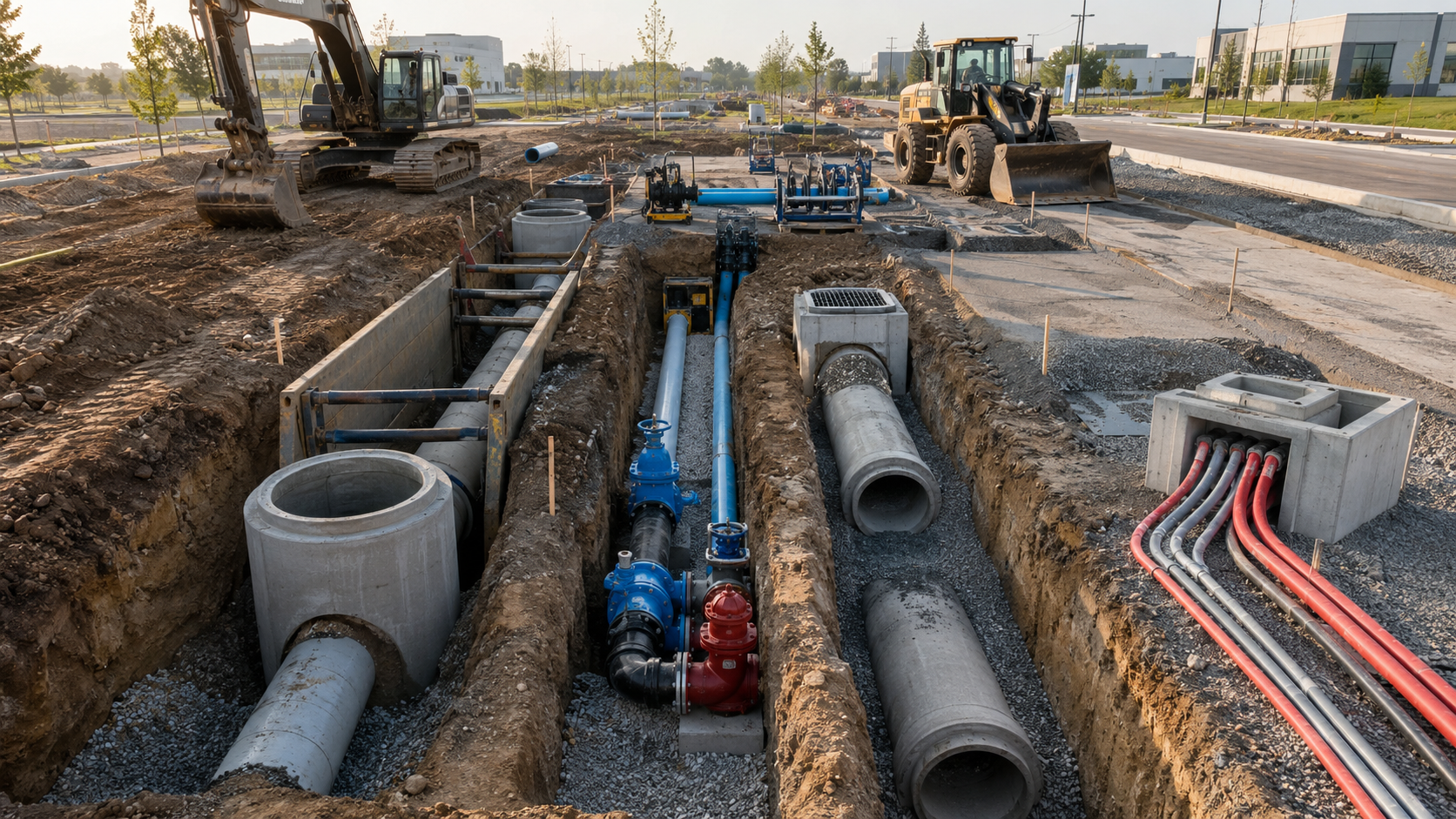
When most people think of plumbing, they picture a technician under a kitchen sink tightening a pipe. While residential repairs are crucial, professional plumbing and sewer service encompasses a vast network of underground infrastructure. It bridges the gap between individual properties and municipal wastewater treatment systems.
Managing this infrastructure requires a deep understanding of hydraulics, soil mechanics, and local environmental codes. A failure in a lateral line can flood a basement, while a failure in a municipal main can disrupt an entire neighborhood. Let's look at how these systems differ based on their application.
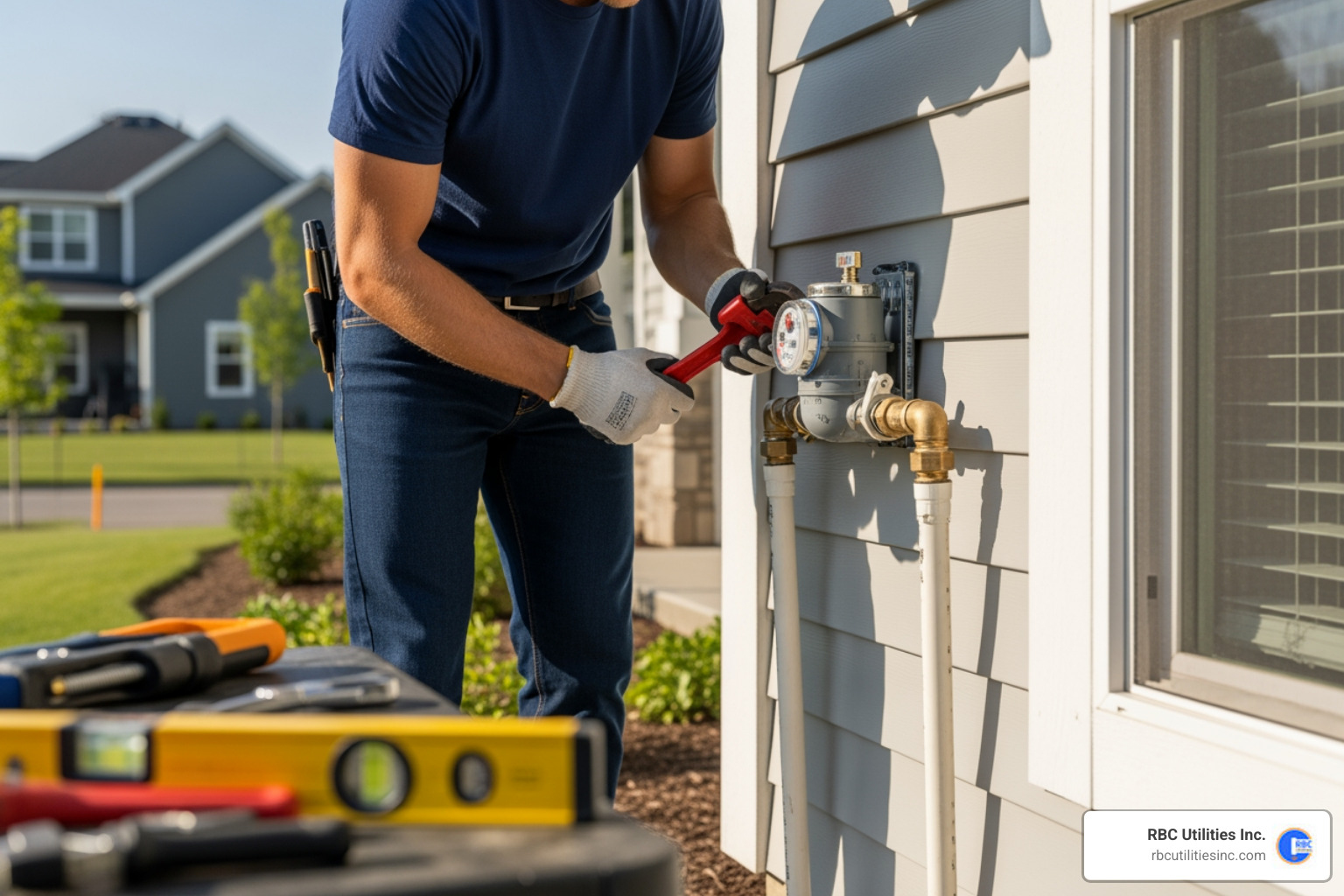
For homeowners and residential property developers, maintaining reliable drainage is a daily priority. Residential services focus on keeping internal fixtures running smoothly and ensuring the lateral line (the pipe connecting the home to the municipal main) remains clear.
Key residential services include:
When home drainage systems fail, the issue often lies deeper than a simple sink clog. If you are experiencing recurring backups, it is time to look at the main line. You can Learn more about residential and commercial sewer line services to understand how lateral lines function.
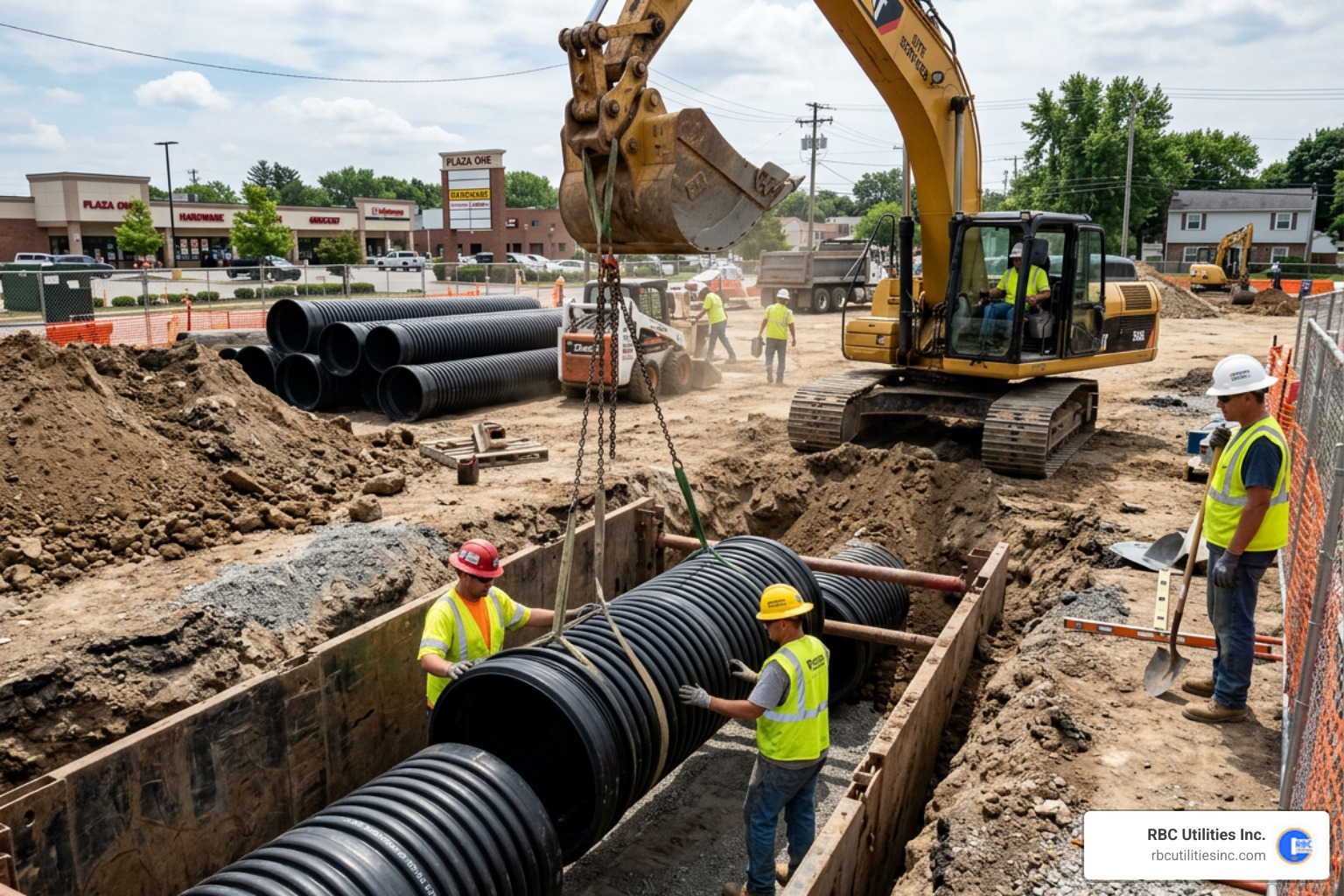
Commercial and municipal plumbing systems operate on a completely different scale. While a residential system experiences intermittent use, commercial systems in shopping centers, office parks, and high-rise buildings face constant, high-volume demand.
Commercial and municipal systems require specialized engineering:
To execute these projects safely and in compliance with strict environmental regulations, developers must partner with specialized contractors. You can Discover professional sewer utility contractors who have the heavy machinery and engineering expertise required for large-scale commercial installations.
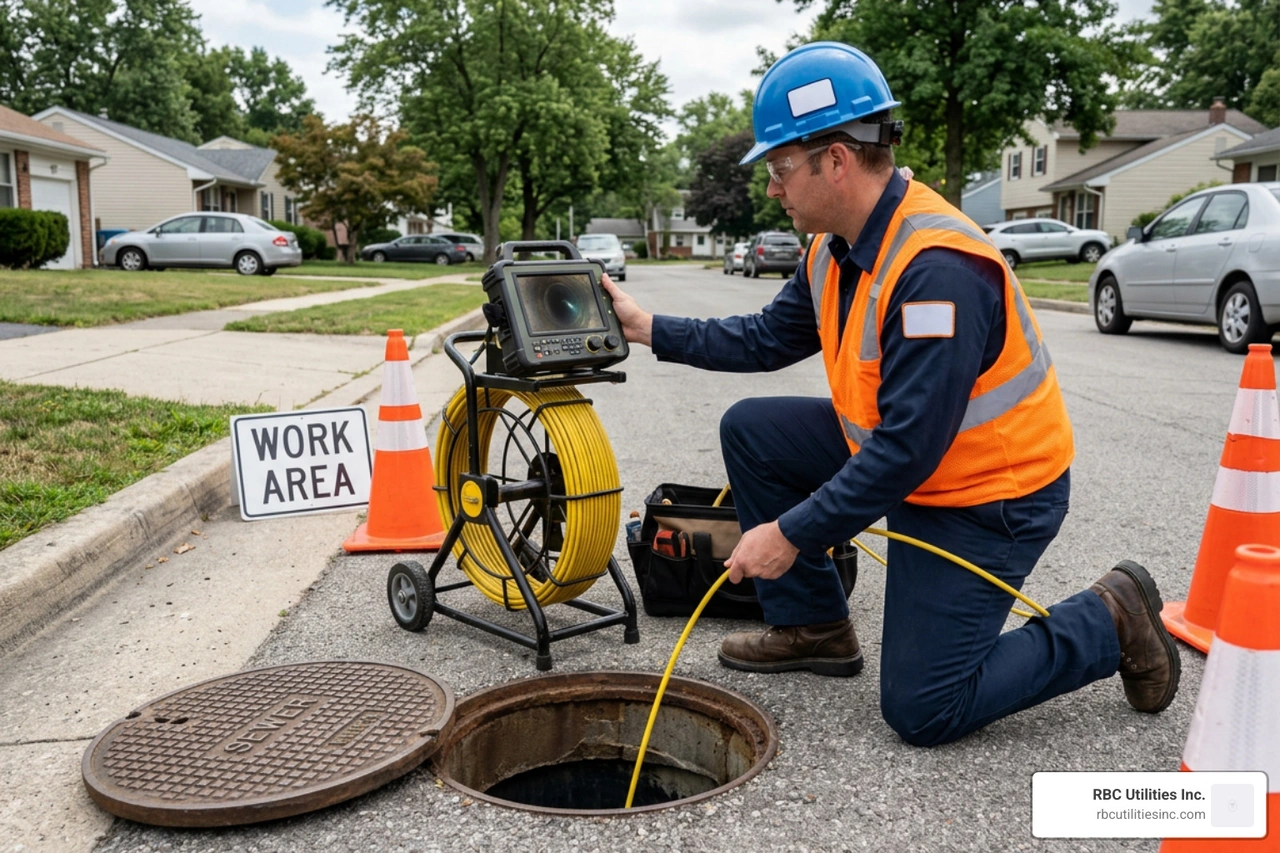
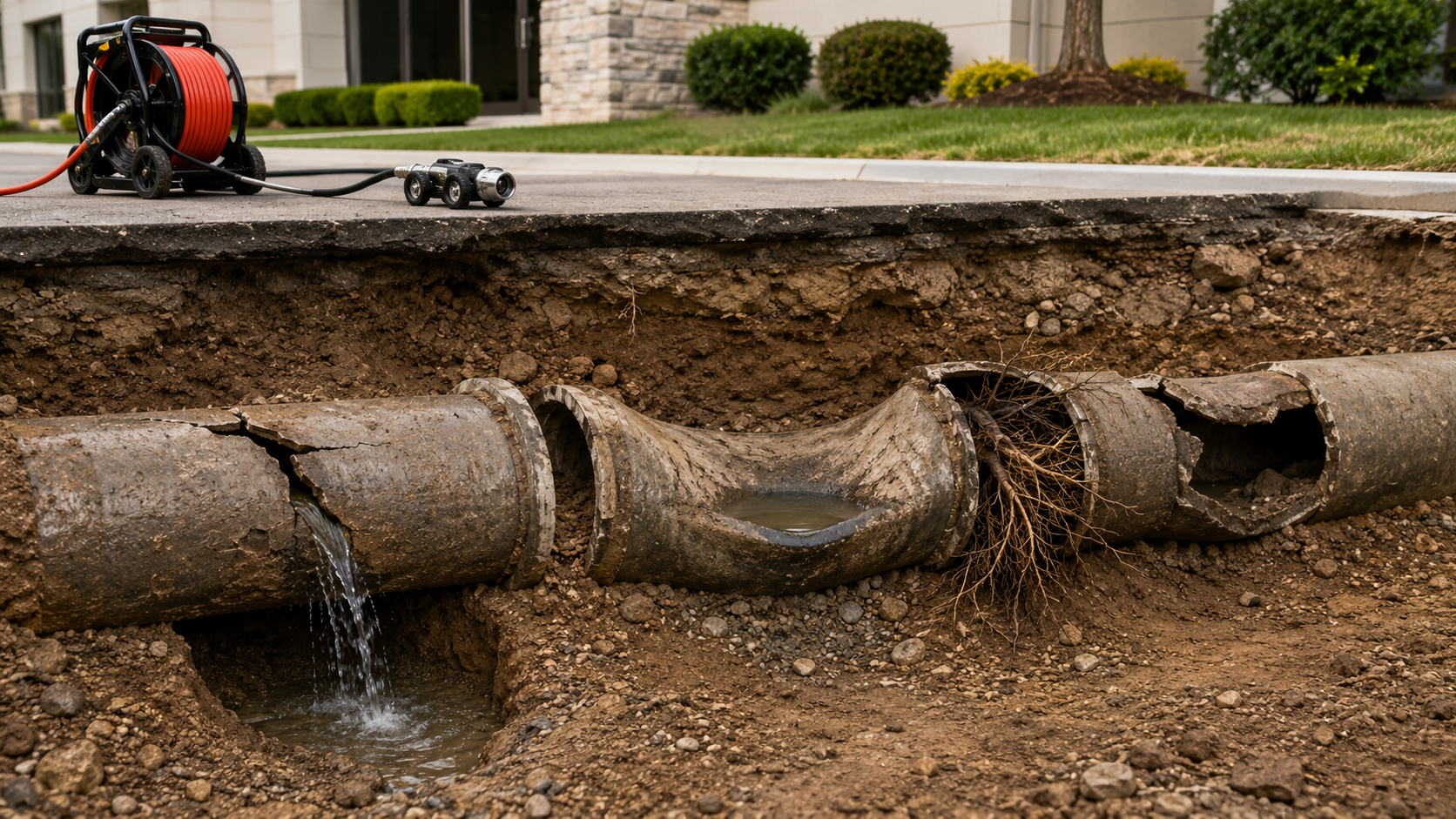
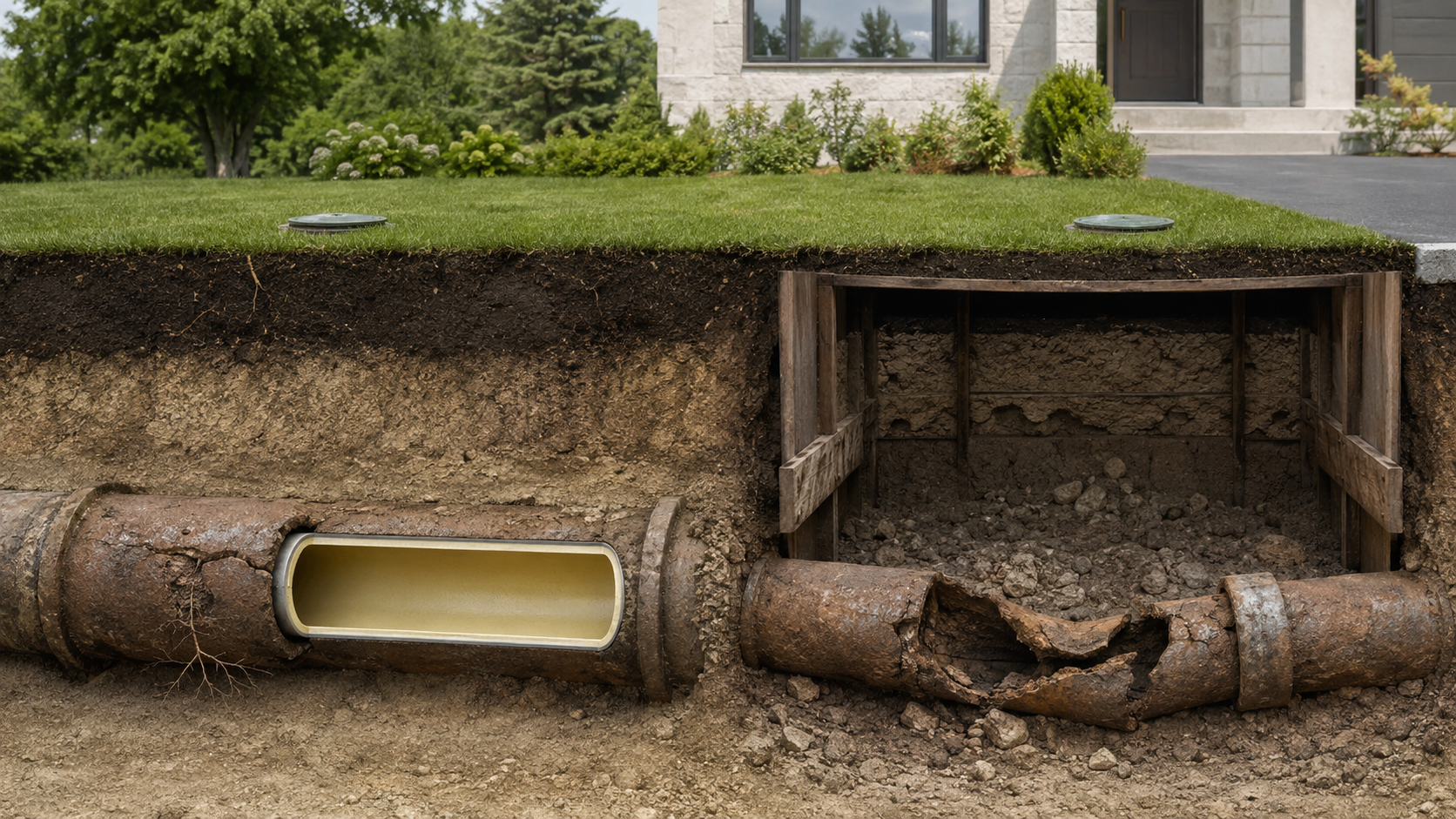
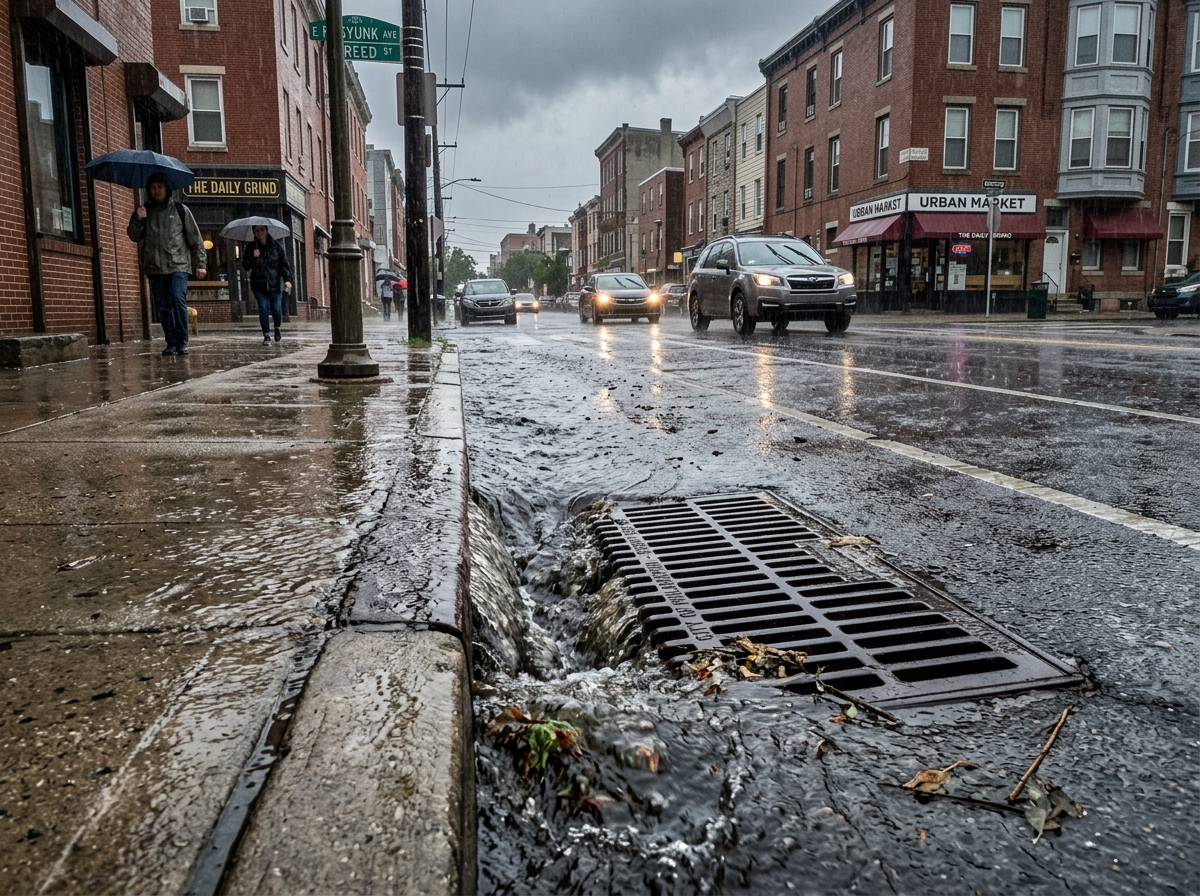
The underground portion of a sewer system is out of sight, which means problems often go unnoticed until they become full-blown emergencies. In many U.S. cities, including older areas of the Carolinas, the average age of sewer pipes exceeds 50 years. This aging infrastructure is highly susceptible to structural failures, blockages, and environmental wear.
The most common threats to sewer lines include:
Gone are the days when plumbers had to dig up an entire yard just to find a clog. Modern plumbing and sewer service relies heavily on high-definition video diagnostics.
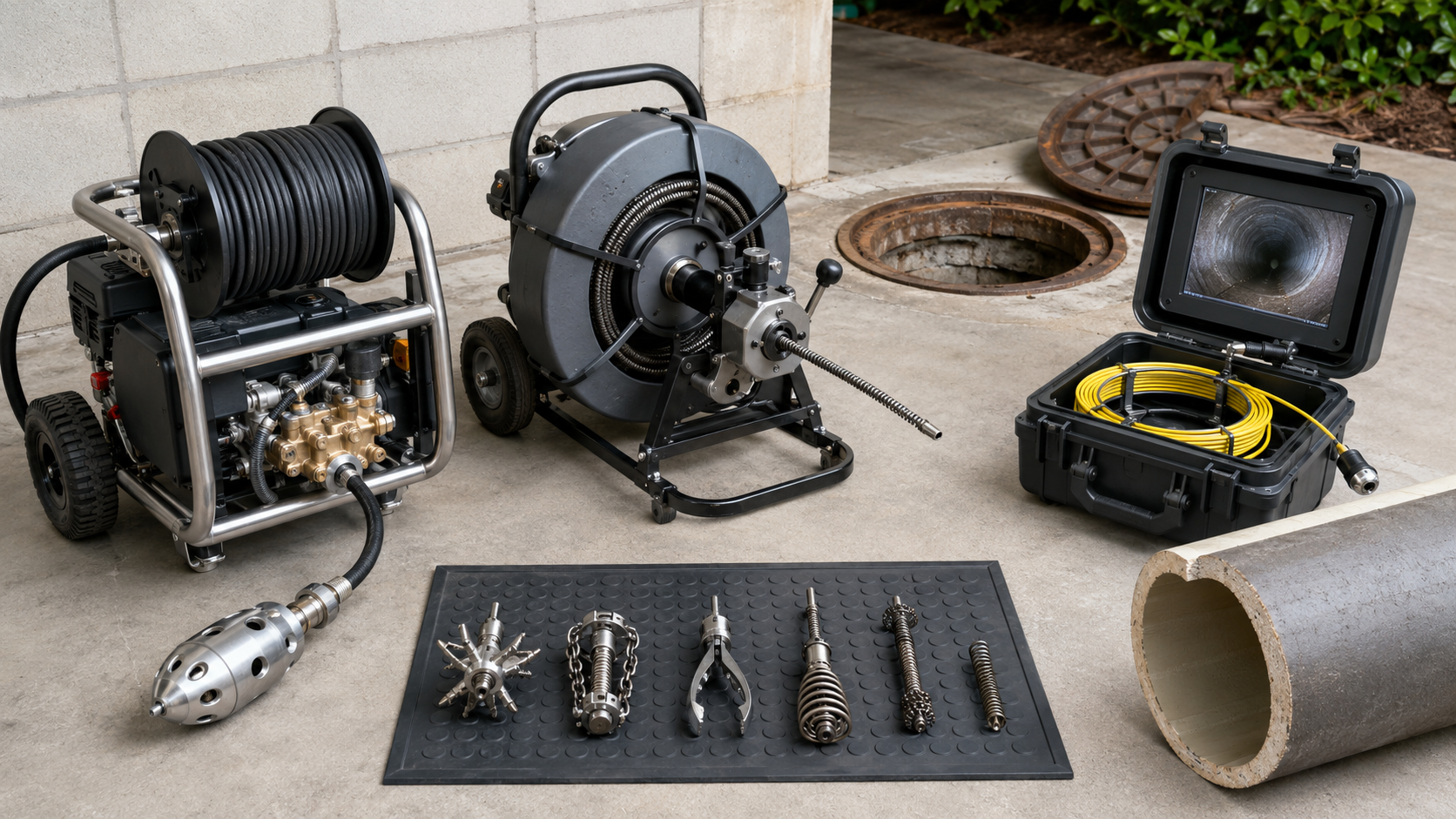
During a sewer camera inspection, a technician feeds a flexible, waterproof fiber-optic camera through a cleanout or drain. As the camera travels through the pipe, it transmits real-time, high-resolution footage to a monitor. This allows the technician to:
Once a diagnostic camera identifies a heavy blockage, the next step is clearing it. For decades, the standard tool was the drain snake (or mechanical auger). While snaking is still useful for punching a temporary hole through a soft clog, it falls short when dealing with stubborn grease, heavy scale, or extensive root systems.
Today, professional contractors use hydro jetting for a comprehensive clean. Hydro jetting uses specialized machines to blast water through the lines at pressures up to 4,000 PSI.
| Feature | Traditional Snaking | Hydro Jetting |
|---|---|---|
| Method | Rotating metal cable/blade | High-pressure water blast |
| Clearing Efficiency | Clears 60% to 70% of debris | Removes up to 100% of grease, scale, and roots |
| Pipe Impact | Can scrape or damage fragile, older pipes | Safe for sound pipes; clears entire diameter |
| Longevity | Short-term fix; clogs often return quickly | Long-term clean; restores pipe flow capacity |
| Environmental Impact | Chemical-free, purely mechanical | Chemical-free, uses only pressurized water |
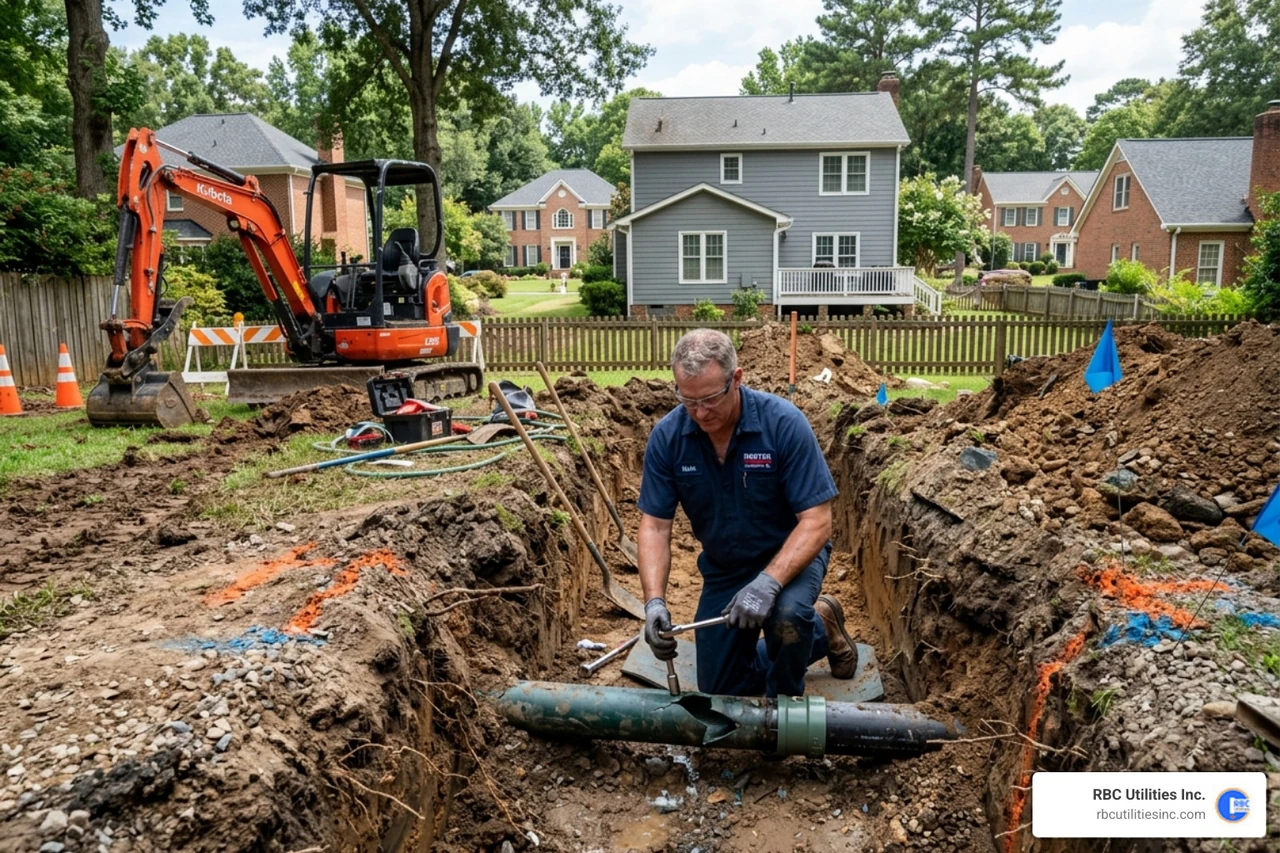
When a sewer line is physically damaged, collapsed, or severely compromised by roots, cleaning is no longer enough. The pipe must be repaired or replaced. Fortunately, modern utility construction offers both minimally invasive trenchless options and highly reliable traditional excavation methods.
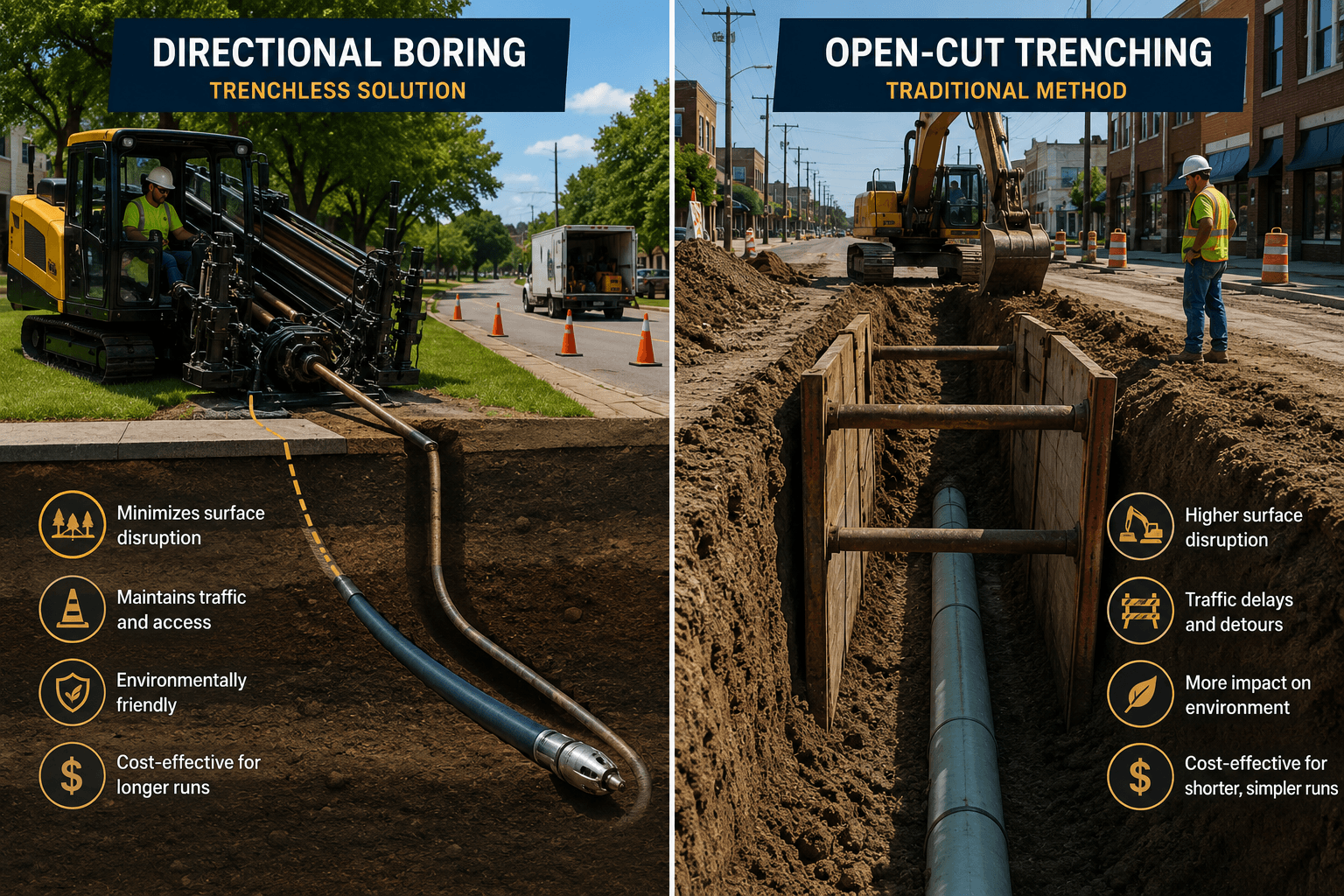
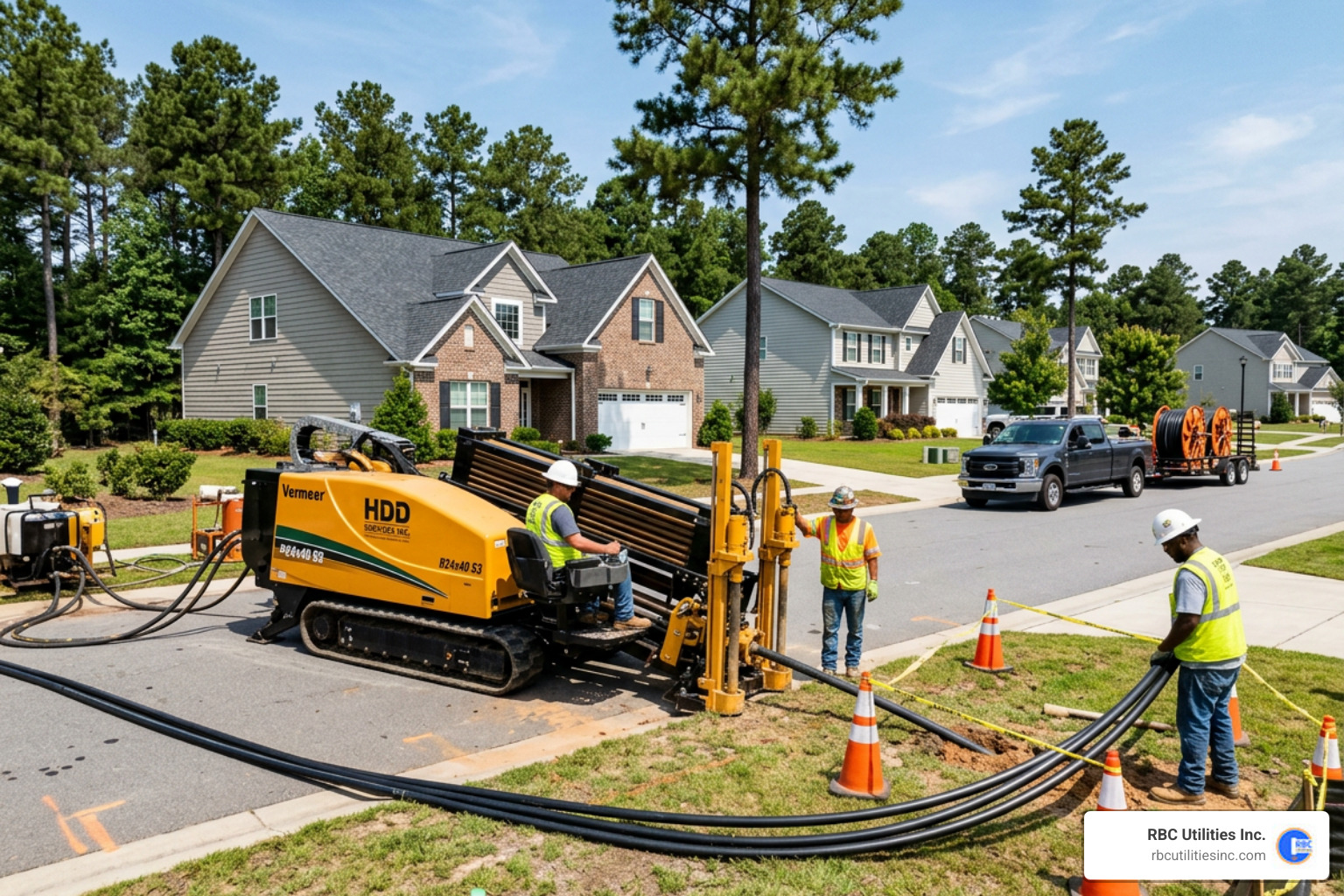
Trenchless technology has revolutionized the utility industry. Traditionally, replacing a sewer lateral meant digging a massive trench through manicured lawns, driveways, sidewalks, and sometimes even roads. Trenchless methods eliminate this destruction, often saving property owners up to 50% in overall excavation and landscape restoration costs.
The two main trenchless methods are:
These methods are ideal for residential neighborhoods and busy commercial zones where surface disruption must be kept to an absolute minimum. To see if this approach fits your project, you can Read about sewer pipe replacement services.
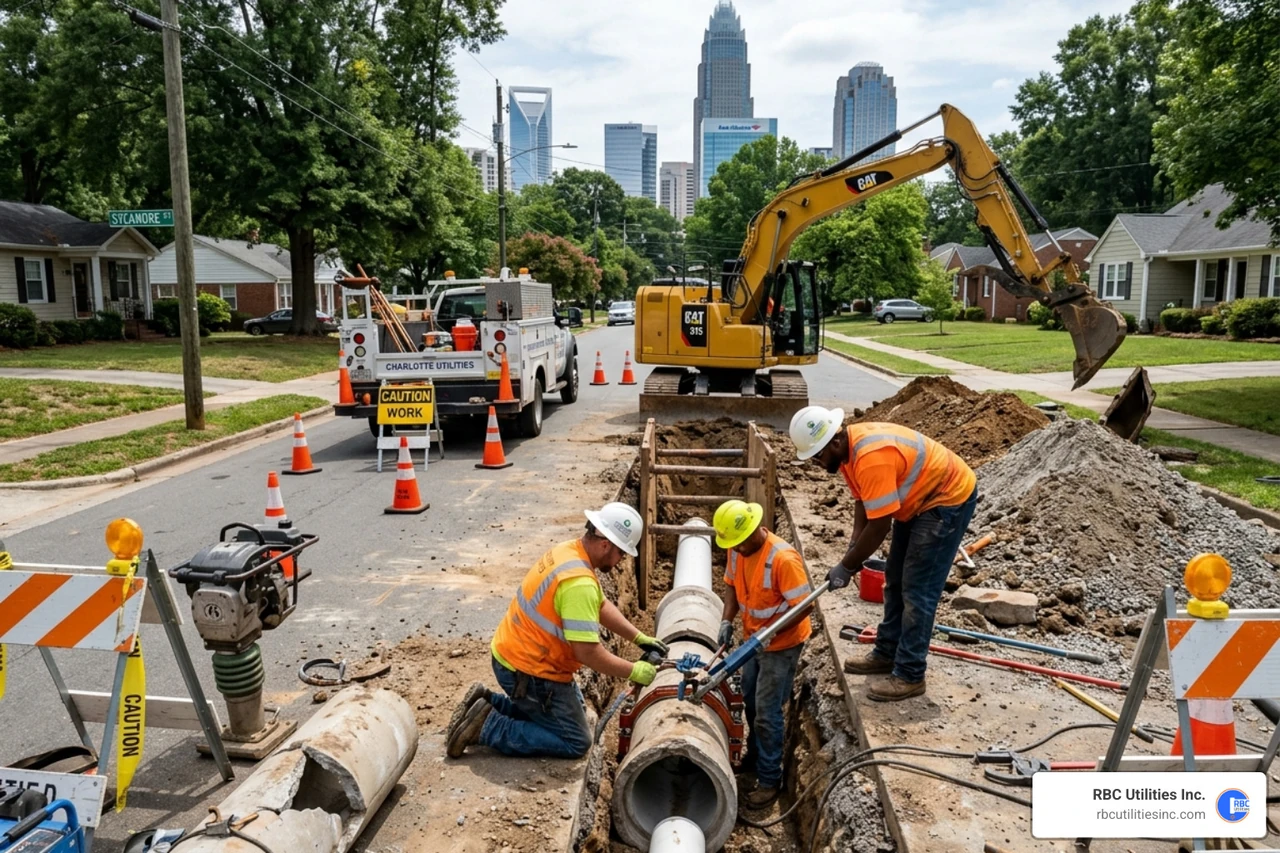
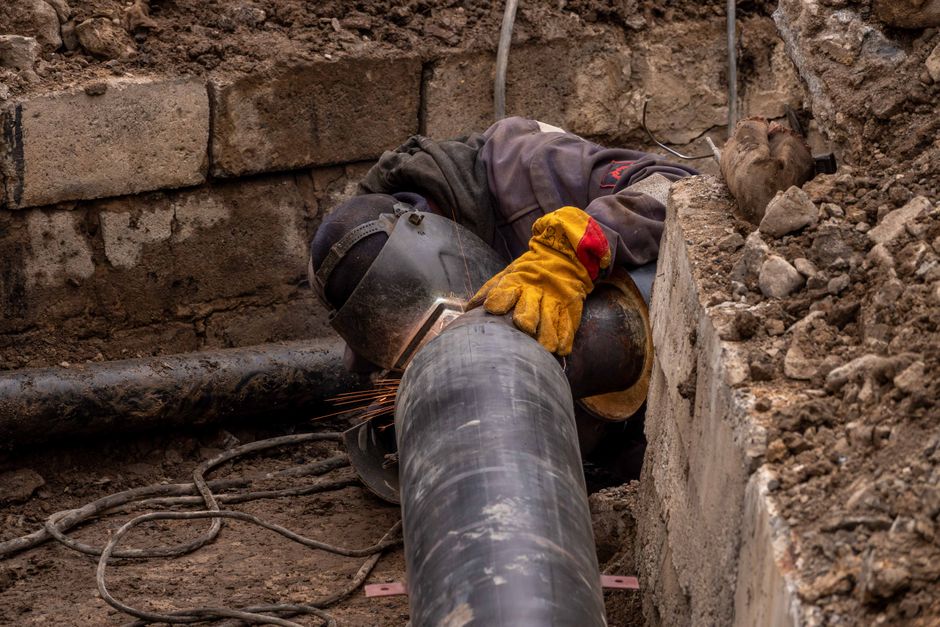
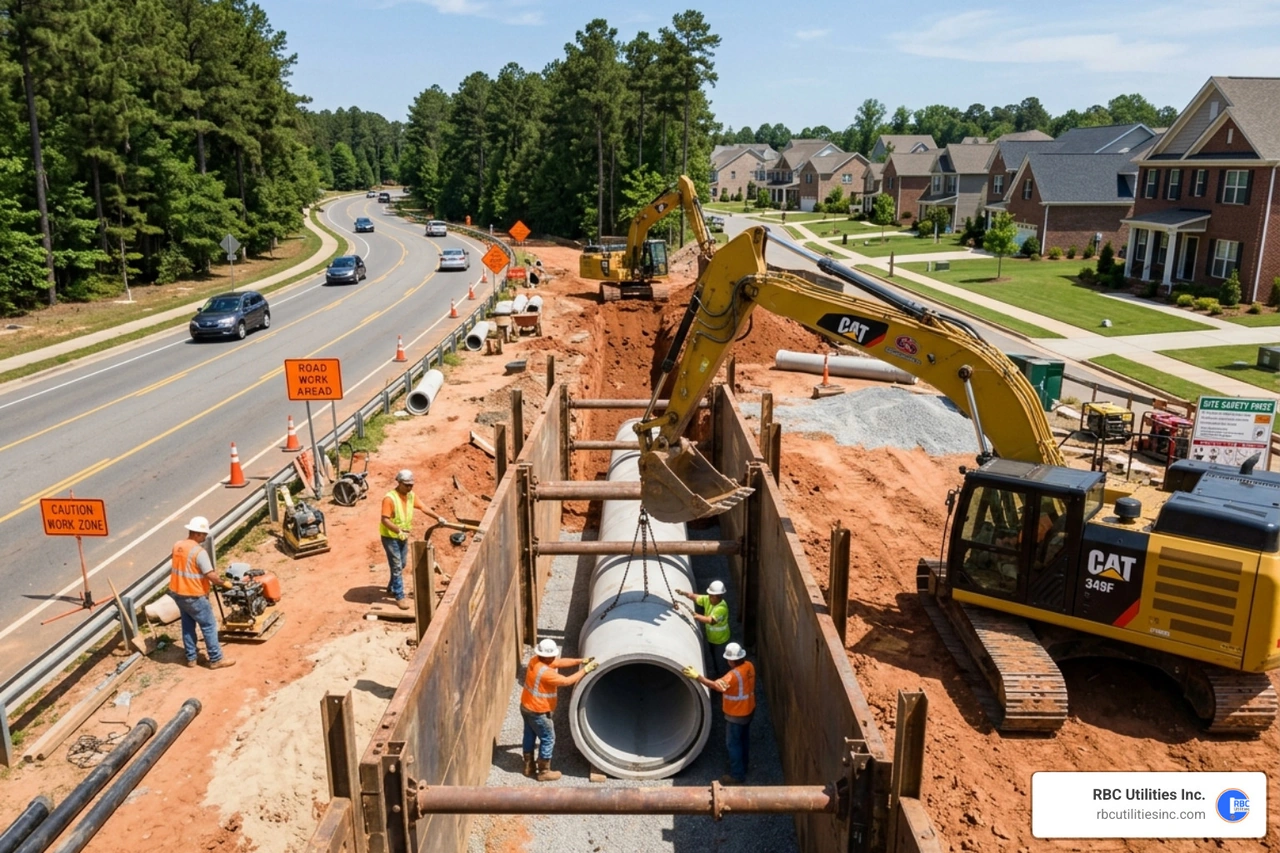
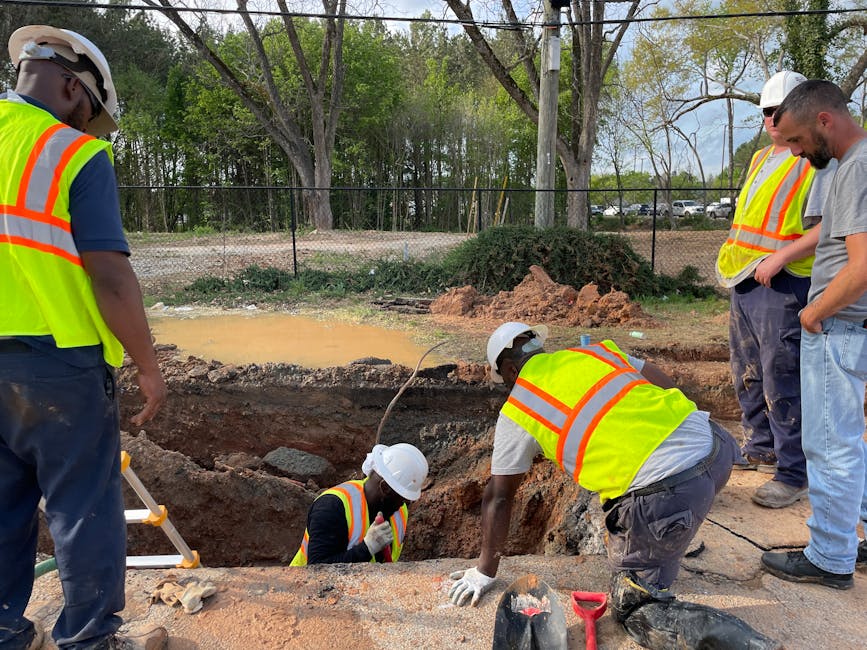
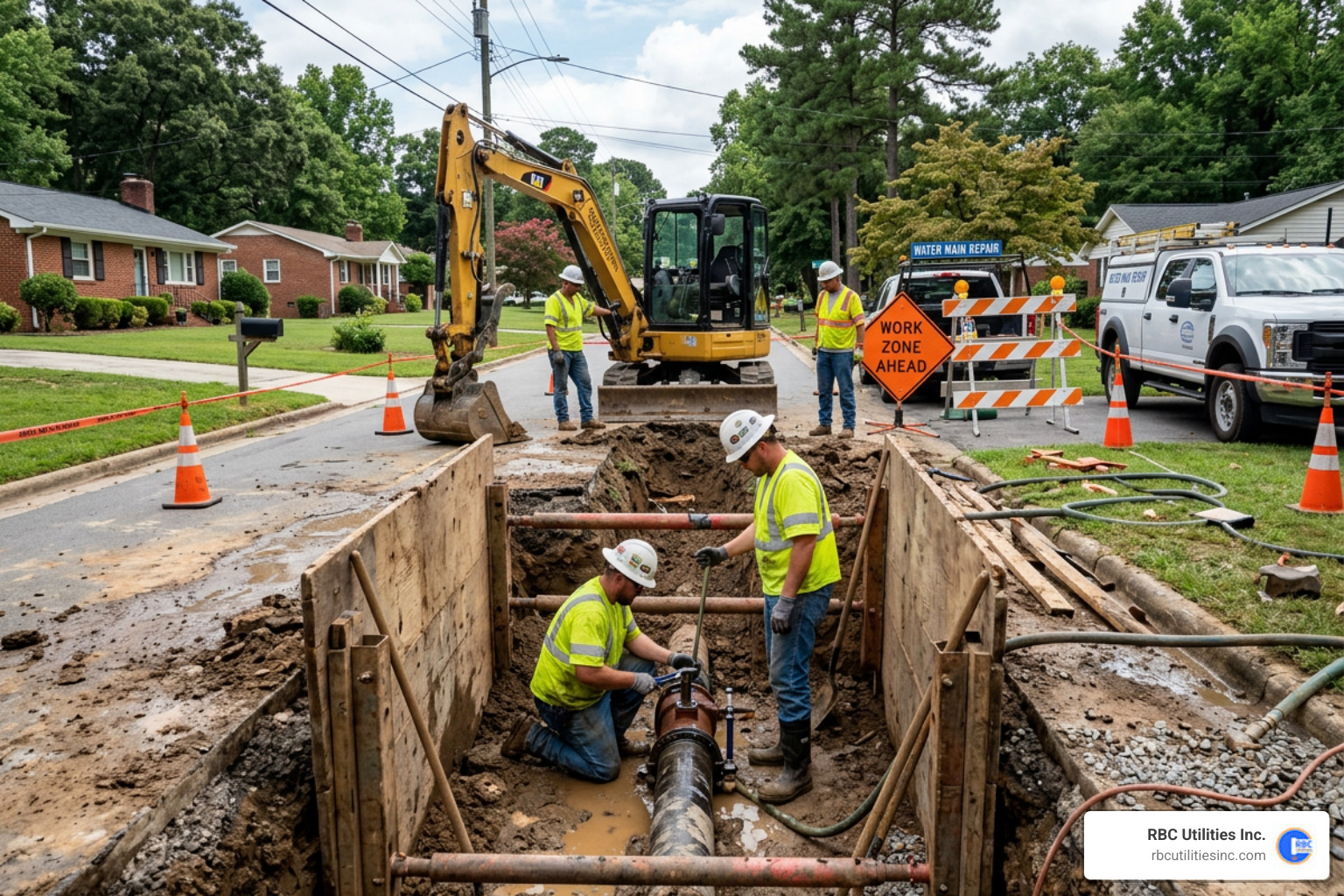
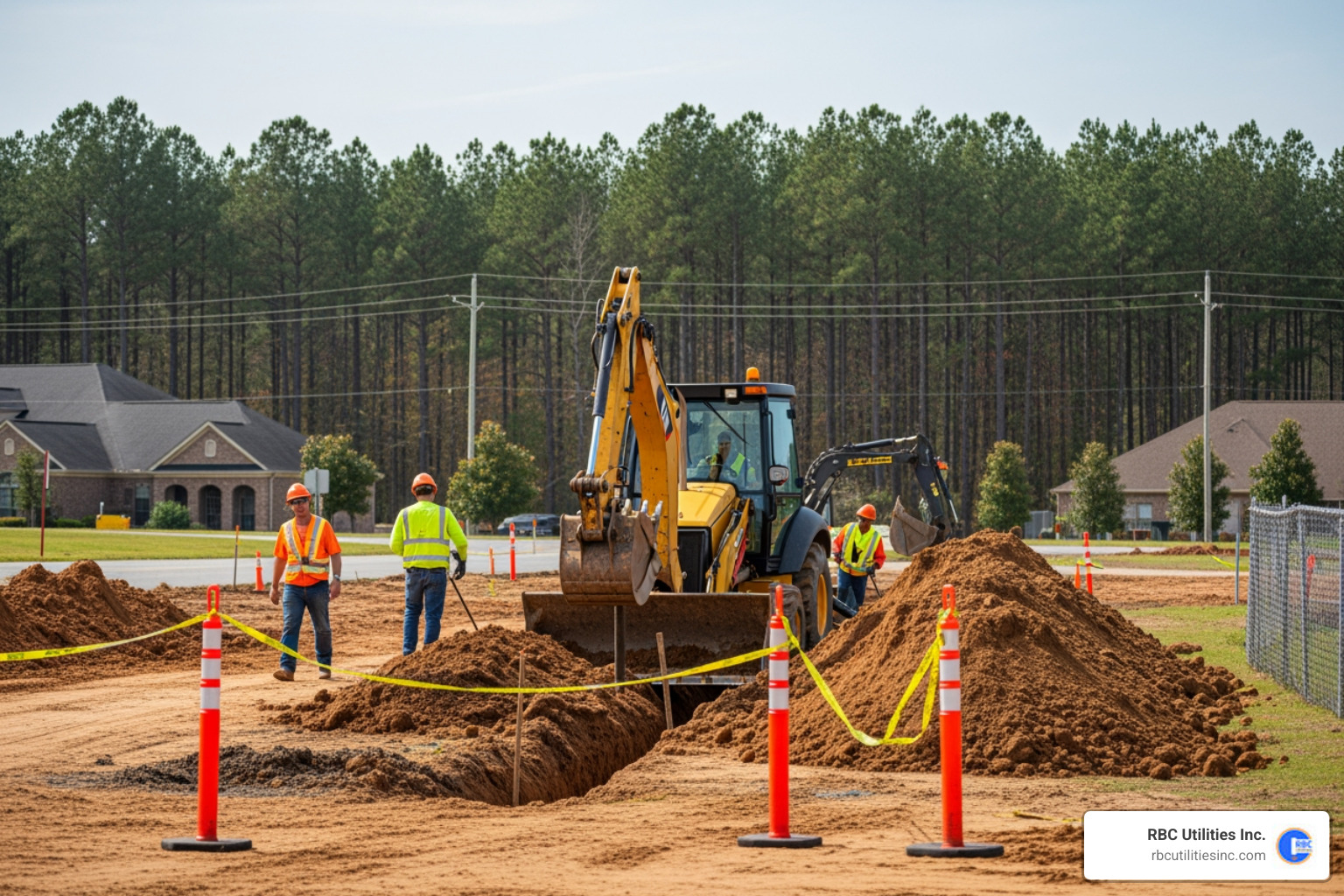
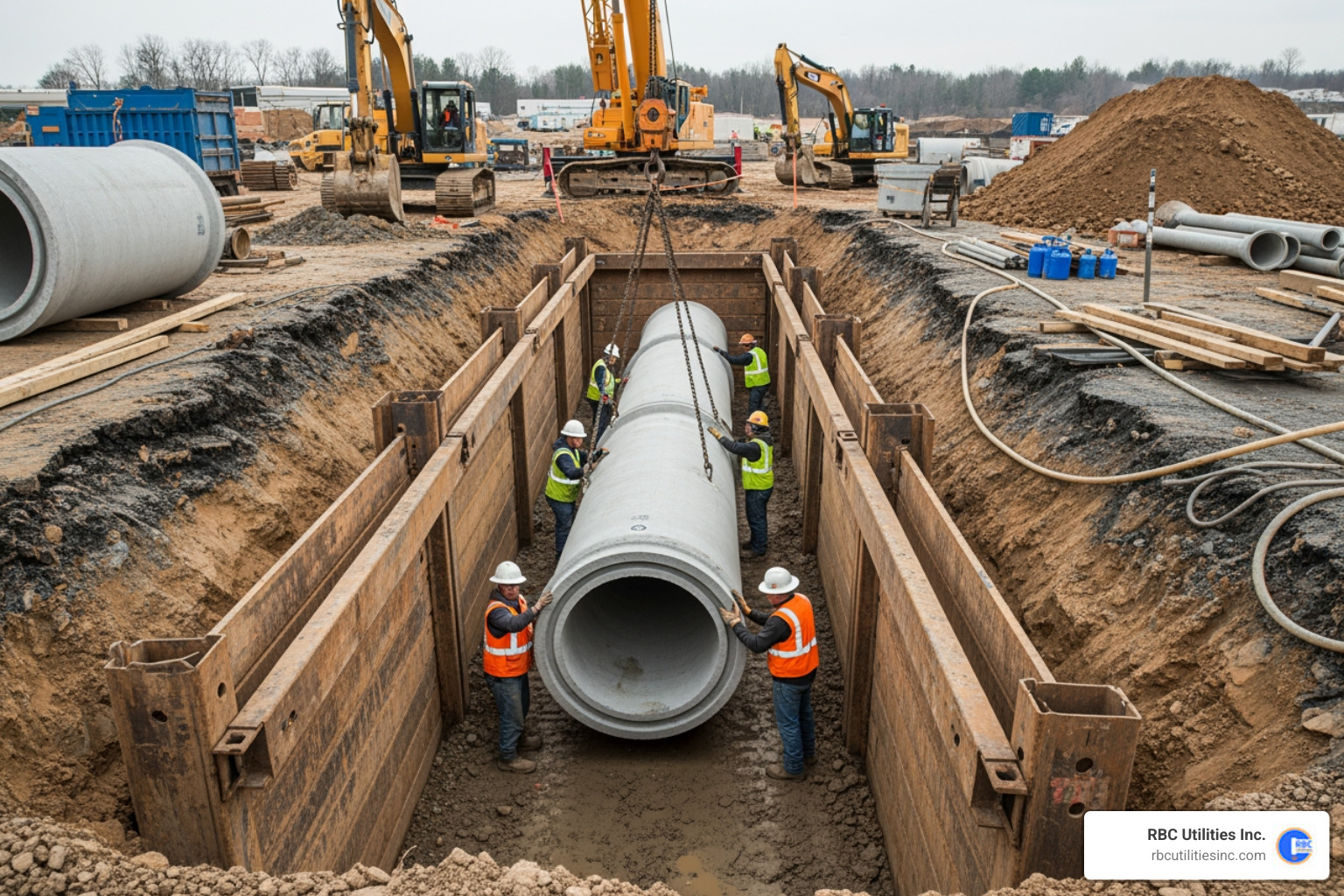
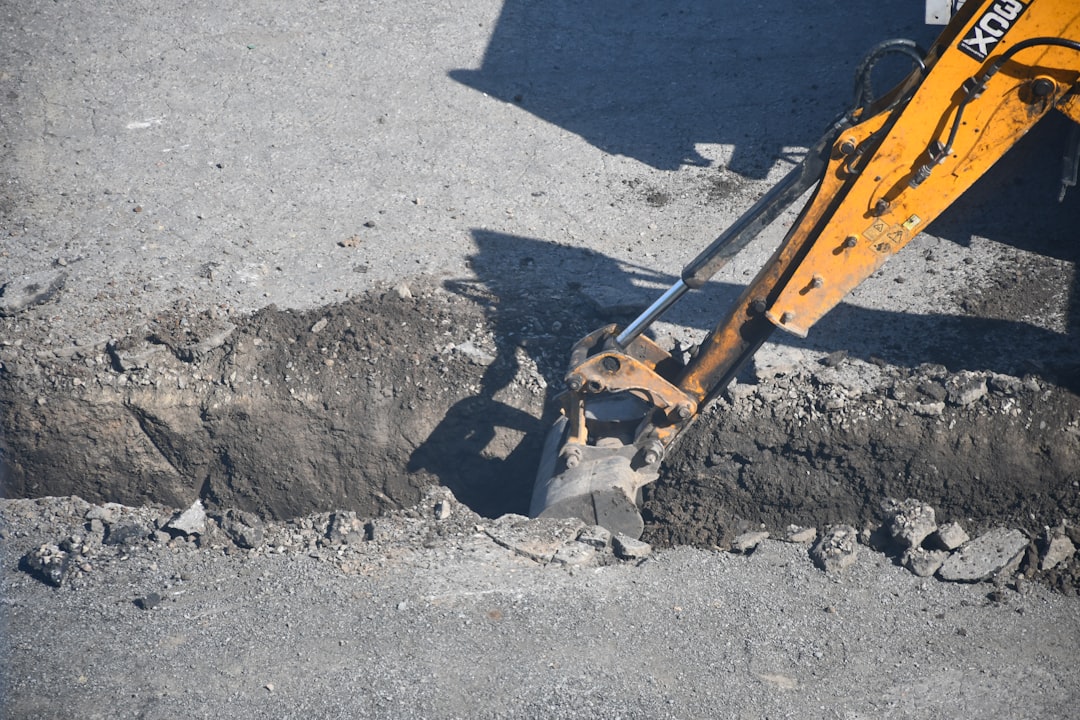
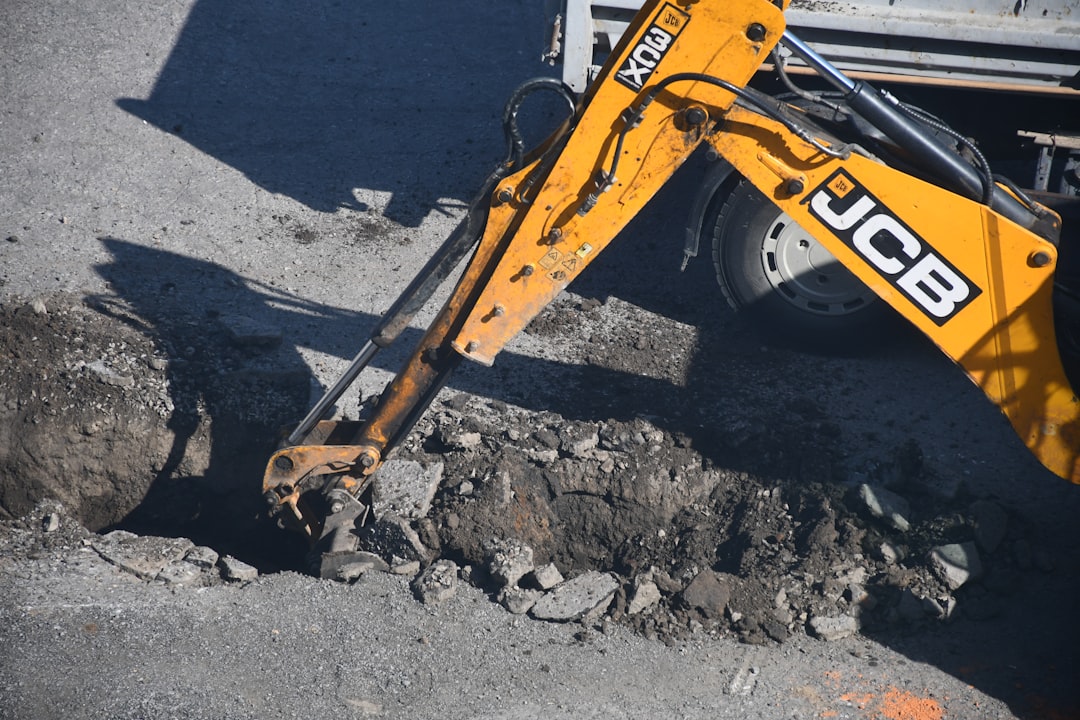
While trenchless methods are fantastic, they are not always viable. If a sewer line has completely collapsed, lost its structural integrity, or requires a change in grade (slope) to maintain proper gravity flow, traditional excavation is necessary.
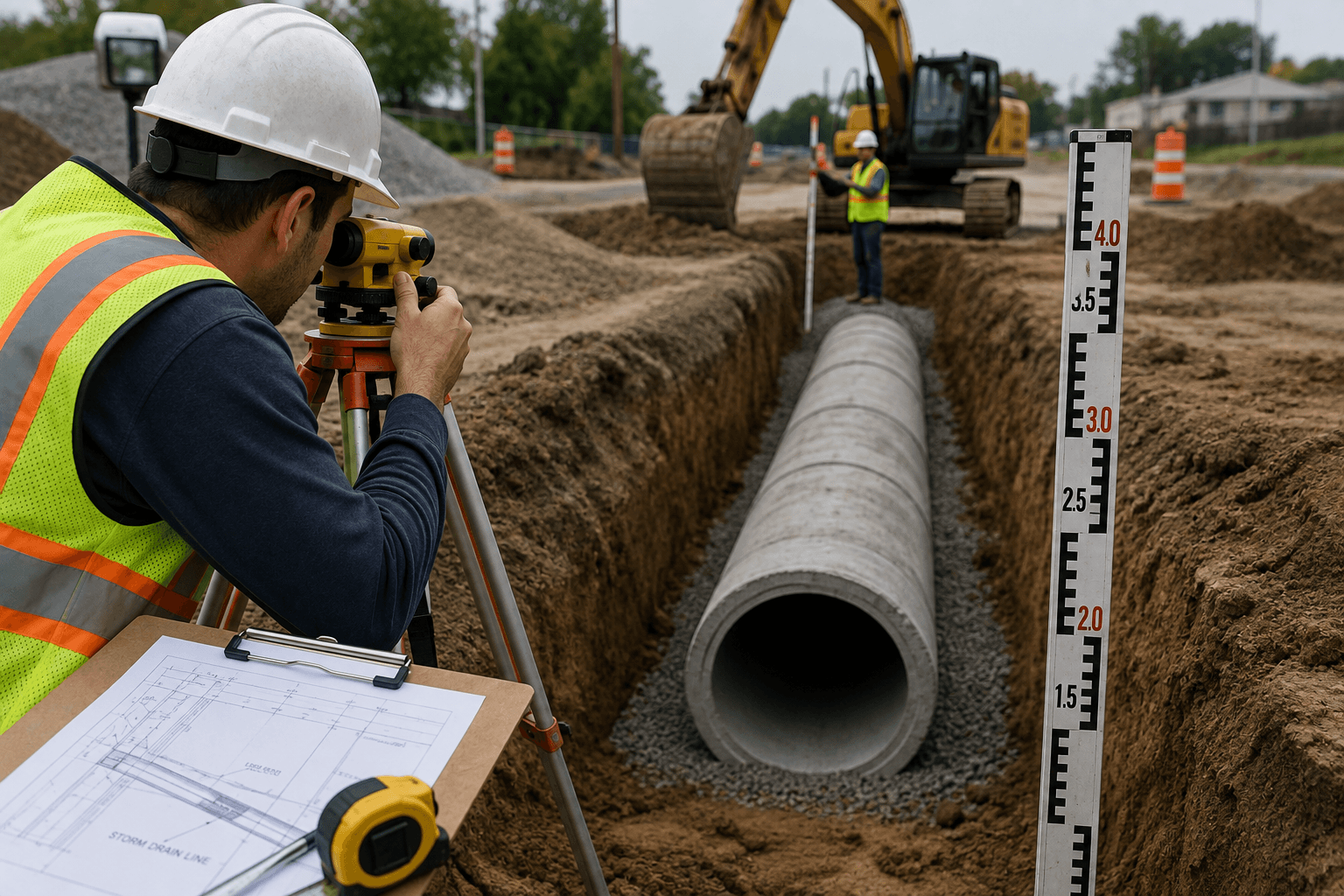
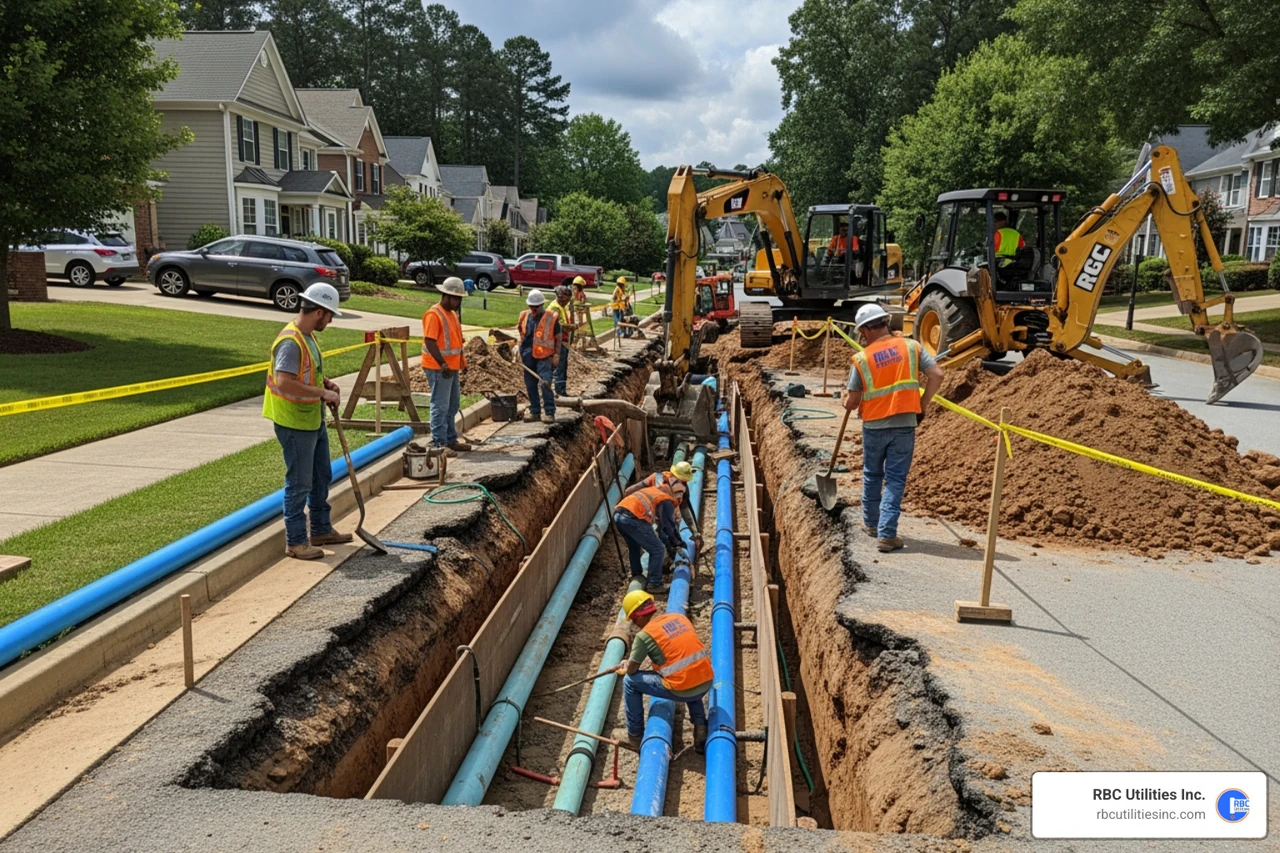
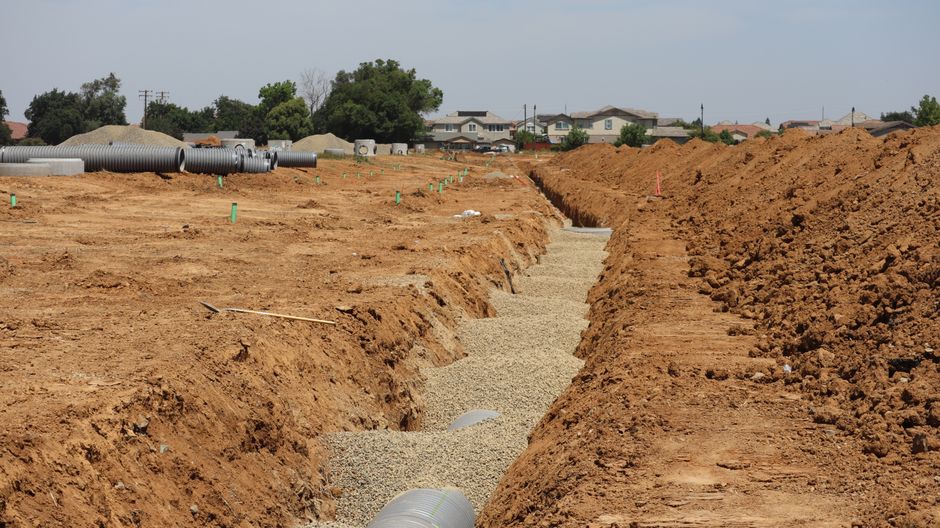
Traditional utility construction involves:
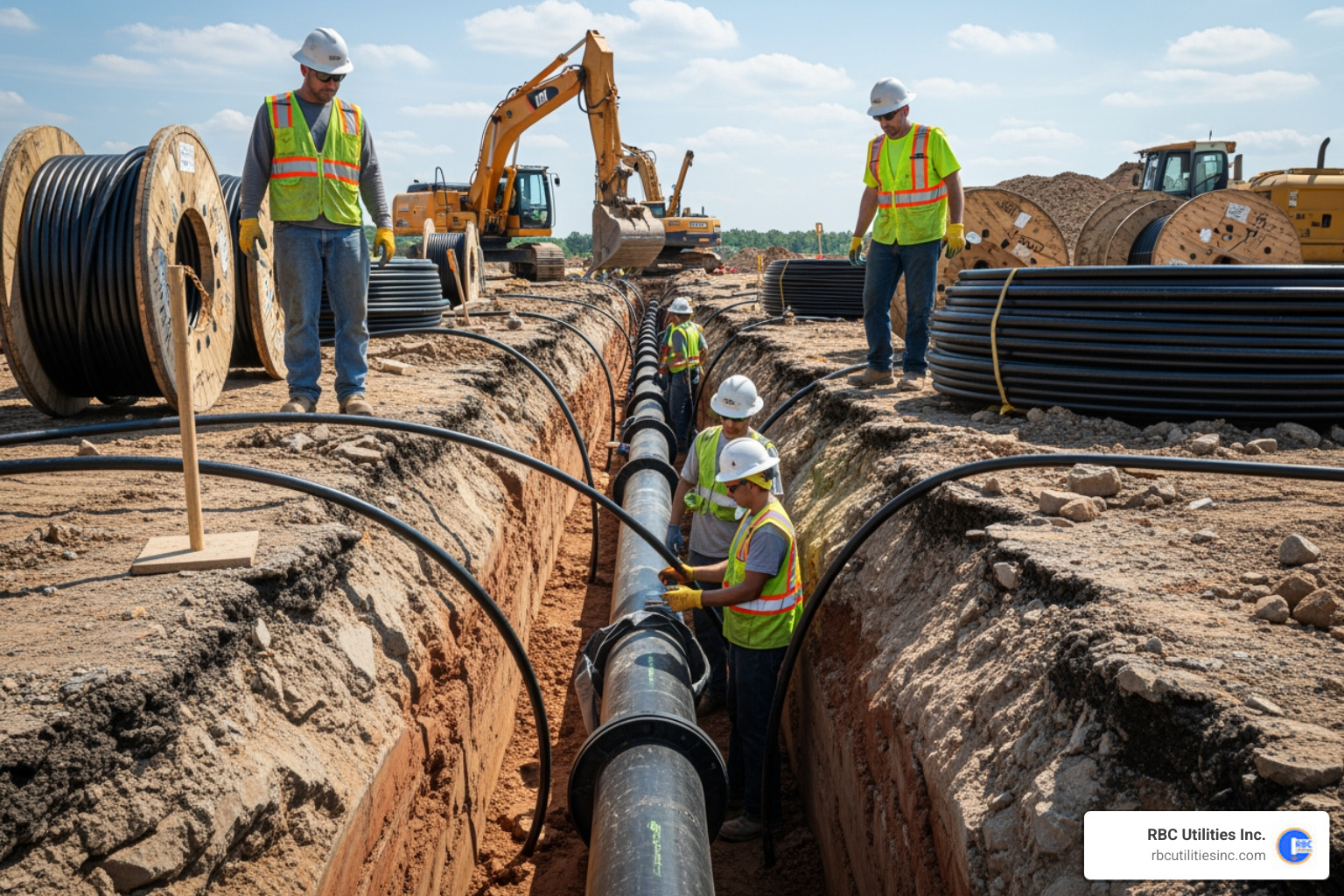
For new commercial developments and municipal infrastructure, laying the groundwork correctly from day one prevents decades of future maintenance headaches. If you are starting a new commercial or residential development in the Carolinas, you can Explore sewer main line installation to understand how professional utility crews execute these foundational systems.
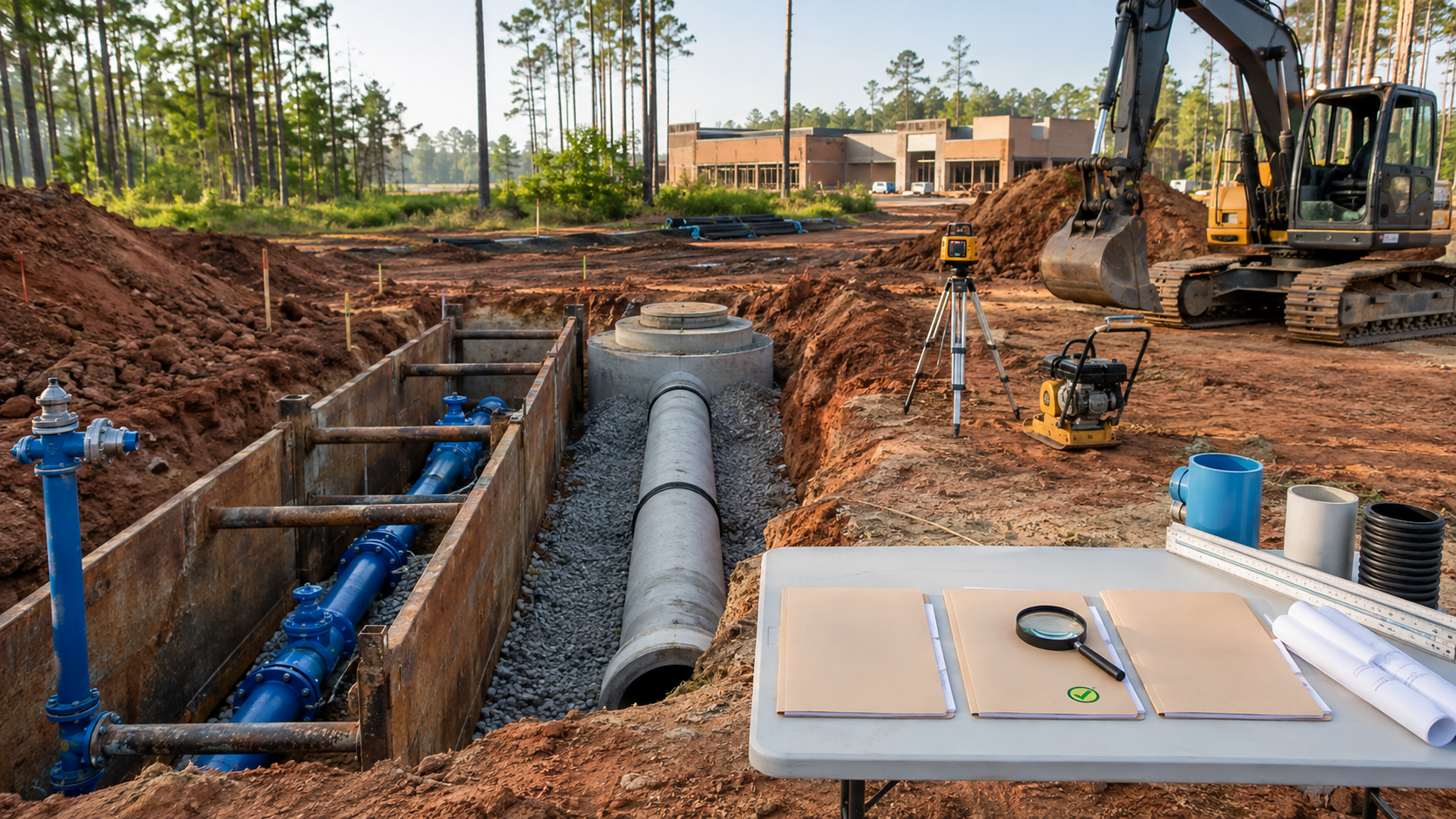
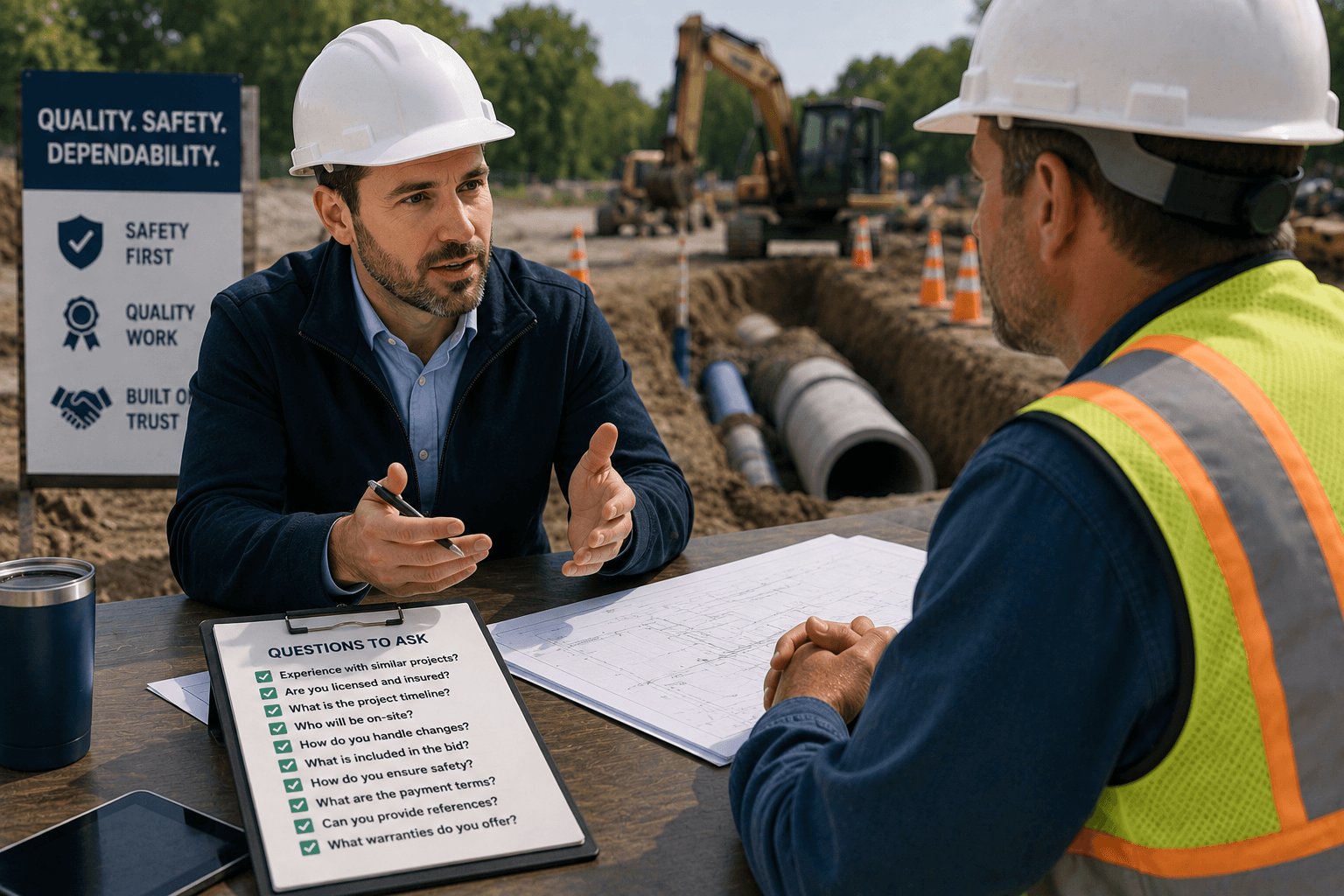
Working on water, sewer, and drainage systems is heavily regulated for a reason: a single mistake can contaminate local drinking water, flood adjacent properties, or cause catastrophic roadway cave-ins. When hiring a contractor for any major plumbing and sewer service or utility construction project, verifying their credentials is your first line of defense.
In the Carolinas, all plumbing and utility work must comply with strict state laws. For projects in North Carolina, contractors must strictly adhere to state-specific building codes. You can Review the official State of North Carolina Plumbing Code to understand the technical standards required for safe, legal installations.
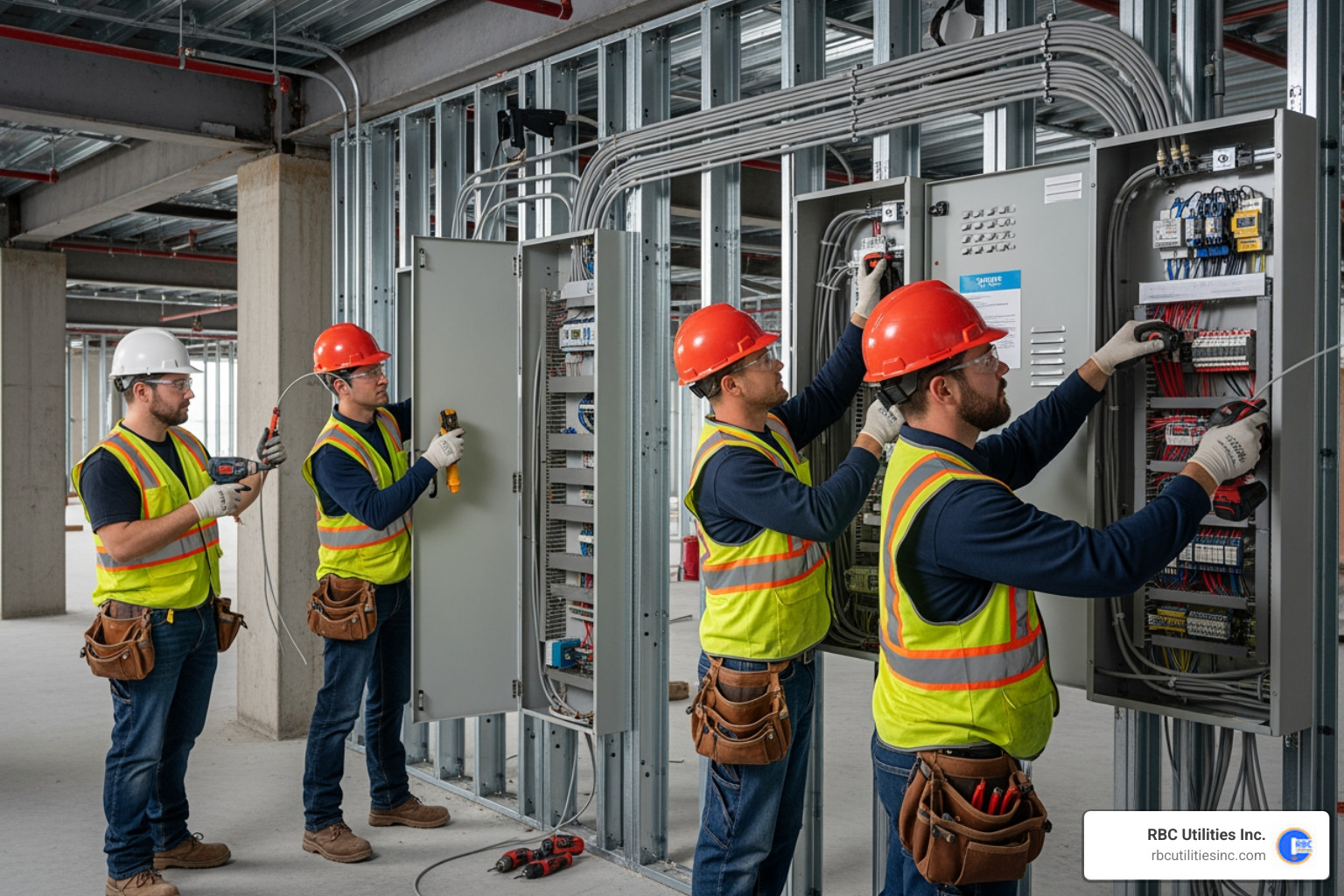
Beyond basic business licenses, a qualified utility and plumbing contractor should hold specific safety and technical certifications:
For developers operating across state lines in the Charlotte metro area and upstate South Carolina, working with a multi-state licensed contractor is a massive advantage. It streamlines the permitting process, ensures consistent quality, and eliminates the need to manage multiple regional subcontractors.
At RBC Utilities Inc., we leverage our local Carolinas footprint combined with the national resources of Saga Infrastructure to provide seamless, compliant utility construction across state lines. You can Learn about RBC Utilities' regional service coverage to see how we assist projects in both North and South Carolina.
For residential properties, we recommend a sewer camera inspection every 2 to 3 years, or annually if your property has mature trees nearby that are prone to root intrusion.
For commercial properties — especially restaurants, multi-family housing, or industrial facilities — sewer lines should be inspected and cleaned at least once a year. High-volume use and grease buildup can quickly lead to blockages, so preventative maintenance is key to avoiding costly business disruptions.
Over 75% of plumbing emergencies occur outside of normal business hours. When a major pipe bursts or a sewer line backs up, every minute counts to mitigate water damage.
During an emergency call, you should expect:
While the upfront cost of trenchless pipe lining or pipe bursting can sometimes be slightly higher than traditional digging per linear foot, it saves thousands of dollars in restoration costs.
Traditional excavation requires you to pay for repaving driveways, rebuilding sidewalks, and replanting destroyed landscaping. Trenchless methods require only small access points, leaving your yard and hardscaping completely intact. Furthermore, seamless HDPE and epoxy-lined pipes are highly resistant to future root intrusion, saving you money on long-term maintenance. You can Learn about sewer line repair in Charlotte to see how these modern techniques are applied locally.
Whether you are a homeowner dealing with a stubborn drain, a commercial property manager protecting your facilities, or a developer laying the groundwork for a major new subdivision, understanding plumbing and sewer service is essential.
At RBC Utilities Inc., we believe that reliable infrastructure is the foundation of strong communities. From sanitary sewer mains and storm drainage systems to water line installations, our experienced crews provide the Carolinas with safe, reliable, and high-quality underground utility systems. Backed by the robust resources of Saga Infrastructure, we are proud to build careers and infrastructure that last.
Have a municipal, commercial, or residential utility project that needs to be done right the first time? Schedule a consultation with RBC Utilities Inc. today, and let’s keep things flowing together.
Part of Saga Infrastructure, protecting what others built and helping it grow.
Address: 4404 Stuart Andrews Blvd., Suite K, Charlotte, NC 28217
Email: info@rbcutilities.com
Phone: 803-913-9727
Service Area: North Carolina | South Carolina