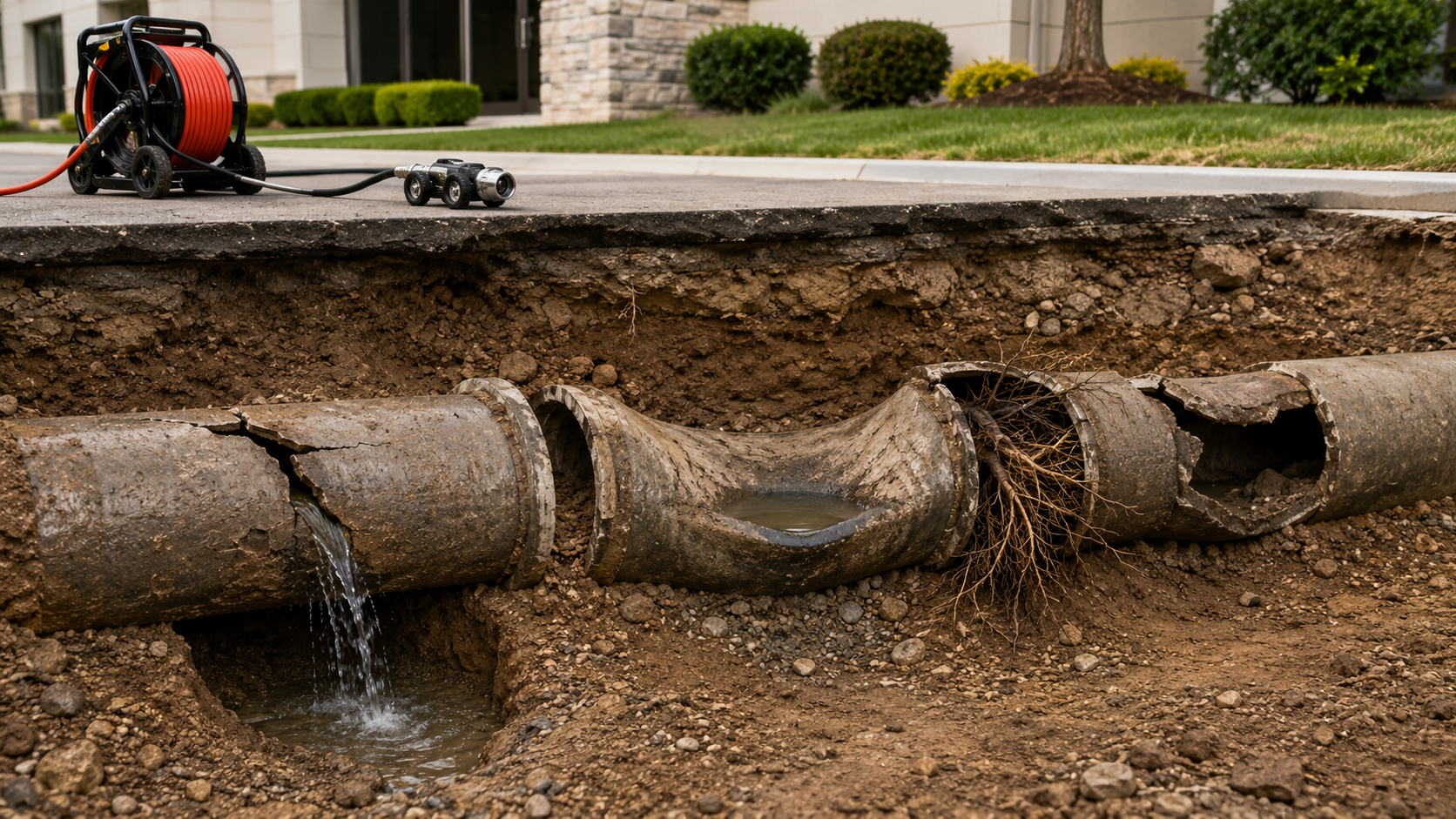
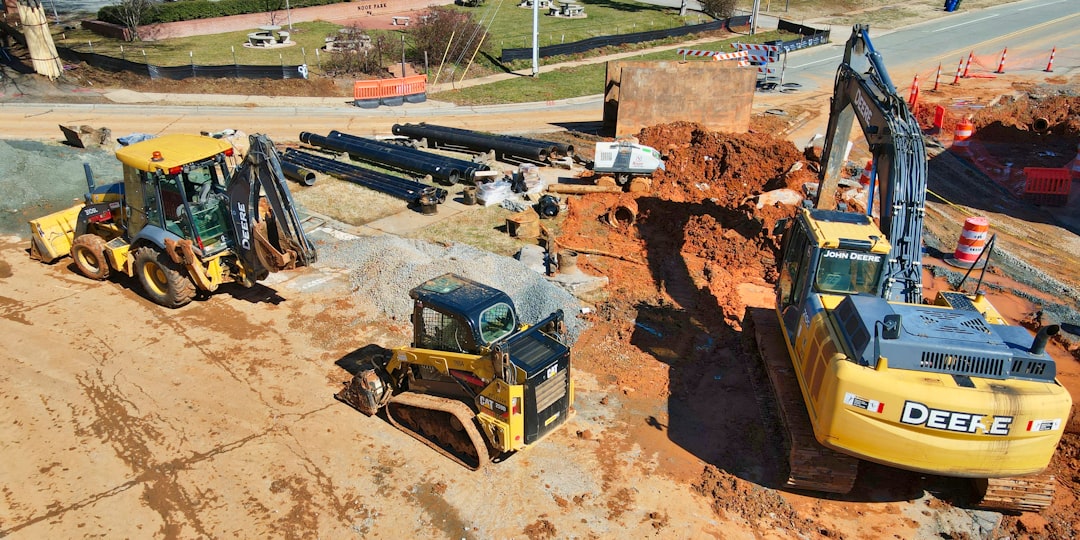
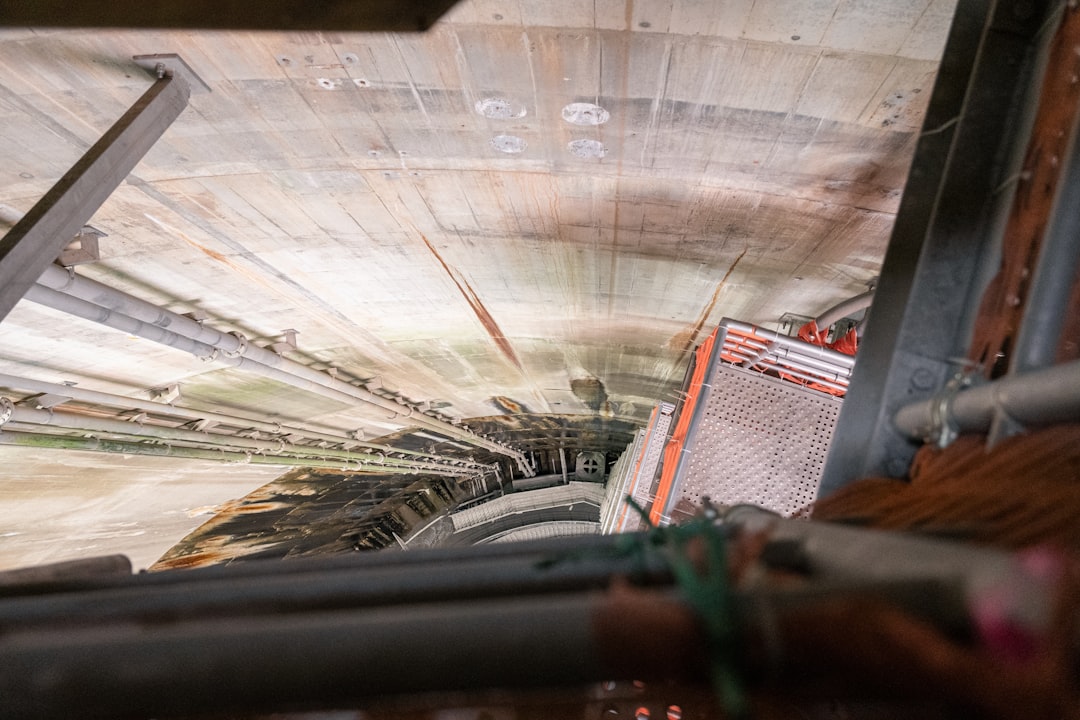
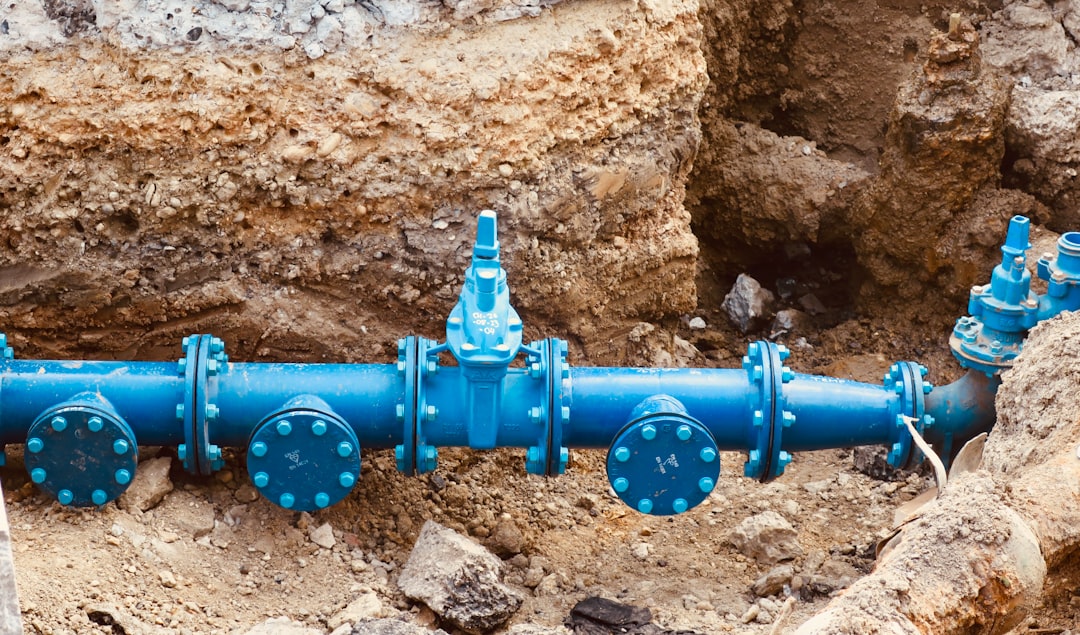
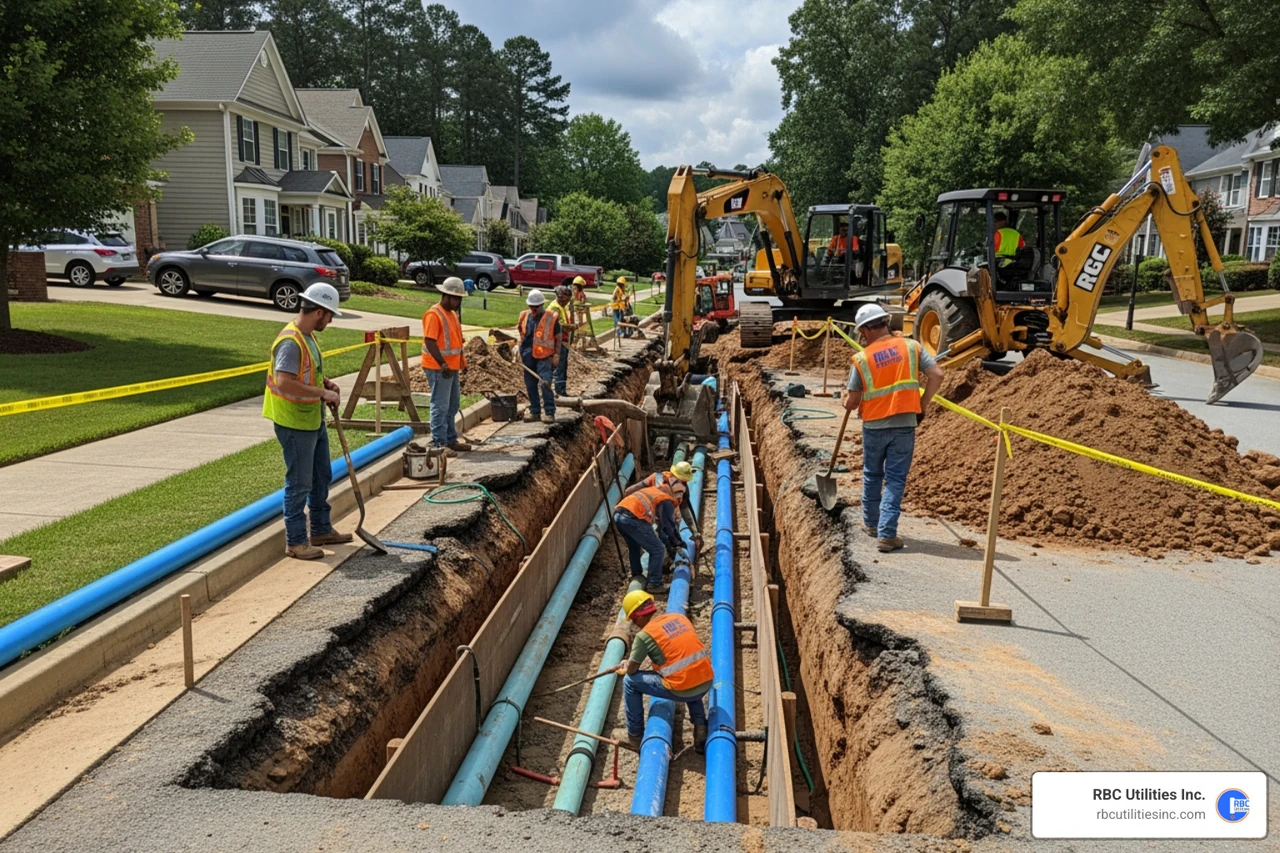
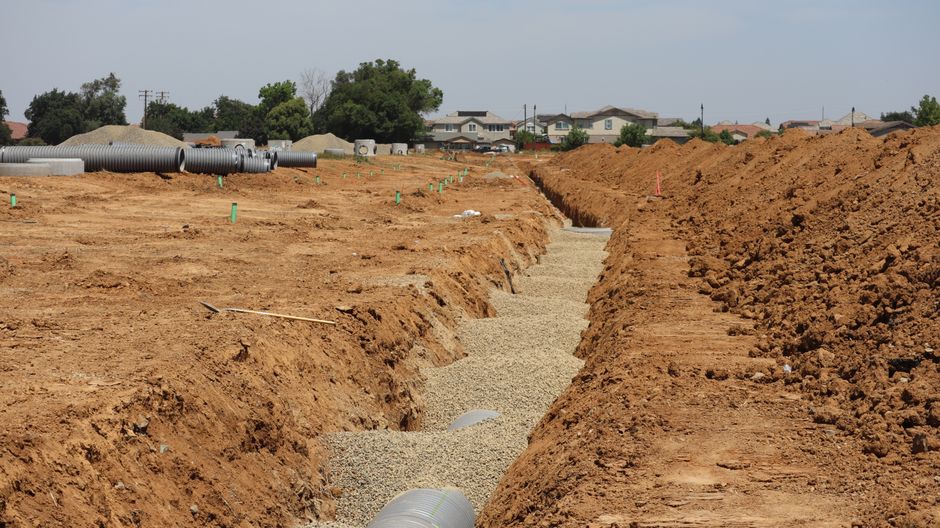
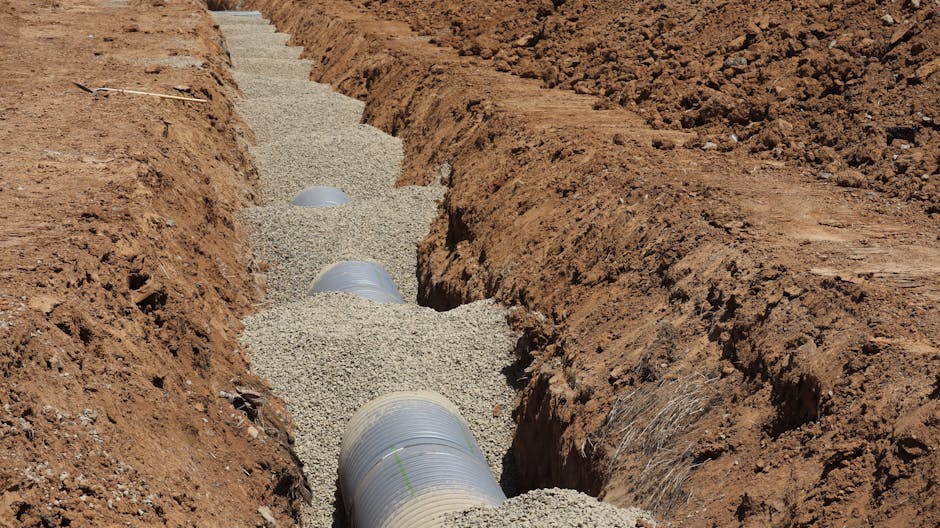
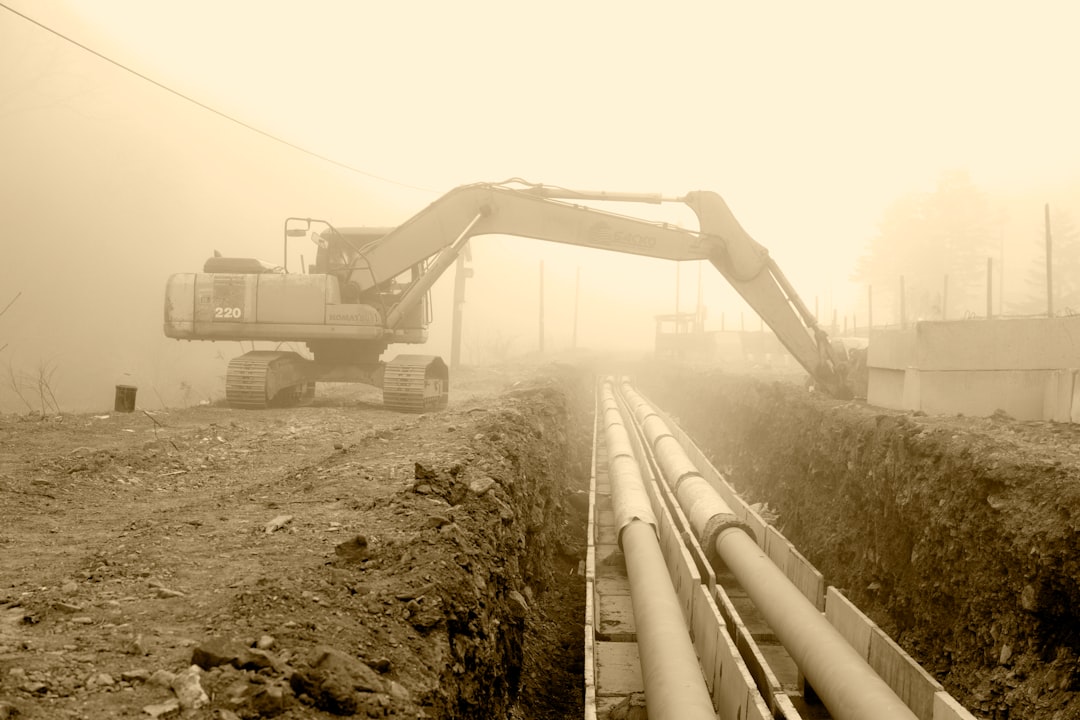
Utility trench excavation NC projects are far more complex than simply digging a ditch. They involve strict safety regulations, precise depth requirements, careful utility locating, and engineered backfill standards — all before a single pipe is laid.
Here's a quick overview of what utility trench excavation in North Carolina involves:
What it is: Utility trench excavation means digging narrow channels to install underground water, sewer, conduit, gas, and fiber optic lines.
NC 811 requirement: In North Carolina, you must call 811 at least 72 hours, or 3 full working days, before digging starts.
Primary safety standard: OSHA 29 CFR 1926 Subpart P sets the core rules for trenching and excavation safety.
Biggest hazard: Cave-ins are the most serious risk and remain a leading cause of trenching fatalities nationwide.
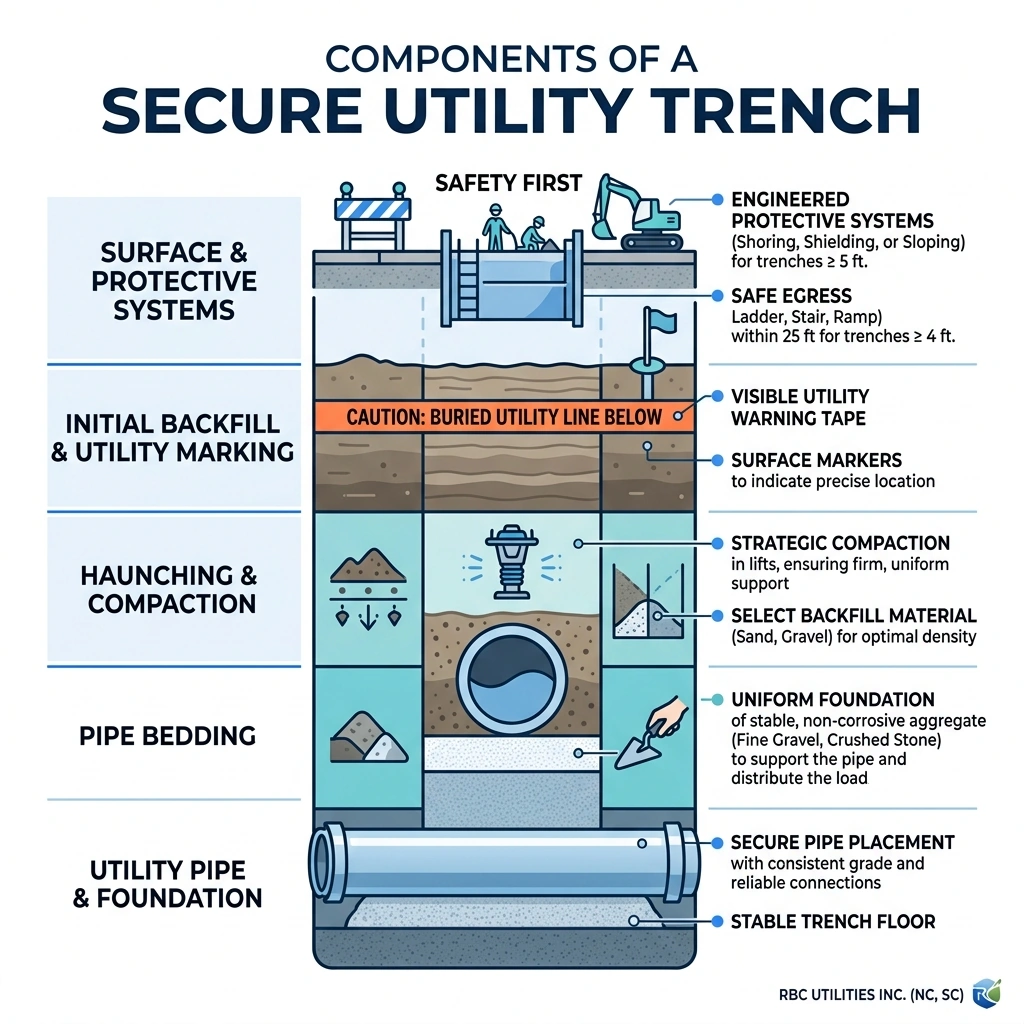
Protective systems: Trenches 5 feet deep or more typically require protection such as shoring, shielding, or sloping.
Egress rule: For trenches 4 feet deep or more, workers need a safe way out within 25 feet at all times.
Who oversees safety: A designated competent person must inspect each trench before entry and watch for changing site conditions.
Getting any of these elements wrong doesn't just cause project delays — it puts lives at risk and can expose your project to serious regulatory and financial consequences.
For developers and general contractors in the Carolinas, the stakes are high. Underground utility work is the backbone of every residential subdivision, commercial site, and municipal infrastructure project. When it goes wrong — a utility strike, a trench collapse, a failed compaction test — the entire project timeline unravels.
I'm Don Larsen, and at RBC Utilities Inc. we've been delivering safe, code-compliant utility trench excavation NC projects since 2008, specializing in water lines, sewer systems, storm drainage, and conduit installation for residential, commercial, and municipal clients across the Carolinas. In this guide, we'll walk you through everything you need to know to keep your next underground utility project on time, on budget, and built to last.
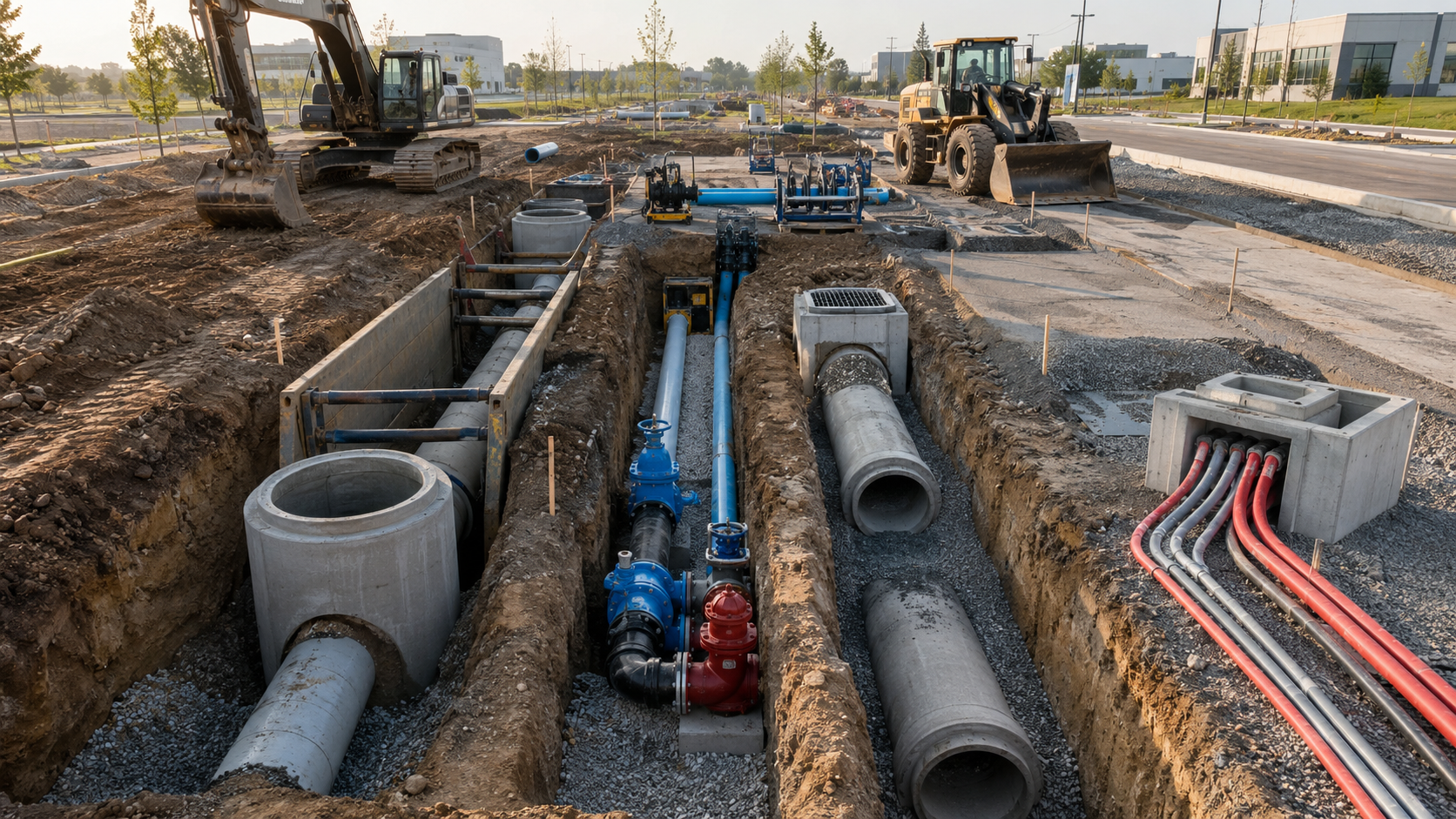
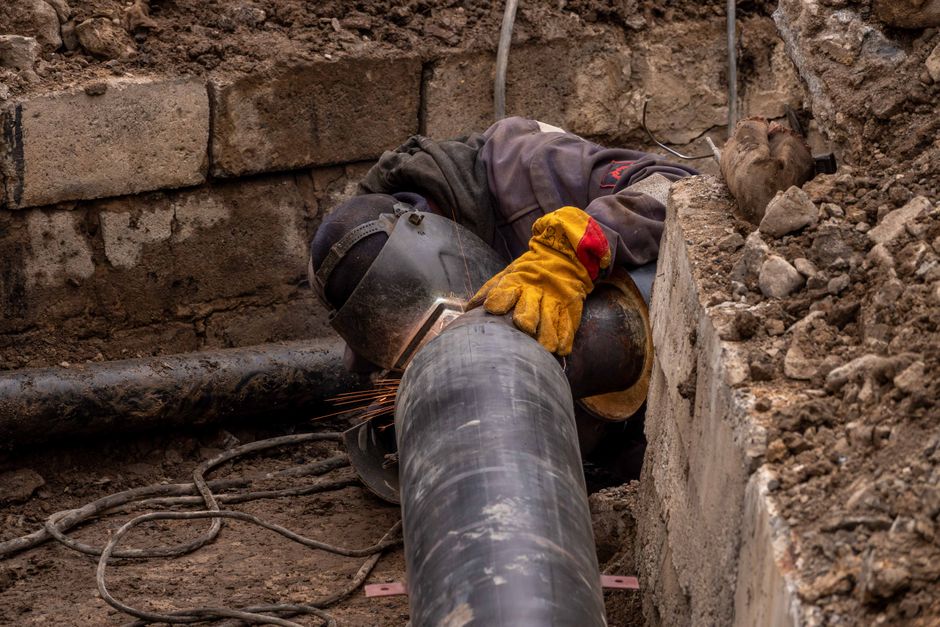
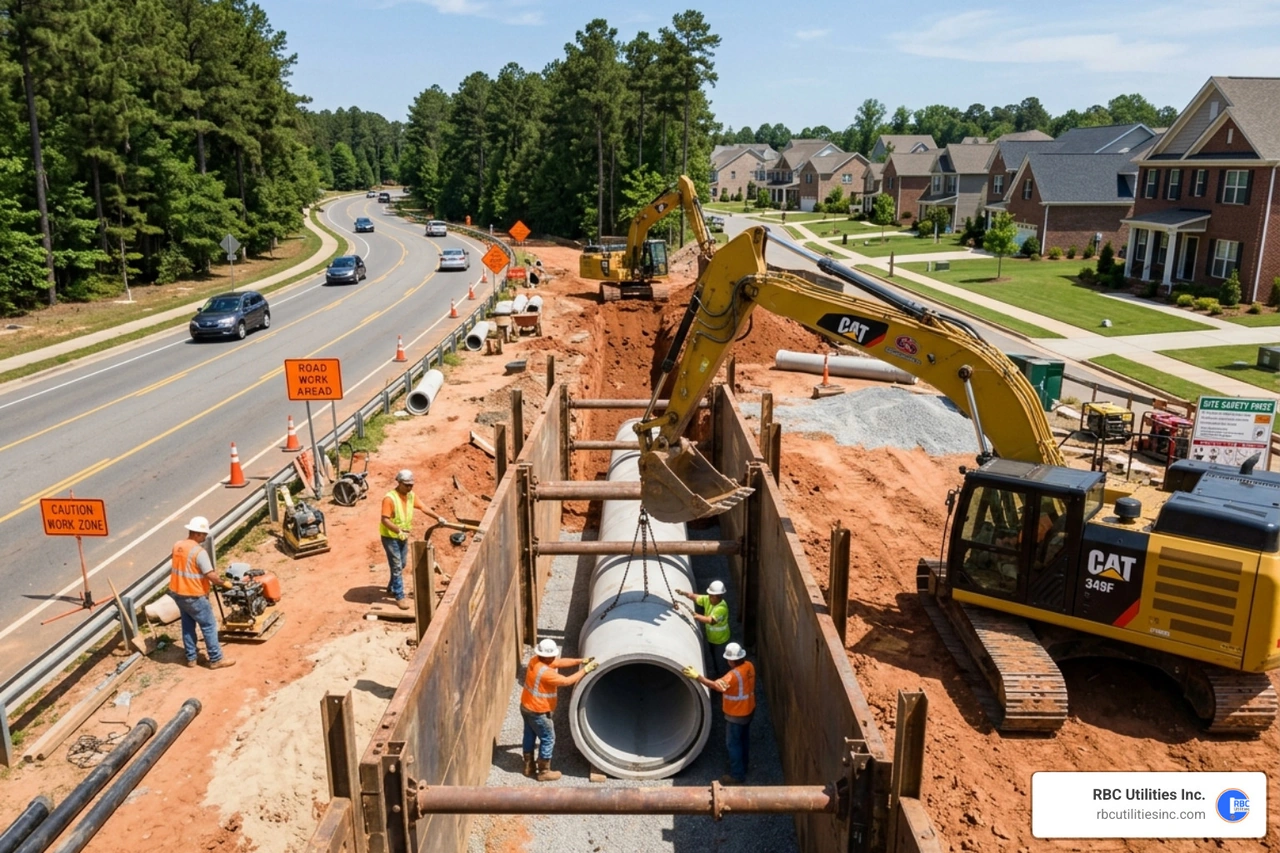
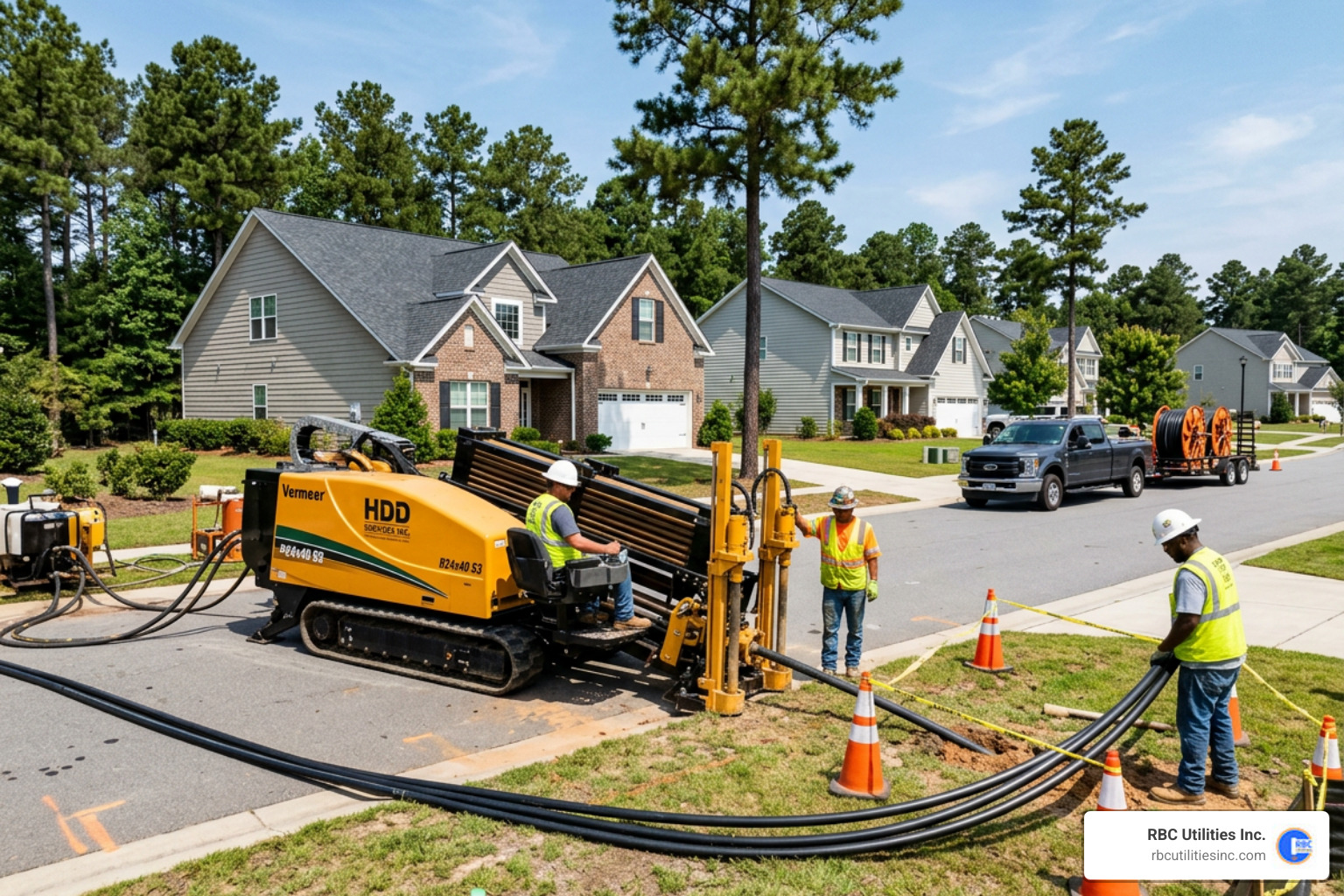
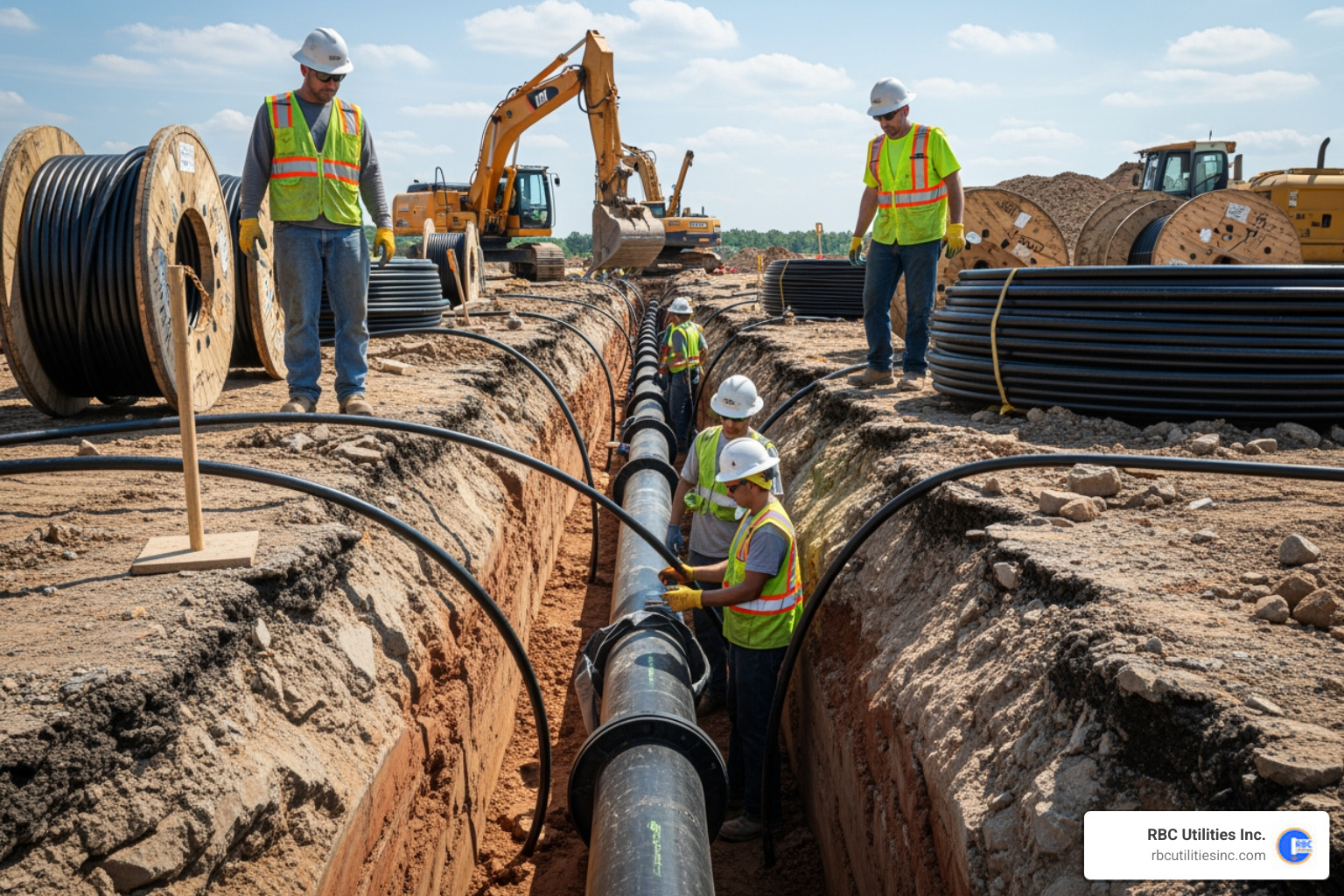
When we talk about utility trench excavation NC standards, we aren't just talking about digging a hole. In infrastructure, there is a massive difference between general excavation and utility trenching. General excavation might involve moving mass amounts of earth for a building pad or a basement. Utility trenching, however, is the surgical strike of the construction world. It involves creating narrow, deep channels designed specifically to house the lifeblood of our cities: water, sewer, gas, and data.
In North Carolina, these projects are governed by a strict hierarchy of rules. From the federal level (OSHA) to state-specific mandates (NC 811) and down to municipal codes in cities like Charlotte or Raleigh, every inch of that trench must be accounted for. These standards exist because infrastructure is essential. If a water main fails due to poor trenching, an entire neighborhood loses service. If a gas line is struck, the consequences can be catastrophic.
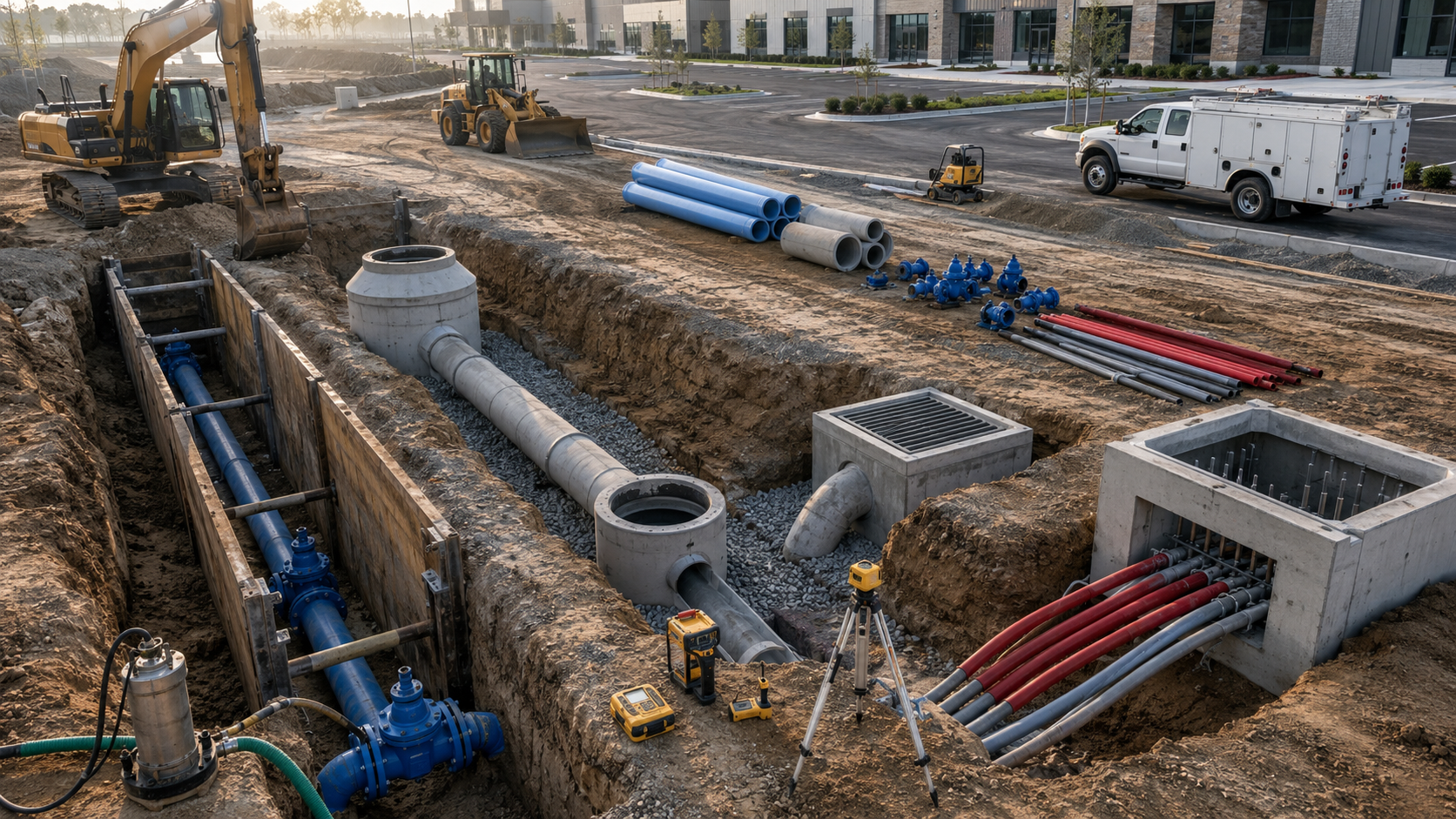
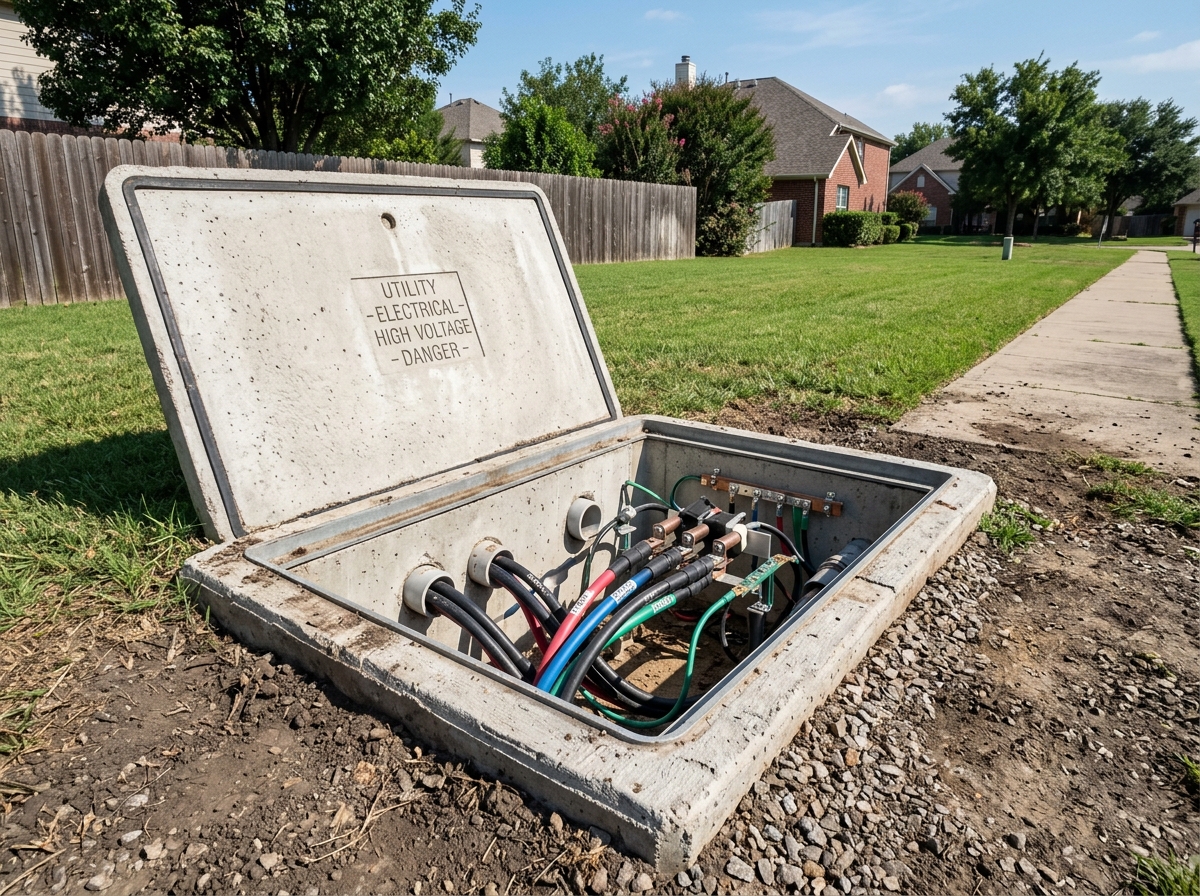
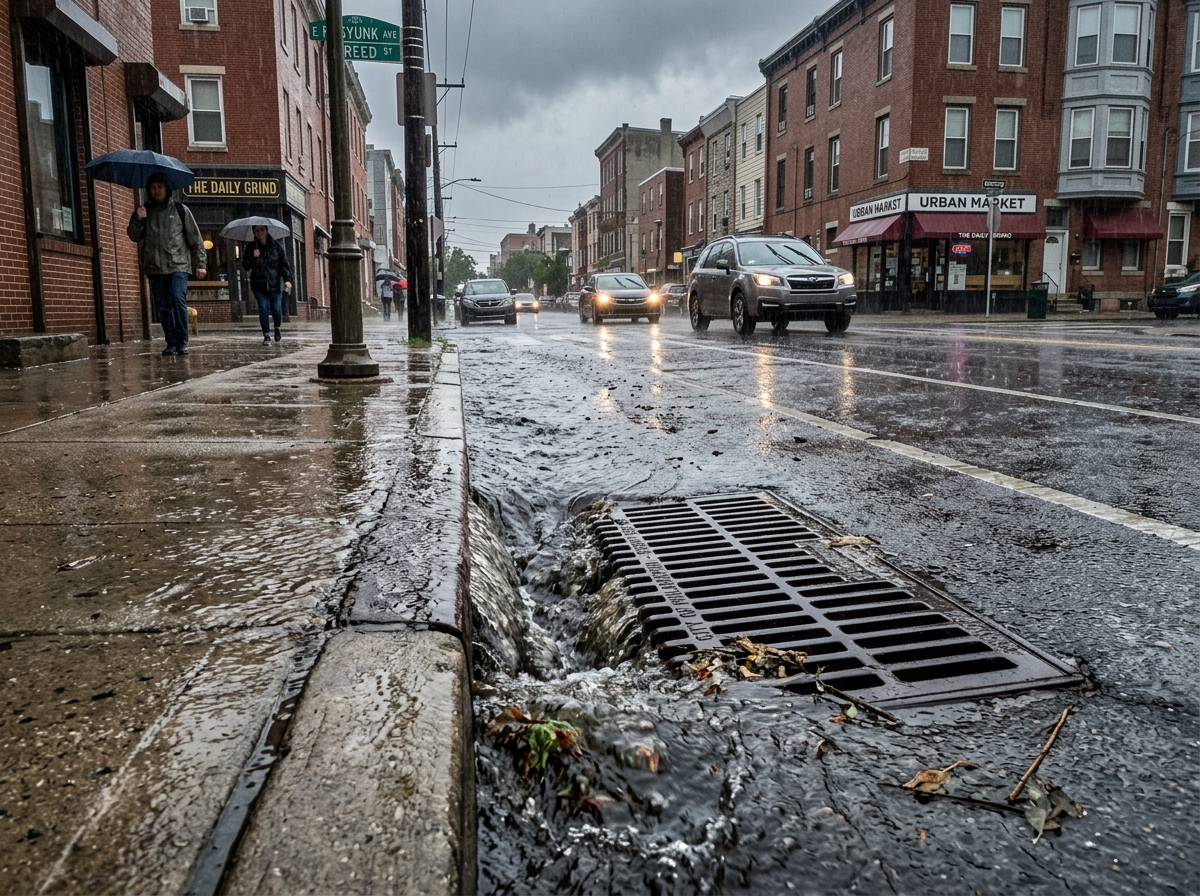
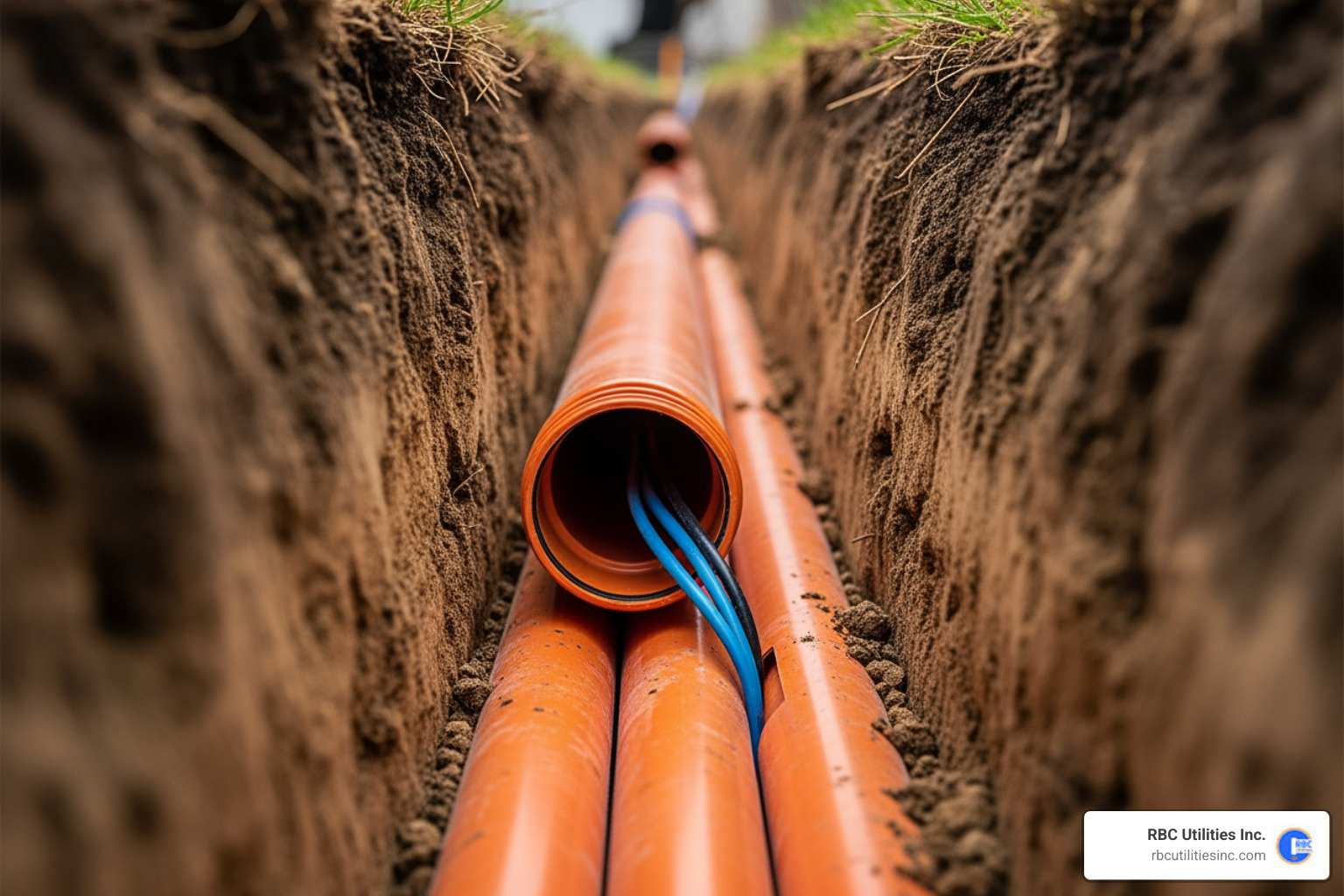
The scope of our work at RBC Utilities Inc. covers a wide range of vital infrastructure. When we perform utility trench excavation NC services, we are typically looking at:
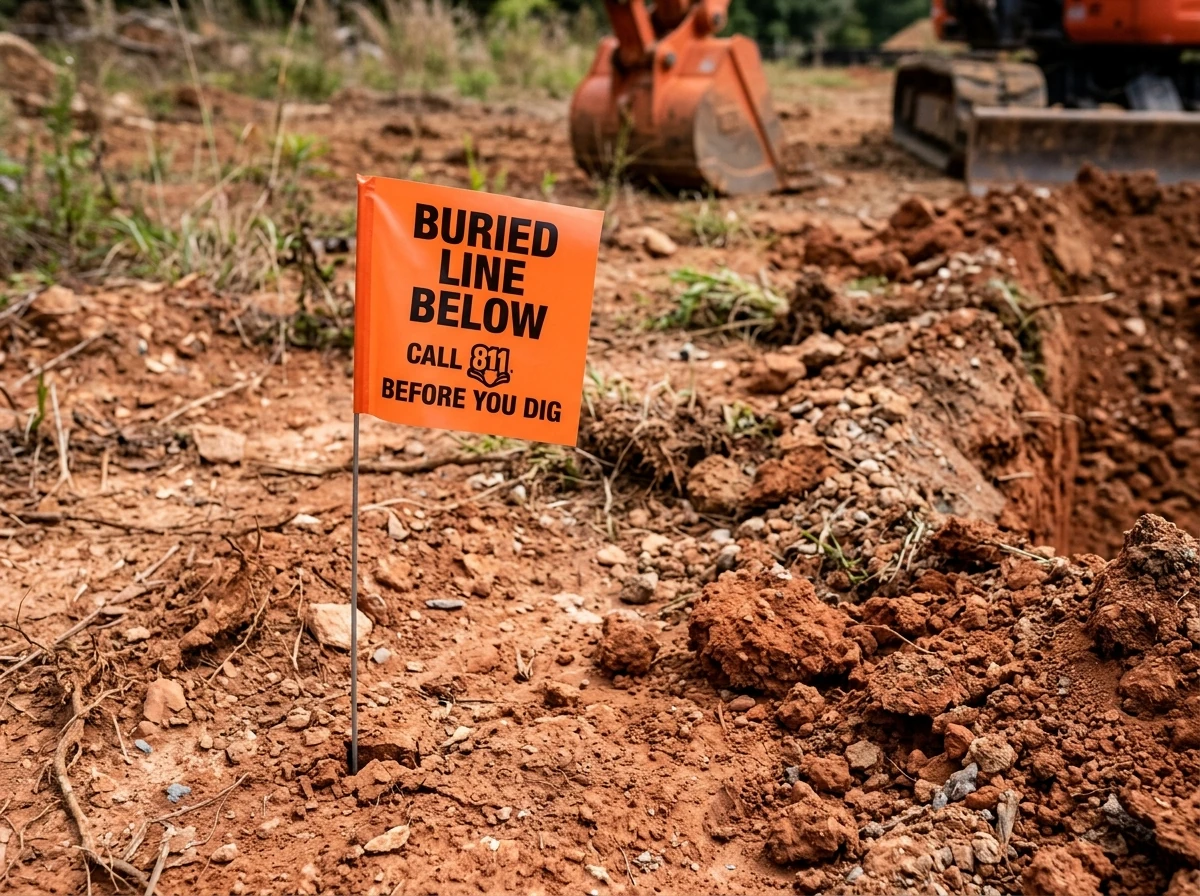
Before we even fire up an excavator, the law requires us to play it safe. North Carolina law is very clear: you must contact NC 811 more than 72 hours (three full working days) prior to any excavation. This "One-Call" system alerts utility owners to mark their buried lines with color-coded paint or flags.
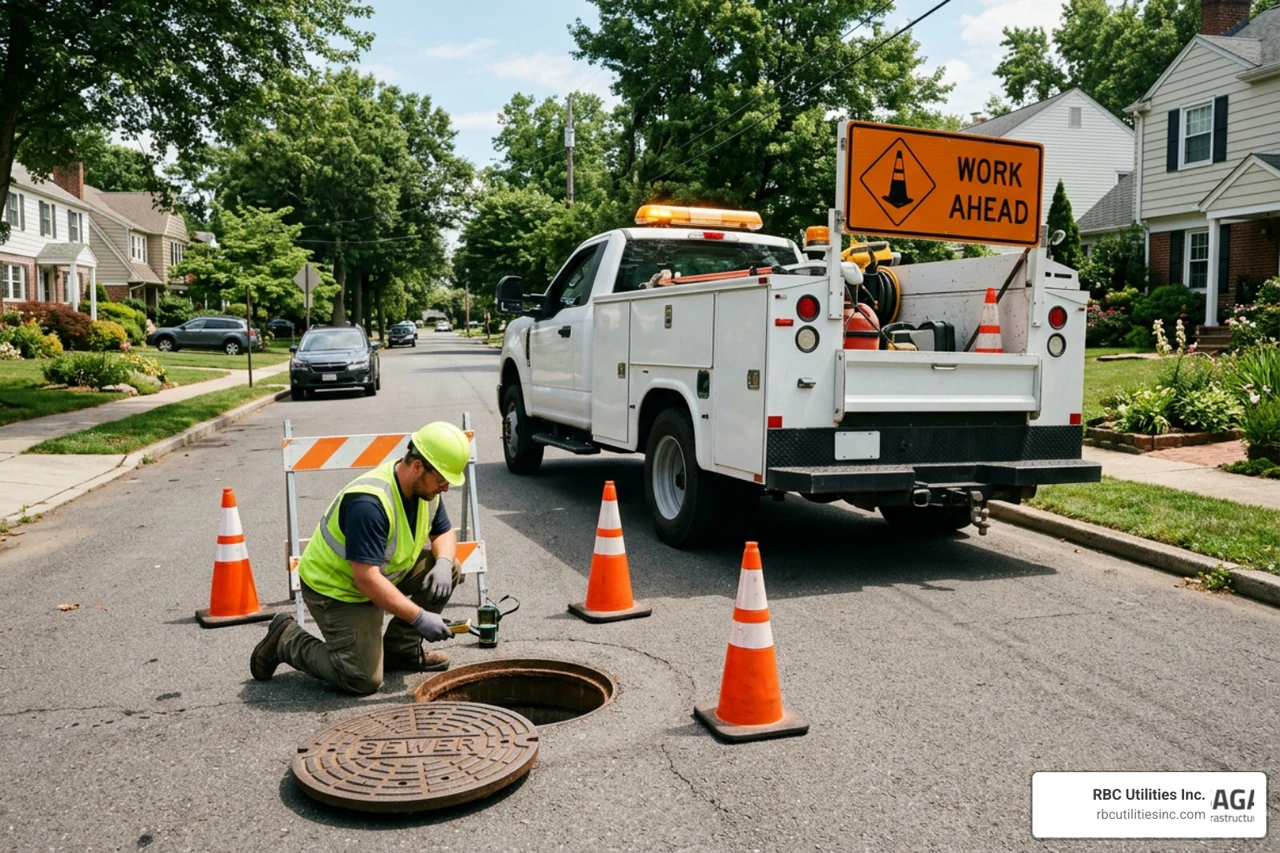
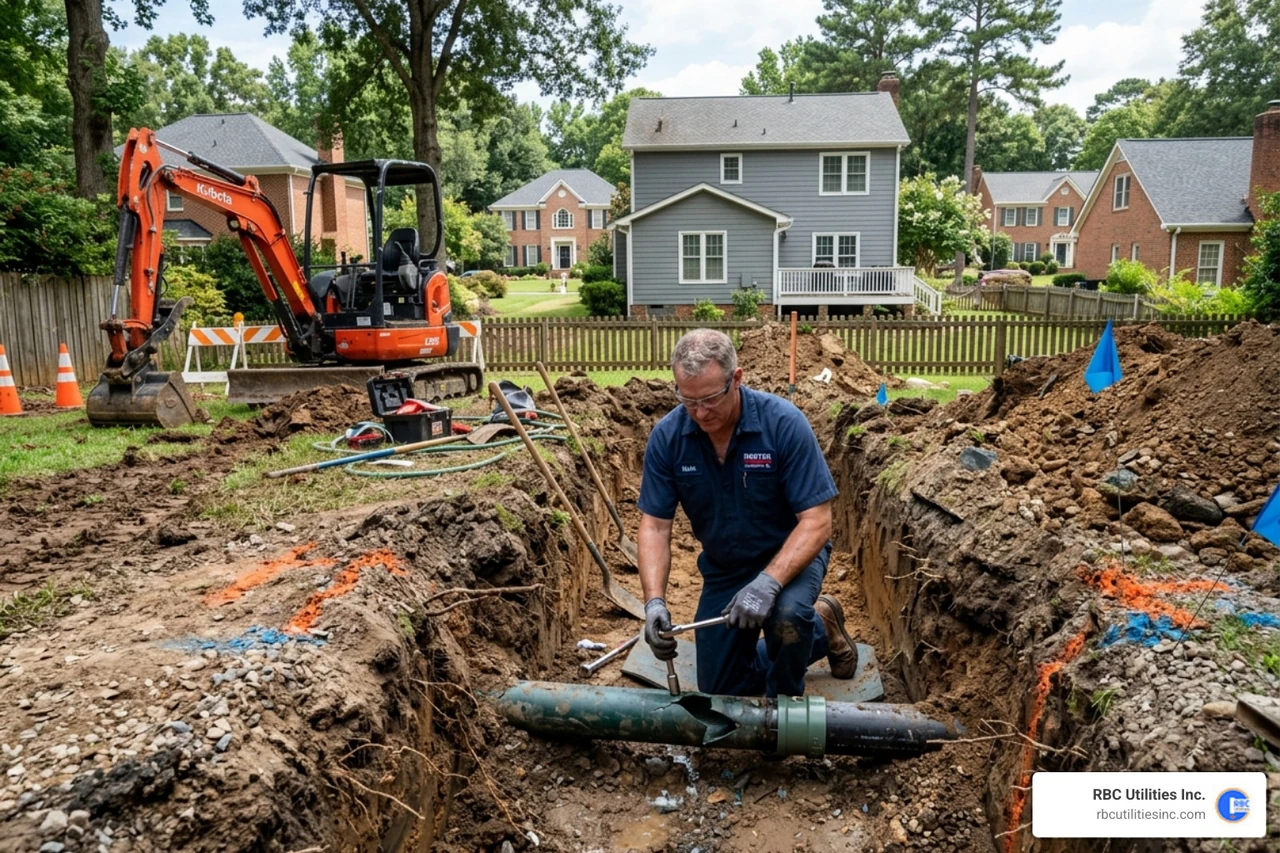
Once those lines are marked, we respect the "tolerance zone." This is the area flanking the utility where mechanical equipment is restricted, often requiring us to use hand tools or non-destructive methods like hydrovac to safely expose the line. Ignoring these mandates doesn't just lead to fines; it leads to project-stopping utility strikes. You can find more info about our underground utility services and how we handle these complex logistics on our service page.
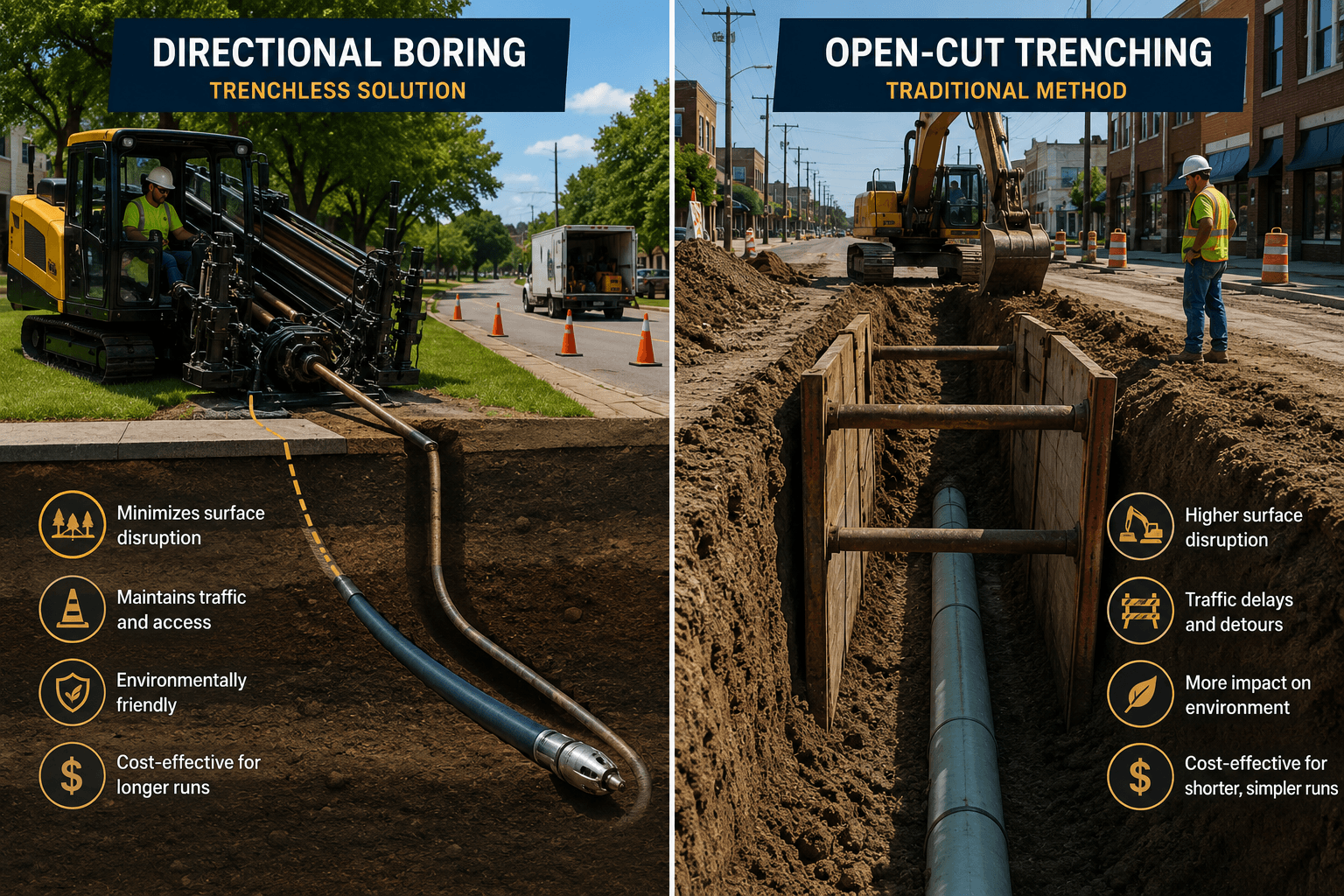
In the old days, you just dug a ditch. Today, we have a toolkit of methods to handle the diverse terrain of the Carolinas—from the red clay of Charlotte to the rocky soils of the Piedmont. Choosing the right method is the difference between a project that finishes on time and one that gets bogged down in "unforeseen conditions."
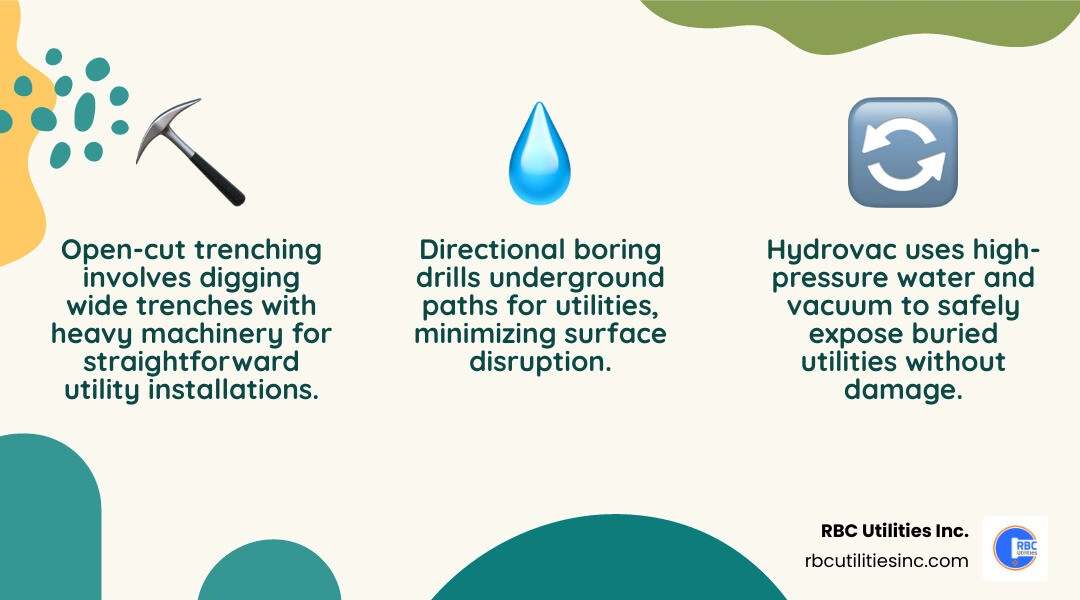
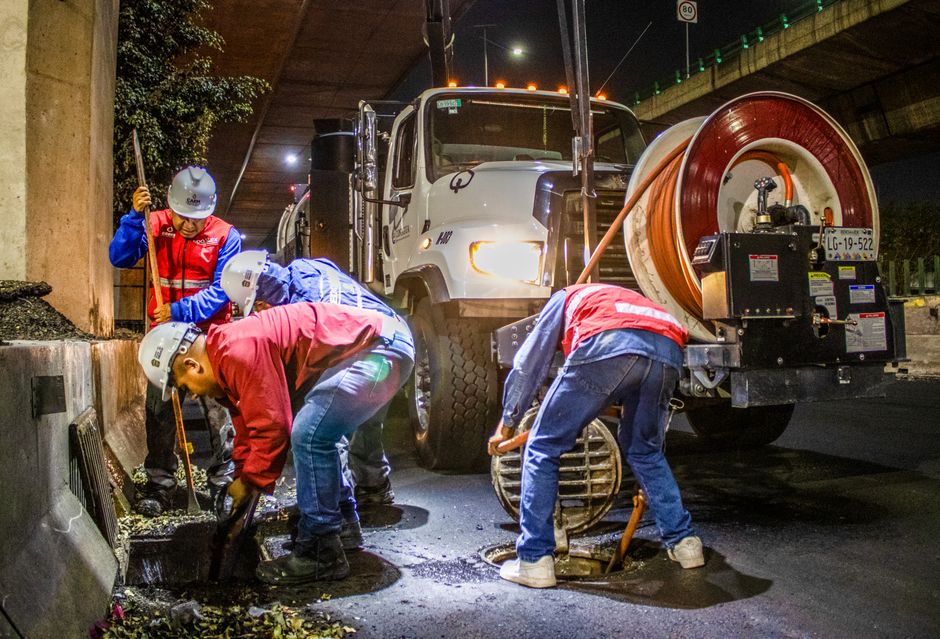
Hydrovac is a game-changer for utility trench excavation NC safety. It uses high-pressure water to liquefy the soil, which is then instantly sucked up by a powerful vacuum into a truck-mounted tank. Because it doesn't use a metal bucket or teeth, it is virtually impossible to damage a buried gas line or fiber optic cable. We use this for "potholing"—the practice of digging a small hole to visually confirm the exact depth and location of a utility before our main crew arrives.
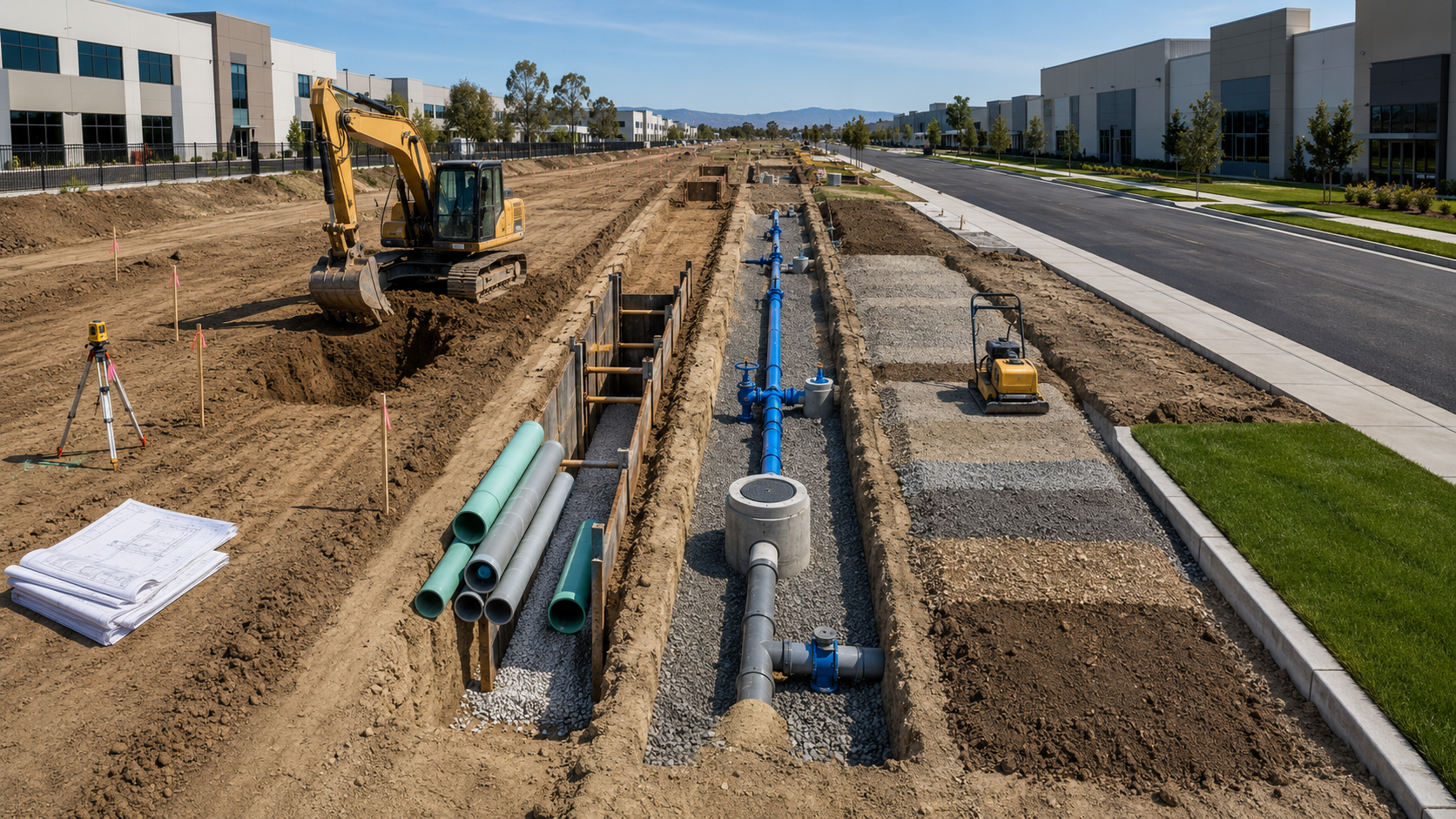
One of the most efficient ways we handle modern developments is through joint trenching. Instead of digging five separate trenches for power, phone, cable, gas, and water, we coordinate with all providers to place multiple utilities in a single, wider trench. This saves space, reduces costs, and minimizes the environmental footprint of the project.
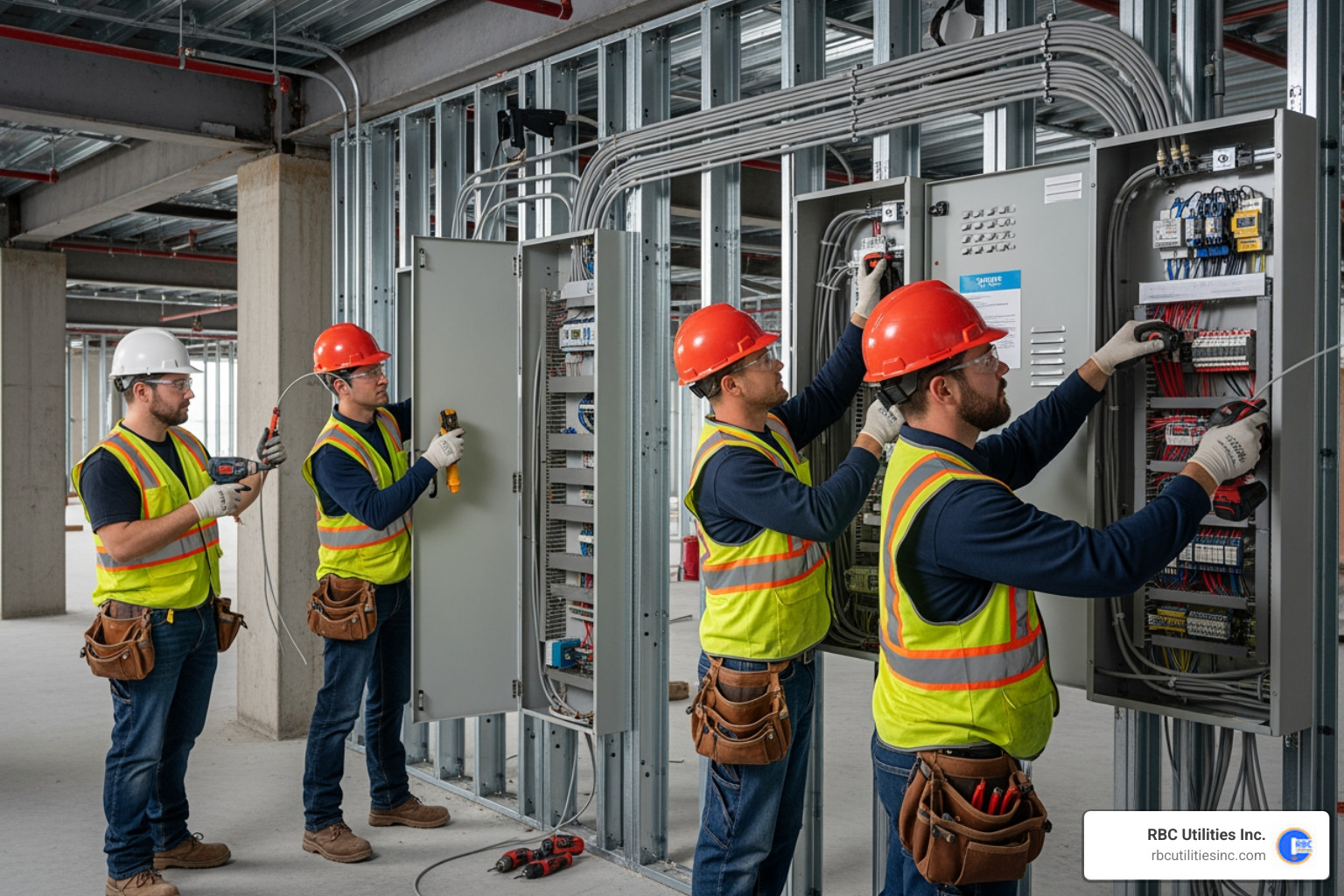
In high-density areas, we often build duct banks. These are groups of conduits encased in reinforced concrete. This provides maximum protection for electrical and communication cables, ensuring they aren't damaged by future construction or shifting soil.
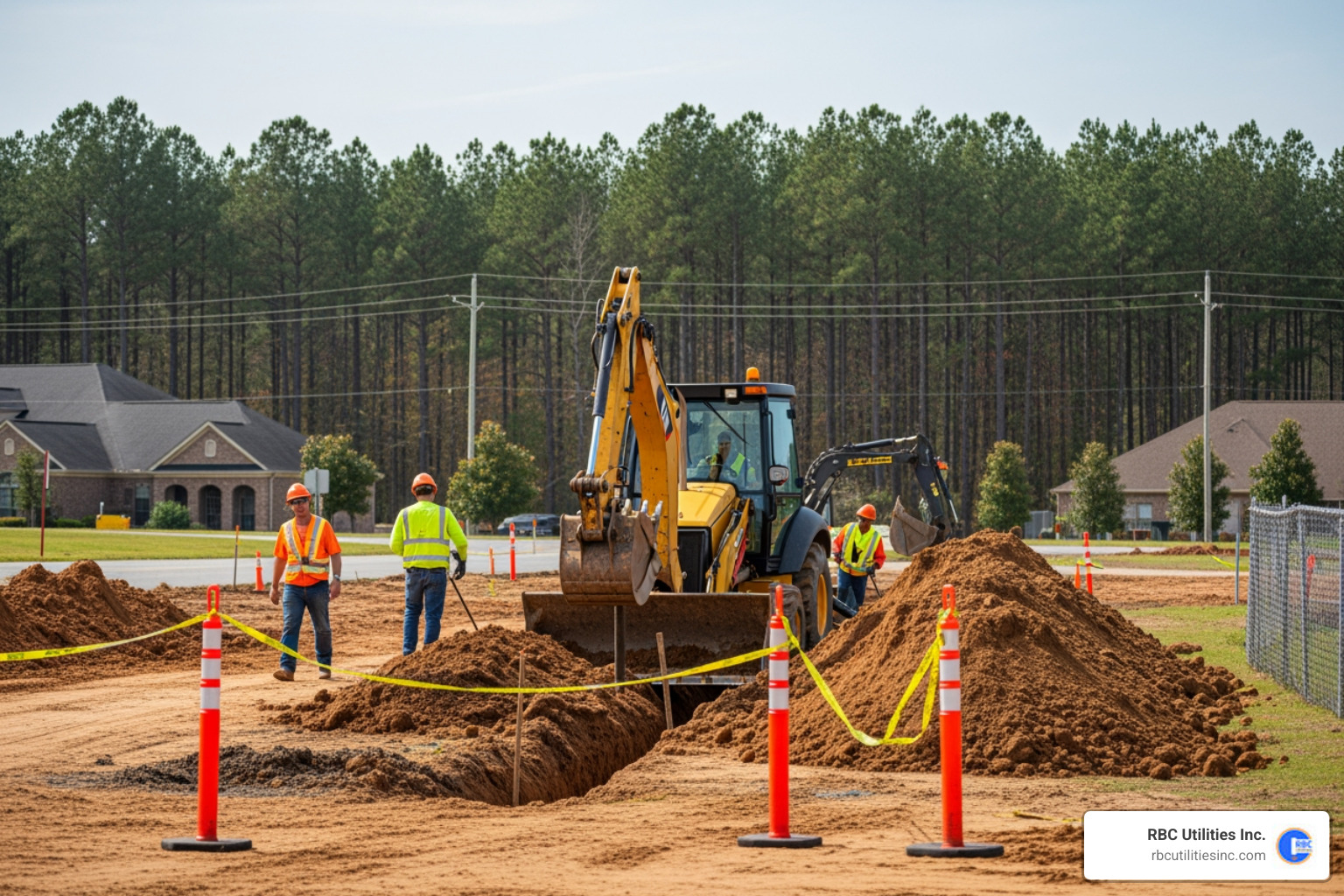
If there is one thing we take more seriously than precision, it's safety. According to the Excavation and Trenching safety standards provided by the NC Department of Labor, cave-ins pose the single greatest risk to workers. A single cubic yard of North Carolina clay can weigh as much as a small car—over 3,000 pounds. You can't outrun a cave-in.
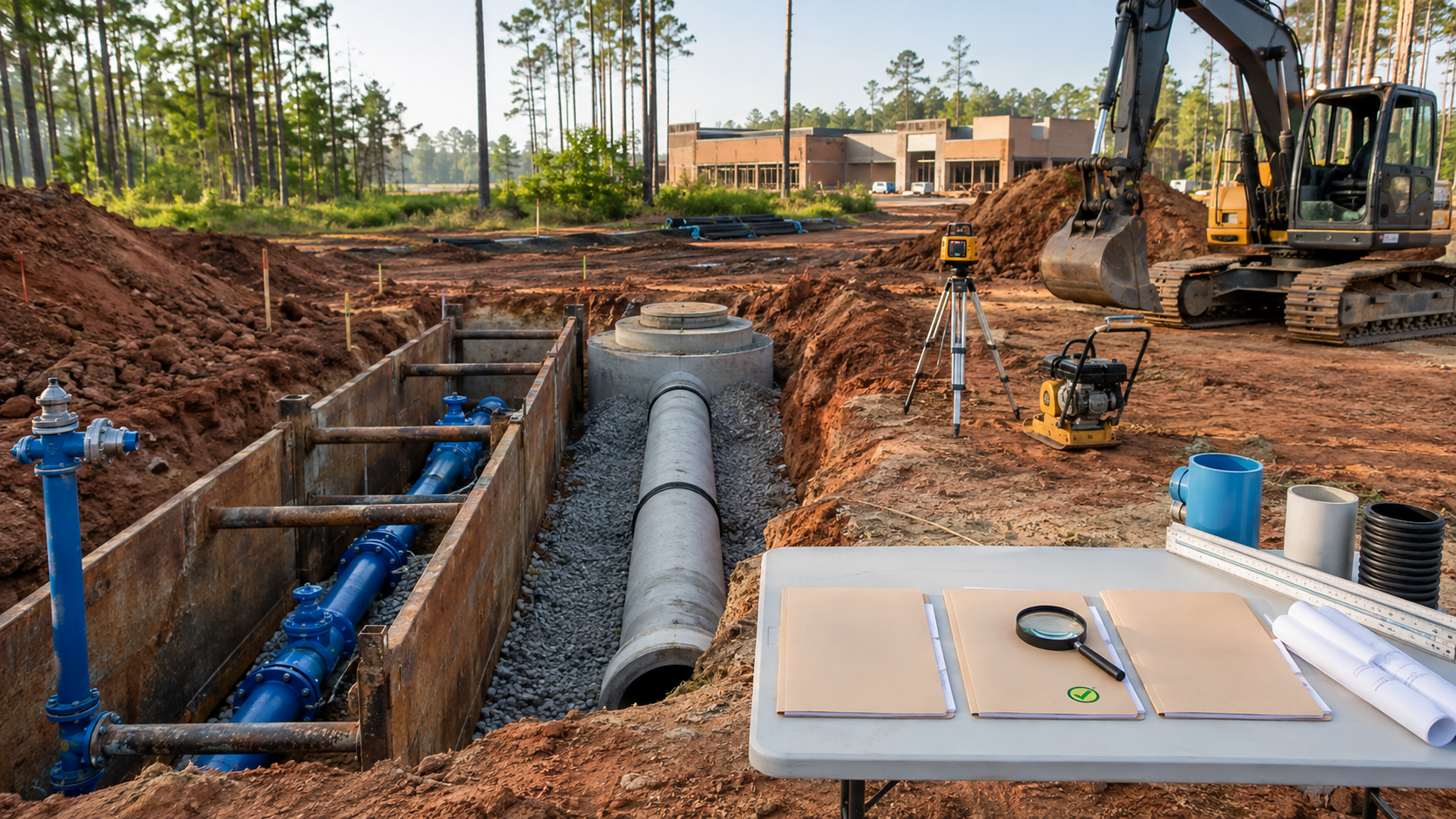
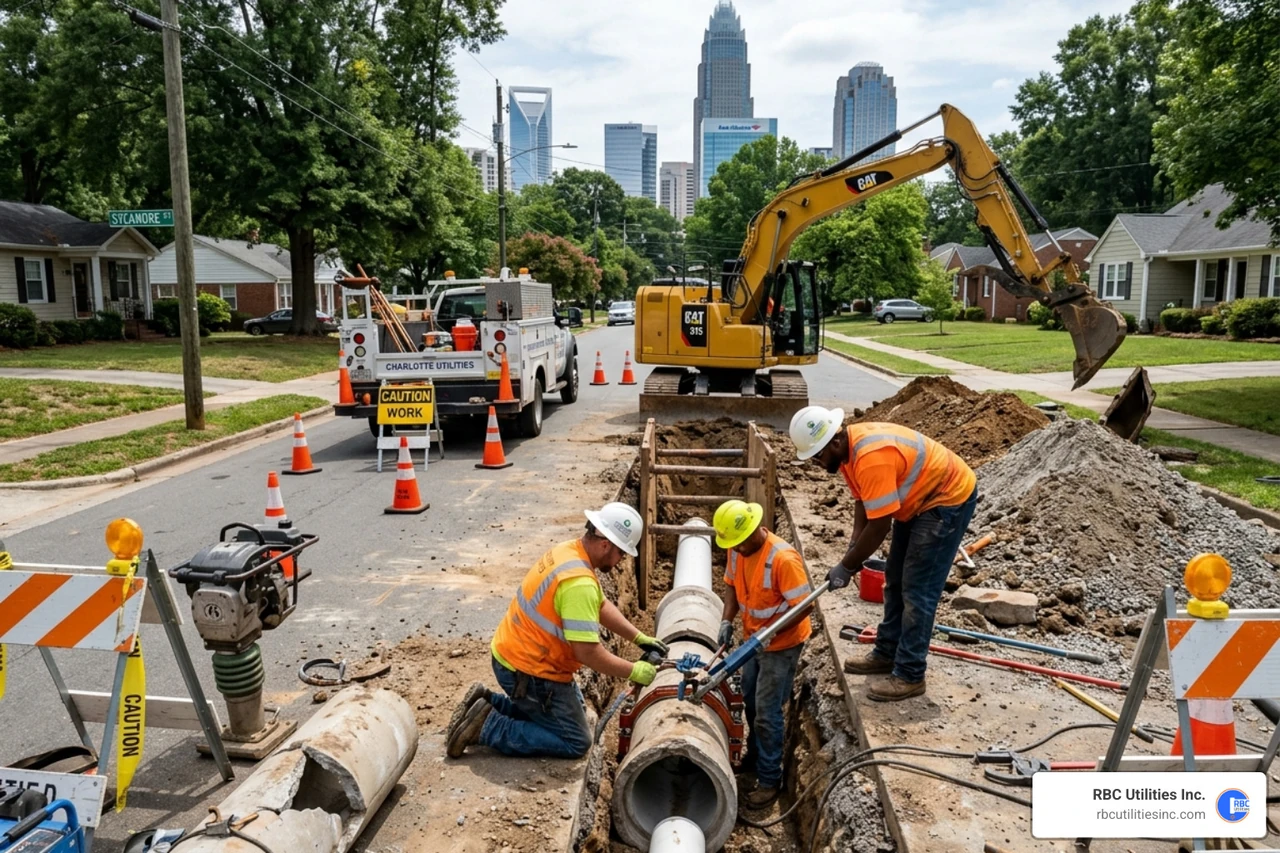
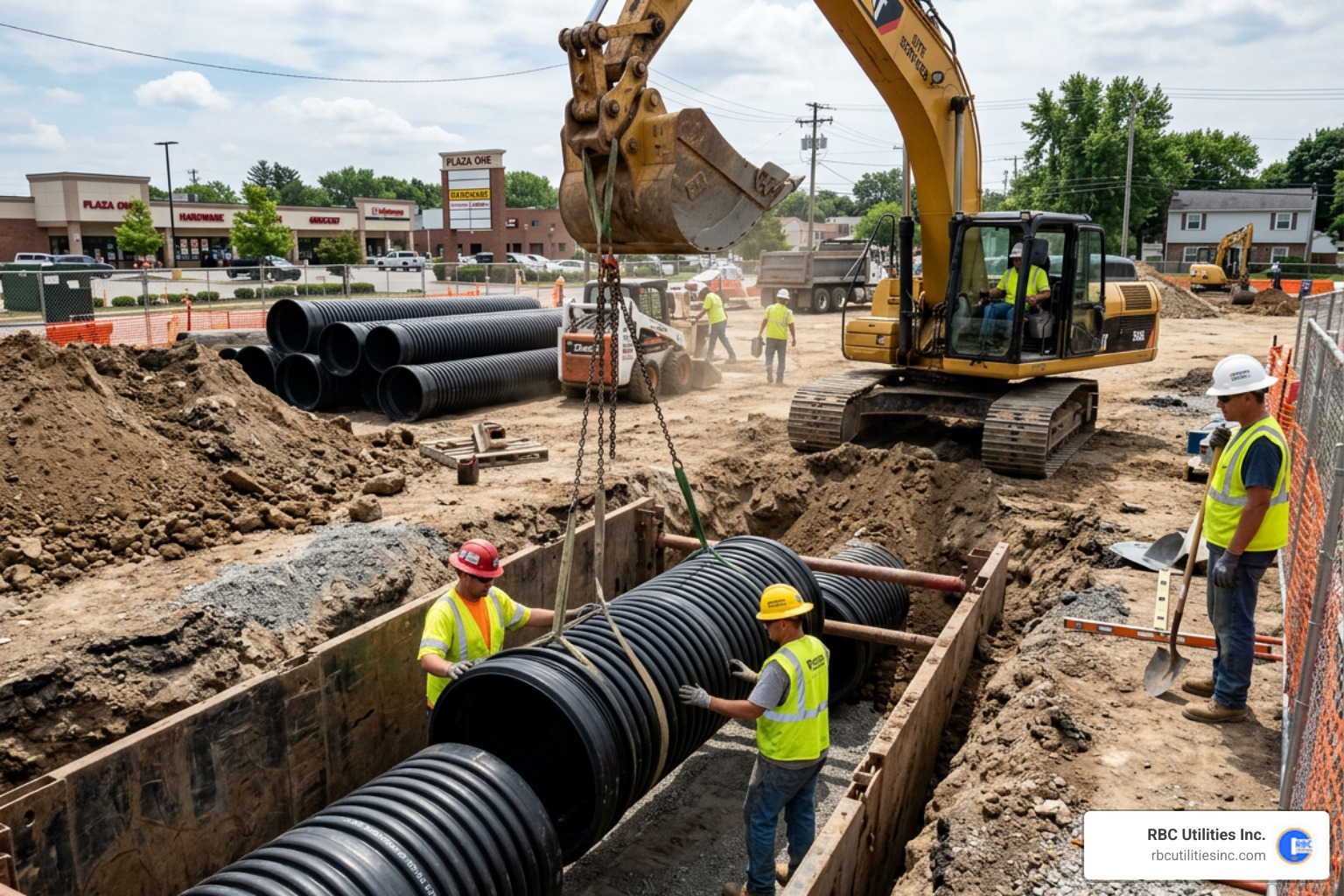
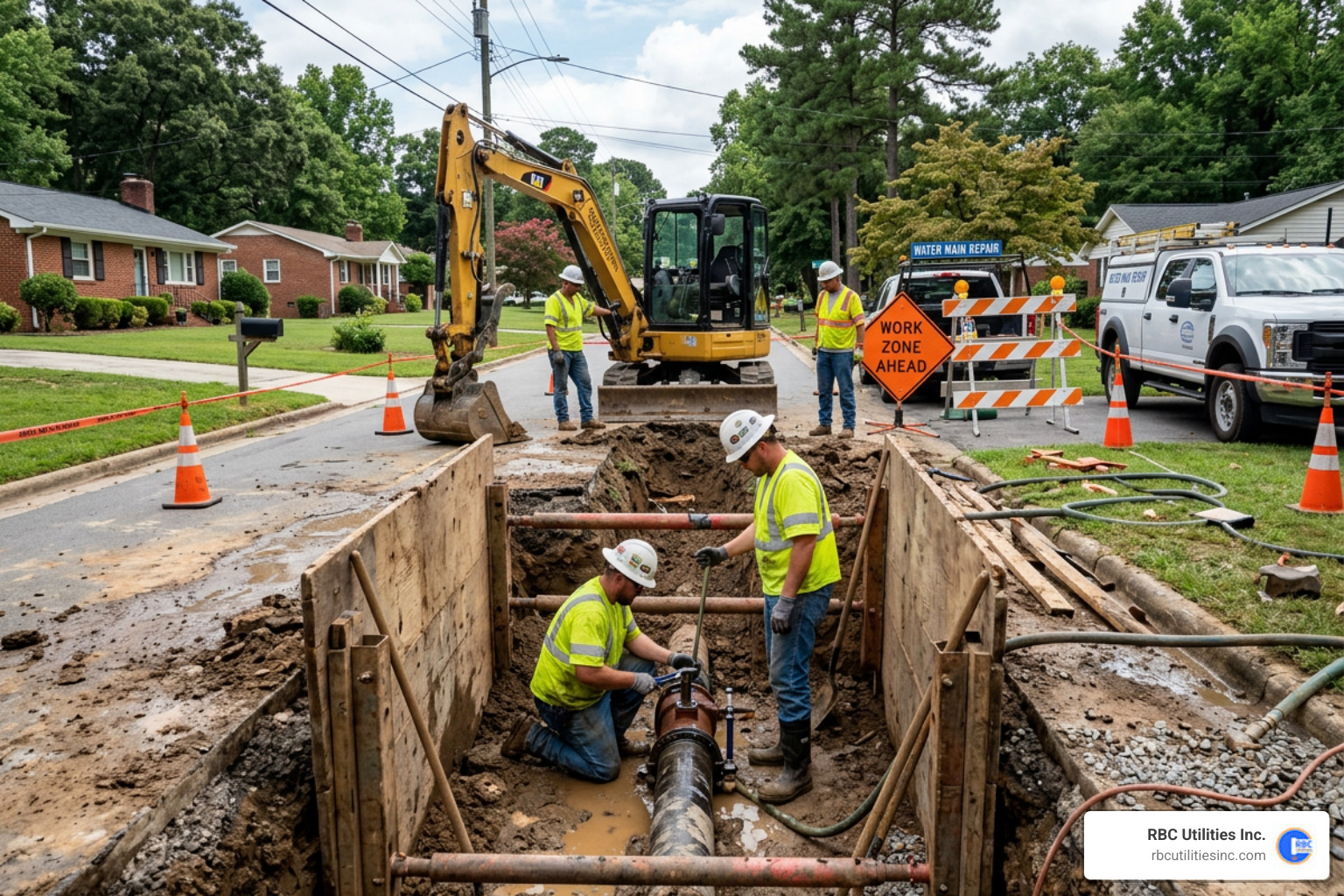
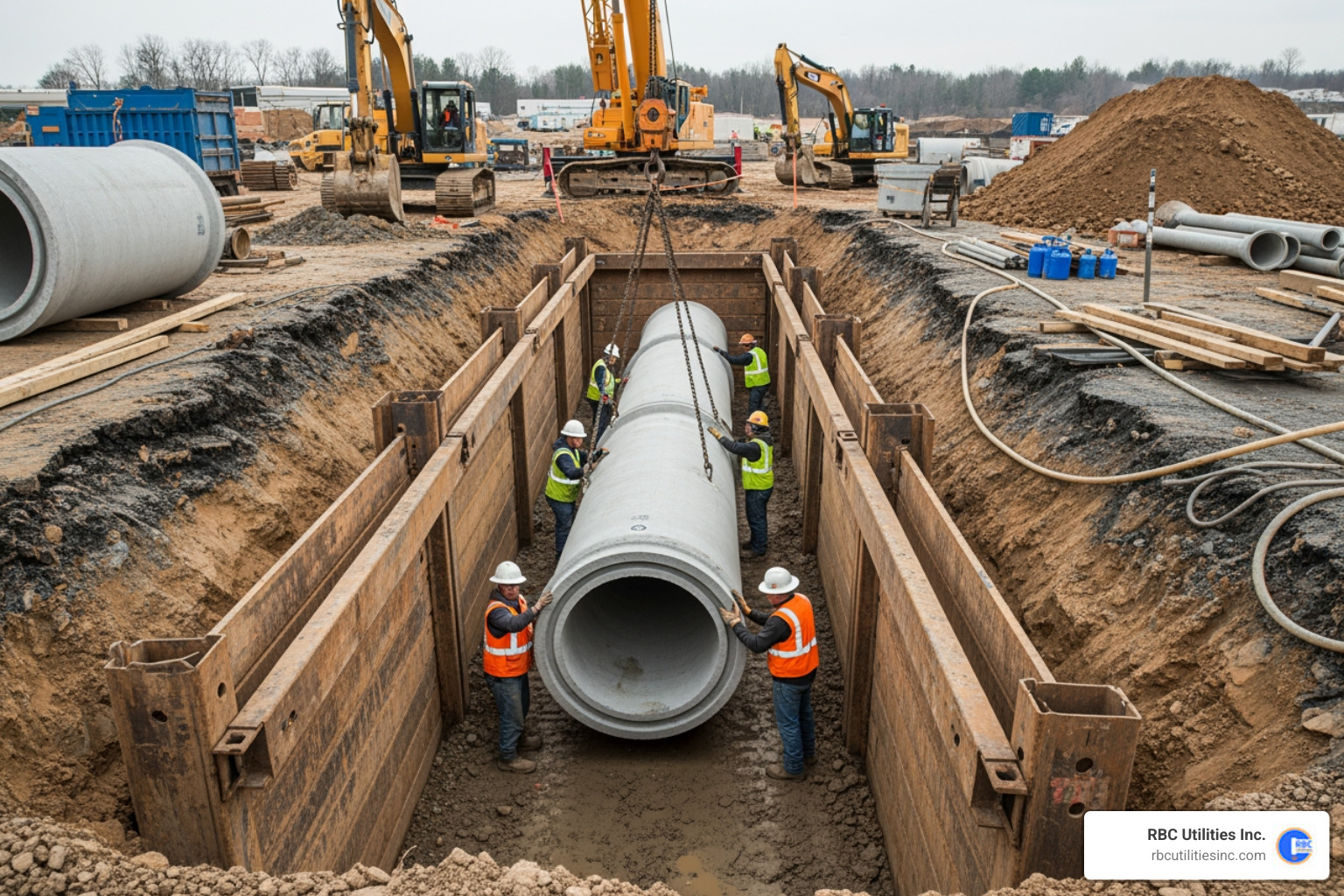
To prevent these tragedies, OSHA 29 CFR 1926 Subpart P requires protective systems for any trench 5 feet deep or more (and even shallower if the soil is unstable). We use three main methods:
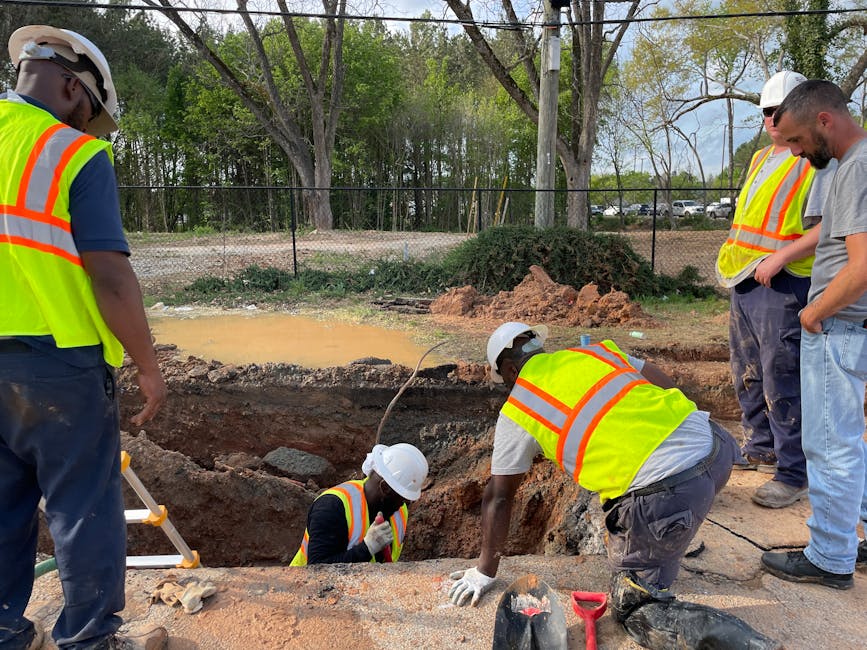
Every utility trench excavation NC site we manage has a designated "competent person." This isn't just a title; it’s a legal requirement. This individual has the training to identify existing and predictable hazards and the authority to stop work immediately if conditions become unsafe.
The competent person performs daily inspections, checking for:
OSHA is very specific about how workers get in and out of a trench. If a trench is 4 feet or deeper, a safe means of egress—usually a ladder—must be located within 25 feet of lateral travel for every employee. This ensures that if something goes wrong, a worker is never more than a few seconds away from an exit. Furthermore, we keep "spoil piles" (the excavated dirt) at least 2 feet back from the edge of the trench to prevent it from falling back in on our team.
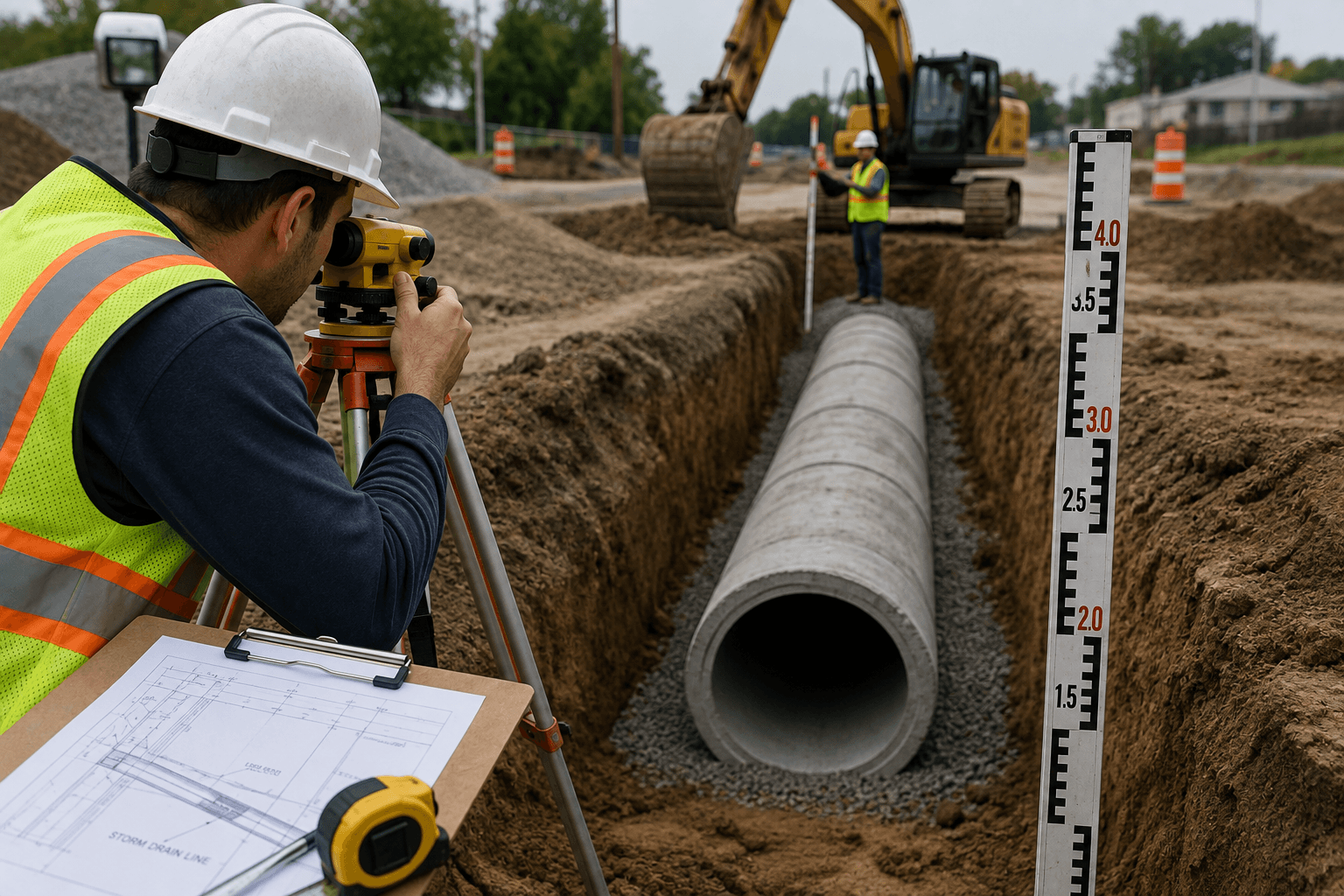
A successful utility trench excavation NC project follows a very specific rhythm. At RBC Utilities Inc., we follow a process honed over decades of service in the Carolinas.
For a deeper dive into these technical requirements, you can review the Standard Specification for Utility Trenches which outlines the rigorous expectations for municipal work in the region.
North Carolina weather is famously unpredictable. Heavy rain can turn a safe trench into a mud-filled hazard in minutes. We employ strict erosion control measures, including silt fences and sediment basins, to protect the local environment and keep our sites compliant with NC environmental laws.
Our soil types also dictate our equipment. In the Piedmont, we often run into "partially weathered rock" that requires specialized attachments or even blasting. In the coastal plains, we deal with high water tables that require extensive dewatering systems. Understanding these local nuances is why our underground utility services are so valued by our clients.
Proper compaction is the difference between a road that lasts 20 years and one that develops a massive sinkhole in six months. Most North Carolina municipalities require backfill to be compacted to 95% Standard Proctor density (as measured by AASHTO T99). We often bring in third-party geotechnical engineers to test our compaction and provide a certified report, giving our clients peace of mind that the job was done right.
While the terms are often used interchangeably, OSHA defines a trench as a narrow excavation where the depth is greater than the width, but the width (measured at the bottom) is not greater than 15 feet. An excavation is any man-made cut, cavity, or depression in the earth's surface.
Depth varies by utility and local frost lines. Generally, water lines are buried 36 inches deep to prevent freezing, while electrical conduits might be 18 to 24 inches deep. Sewer lines vary significantly based on the "fall" needed for gravity flow.
Because trenching is one of the most dangerous jobs in construction. A competent person is trained to spot hazards—like soil fissures or improper shoring—that an untrained eye would miss. Their presence is a legal mandate to prevent fatalities.
At the end of the day, utility trench excavation NC is about more than just moving dirt. It’s about building the foundation for the Carolinas' future. Whether we are laying fiber optic lines to connect a new business park in Charlotte or installing storm drains for a residential community in Raleigh, our focus remains the same: precision, safety, and reliability.
By choosing a partner like RBC Utilities Inc., you are getting the benefit of local expertise backed by national-scale resources. We understand the red clay, the regulatory landscape, and the critical importance of keeping your project on schedule. From the first call to NC 811 to the final compaction test, we are committed to excellence in every foot of trench we dig.
Ready to start your next project with a team that values precision as much as you do? Contact us for your next project and let's build something lasting together.
Part of Saga Infrastructure, protecting what others built and helping it grow.
Address: 4404 Stuart Andrew Blvd., Suite K, Charlotte, NC 28217
Email: info@rbcutilities.com
Phone: 803-913-9727
Service Area: North Carolina | South Carolina