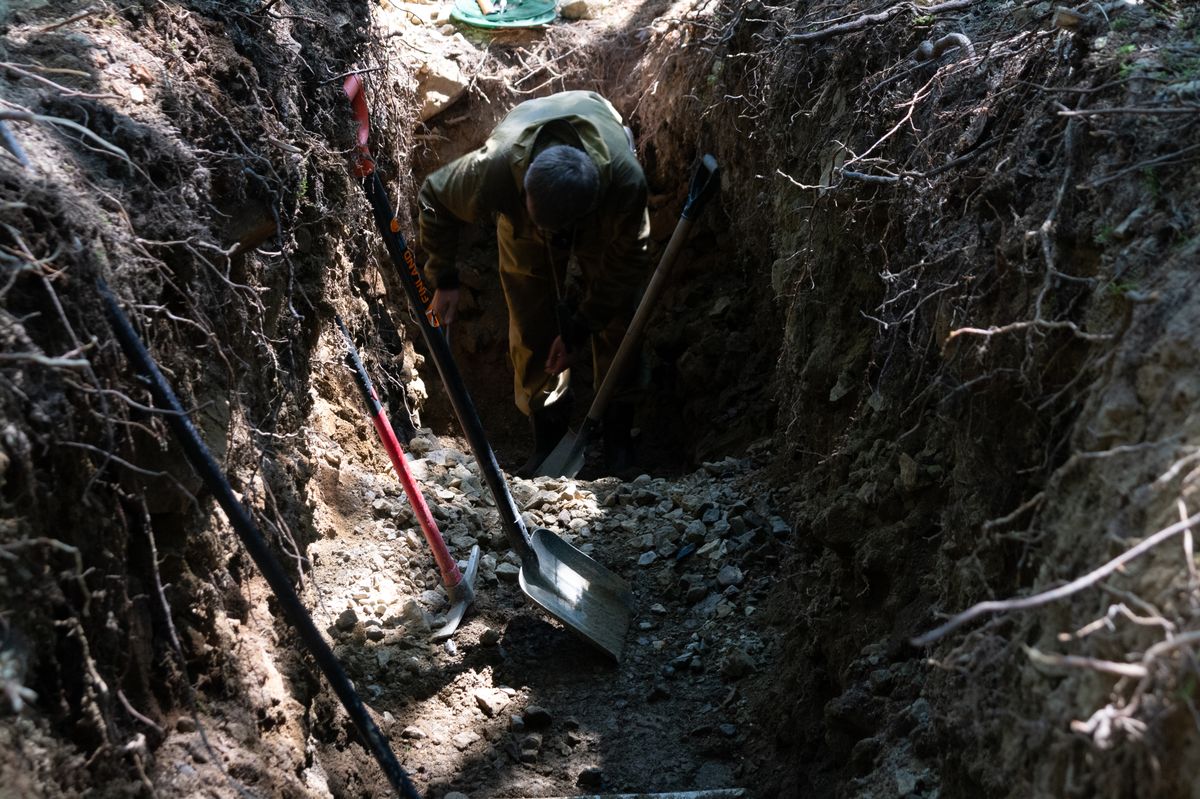
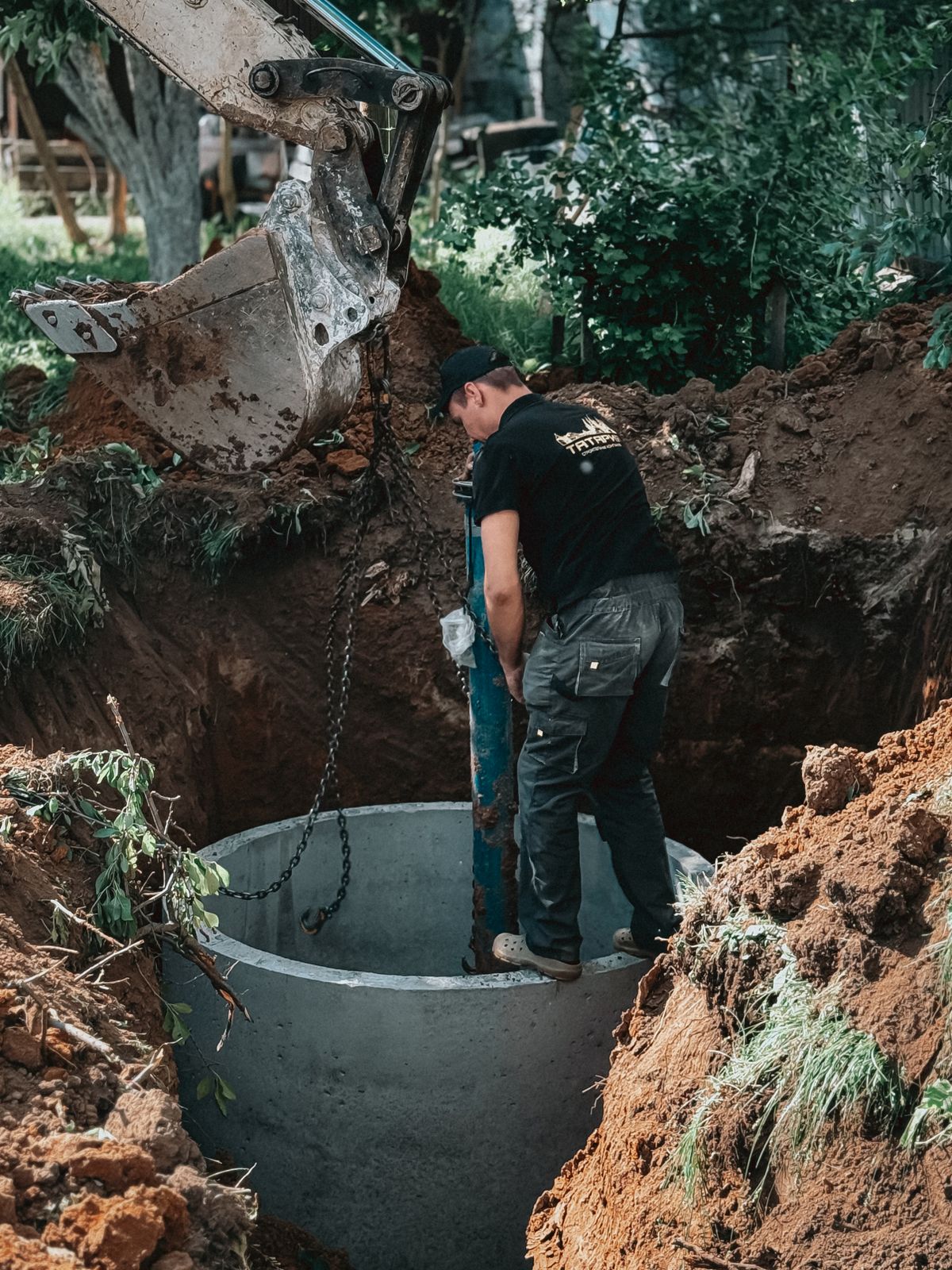
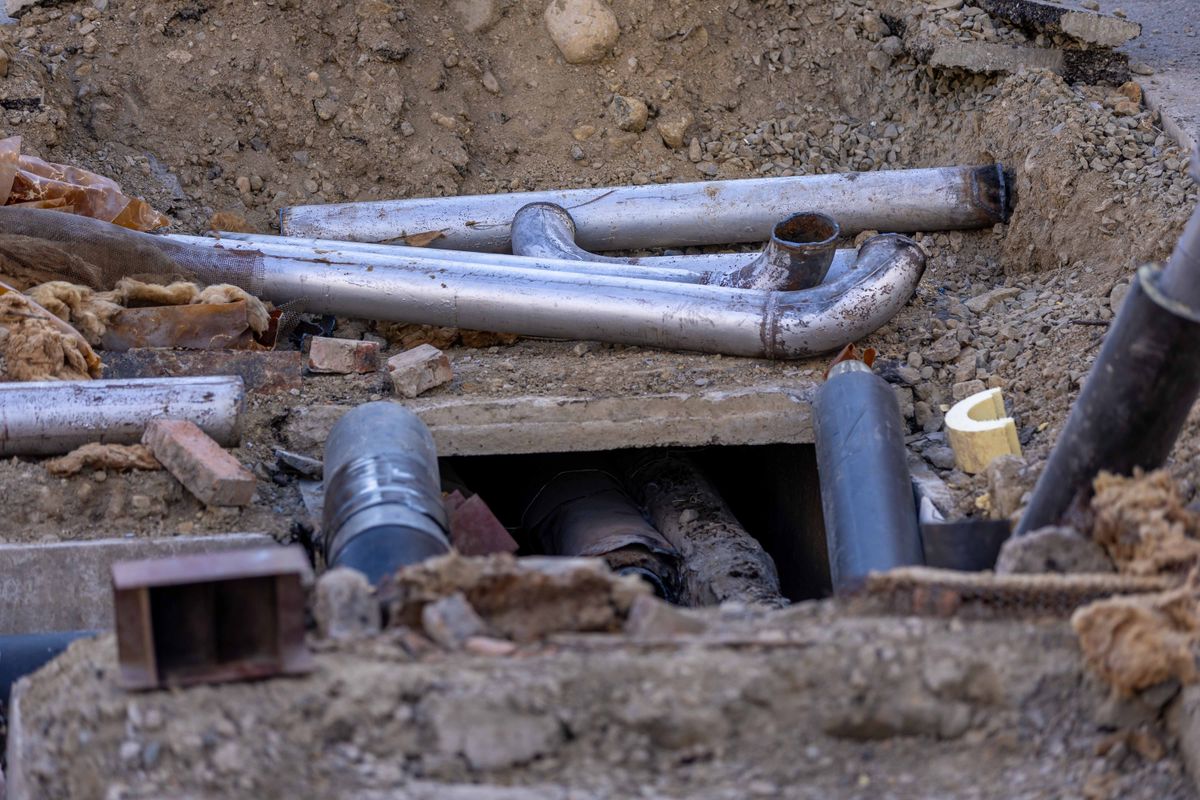
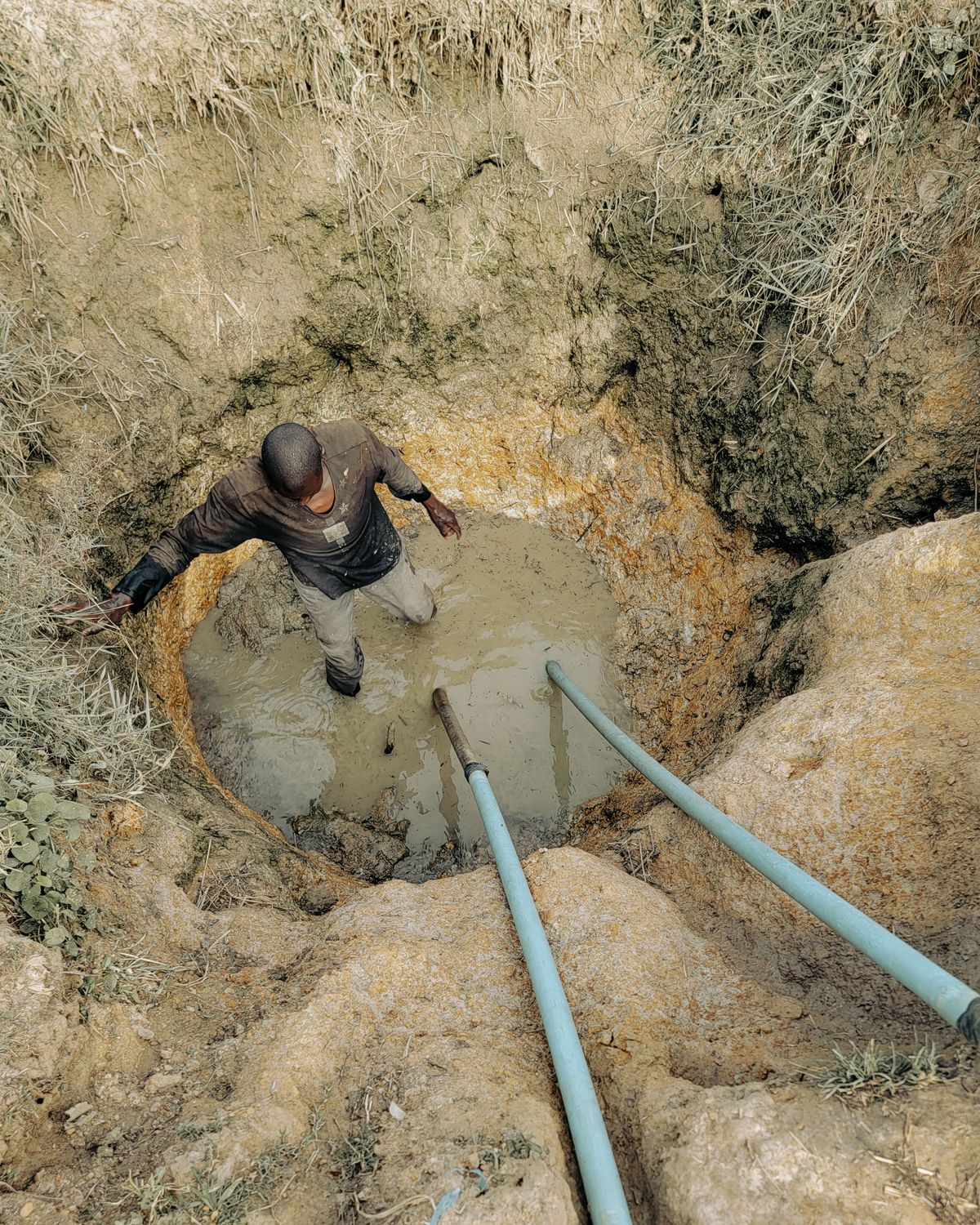
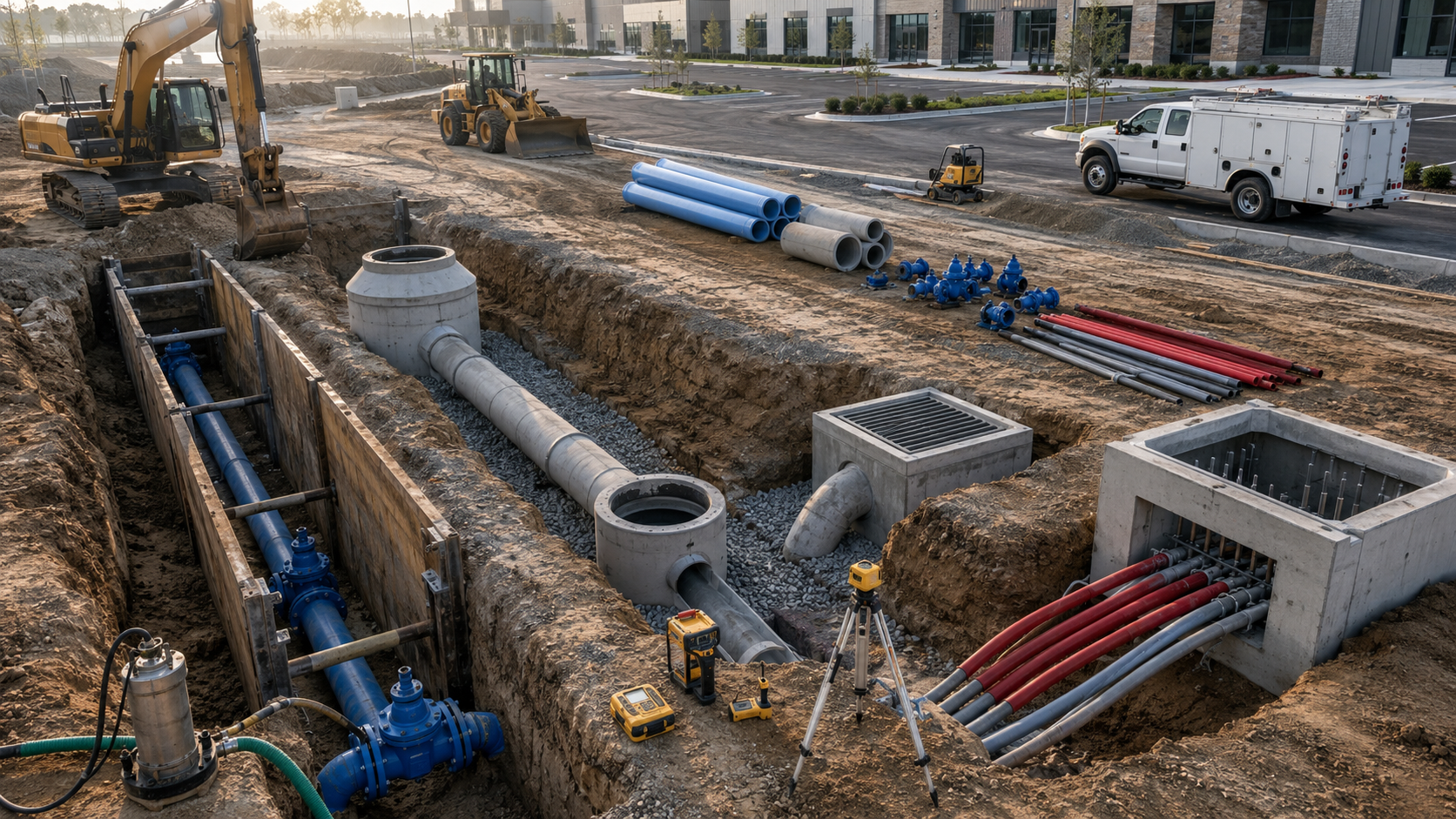
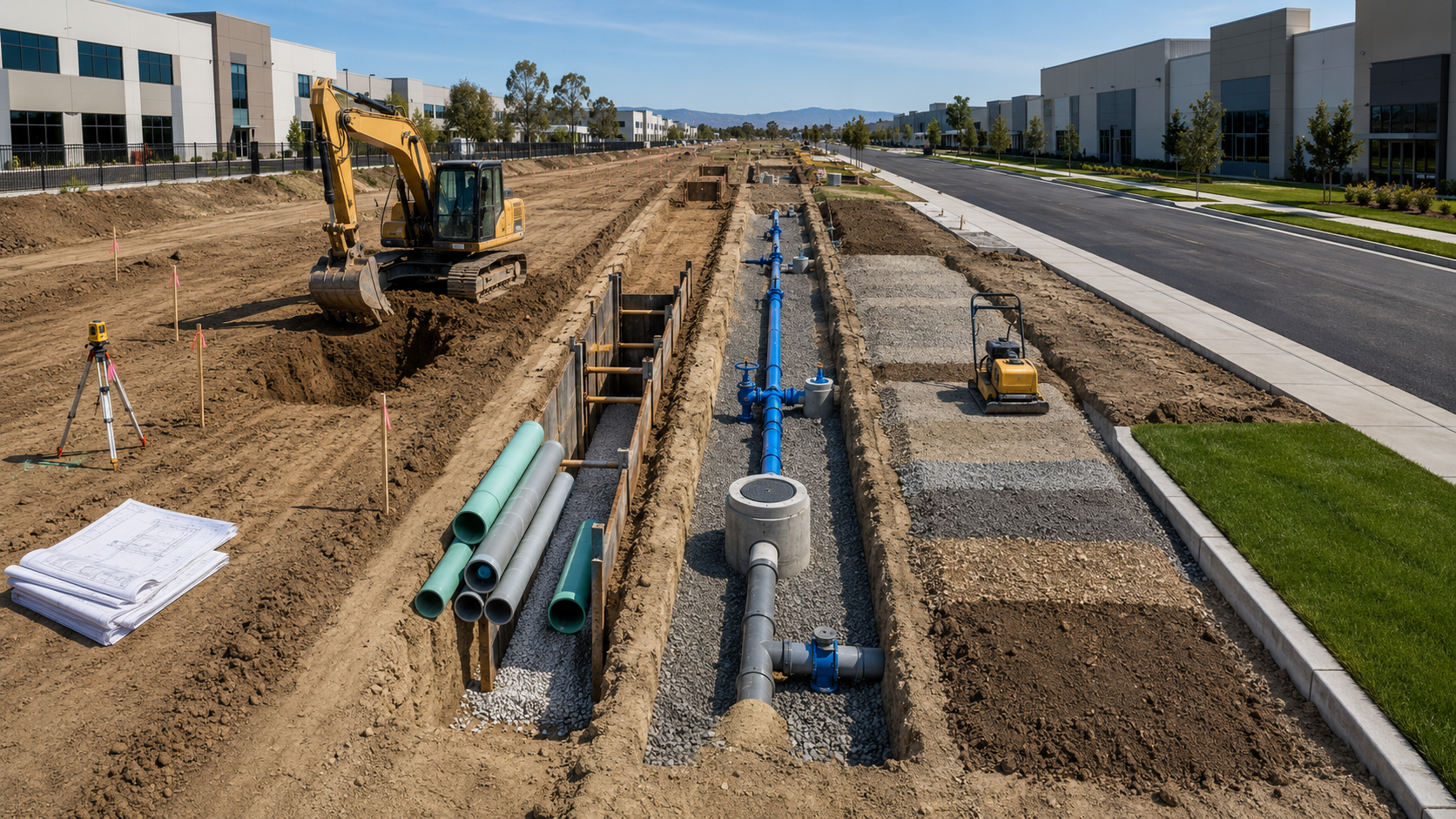
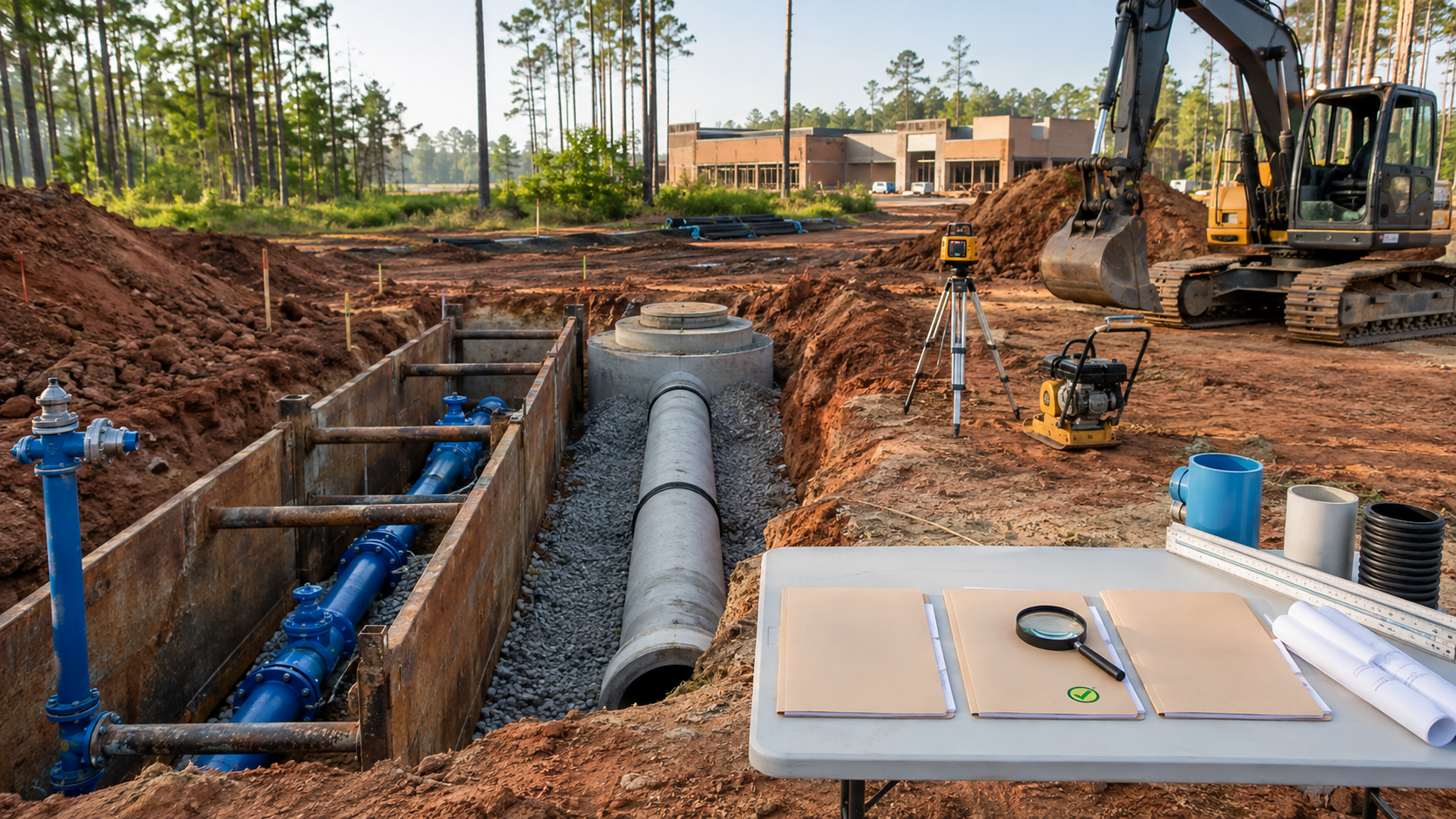
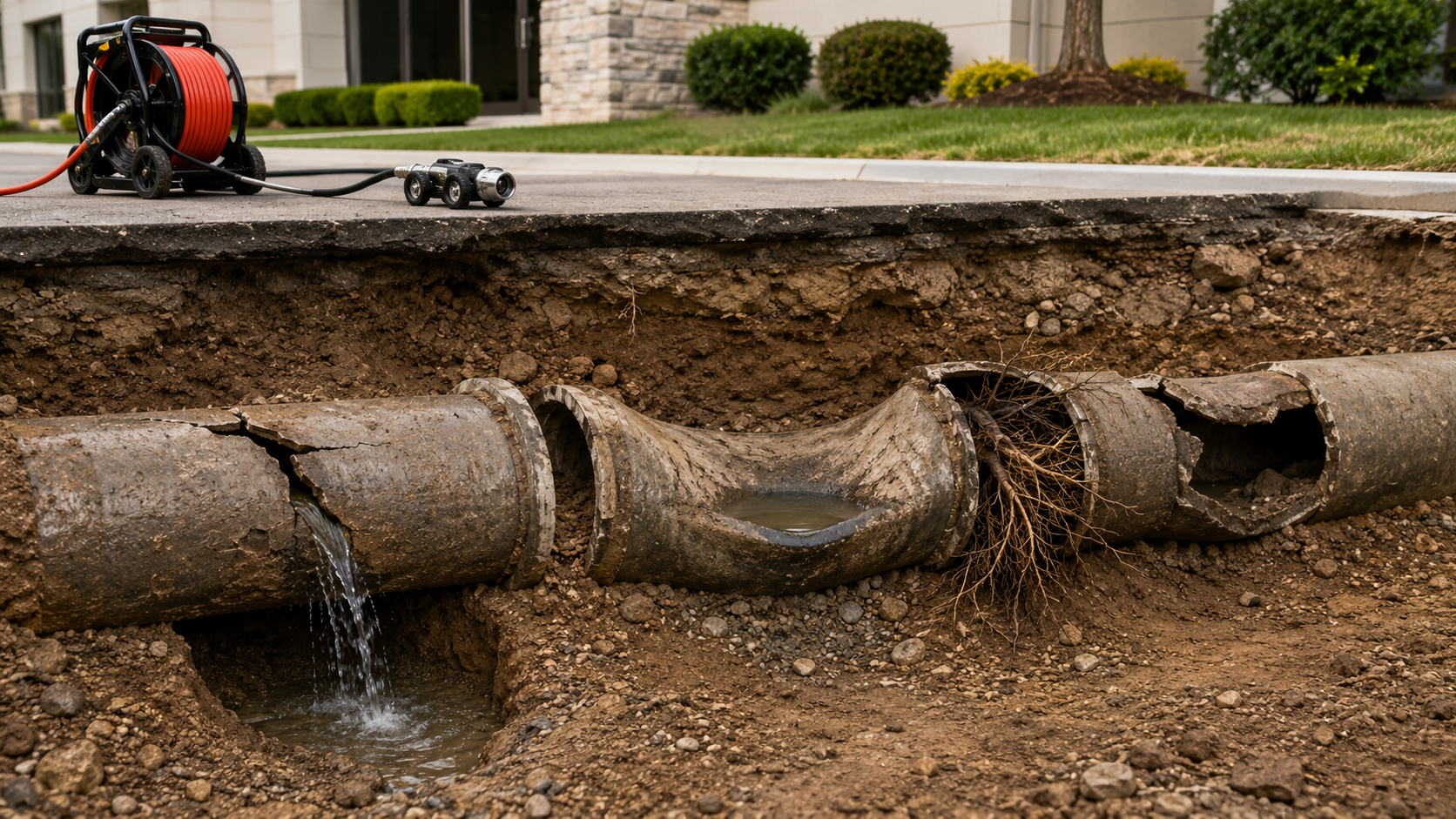
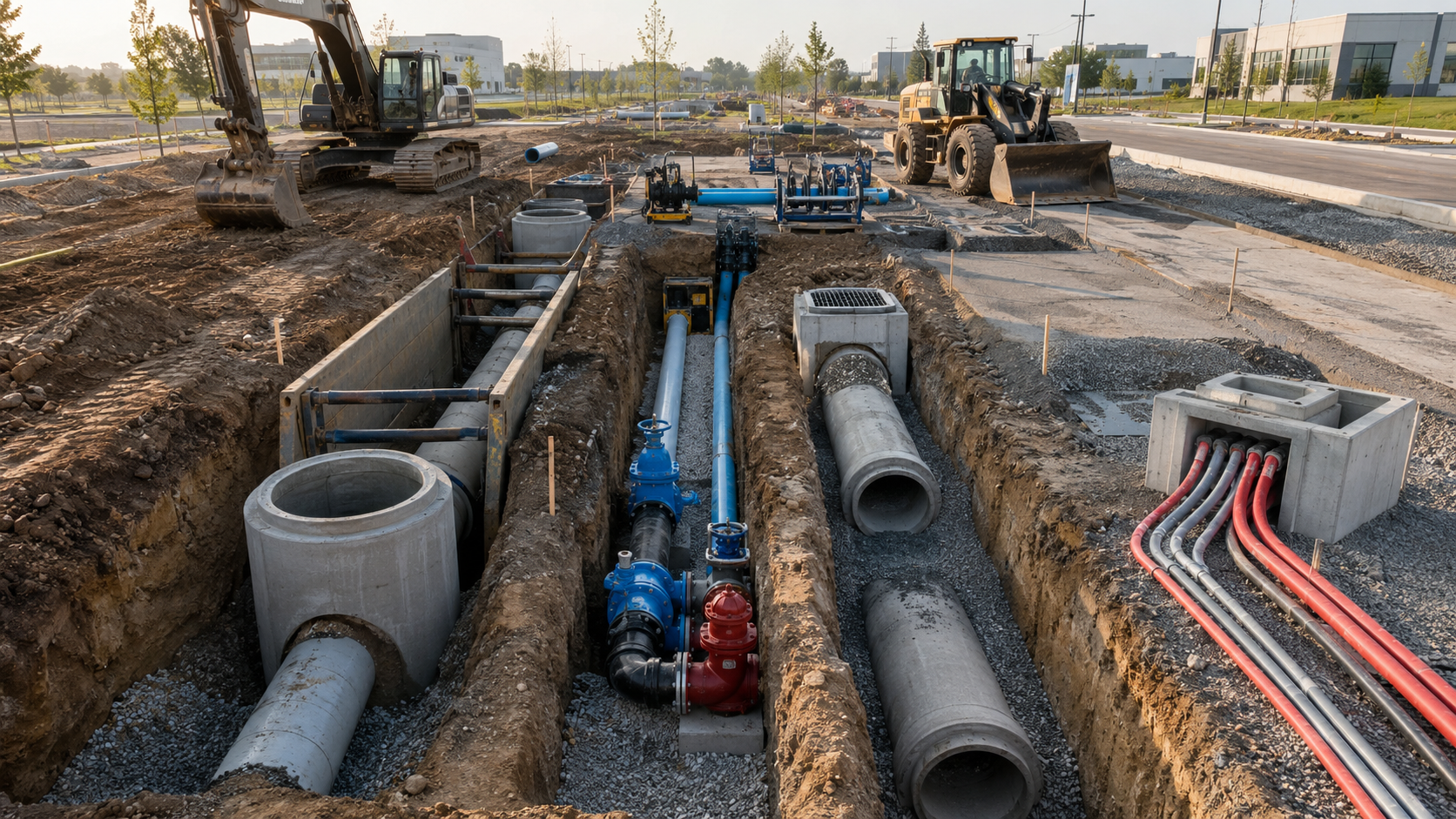
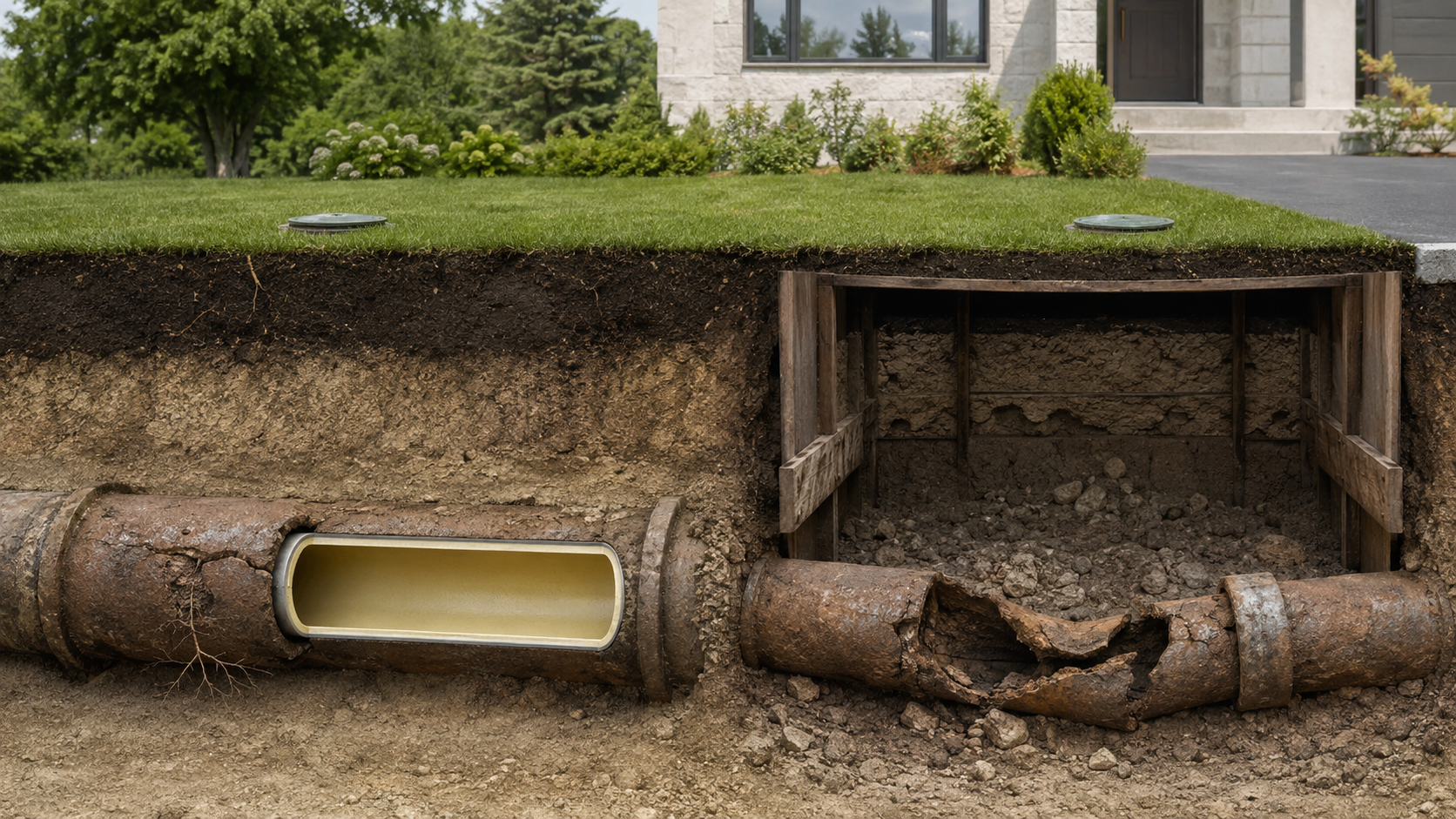
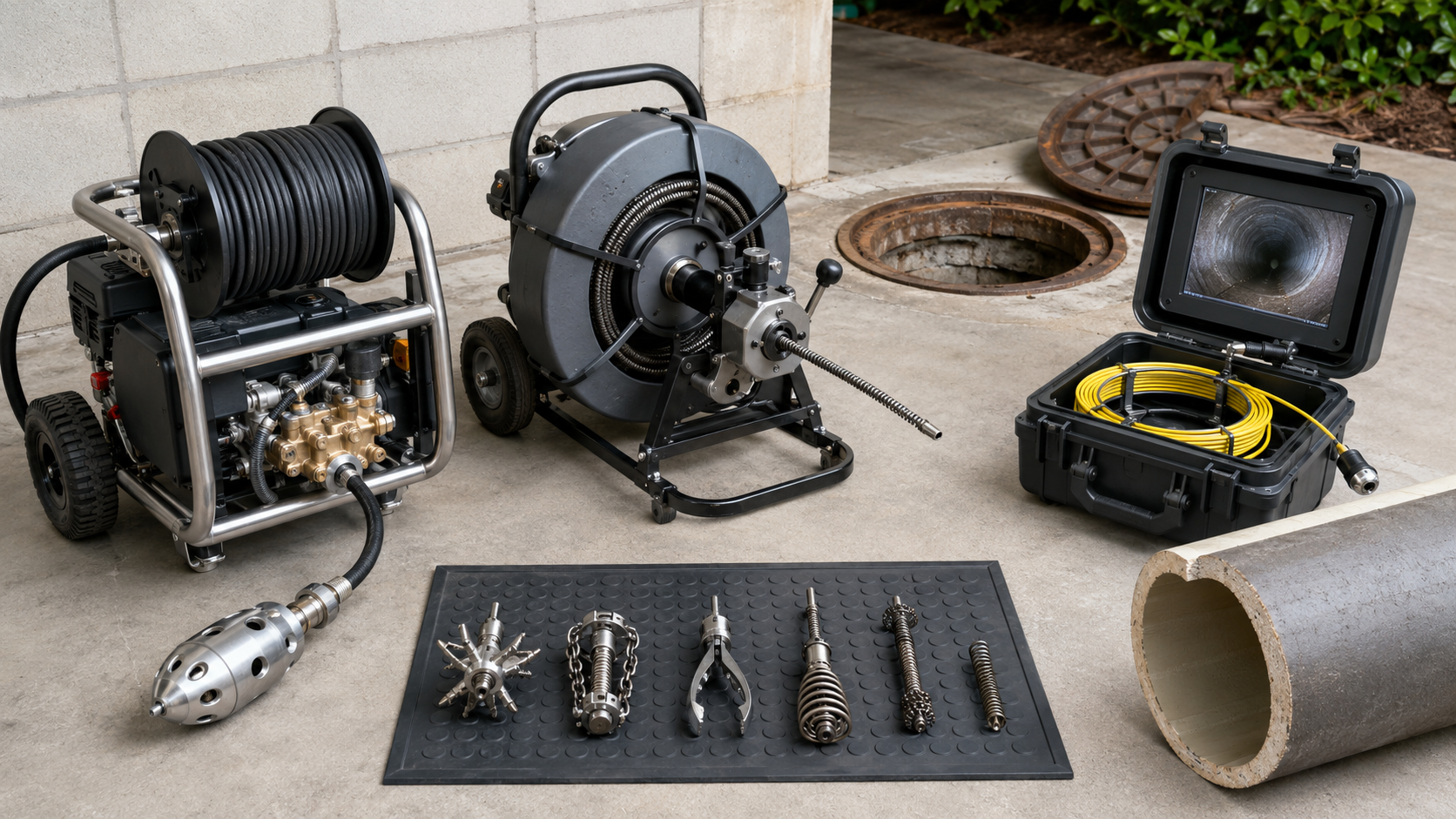
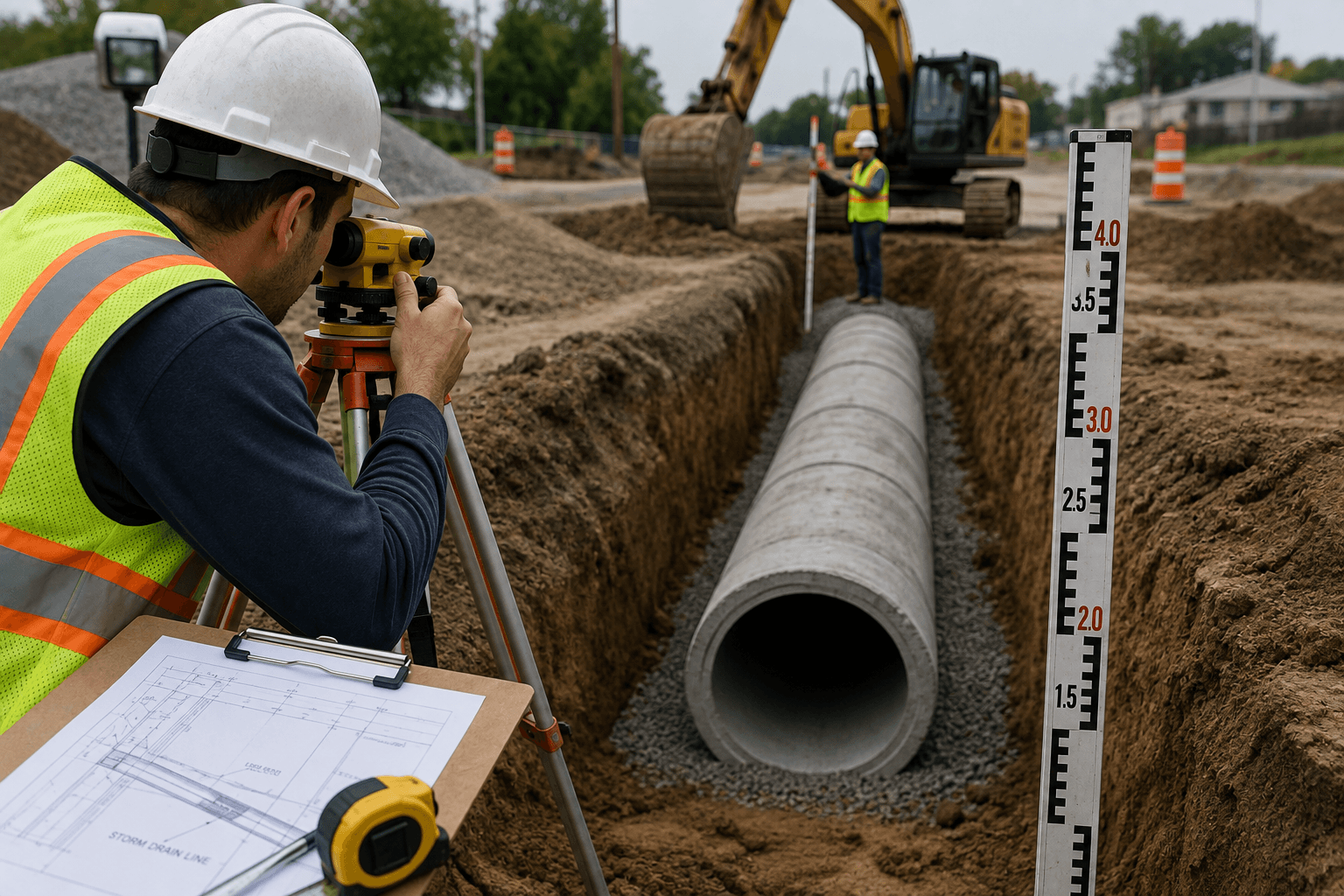
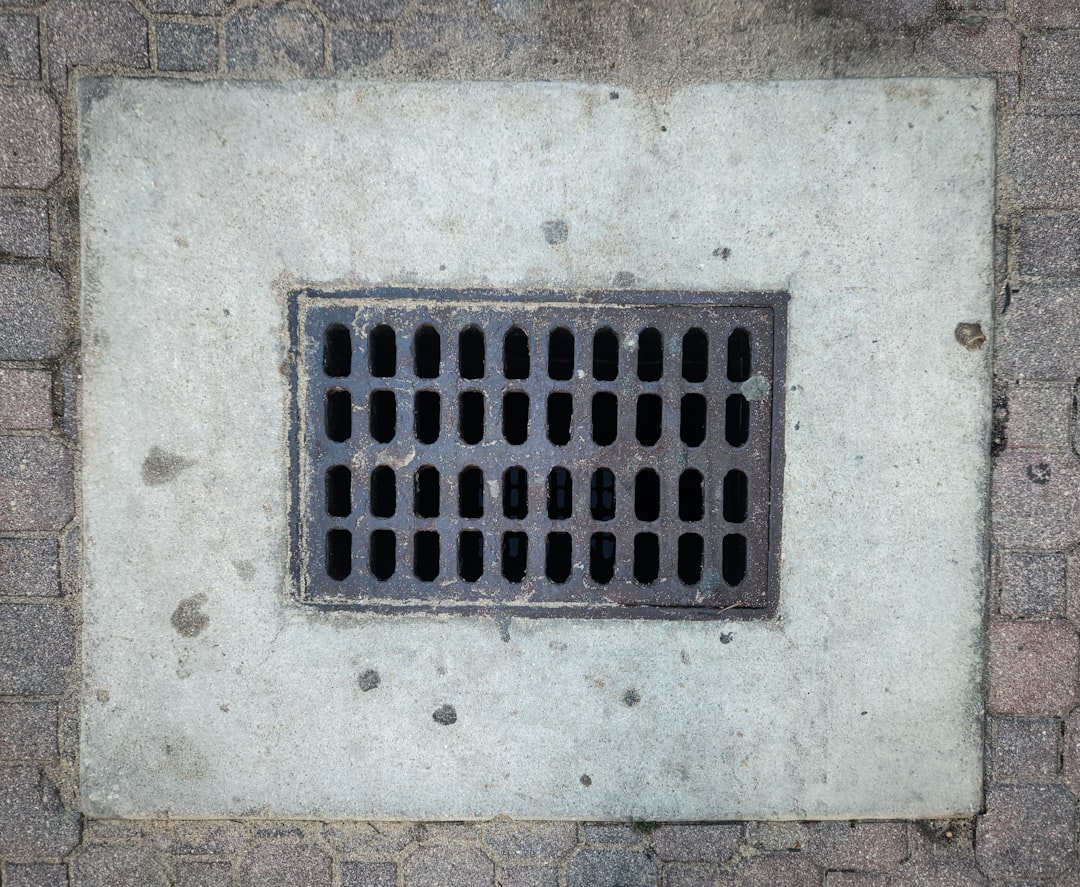
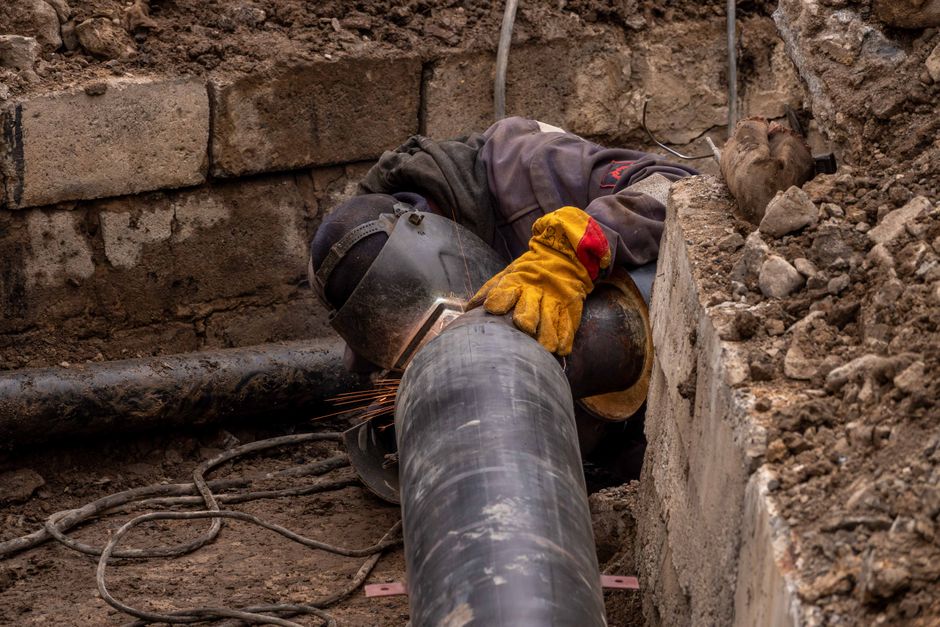
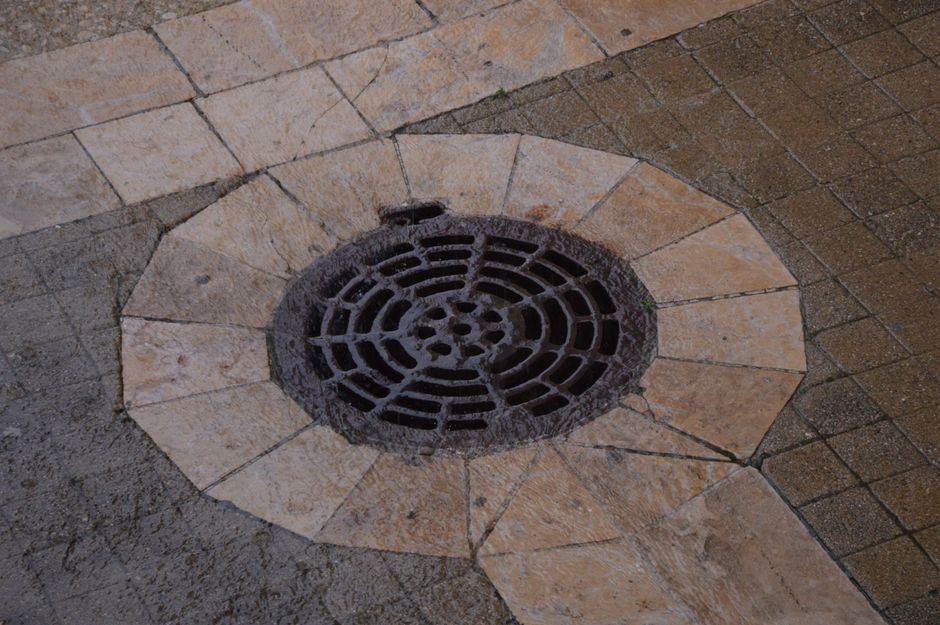
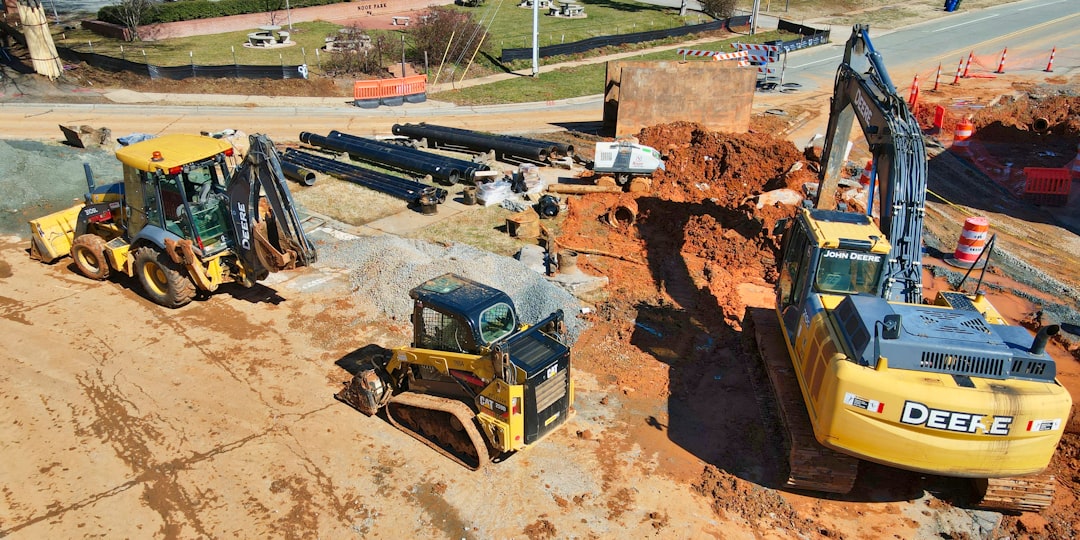
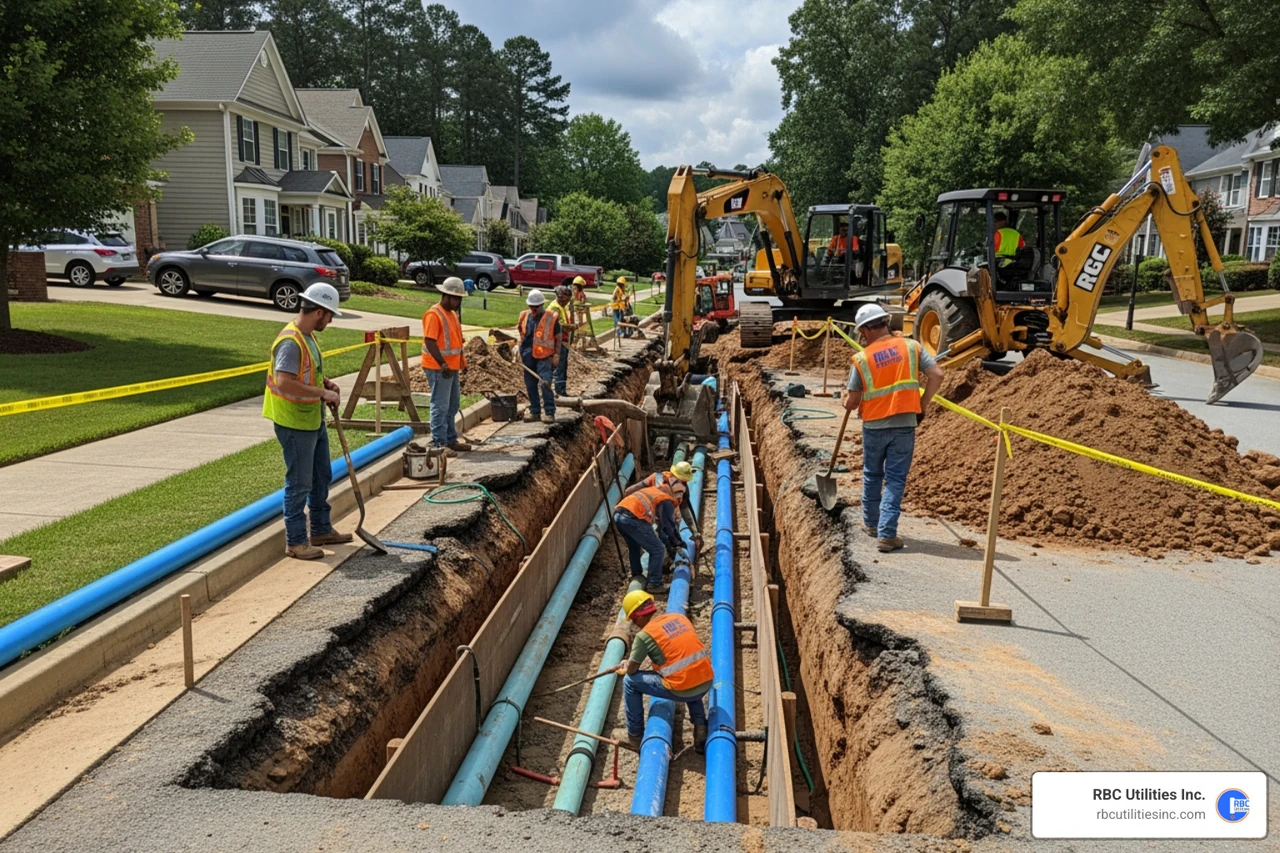
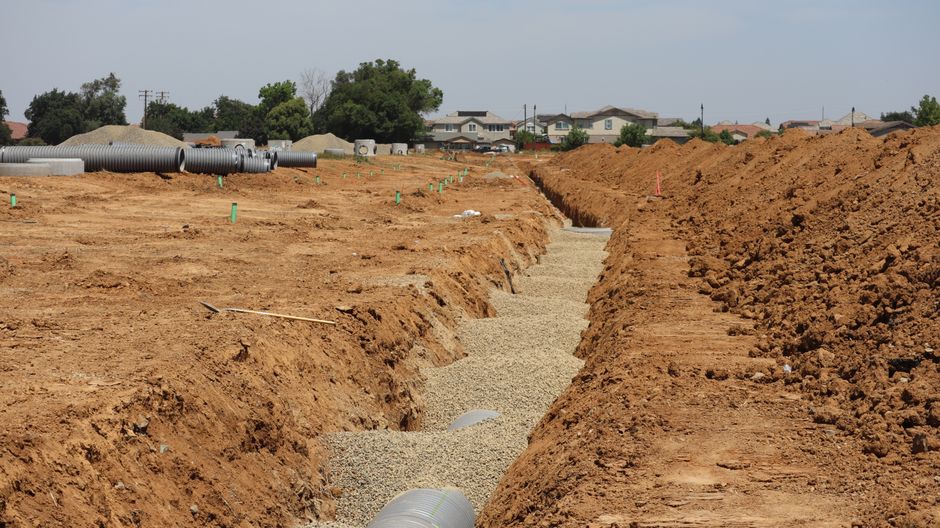
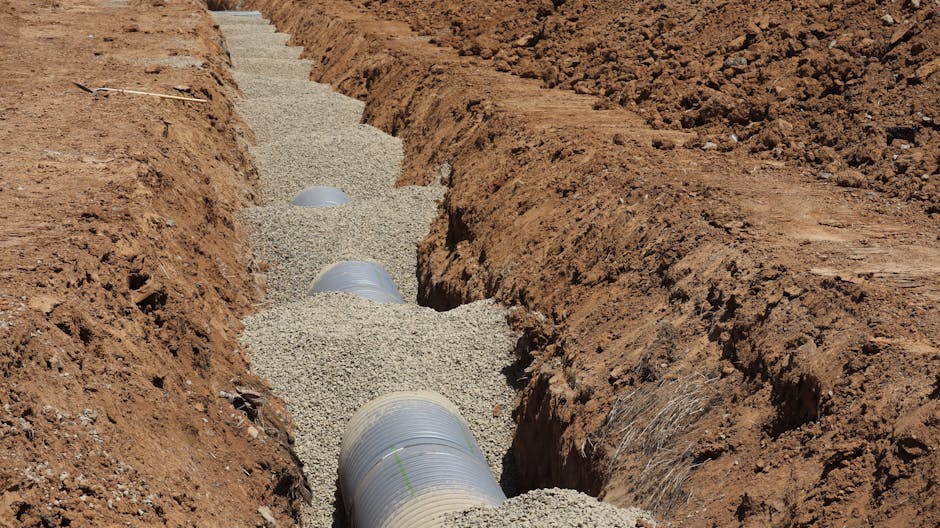
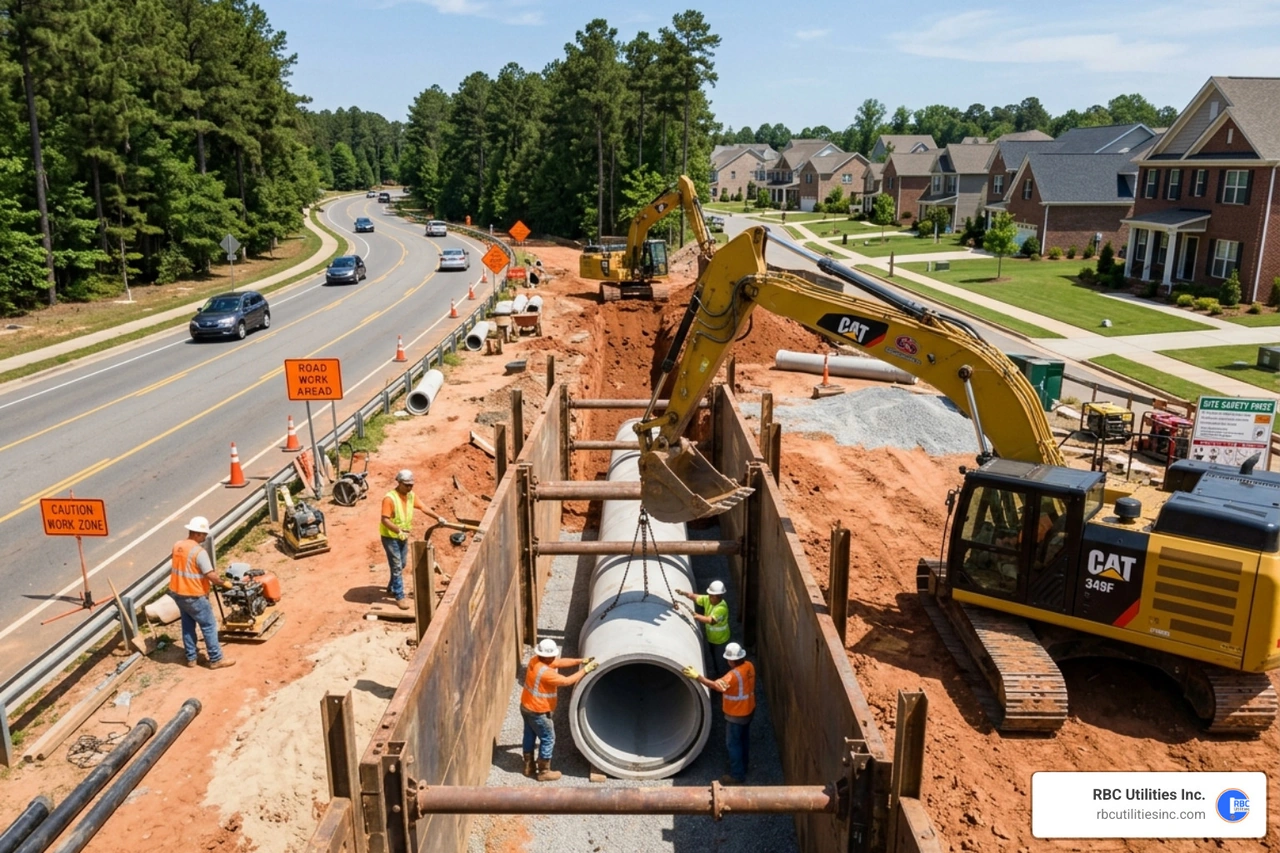
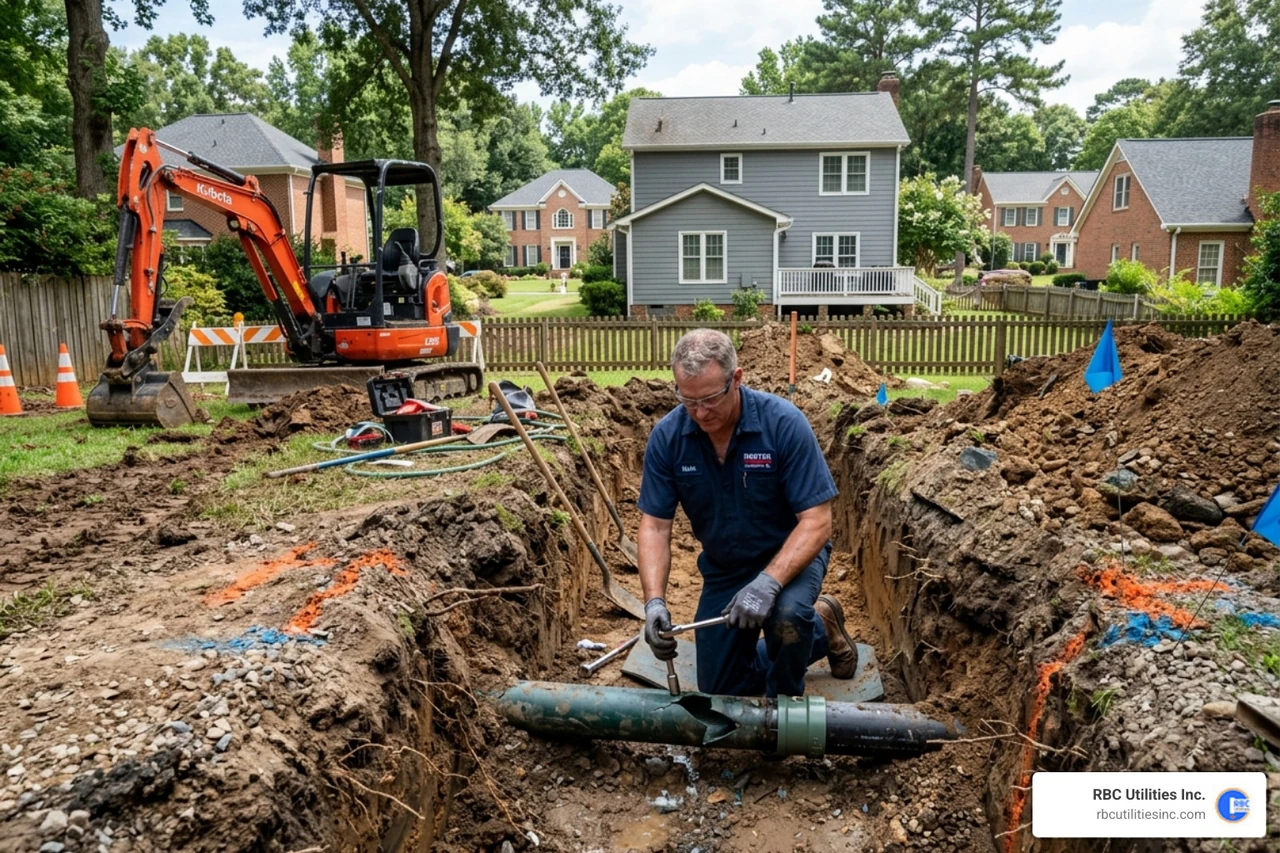
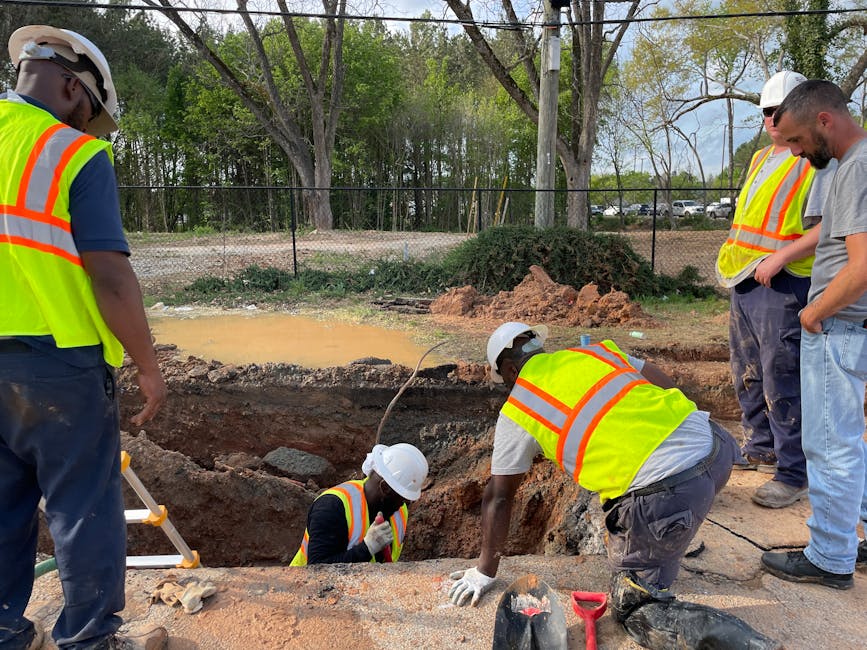
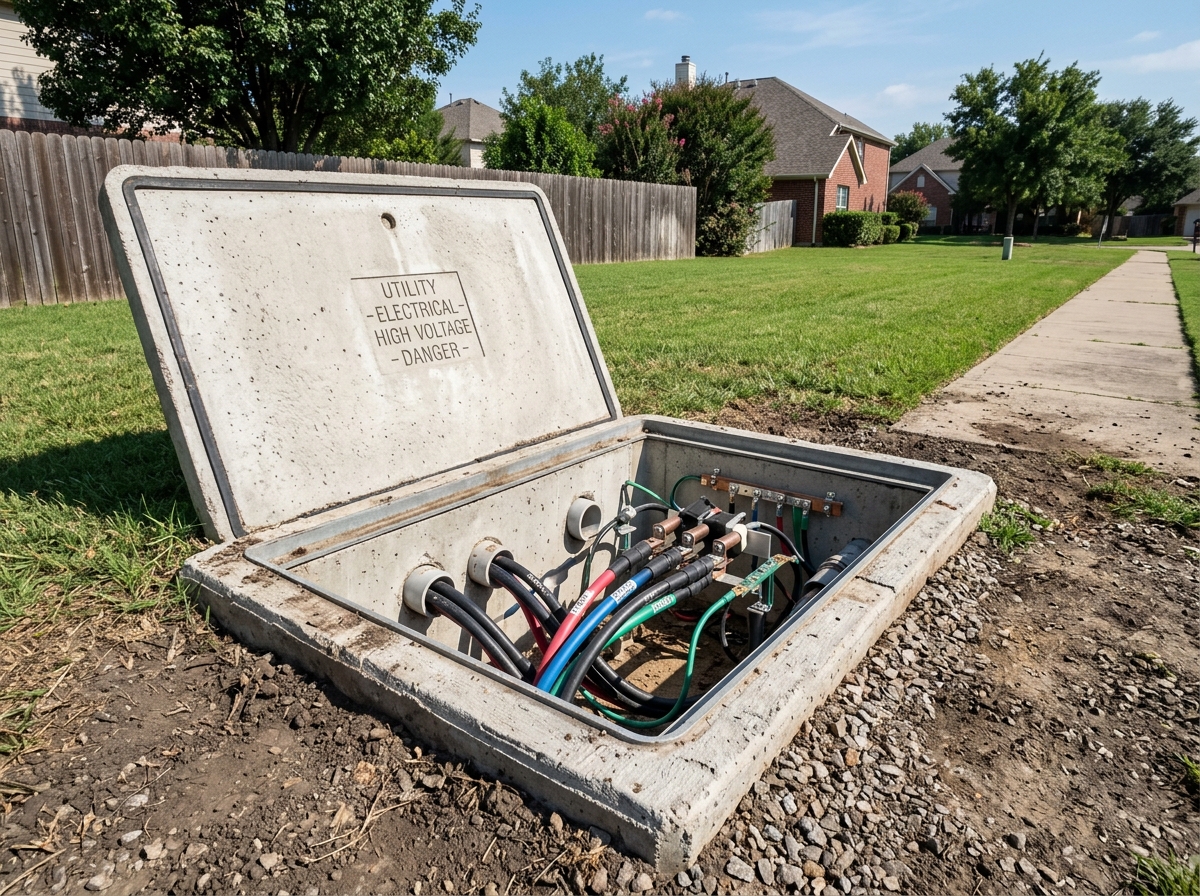
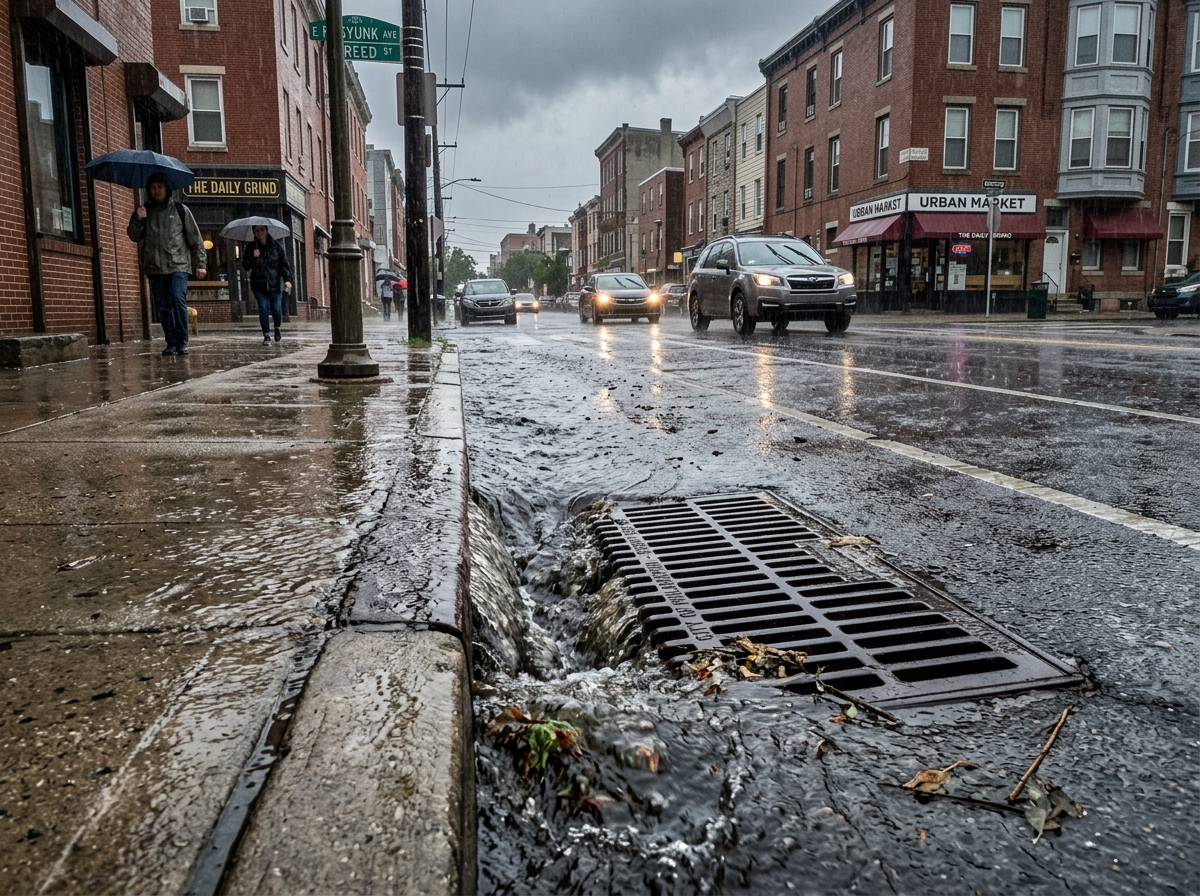
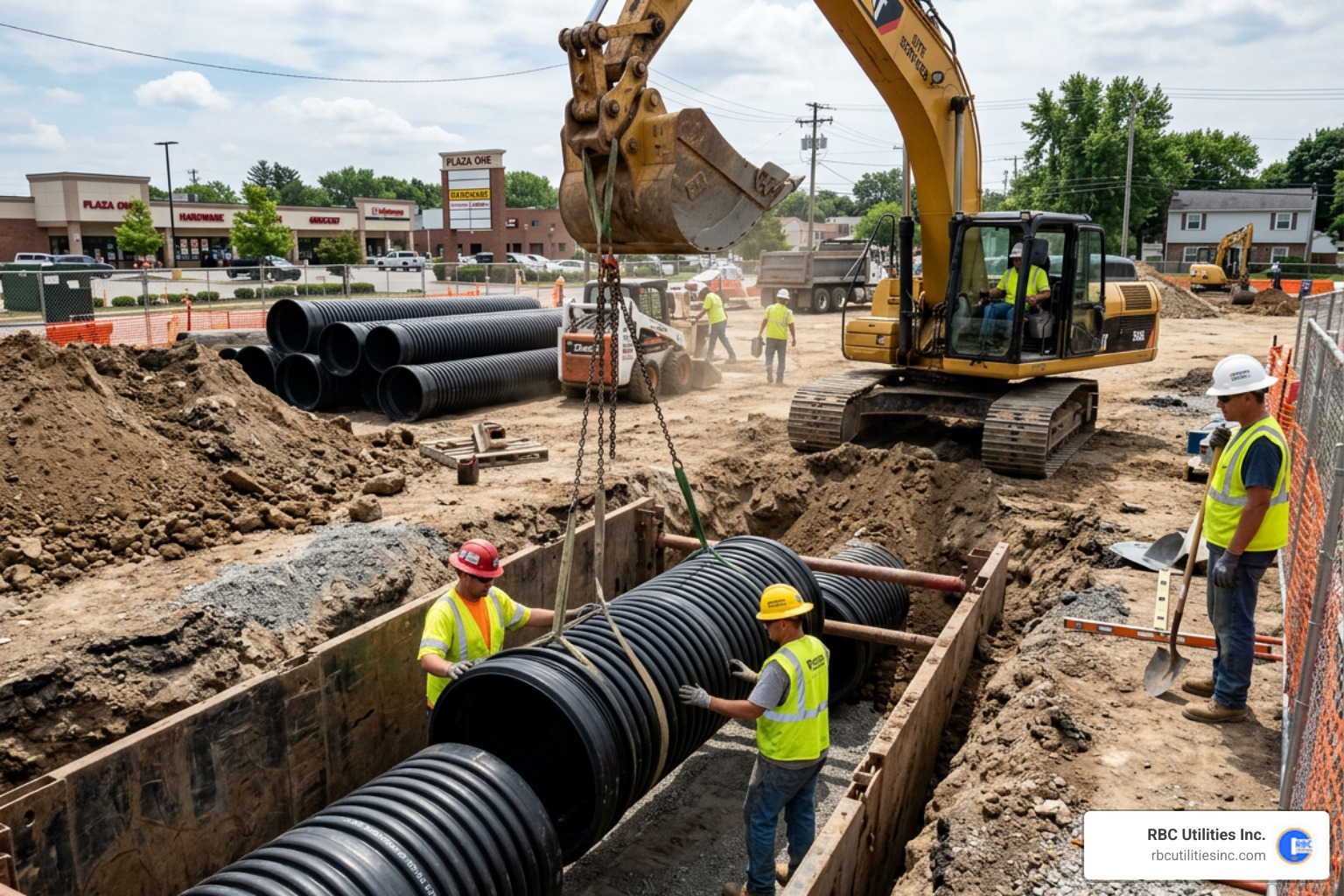
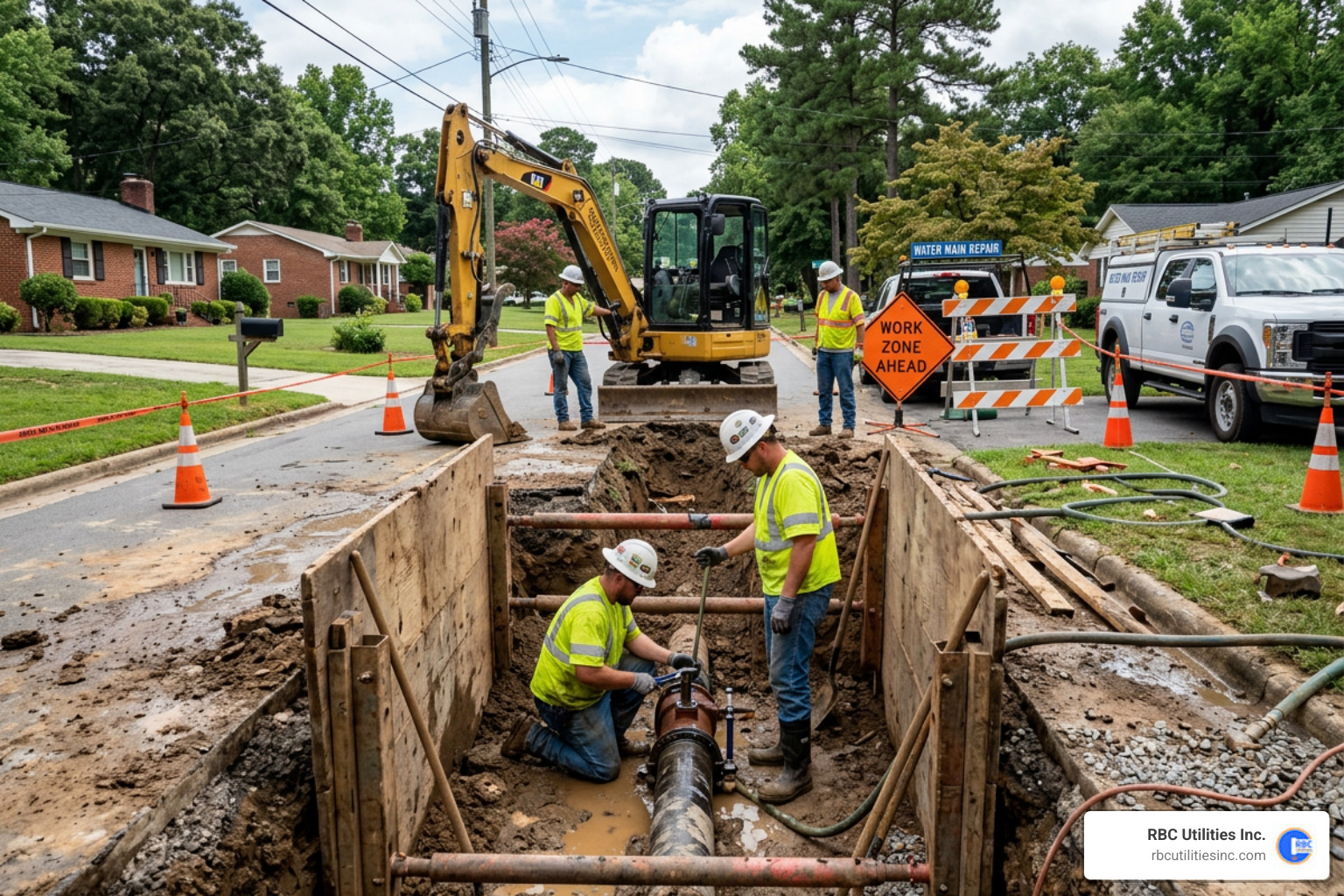
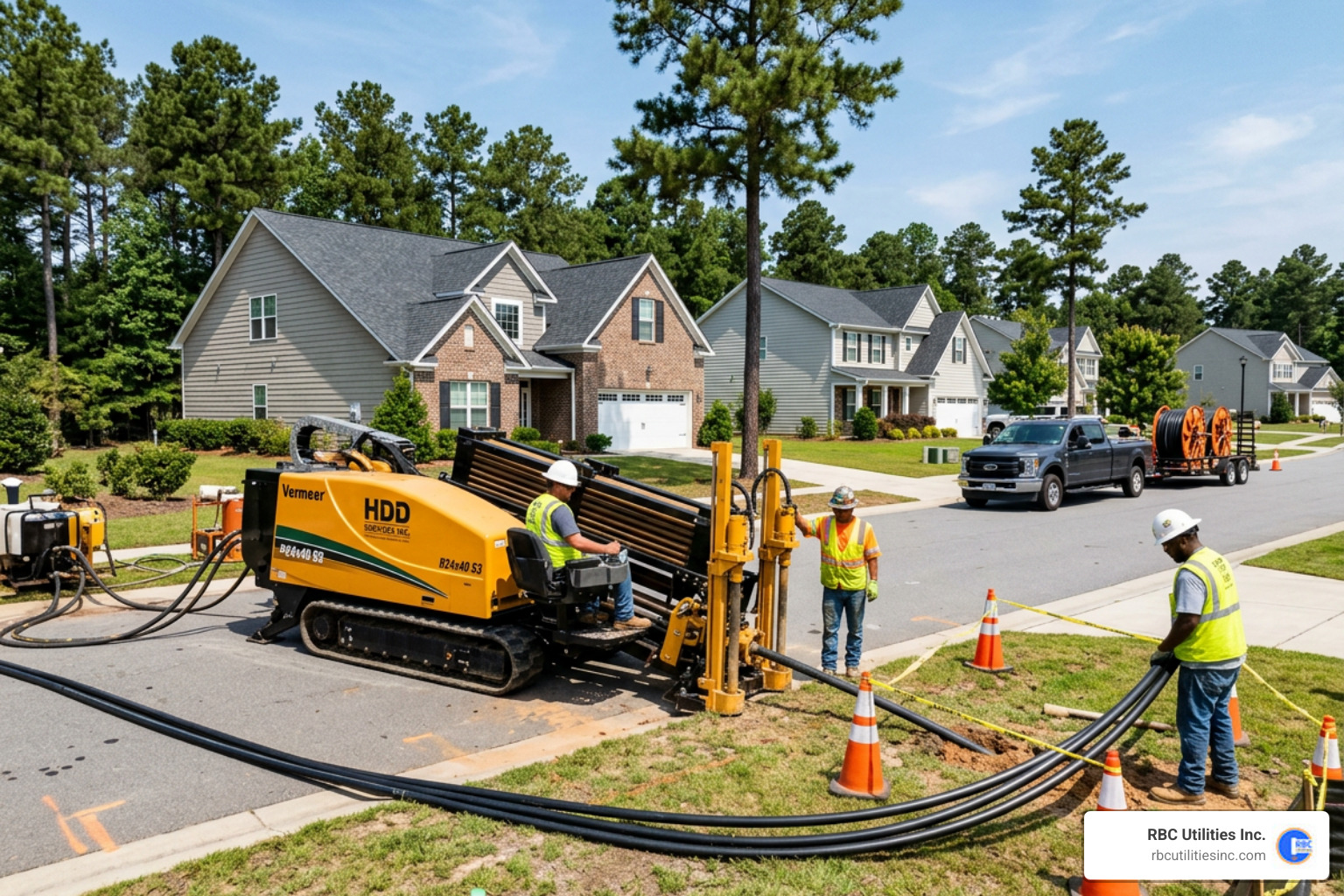
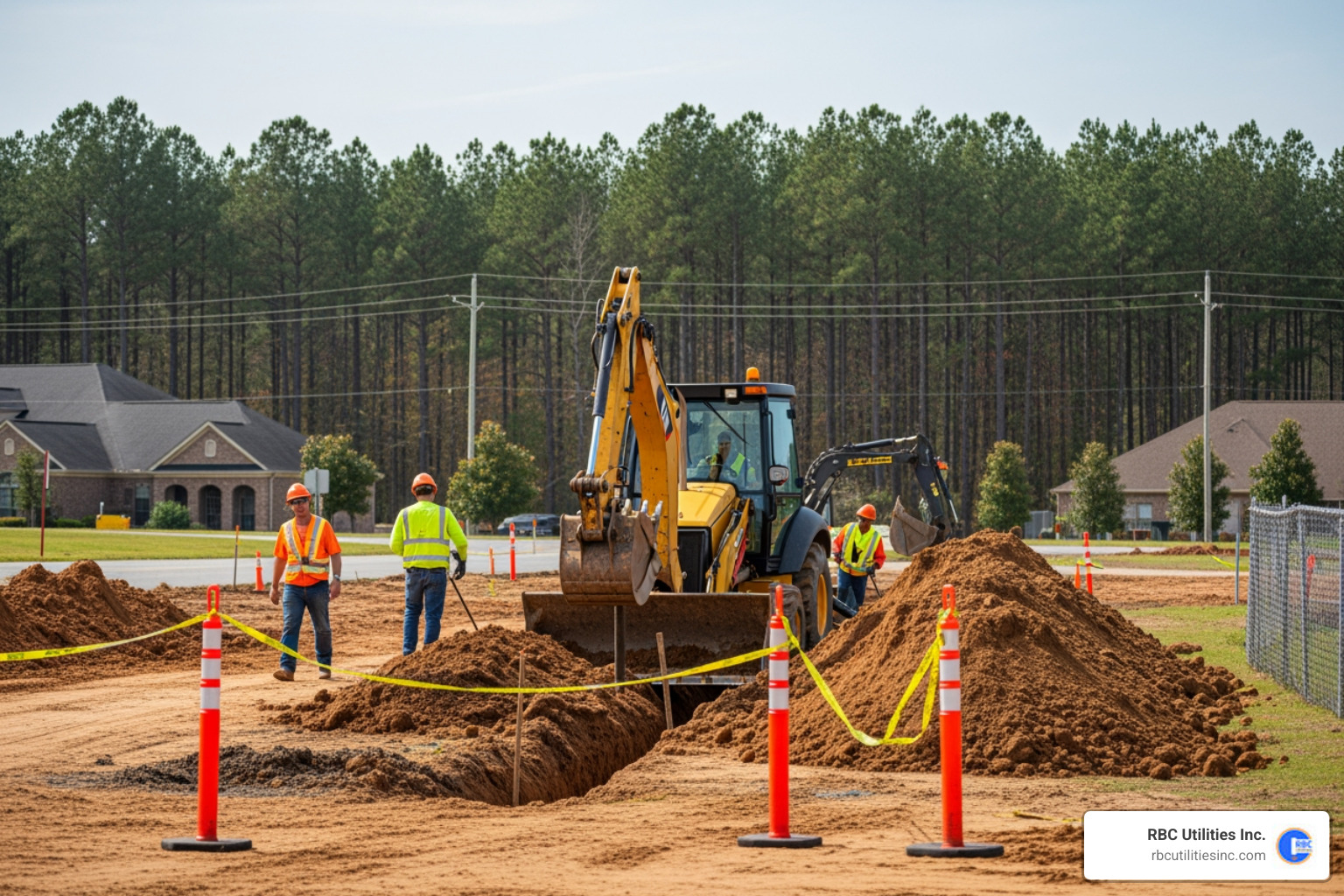
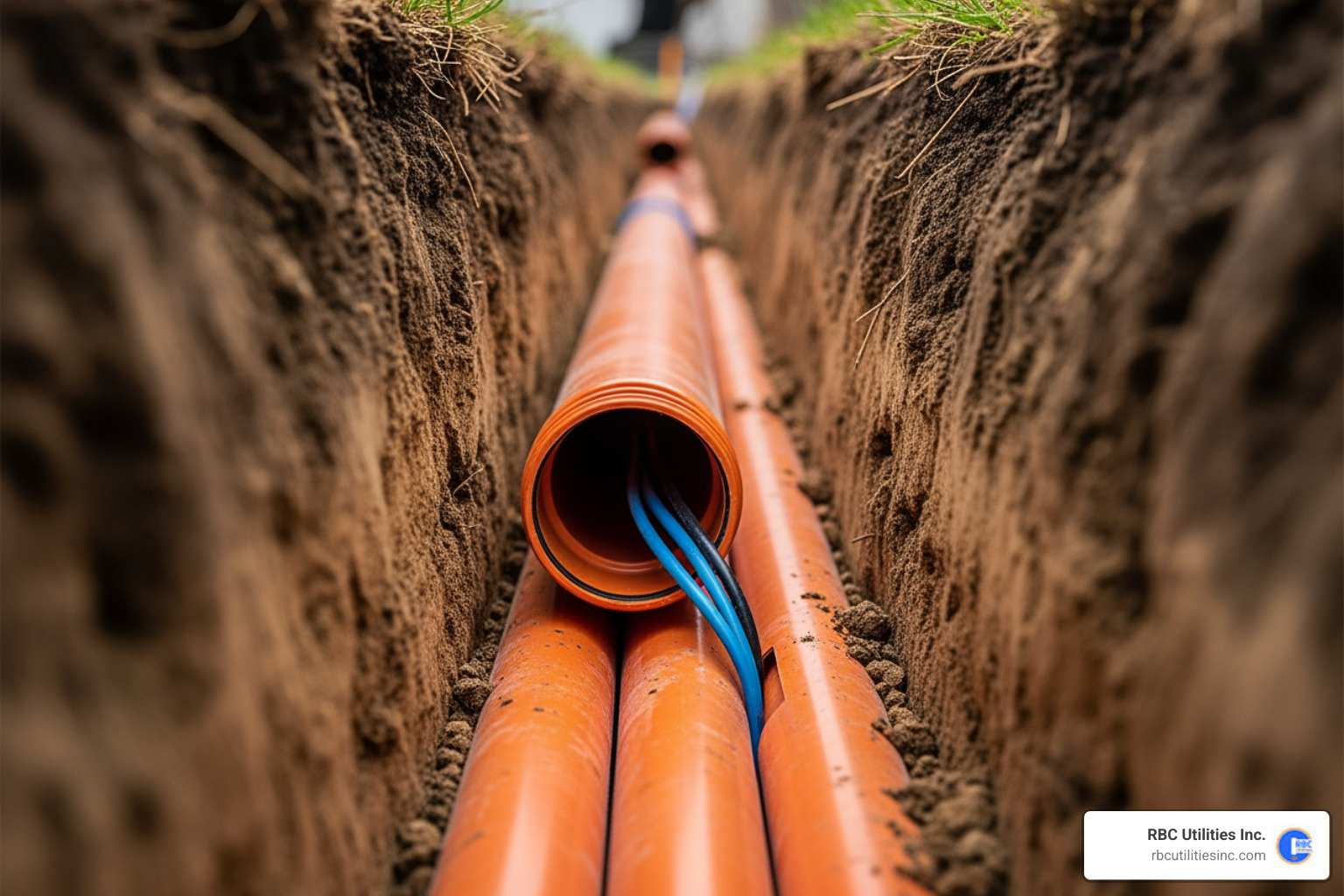
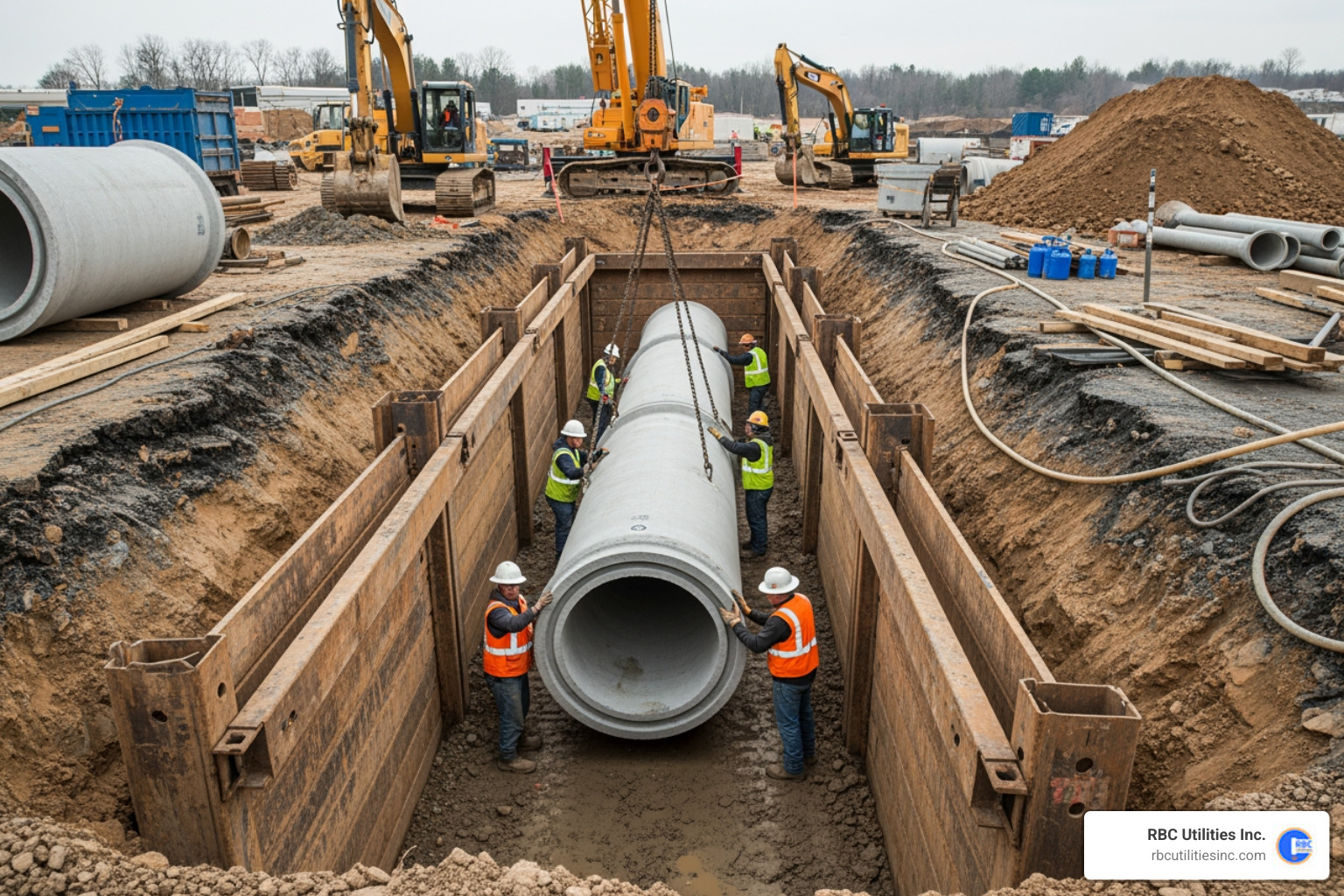
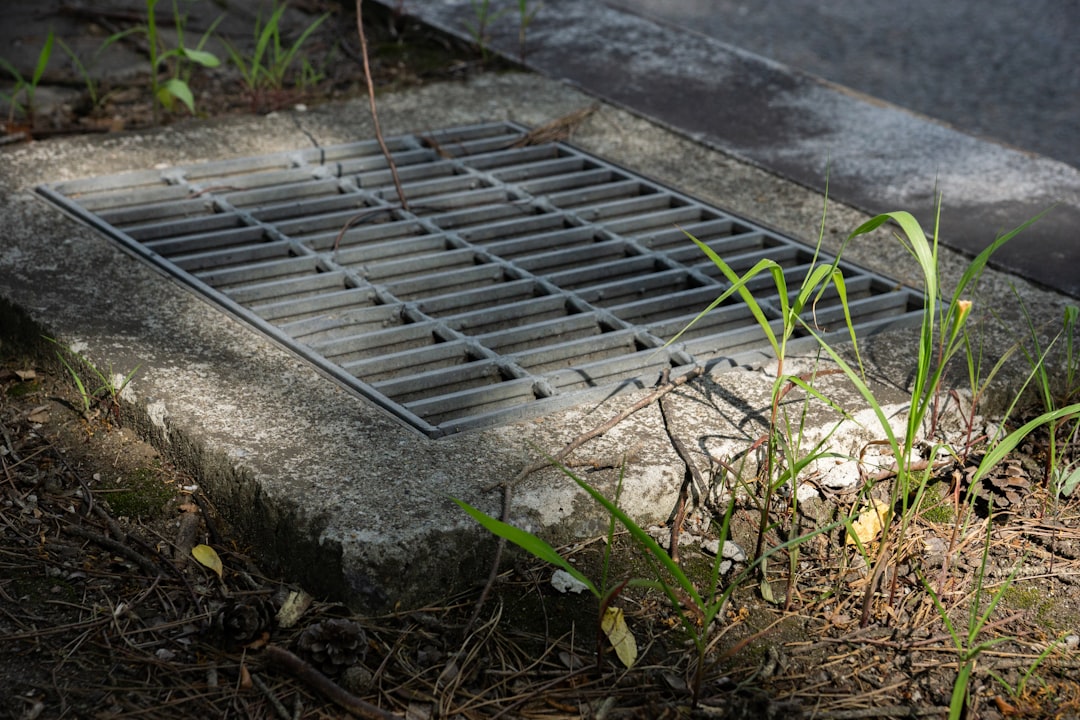
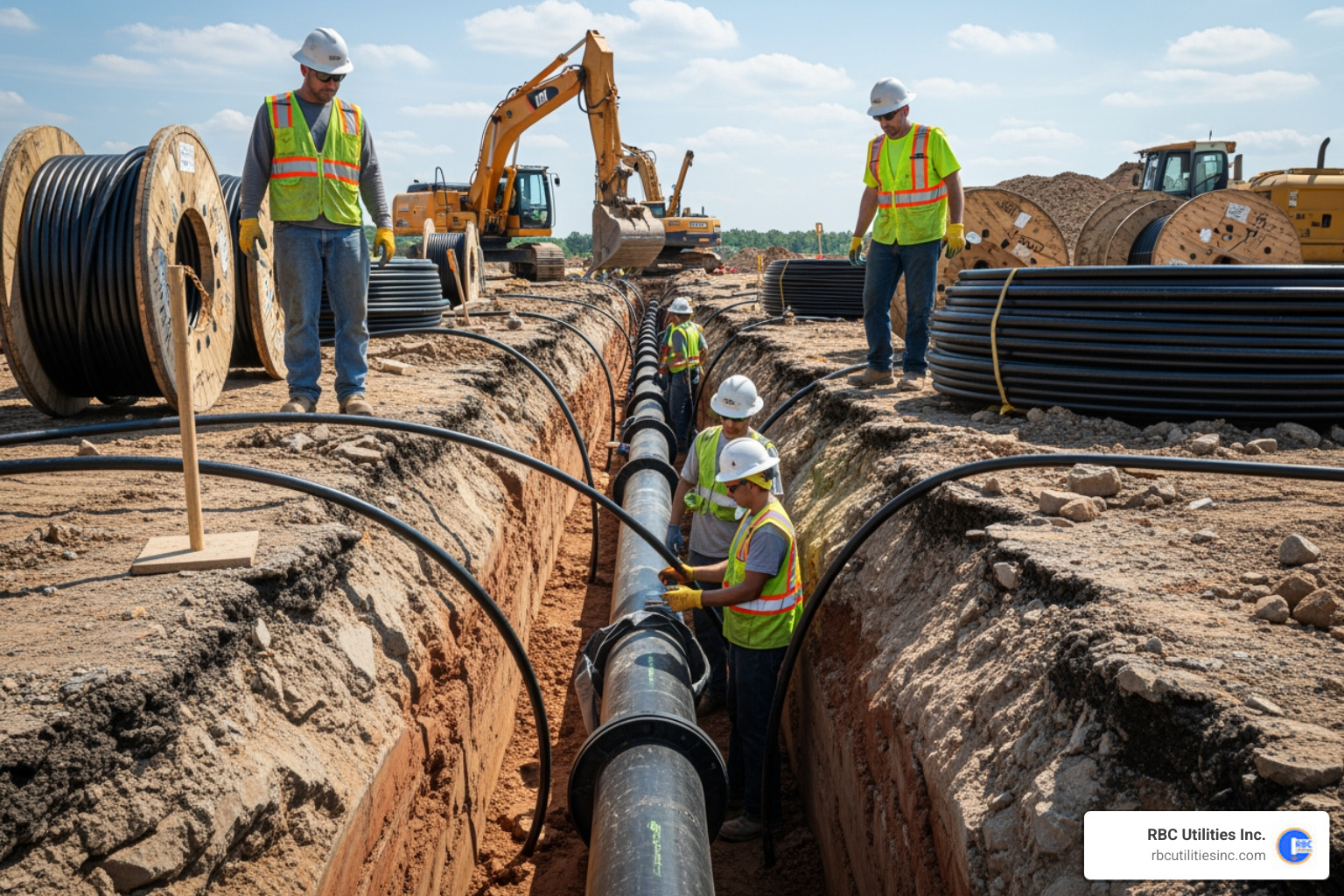
A storm drain pipe that looks perfectly installed on the day it goes in the ground can still fail years later, and almost never because of the pipe itself. Grade, bedding, and backfill are the three details nobody photographs for the closeout binder, and they're also the three details that determine whether a drainage system performs for decades or settles, cracks, or ponds within a few seasons.
For a broader look at RBC's work, review RBC Utilities services, recent RBC Utilities projects, and this guide to what makes a true utility infrastructure contractor.
EPA's stormwater management resources cover the regulatory side of drainage and erosion control that runs alongside these installation details on most permitted sites.
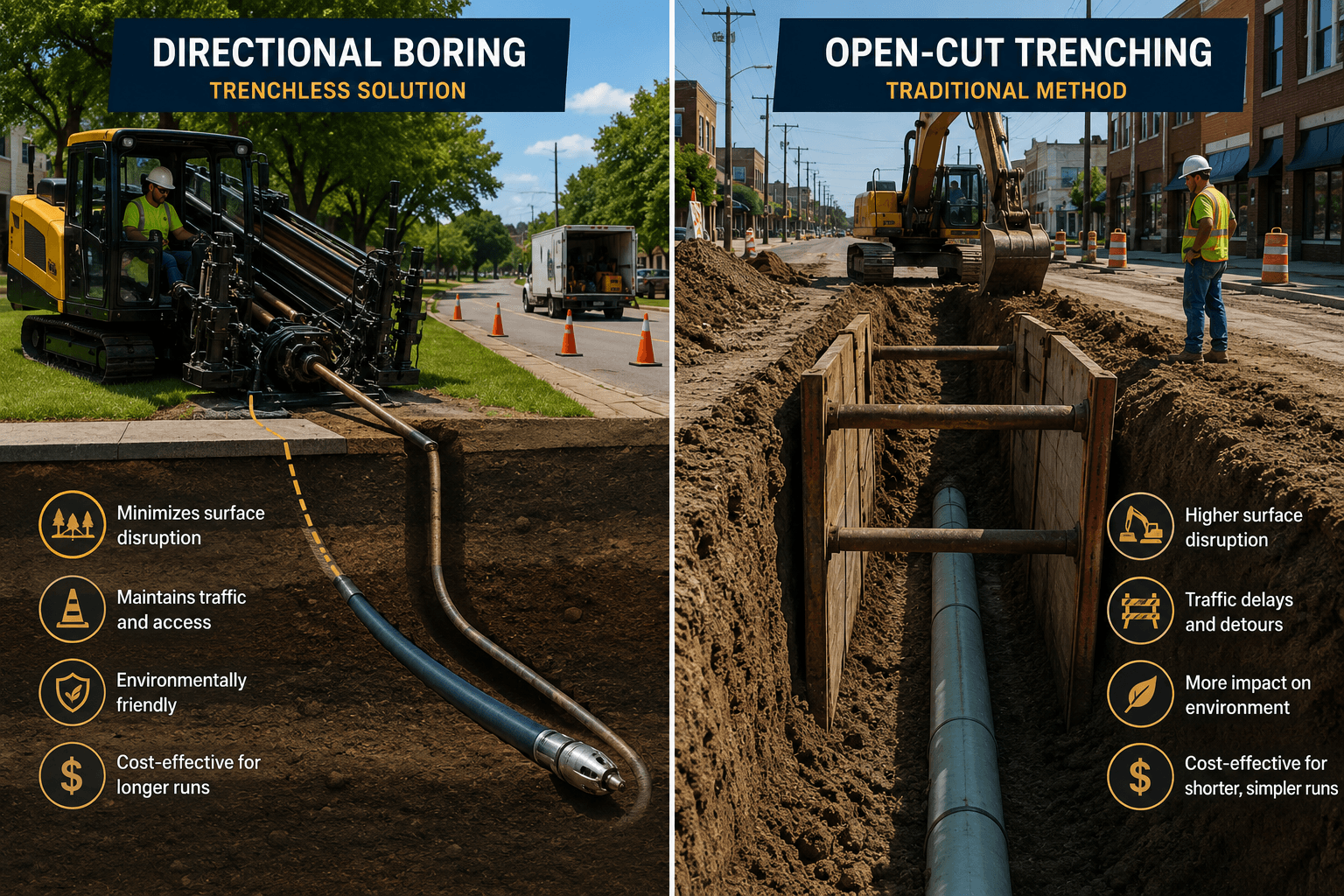
If method selection for the broader utility scope is still a question, compare RBC's notes on directional boring vs. open-cut trenching, commercial conduit installation, and storm drain pipe installation.
More than most people expect. Even fractions of a percent of slope, over the length of a drainage run, can be the difference between self-cleaning flow and a line that silts in within a year or two.
Rarely without excavating the line again. That's exactly why bedding gets verified before backfill starts, not after a problem shows up.
Grade checks, bedding material and depth, and compaction test results at each lift. RBC Utilities builds that documentation into every storm drainage scope so problems can be traced and fixed before the trench closes, not years later.
Storm drainage installation is judged on inspection day, but it's built or broken by decisions nobody sees again once the trench is closed. Grade, bedding, and backfill deserve the same attention as the pipe itself, because they're what determines whether the system performs for its full service life.
RBC Utilities brings that level of field discipline to storm drainage work across the Carolinas. For project conversations, use the RBC Utilities contact page.
Part of Saga Infrastructure, protecting what others built and helping it grow.
Address: 4404 Stuart Andrew Blvd., Suite K, Charlotte, NC 28217
Email: info@rbcutilities.com
Phone: 803-913-9727
Service Area: North Carolina | South Carolina