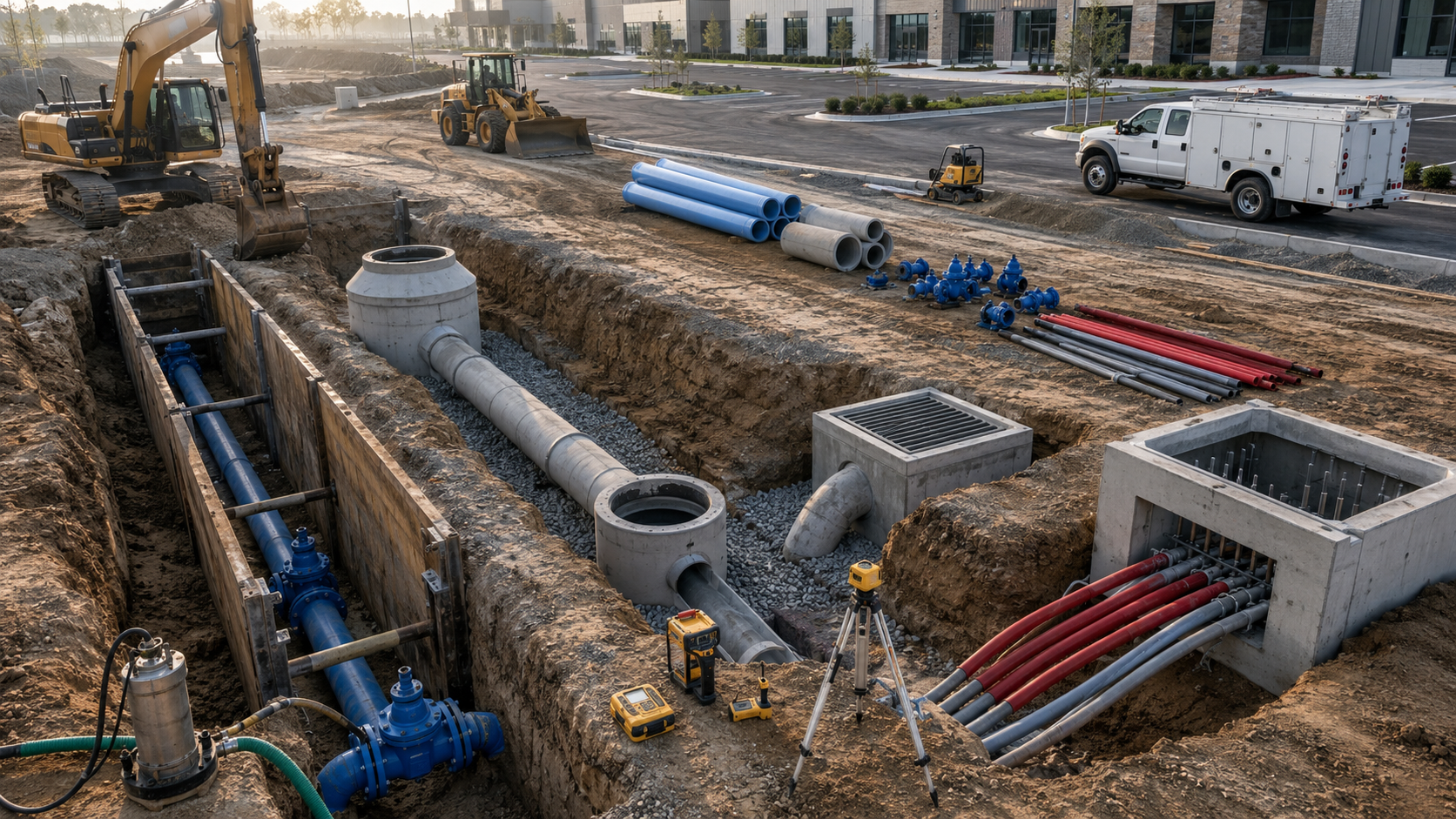
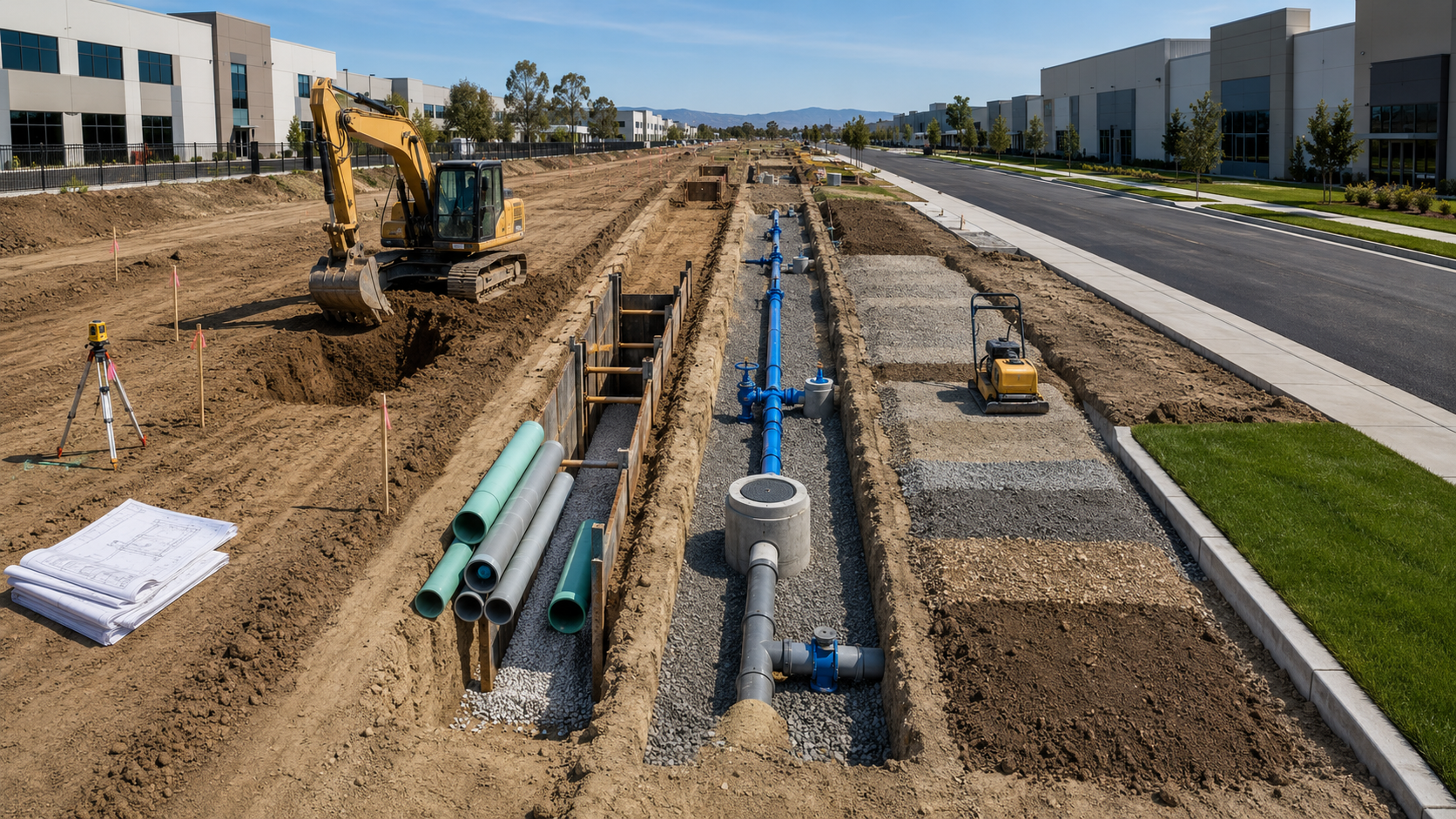
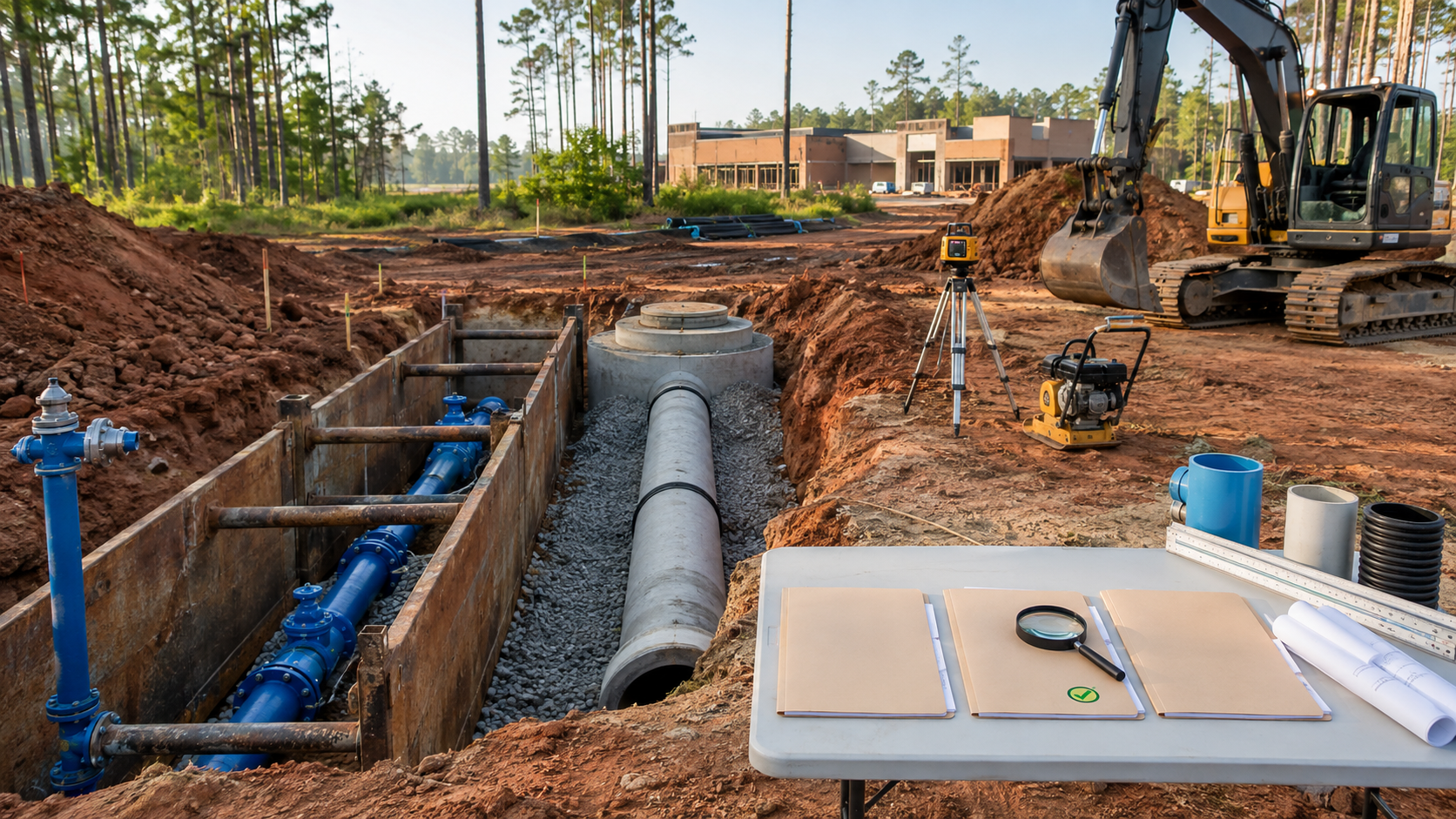
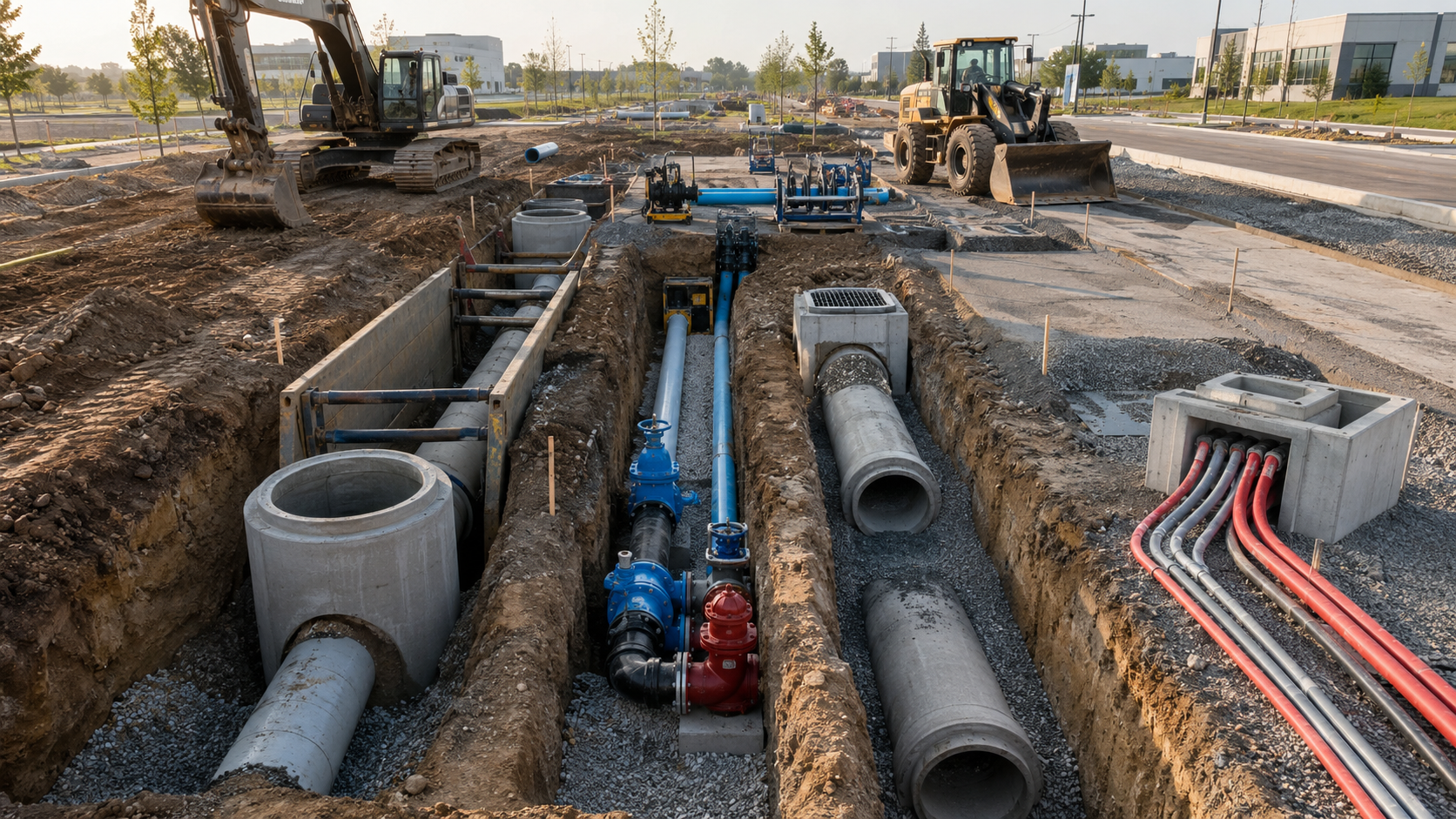
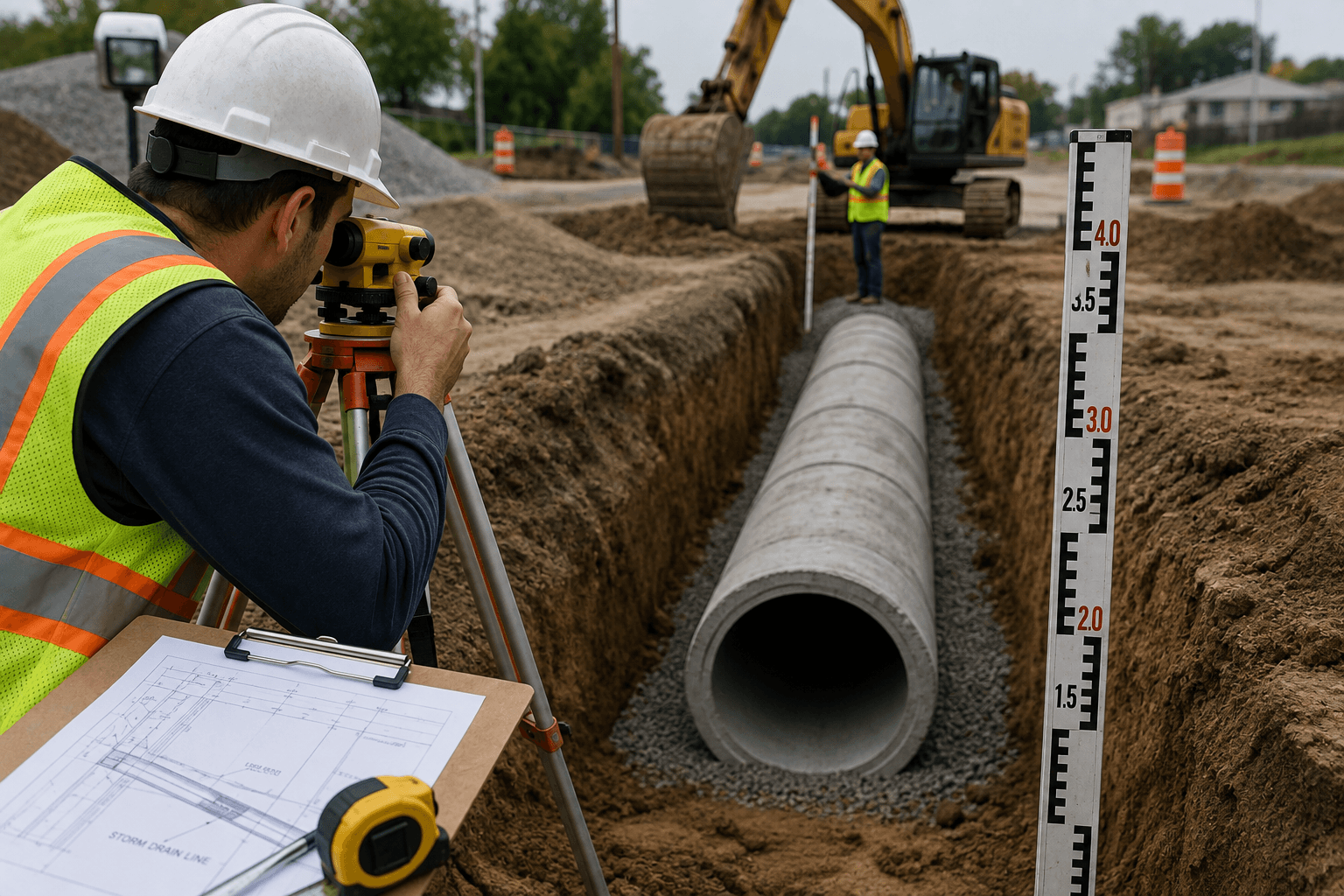
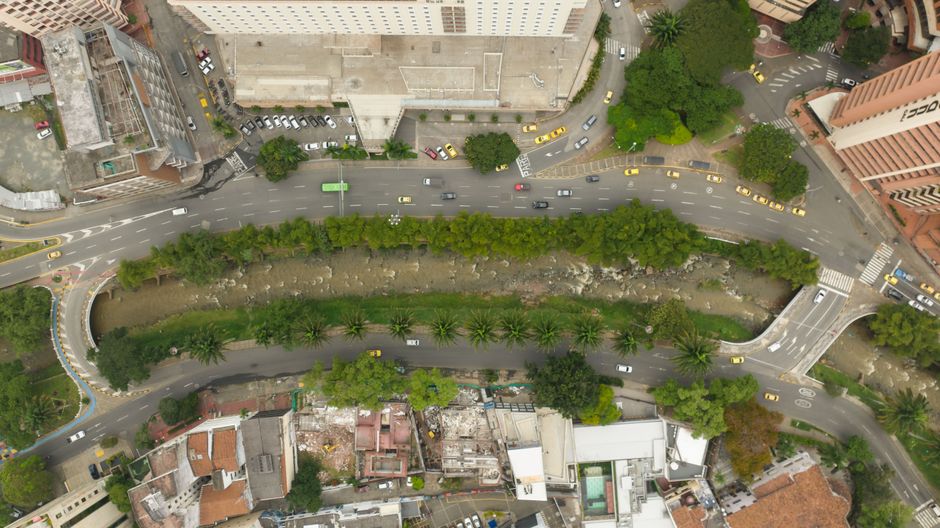
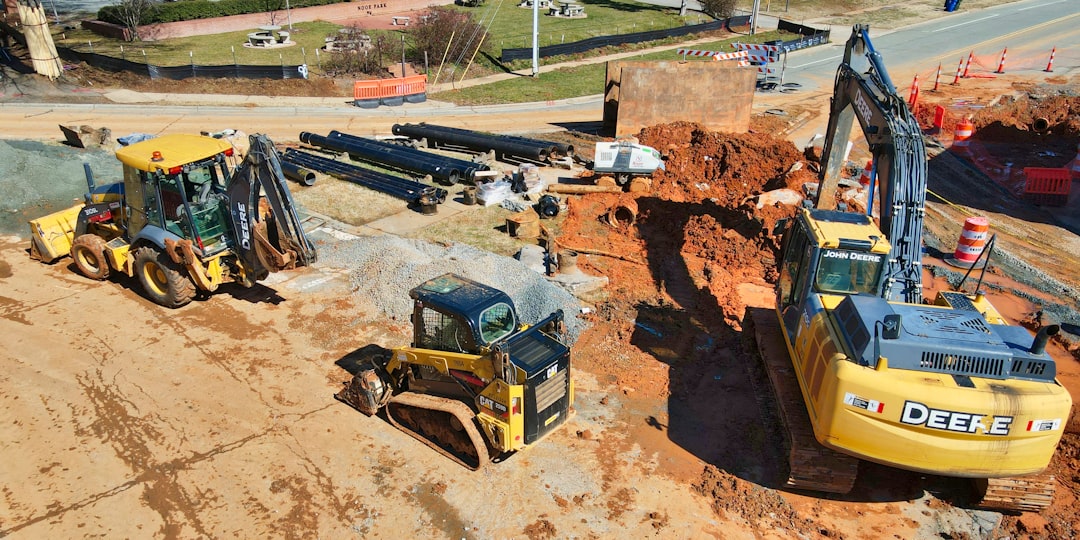
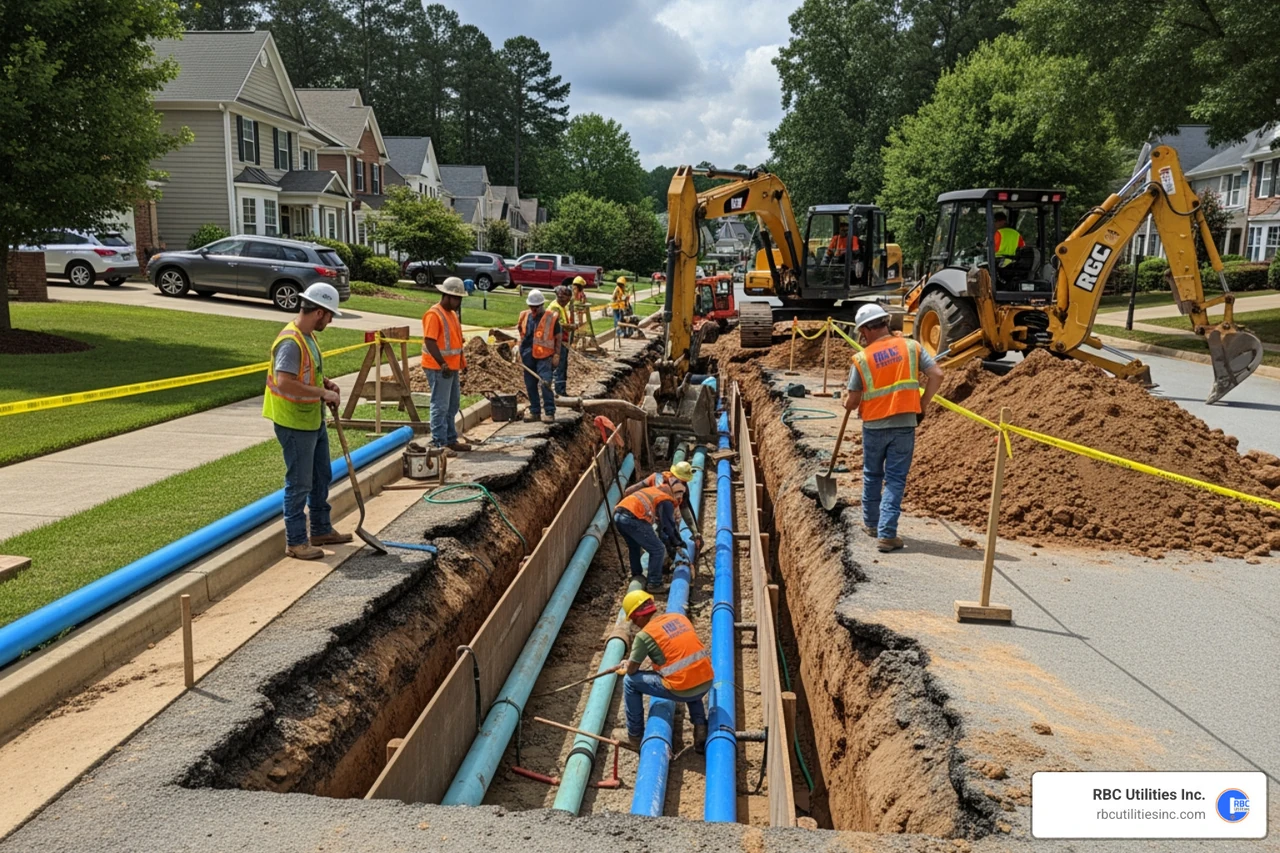
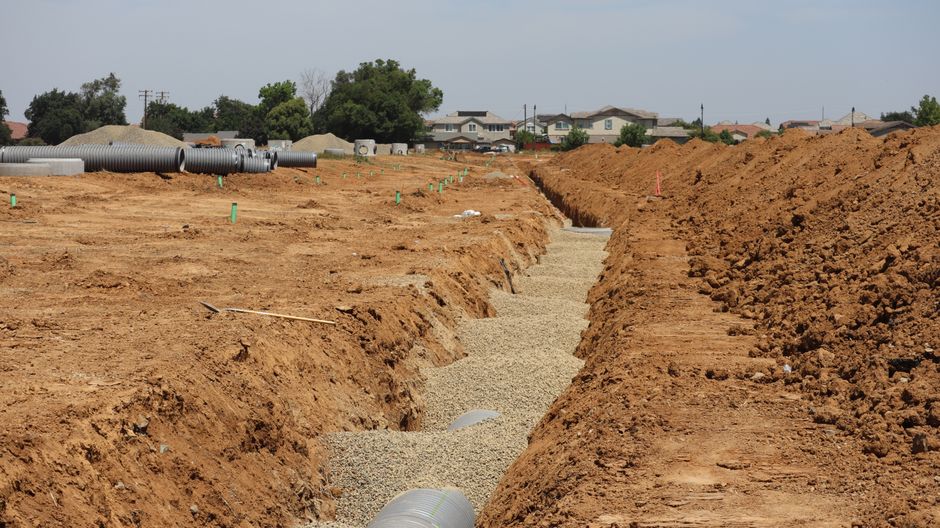
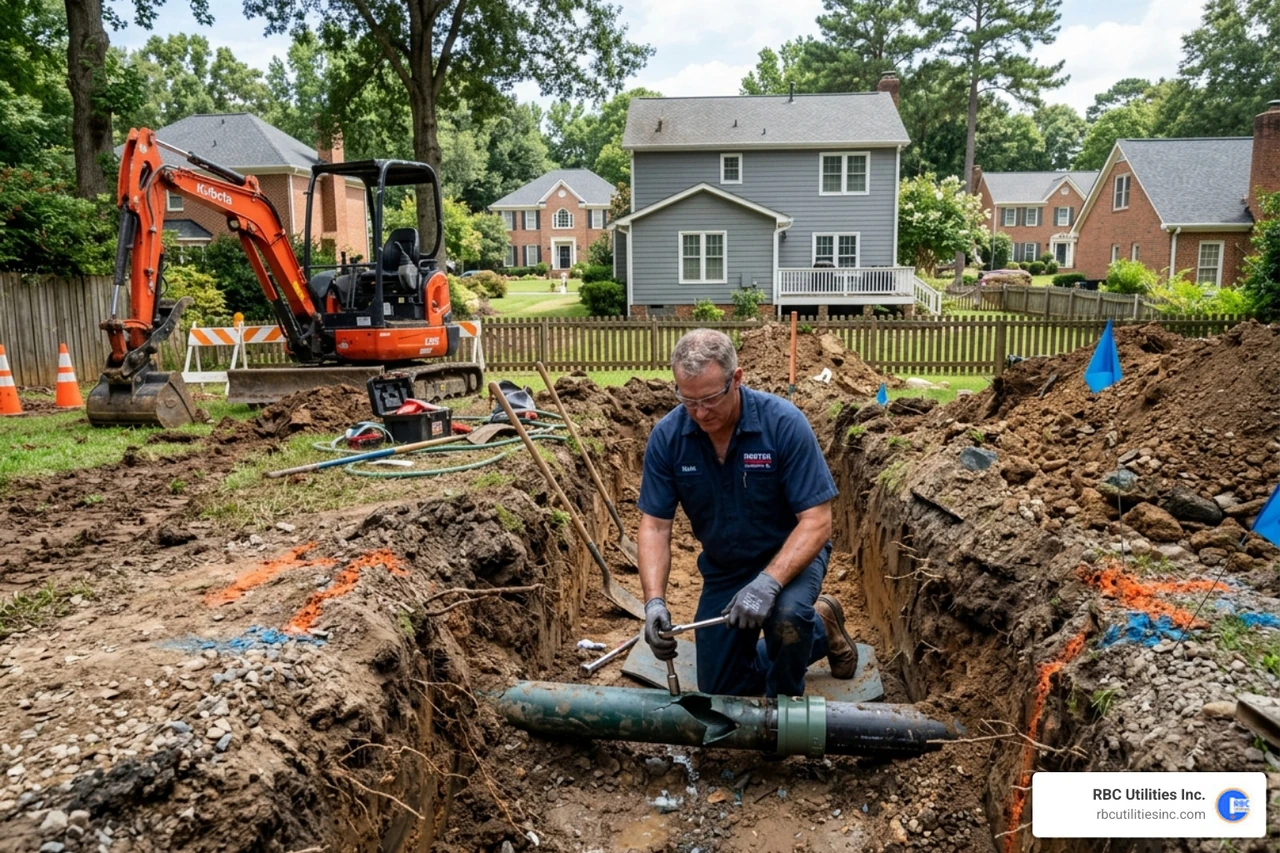
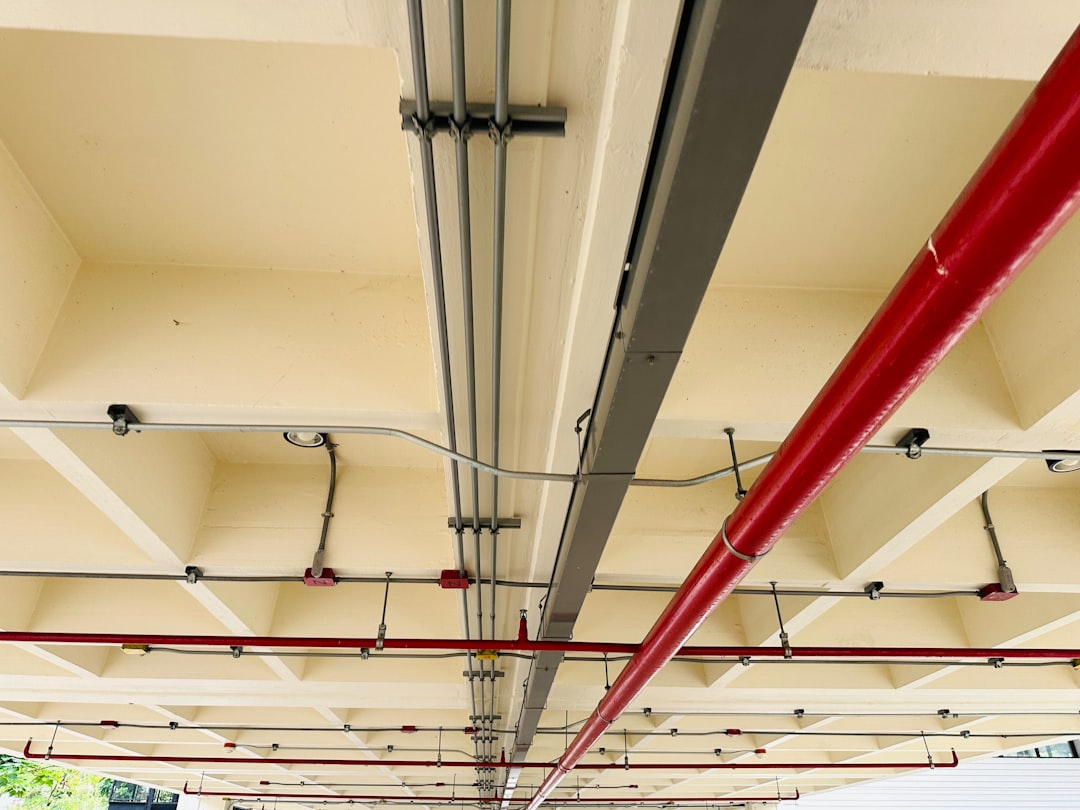
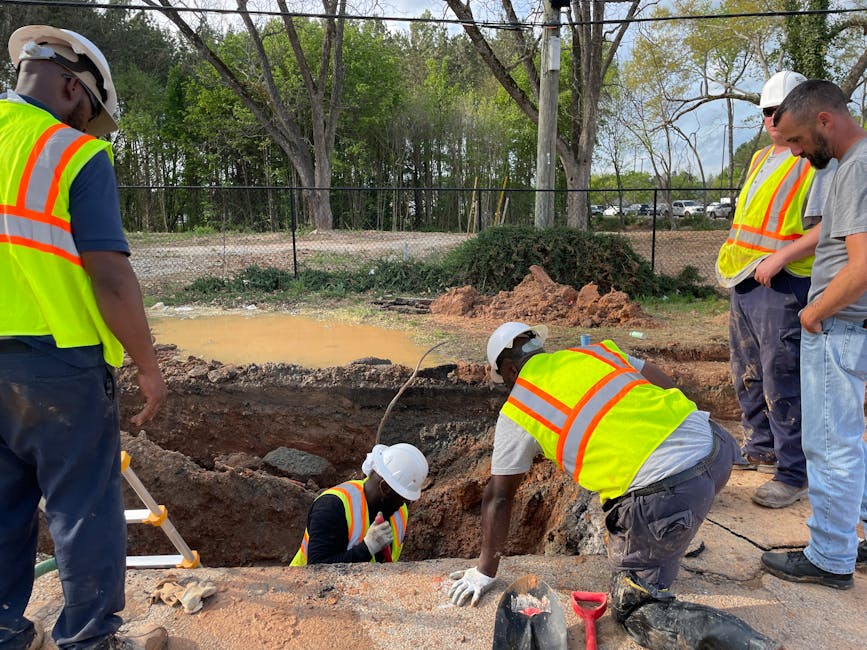
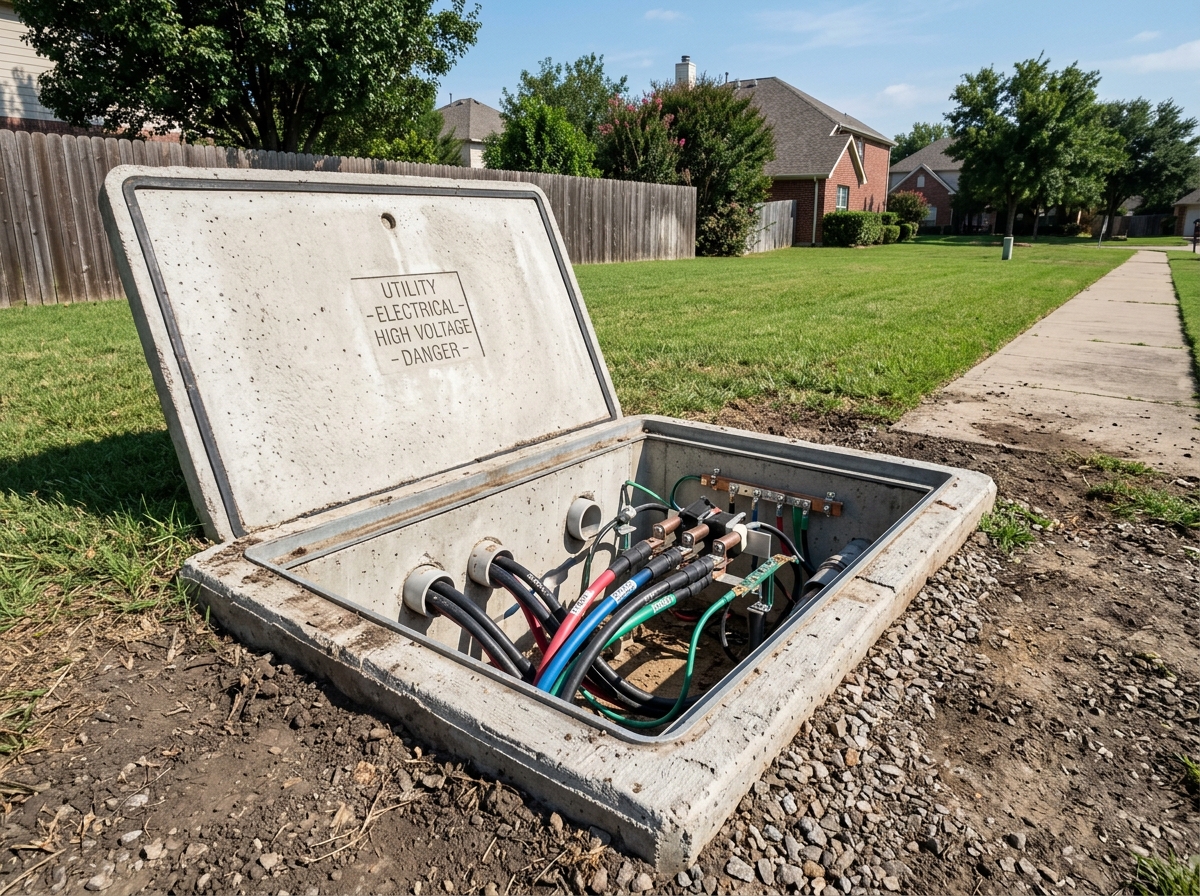
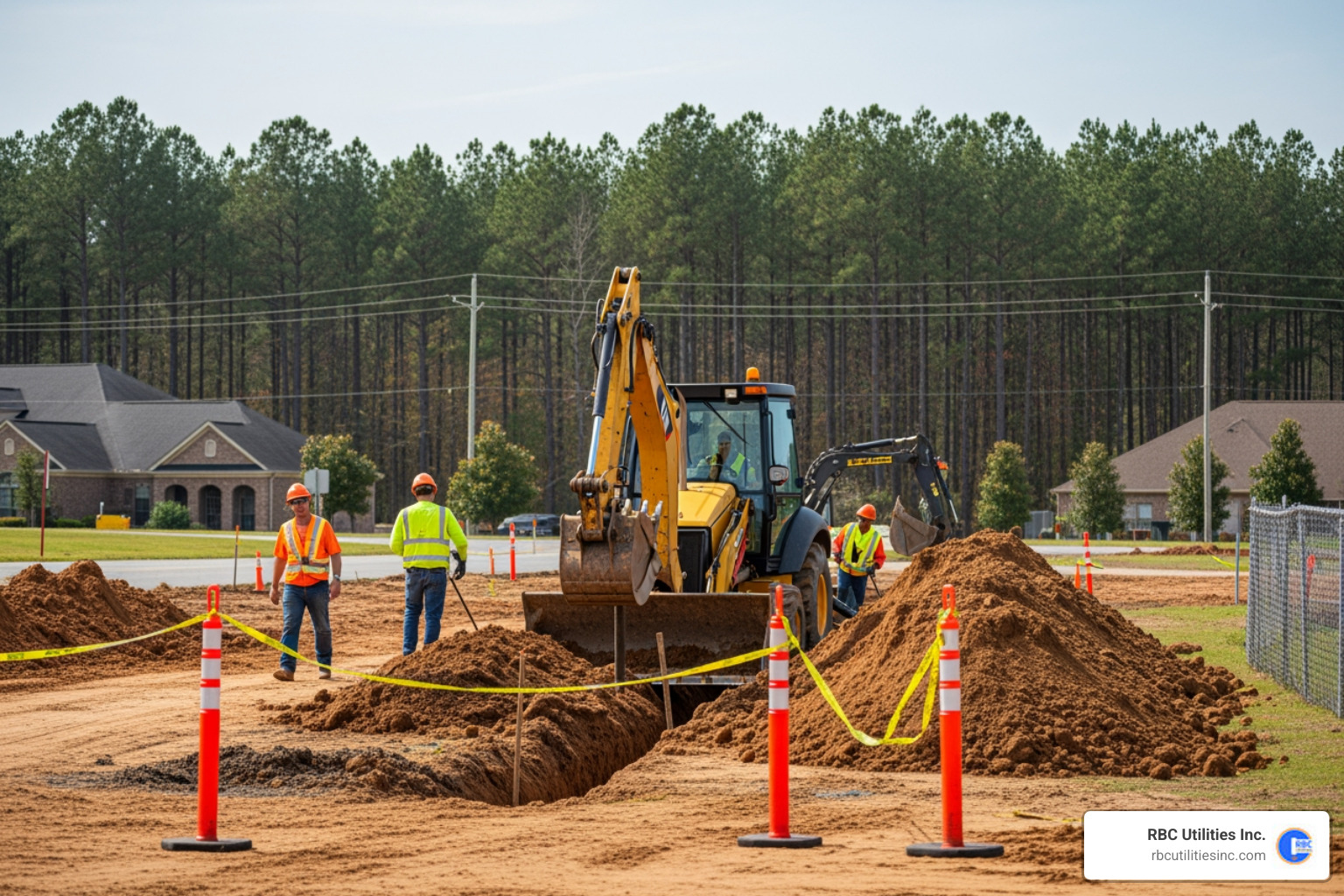
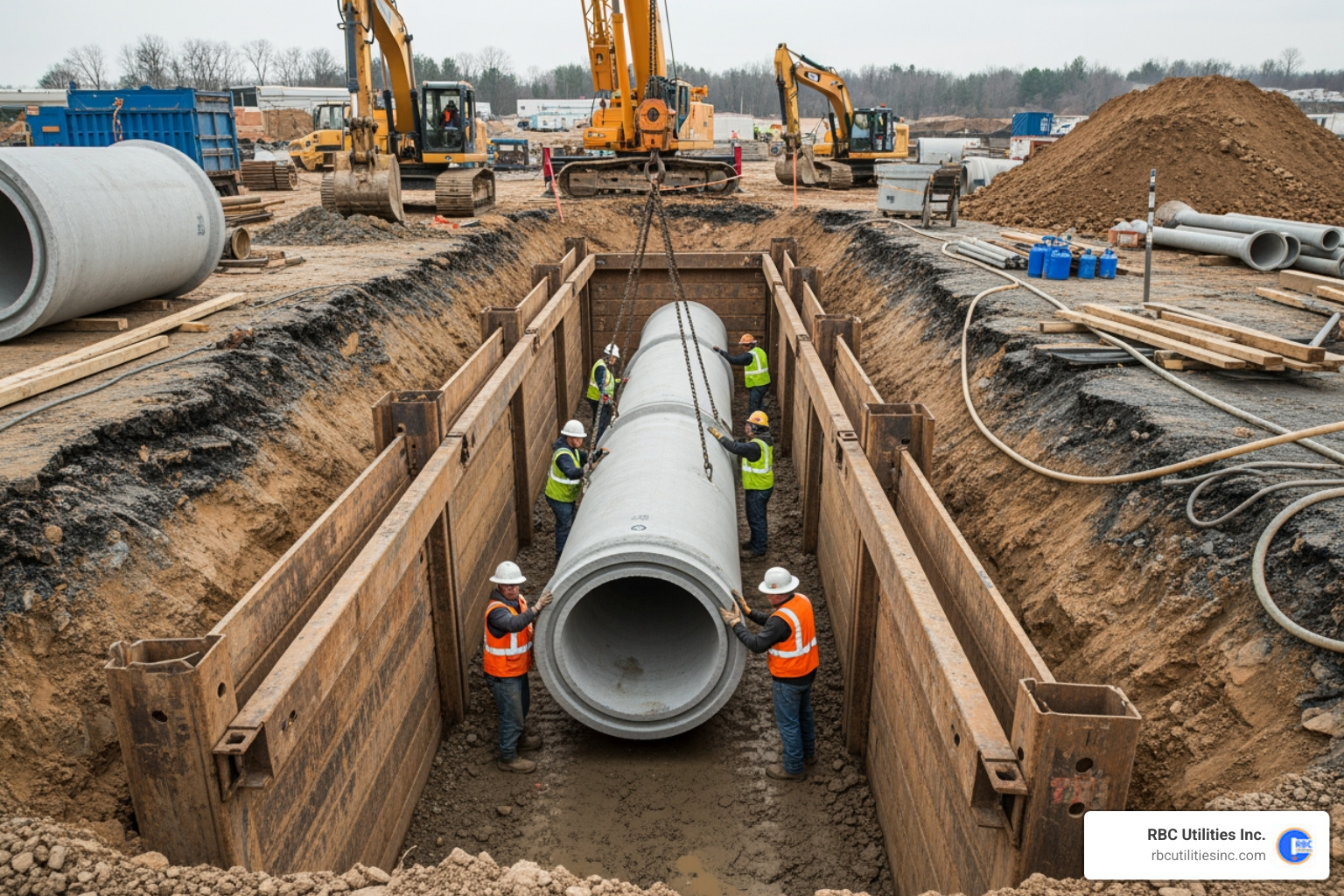
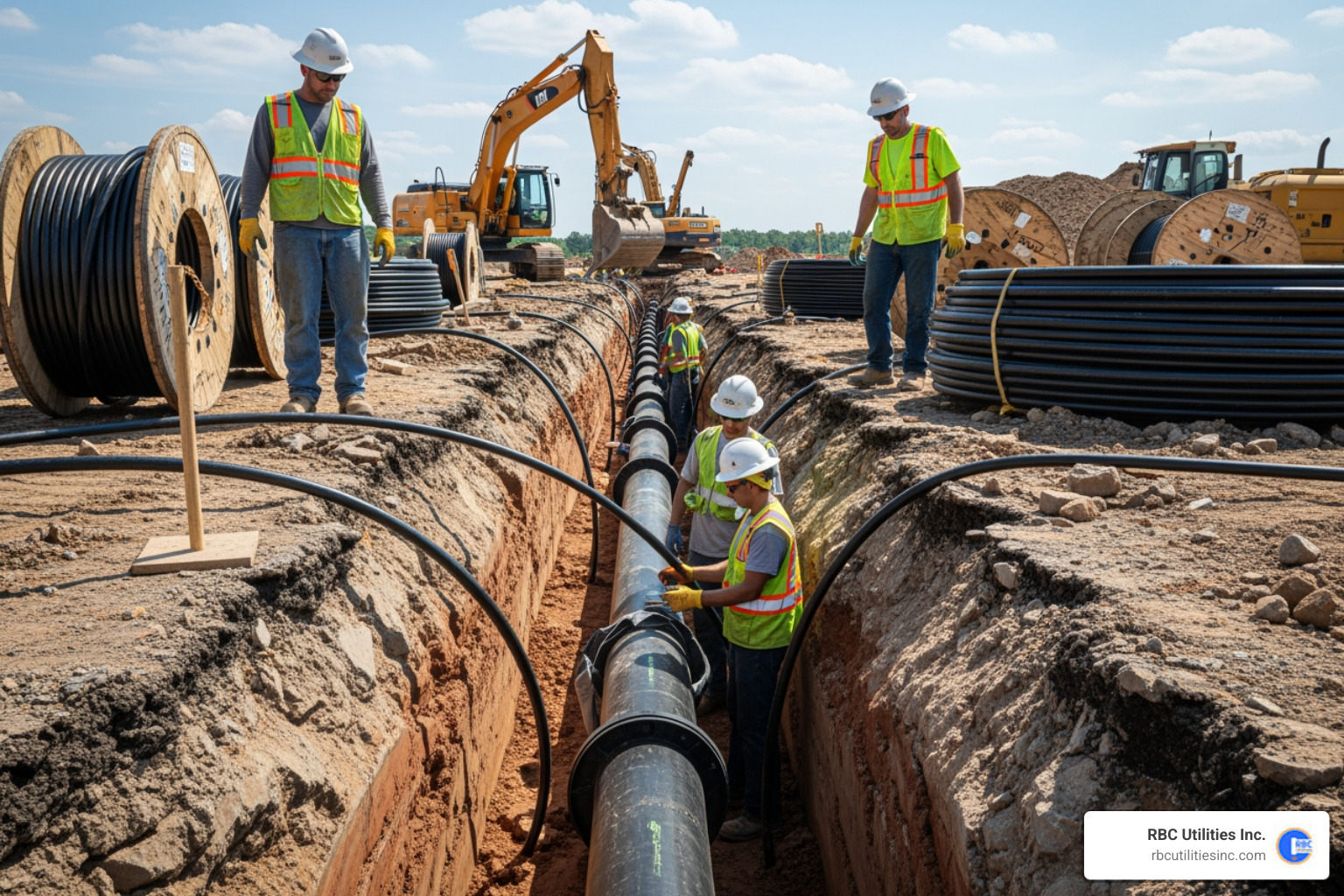
By the time most teams start thinking seriously about underground utilities, grading, access roads, and laydown areas are already set. That order of operations is backwards. Utility corridors should shape those decisions, not get squeezed in around them.
For a broader look at RBC's work, review RBC Utilities services, recent RBC Utilities projects, and this guide to what makes a true utility infrastructure contractor.
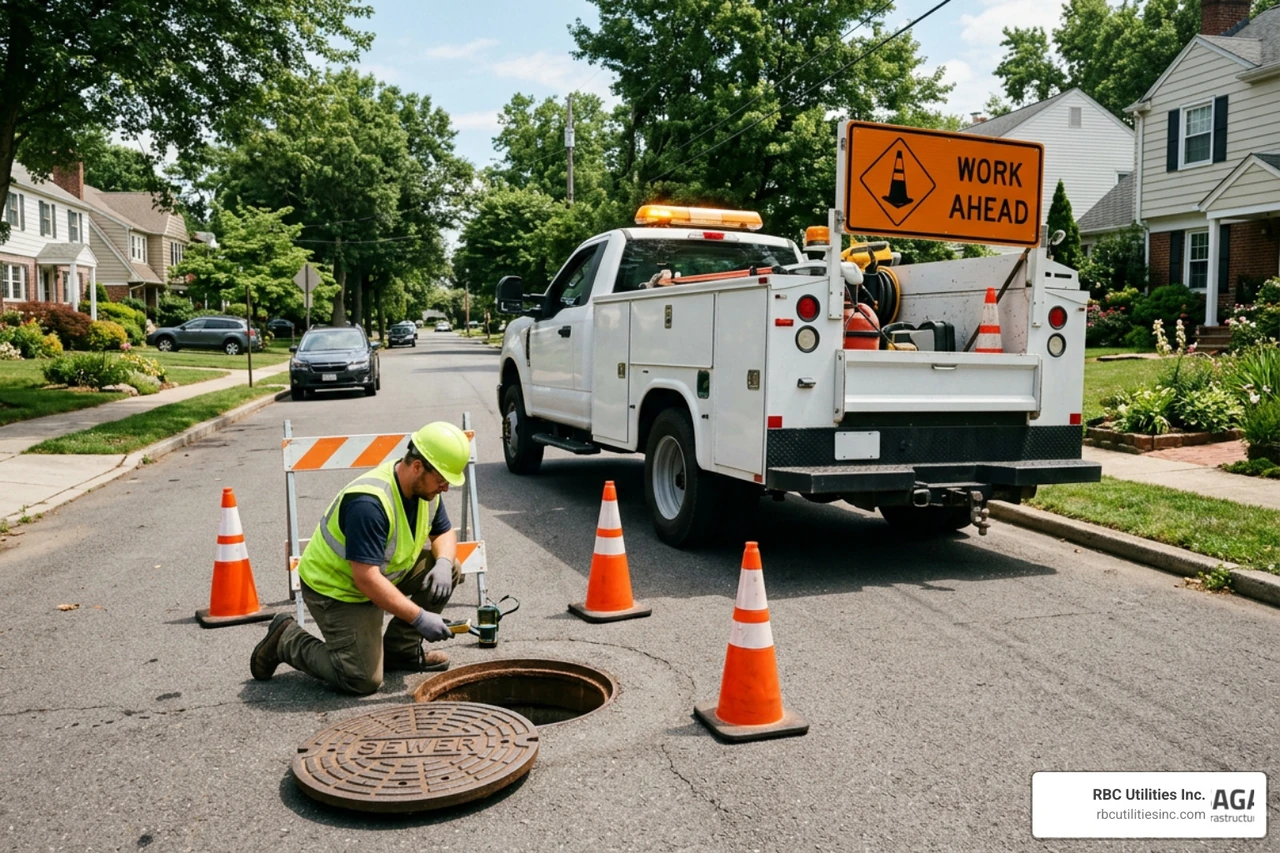
NC 811 locate requests should go in as early as the utility layout allows, since conflicts found during design are far cheaper to resolve than ones found during excavation.
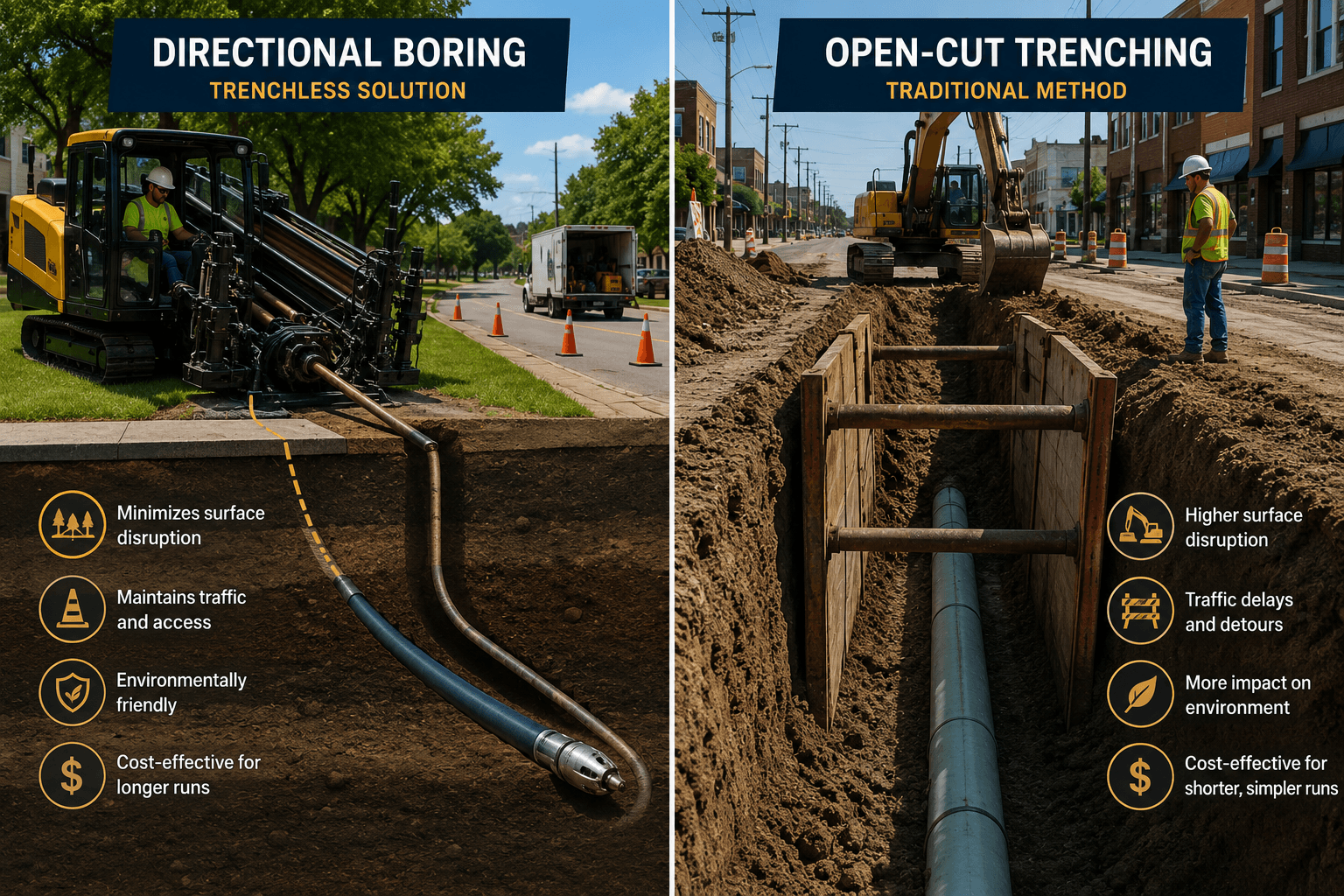
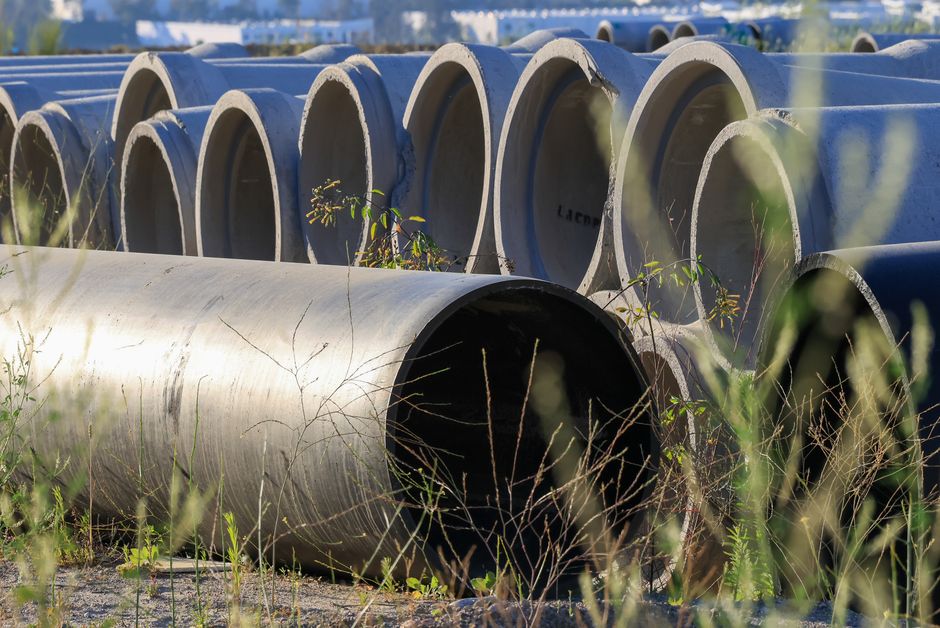
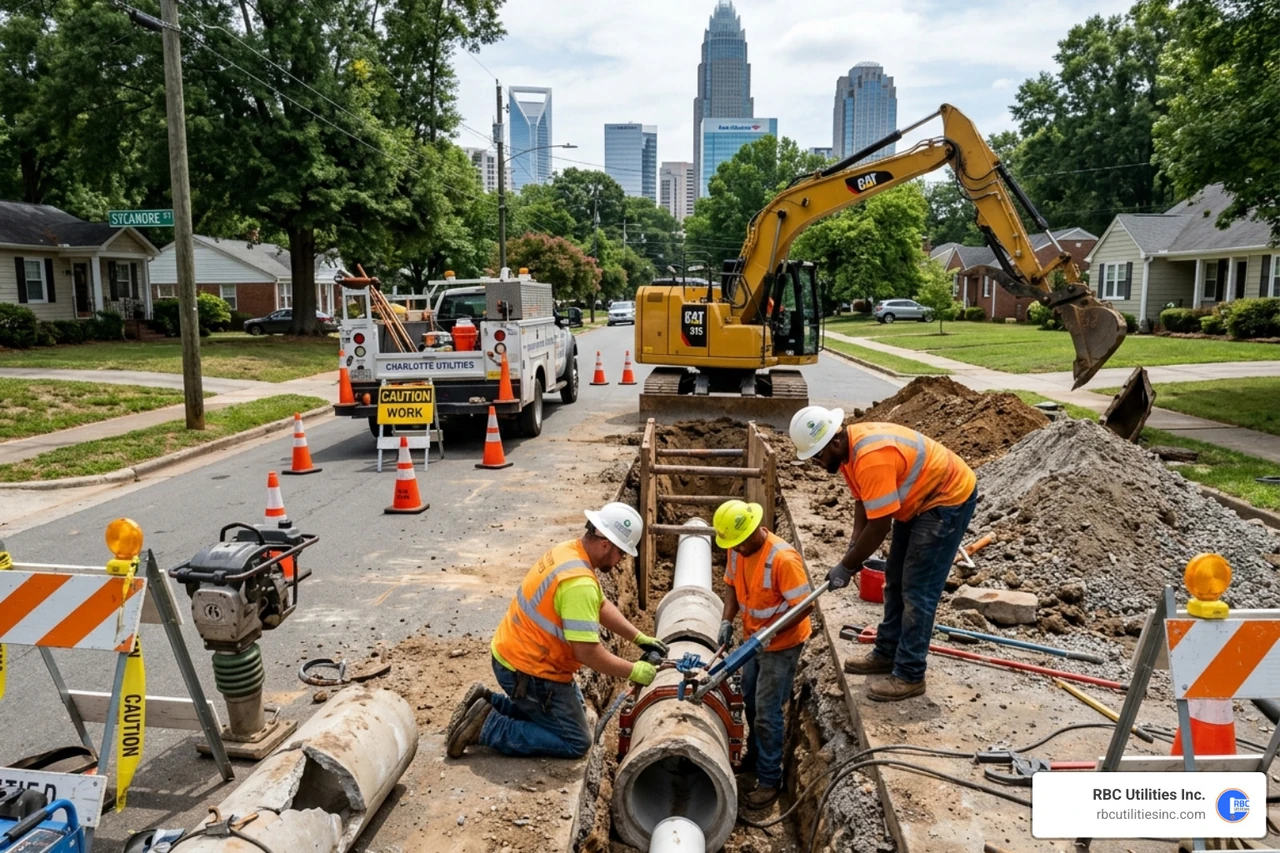
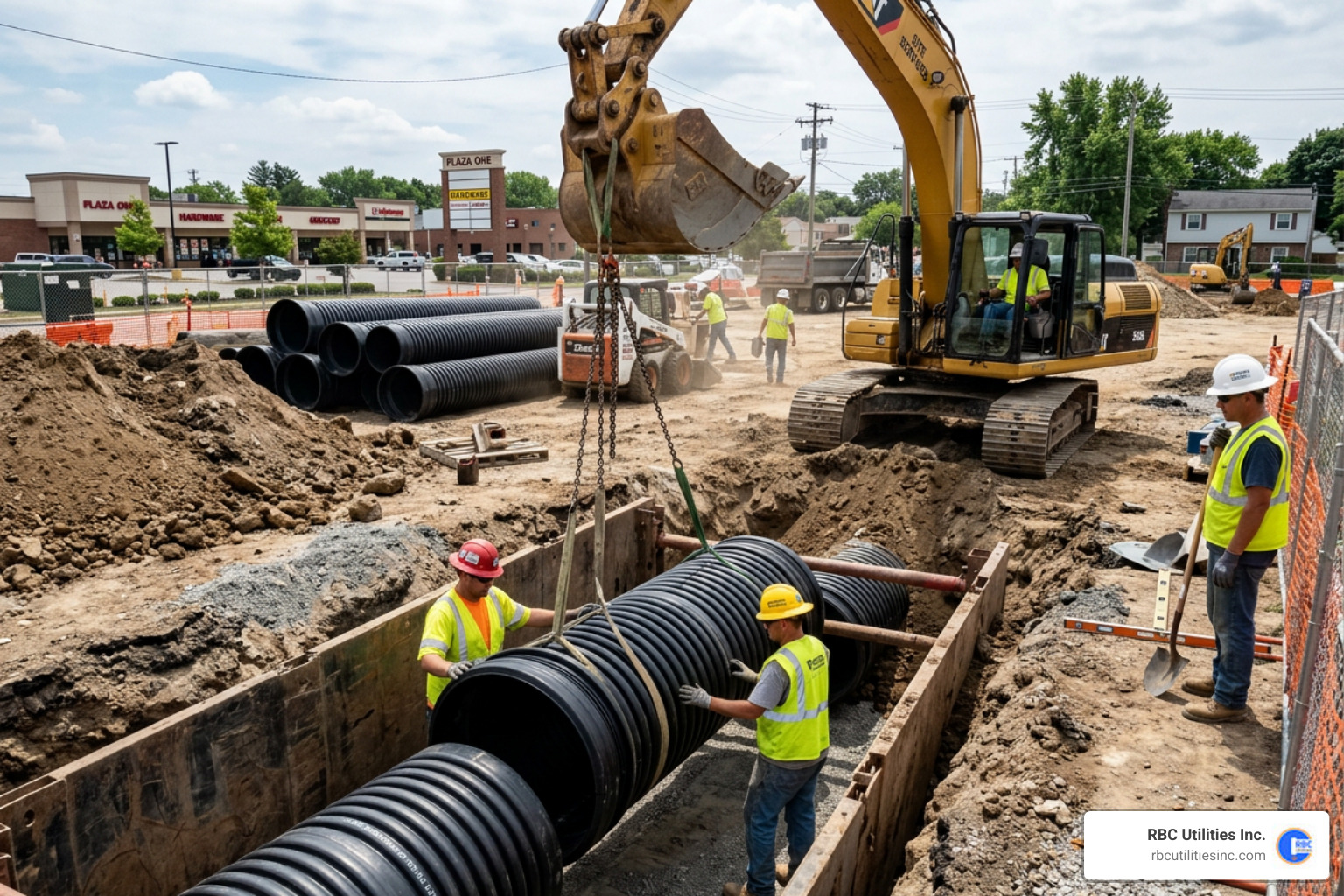
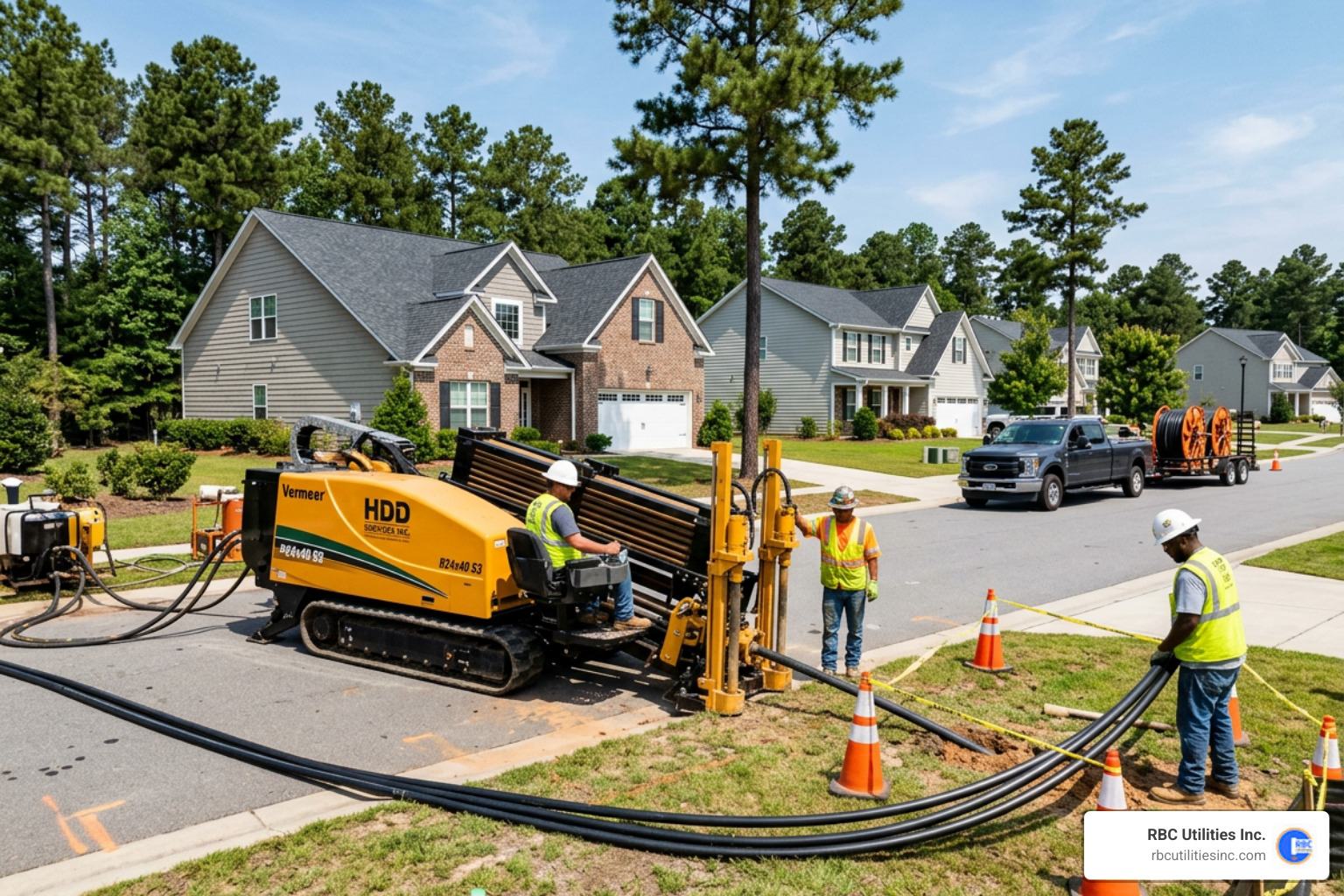
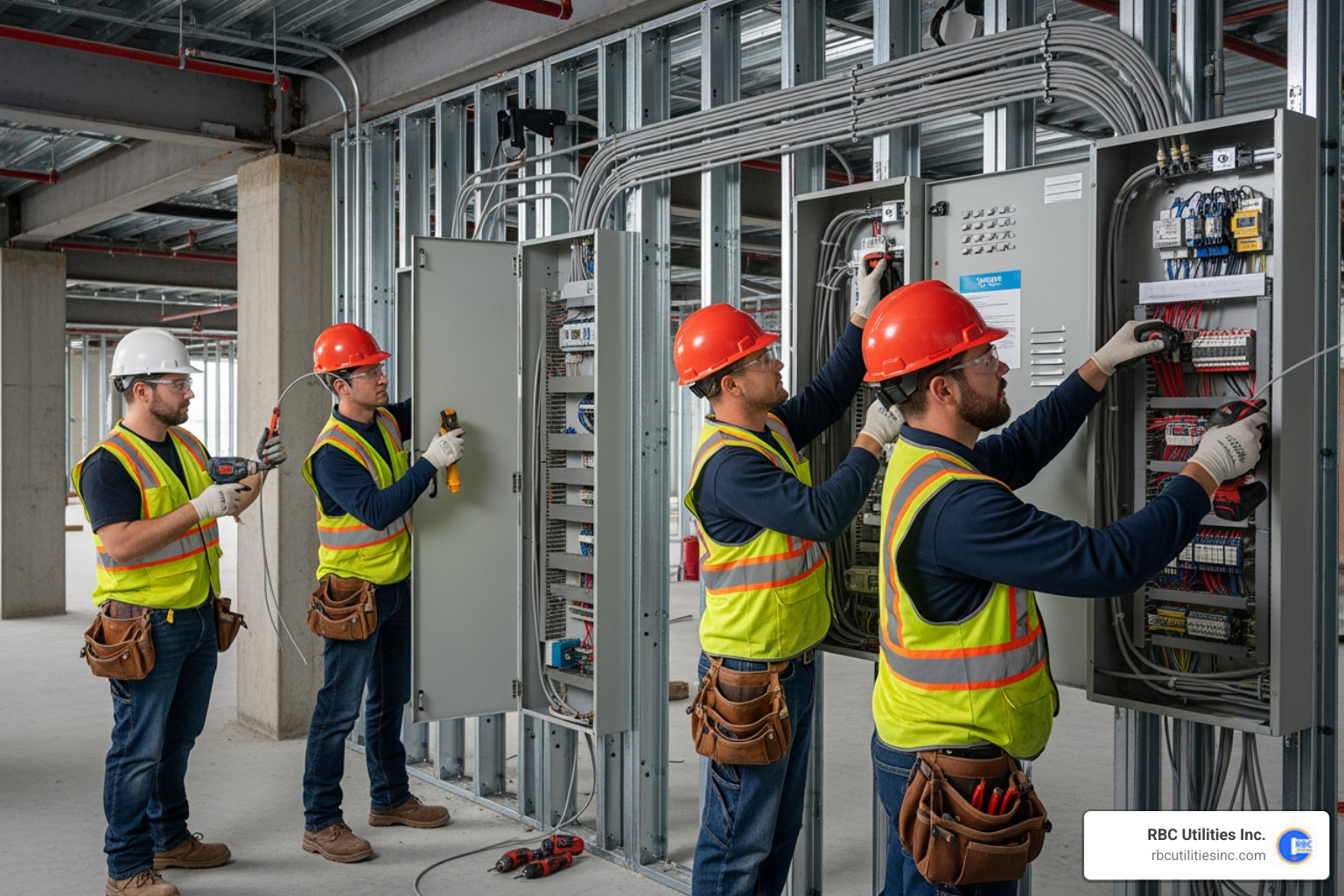
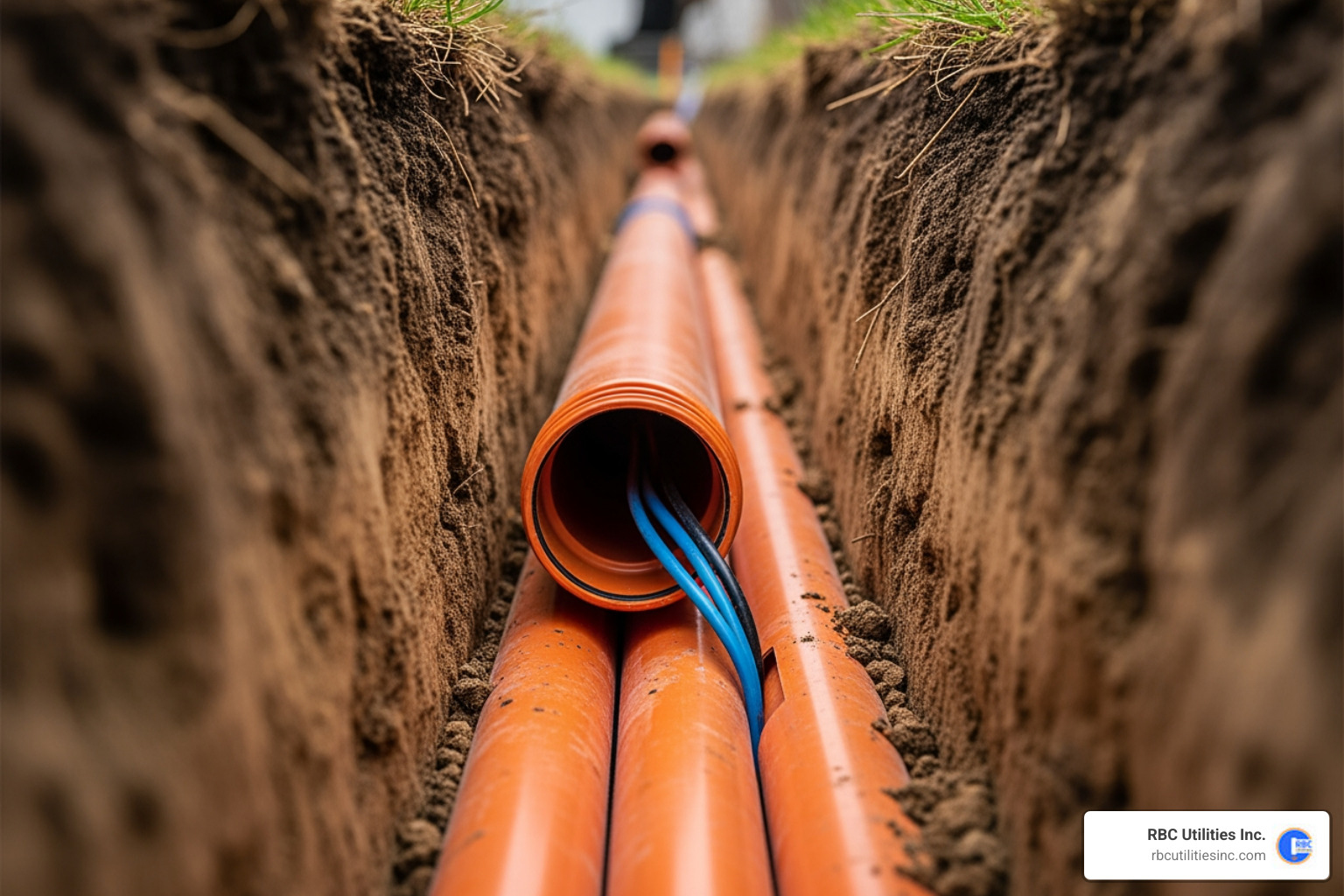
Compare RBC's notes on directional boring vs. open-cut trenching, commercial conduit installation, and storm drain pipe installation once method selection becomes part of the early planning conversation.
There's rarely such a thing. A utility contractor reviewing a draft site plan can flag corridor, depth, or access conflicts while they're still just lines on paper, not field problems.
Generally the opposite. Catching conflicts before submission avoids the resubmission cycles that actually add time to approval.
Corridor routing relative to grading and access, depth conflicts between scopes sharing a trench, and whether the sequencing assumed in the plan is realistic in the field. That review is part of how RBC Utilities keeps Carolinas developments moving once construction starts.
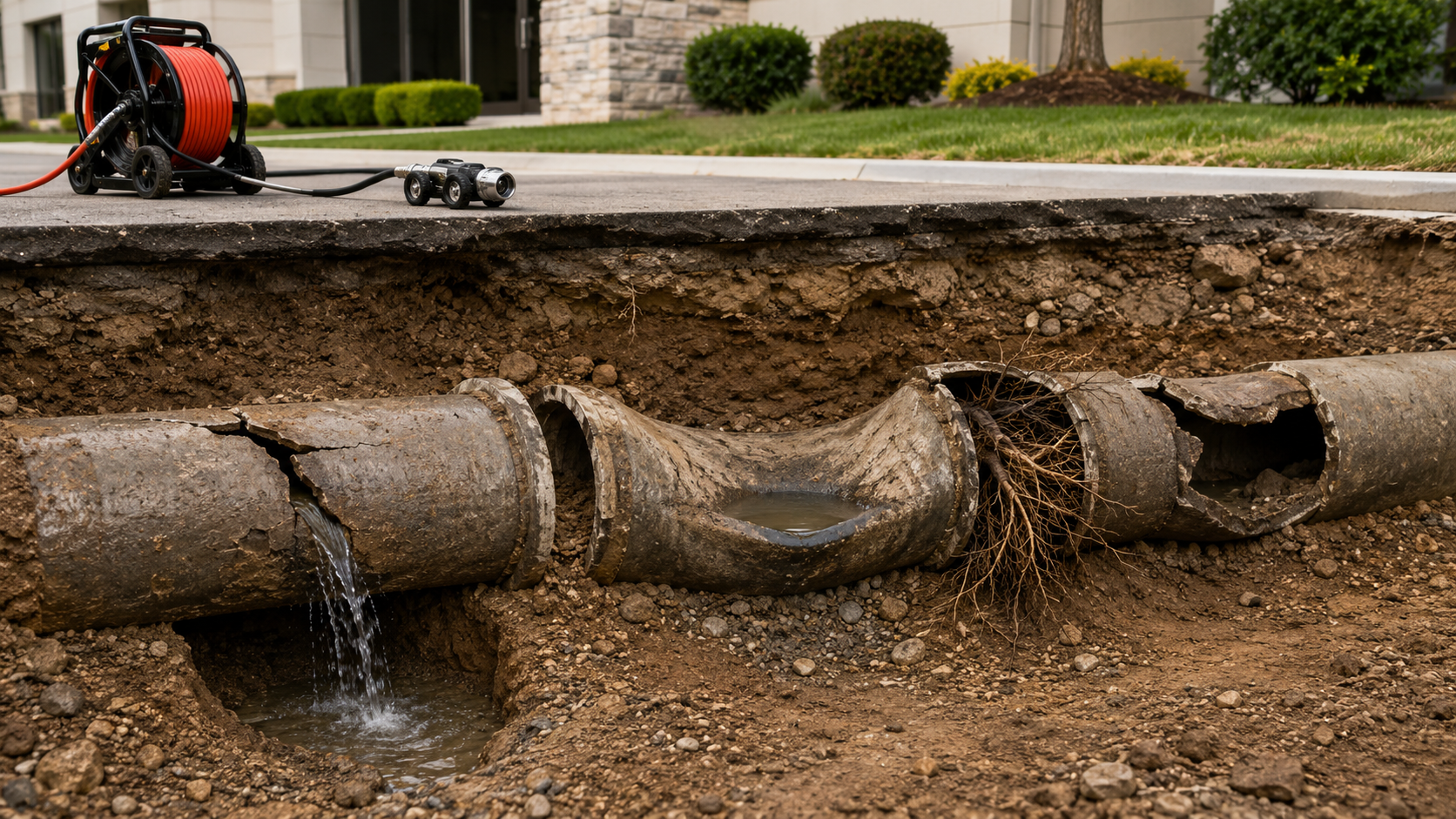
Underground utilities planned after grading and access decisions are locked in almost always cost more to install and take longer to fix when something doesn't fit. Planning the corridor first changes that.
RBC Utilities works with developers and civil teams early in the site planning process across the Carolinas. For project conversations, use the RBC Utilities contact page.
Part of Saga Infrastructure, protecting what others built and helping it grow.
Address: 4404 Stuart Andrew Blvd., Suite K, Charlotte, NC 28217
Email: info@rbcutilities.com
Phone: 803-913-9727
Service Area: North Carolina | South Carolina