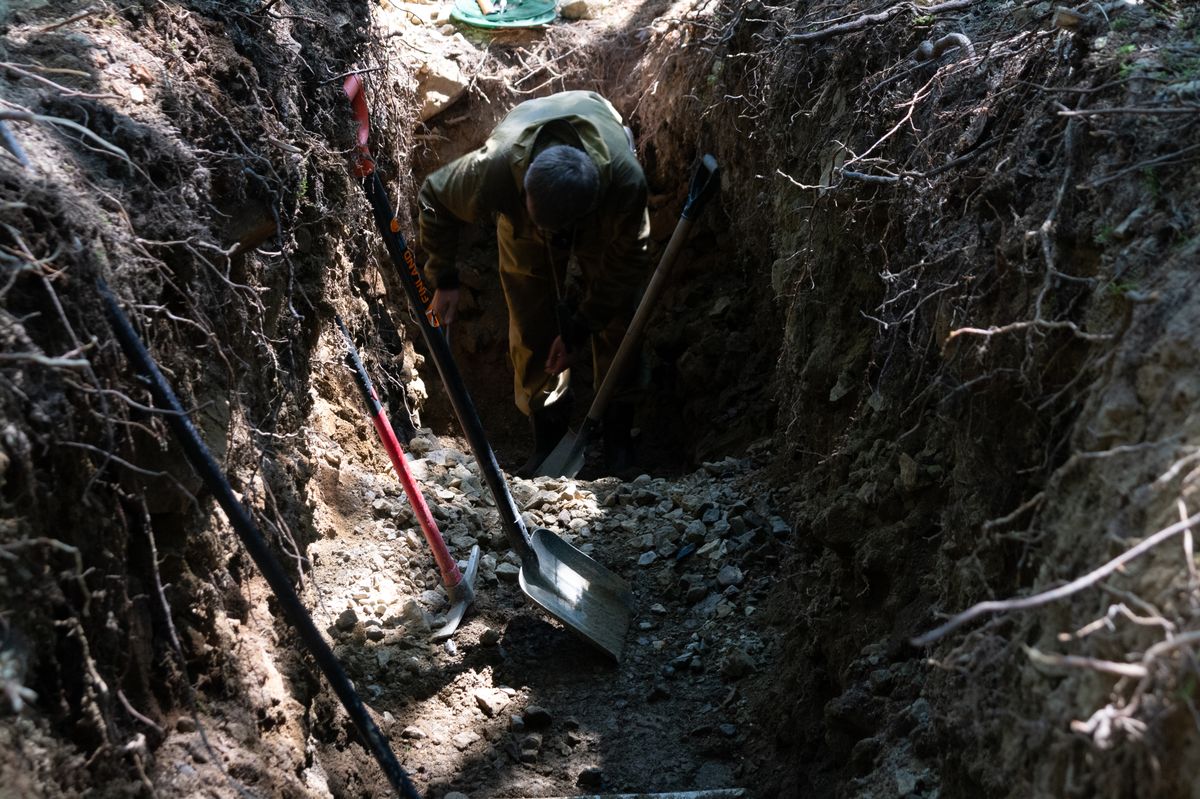
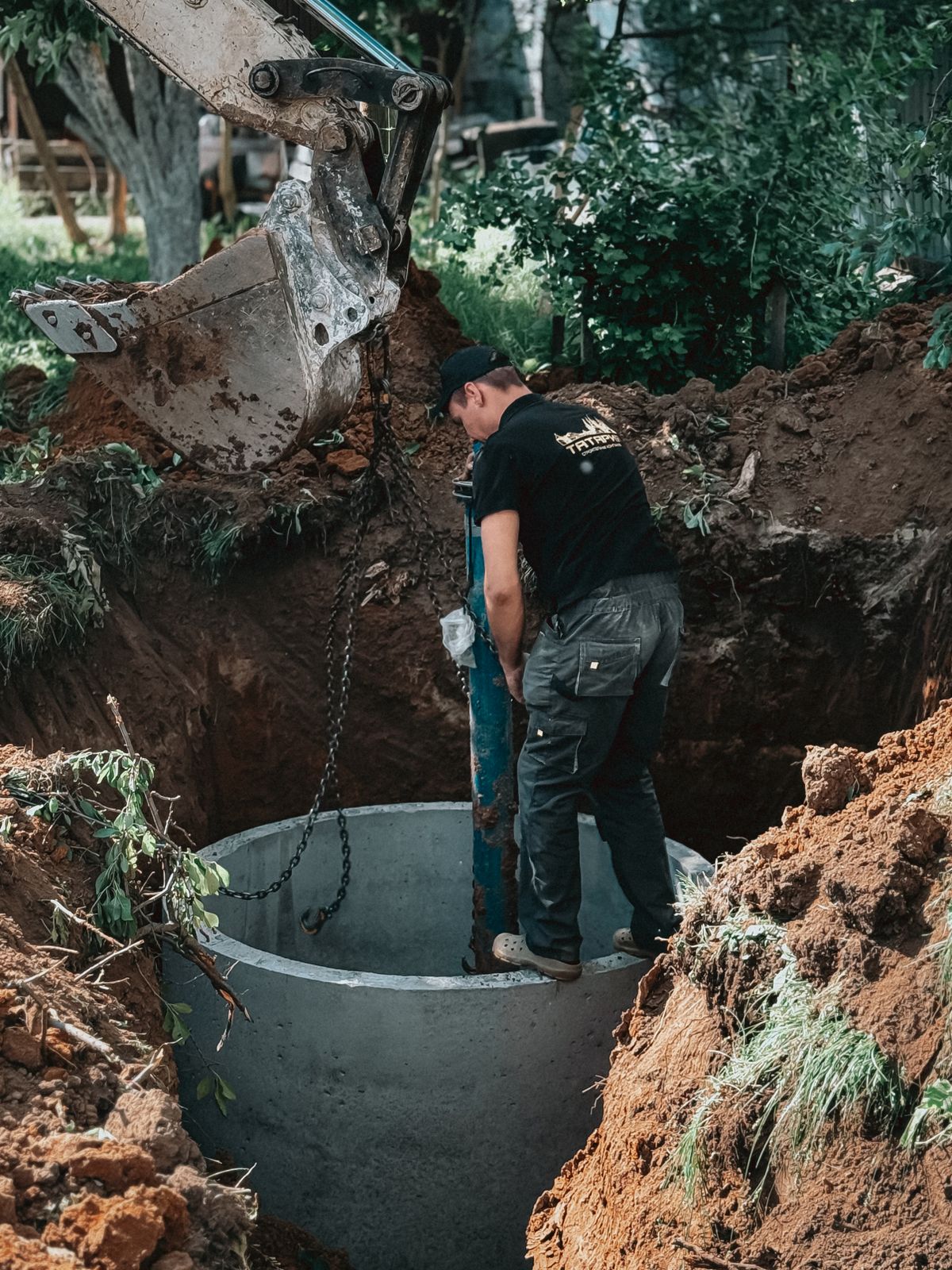
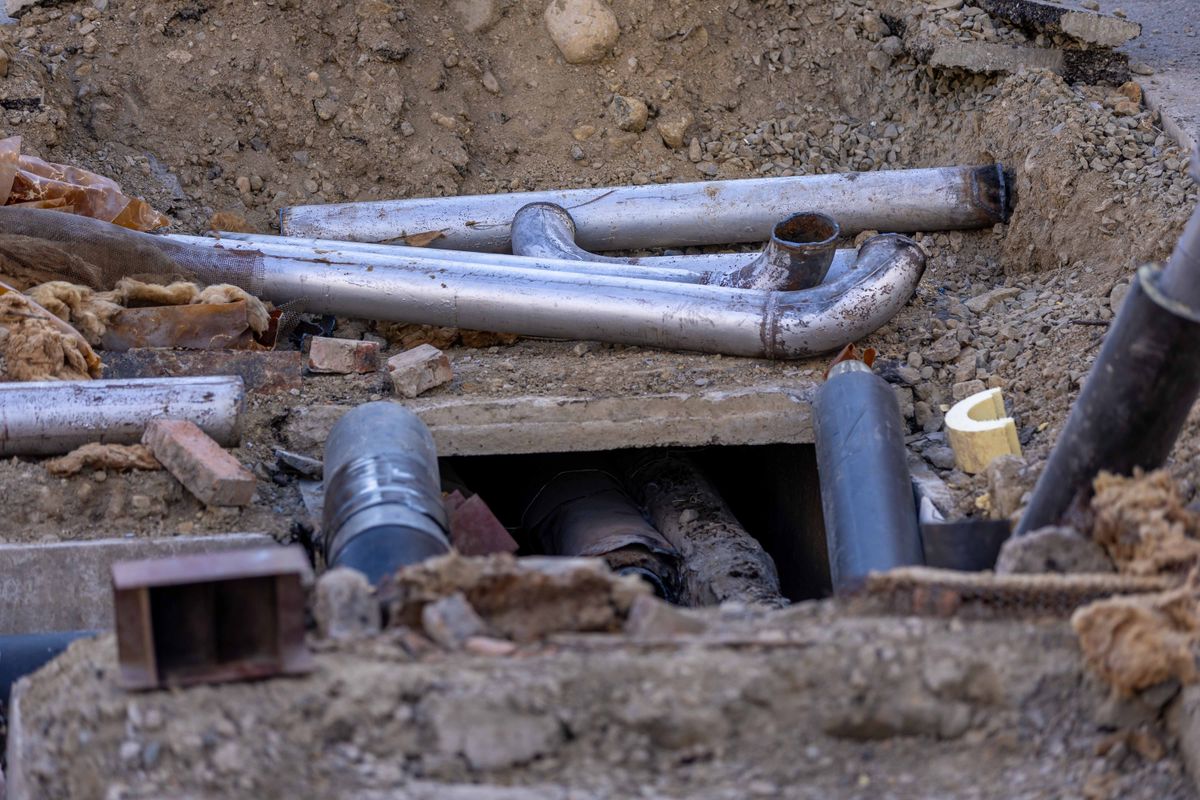
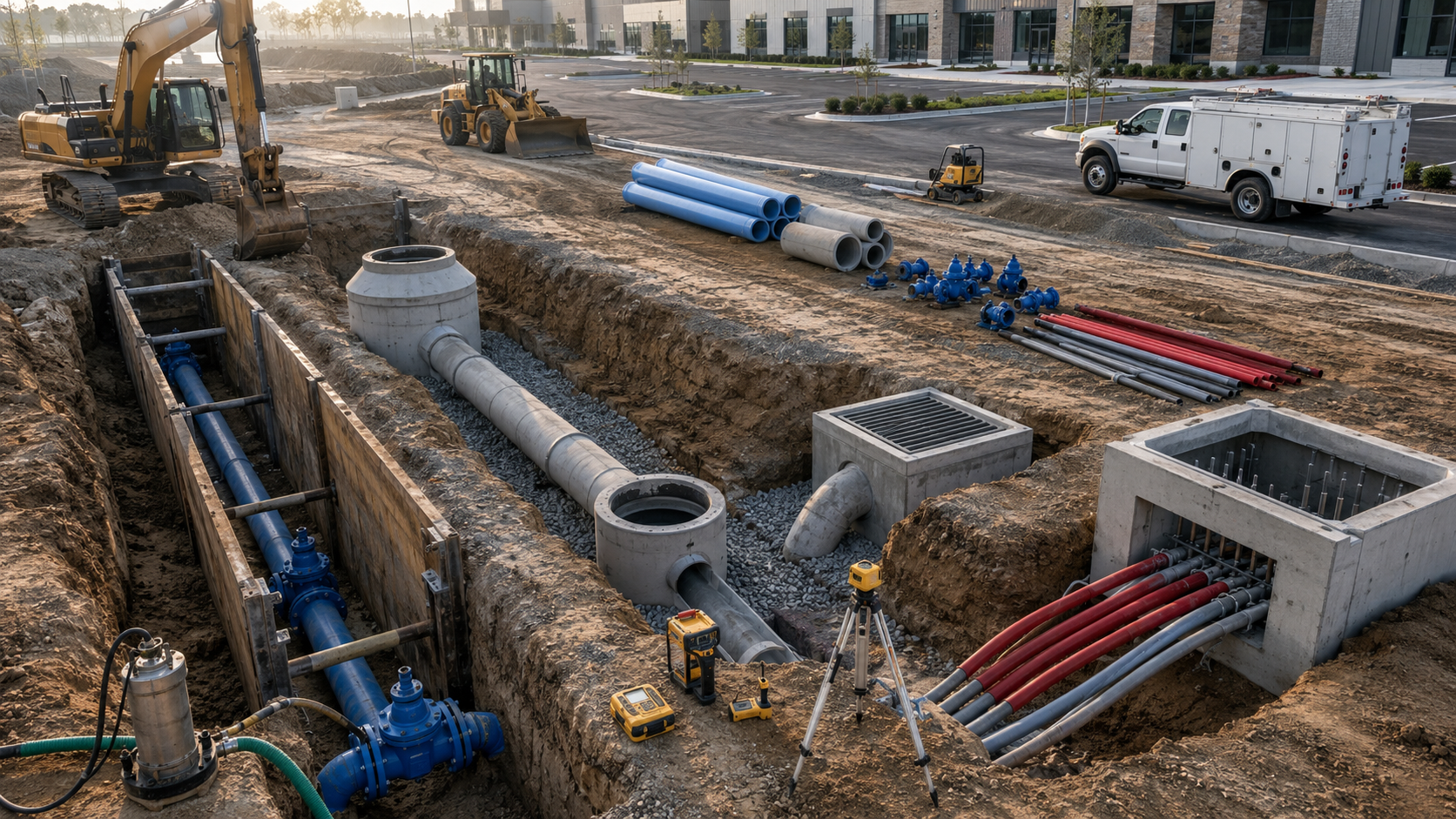
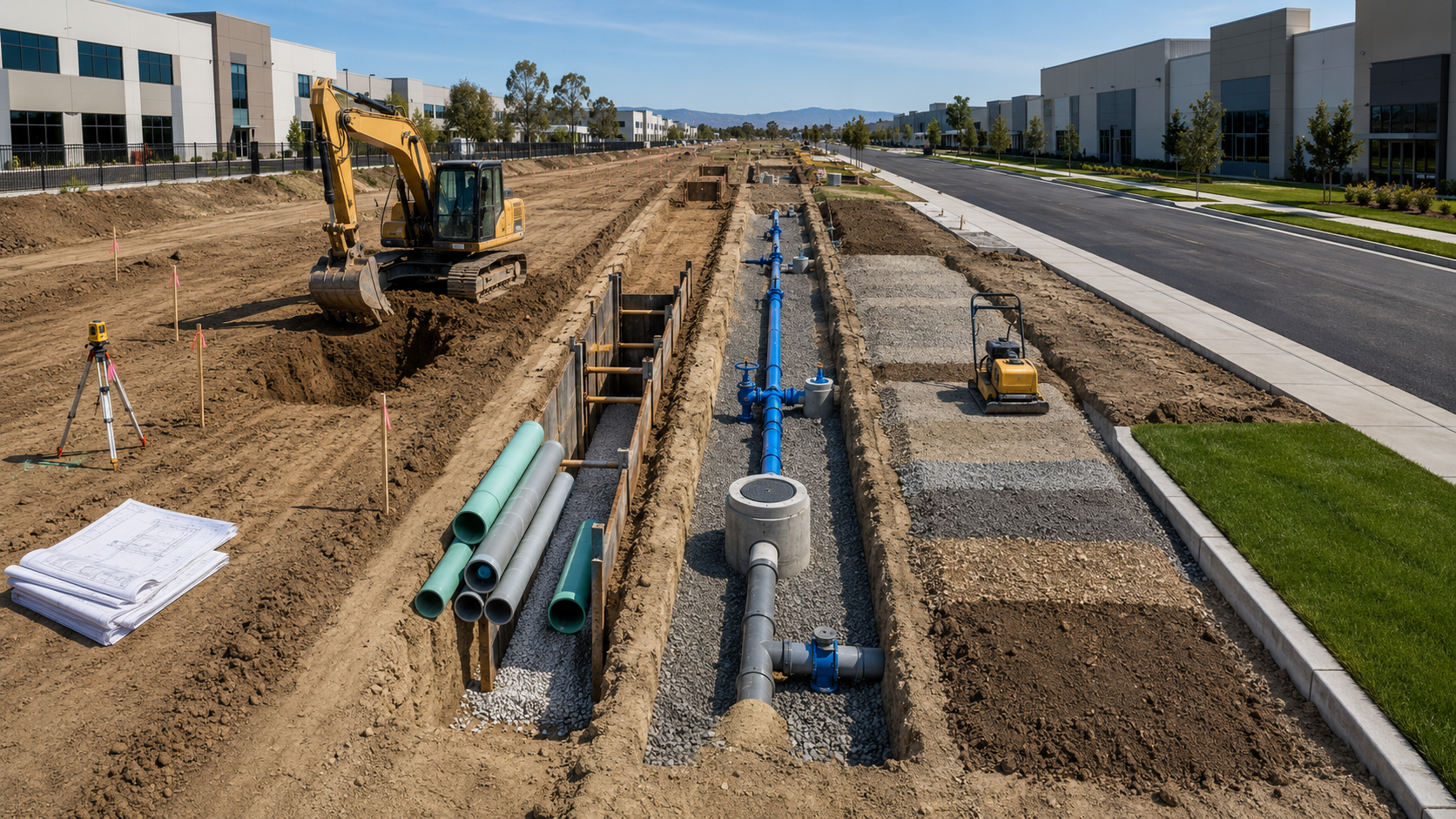
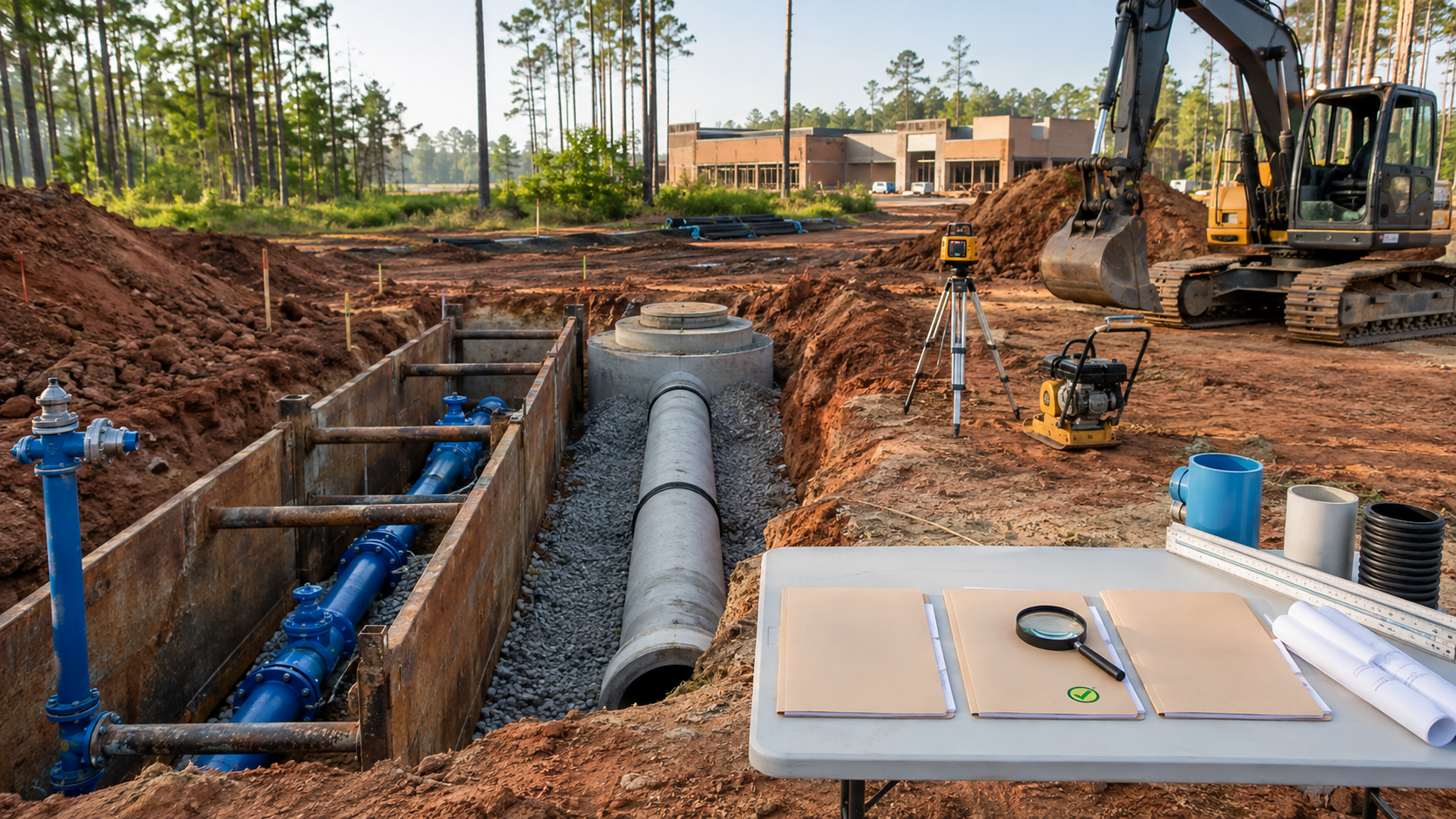
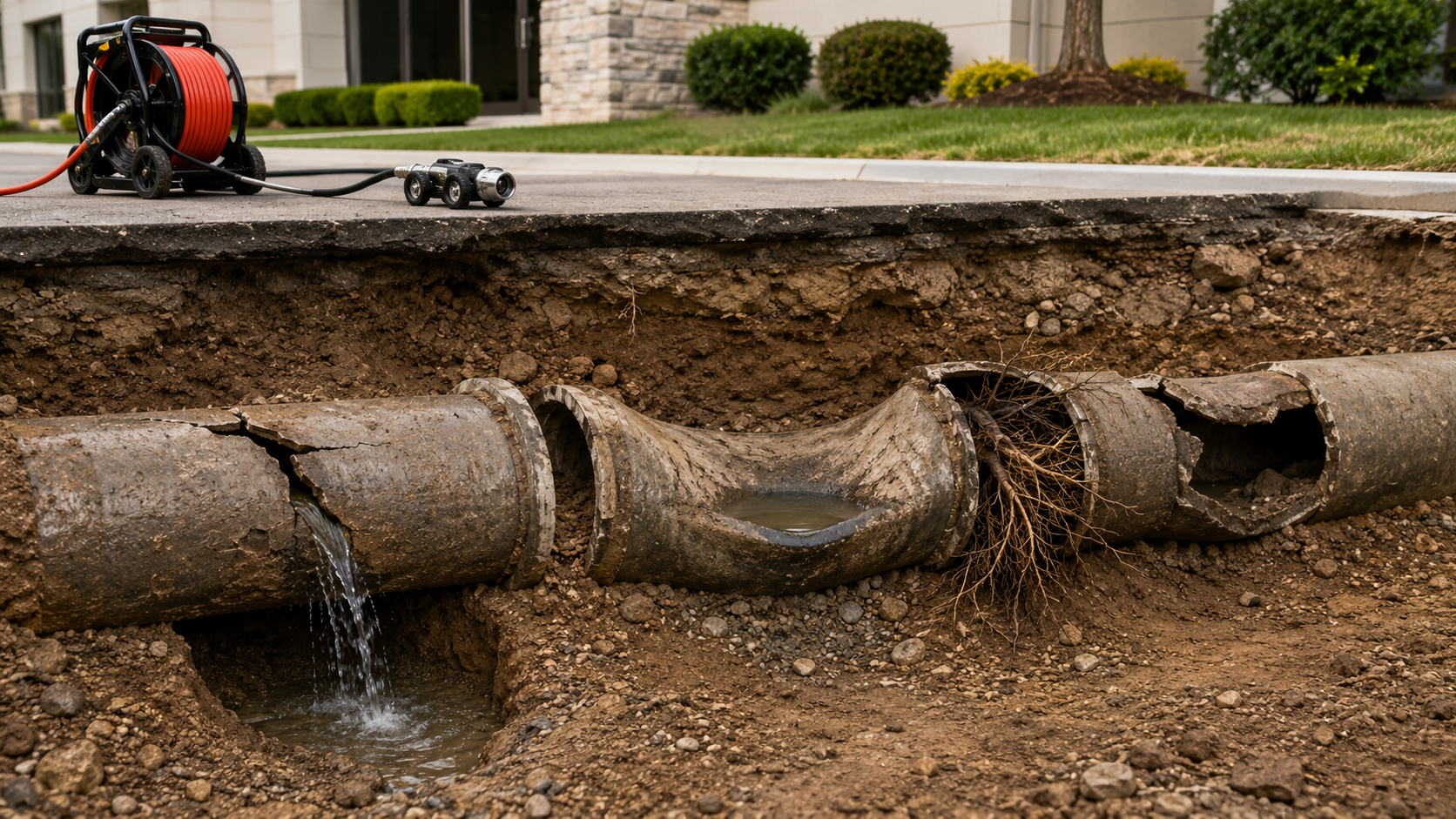
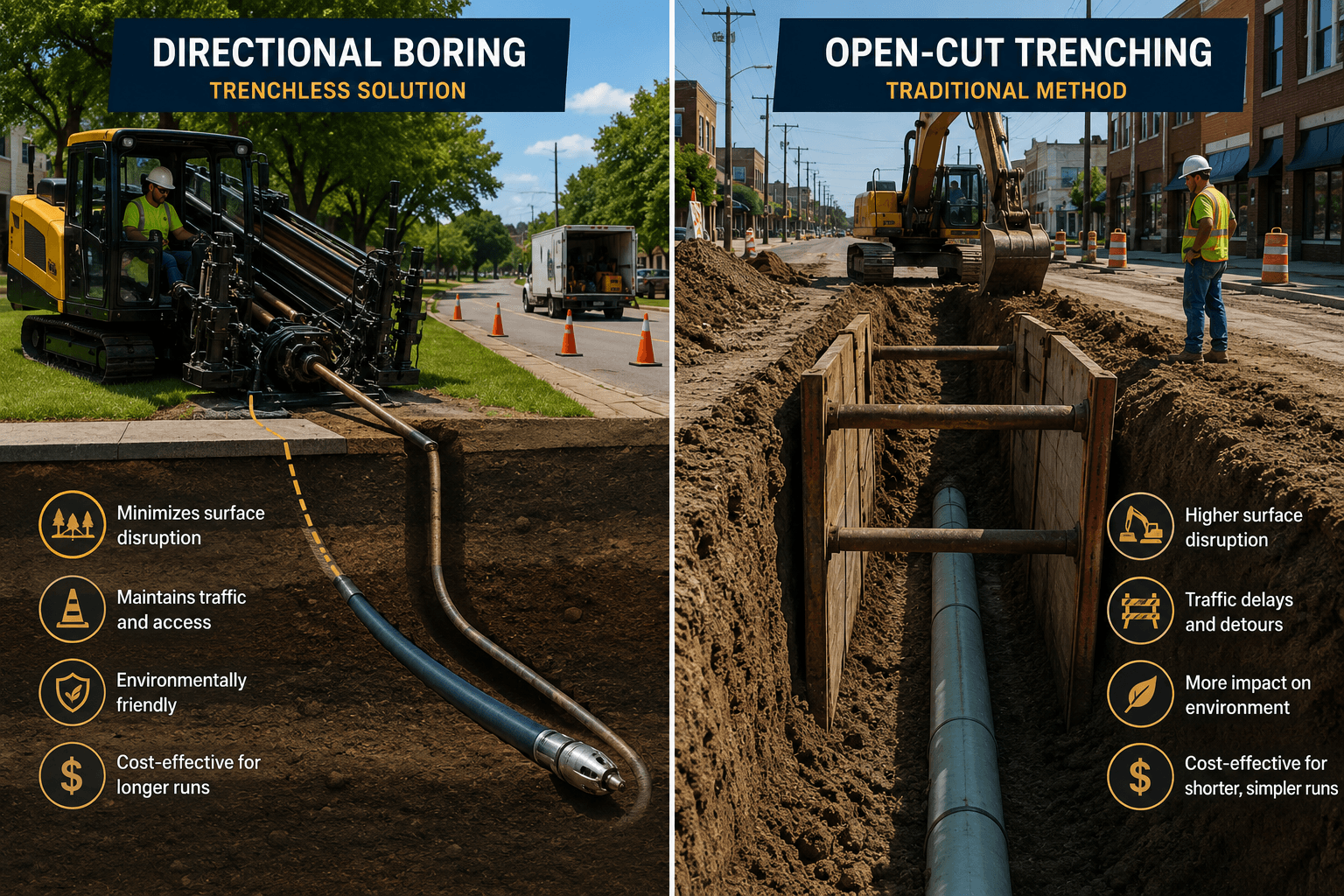
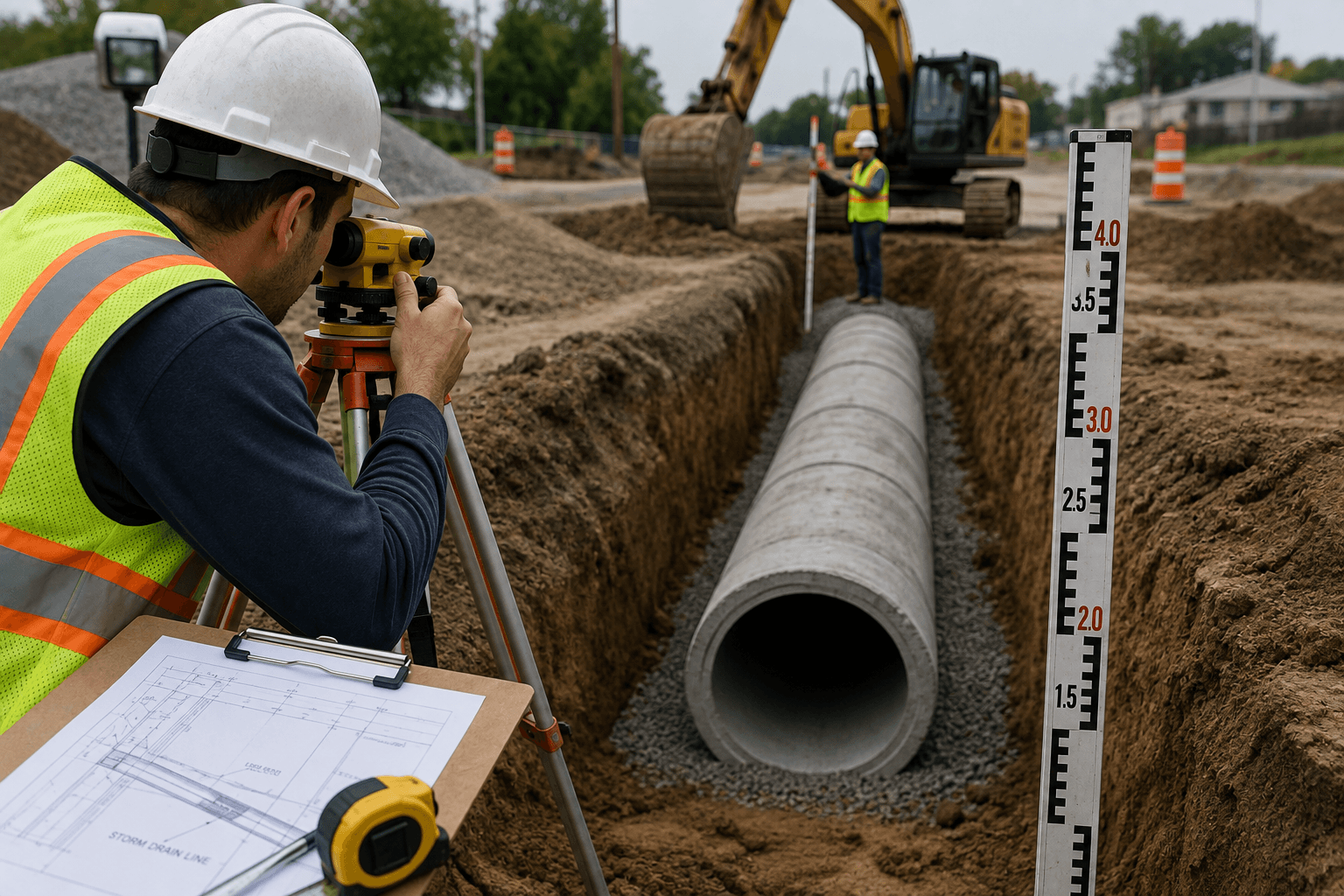
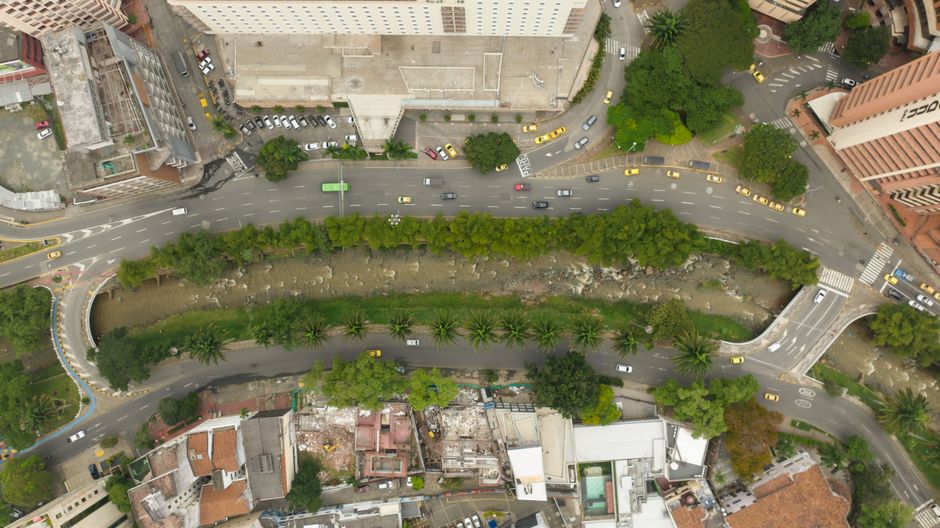
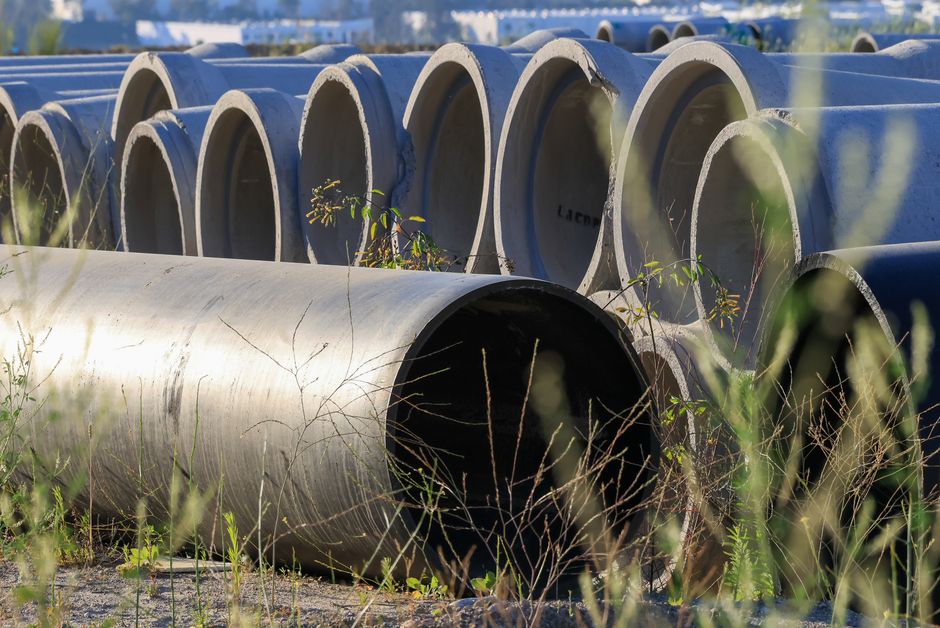
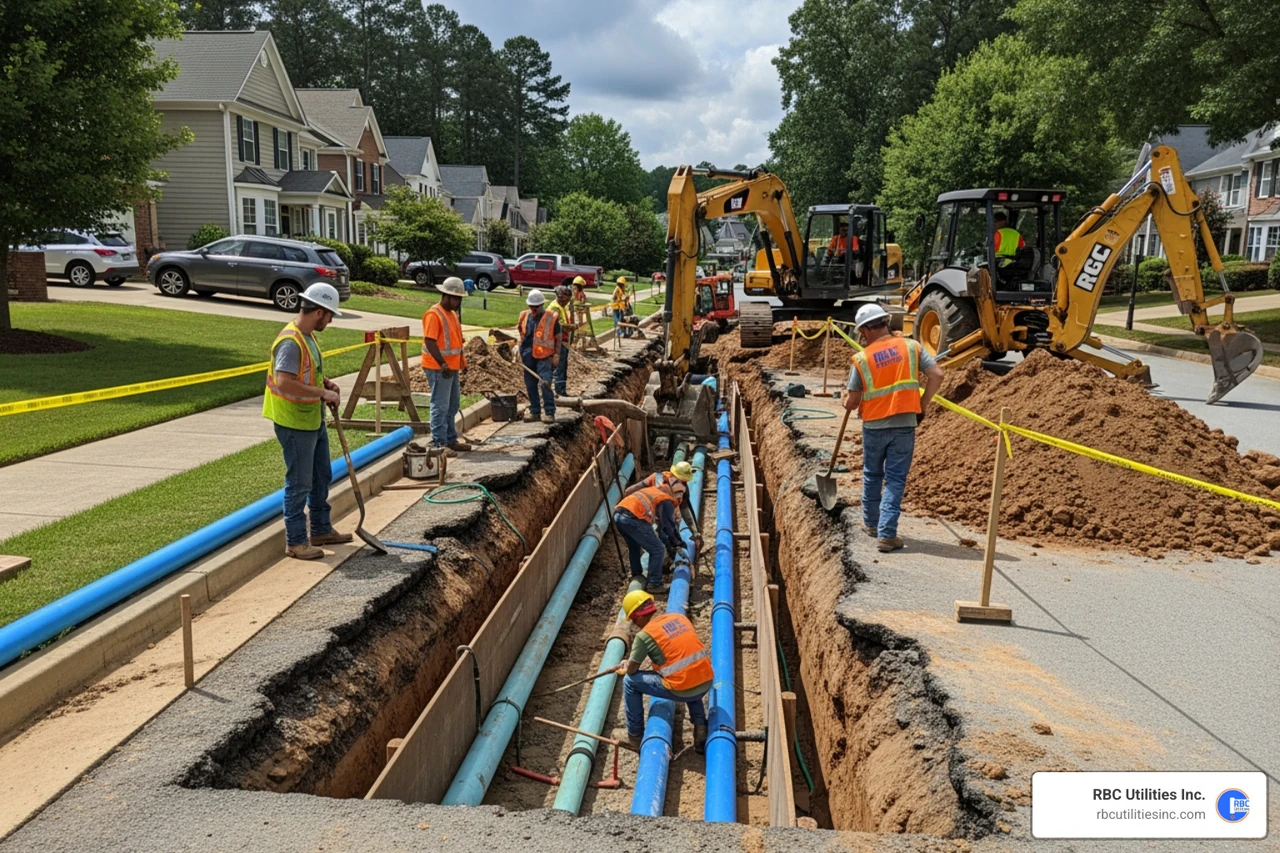
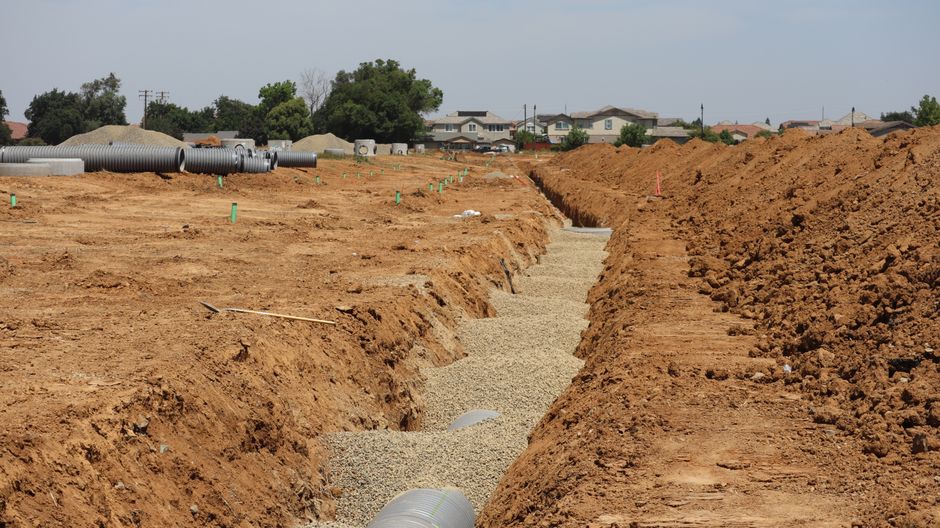
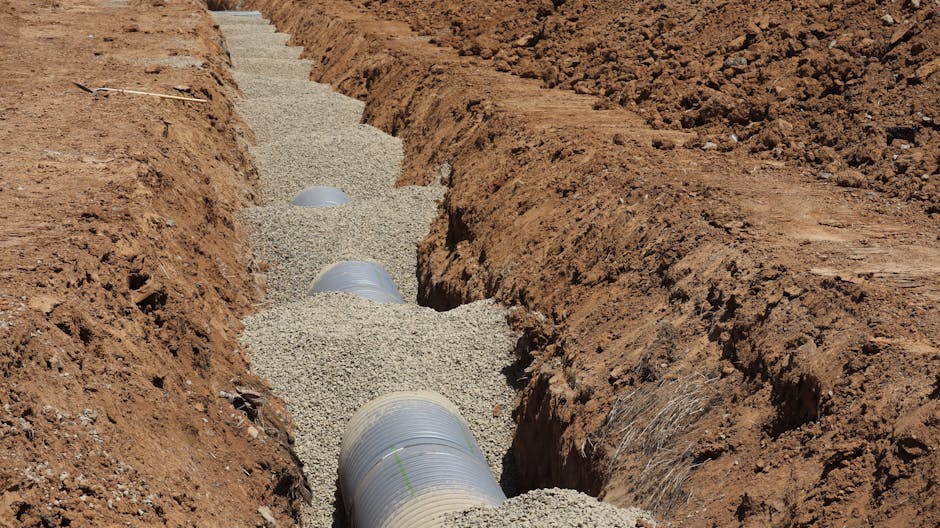
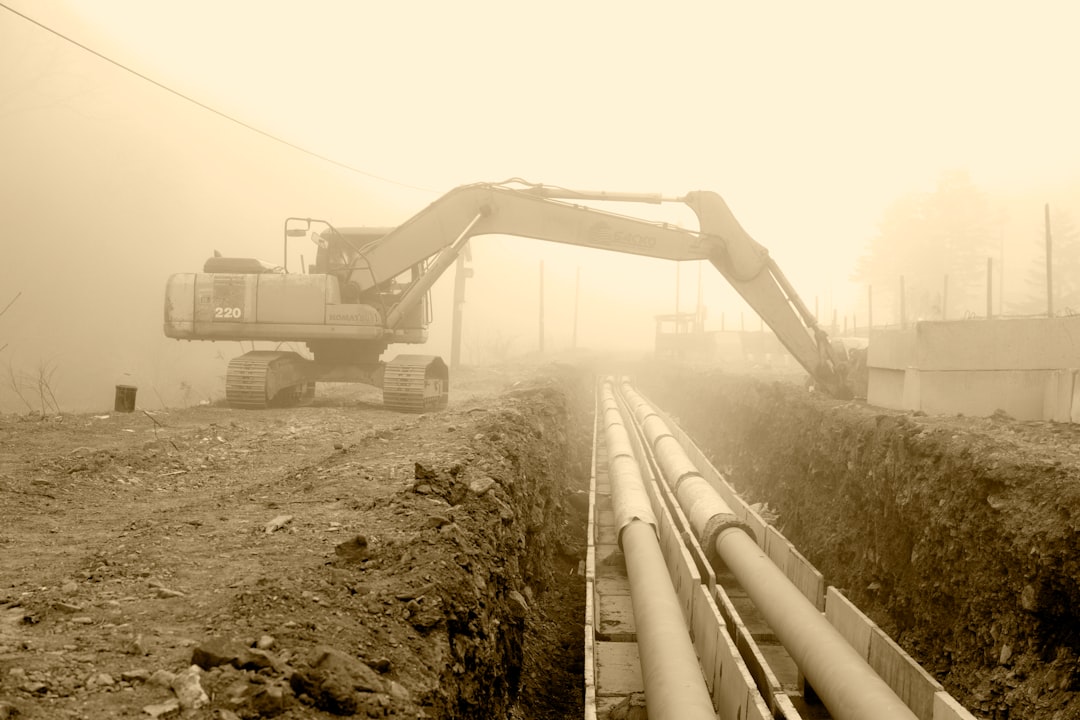
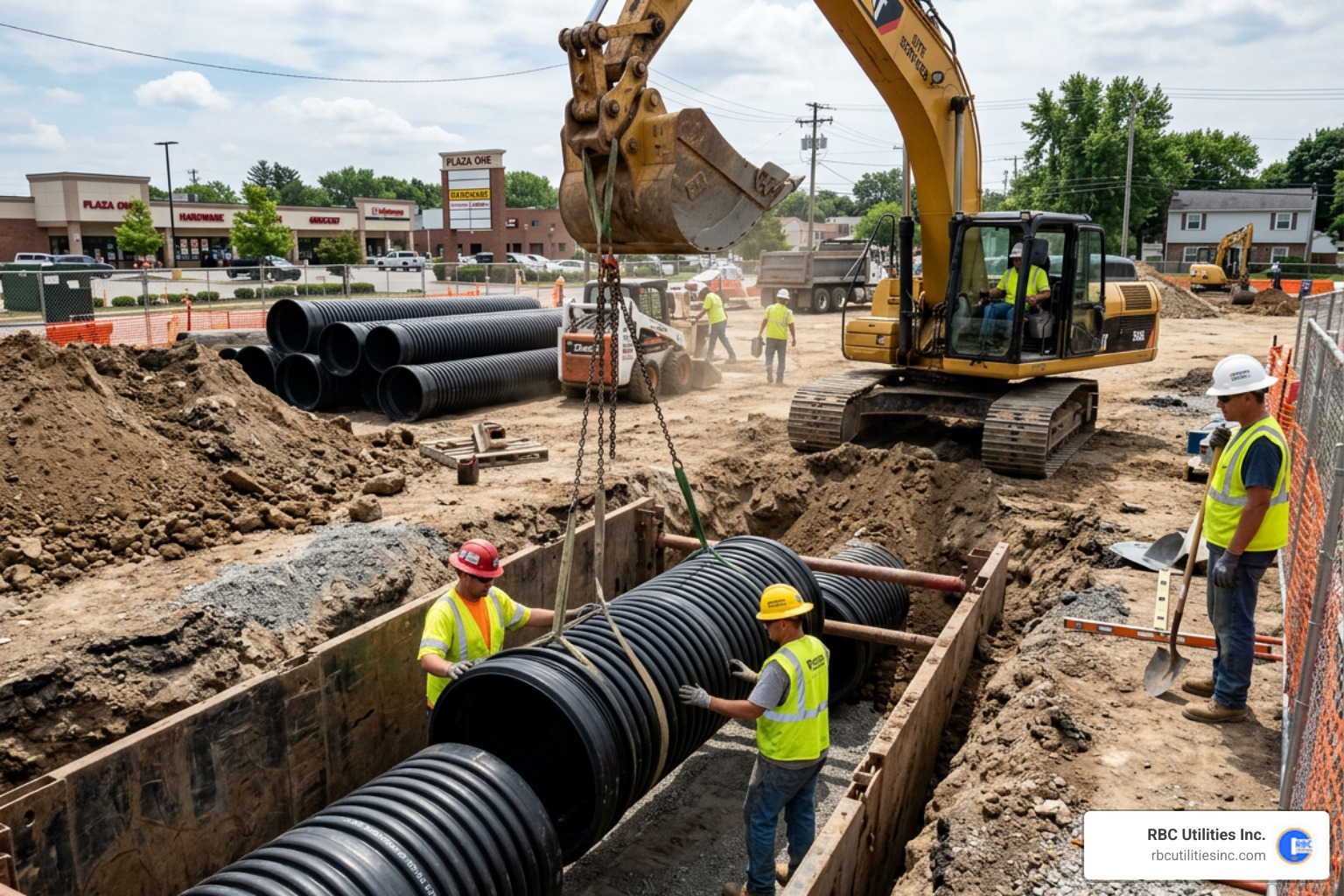
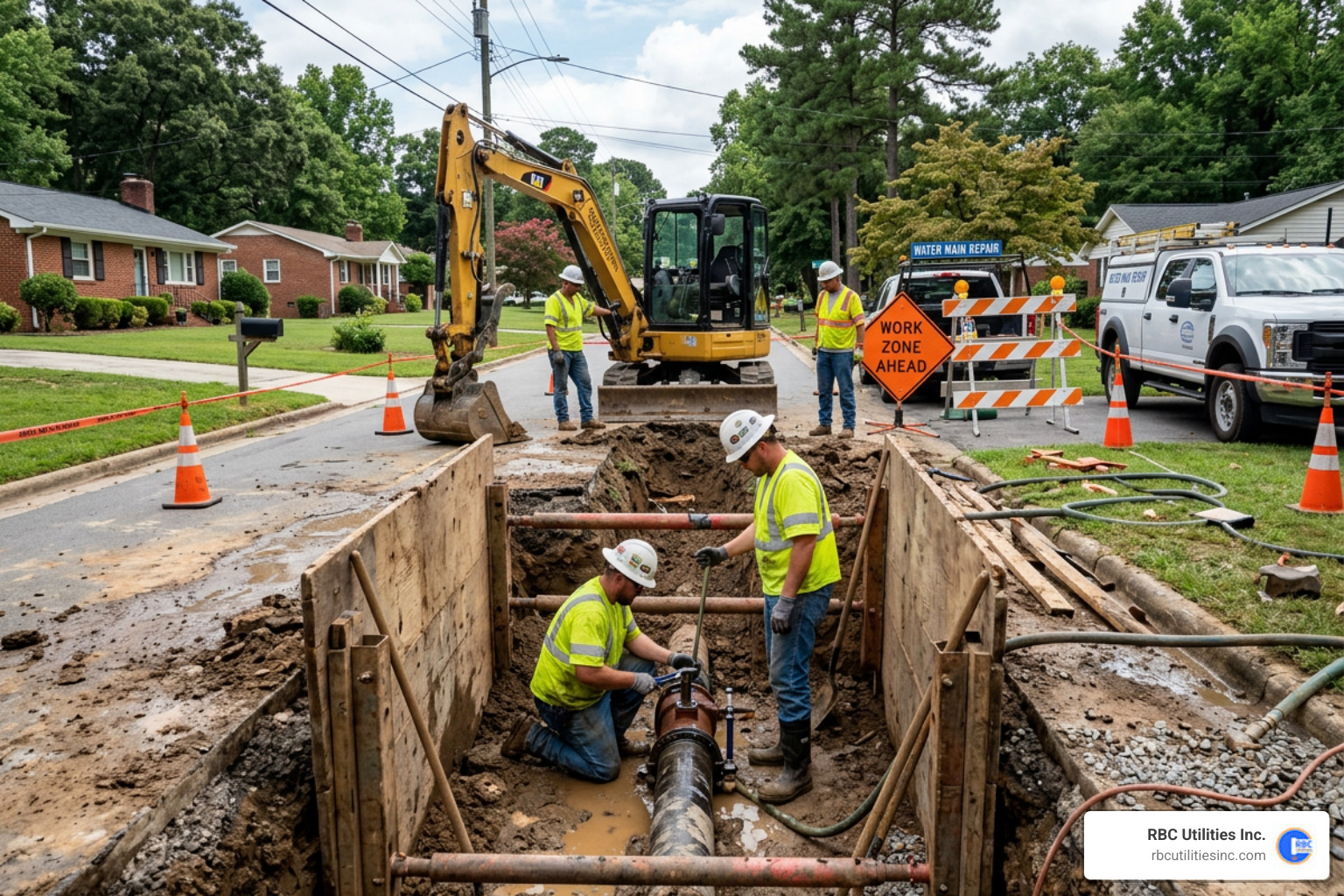
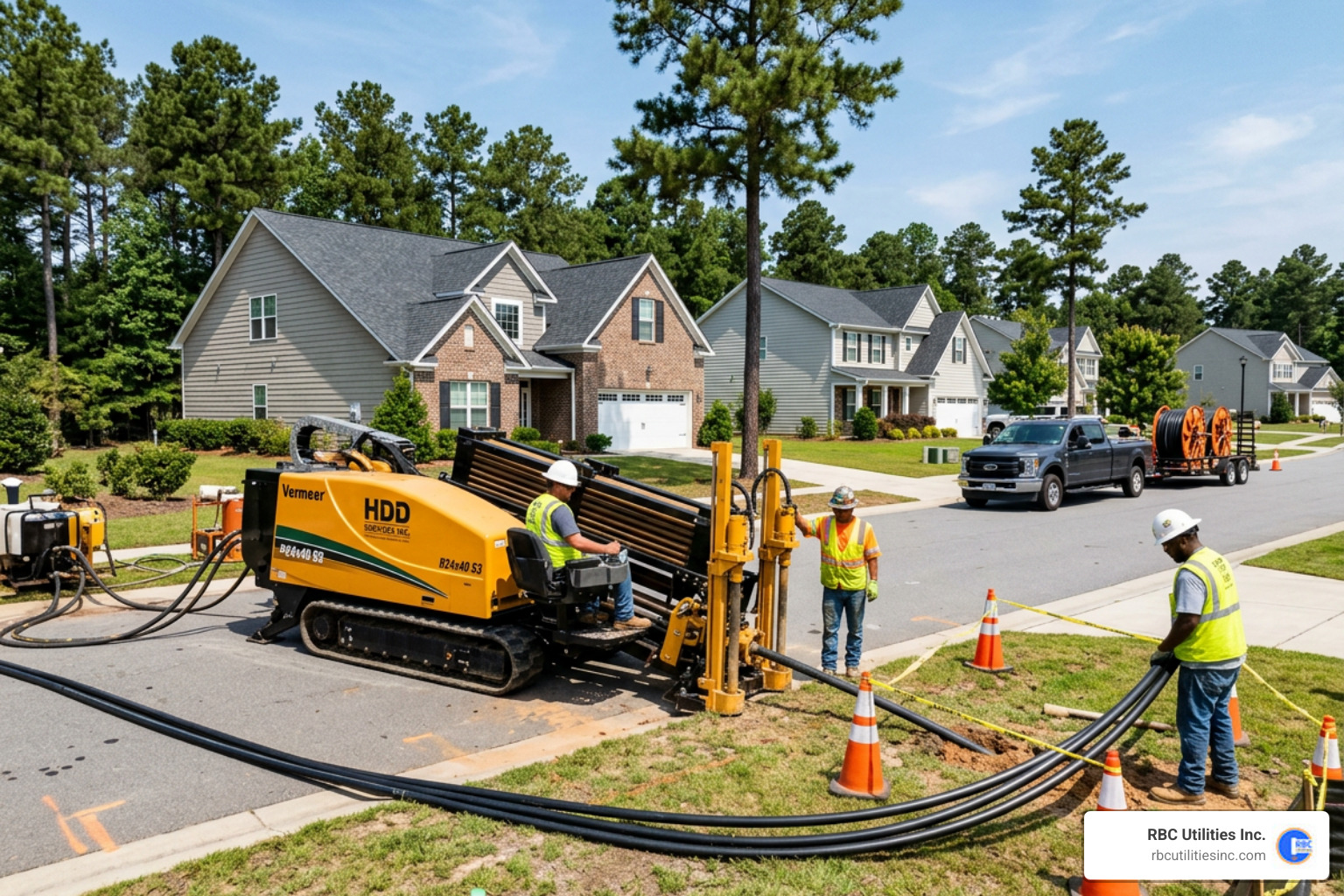
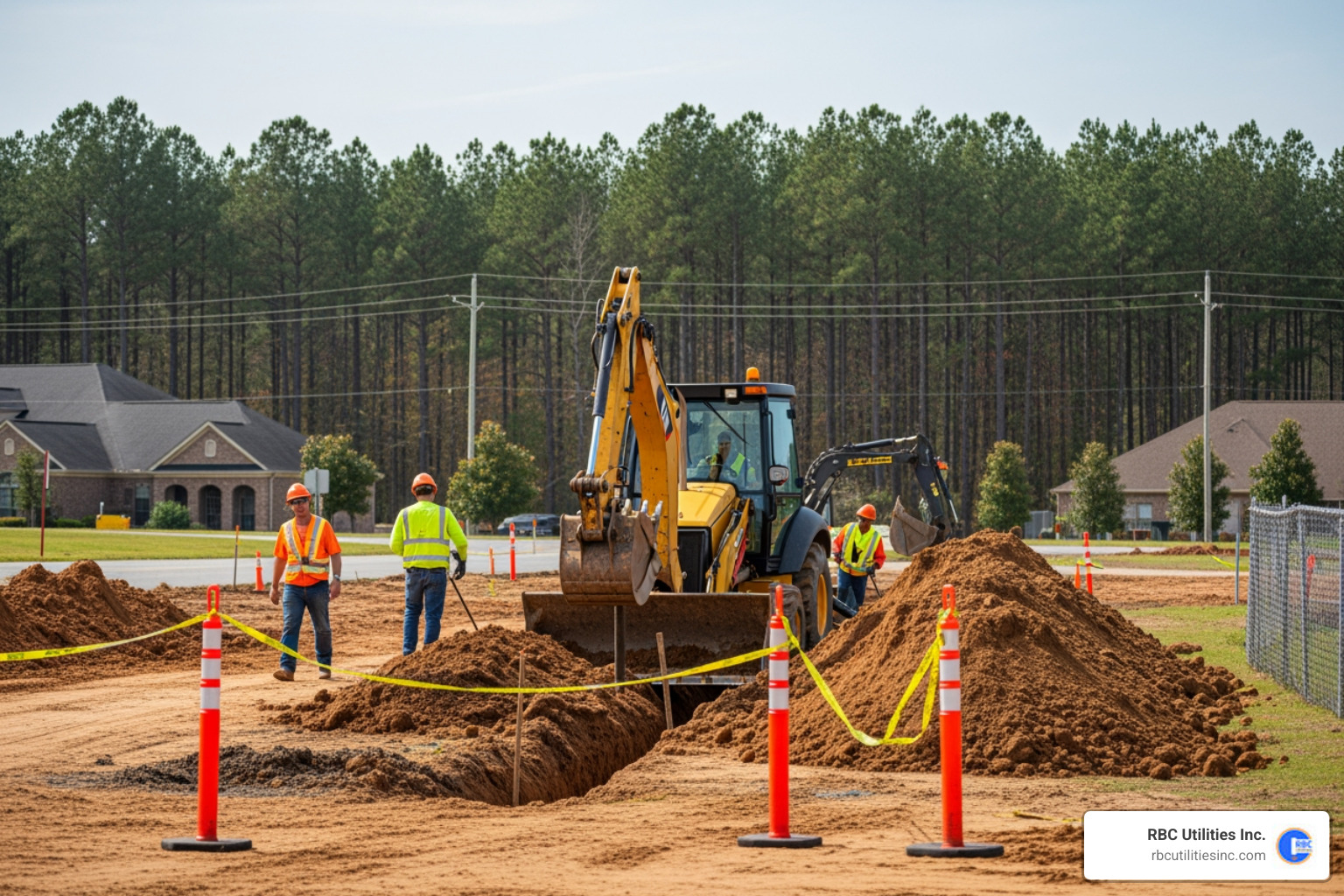
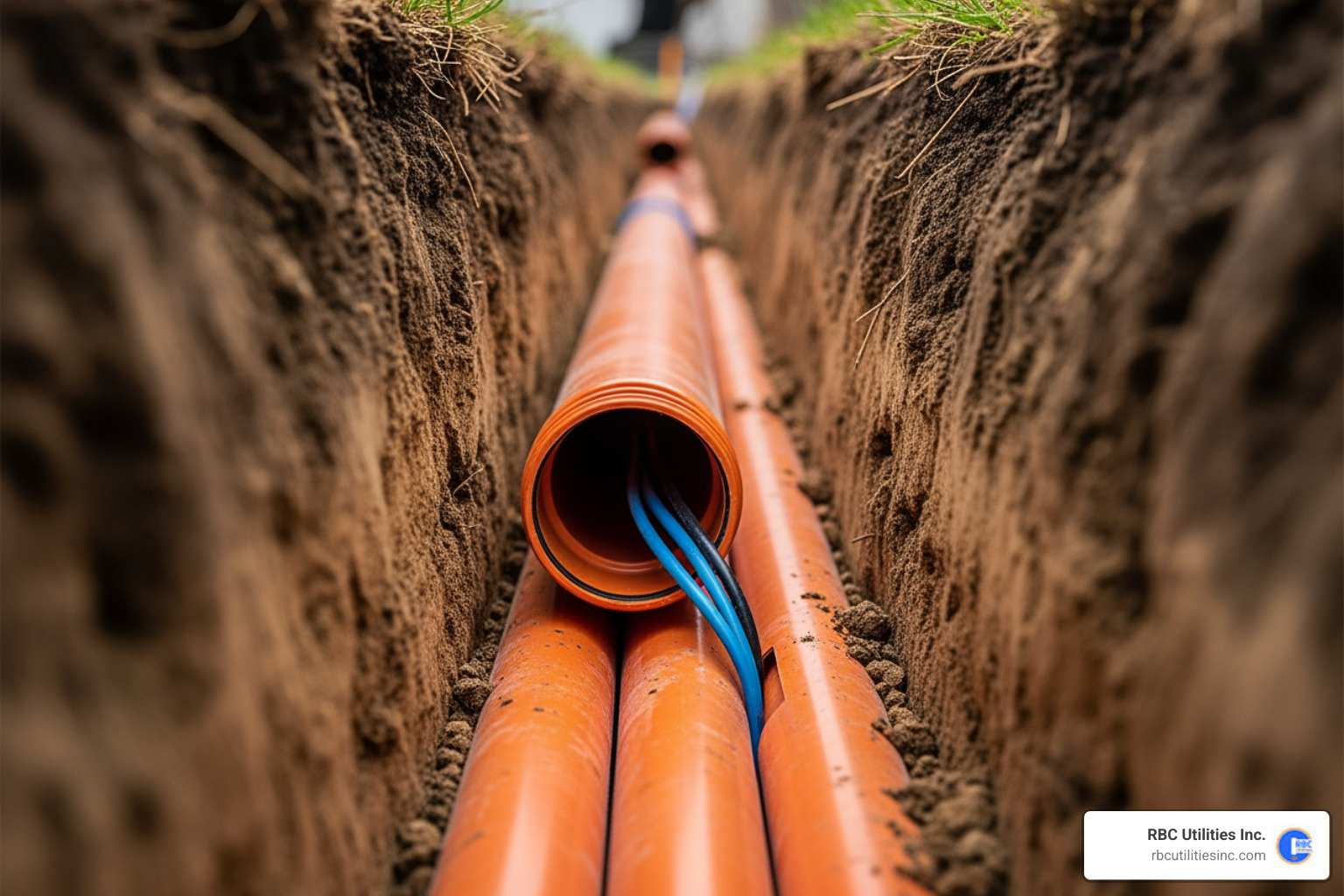
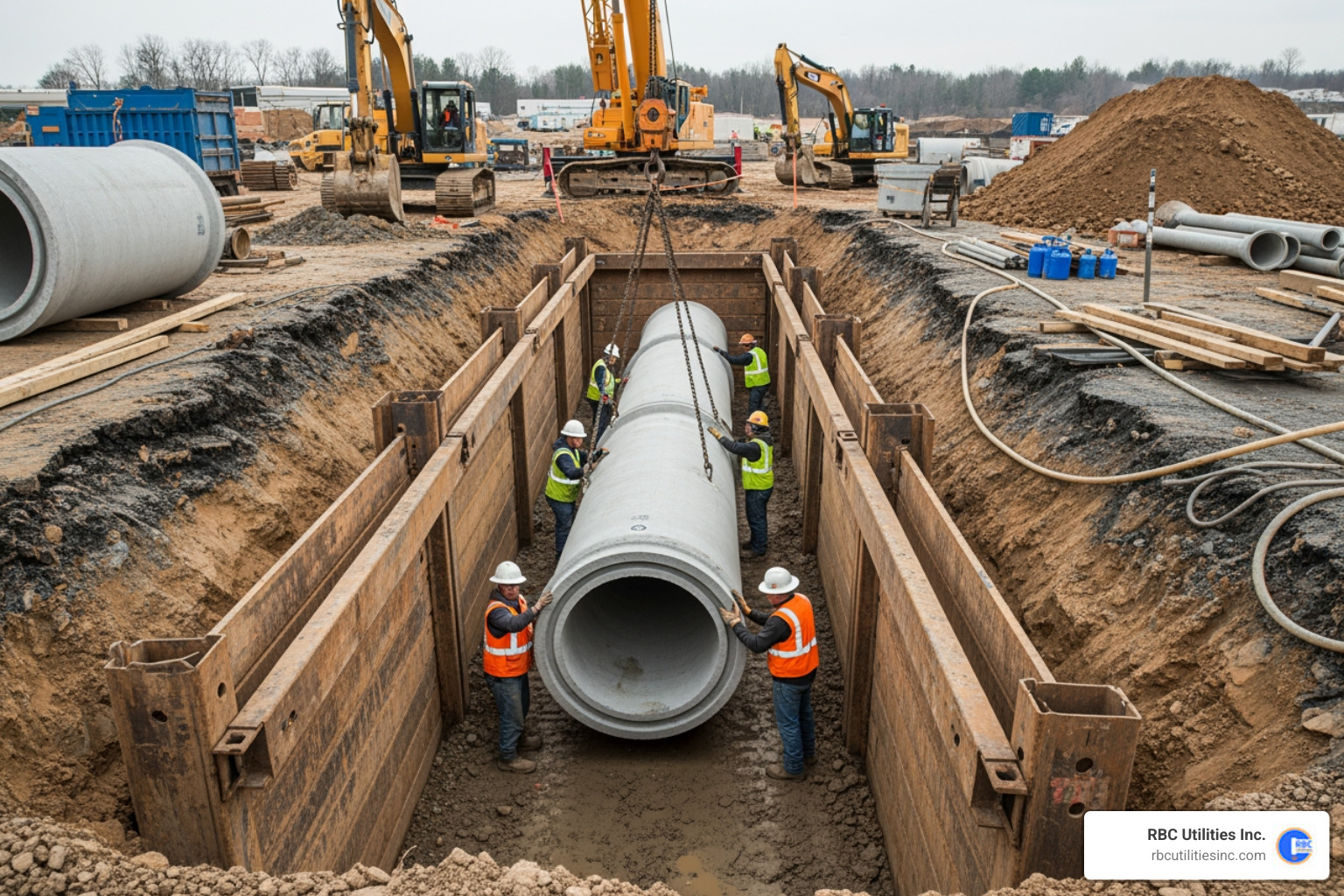
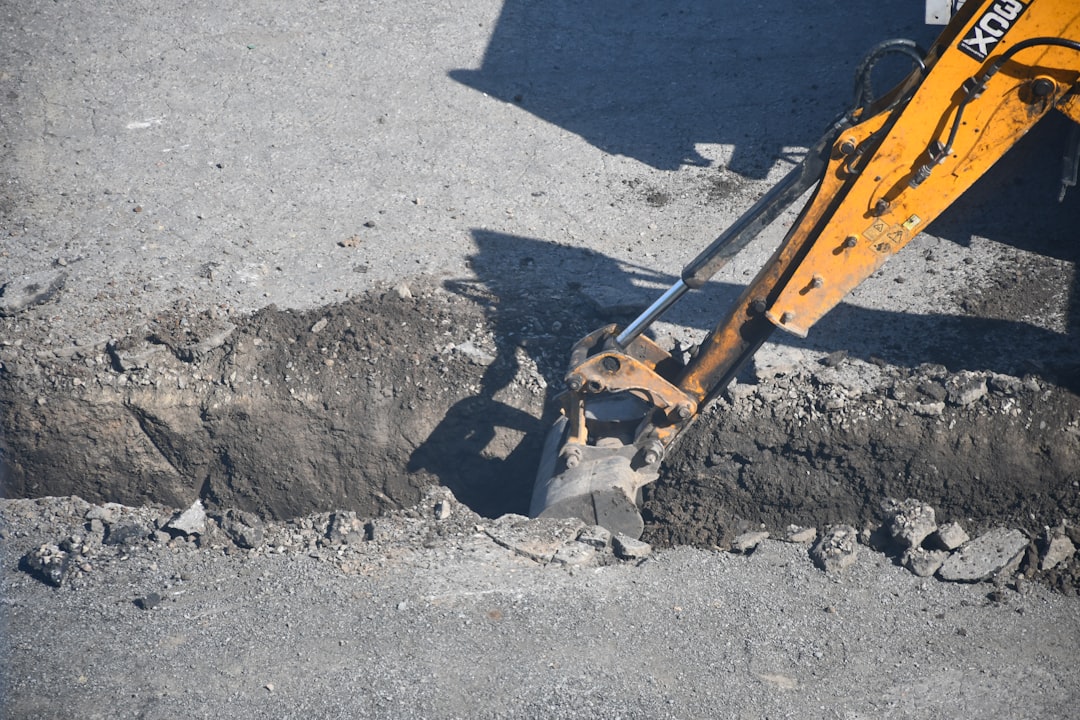
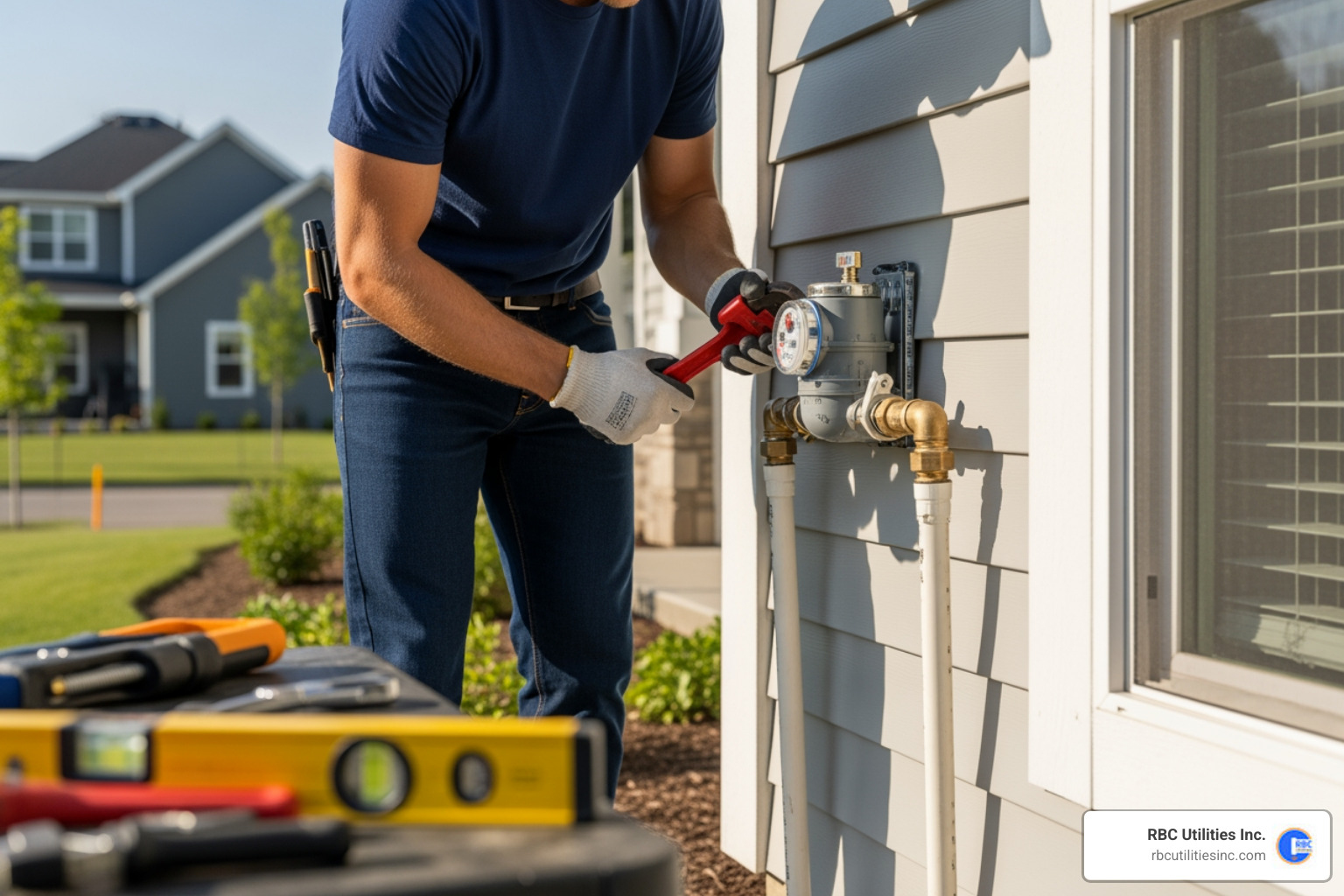
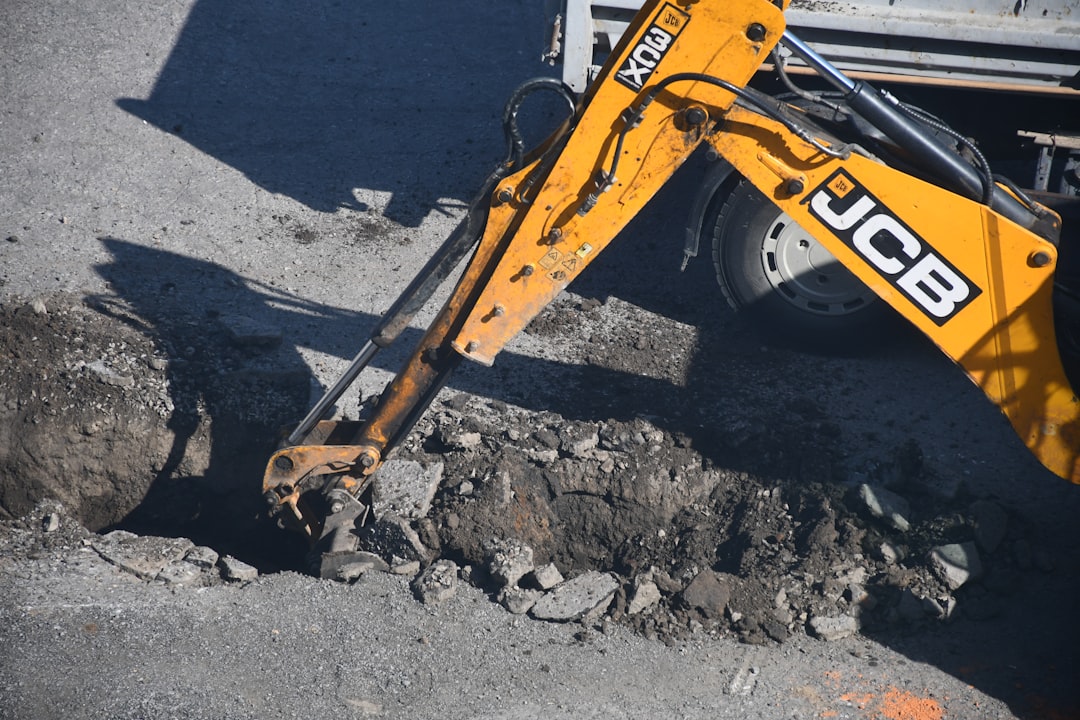
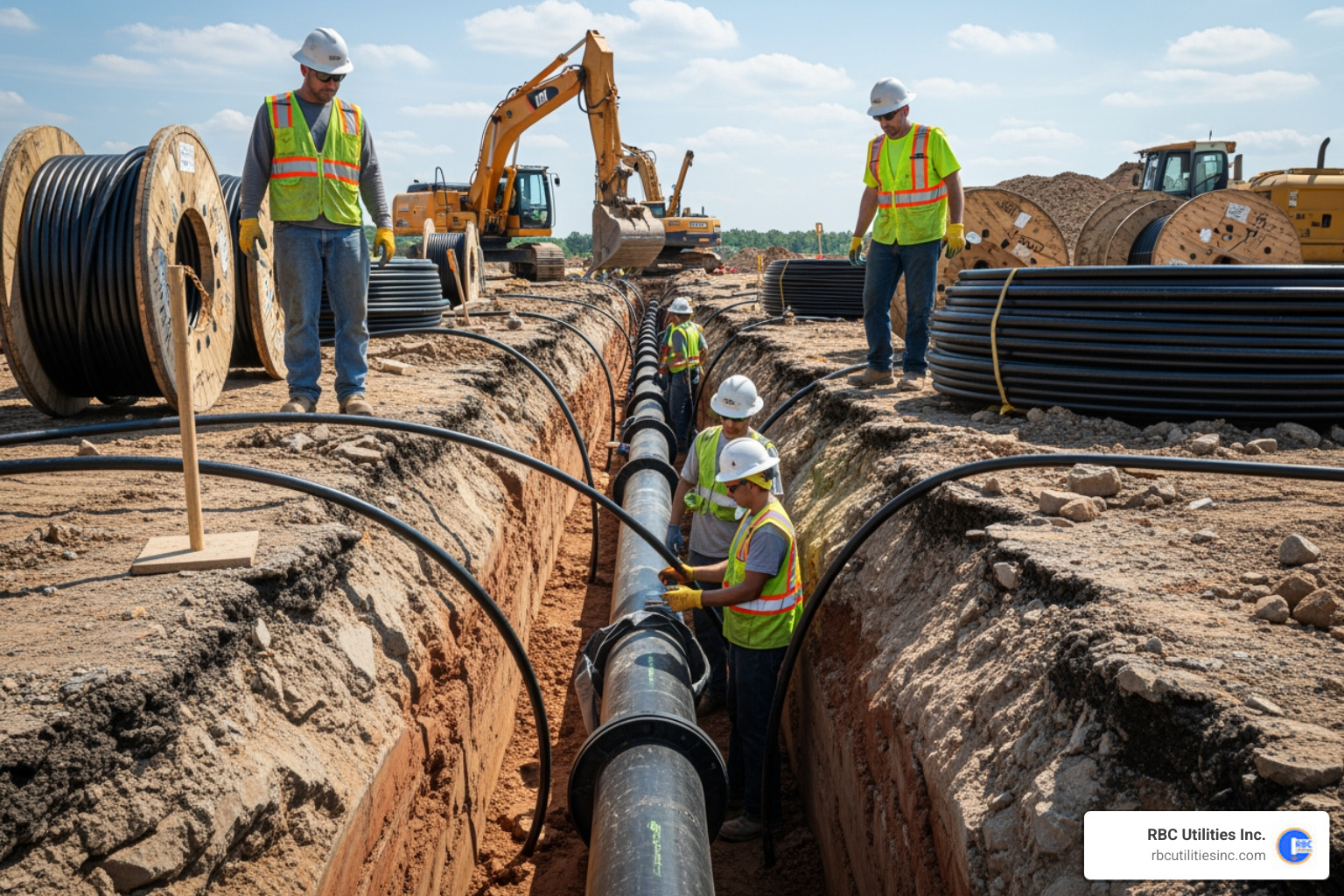
Neither directional boring nor open-cut trenching is the "right" method in the abstract. Each one solves a different problem, and picking between them based on habit rather than site conditions is one of the more expensive mistakes a project can make before a single foot of pipe goes in the ground.
For a broader look at RBC's work, review RBC Utilities services, recent RBC Utilities projects, and this guide to what makes a true utility infrastructure contractor.
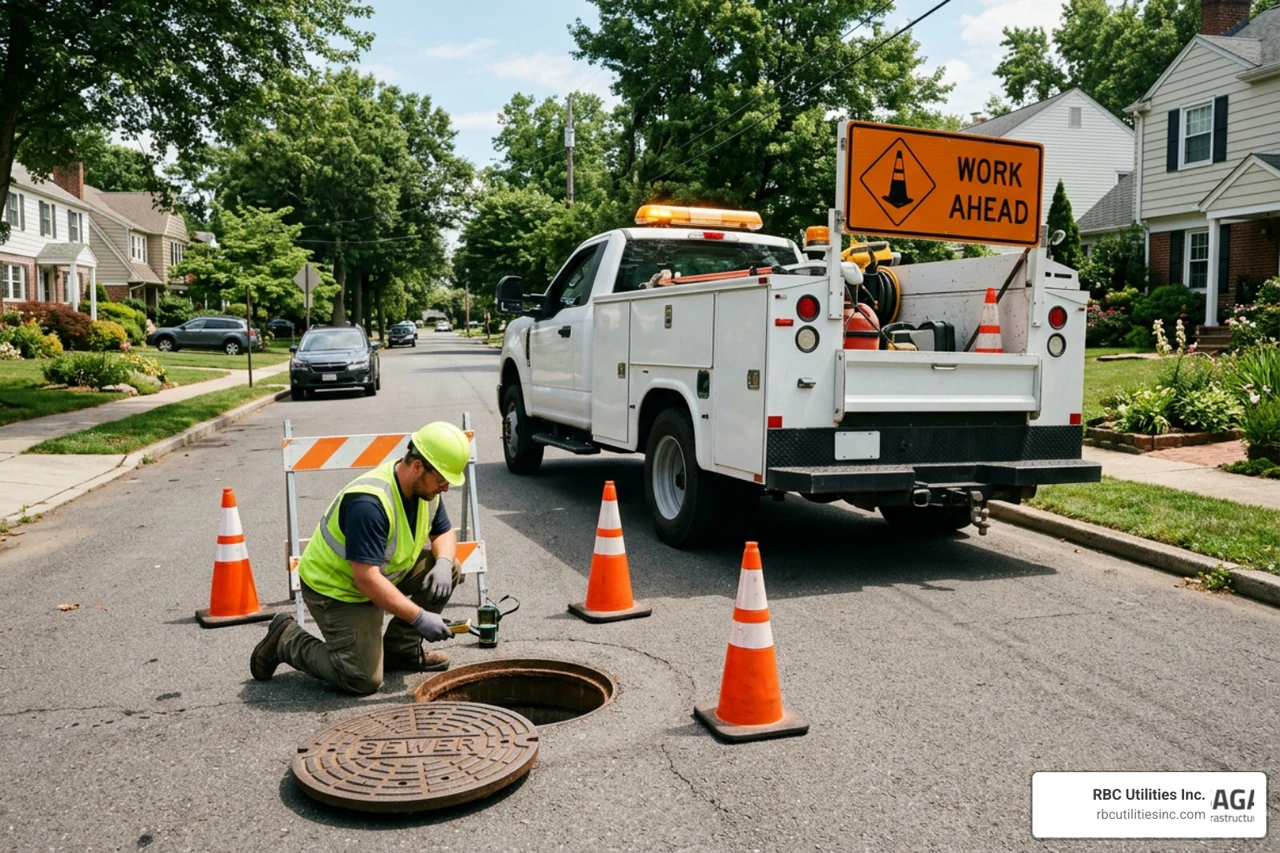
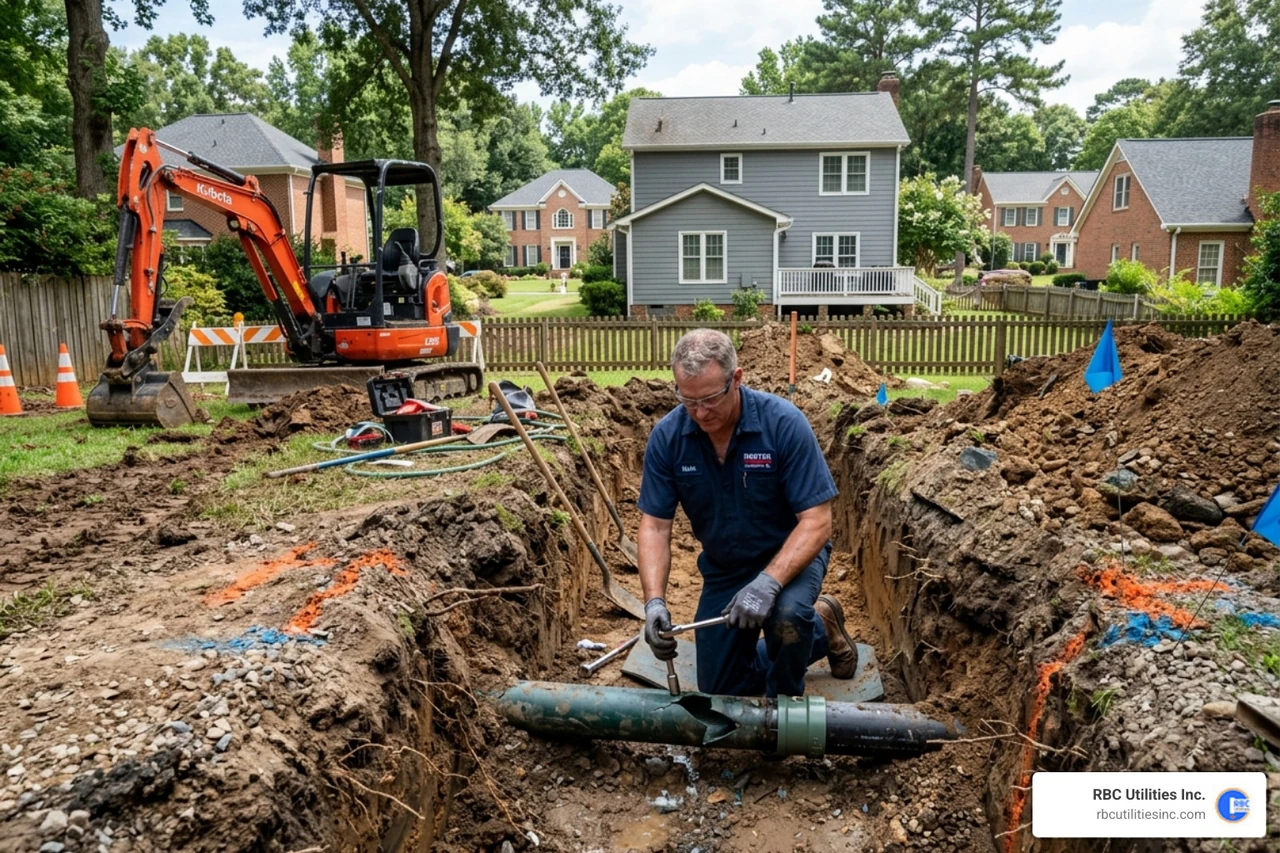
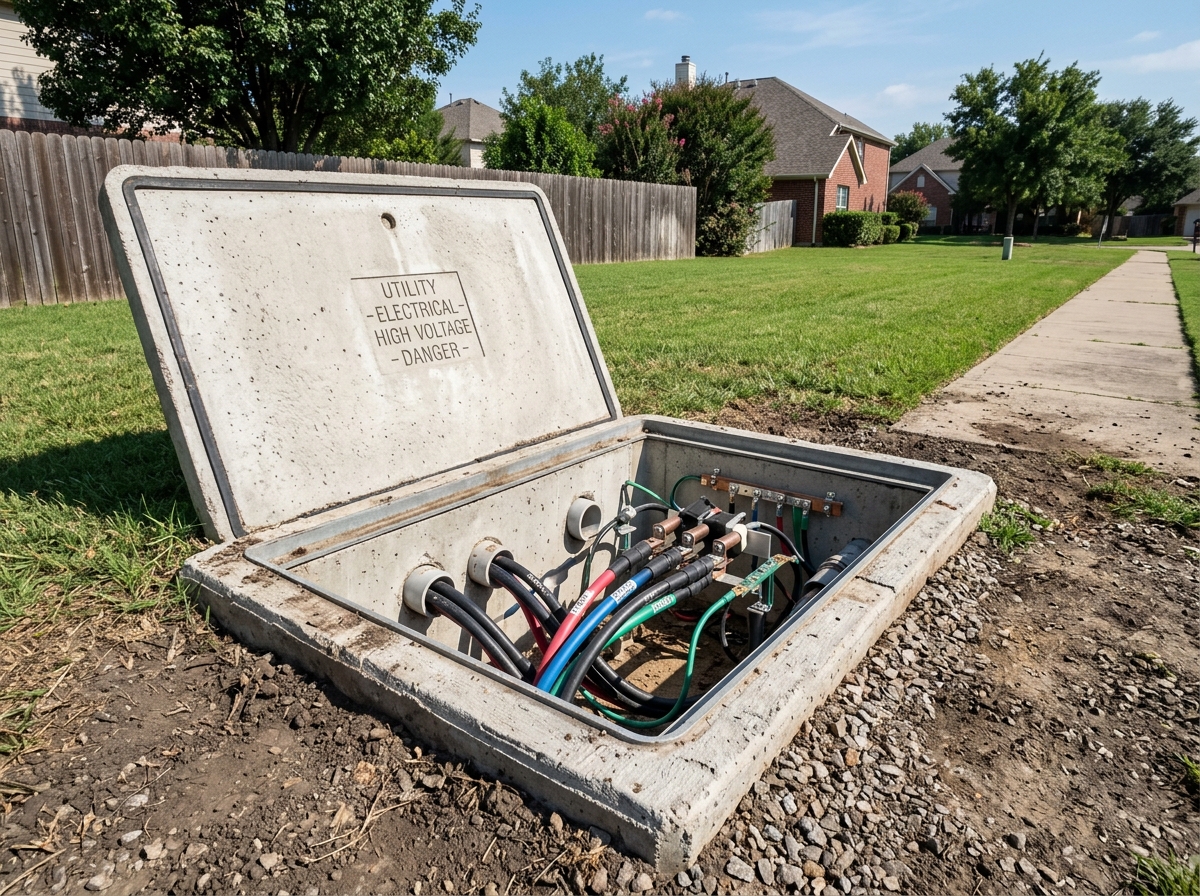
NC 811 locate requests are required regardless of which method is chosen, and existing utility conflicts are one of the most common reasons a bored line has to be rerouted mid-project.
For related decisions, see RBC's notes on commercial conduit installation and storm drain pipe installation, both of which often involve the same open-cut versus boring tradeoff.
Usually to the surface, yes. But it isn't always the more reliable choice underground, particularly in rocky or highly variable soil where bore path accuracy becomes harder to guarantee.
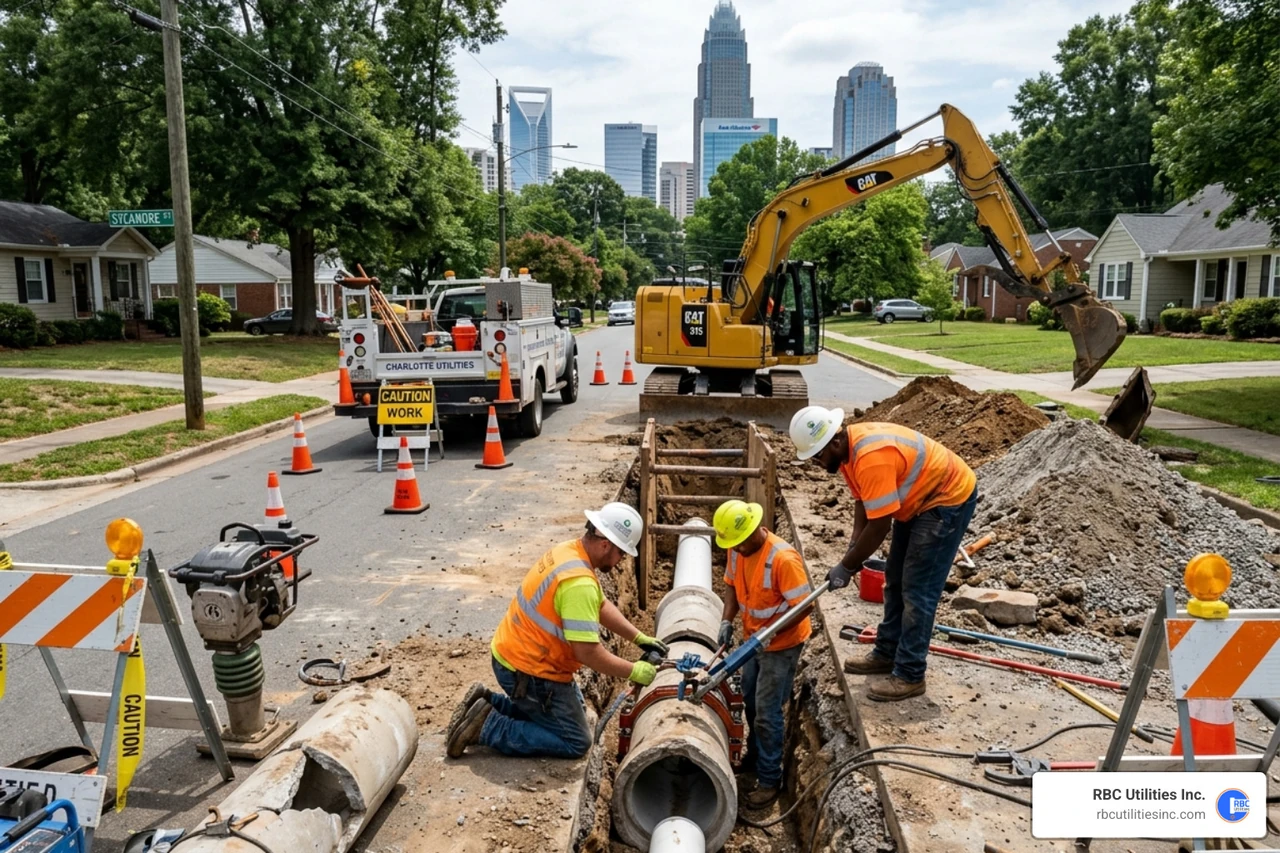
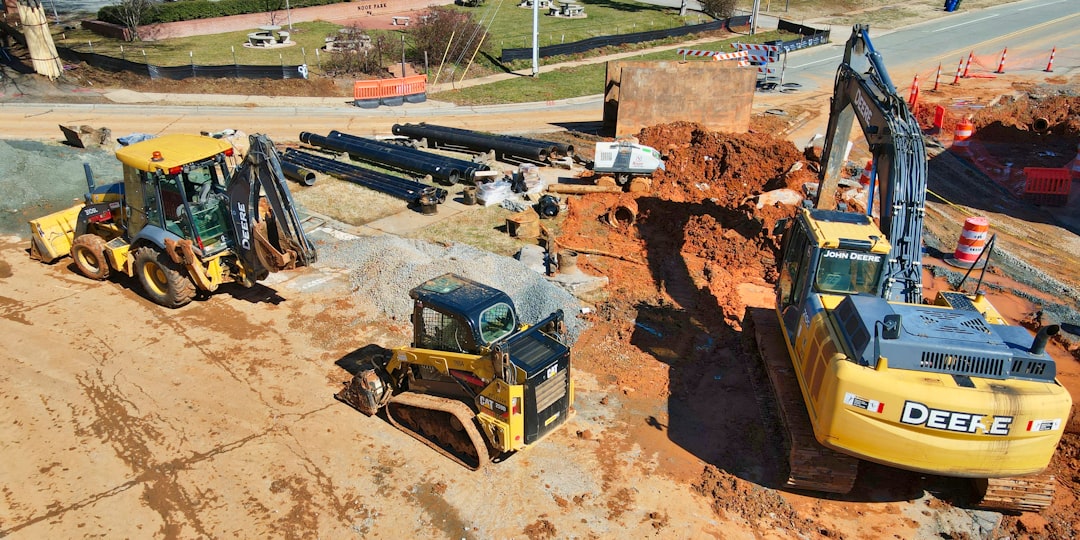
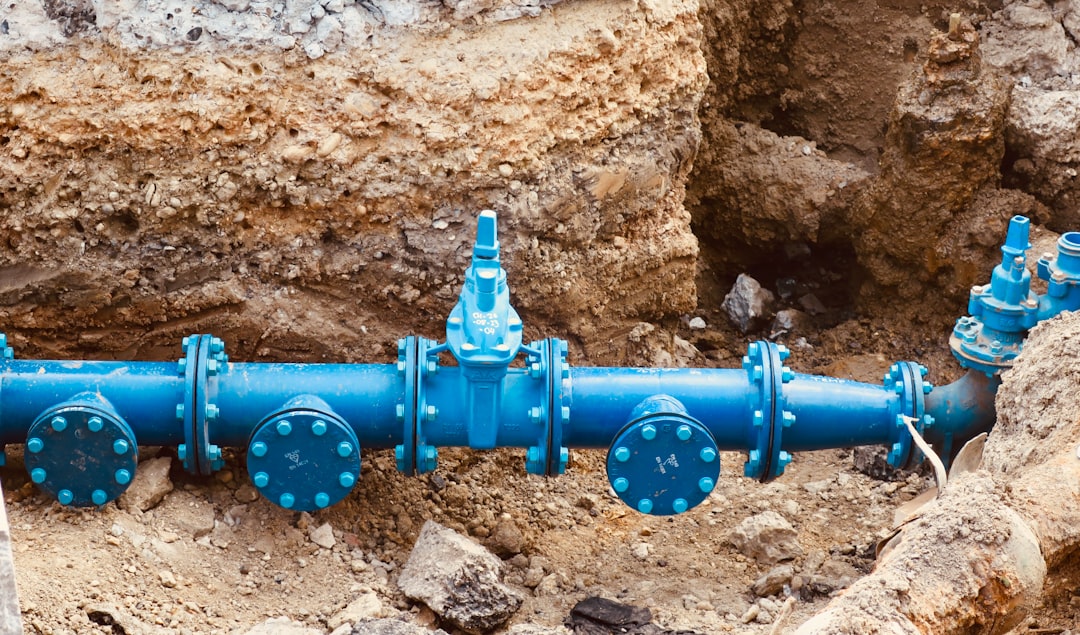
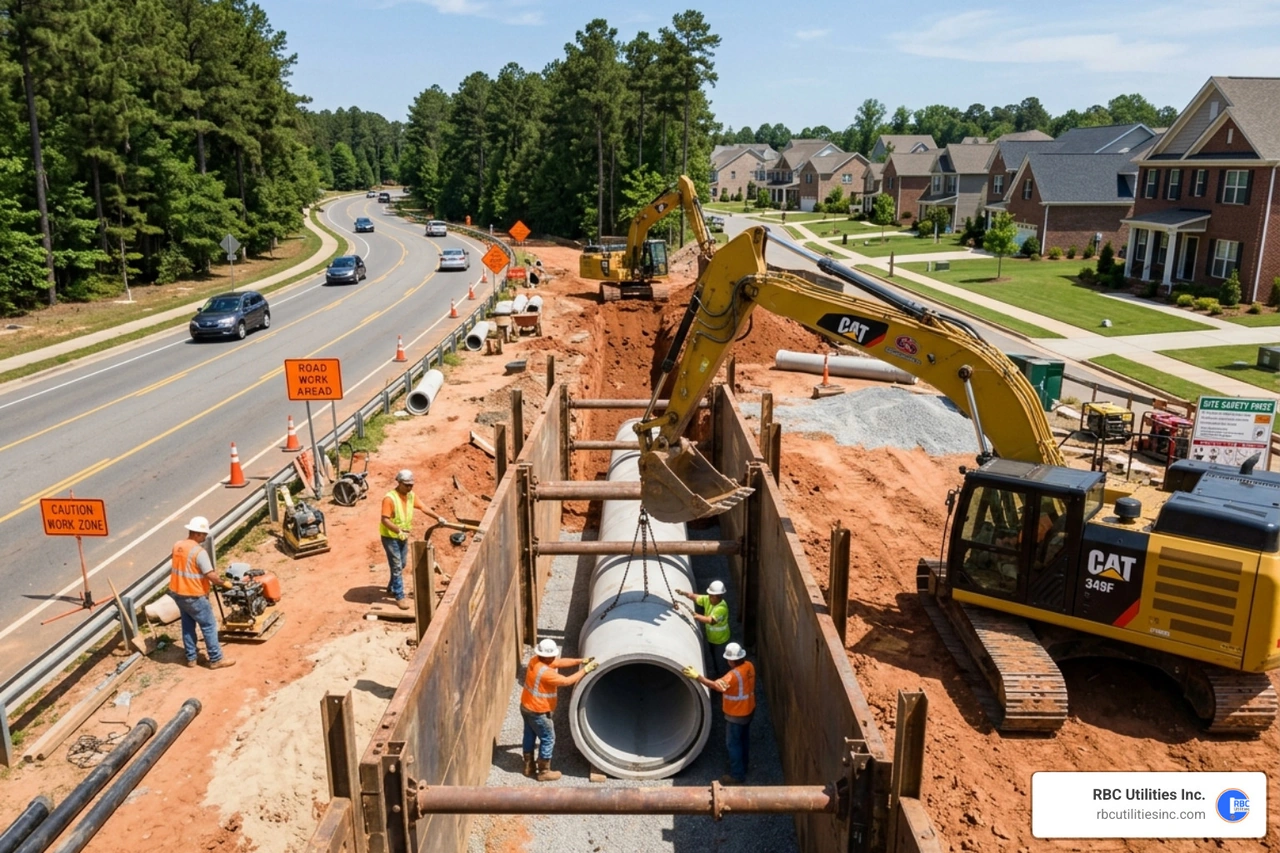
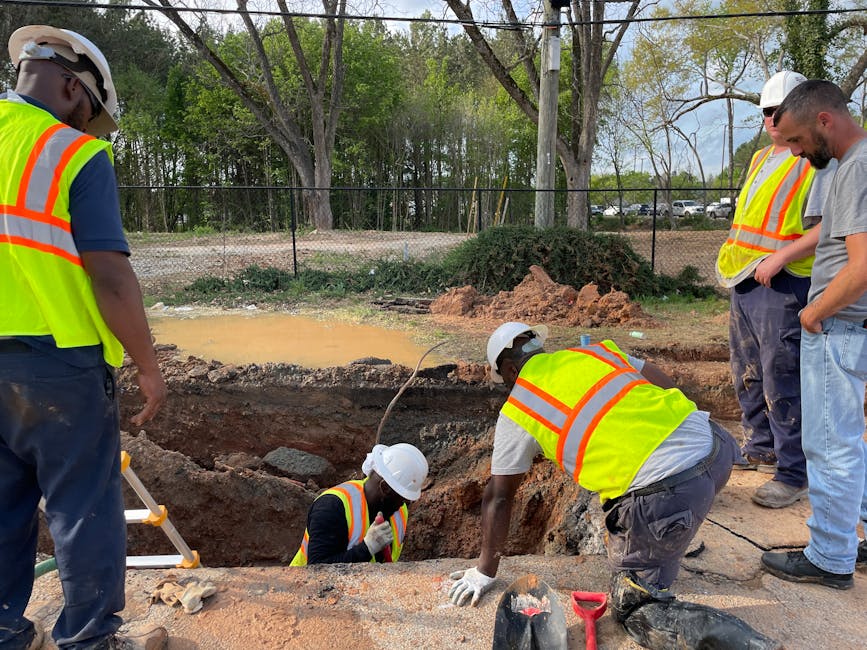
Not necessarily. Installation may be simpler, but restoration of paving, curbing, or landscaping can make the total project cost higher than a bored alternative, depending on the site.
The utility contractor, working from geotechnical information and locate results, not a generic assumption carried over from a different project. RBC Utilities makes this call project by project rather than defaulting to one method across every job in the Carolinas.
Directional boring and open-cut trenching are tools, not competing philosophies. The right answer depends on soil, depth, tie-ins, and what's sitting on top of the trench, and getting that decision right up front avoids costly method changes mid-project.
RBC Utilities evaluates both options on every project before recommending a path forward. For project conversations, use the RBC Utilities contact page.
Part of Saga Infrastructure, protecting what others built and helping it grow.
Address: 4404 Stuart Andrew Blvd., Suite K, Charlotte, NC 28217
Email: info@rbcutilities.com
Phone: 803-913-9727
Service Area: North Carolina | South Carolina