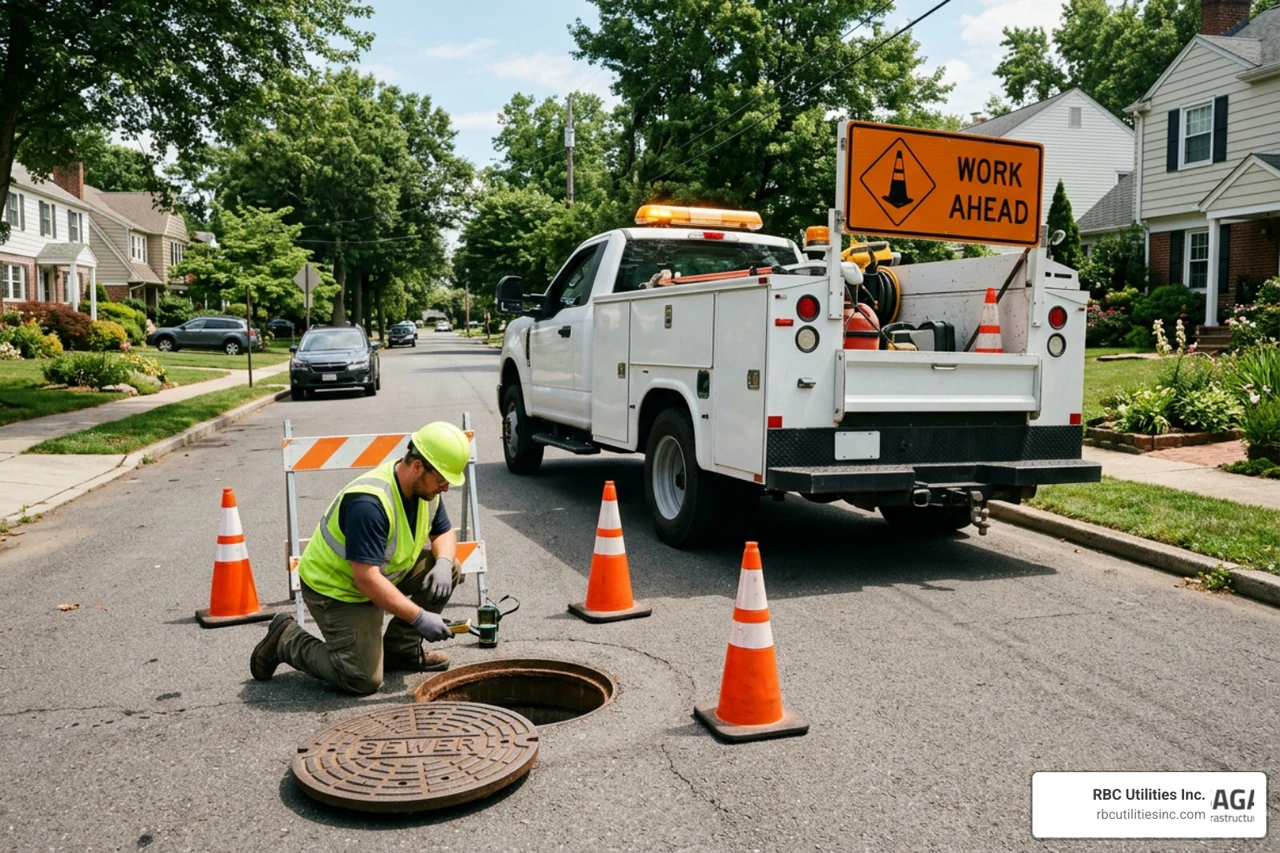
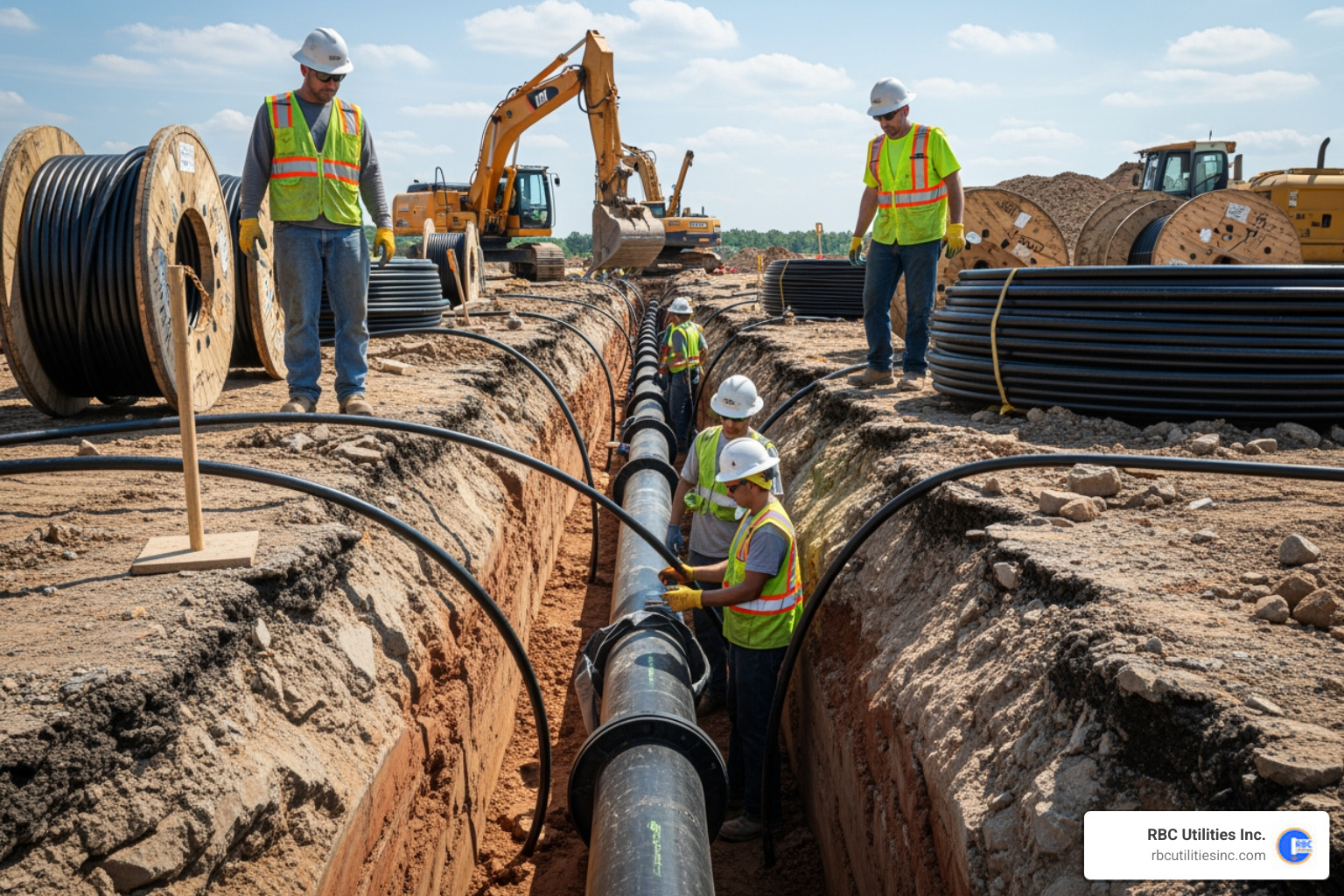
Sewer line repair Charlotte is one of the most urgent underground utility issues affecting both residential and commercial properties across Mecklenburg County. Whether you're a homeowner dealing with a backup or a contractor managing a multi-unit development, a damaged sewer line demands fast, informed action.
Here's a quick overview of your main options:
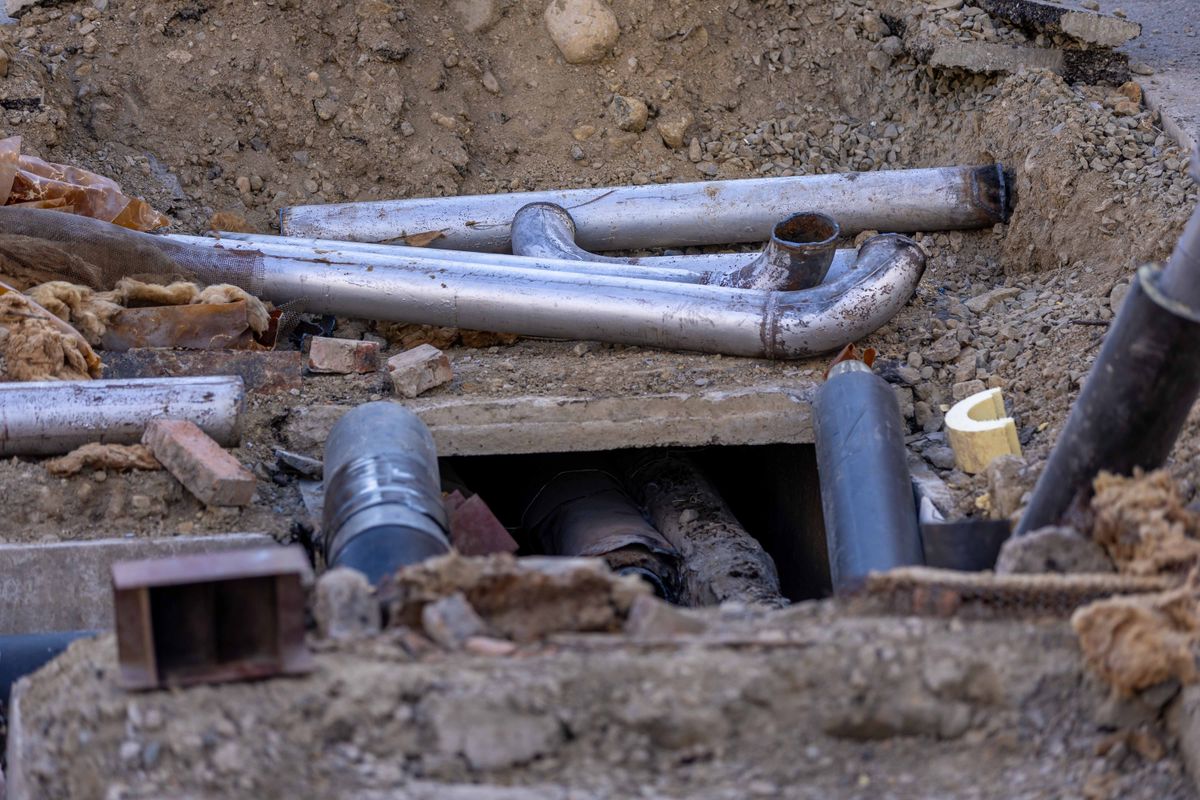
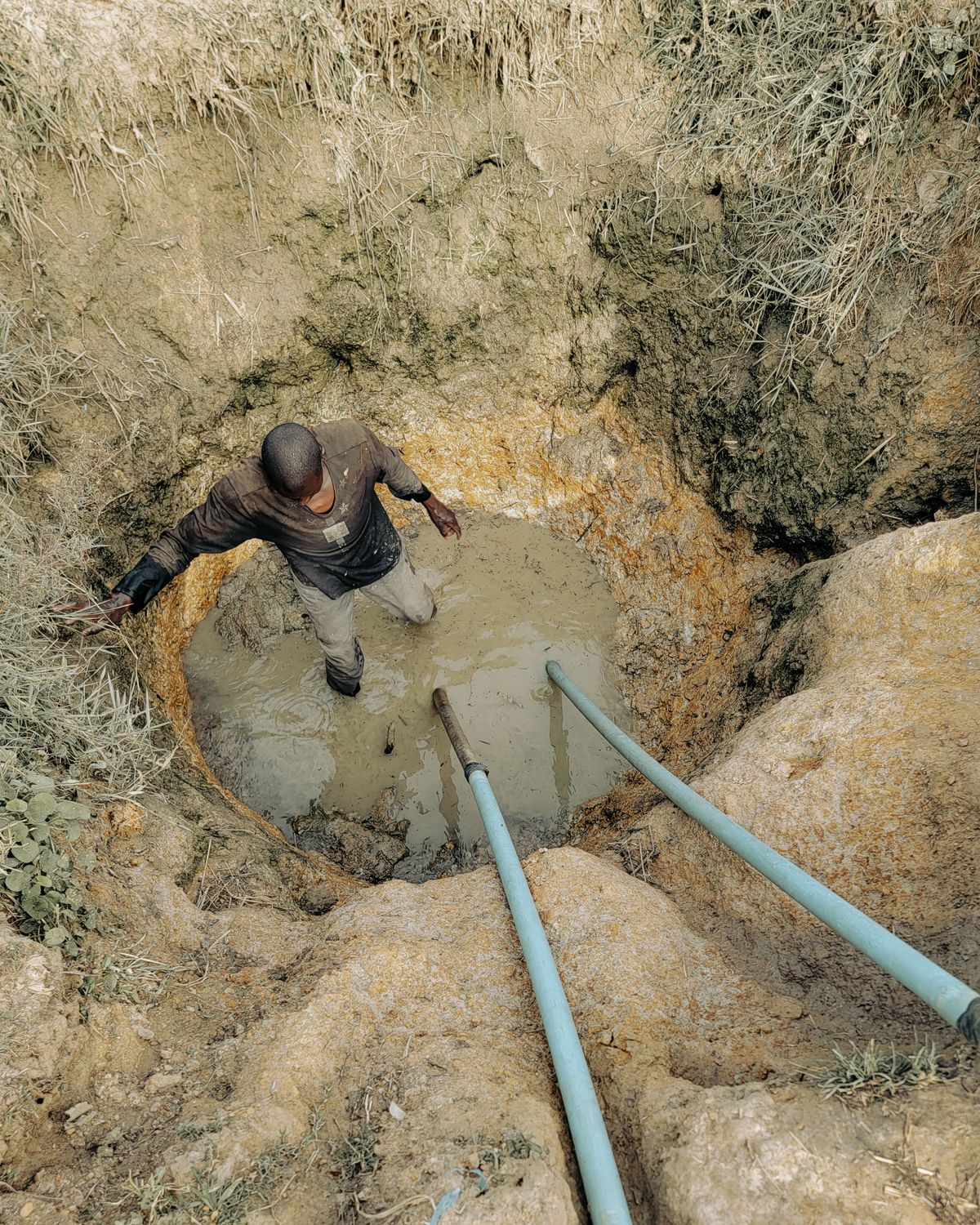
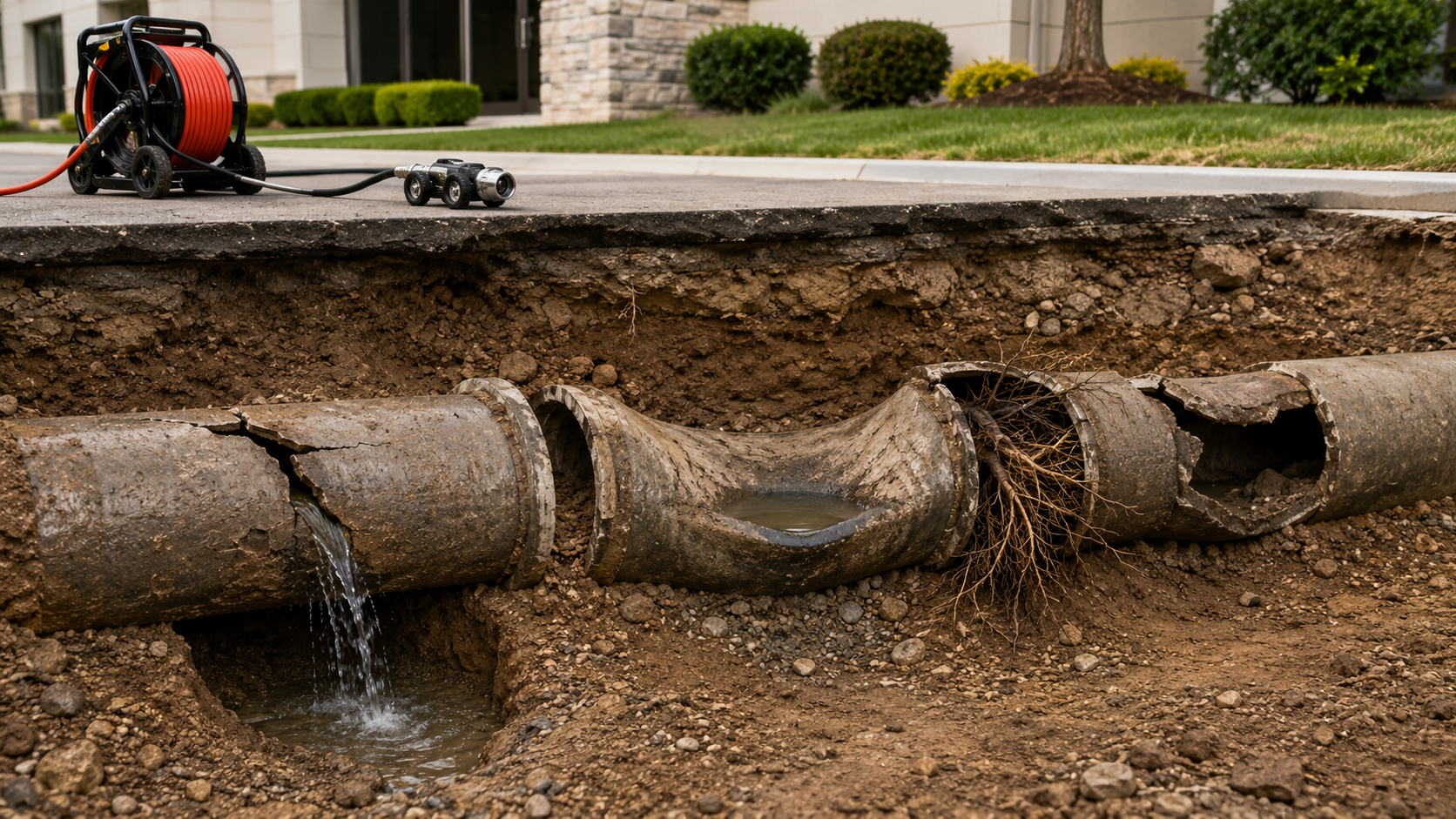
Charlotte's aging underground infrastructure is a real problem. Many properties in the area still rely on clay, cast iron, or Orangeburg pipes that are decades past their expected lifespan. Tree roots, soil movement, and the region's humid subtropical climate put constant stress on these systems. Left unchecked, a minor crack can turn into a full collapse — and a much bigger bill.
I'm Don Larsen from RBC Utilities Inc., an underground utility construction contractor with deep roots in the Carolinas and extensive hands-on experience in sewer line repair Charlotte projects ranging from residential laterals to large-scale municipal sanitary sewer systems. The sections below will walk you through everything you need to make a smart, confident decision.
In a city as vibrant as Charlotte, we often take our infrastructure for granted until it stops working. Because sewer lines are buried deep underground, they don't usually scream for attention until a catastrophe occurs. However, your home or business will often whisper a few warnings first. Recognizing these signs early can be the difference between a simple spot repair and a total system overhaul.
One of the most immediate indicators of a breach in your line is the smell. Sewer gases are supposed to be trapped by your plumbing vents and carried out through the roof. If you start smelling "rotten eggs" or raw sewage in your yard or basement, it’s a sign that the line is cracked or disconnected, allowing gas (and likely wastewater) to escape into the surrounding soil.
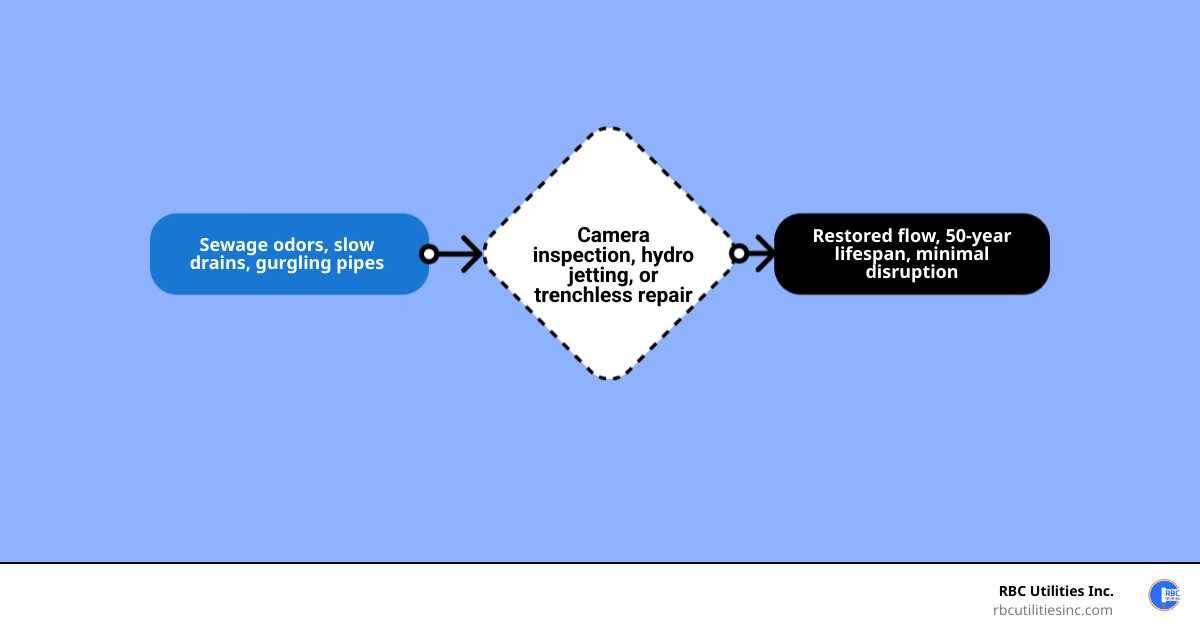
If a single sink is slow, you probably have a local clog. But if every drain in your house seems sluggish—or if your toilet gurgles like it’s trying to tell you a secret every time the shower runs—you likely have a mainline blockage. This is often the first stage of sewer line repair charlotte needs, indicating that the pipe's diameter is restricted by roots, grease, or a partial collapse.
We all want a green lawn, but if one specific patch of grass is significantly greener and taller than the rest of your yard, you might have a "fertilizer" leak. Sewage is rich in nutrients that plants love. Conversely, if the leak is severe enough, the constant moisture can erode the soil, leading to mysterious indentations or even full-blown sinkholes along the path of the sewer line.
Rats and cockroaches love sewer lines. A break in the pipe provides them with a "highway" directly into your home. Additionally, in the heavy clay soils common to the Carolinas, a leaking sewer line can oversaturate the ground near your foundation. Over time, this can lead to soil shifting and structural cracks in your home's slab or basement walls.
Red Flags for Charlotte Homeowners:
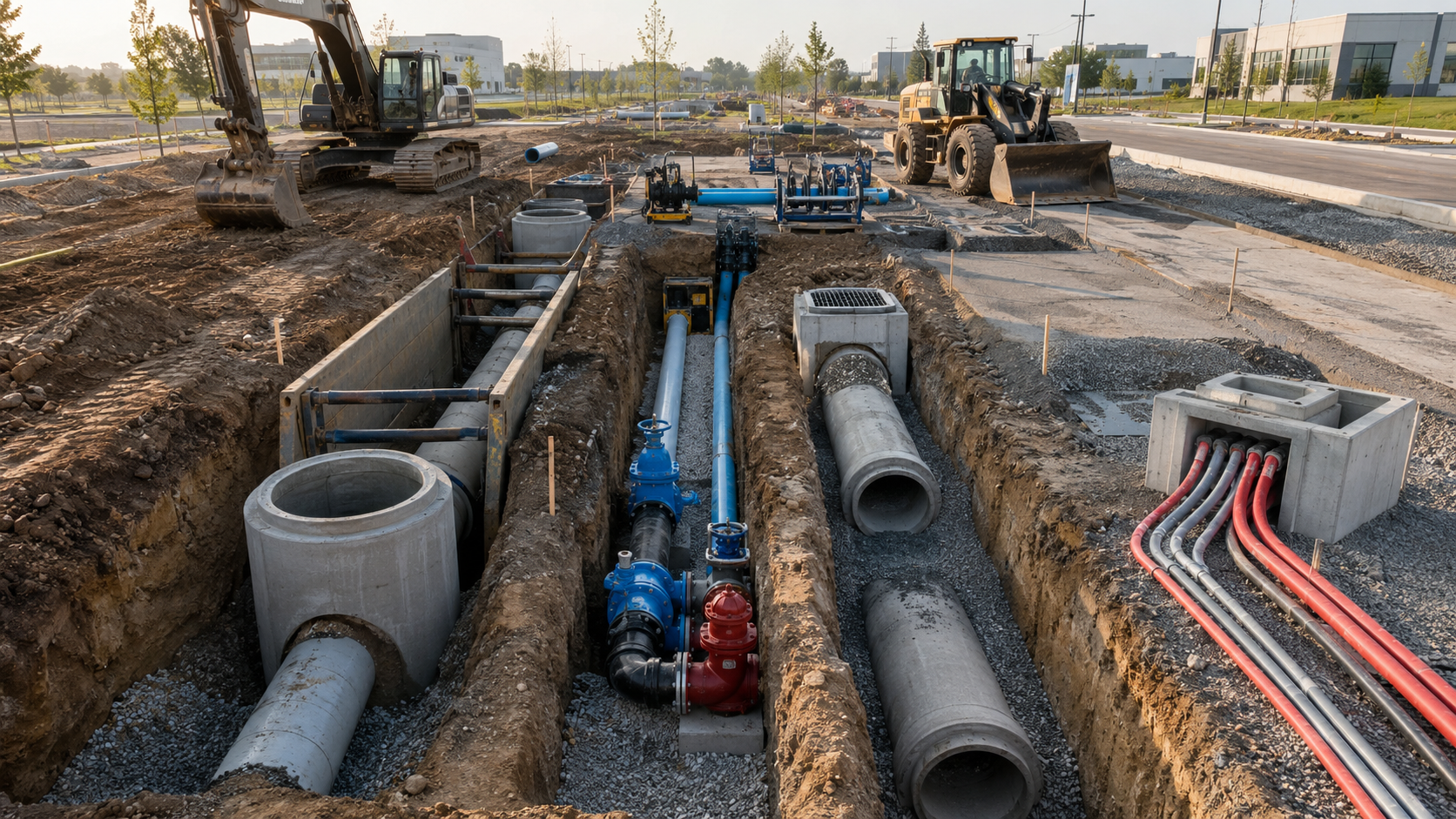
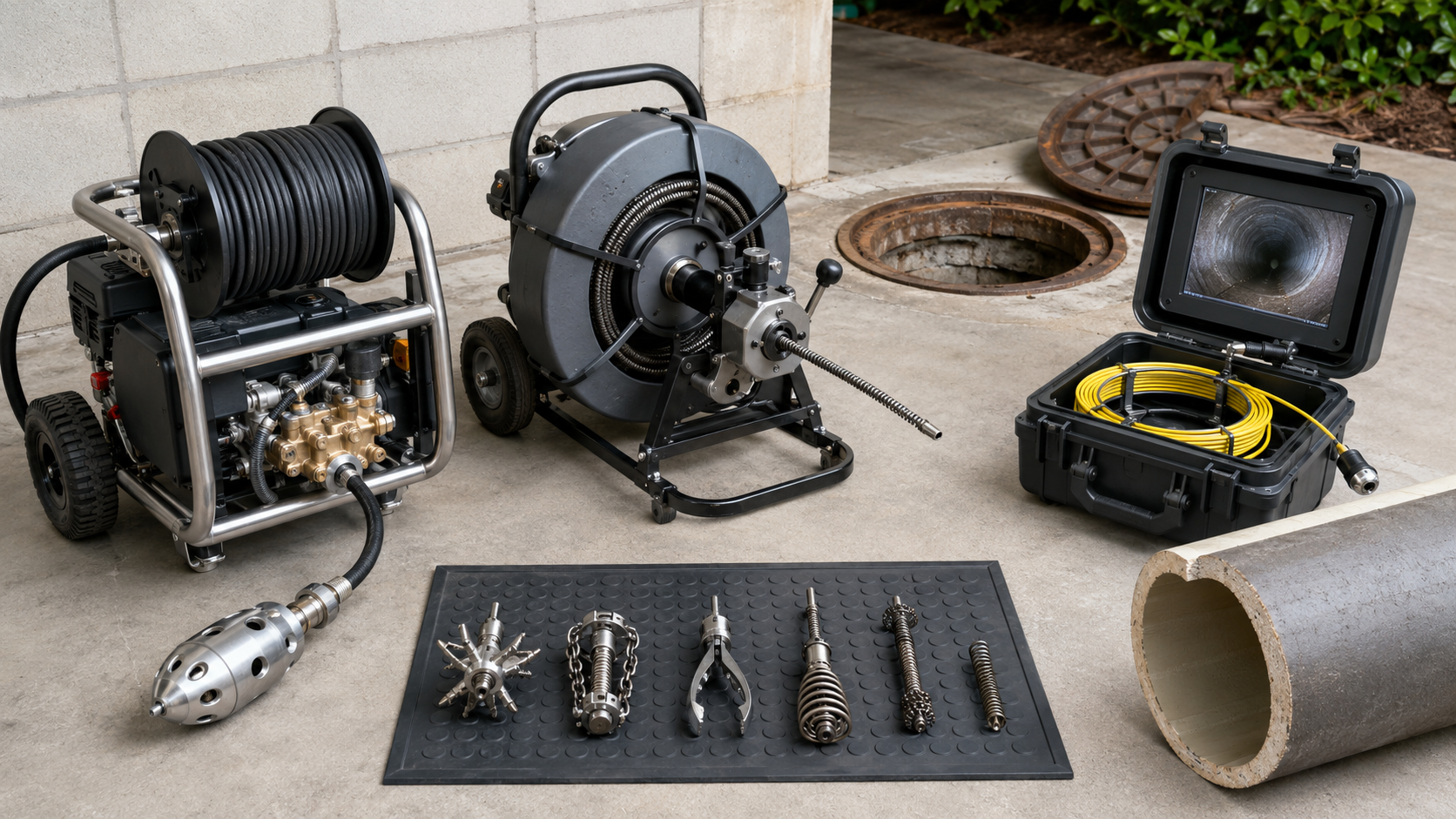
When we talk about sewer line repair charlotte, we aren't just talking about one single service. Modern utility construction offers a variety of ways to address underground issues, ranging from high-tech diagnostics to heavy-duty excavation.
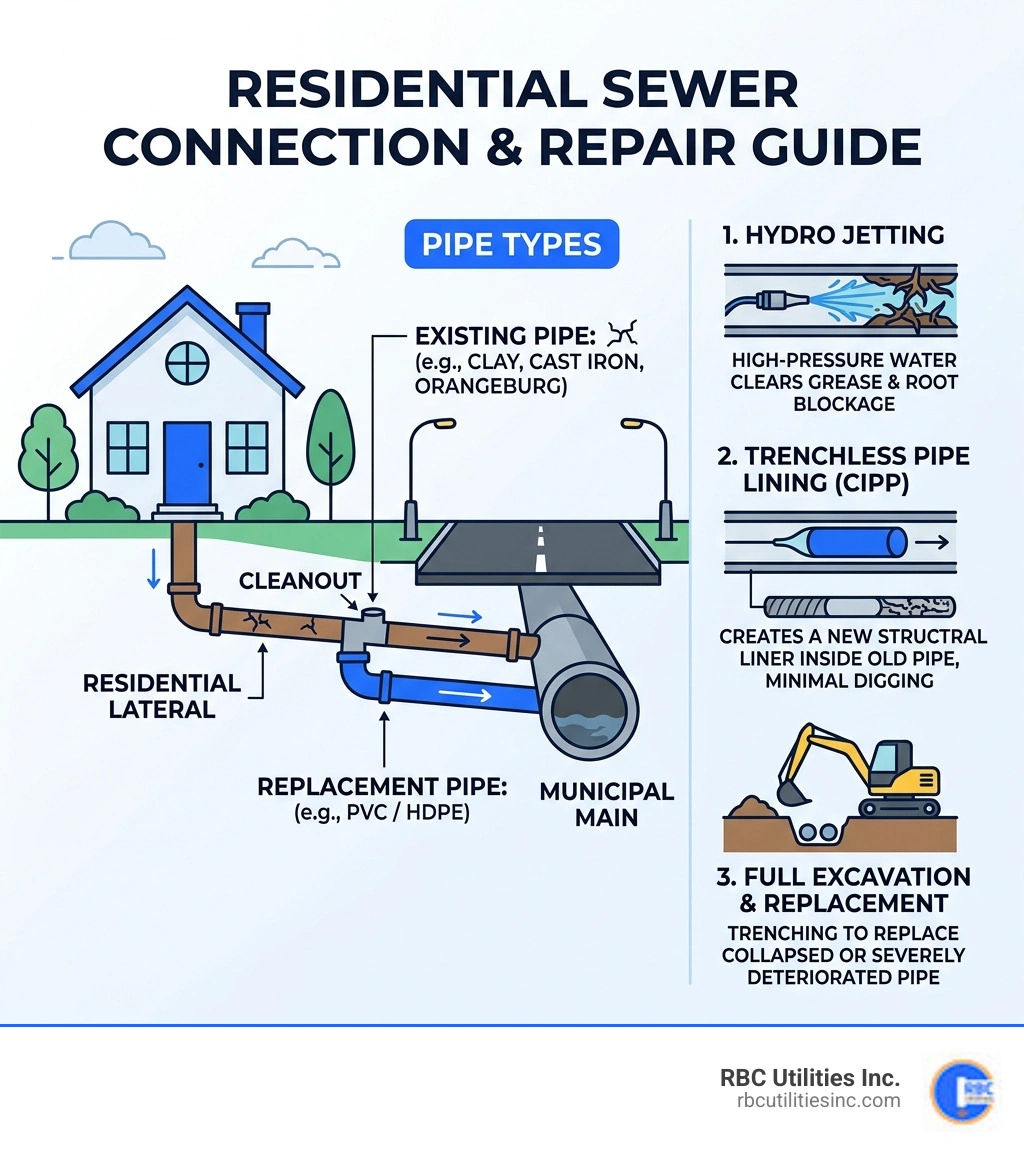
Before we ever break ground, we use high-definition waterproof cameras. These are snaked through the line to provide a real-time view of the interior. This allows us to identify the exact location of a crack, a "belly" (a sag in the pipe where debris collects), or root intrusion. In Charlotte, a professional camera inspection typically costs between $200 and $400, but it can save thousands by preventing unnecessary digging.
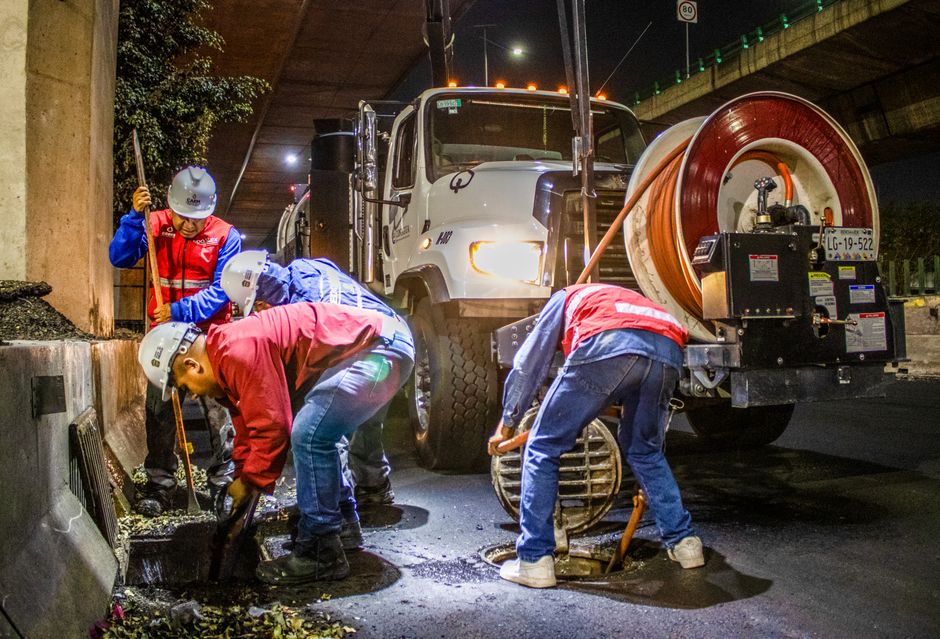
If the pipe is structurally sound but clogged with grease or roots, hydro jetting is the gold standard. Unlike a plumber's snake, which just pokes a hole through a clog, hydro jetting uses high-pressure water (up to 4,000 PSI) to scrub the pipe walls clean. This service usually runs between $350 and $600 and is a great preventative maintenance step.
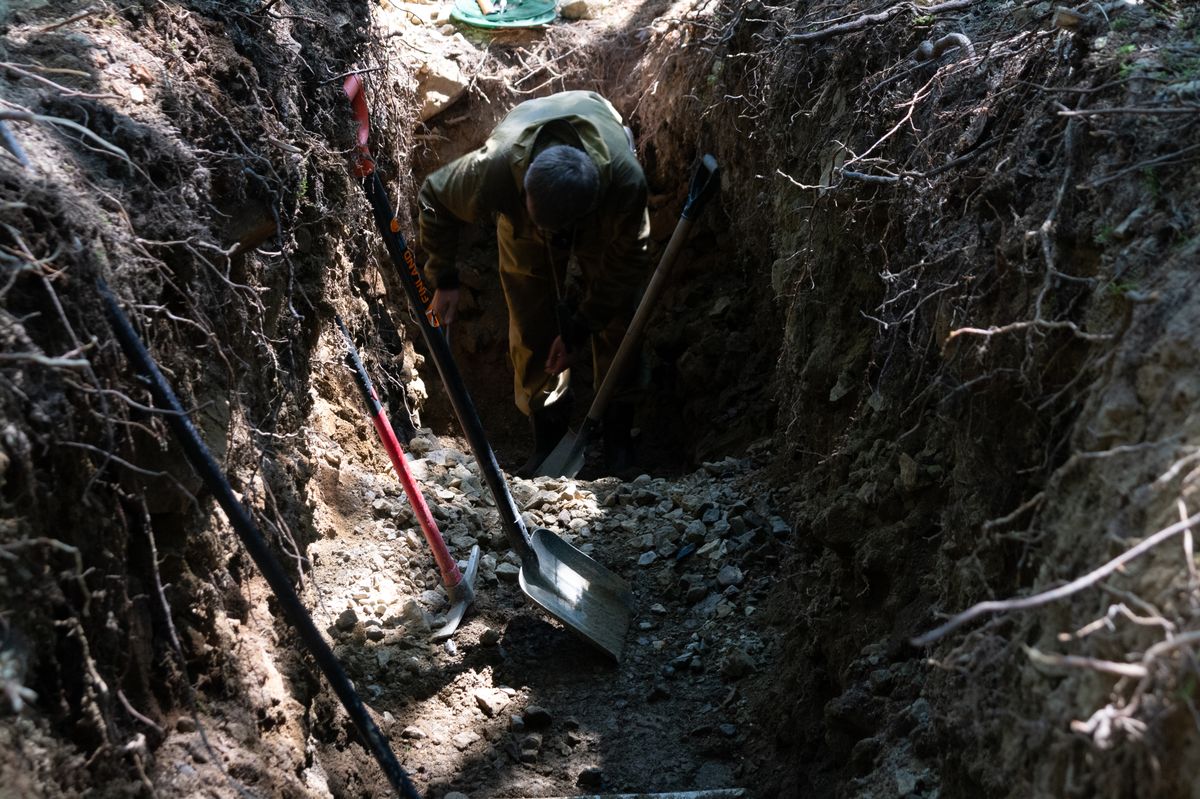
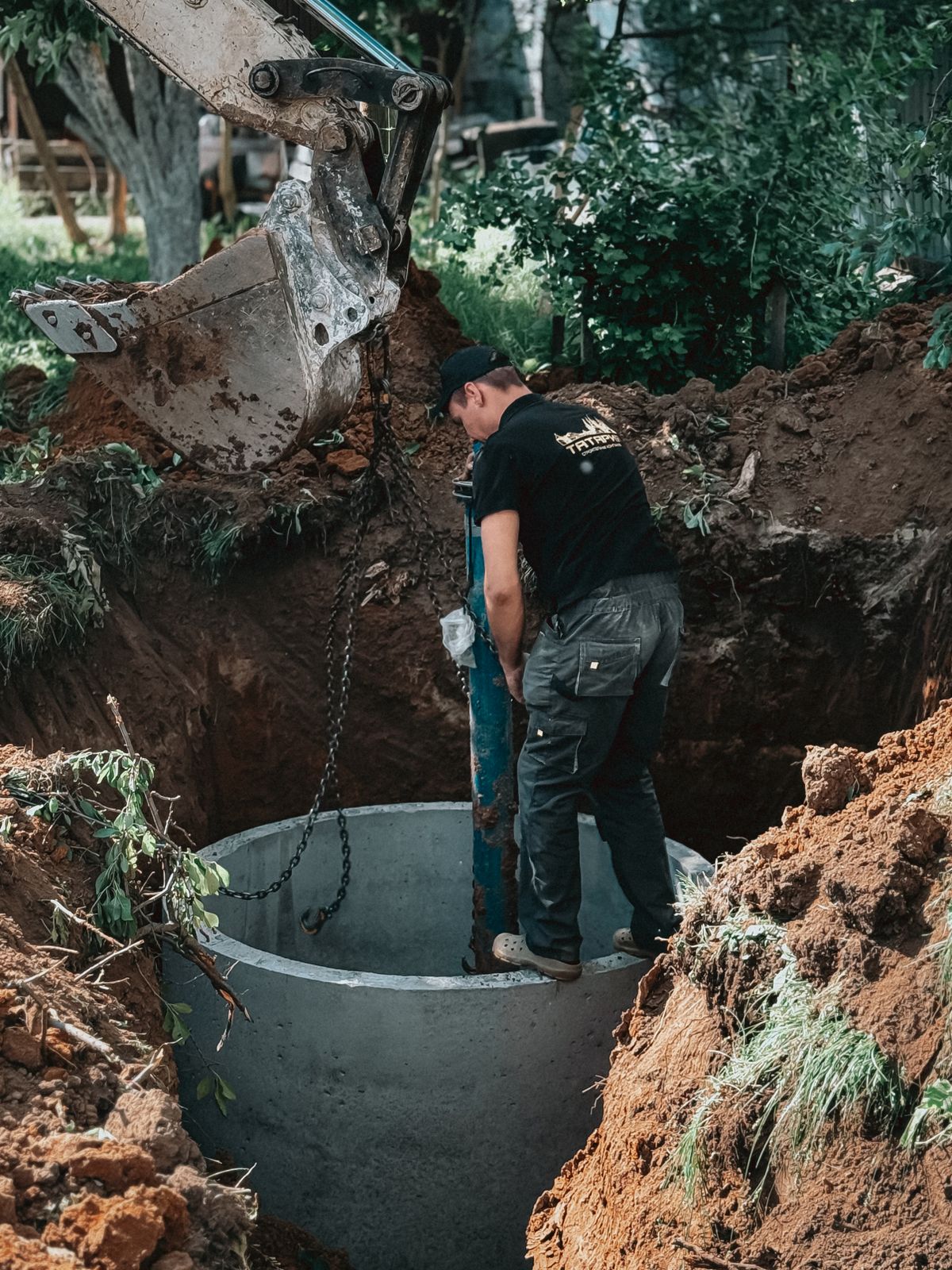
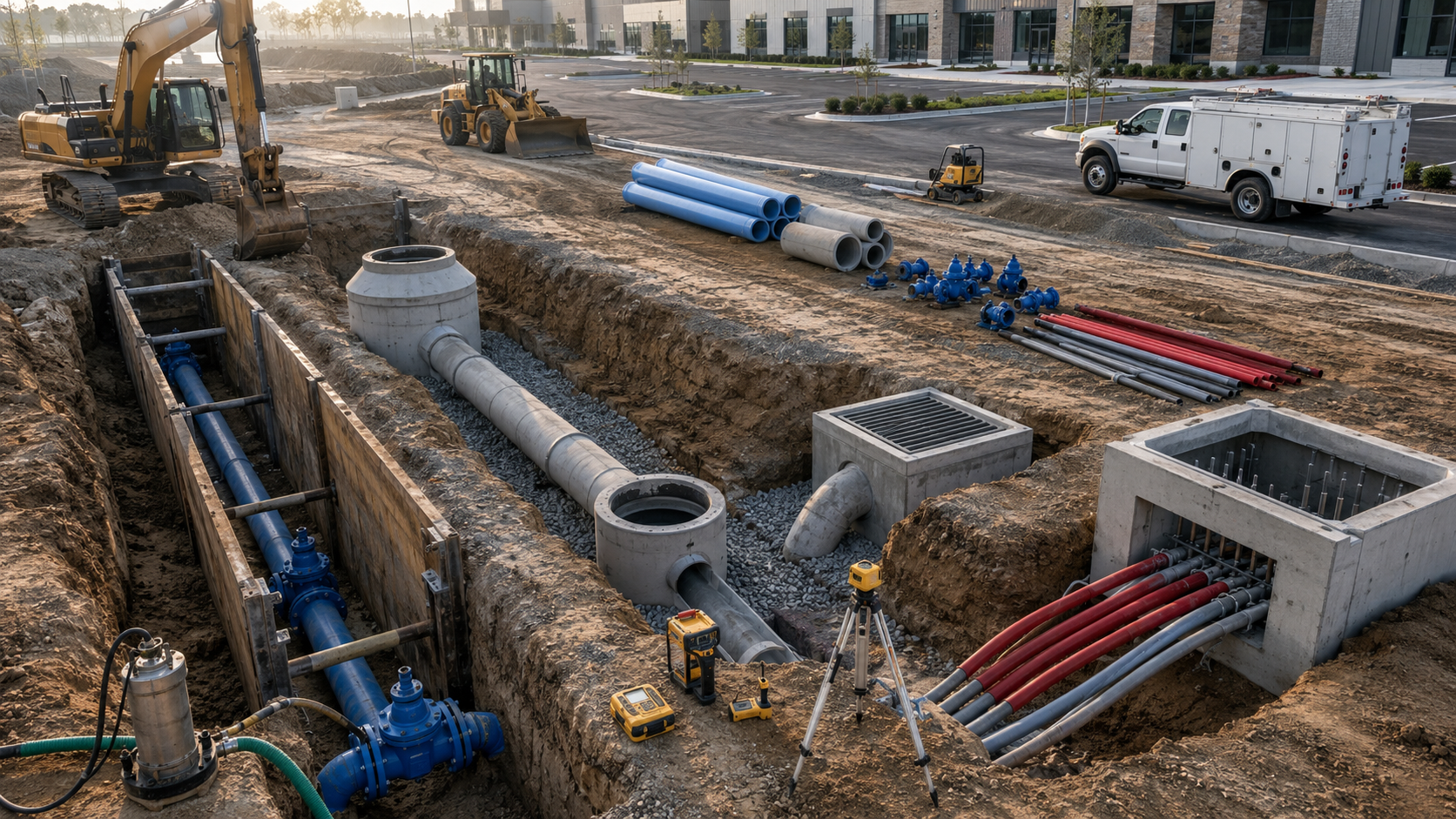
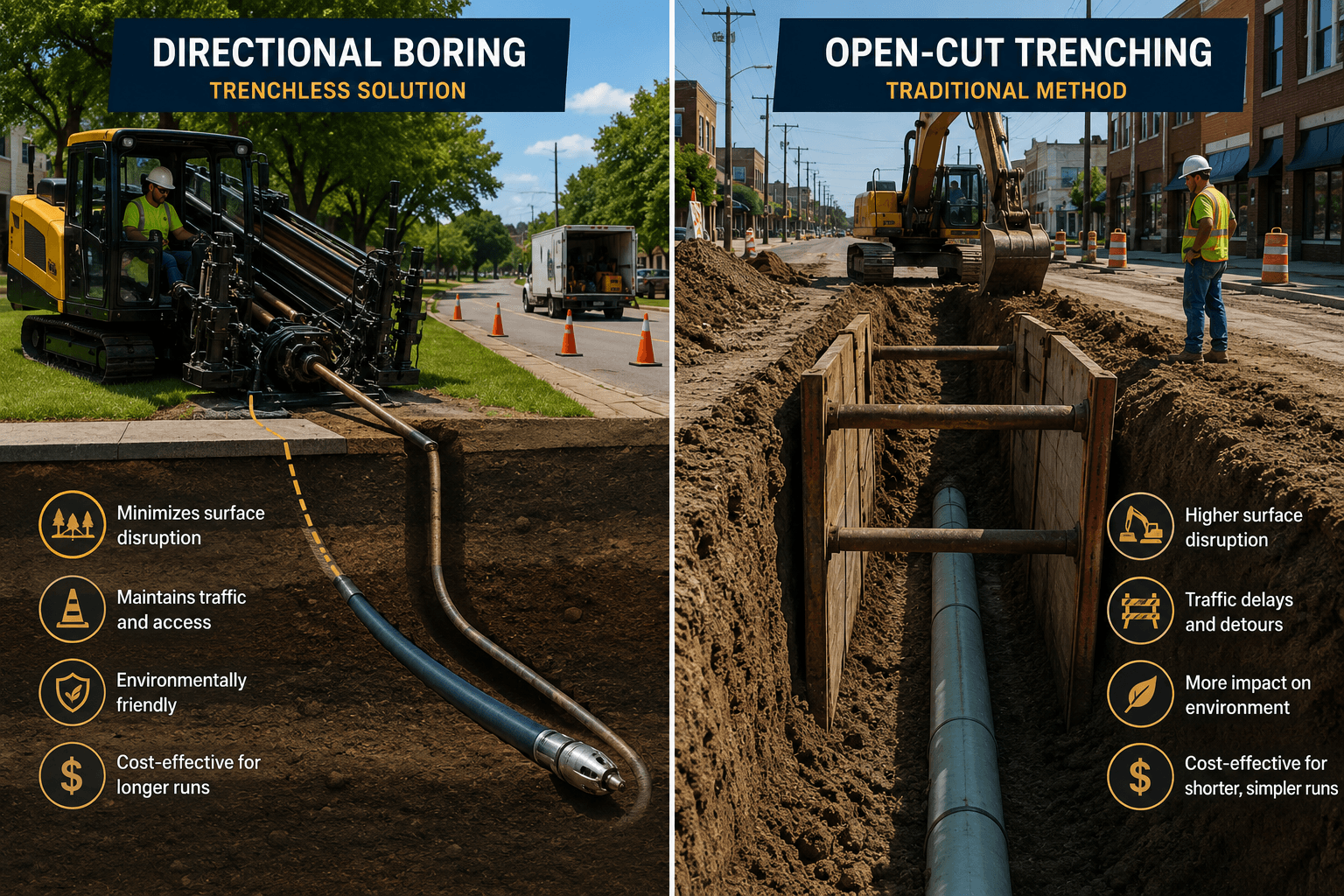
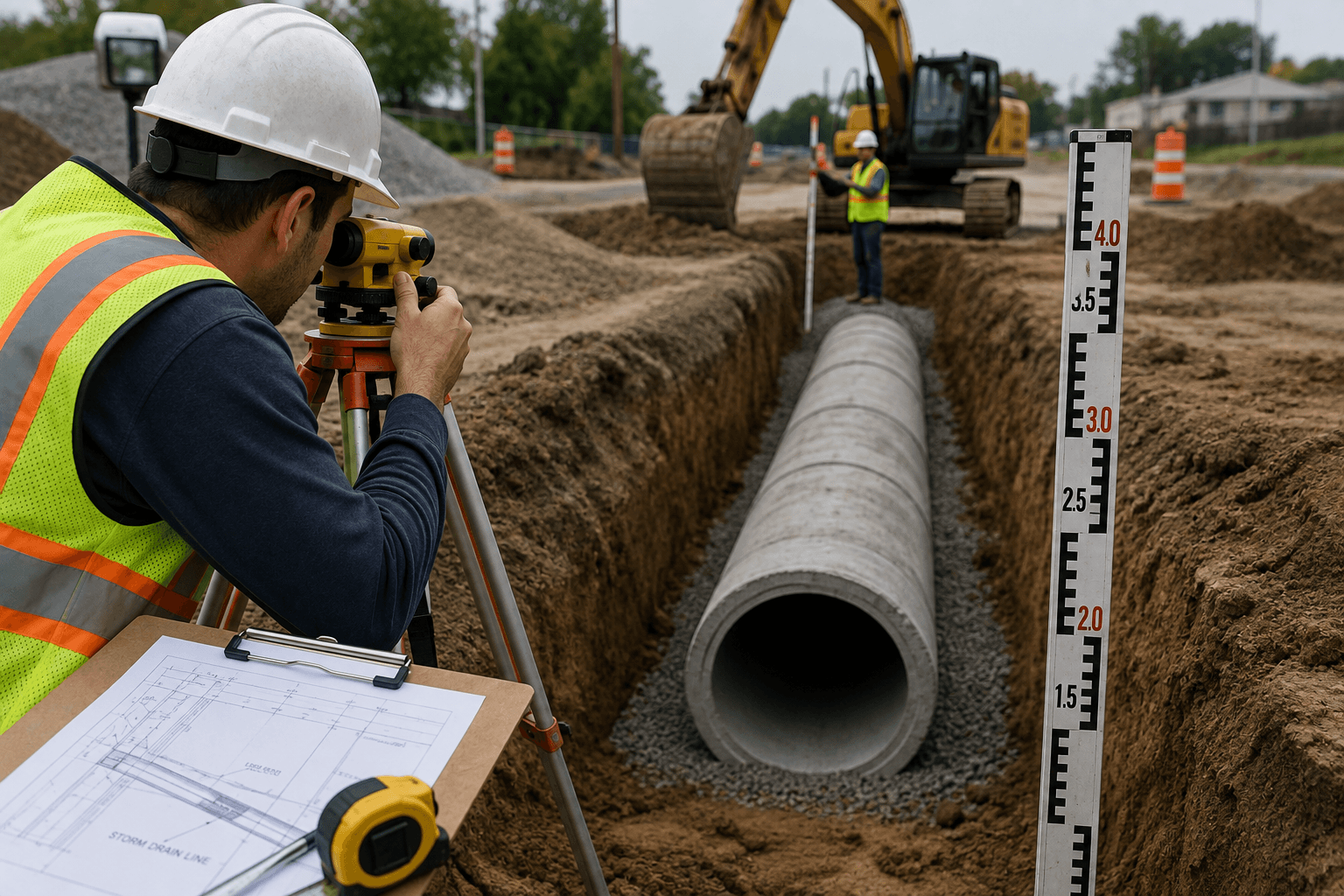
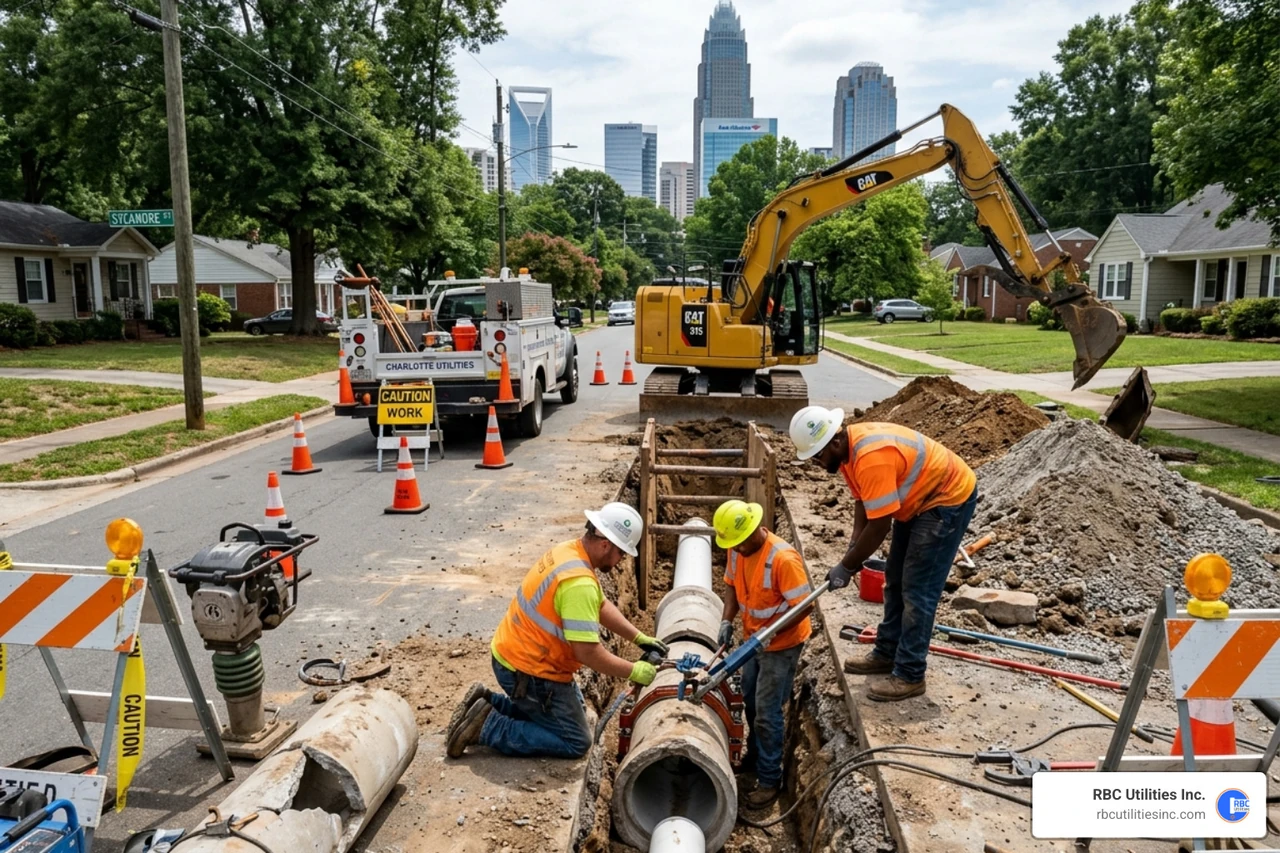
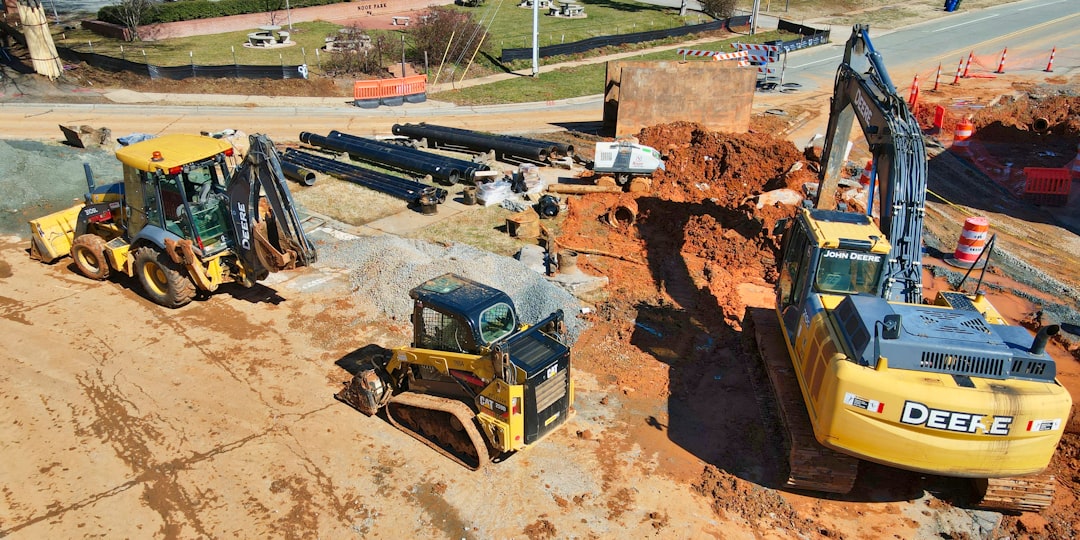
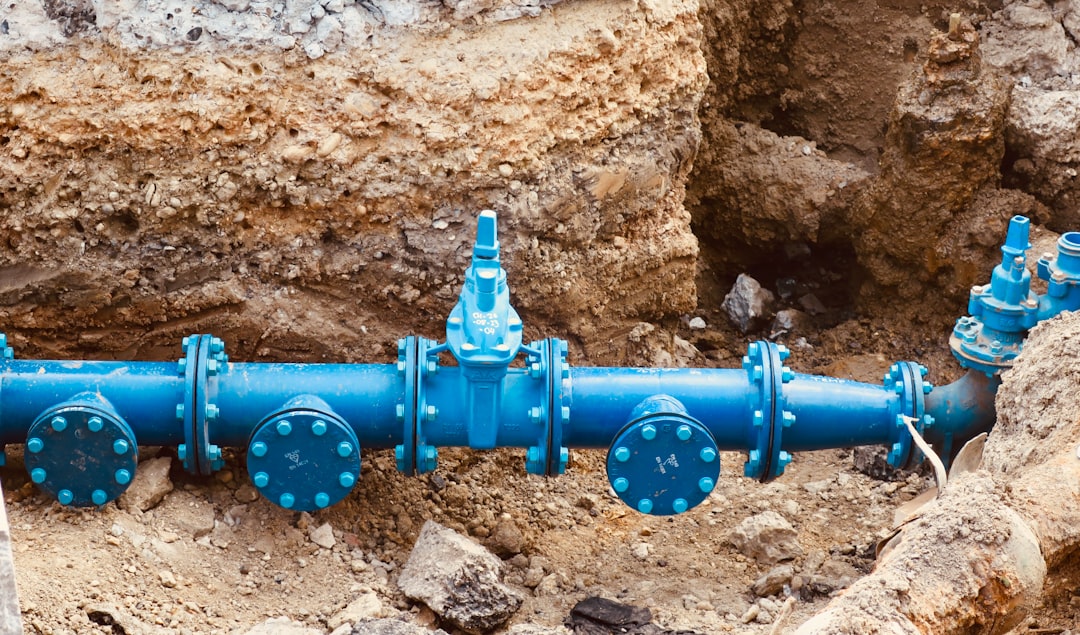
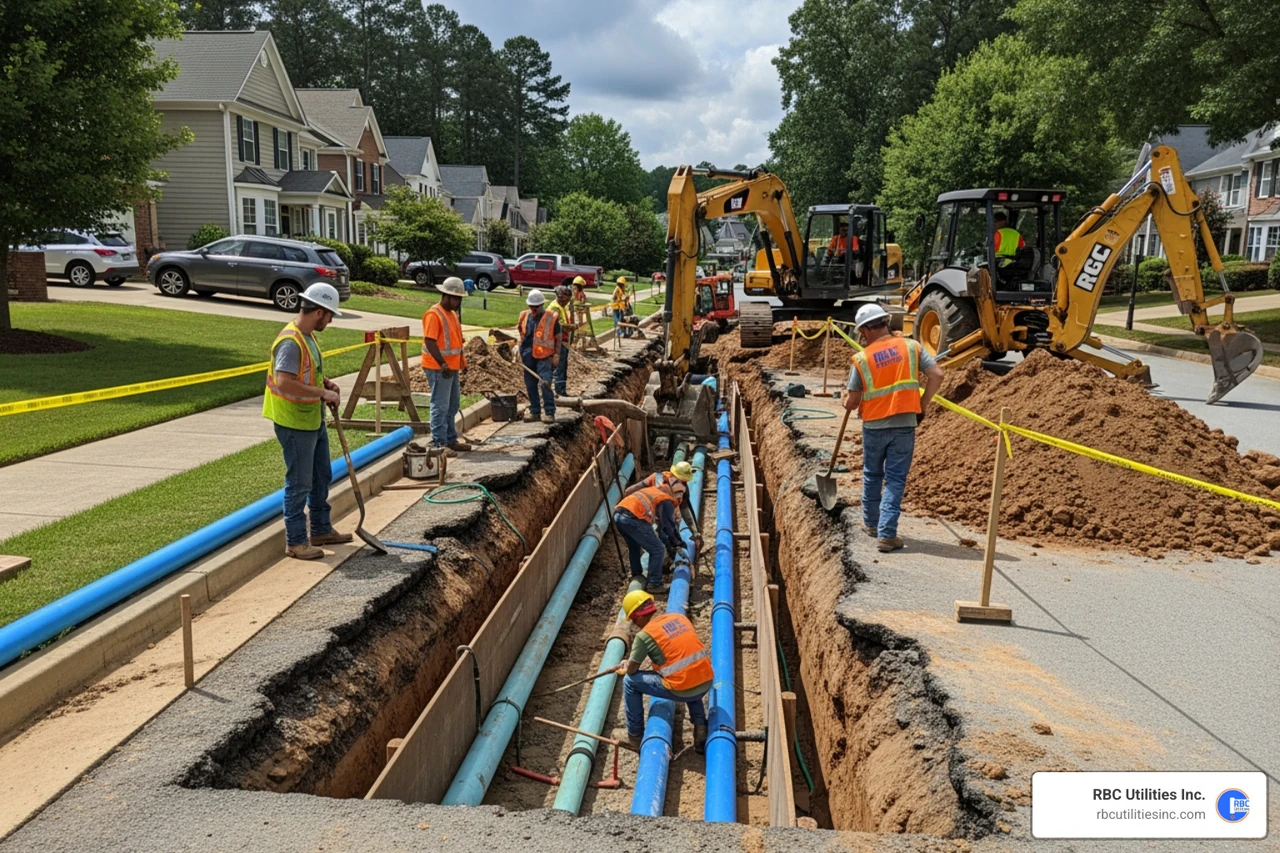
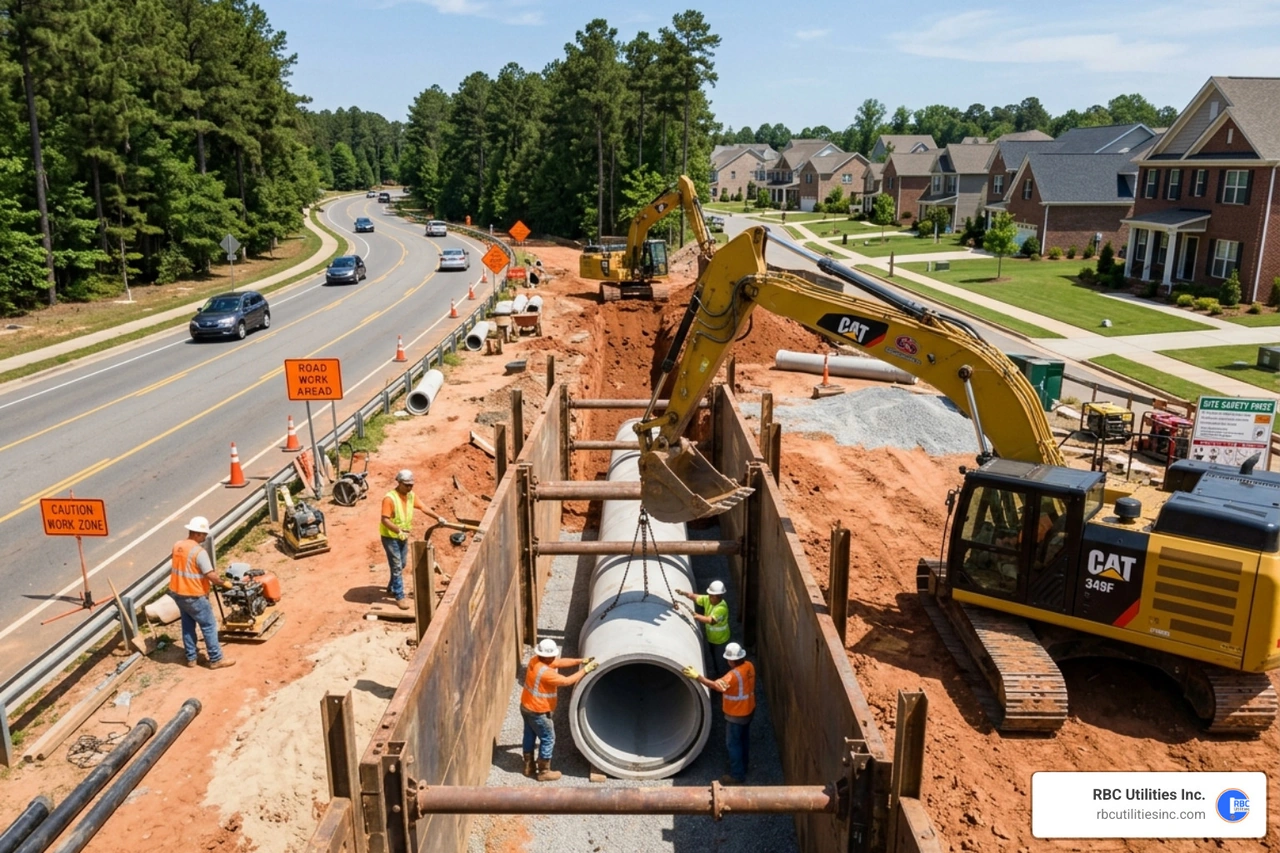
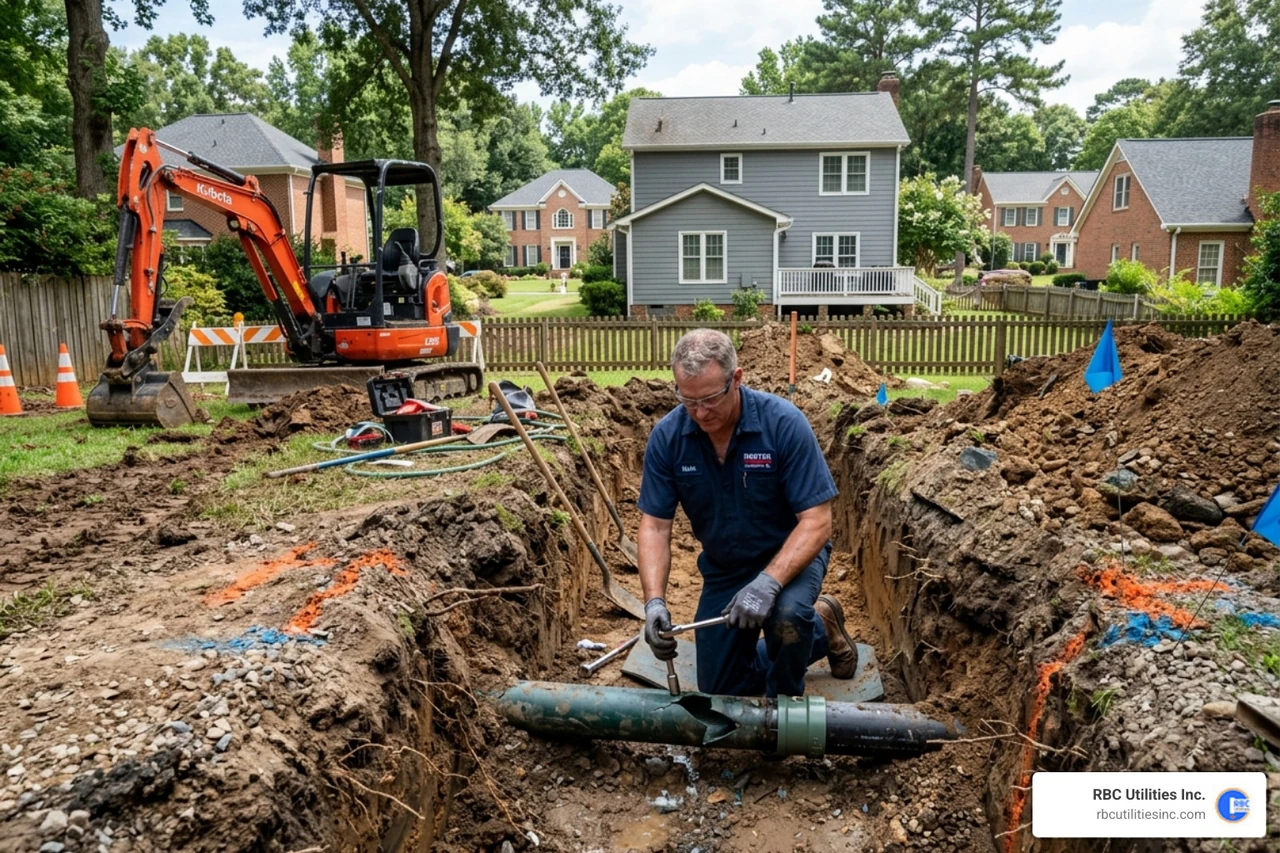
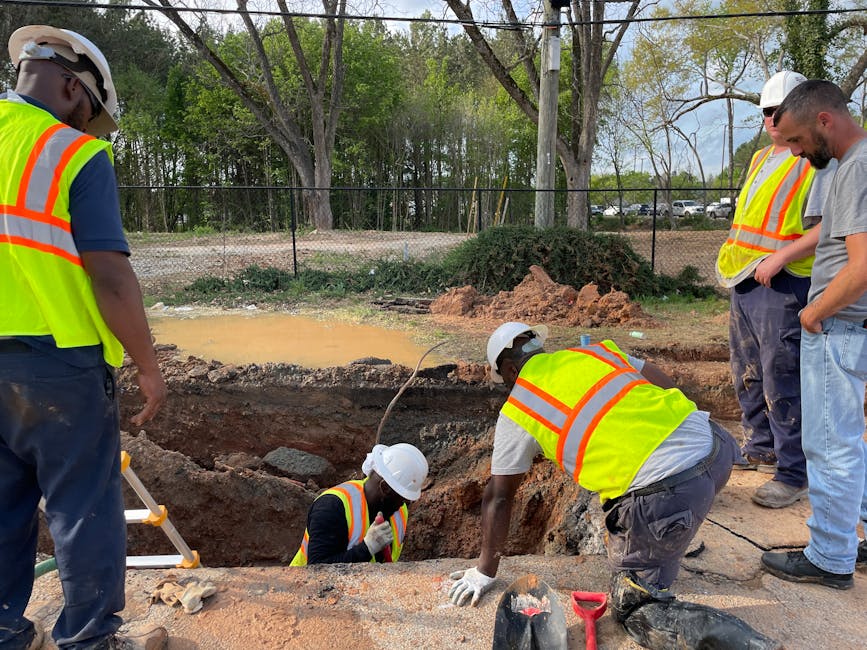
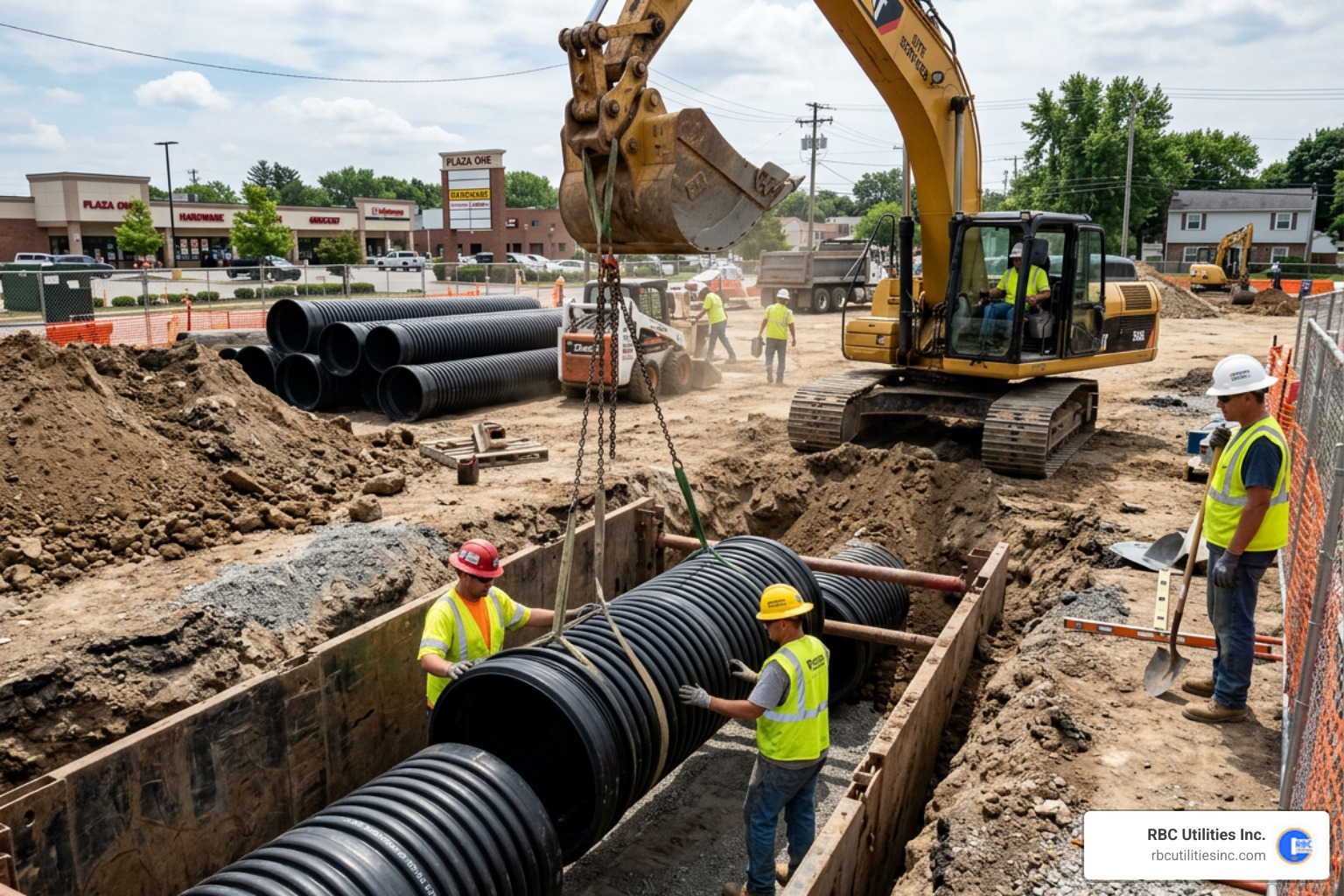
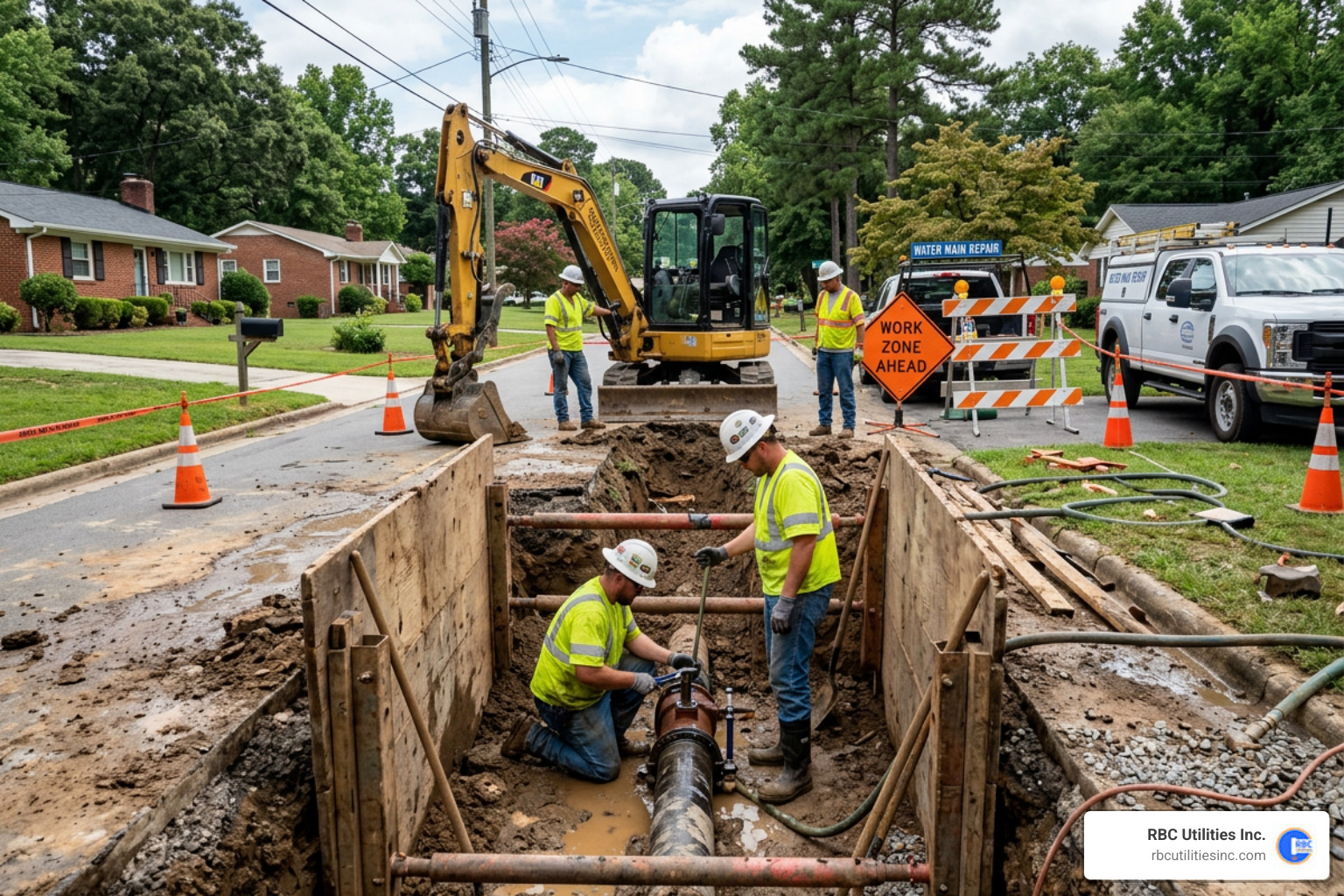
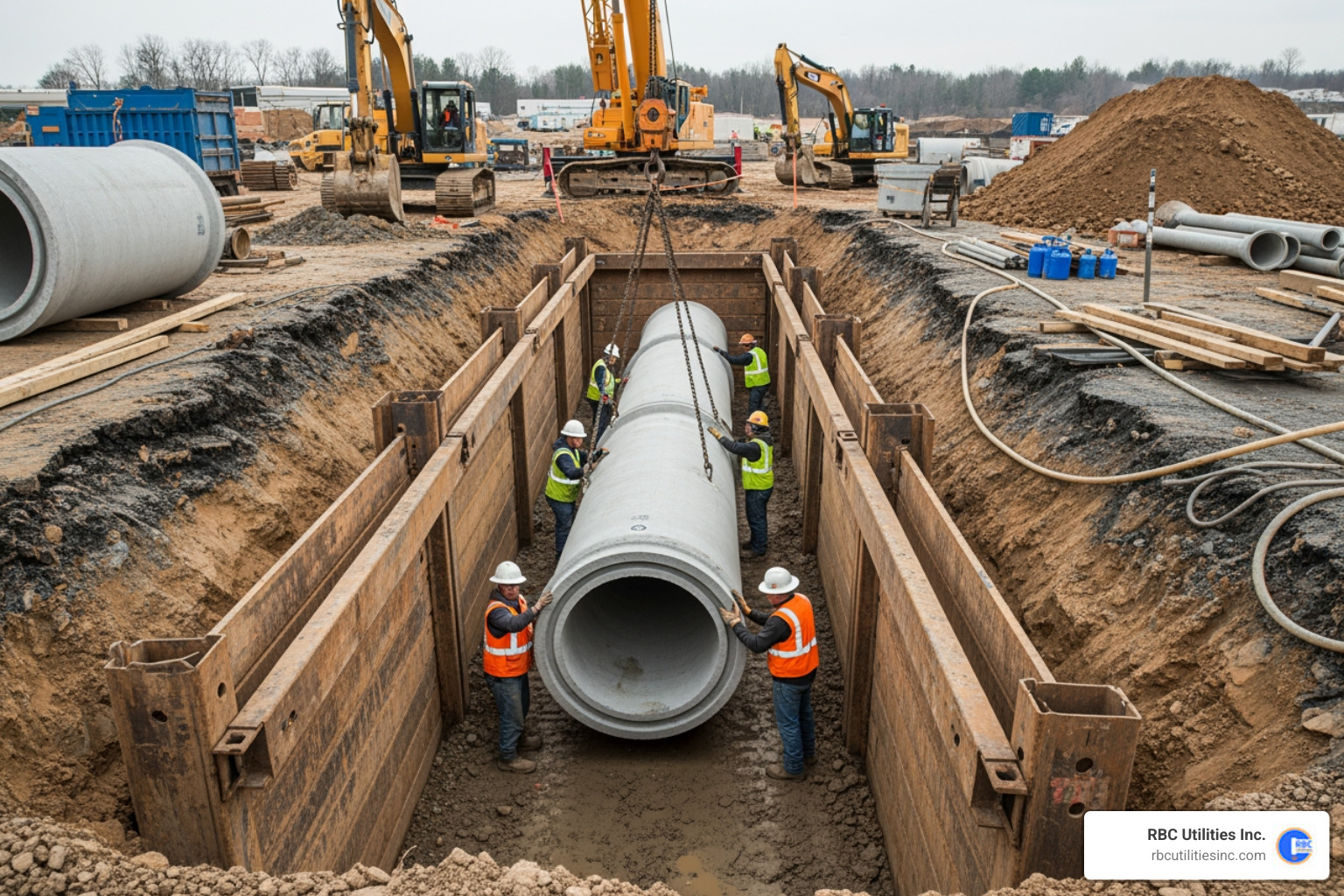
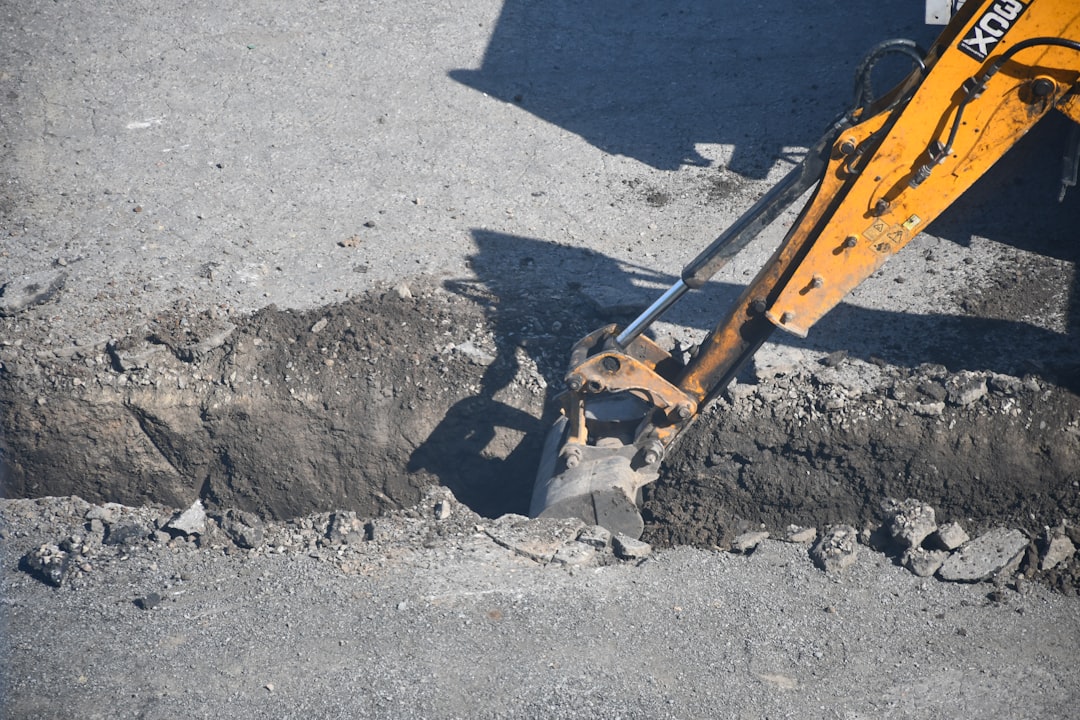
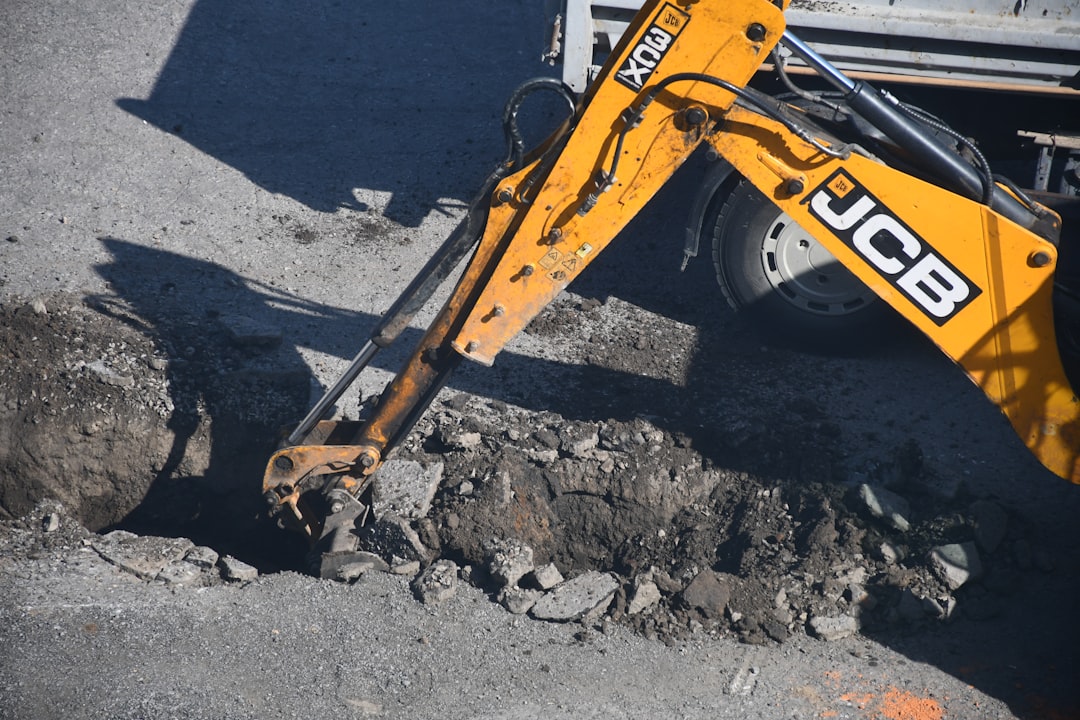
The cost of the actual repair depends heavily on the depth of the pipe, the materials used, and the method chosen. Traditional excavation involves digging a trench along the entire length of the pipe. While the pipe material itself is relatively inexpensive, the labor and the cost of restoring your driveway, sidewalk, or landscaping can drive the total price up to $15,000 or more.
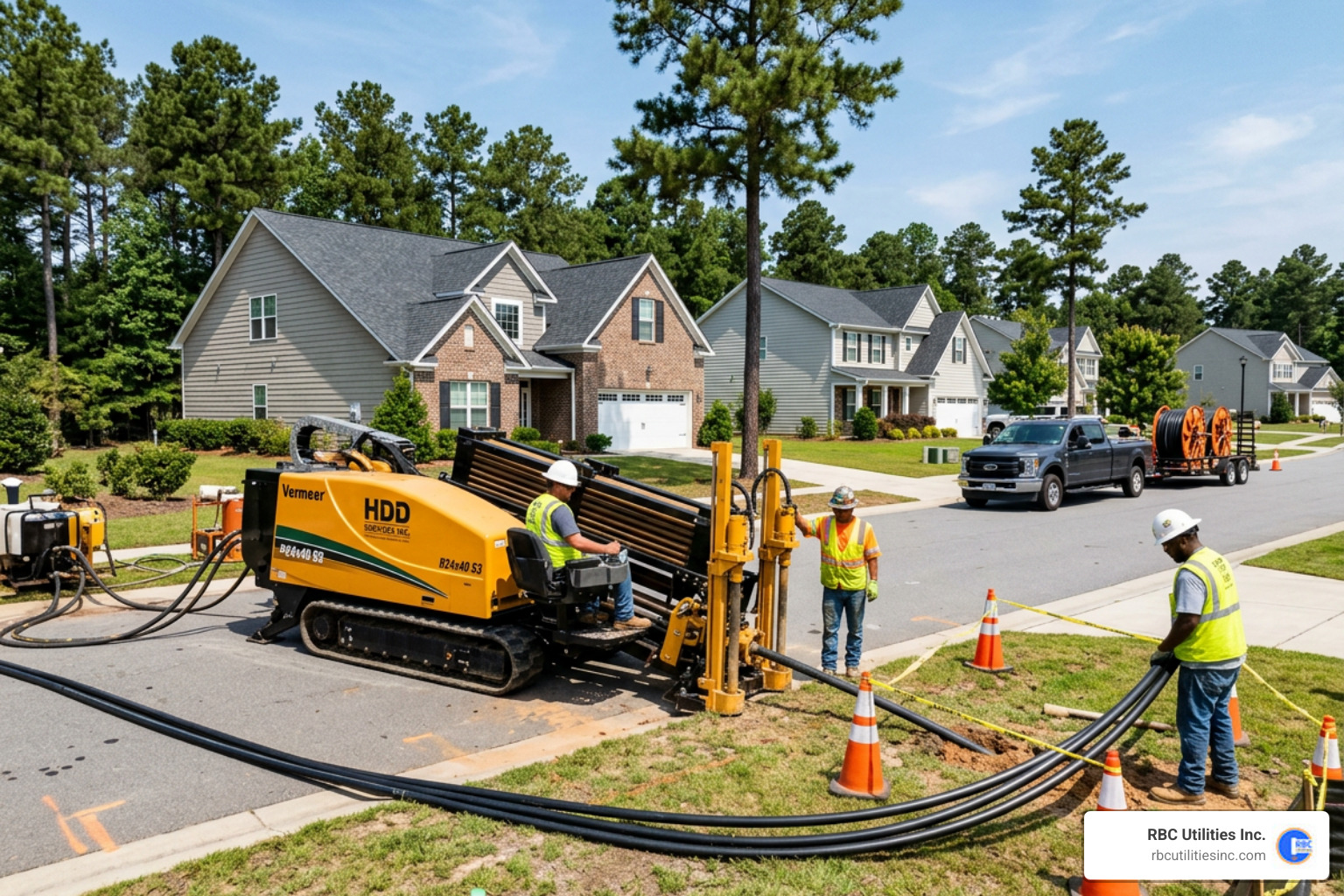
Trenchless technology, which we will discuss in detail below, typically costs between $4,000 and $10,000. While the equipment and resins are more expensive, you save significantly on "indirect" costs because your yard remains intact.
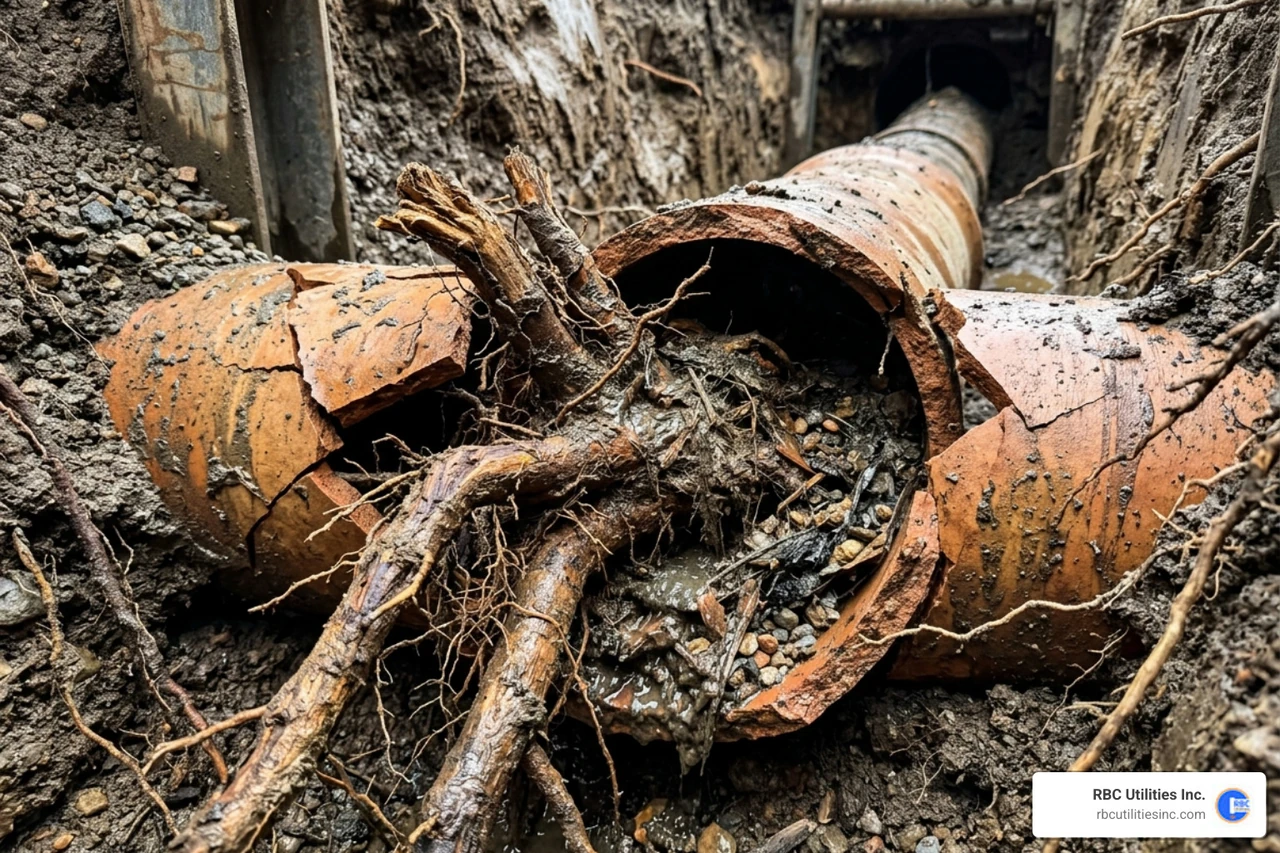
Charlotte is famous for its beautiful tree canopy, but those roots are the #1 enemy of underground utilities. Tree roots are naturally drawn to moisture and nutrients. Even the tiniest hairline crack in an old pipe acts as a beacon. Once a single root tip finds its way inside, it expands, creating a "root ball" that catches grease and toilet paper, eventually cracking the pipe wide open.
In many older Charlotte neighborhoods, sewer lines were constructed using:
Choosing between trenchless repair and traditional digging is the biggest decision a property owner has to make. At RBC Utilities Inc., we emphasize methods that balance structural integrity with cost-efficiency.
Digging required
Time to complete
Landscape damage
Pipe lifespan
Best for
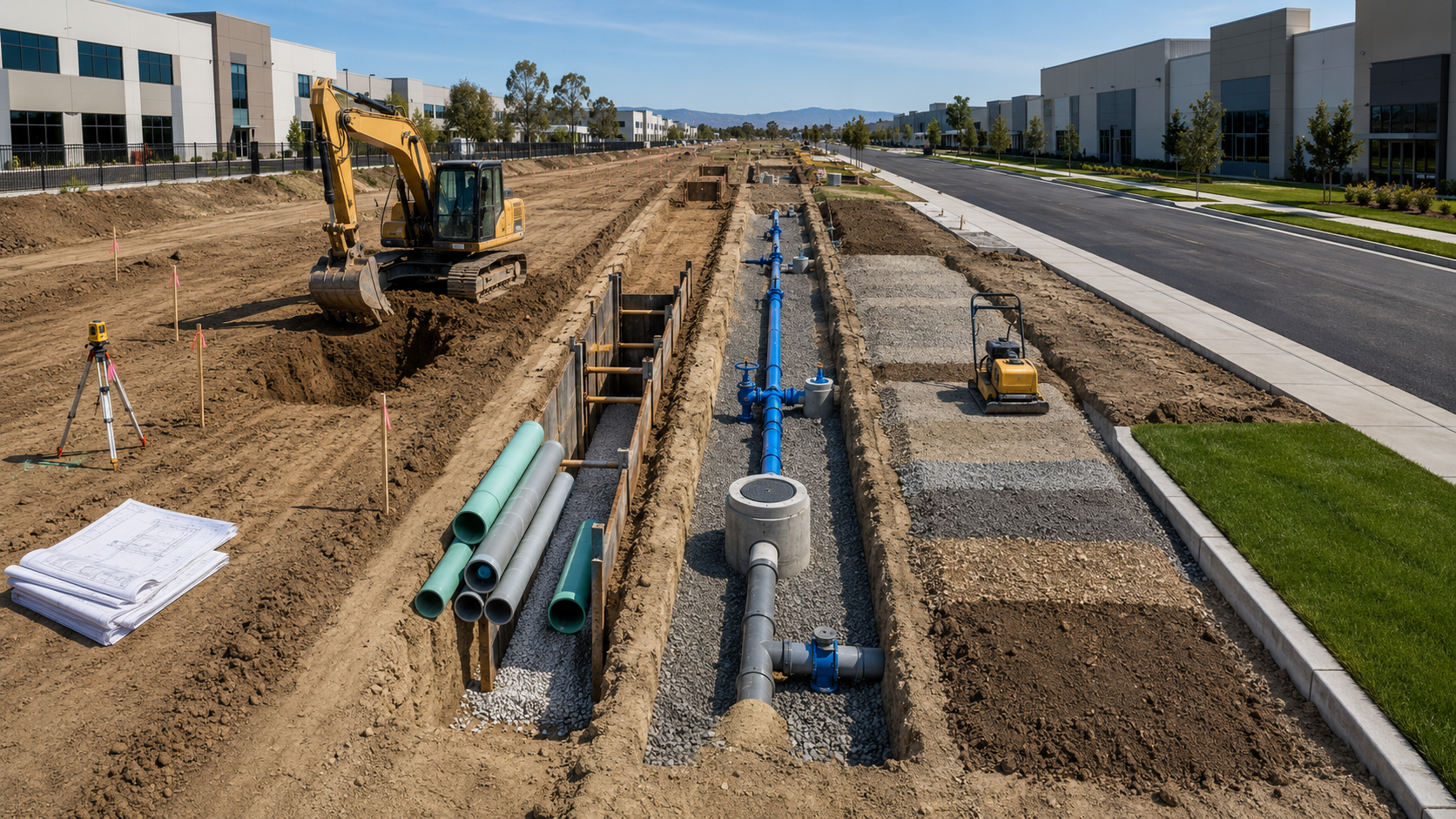
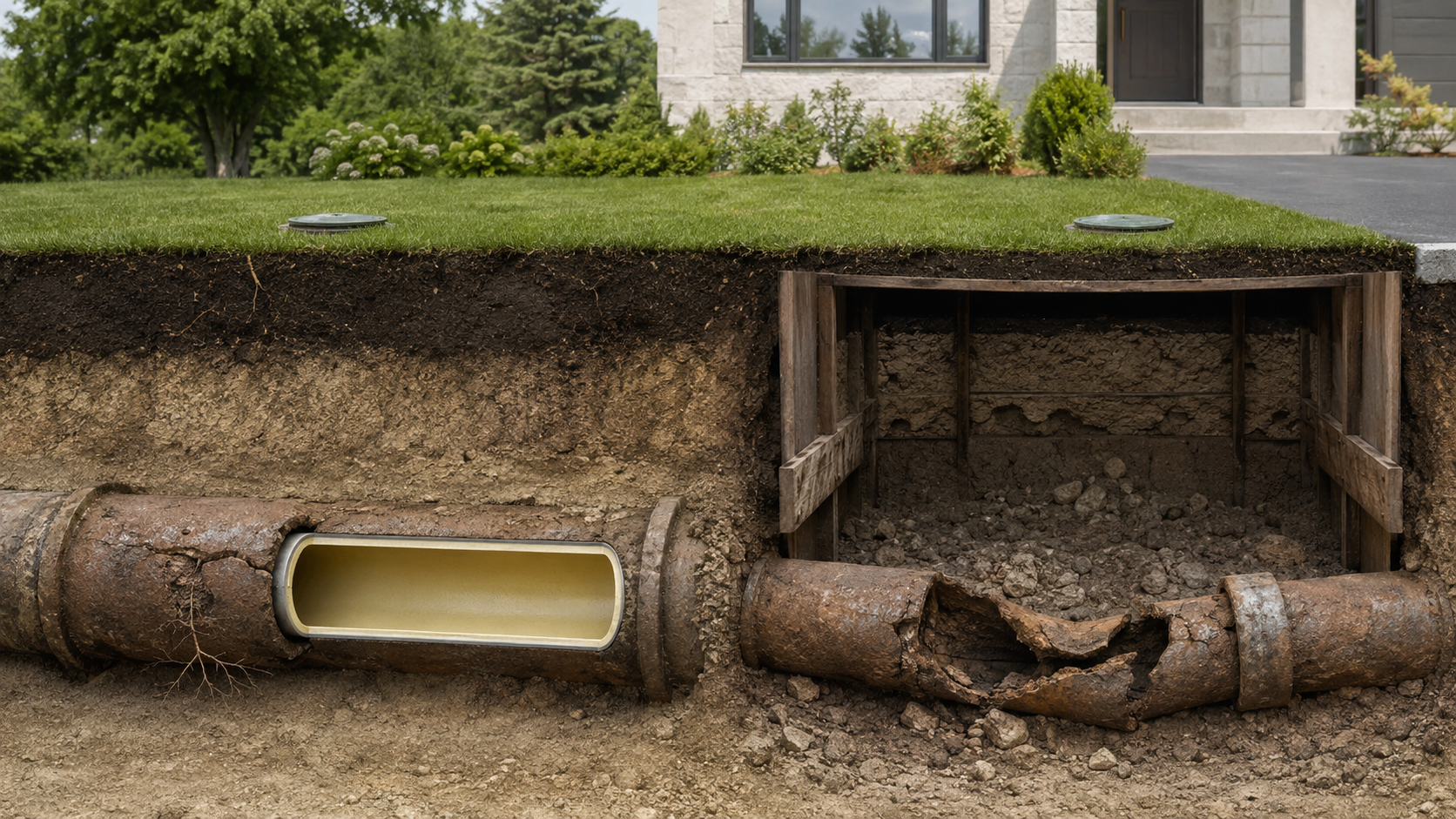
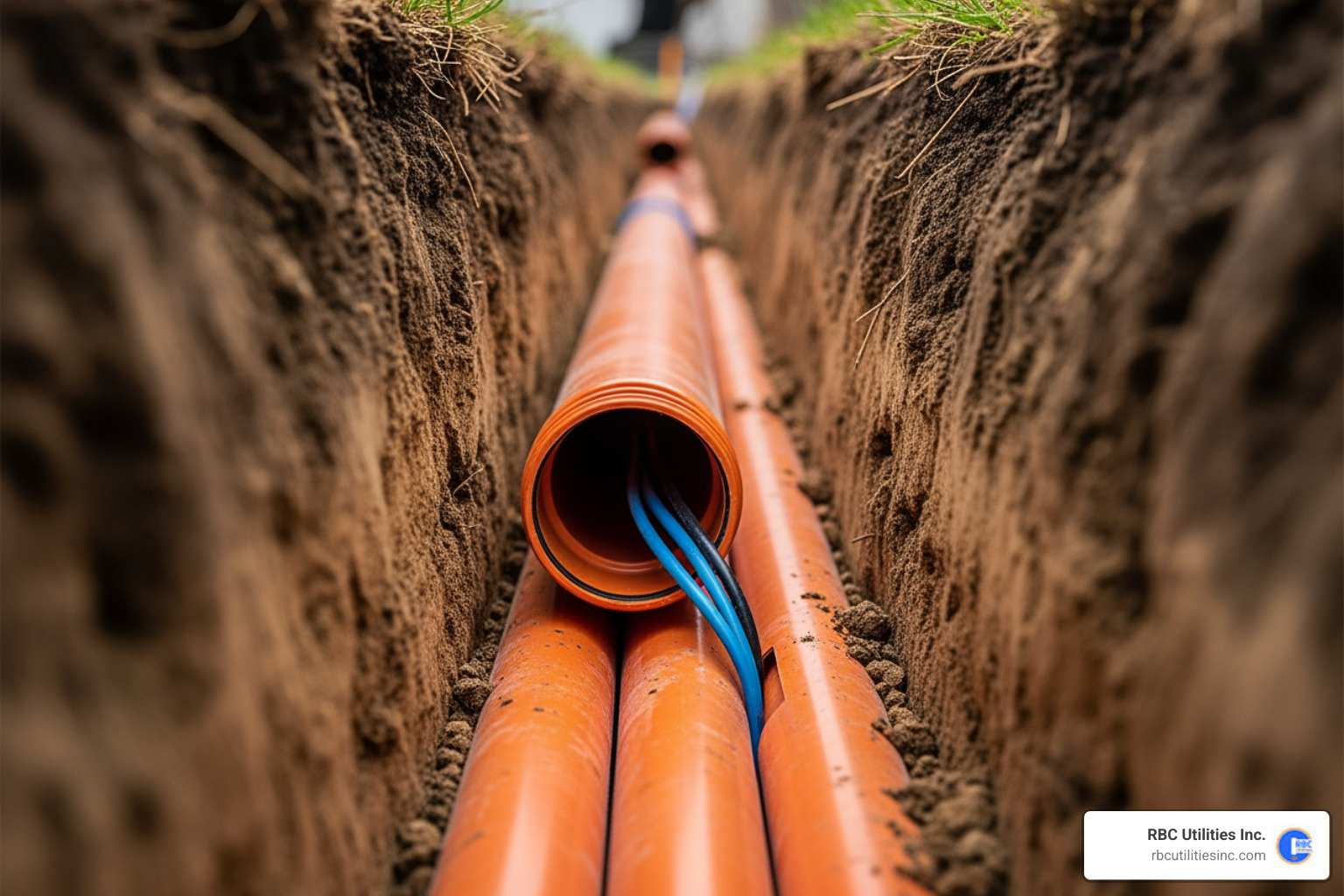
Trenchless technology generally falls into two categories. Cured-in-Place Pipe (CIPP) involves inserting an epoxy-saturated felt liner into the old pipe. Once inflated and cured, it creates a seamless "pipe within a pipe" that is actually stronger than the original. Pipe Bursting, on the other hand, involves pulling a new HDPE pipe through the old one, literally breaking the old pipe apart as the new one takes its place.
For those managing larger properties or commercial sites, More info about sewer services can help you understand how these technologies scale. Trenchless methods are particularly effective in the North Carolina climate because they don't disturb the soil stability, which can be an issue in our heavy clay environments during the rainy season.
The primary advantage of trenchless sewer line repair charlotte is preservation. If your sewer line runs under a 50-year-old oak tree, a custom-paved driveway, or a manicured rose garden, the last thing you want is a backhoe tearing it all up.
Beyond aesthetics, trenchless repairs offer:
In most residential cases, the actual lining process is completed in a single day. After we clean the pipe and prepare the surface, the epoxy liner is inserted and allowed to cure. Depending on the weather and the specific resin used, curing takes a few hours. Your water service is typically only down for the duration of the workday, making it far more efficient than traditional digging which can leave your yard a mess for a week or more.
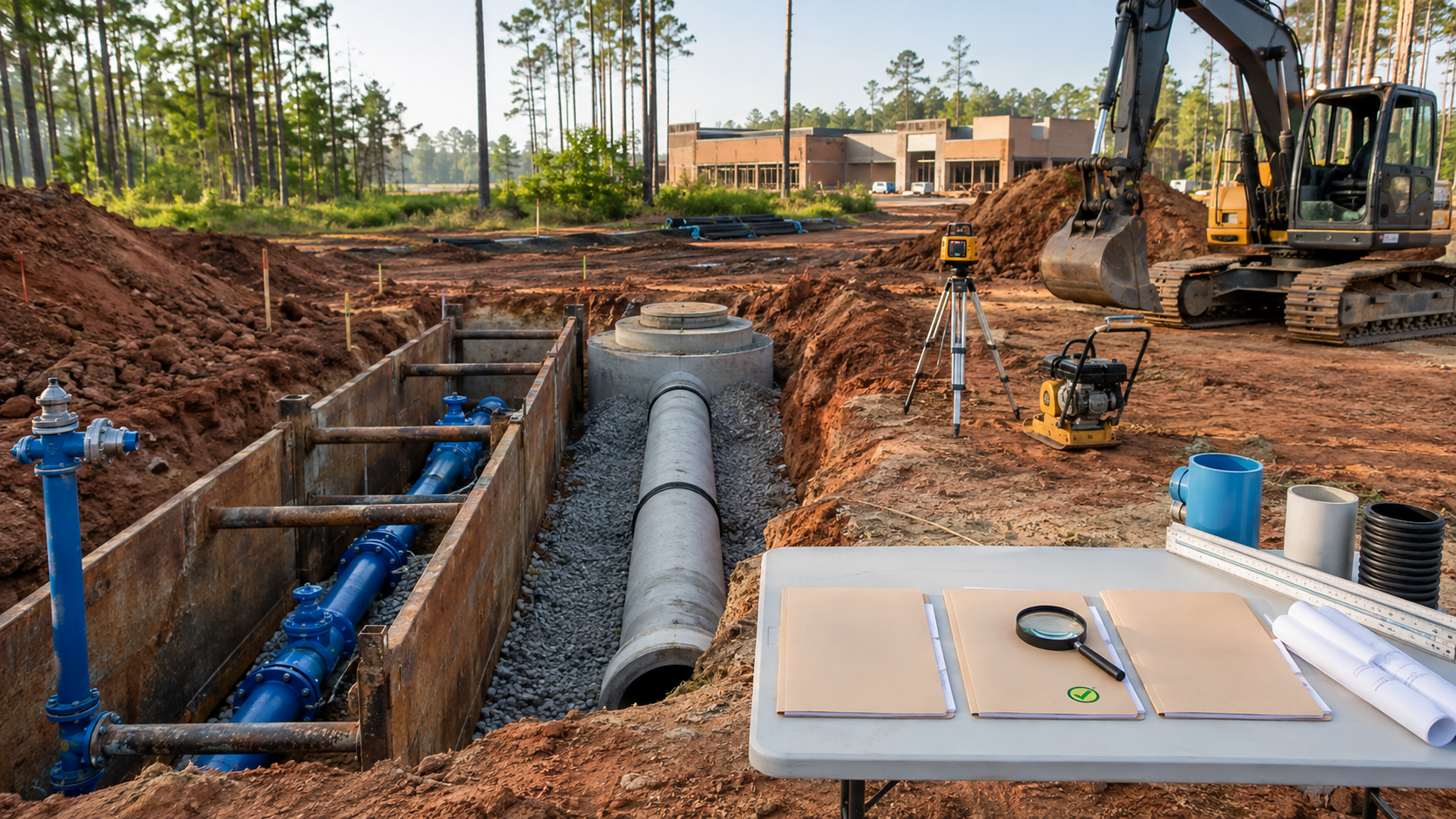
While we love the efficiency of trenchless technology, it isn't a magic wand. If a pipe has completely collapsed or "pancaked," there is no space to insert a liner or a bursting head. Additionally, if the pipe has a severe "belly" (a low spot caused by soil shifting), a liner will simply follow that low spot, and the clogs will continue. In these cases, a traditional excavation is necessary to properly grade the pipe and ensure a gravity-fed flow.
Charlotte sits in a humid subtropical climate zone. We experience significant temperature swings and heavy seasonal rainfall, especially during El Niño cycles. These factors cause the heavy clay soil in the Carolinas to expand and contract. This "ground heave" puts immense pressure on aging pipes, often leading to joints pulling apart or pipes snapping. Furthermore, our high humidity contributes to faster corrosion in older cast iron systems.
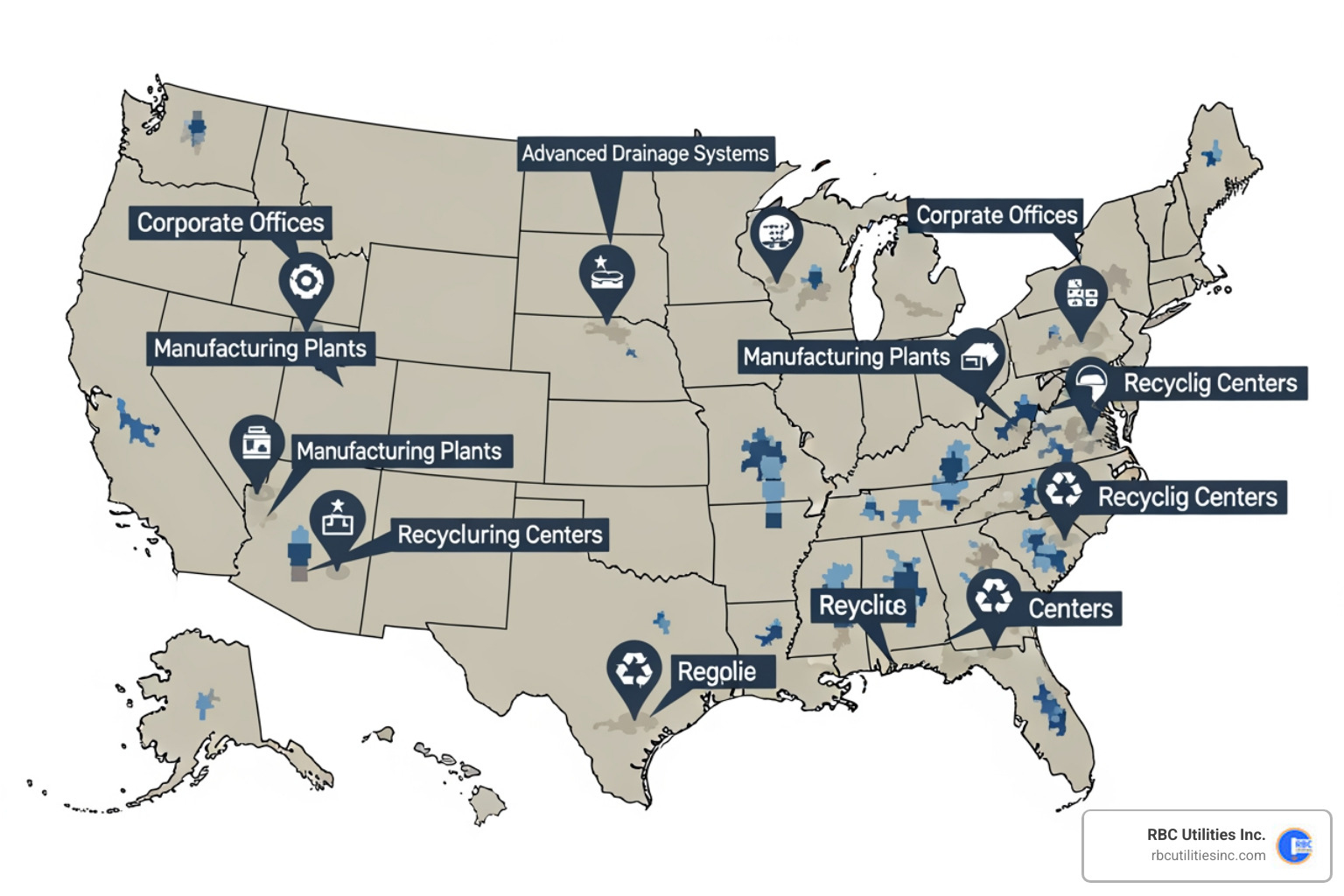
At RBC Utilities Inc., we believe that infrastructure is the backbone of any healthy community. Whether we are working on a residential sewer line repair charlotte project or a major municipal expansion, our focus remains on safety, reliability, and local expertise. We combine the personal touch of a Carolinas-based team with the national resources of Saga Infrastructure to ensure that every job meets the highest standards.
Don't wait for a small gurgle to become a major flood. If you suspect your sewer line is failing, it's time to bring in the pros who know the specific challenges of the Charlotte landscape.
Contact our experts for utility solutions to schedule a consultation, or Explore our full range of services to see how we can help protect your property's infrastructure for the next 50 years.
Part of Saga Infrastructure, protecting what others built and helping it grow.
Address: 4404 Stuart Andrew Blvd., Suite K, Charlotte, NC 28217
Email: info@rbcutilities.com
Phone: 803-913-9727
Service Area: North Carolina | South Carolina