Why Choosing the Right Sewer Line Cleaning Equipment Makes or Breaks the Job
The right sewer line cleaning equipment can mean the difference between a quick, clean fix and a costly, drawn-out job site problem. Whether you're dealing with grease buildup in a residential lateral or a root-choked municipal main, the machine you deploy matters.
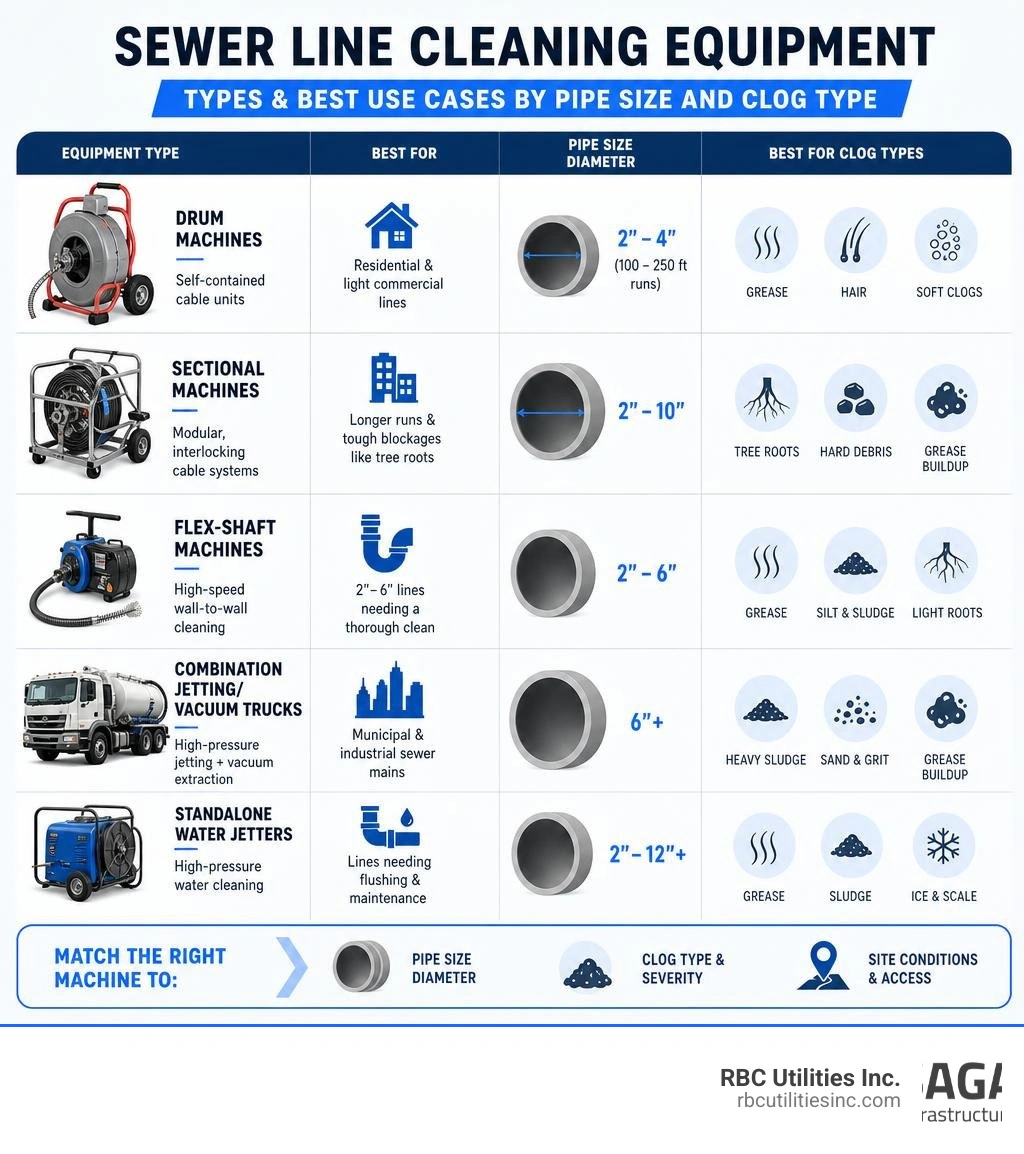
Here's a quick look at the main equipment types and what they're best for:
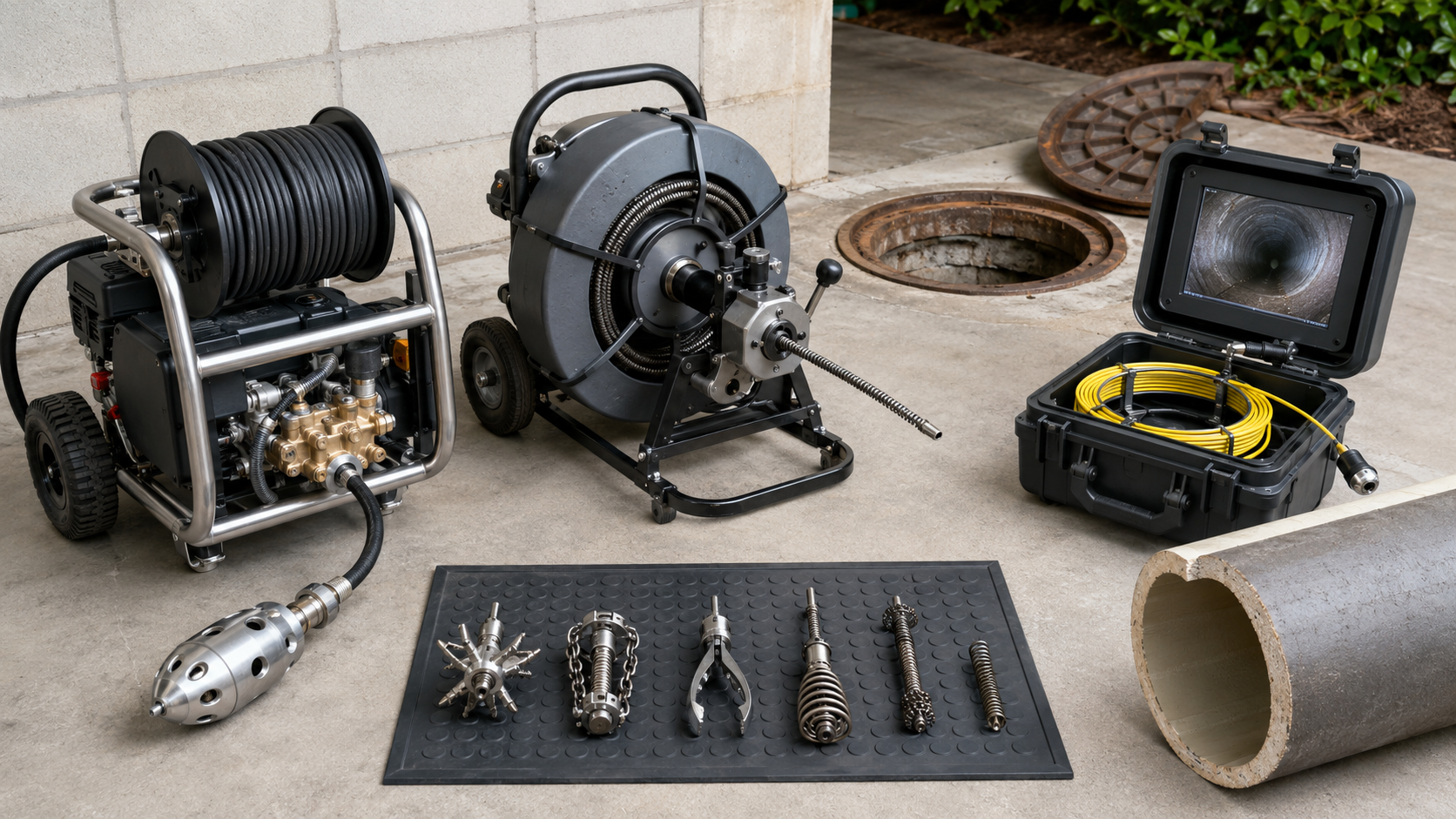
- Drum machines - Self-contained cable units ideal for residential and light commercial lines (100–250 ft runs). Best for grease, hair, and soft clogs.
- Sectional machines - Modular, interlocking cable systems for longer runs and tougher blockages like tree roots. Handle pipes from 2" to 10" diameter.
- Flex-shaft machines - High-speed (up to 2,200 RPM) systems for wall-to-wall cleaning in 2"–6" lines. Lightweight and compact.
- Combination jetting/vacuum trucks - Heavy-duty, truck-mounted units for municipal and industrial sewer mains. Combine high-pressure water jetting with vacuum extraction.
- Standalone water jetters - High-pressure water systems that flush grease, sludge, and ice without mechanical cables.
Each type fits a different job. Matching the machine to the pipe size, clog type, and site conditions is what separates a professional result from a repeat service call.
I'm Don Larsen, and at RBC Utilities Inc. we've been working with sewer line cleaning equipment across the Carolinas since 2008, tackling everything from new residential sewer installs to complex municipal infrastructure upgrades. That hands-on experience with underground utility systems is what drives this breakdown — so you can make a confident, informed call on your next project.
Quick look at sewer line cleaning equipment:
Core Types of Sewer Line Cleaning Equipment
To keep our communities in North Carolina and South Carolina running smoothly, utility teams must master an array of mechanical and hydraulic tools. Choosing the wrong machine can lead to damaged pipes, broken cables, or simply an incomplete job.
When providing professional commercial sewer line services, we categorize these tools into four primary mechanical styles, alongside heavy-duty municipal vehicles.
Drum Machines vs. Sectional Machines for Drain Cleaning
The classic debate in mechanical drain cleaning is drum versus sectional.
Drum machines house the entire length of the cable inside a single, enclosed drum.
- Cable Buckling Prevention: The primary mechanical benefit of a drum machine is that the heavy-duty enclosed drum keeps the cable contained. Under high torque, this containment prevents the cable from twisting, looping, or buckling outside of the machine.
- Cleanliness: Because the spinning cable is housed inside the drum, splatter is kept to a minimum, keeping the indoor job site clean.
- Reach and Power: Professional drum machines, like those from Spartan Tool, supply steady power to clear lines extending from 100 to 250 feet. They often feature smart motors that sense resistance and automatically scale up power to cut through tough grease or root blockages.
Sectional machines, on the other hand, use individual, interlocking cable sections (usually 8 to 15 feet long) that are coupled together as the job progresses.
- Portability: Because you only carry the machine and a carrier of cable sections, the individual components are much lighter. This is a lifesaver when navigating tight crawl spaces or climbing stairs on commercial properties.
- Root Cutting Power: Sectional machines spin the cable at a much higher RPM (often around 600 RPM) compared to drum machines. This high-speed rotation makes them exceptionally effective at cutting through aggressive tree root intrusions.
- Extended Reach: The RIDGID K-1500SP Sectional Machine is a prime example of this category's capability. It can clean sewer lines from 3 inches to 10 inches in diameter up to 300 feet using a 1 1/4-inch sectional cable. If a section of cable damages or breaks, you only have to replace that single segment rather than an entire 100-foot run.
High-Speed Flexible Shaft Sewer Line Cleaning Equipment
Flexible shaft technology has revolutionized the drain cleaning industry over the last few years. These systems feature a specialized cable housed inside a durable, stationary outer sheath, allowing the inner shaft to spin at incredibly high speeds while the operator safely handles the outer casing.
- Wall-to-Wall Cleaning: Unlike traditional cables that snake through a pipe, high-speed flexible shafts utilize chain knockers and carbide-tipped cutters that expand to the exact inner diameter of the pipe. This provides true wall-to-wall cleaning, grinding away scale, tuberculation, and grease.
- Speed: The General Pipe Cleaners Flexi-Rooter machine spins its flexible shaft up to 2,200 RPM. That is roughly 10 times faster than traditional drum machines, allowing operators to pulverize blockages in a fraction of the time.
- Camera Integration: Because the outer sheath does not spin, you can run a sewer camera down the line simultaneously. This allows you to watch the clearing process in real time, ensuring a perfect clean without guesswork.
Key Specifications for Selecting Sewer Line Cleaning Equipment
Selecting professional-grade sewer line cleaning equipment requires looking past the brand name and analyzing the exact specifications of the cables, motors, and structural materials.
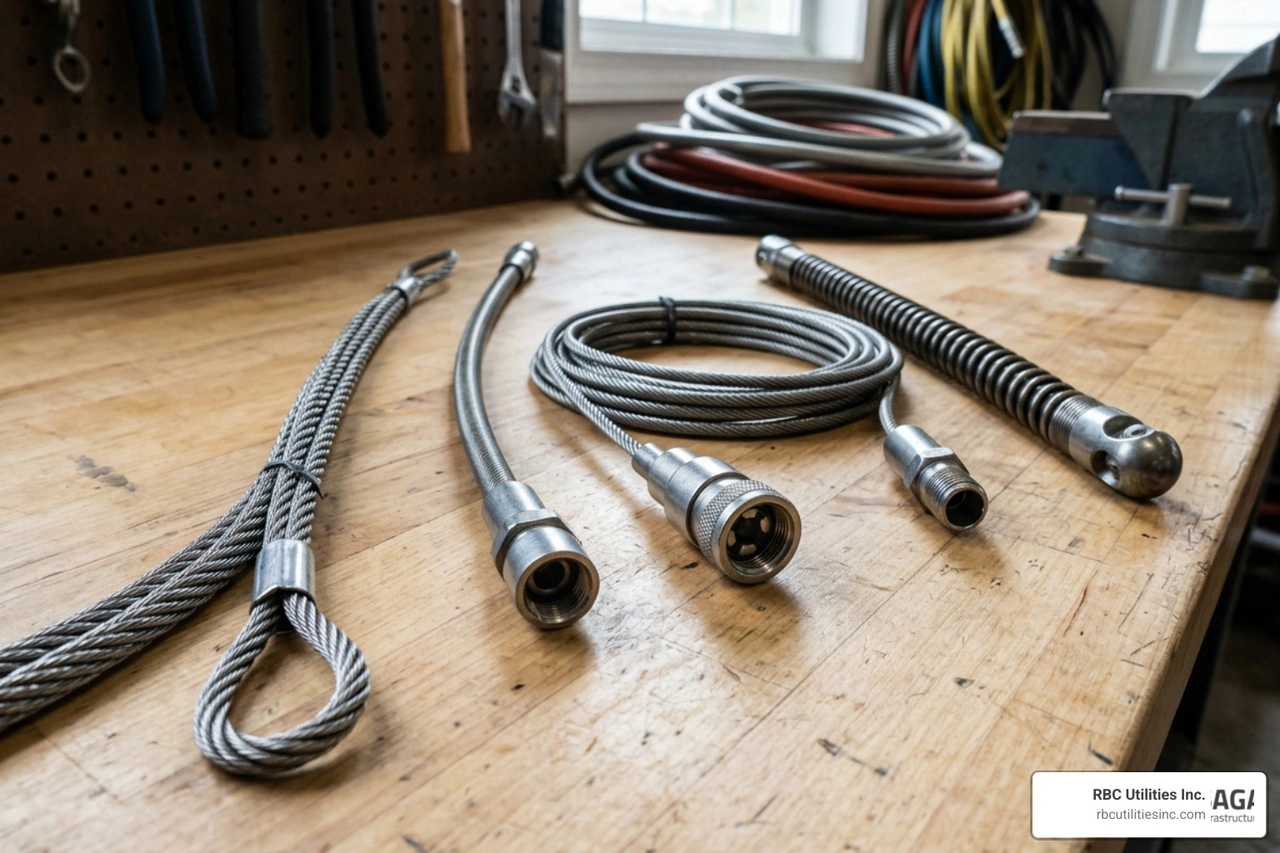
When preparing for a sewer line repair charlotte project, our crews evaluate three primary specifications:
Choosing Cable Diameters and Motor Horsepower
The structural design of your cable dictates how much torque you can transfer to the clog.
- Inner Core (IC) Cables: These feature a nylon or steel core inside the wound outer cable. This core provides maximum kink resistance and stiffness under high torque, which is essential for heavy root cutting.
- Integral Wound (IW) Cables: These are wound tightly to provide a balance of flexibility and stiffness, allowing the cable to navigate tight bends and P-traps without buckling.
- Matching Cable to Pipe: A common mistake is using a cable that is too small for the pipe diameter. A 3/8-inch cable will easily kink or loop back on itself inside a 6-inch pipe. Conversely, a heavy 1 1/4-inch cable will destroy a small 2-inch residential line.
- Motor Power: Heavy-duty sectional machines, such as the BLUEROCK SDS200, utilize 1.5 HP motors to drive thick cables through stubborn blockages in 2-inch to 8-inch lines. These motors must be paired with torque-sensing or smart drive systems to prevent the motor from stalling or snapping the cable when a solid obstruction is hit.
Evaluating Durability, Corrosion Resistance, and Warranties
Sewer cleaning is a harsh, wet, and chemically aggressive environment. Equipment longevity depends entirely on material science.
- Tank Corrosion Protection: For municipal and truck-mounted vacuum systems, the debris tank is highly susceptible to rust. High-end manufacturers utilize an 8-step painting process to achieve a C3 corrosion class rating. This protective standard ensures a minimum steel tank lifetime of 20 years, even when handling corrosive sewer sludge.
- Cable Strength: Standard hollow cables wear out quickly. Look for patented wire-rope center designs, such as Flexicore cables, which use heavy-duty aircraft-grade wire rope at their core to resist kinking and extend the tool's service life.
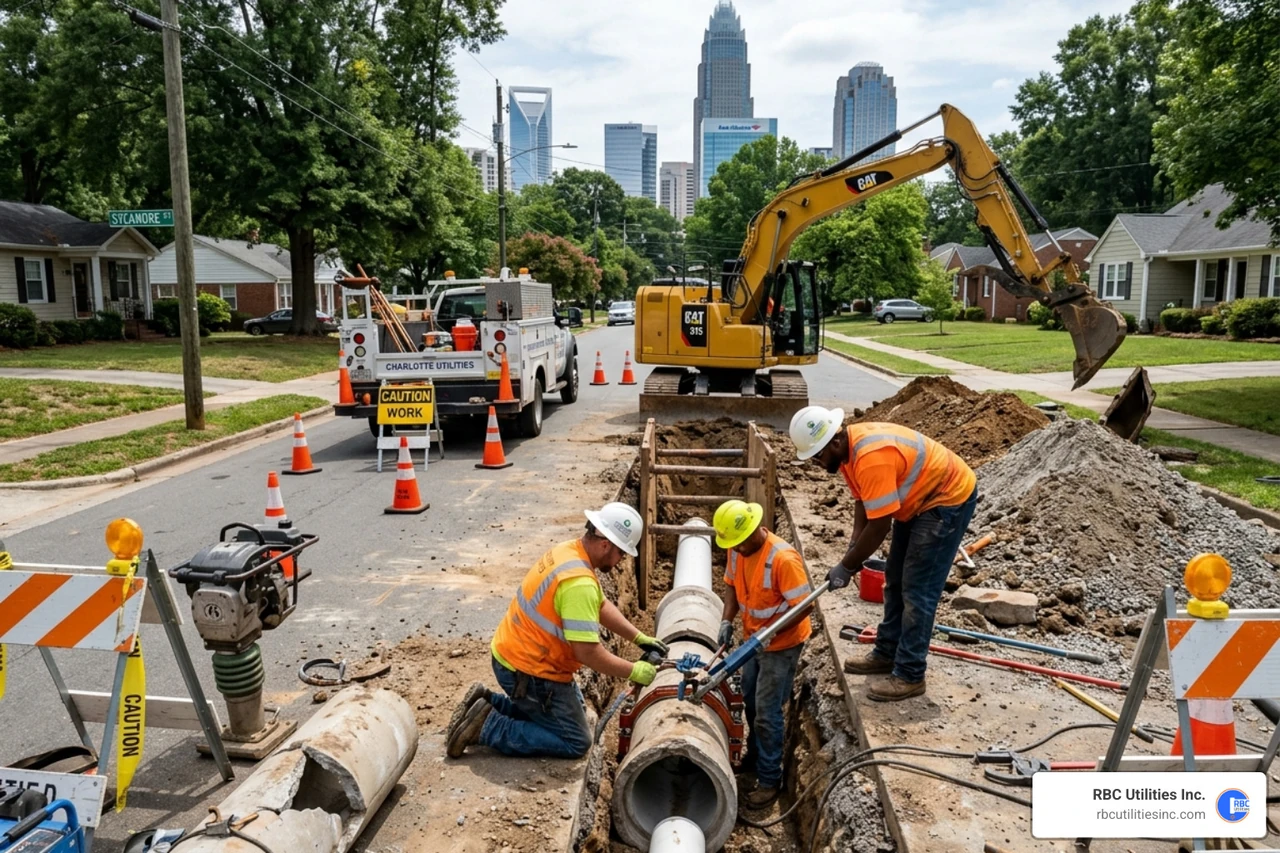
- Warranty and Support: When investing in professional equipment, verify the manufacturer's warranty. A solid warranty on the motor, drum, and structural frame is critical when operating machinery under daily high-stress conditions. This is especially true when performing extensive sewer pipe replacement services where downtime directly impacts project delivery.
Safety Features, Operator Controls, and Regulatory Compliance
Operating high-torque mechanical equipment carries inherent risks. Modern safety features are designed to protect both the operator and the pipeline infrastructure.
- Clutch Mechanisms: Instant-acting cable clutches are standard on quality sectional machines. When the operator releases the clutch handle, cable rotation stops instantly, preventing the cable from binding and catching the operator's hands.
- Pneumatic Foot Pedals: Air-actuated foot pedals allow the operator to control the machine's power while keeping both hands free to guide the cable. Because the pedal uses air pressure rather than an electrical signal, there is zero risk of electrical shock in wet environments.
- Auto-Feed Systems: These systems mechanically feed and retrieve the cable at the push of a lever, reducing operator fatigue and keeping hands further away from the rotating cable.
- Regulatory Compliance: Buyers must also pay attention to regional health and safety warnings. For example, some professional drain cleaning components contain brass or chemical compounds subject to California Proposition 65 warnings. Understanding these material disclosures ensures your safety protocols align with modern environmental standards during commercial sewer line repair projects.
Heavy-Duty Municipal and Truck-Mounted Systems
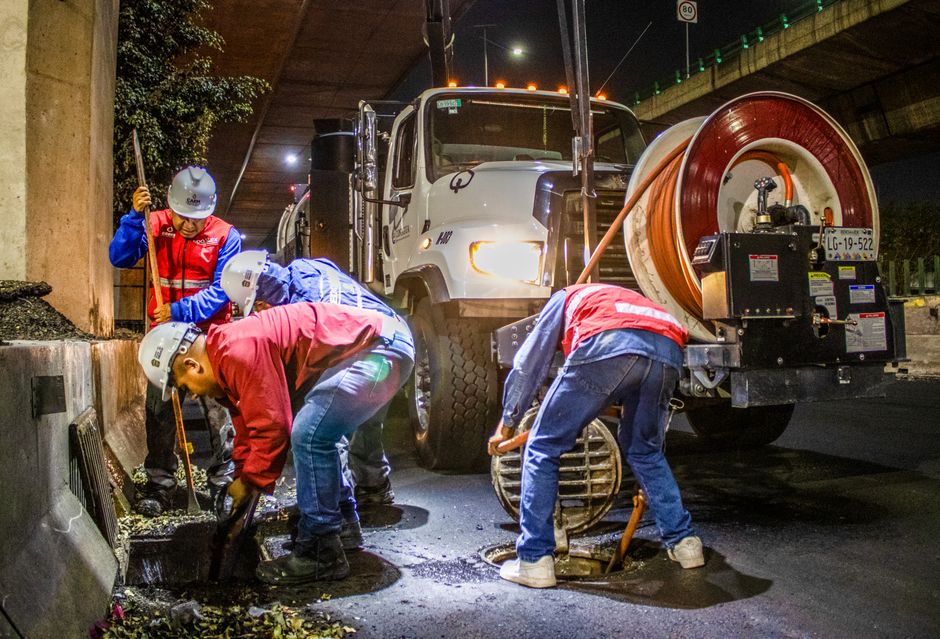
When blockages move beyond lateral sewer lines and into large municipal mains, portable equipment must give way to truck-mounted systems. These massive units combine high-pressure hydraulic flushing with high-volume vacuum extraction.
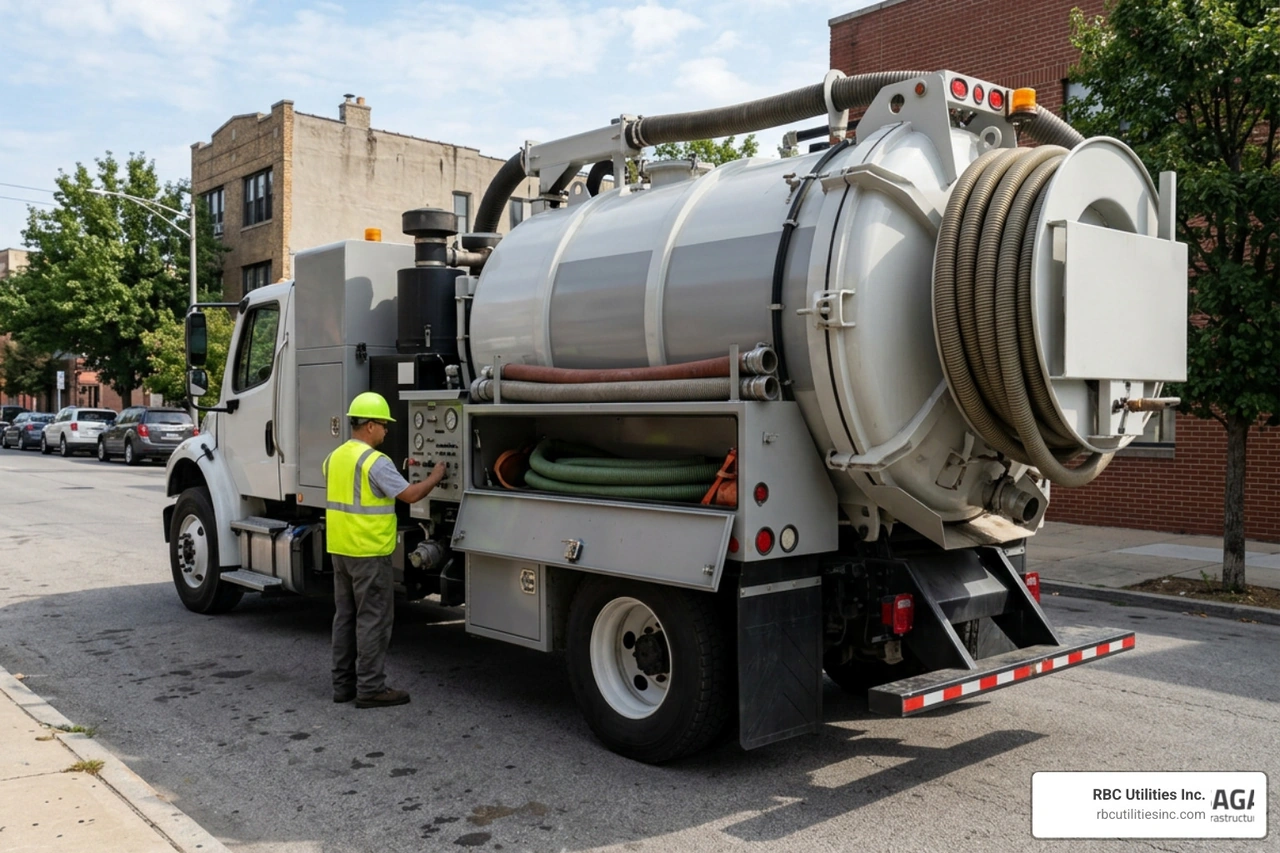
For large-scale infrastructure maintenance, sewer utility contractors rely on these heavy-duty systems to keep city networks clear.
The Power of Combination Jetting and Vacuum Units
Combination sewer cleaners are the workhorses of municipal utility maintenance. By combining high-pressure water jetting to break up blockages and a high-flow vacuum system to extract the debris, these trucks resolve issues in a single pass.
- Dynamic Tank Partitioning: Advanced combination units, such as the Bucher Municipal FlexLine C140, feature a movable partition inside a single large tank (like the C140's 14 m³ tank). This partition dynamically adjusts the ratio of clean water to vacuumed sludge. As clean water is used for jetting, the partition shifts to allow more room for vacuumed material, maximizing the truck's operational capacity.
- Extreme Hydraulic Power: These trucks carry serious pumping power. The FlexLine C140 utilizes a jetting pump capable of delivering 333 liters of water per minute at 170 bar of pressure. This hydraulic force easily cuts through packed dirt, rocks, and thick grease.
- Simplified Controls: While some modern trucks rely on complex CAN Bus systems and digital touchscreens, others prioritize mechanical simplicity. The Sewer Equipment Co. Model 900 ECO uses a robust 12-volt analog switch system. This allows field mechanics to diagnose electrical issues with a simple test light rather than requiring specialized diagnostic software or laptops on-site. Furthermore, the Model 900 ECO operates at a 35% lower engine RPM than traditional models, drastically reducing fuel consumption and noise levels in residential neighborhoods.
Water Recycling Technology in Modern Sewer Line Cleaning Equipment
Historically, combination trucks had to leave the job site multiple times a day to refill their fresh water tanks, wasting fuel and valuable labor hours. Modern water recycling technology has completely changed this workflow.
- The Recycling Process: An oscillating rotary filter drum inside the debris tank separates solid waste from the vacuumed sewer water. This filtered water is routed through multi-stage cyclone separators and 10-micron filters directly back to the high-pressure jetting pump.
- Incredible Water Conservation: The environmental and operational savings of these systems are massive. The patented water recycling system on units like the KAISER Eco 4.0 Water Recycling system can save up to 24,000,000 liters of fresh water per year per vehicle.
- Operational Efficiency: By eliminating the need to search for hydrants and refill fresh water tanks, utility crews can remain on-site and clean sewers continuously, doubling daily productivity.
Frequently Asked Questions about Sewer Cleaning
How do pipe diameter and job site accessibility influence equipment choice?
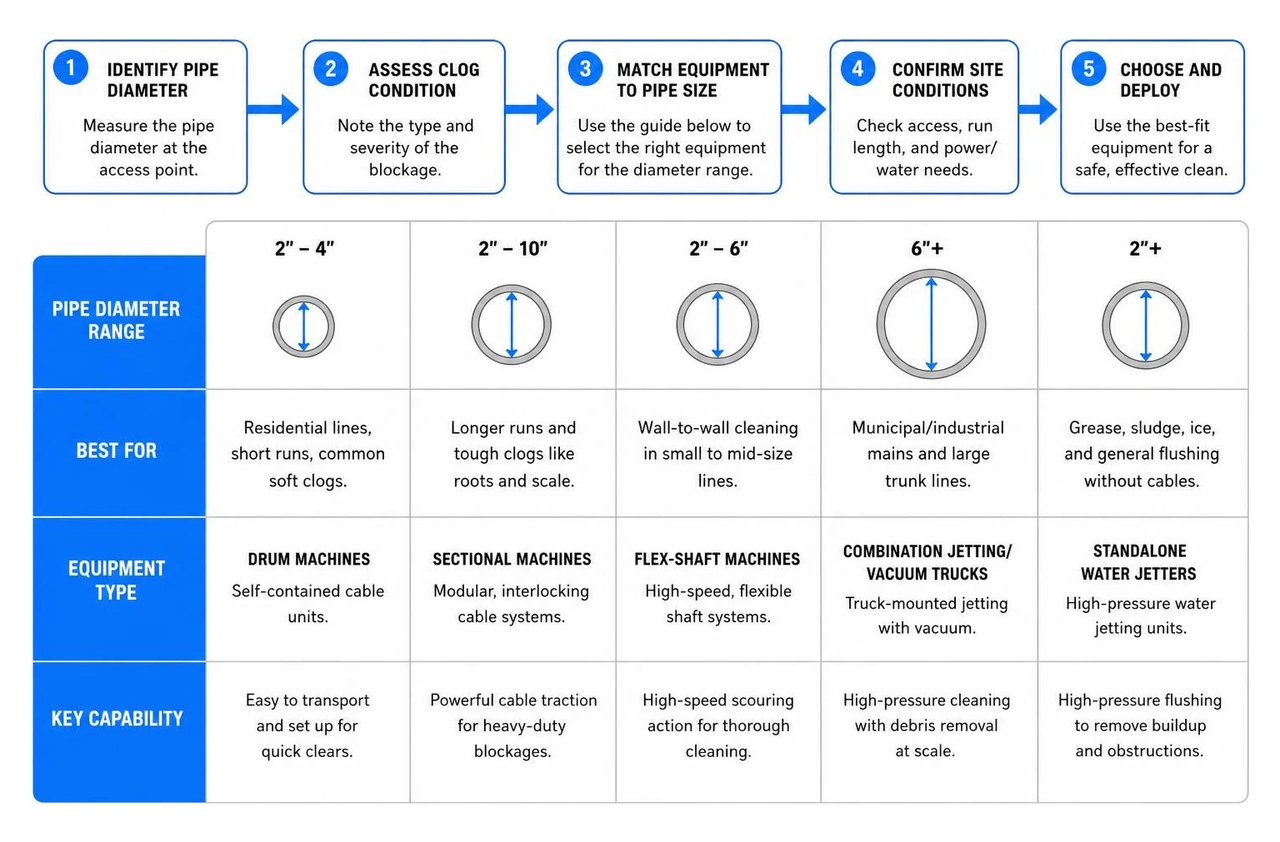
Matching the machine to the physical constraints of the job site is the first step in planning:
- Small Lateral Lines (2" to 4"): Best cleared using portable drum machines, flex-shaft tools, or portable electric water jetters. These units easily navigate doorways, basements, and tight residential yards.
- Medium Commercial Lines (4" to 8"): Handled efficiently by heavy-duty sectional machines or trailer-mounted hydro-jetters.
- Municipal Mains (8" and up): Require truck-mounted combination jetter/vacuum units due to the sheer volume of water and suction required to clear heavy debris over long distances.
What are the advantages of water recycling systems in combination trucks?
Water recycling systems provide three major benefits:
- Zero Fresh Water Waste: They reuse sewer water for jetting, conserving millions of gallons of fresh drinking water annually.
- Reduced Fuel Consumption: Crews do not have to drive back and forth to water refill stations, saving diesel and reducing wear on the truck.
- Continuous Operation: Crews can work a full shift without stopping, significantly lowering the overall cost of municipal maintenance.
What safety features are most critical for high-torque cable machines?
When operating high-torque mechanical snakes, safety must be the top priority:
- Instant-Acting Clutches: To stop cable rotation immediately if the cutter binds on a hard obstruction.
- Rear Guide Hoses: To prevent the rotating cable from whipping wildly behind the machine.
- Heavy-Duty Leather Mitts: Specifically designed for drain cleaning, allowing the operator to guide the spinning cable safely without catching their fingers.
Conclusion
From portable high-speed flexible shafts to massive water-recycling combination trucks, having the right sewer line cleaning equipment is what allows utility crews to keep our cities clean and safe.
At RBC Utilities Inc., we bring local Carolinas expertise backed by national Saga Infrastructure resources to every project we touch. Whether we are constructing complex underground utility systems or maintaining municipal mains, our commitment to safety, reliability, and precision is unmatched.
If you need a trusted partner for your next residential, commercial, or municipal infrastructure project in North Carolina or South Carolina, explore our comprehensive RBC Utilities Inc. Services and let's build a cleaner tomorrow together.